

Download Free Original Music Songs from the films
Scores & Rankings
The Ride Directed by William James
Find this film in
Score breakdown
- Storytelling & Structure ×210
- Emotional Connection ×210
- AI Tool Management ×210
- Visual Craft10
- Screenplay10
- Sound Design10
- Originality10
- Technical Polish10
- Rewatch Value10
×2 = core category, counts double.
Directed by William James • Runtime 8:33
Watch on Higgsfield | Instagram
Film Review
Written by Kineograph
Is Chuck Already Dead?
Two lifelong friends take one fateful ride that forces them to confront a painful truth: some friendships may not survive the people we become.
This review discusses the ending of The Ride and an open question about it. It is a film that rewards a fresh first watch, so watch it first and then come back.

Synopsis
A sudden car crash, a long-buried confrontation, and a fateful ride to court. The Ride follows Chuck, a troubled immigrant whose life has been unraveling for years, as he prepares to face a verdict that could change his future forever. Driving him is Roger, his oldest friend: the man who came to America with him, built the stable life Chuck never could, and has spent years helping him survive his mistakes.
Trapped together in the car, decades of loyalty, sacrifice, jealousy, love, and resentment erupt into a brutal reckoning, as each man challenges the other’s version of their shared past. It is a psychological, character-driven drama about friendship, expectation, and how long we can keep trying to save someone we love from themselves.
The Review
Is Chuck Already Dead?
That is the question I could not stop asking after the film ended, and the filmmaker has said openly that it is meant to be there, as an optional interpretation, not a literal answer. The film never confirms it. But it leaves clues, and the more I looked at them, the more they seemed to hold together.
It begins with the opening: we see everything through Chuck’s eyes as he drives, loses his signal, and slams into a van. The car rolls, the screen goes black, and only then does the title appear. Later, as Roger speaks, the film runs Chuck’s memories of the crash in reverse, all the way back to his apartment that morning, which suggests it is the same drive. That raises a quiet but unsettling question: how does a man crash in the morning and arrive at a verdict, calm and dressed, with his friends beside him, on that same day?
Then there is the courthouse. As the ride ends, the film becomes dreamlike. The streets are unnaturally empty, the world is held in a heightened stillness, and the building rises with a monumental, almost sacred scale. It looks less like a courthouse than a threshold. His friends tell him he looks good. Roger runs to hug him. Chuck speaks about the good times in the past tense. The moment he walks through the doors, the screen goes black and says The End.
I do not think the film wants us to settle on one answer, and it works either way. If the entrance leads to a courtroom, then it is a man walking toward the consequences of what he has done. If it leads somewhere else, it is a man saying his last goodbyes to the people who loved him. In both readings, it is the same moment: facing what you have done, with the people who stayed. That is why I find the question so moving.

Seeing Through Chuck’s Eyes
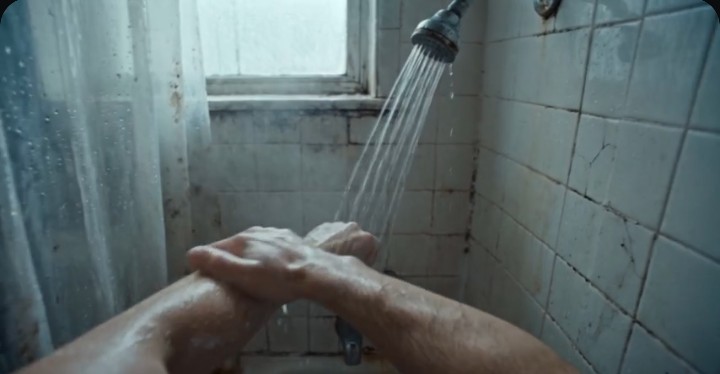
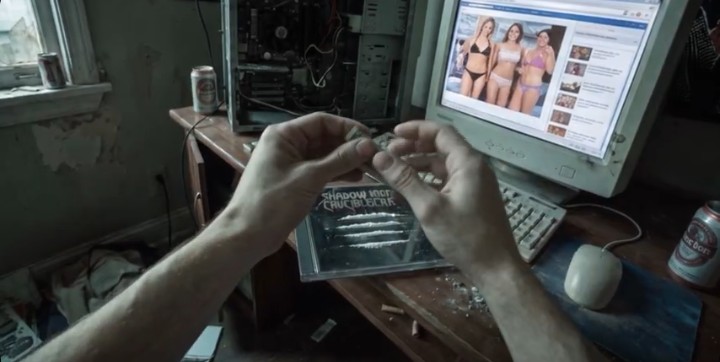
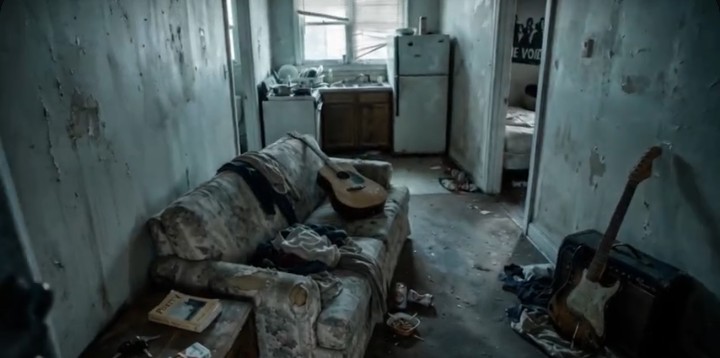
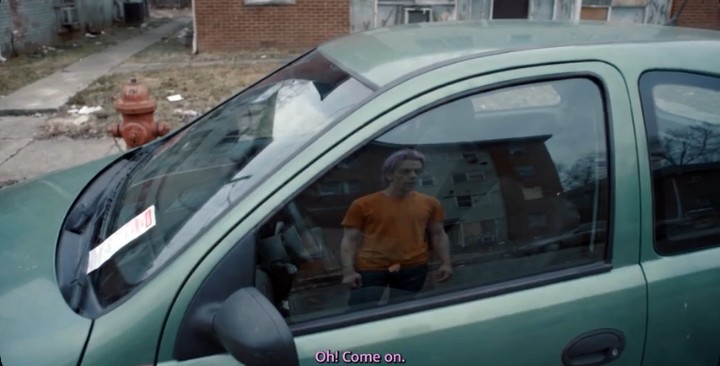
The first minute is the most technically astonishing part of the film. We open as Chuck, in first-person view. He wakes, we see his hand, and the clock tells us it is 9:46 in the morning. We take in his messy room, his computer glowing in the background, then the shower, the stairs of a dirty apartment building, and finally the car, where we catch his reflection in the window. The camera moves everywhere, entirely from his point of view. I have now watched this film three times, and each time I thought the same thing: what a nightmare it must have been to set that up. I would have burned the house down from frustration.
The car sequence that follows is even better. We see Chuck’s face in the rearview mirror, his left hand on the wheel and a phone in his right, as he runs a red light and nearly hits another car’s bumper. After speaking with the director, I learned that the apartment sequence was a walk in the park compared with this one. He explained that the key was treating the shot as exactly what Chuck sees, not simply a camera placed in the driver’s seat, so the view reacts like a human body would, jolting down, snapping up, or swinging to the side. Hearing how it was made was as enjoyable as watching it. It looks spectacular.

Two Friends, Two Lives
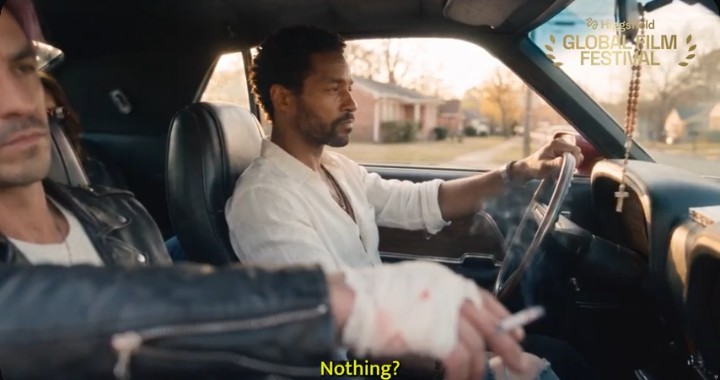
Once the ride begins, the film becomes a three-person chamber piece, and it is wonderfully tense. Roger and Chuck start with small things, like the cloth tied around Chuck’s hand and Chuck’s attitude, and it grows into an argument about everything. Roger believes Chuck does not care what people think. Chuck says he does not want to spend his life auditioning for people he does not even like. Roger answers that no one is asking him to audition; they are asking him to show up. That line says a great deal about the gap between them.
What makes the argument so painful is that both men are right and both are hurt. Roger gave up what he loved for a stable life and a perfect girlfriend. Chuck kept his freedom but never took on the responsibility that goes with it. Each one sees in the other the life he did not choose. And when Roger delivers his speech about adult life, about wanting the freedom of a teenager and the paycheck of a grown man while the people foolish enough to care about you pay the difference, Roger adds that it is not only the people who know him. It is a reminder that strangers pay for Chuck’s choices too.


Silence Louder Than Dialogue
Some of the film’s best moments have no words at all. In one shot, Roger simply stares, and his frustration is perfectly translated. It is a small piece of acting, and it is very well done.
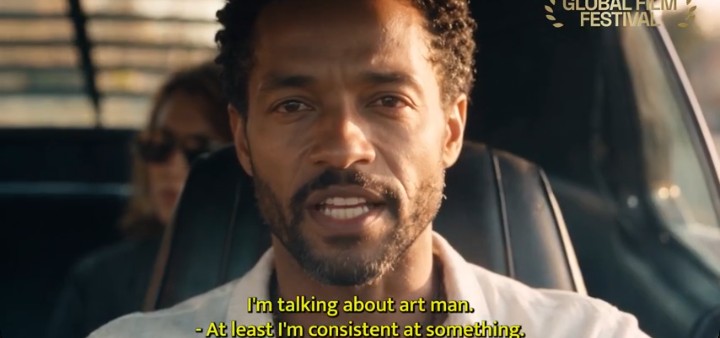
Then comes the moment the whole film turns on. Chuck says it was an accident, and Roger answers, loudly, that a woman died. We see a flash of Chuck hitting the car, and the sound seems to go quiet, but not completely, as if everything stopped while the truth landed. As Roger continues, talking about Chuck’s potential and saying that he is tired, we see the crash and the drive replay in reverse. It is a brilliant device, because it shows us what Chuck is doing in his mind: rewinding, searching for the point where things could have gone differently. When Roger says he is tired of Chuck acting like a loser, and Chuck says “you’ve said enough” through tears, we feel the full weight of twenty years.

No Villain
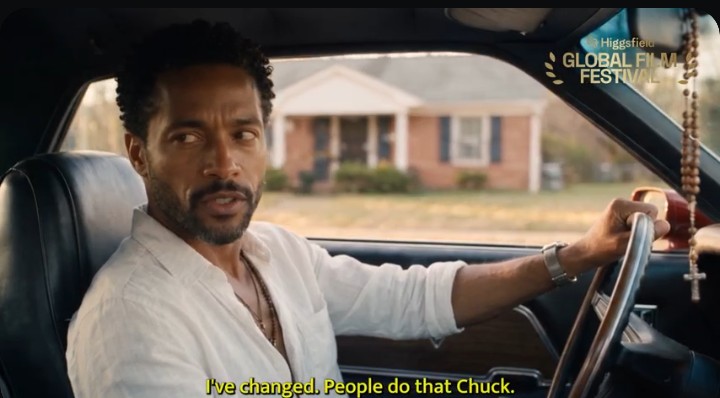
One of the film’s greatest strengths is that it does not tell us who is right. The filmmaker deliberately refocused the central conversation to create moral ambiguity between the two men, avoiding a clear right or wrong and letting the audience choose where their sympathy lies. I found my own sympathy shifting from scene to scene. Roger is tired and justified, and he is also a little proud of the life he built. Chuck is destructive, and he is also someone who was left behind by the person he trusted most.
It is a film about competing versions of the same history, and it respects both. Danna, who the filmmaker describes as the emotional and empathetic point of view of the film, watches from the back seat, reacting, validating, and protesting. She is who we are, listening to two people we care about hurt each other.
The Quiet City
After the argument, the film goes silent. For a few seconds, the two men drive without speaking while a soothing song plays, and we see the city: people on street corners, cars passing, a homeless man on a corner. These are not filler. The filmmaker added observational city inserts to expand the film’s world beyond the car, including the young people Chuck notices and the homeless man Roger observes. Each one reflects how the man looking at them sees the world. It is a lovely, subtle way to show their differences without another line of dialogue.
The Bandage and the Walk
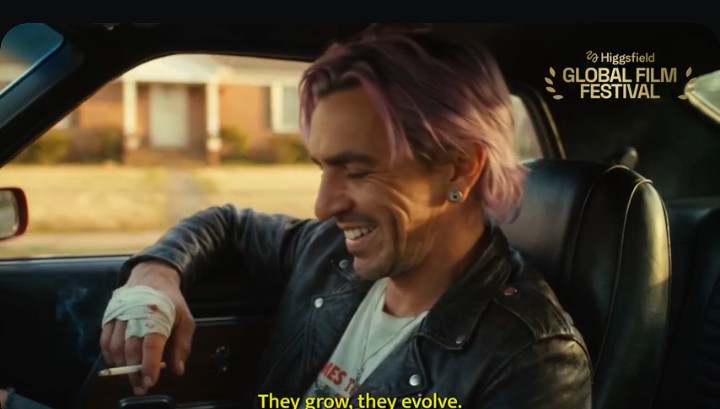
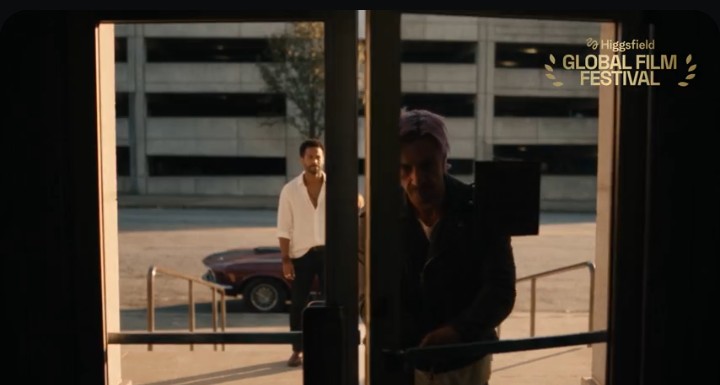
When they arrive, Chuck stands in front of a great building with a staircase and looks at the entrance. He removes the bandage that he had tied around his hand. Earlier, Roger mocked it, saying it “completes the look.” Now it is gone. I read that as Chuck taking off the thing that covered the wound and facing what is underneath. Danna tells him he looks good, and he turns and walks toward the entrance.
Roger runs after him and hugs him. He starts to say “Chuck, I just…” and Chuck stops him with a line that lands like a gift. “I know, man. You did all you could. This was on me. We had some good times, didn’t we?” This is the arc of the film in two sentences. After a ride full of blame, Chuck takes the weight back. He releases his friend from the guilt of not being able to save him. The goodbye is affectionate and accountable, not bitter, and it shows that a friendship can end and still have been real.

The Polaroid
The film seems to end as the screen goes black and says The End. But there is one more scene, and it is the best kind of last-minute reveal. Danna sits in the driver’s seat, Roger sits beside her, and he picks up a Polaroid that was left where Chuck was sitting. Danna asks how old it is. Twenty years, he says. It is a photograph of Roger and Chuck, young, singing in their own punk rock band.
It is a beautifully designed payoff. The filmmaker reworked the Polaroid so that the surprise is not only seeing the two of them younger. It is realizing that Roger had an entire creative and emotional history that he never shared with Danna. And it recontextualizes the whole ride: the man who traded what he loved for stability and the man who never let go of it were once the same kind of dreamer, in the same band. The photograph then becomes the entry point to the credits, which unfold as a continuous motion-graphics sequence of two photographs, paper textures, and tactile objects, with a great song playing. The filmmaker has said that the name of that old band, “20,000 Punk Rock,” came from an accidental line in the generation process, which he turned into a meaningful piece of character history. That is the kind of creative problem-solving I love to see.
The Craft Behind the Camera
Everything about the film reflects intention. The filmmaker set out to bring the focus back to the fundamentals of filmmaking: strong dialogue, purposeful camera work, and believable performance. It shows. He builds each shot from a carefully designed key image, and he notes that no shot ever jumps the axis, no over-the-shoulder is off, and no framing is accidental. That is the 180-degree rule at work, and in a car with three people in a tight space, it keeps us oriented while the tension climbs. The golden-hour light makes the city beautiful and slightly dangerous, and the performances stay close and natural.
It is also a one-person film. The script was written by hand, the visuals were generated and refined by the director with his own trained agent, and he edited the whole thing himself. There is real craft in knowing how to make the most of a small space and two people talking.


Final Thoughts
The Ride is an intimate, emotionally honest drama about friendship, accountability, and the people we become, built around one car, one argument, and one question the film refuses to answer. It is superbly shot, finely acted, and quietly devastating, and it gives you a lot to think about on the way home.
Is Chuck already dead? Maybe. Maybe he is simply walking into a courtroom. Either way, the film’s truth is the same: one day, we all have to walk through the door alone, and the greatest gift is to have someone who rode with us as far as they could.
Scene Breakdown
0:00–0:30 — We are the eyes of Chuck. He wakes up and we see his hand. It is 9:46 a.m. in a very messy room with a computer in the background, still showing a video site. He showers, gets ready, leaves the apartment, goes down the stairs of a dirty building, and heads outside. He unlocks his car and we see his reflection in the window. The camera moves everywhere, entirely from his point of view.
0:31–0:44 — Still through his eyes, we see his face in the rearview mirror and his left hand on the wheel. He holds a phone in his right hand and talks to someone named Mike, telling him to talk to a person named Sara. He runs a red light and nearly hits a car’s bumper.
0:45–0:47 — He drives past the other car and swears at the driver, asking if he is blind.
0:48–1:05 — We continue to see Chuck’s face in the rearview mirror. He seems to lose signal on his phone. A van gets close and we hit it. The car rolls over, the screen goes dark, and the title The Ride appears.
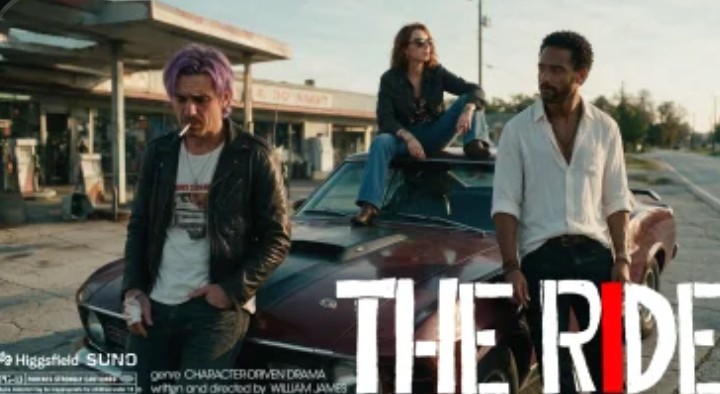
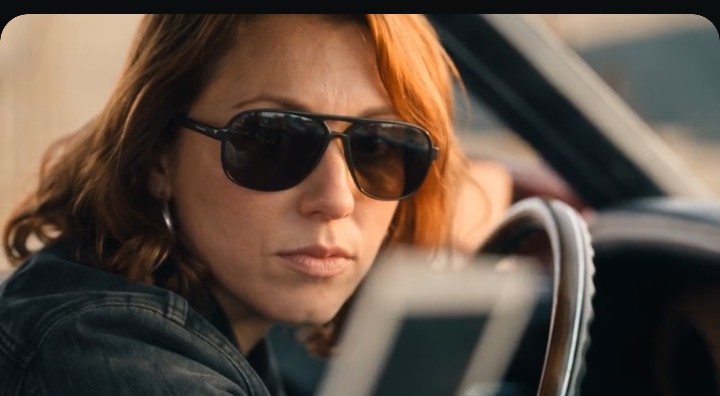
1:06–1:41 — Chuck, with purple straight hair parted in the middle and a black leather jacket, washes his face in a gas station restroom. A man puts gas in his car outside, and Danna is inside buying sunglasses.
1:42–2:00 — Danna pays for the glasses, which come to $10.50. She seems distracted as she looks out the window at Roger standing by the car. She also asks for a pack of cigarettes.
2:01–2:18 — Roger leans against a beautiful two-door car. Inside the restroom, Chuck vomits by the toilet, and the sounds carry outside. Frustrated, he hits the mirror and swears in Spanish.
2:19–3:05 — Danna comes out wearing the glasses and hugs Roger. She asks if he is okay. He starts to say it is just Chuck, but Chuck comes out and he does not finish. Danna says she will take the back seat since he and Chuck have a lot to talk about.
3:06–3:23 — All three are in the car. Roger tells Chuck that he read the briefing. A close-up shows a cassette tape labeled “A Song for the Deaf.” Roger finishes a conversation about work, and they sit in silence.
3:24–3:33 — Roger asks what happened to Chuck’s hand, which is wrapped in fabric. Chuck says nothing. Roger says, “I guess it completes the look.” Chuck says, “Roger, don’t start. Not today.”
3:34–4:00 — They begin to argue. Roger thinks Chuck does not care what people think. Chuck says none of it matters and that he does not want to spend his life auditioning for people he does not like. Roger says no one is asking him to audition, only to show up.
4:01–4:44 — The argument intensifies, turning to responsibility and life choices, and to how Roger traded what he loved for a life that seems figured out, even for the perfect girlfriend. Danna says, “I’m right here.” Chuck says, “I know.”
4:45–4:53 — Roger’s speech about adult life: wanting the freedom of a teenager, the responsibility of a kid, and the paycheck of a grown man, while the people foolish enough to care about you pay the difference. Danna adds that it is not only people who know him, a reminder that strangers pay for Chuck’s bad choices.
4:54–5:03 — A wordless shot of Roger’s intense look and frustration.
5:04–5:24 — Chuck says it was an accident. Roger says loudly that a woman died. We see a flashback of Chuck hitting the car, and the sound seems to go quiet. Roger continues, speaking of the potential Chuck has and saying he is tired.
5:24–5:37 — Flashbacks of the crash and of Chuck driving, in reverse, all the way back to the apartment, as Roger continues. He finishes by saying he is tired of Chuck acting like a loser.
5:38–5:44 — Roger says, “Look, brother, what I’m trying to say.” Chuck says, “You’ve said enough,” as a tear runs down his cheek.
5:45–6:33 — They drive in silence. Shots of the city, people on corners, passing cars, a soothing song, and a homeless man on a street corner. They arrive at a large building with stairs at the front.
6:34–6:54 — Chuck stands in front of the stairs, looking at the entrance. He removes the bandage from his hand and looks back at his friends. Danna says, “You look good.” Chuck turns and walks toward the entrance.
6:55–7:33 — Roger gets out of the car and runs to him. He hugs him and says, “Chuck, I just…” Chuck says, “I know, man. You did all you could, this was on me. We had some good times, didn’t we?” They say goodbye and Chuck goes inside. The screen goes black and reads The End.
7:34–8:33 — Danna is now in the driver’s seat and Roger in the passenger seat. Roger takes a Polaroid that was left where Chuck sat. Danna asks how old it is. Twenty years, he says. It shows him and Chuck singing in their own punk rock band. The photograph becomes part of the end credits, with a great song playing.
Production tools: Higgsfield (Seedance), Photoshop, Suno Studio for music, After Effects for editing. Written, directed, and produced by William James using his “Precision AI Filmmaking” pipeline, with prompting developed alongside his trained agent, Arcadia.
Reader Reviews
BeautifullyBeautifully Crafted, Emotionally Compelling
Loved The Ride. Every scene feels intentional, with thoughtful details that make the world feel incredibly real. The performances are compelling, and the characters’ emotions come through beautifully.
The beautiful lighting adds so much atmosphere and depth.
You can feel the care that went into every frame.
