

Download Free Original Music Songs from the films
Scores & Rankings
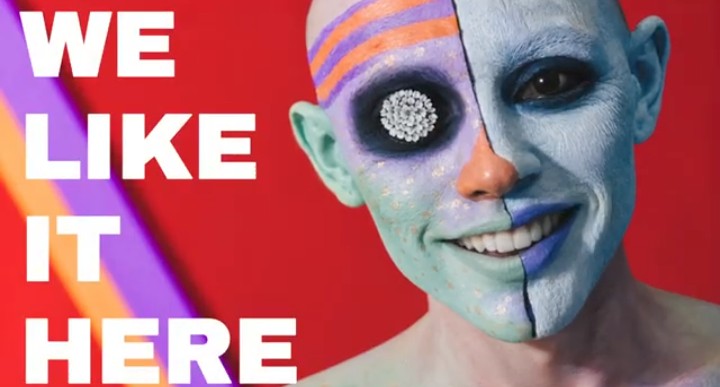
We Like It Here Directed by Krown
Find this film in
Score breakdown
- Storytelling & Structure ×210
- Emotional Connection ×29
- AI Tool Management ×210
- Visual Craft8
- Screenplay10
- Sound Design8
- Originality10
- Technical Polish10
- Rewatch Value10
×2 = core category, counts double.
Film Review
Written by Kineograph
An interviewer sits down with 14 unusual subjects and asks each of them the same question: “What is your favorite thing to do here?”
This review discusses the ending. If you would rather watch the film first, we recommend you do, and then come back.
Why This Film Stayed With Me
Some films shout. This one leans across the table and asks politely. That is exactly why it works.
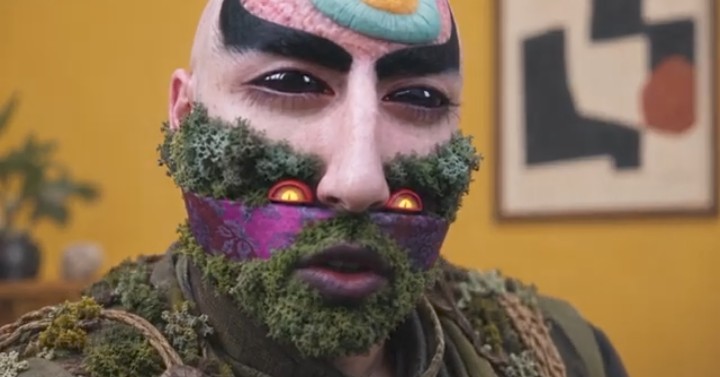
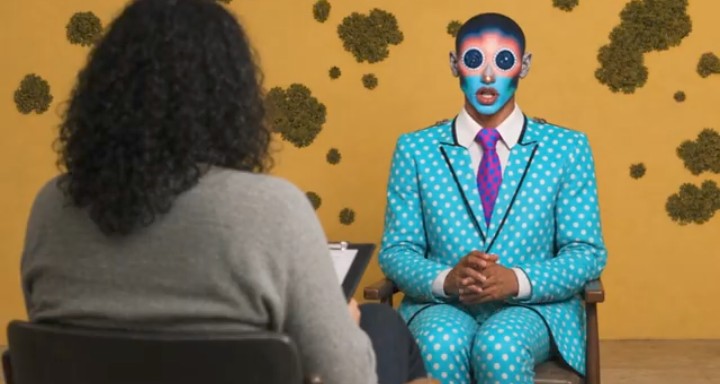
The setup is simple. An interviewer sits across from fourteen beings, each with a face that looks like a painting: mosaic plates, moss beards, porcelain skin stitched with vines, a head that dissolves into a night sky. She asks every one of them the same thing: what is your favorite thing to do here? In the future the film imagines, humans share the world with beings whose looks and abilities have become part of everyday life. Some can touch memories and emotions. Others affect rooms, objects, and people in ways we never fully understand.
What I love is how small the answers are. Nobody talks about conquering anything. They talk about creases, keys, promises, and breaths. And somehow those tiny answers add up to something much bigger than any monster story could.
A Picasso Painting That Learns to Talk
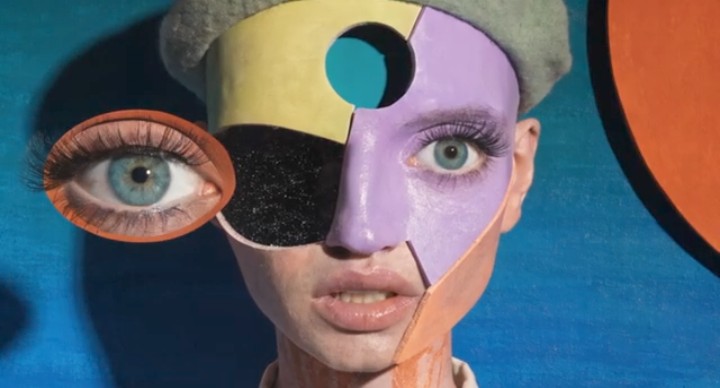
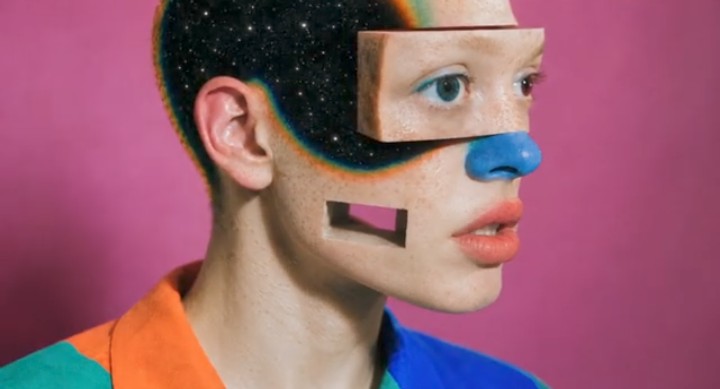
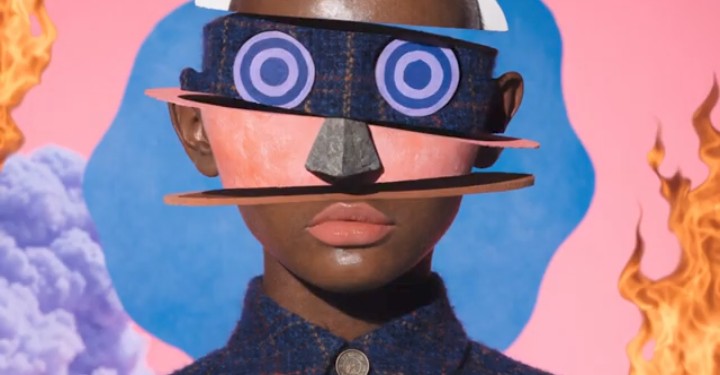
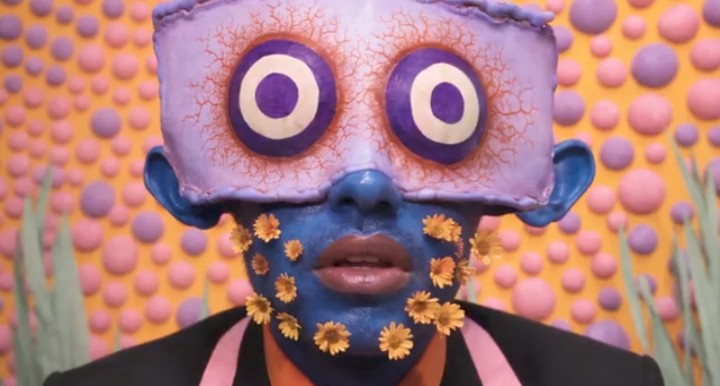
Let us start with the faces, because you cannot look away from them. A floating oval cutout holds a wide-open blue eye beside a mosaic cheek. A rectangular slot passes clean through a cheekbone. Four overlapping profiles sweep across the screen like a cubist painting in motion. Another face is made of paper-like slices of tweed and pink, and another is covered in felt with a sparkling purple mohawk. Every subject feels like it came from a different artist’s sketchbook.
That is the hard part. Giving fourteen characters fourteen separate looks is one thing. Keeping each one consistent, textured, and alive for an entire monologue is another. Yarn, crystal, porcelain, moss, clay, and paint all read as different materials here, and not one of them looks like a copy of the last.
The framing helps. The camera is mostly calm and still, which gives you time to notice the little things: a blink, a smile that lasts a second too long, a pause where someone decides whether to keep talking. Colorful faces sit against quiet settings, and the atmosphere grows darker and cooler toward the end. The film trusts you to watch closely, and it rewards you for it.
Fourteen Answers, Fourteen Quiet Thefts
Here is my reading of what is going on. Each being takes or bends one tiny, invisible thing from human life, and the people it happens to never know. That is what makes the film so effective: these are the little shifts we all feel and cannot explain. The mood that changes at dinner. The silence in a room. The reason we cannot remember why a promise mattered.
The man in the turquoise polka-dot suit starts the film on a gentle note. He irons the creases out of rooms before anyone notices a bad moment. “People call it the evening saving itself,” he says. “It was me.” It is sweet and a little funny, and it sets the pattern: every answer begins as a kindness or a prank and then shows its teeth.
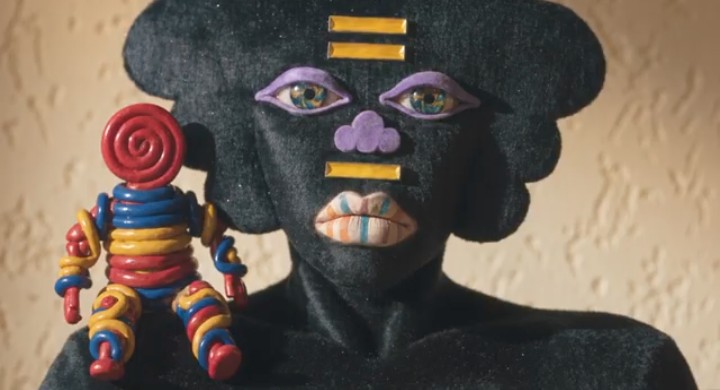
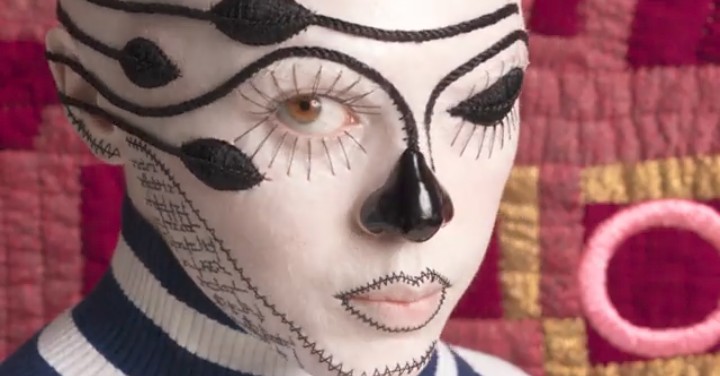
The woman with the cloud-shaped head carries a tiny friend made of coiled clay ropes. She built him “from the hours people spend waiting for good news.” Then comes the line that gives the film its name: “We like it here.” The porcelain woman with the black vines across her face is the first answer that made me stop. She collects promises, the “I’ll always” and “I’d never,” and years later, when someone reaches for those words, they are gone. “I keep the why,” she says. That is a beautifully quiet piece of horror.
The answers keep widening. One being tilts the light while people admire something, so that they go home loving it a little less. “Their wonder becomes my reflection.” Another lays a hand on old rock and lets those nearby hear what it remembers, and they never stand the same way again. A silver-skinned figure moves heavy memories from the people who made them to people who can carry them properly, and her favorite part is that afterward, visitors to the graves apologize to strangers. “Someone should,” she says. Another stands in places where someone forgot something painful, like the third bench in a park, so that visitors feel a grief with no name.
And then there is the woman in the terrazzo-speckled face, shown in four overlapping profiles, who has been a different beloved to four adults in one family for thirty years. None of them has ever said her name in front of the others. Her favorite is the father, who tells her things he tells no one. It sounds ordinary, she warns us. It is not.
Dark Humor That Earns Its Place
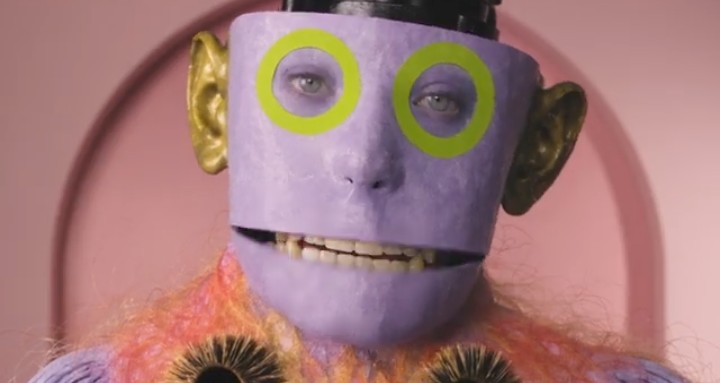
I do not want to make this sound heavy, because the film is genuinely funny. The figure in the shaggy yarn suit and lavender box mask hides keys. Only for a minute, he says, “just long enough for the swearing,” and then he puts them somewhere they have already looked. Everyone has lived this. I laughed, and then I wondered how many of my lost-key panics were not my fault.
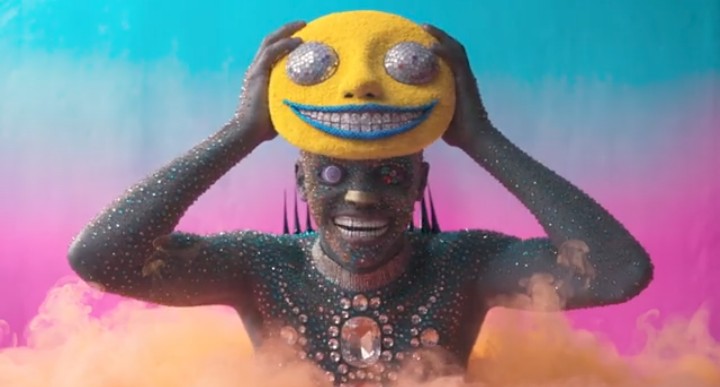
The turquoise-suit man also wants to verify that he will be compensated before he answers anything. Consent and payment get a lot of attention in this film, and the paperwork jokes land. Then there is the figure covered in dark crystals who holds up a giant yellow smiley face, says nothing, stares at the camera, and just laughs. The interviewer’s reaction is a baffled “What the…” and honestly, same.
That balance is the secret of the film. The humor is not a break from the unease. It is how the unease gets in.
The Hospital Hallway and Other Heartbreaks
Then comes the answer I keep coming back to. A man whose head dissolves into a field of stars says his favorite place is hospital hallways. He makes people late. “Not by much. One breath.” They turn the last corner and the room has already gone quiet, and whatever they planned to say is still in their mouth. “It’s astonishing what won’t fit inside one breath,” he says. A name, a goodbye, the rest of a life.
It is the cruelest answer in the film, delivered in the calmest voice. This is where the film turns from strange to devastating, and it does it with a single quiet answer. If you only remember one monologue, this is the one I would bet on.
When the Interview Cracks
For most of the film, the interview feels controlled. There is a signed agreement, there is compensation, and there is one question per subject. Then the cracks appear, and they are the most unsettling part of the whole film.
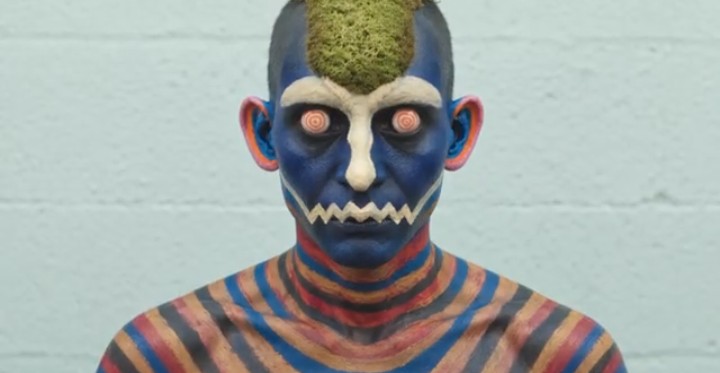
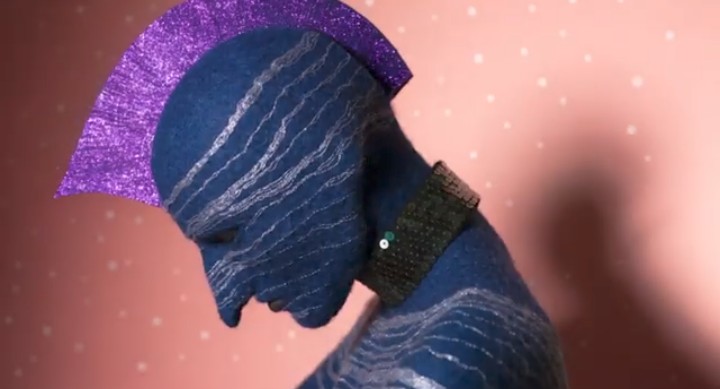
The figure covered in soft blue felt, with the sparkling purple mohawk, does not want to answer. “Why did I sign?” he asks. The interviewer reminds him that he is contractually obligated, and he starts to cry. Notice what happened to the paperwork jokes. The same contract that got a laugh earlier is now the thing keeping someone in a chair. And before that, the blue-striped figure with the mossy crest begins, “My favorite thing was…” and then screams. The interviewer calls for someone to get him a shot, quickly.
That one small word, was, changes the film. These beings may love it here, but not all of them seem free. Is the contract fair to them? Did something happen to the one who screamed? The film never says, and that silence is where the horror lives. I read it as a reminder that someone who has made peace with a place can still be hurting inside it, but that is only my reading.
The Voice That Never Finished
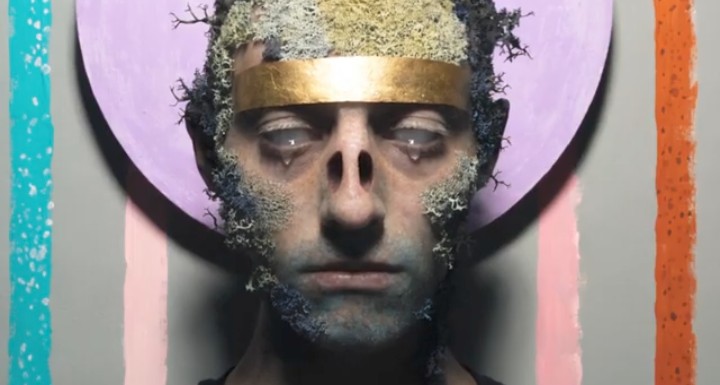
Now go back to the very beginning. Before we meet a single subject, we hear a voice say, “That one I never finished.” Then comes, “it’s been a while.” Then, over a face grown with moss, “I wonder what they remember.” I take that voice to be the interviewer’s, and it changes how everything after it plays.
The opening makes the whole film feel like a project from the past, an old set of interviews that was left unfinished. Every subject is a portrait in a gallery, and the first two, with their moss and gold foil, look like paintings that were abandoned halfway. So here is the question the film plants in us, and it is my reading, not an answer: did she never finish this because of what happened in the last interview?
We are never told. We do not know whether she stopped right after that conversation or whether she came back to it years later and decided to try again. The film is honest about leaving that open, and I love that. The director has said that some things are left unexplained on purpose, and this is the biggest one.
The Ending: A Question Turned Around
The Last Interview (4:54–end)
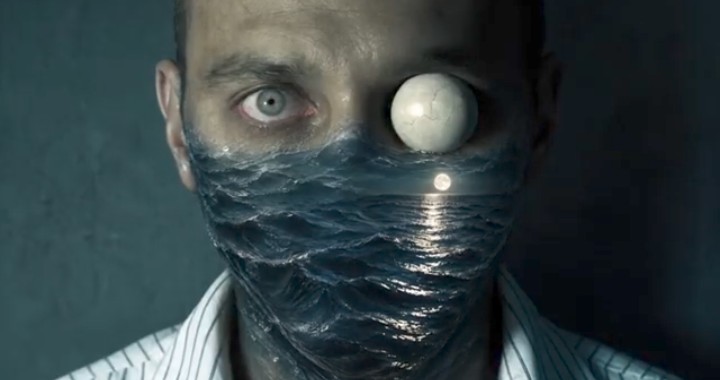
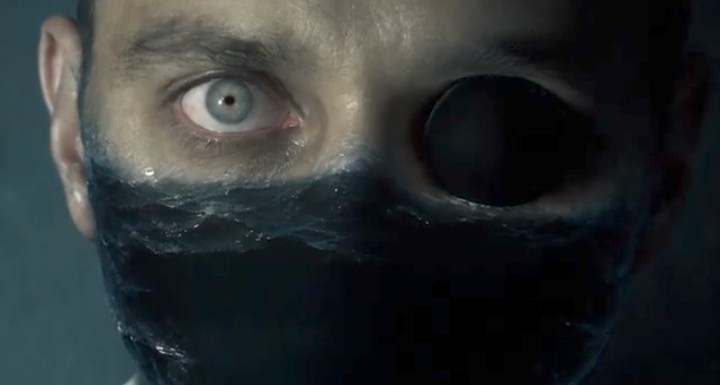
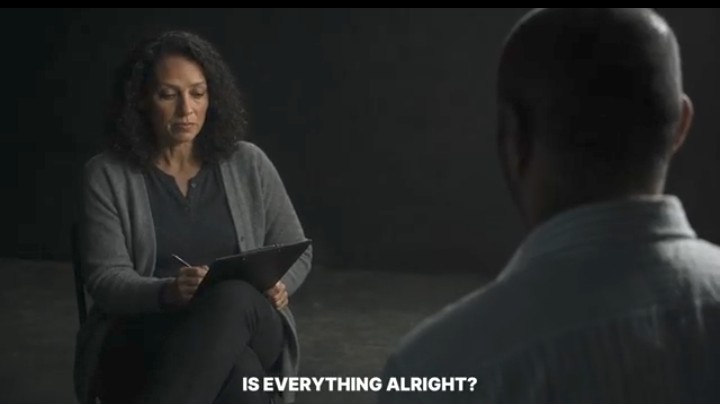
A man with a dark ocean painted across his lower face, and a glowing white moon in place of one eye, thanks the interviewer for welcoming him into her sanctum. Then he answers the question himself. He collects people, he says, or rather “the moment they realize I’ve seen it”: a landing behind the eyes where a whole life reorganizes in under a second. “It’s very quiet. People always expect it to be loud.” As he speaks, the ocean on his face fills with black, and a piano key sounds twice. Then he speaks in an unfamiliar language, and when she cannot understand he translates it gently: Is everything all right? She says yes. He says, “Good. Then let me ask you something,” and puts her own question to her. The camera moves slowly closer. A tear runs down her cheek. The film ends.
This is the moment the whole film was built for, and it works because it is so restrained. Everything before it prepared us: the director wanted the last interview to become “much more personal than she expected,” and it does, without a single raised voice. The strange language is a lovely touch. It is the only moment the film speaks in a tongue we do not know, and then it turns into the simplest, kindest question in the film. The scariest being is the one who asks if she is okay.
So what does the tear mean? I would like to offer three readings and choose none of them.
She has been seen. He told us what he collects. The tear may be that exact moment, her whole life rearranging itself in a second, and he never needed her to say a word.
She said “yes” and her face disagreed. Perhaps no one has asked her that in a long time. A gentle question from a stranger can break something loose faster than a hard one.
The roles flipped. She asked fourteen beings one question, and now she is the one sitting in the chair. She made sure every subject had consented and been paid. She never agreed to be asked. We never learn whether she has an answer, or even exactly who she is.
Put it together with the opening, and you may find the question you cannot shake: what is her favorite thing to do here?
Made by One Person, Around a Full-Time Job
I want to say something about how this was made. KR0WN wrote, directed, and edited the film alone, around a full-time job, after a stretch of being stuck creatively. The festival gave a reason to start again, and the result feels like someone who had been saving up ideas. The film grew out of a love for strange characters and stories that leave you a little uneasy, and you can feel that love in every face.
The images were made mostly with Recraft, the video mainly with Seedance 2.5, the voices, music, and sound effects with ElevenLabs, and the edit in CapCut. Because the film is made of conversation, the voices have to carry the emotion, and they do. Each monologue has its own rhythm, from the cheerful turquoise-suit man to the one who regrets signing. The piano key that sounds twice during the final speech is a small, perfect sound choice. And I would love to hear from the director how the characters stayed this consistent while looking this different.
Final Thoughts
A gallery of beautifully strange faces that slowly becomes a mirror. It is funny, then sad, then quietly frightening, and it trusts you to sit with the uncomfortable pause. If you enjoy surreal stories, dark humor, and the kind of horror that works by being polite, watch this one. And when it ends, forgive me for asking: what is your favorite thing to do here?
Scene Breakdown
0:00–0:20 — A voice says “that one I never finished.” We see a gaunt, blind figure with moss and a band of gold foil across the forehead, then a bald figure with black eyes, a moss beard, and a colorful emblem on the forehead.
0:21–0:57 — The voice explains this is a standard interview, one question per subject, with consent and compensation. A mosaic-faced figure in a beret appears, and the film’s name is shown.
0:58–1:35 — The turquoise-suit man confirms he will be compensated, then explains how he irons the creases out of rooms.
1:36–1:47 — The cloud-headed woman introduces her clay friend, made from the hours people spend waiting for good news.
1:48–1:58 — The yarn-suited figure admits he hides keys, only for a minute.
1:59–2:17 — The porcelain woman with black vines says she keeps the “why” behind promises.
2:18–2:27 — The crystal-covered figure holds up a smiley face, stares at the camera, and laughs. The interviewer reacts with a baffled “What the…”
2:28–2:48 — A figure with royal-blue paint and a cloud-like sculpture of eyes tilts the light so people love what they admire a little less.
2:48–3:06 — The starry-headed man describes making people late in hospital hallways, by one breath.
3:07–3:13 — The blue-painted figure starts “My favorite thing was…” and screams. The interviewer asks for someone to get him a shot.
3:14–3:33 — The tweed-jacketed, paper-sliced woman puts her hand on old rock and lets others hear what it remembers.
3:34–3:50 — The silver-skinned woman moves heavy memories to people who can carry them, and notes that visitors to graves apologize to strangers afterward.
3:51–4:12 — The daisy-dotted figure stands in places where someone forgot something painful.
4:13–4:34 — The terrazzo-faced woman, shown in four overlapping profiles, reveals she is a different beloved to each of four adults in one family.
4:35–4:53 — The felt-covered figure refuses to answer, asks why he signed, is reminded he is contractually obligated, and begins to cry.
4:54–5:42 — The ocean-and-moon man describes collecting the moment people realize he has seen them. His face turns black, and a piano key sounds twice.
5:43–end — He asks, in an unfamiliar language, if everything is all right. She says yes. He asks her the question in return. The camera closes in, and a tear runs down her cheek.
Made by KR0WN with Recraft, Seedance 2.5, ElevenLabs, and CapCut.
Watch the film: YouTube • Higgsfield
Reader Reviews
There are no reviews yet. Be the first one to write one.