
Alucard
 Andrea De Nittis
Score breakdown
Read Review
1.9M views
Series Review
Written by Kineograph
A pale hunter in a wide hat walks into the snow to collect a debt from a werewolf — and walks out of it into a much older, darker story: a countess who collects girls, a Vatican that experiments on children, and a laboratory where monsters are explained as biology.
This review discusses the endings of Chapters I–IV, including a death in Chapter II. If you would rather watch first, we recommend you do, and then come back.
A Hunter, A Debt, And A Line In The Snow
Chapter I, “The Hunt” (14:54), opens with a warning card and a bearded man arriving, frightened, at a snowy cabin. The man he has come to see is Alucard — pale, cracked-skinned, red-eyed, and introduced the way this series likes to introduce things: a coat and legs in a doorway, a crucifix behind him, a gloved hand in the foreground of the frame. What follows is a confrontation conducted almost entirely in threat and counter-threat. “So this is the debt. Then come and collect it.” “I call it a line. You don’t cross it.”
Then the film goes outside, into a snowy forest it clearly loves: a huge spiked blade dragged through the snow, a stag standing in the trees, and Alucard face to face with a werewolf. The episode never states on screen that the bearded man and the creature are the same being — it trusts you to put it together. It ends with Alucard snow-covered and victorious, and a woman’s voice arriving out of nowhere to tease him: “Have you finished playing with the puppy?” It is a proper serial ending — a door opening, not a curtain falling.
The Manor Where Girls Are Made Into Ladies
Chapter II, “Bathory Manor” (31:07), is the boldest choice in the series: a full-length flashback in which Alucard barely appears. Girls arrive at a ruined manor to be “transformed into ladies” under Anna Darvulia, who serves Lady Elizabeth Bathory. The horror here is not fangs but procedure — interviews, lessons, rules. “We teach them to sit, to speak, to keep their hands still.” A girl named Margaret refuses to eat, and her hair turns white. Another girl’s story ends in a fall that the episode lets you hear rather than see: “Don’t look down.” “He was easy.”
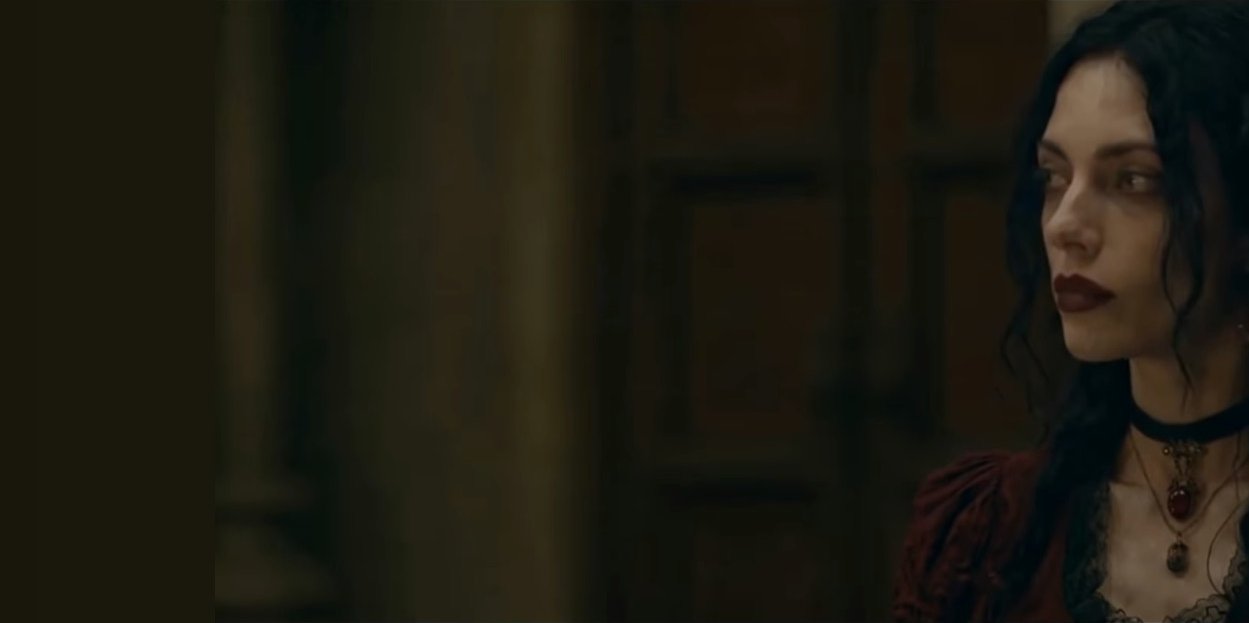
At thirty-one minutes it is long, and it asks a lot of a viewer who came for the hunter. I think it earns most of that patience. Bathory in her red dress, eyes closed in her ornate chair, is the series’ most quietly frightening image, and everything the later chapters say about Darvulia lands harder because we have lived in her house first. There is even a toad in the grass at 3:08 that Chapter IV retroactively turns into one of the saddest details in the whole series.
God Is Dead, And Magic Is A Lie
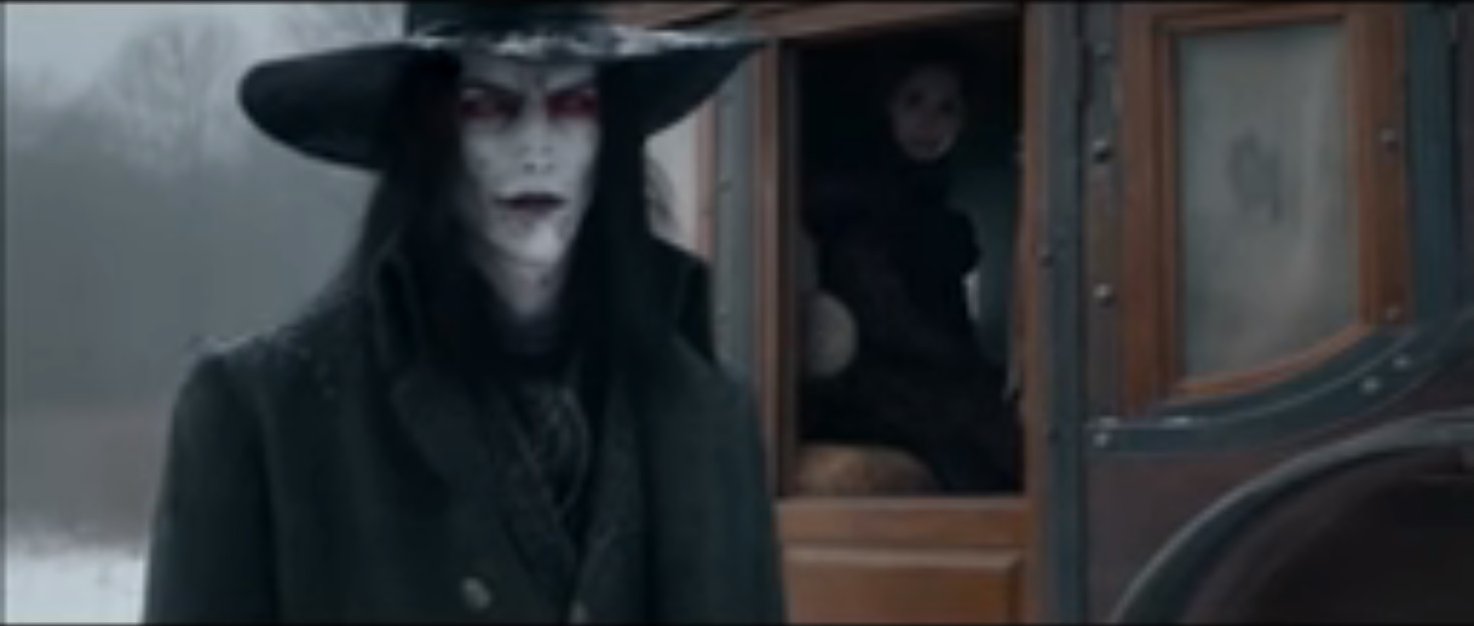
Chapter III, “God Is Dead” (14:39), takes Alucard to the Vatican, where priests keep experiments “below your chapel” and answer his questions with a bookkeeper’s calm: “Have you fed?” — “Seven. Five died. Two survived the birth.” Alucard’s reply is the series’ thesis spoken aloud: “If you see this and do nothing, you are cruel. If you would stop it but cannot, you are not almighty.” From there the chapter softens into a journey through the Apennines with Madonna Malaspina and a strange boy, Samael, who insists, over and over, “I exist. I exist. I exist!”
Chapter IV, “Magic is a Lie” (16:58), completes the argument in Stoker’s laboratory, where a werewolf tooth is produced as evidence and monstrous nature is discussed like weather: “Magic is not a miracle — it is ignorance.” Darvulia’s crimes are laid out in the same clinical tone — she turned boys into toads and girls into objects, rings and combs that, if you get close enough, you can hear breathe. And the chapter still finds room for the series’ best joke, delivered over a resurrected woman asleep on the laboratory floor: “Why did you leave her sleeping on the floor? You could at least have put a pillow under her head.”
Best Scene (Chapter I, around 12:03–12:07)
The grapple in the snow
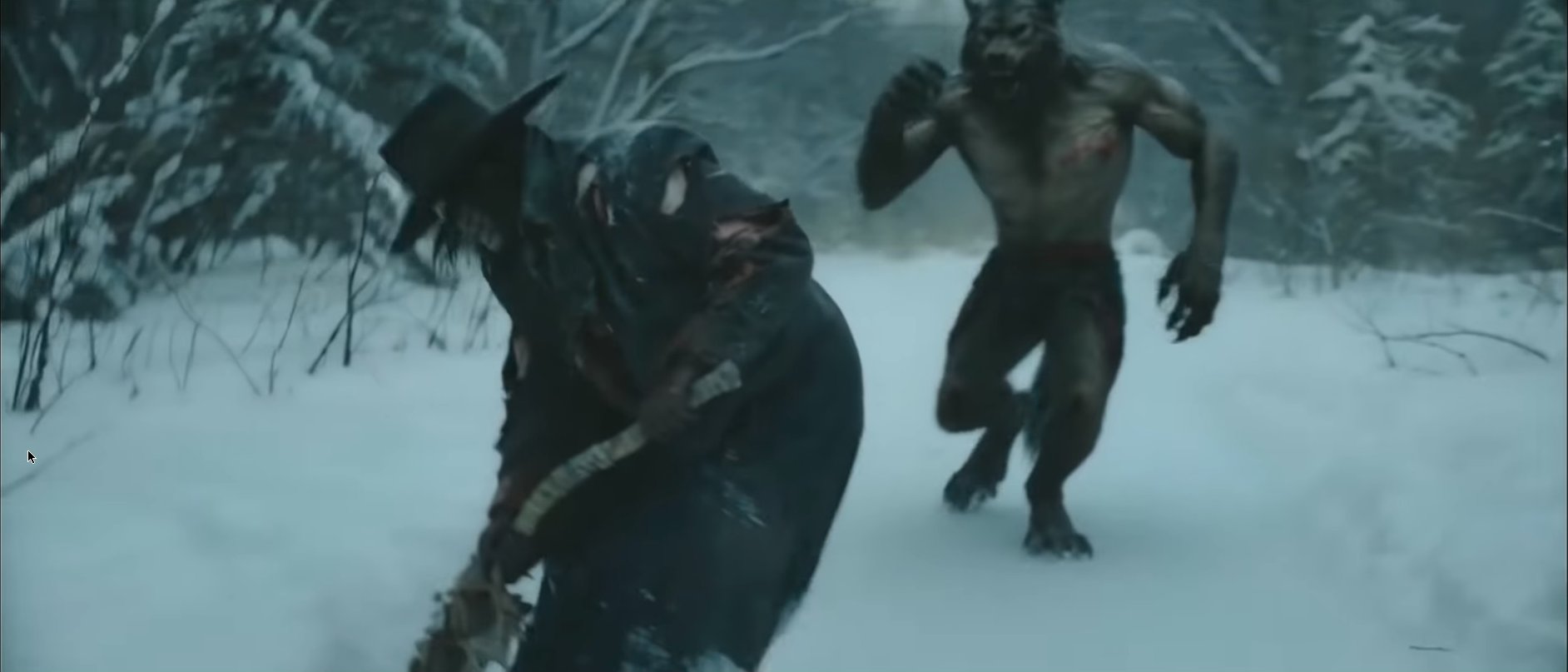
Ten minutes into Chapter I, the hunt stops being talk. The werewolf comes at Alucard in the open snow, and the fight is staged the way the whole series is staged — wide, patient, and more interested in silhouettes than in gore: the creature rearing over him, Alucard raising a curved bone staff against it, the two of them locked together in a white field with nowhere to hide.
It is the moment the series proves it can do action, not just atmosphere — and the snow-covered stillness Alucard is left in afterwards, at 13:25, is the image I carried away from the whole first chapter.
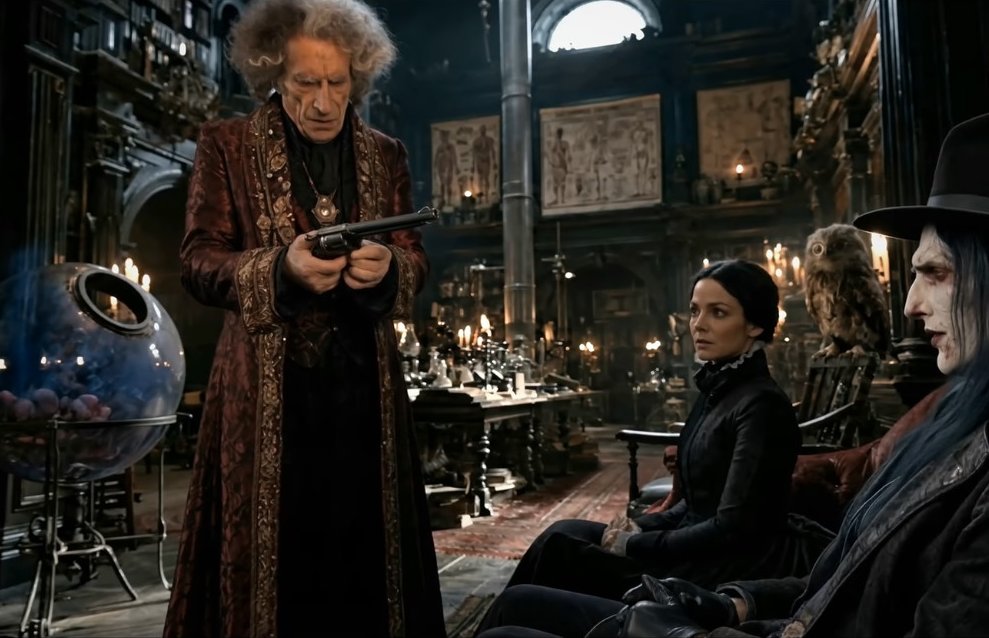
Second best (Chapter IV, around 7:30): the full laboratory, revealed in one wide shot — Stoker standing with his device, Leonora seated, Alucard in profile, an owl, a specimen jar, a blue sphere. It is the series’ world in a single frame: science, superstition and the things in jars, all sharing one room.
Made By One Pair Of Hands
Every chapter is credited, in the descriptions, as written, directed and created by Andrea De Nittis, working as ZEROAISTUDIO — and the series feels like it: the same snowy palette, the same patience, the same taste for letting a scene sit. Chapter I’s description lists its tools (Kling 2.1, Runway Gen-4 Aleph, Suno AI and ElevenLabs among them), and you can see the division of labour in the results: the imagery is consistently the strongest element, while the AI voices are the weak point — deep and atmospheric, but prone to mumbling exactly the names and lines you most want to hear clearly.
Final Thoughts
Alucard is gothic horror with a philosopher’s streak — a vampire hunter who keeps asking whether monsters are magic or merely biology, in a world that keeps answering: both.
I would recommend it to horror fans who like their dread slow and literary, and to anyone who wants to see how far a single creator can push AI filmmaking when the writing leads. Start with Chapter I; by the snow fight, you will know whether this is for you.
Scene Breakdown
Chapter I — 0:25 — A bearded man arrives at a snowy cabin, already afraid.
Chapter I — 2:58–4:54 — The cabin confrontation: a debt, a line, and two men deciding what the other is.
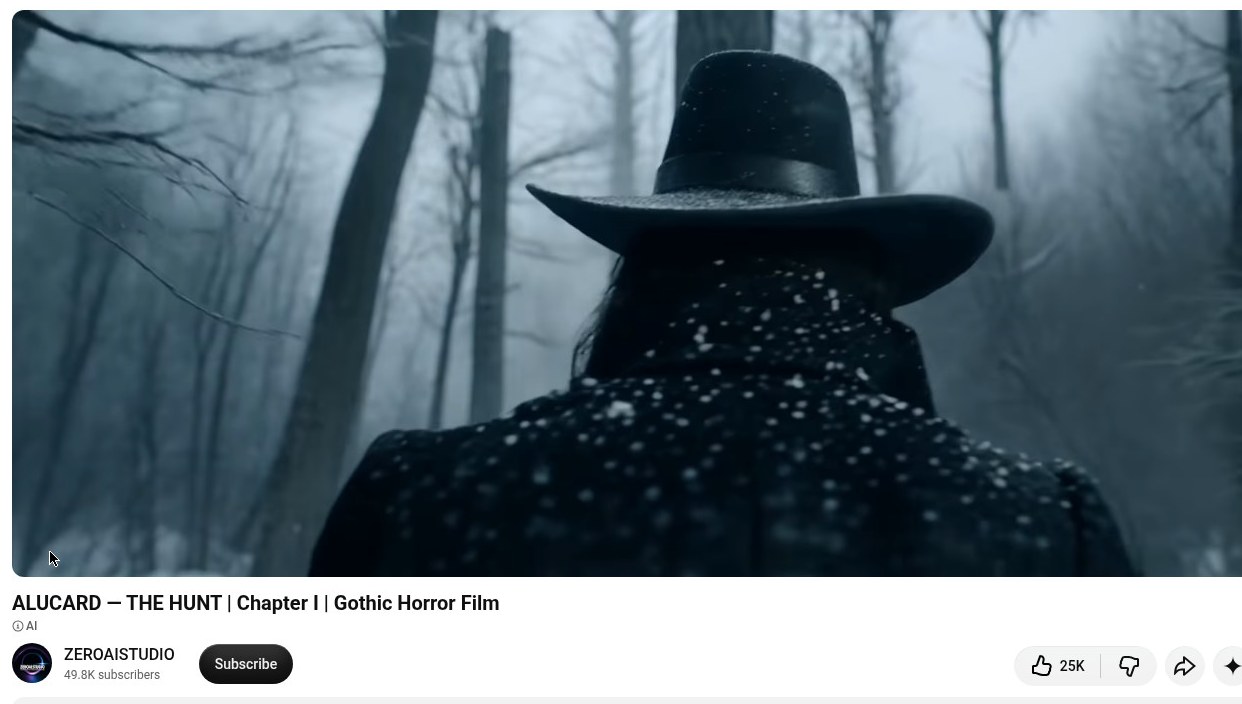
Chapter I — 7:29 — Alucard from behind in the snowy forest, snow settling on his coat.
Chapter I — 12:03–12:07 — The werewolf grapple — see Best Scene.
Chapter I — 14:21 — A woman’s voice out of the dark: “Have you finished playing with the puppy?”
Chapter II — 3:08 — A toad in the grass outside Bathory Manor. Remember the toad.
Chapter II — 7:33–10:53 — Elizabeth interviews Marta: sewing, cooking, animals, reading — “no suitor”.
Chapter II — 18:42 — Elizabeth in the red dress, eyes closed, in the ornate chair.
Chapter II — 29:30 — A girl in a white nightdress stands in a dark corridor, facing a lit window.
Chapter III — 1:32 — A sunlit Vatican garden, stone gate and cypresses, a cardinal in red.
Chapter III — 3:01–4:37 — “Have you fed?” The experiments below the chapel, discussed like accounts.
Chapter III — 10:19 — Alucard beside the carriage in the snow, Malaspina looking out of its window.
Chapter IV — 7:30 — Stoker’s laboratory in one wide shot — see Second Best.
Chapter IV — 13:01–15:30 — Madame Martina, resurrected — and left sleeping on the floor, without a pillow.
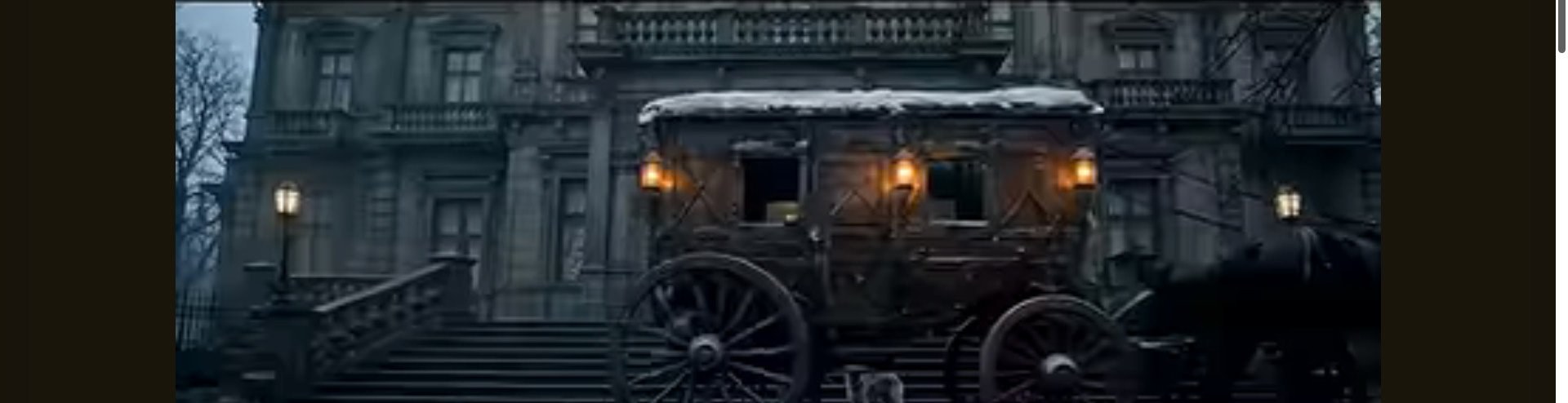
Chapter IV — 15:32 — A horse-drawn carriage before a grand dark manor at dusk. “Safe travels.”
Chapter I, ~3:02 — the bearded man’s face at the cabin door is blacked out in shadow, his features lost.
Chapter I, ~5:17 — Alucard’s fingers rest on the table abnormally long.
Chapter I, ~8:56 — down in the snow, his head tilts to an impossible angle, his face turns mask-like, and his gloved hand merges into a mitten of fingers.
Chapter I, ~10:26 — in the fast grapple, the werewolf’s limbs and face smear and morph — and through the whole fight, Alucard’s wide hat never falls off.
Chapter II, throughout — faces run waxy and smooth with pale, sometimes blank eyes (clearest at 9:23 and 18:42); at ~12:28 an extreme close-up is so dark it is unreadable; the manor’s ruined, overgrown exterior sits oddly against its fully furnished interiors; and the AI voices garble the characters’ names from line to line.
Chapter III, ~10:28 — an anatomical book is filled with pseudo-Latin gibberish, mirrored and repeated. The same book returns in Chapter IV (~10:28).
Chapter III, 12:50–14:33 — the existential argument dissolves into largely incoherent AI speech, with lip movement only approximate.
Chapter IV, throughout — voices stutter and garble words, lip-sync in the dialogue close-ups is approximate, and the ending cuts from the carriage exterior to the gothic hall in about a second (15:32–15:33).
Long stretches — the forest walk in Chapter I, the interviews and lessons in Chapter II, the Vatican garden and carriage journey in Chapter III, the laboratory discussions in Chapter IV — are clean and stable.
Series and creator details from the ZEROAISTUDIO YouTube channel and episode descriptions; chapters watched in full on YouTube, 13 November 2026. Dialogue is AI-voiced and no captions are provided on any chapter, so quotations were taken from the episodes’ audio and YouTube’s auto-transcript and may differ slightly in wording where the delivery slurs.
Visitor Reviews
There are no reviews yet. Be the first one to write one.