

1001 Nights
 SAGAS
Score breakdown
Read Review
5.1M views
Series Review
Written by Kineograph
A boy dreams of treasure and walks across the desert to find it under his own floor. A fishergirl talks an ancient Jinn back into his jar. And Aladdin finds the lamp, wins the princess — and loses everything to a stranger crying “new lamps for old”. Four tales, one lesson: wit and heart beat force.
This review discusses the episodes’ endings, including the Aladdin cliffhanger. If you would rather watch first, we recommend you do, and then come back.
No Frame, Just A Voice
There is no Scheherazade here, and no framing story. Each tale opens directly, held together by an unnamed narrator, chapter titles, the gold 1001 brand, and a storyteller’s tease at the end — let that be for another tale. One honest note about scope: these four episodes are a selection from a much larger collection on the SAGAS channel, which numbers its tales differently (“The Treasure” calls itself the fifth episode of 1001). We present them in the order StoryVeo lists them, and the two Aladdin episodes, which are one continuous story, close the set.
“The Treasure” (20:26)
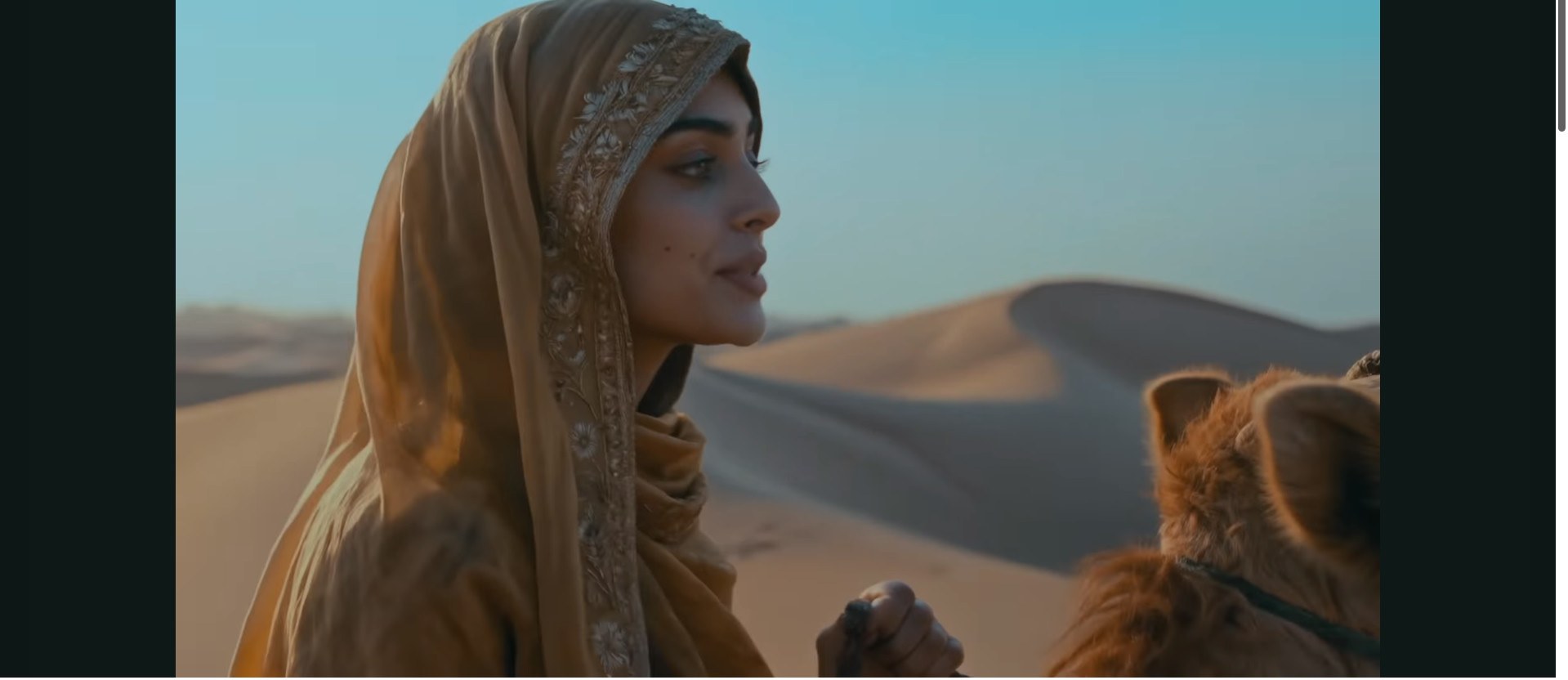
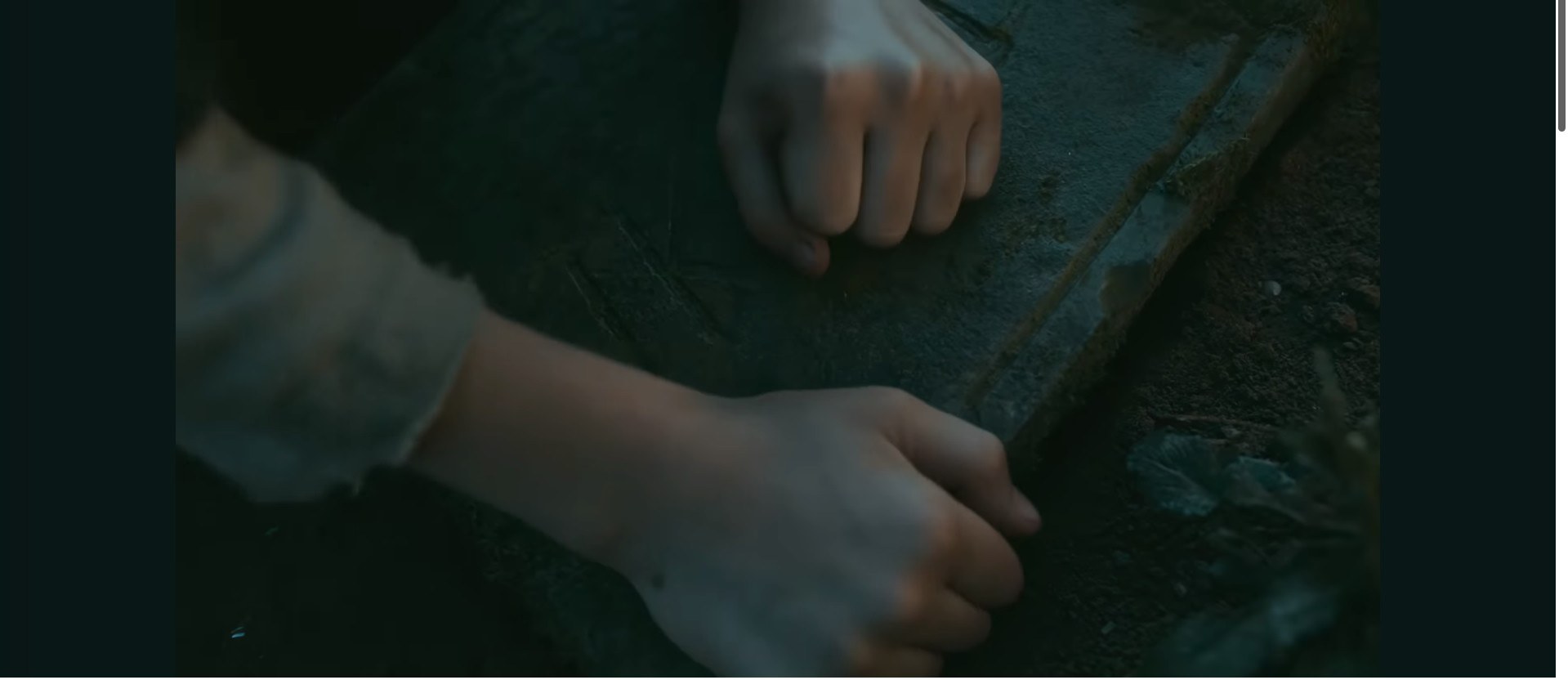
Young camel herder Imad dreams of gold under a floor in Cairo, and walks into the desert to find it — surviving a sandstorm in which a spirit woman speaks a paraphrase of Psalm 91 over him, protection for the road. In Cairo he finds the house, and its owner, who has had the mirror-image dream: treasure beneath a ruin in an oasis. Imad knows that ruin. It is his own home in Faiyum. The return home is silent, and the film trusts you to understand what the hands lifting the floor slab at 18:27 mean without showing you a single coin: the treasure was never where he sought it.
“Amani and The Jinn” (21:17)
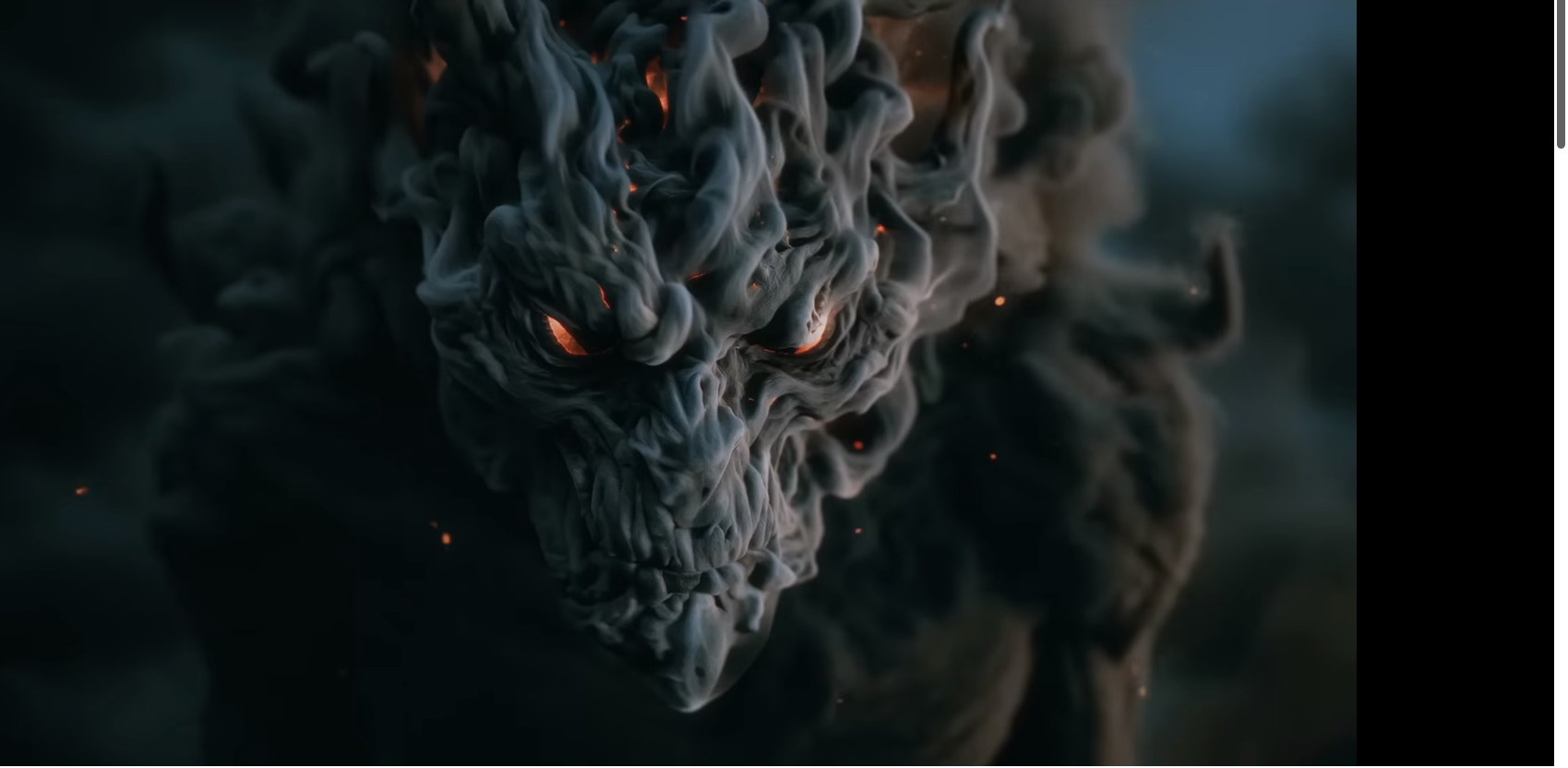
The narrator warns us this tale is “not for the faint-hearted”, and for its first minutes it earns it: fishergirl Amani — “12. And half, actually” — pulls a sealed jar from the sea, and out of the smoke comes a being who was ancient when her ancestors were crawling from the mud. What makes the episode is that she is not impressed. “A campfire with a temper?” she asks him, and dares him to prove his power — twice. Inside his world she finds Amin, a boy trapped there for years, surviving rather than living; and her escape is the oldest trick in the book, played beautifully: “I don’t believe you could possibly fit in this jar.” He shrinks, she seals, and he accepts her as his true master with something like relief. It ends, as every good tale here does, on a hook for another night.
Aladdin, In Two Parts (23:36 and 25:10)
The centrepiece is Aladdin, and it plays fair with the story you know while keeping its own heart. The cave opens only for the boy who carries the blood; told to touch nothing else, he takes the lamp and the gems — for his sick mother — and is buried for it. The Genie, when he comes, is given rules that give the whole diptych its moral shape: “I cannot break a will. I cannot return the dead. And I cannot kill in your name.” So Aladdin’s wishes are kind ones: escape, his mother healed, the streets fed. Princess Bodour arrives asking why everyone is celebrating, and the story turns.
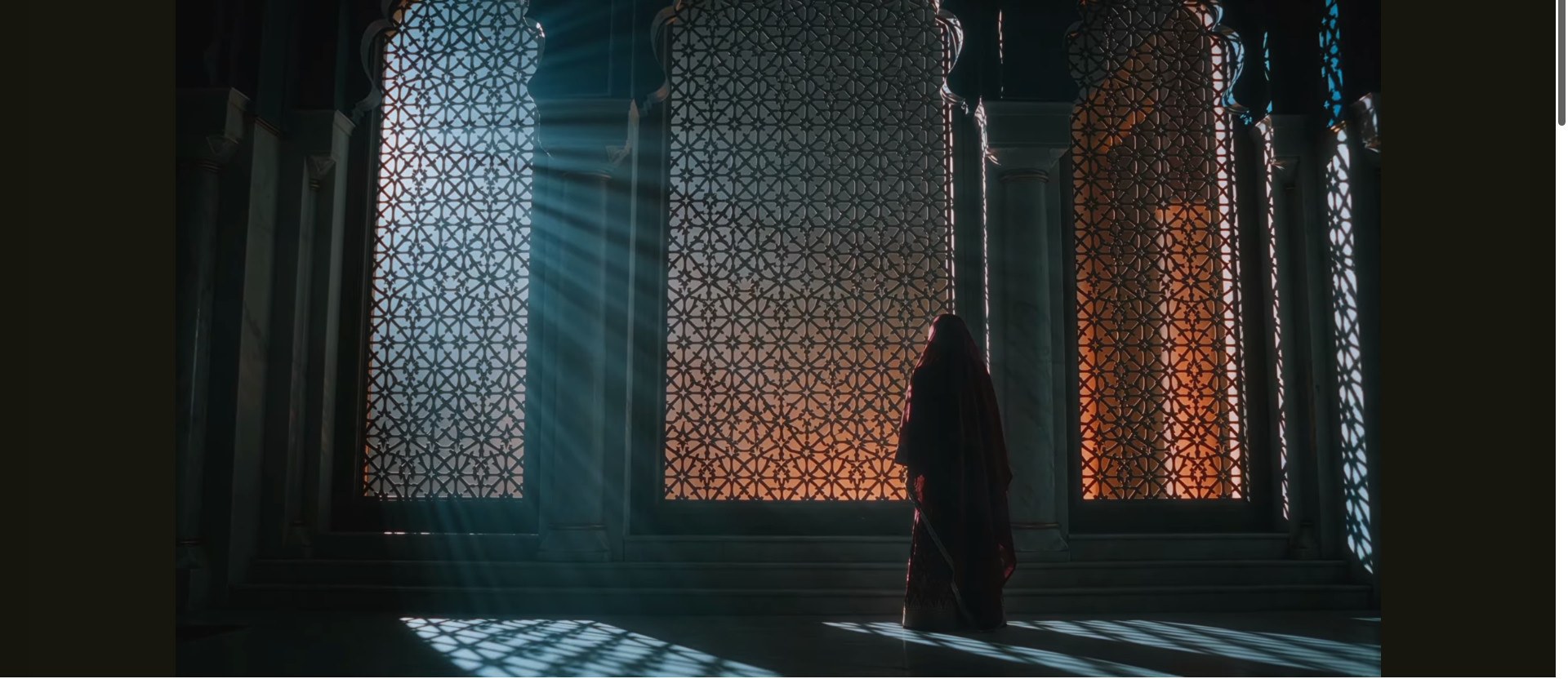
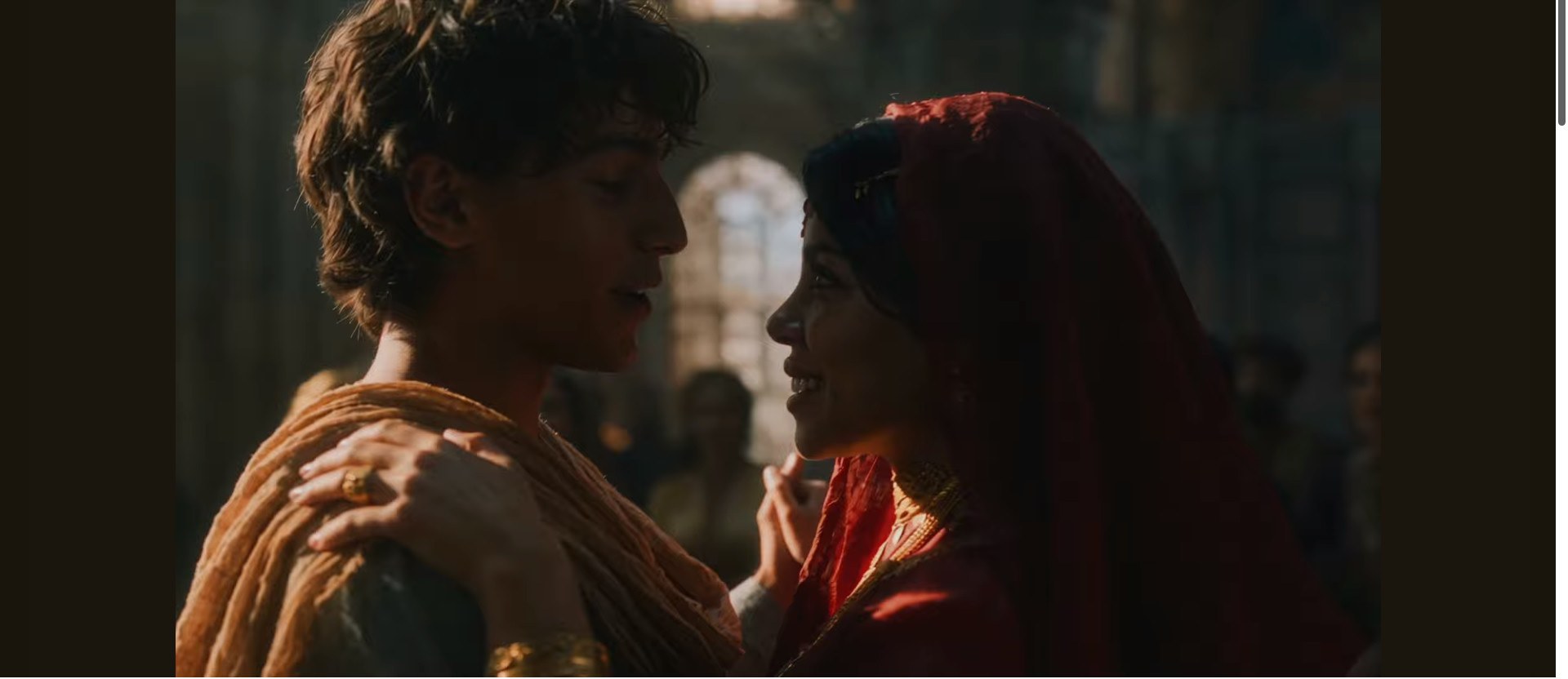
Part two is the stronger half: Bodour refuses the Vizier’s son because “no one tells me he is kind”; Aladdin haunts the palace until the betrothal dissolves; his bowl of stars wins the bride-gift challenge; and Bodour chooses him herself — “Father, I have never met him… But I have already seen his heart.” The wedding dance is the series at its most joyful (“You dance like you stole the steps.” “I steal everything well.”). Which is exactly when the sorcerer, disguised as a lamp trader, takes the lamp out of the palace in exchange for a shiny new one — and wishes himself the most powerful sorcerer the world has known. Curtain. A finale, “Aladdin at War”, is advertised, and on this evidence it will be worth the wait.
Best Scene (Episode 3, 12:16–14:00)
Meeting the Genie
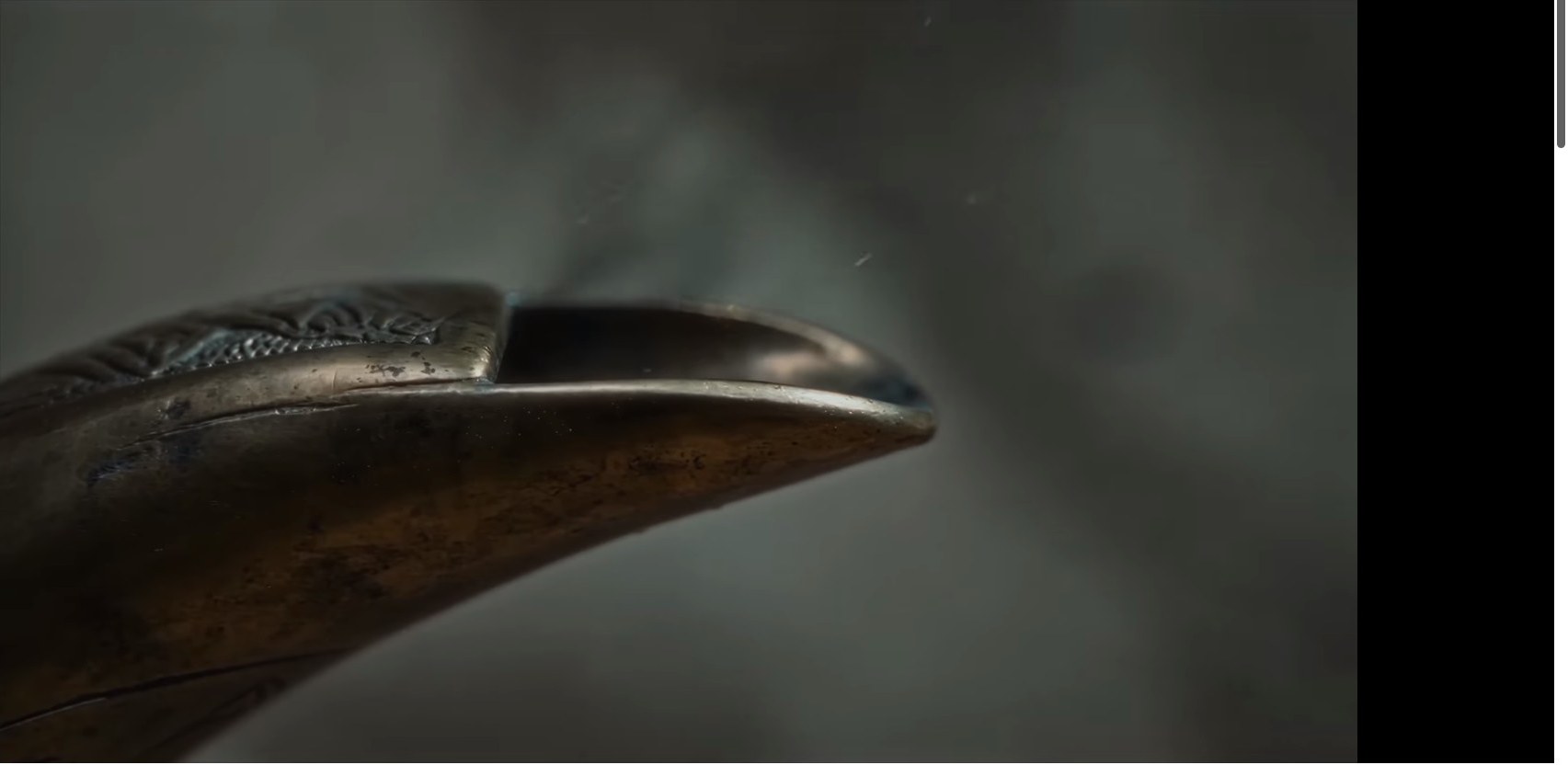
Buried in the collapsed cave, Aladdin rubs the lamp, and the Genie arrives — not as a joke, but as a servant with a code. “I am your servant, the genie of your lamp. What is your wish, Master?” And then the three limits, spoken plainly: he cannot break a will, cannot return the dead, cannot kill in your name.
It is the best scene in the four episodes because everything after it is decided here. A lesser telling would make the lamp a cheat code; this one makes it a test of character, and Aladdin passes it in the next breath — his first real wish is for his mother. The lamp macro in smoke at 12:45 is the series’ signature image, and the scene around it earns it.
Where It Strains
The flaws are real but they live at the edges. Crowds turn faceless and merge in the wide shots — markets, courts, processions. Hands soften and fuse in close-up, most noticeably over fire and reins. The stated ages and the faces do not always agree: Amani is twelve and a half and Aladdin fifteen, and both read older on screen. One open book, at 11:47 of Episode 4, is filled with pseudo-Arabic script that is not writing at all. And there are no captions on any episode, which family viewing will miss. None of it breaks a scene; all of it is worth knowing going in.
Final Thoughts
1001 Nights is the Arabian Nights told the way they were meant to be told — golden, earnest and cliffhung — and the most consistent piece of AI series-making in this batch.
I would recommend it to families first, and then to anyone who wants to see what AI series can already do when a studio picks stories worthy of its tools. Start with Amani and her Jinn; the jar scene will sell you the rest.
Scene Breakdown
Ep. 1, 0:00–1:30 — The narrator’s promise: the treasure is not where you seek it.
Ep. 1, 6:37–10:23 — The sandstorm, and the spirit woman’s protection speech.
Ep. 1, 14:58–16:50 — The swapped dreams: the Cairo owner has dreamed of Imad’s home.
Ep. 1, 18:27 — Hands lift the floor slab at home. No gold is shown.
Ep. 2, 2:53–3:45 — Amani opens the jar; the Jinn boasts of shaping mountains.
Ep. 2, 9:36–15:00 — Amin, the boy trapped in the Jinn’s world.
Ep. 2, 17:01–19:46 — The double trick, and the sealing of the jar.
Ep. 3, 4:52–12:16 — The cave mission: “Touch nothing else.”
Ep. 3, 12:16–14:00 — Meeting the Genie, and the three limits.
Ep. 3, 17:39–21:42 — The return: mother healed, streets fed, Bodour arrives.
Ep. 4, 3:53–7:28 — The haunting of the palace; the betrothal dissolves.
Ep. 4, 18:46–19:22 — The wedding, and the dance.
Ep. 4, 21:42–25:10 — “New lamps for old”: the lamp is traded away.
Episode 1: 0:12–0:19 — the opening woman’s face warps mid-phrase; her teeth smear. 6:52 — a blurred foreground hand, fingers indistinct, covers half of Imad’s face. 7:03 — an older man’s gaze directions mismatch. 17:01 — the market crowd are faceless smudges with merging bodies; Imad’s fingers fuse on the reins. The epiphany (10:23–12:22) and the Cairo dialogue (12:22–16:50) are stable and clean.
Episode 2: 0:09–0:22 — Amani’s hands tangle into the fishing net, an oar passes through the boat’s edge, and her legs merge with the hull. 7:07 — the Jinn’s market crowd are faceless mannequins and the stalls morph. 19:00–19:07 — the Jinn’s smoke face shifts continuously — partly the design of a smoke creature, but it never settles. Amani is stated to be twelve and a half and reads as an adult on screen. The jar opening and the dialogue close-ups are clean.
Episode 3: 0:06–0:07 — an unexplained floating cube hovers over the night city. 0:12 — ruined columns lean at impossible, mismatched angles. 0:20 — the sorcerer’s fingers over the blue fire are fused and mitten-like. 7:13–7:21 — elongated fingers with an unclear count, and eyes looking in different directions. Aladdin is stated to be fifteen and reads as a young adult. The gem cave, the lamp macro (12:45) and most close-ups are stable.
Episode 4: 1:46 — Aya, at the frame’s edge, is a blurred, faceless figure beside a clean close-up of Bodour. 2:02 — the Genie’s hair and body merge with the balcony railing. 5:00–7:28 — background courtiers are soft and faceless in the wide shots. 11:47 — the open book’s script is pseudo-Arabic gibberish. The palace dialogue and the wedding dance (19:22) are clean.
Series by SAGAS, from its 1001 collection. Episode details are from the series’ YouTube pages and our own viewing; the collection continues on the SAGAS channel beyond these four tales.
Visitor Reviews
There are no reviews yet. Be the first one to write one.