
 U.R Panya
 Creator ID26-11-00-0082MCG StrivefeeCreator ID26-11-00-0083

Score breakdown
1.5K views
Film Review
Written by Kineograph
Years after Aveline, a former princess, chose the throne over the man she loved, she crosses the world to the Wish Gate to find him — and there she is offered the perfect life they never had, and asked to choose.
This review discusses the ending. If you would rather watch the film first, we recommend you do, and then come back.
“I’m Coming With You”
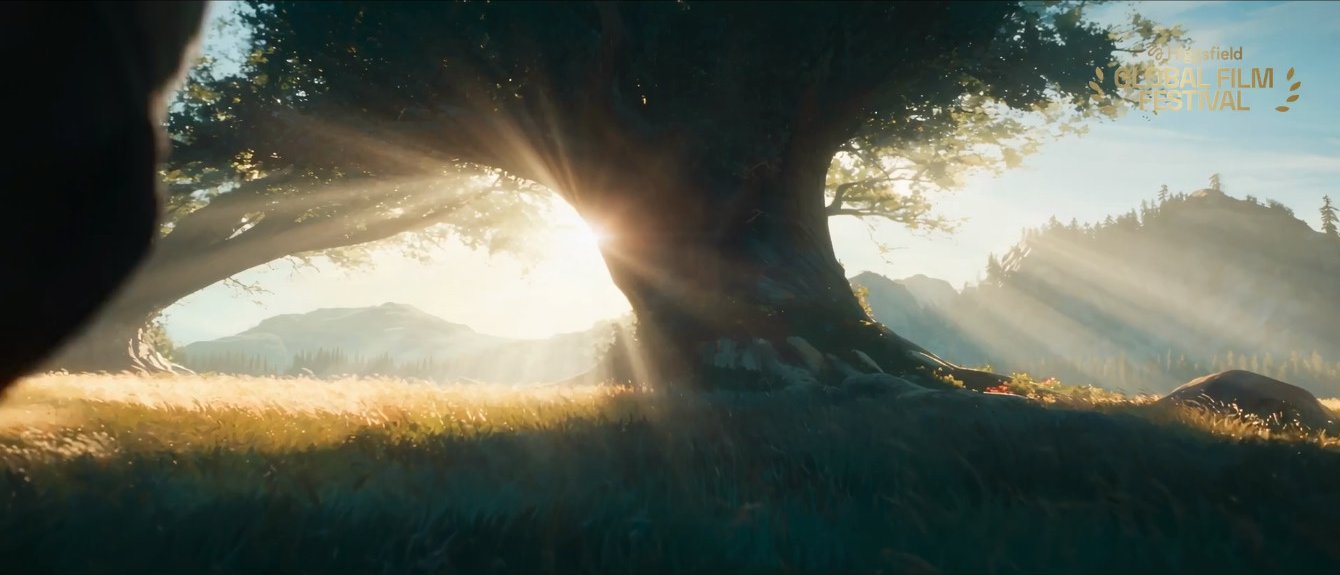
It opens in gold: a sunlit tree, golden grass, a cottage in the forest, and a line the film will keep returning to — a promise of accompaniment, asked to be said again. Then Aveline is on the road north, asking travellers about the pass. The world announces its rules in asides: one man’s brother married a river spirit, and nobody at the roadside finds that worth a raised eyebrow. This is a fairy tale that trusts its weather.
The title object arrives early, and as a small comedy of care: a hot bowl, offered with solicitude — better? warmer? — and received with a yelp: “What?! It burns!” It is a good joke and a better omen. In this film, love keeps being handed over too hot to hold. The road’s comedy stays gentle and verbal — a roll-call of Geralds, brothers and cousins of Geralds, sorted out with great seriousness — and it suits the film: this is a quest told at walking pace, by people who talk their way north.
“I Keep Making Things For An Eight Year Old”
The tavern is where the film quietly becomes itself. Old Dunstan — grey-bearded, a maker of wooden things — went north with Edric seven years ago, and he tells Aveline two things. The first is the news she has crossed the world for: Edric is alive. The second is what the road north did to the man who walked it: the whole way, Edric talked about the same things — a small house, a piece of land, a woman who should have been there. He wanted what the journey showed him more than the road beneath his feet.
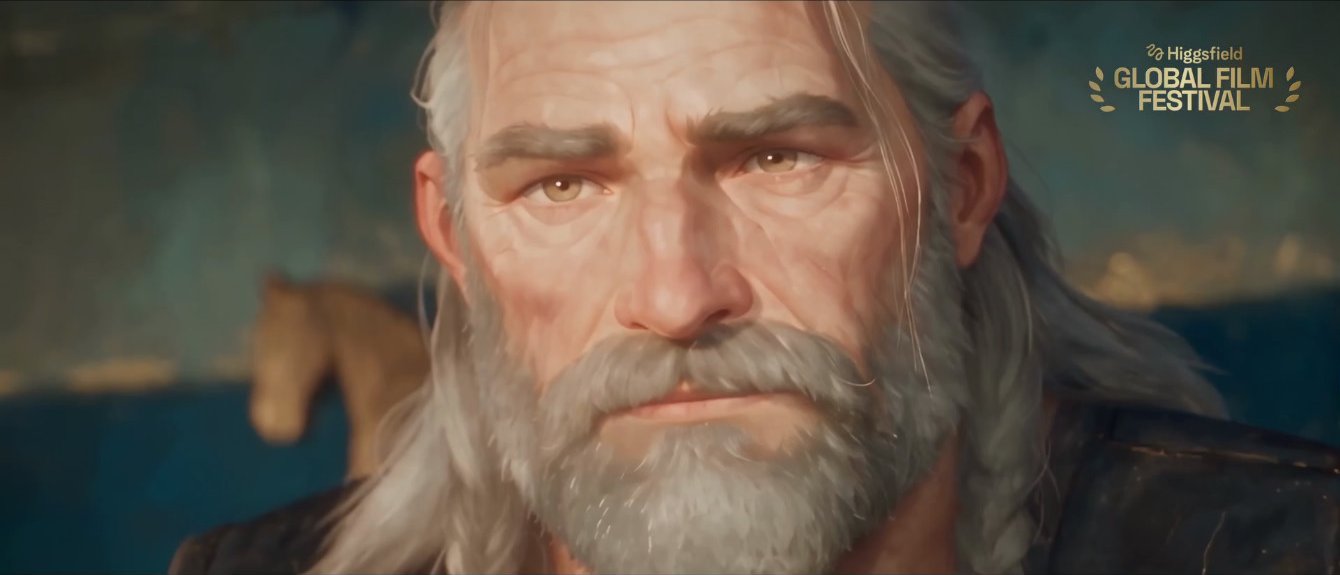
And then Dunstan drops his own wound in sideways, in the line this section is named for. His daughter was eight when he went north. She is fifteen now. He keeps making things for an eight-year-old. I read that beat as the film’s hinge: Aveline is not the only person in this story living alongside a version of events that never happened. Everyone at that tavern table is carrying an unlived life. The Wish Gate, when it comes, will not be offering her anything the rest of them haven’t already imagined.
“Next Time, Let Me Decide What I Carry”
The flashback to the kingdom is the film’s other pillar. The castle is dark, the banners blue, and the old choice is laid out without villains: Edric was never a knight; if he stayed, he would be used to unseat her; her father was fading, her brother sick. Come tonight, he asked her — anywhere, work, a roof, a piece of land if they were lucky. She stayed. The kingdom was on her to protect, and she asked him to look after Lucius, because she couldn’t.
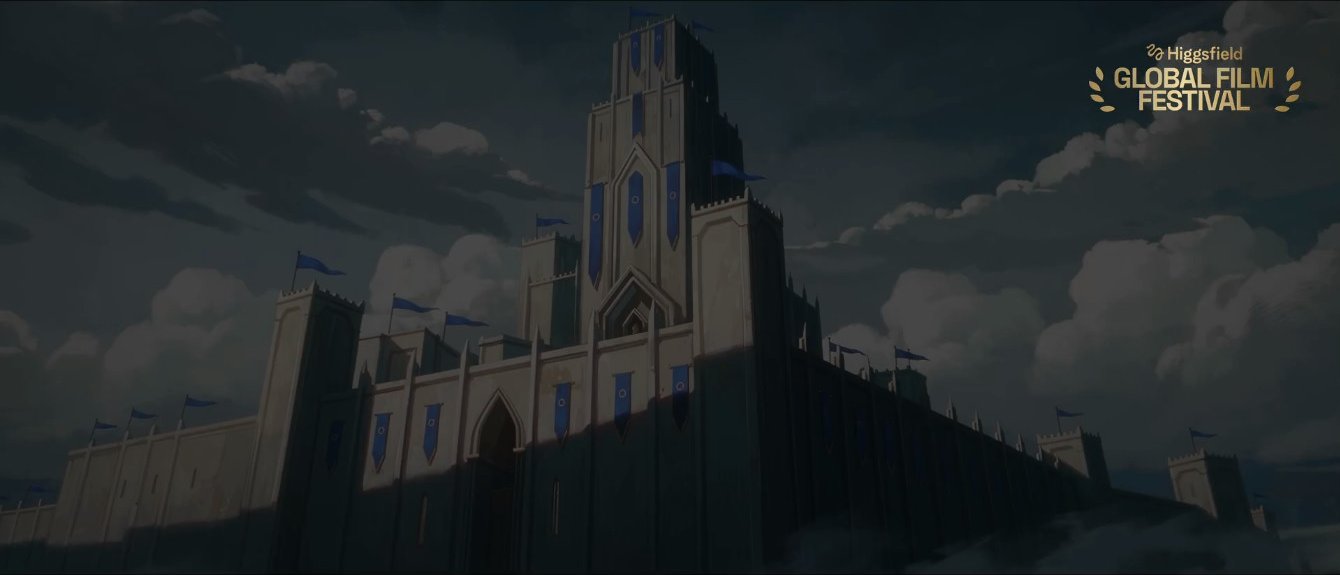
What gives the flashback its sting is not the parting but the bookkeeping: the things they each kept from the other, for the other’s own good, and the bill arriving years later in a single exchange — why didn’t you tell me; it wasn’t yours to carry; next time, let me decide what I carry. That is a more honest account of how love and duty actually damage each other than most romances twice this length manage.
“I’ve Died Before. It’s Okay To Die Again”
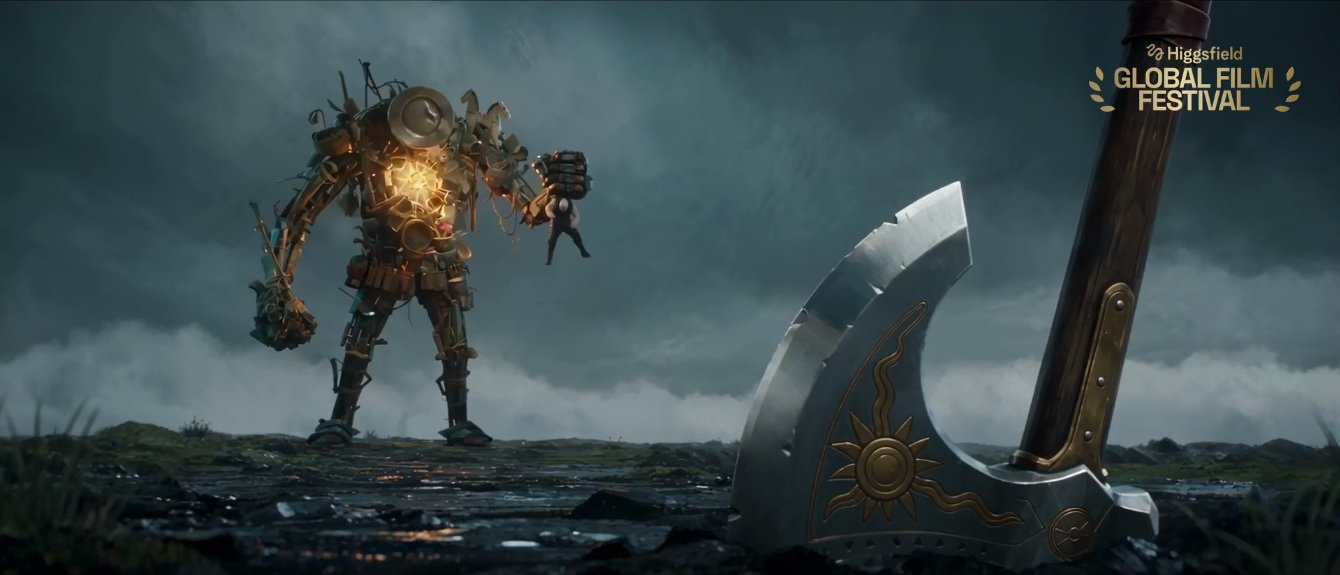
North again, and the journey darkens. There is a workshop with a glowing blue pool set into its floorboards, and then the film’s great set-piece of scale: a giant golem of scrap metal, a glowing chest, an enormous sun-marked axe — and a small man standing in front of it, offering himself with the strangest calm in the film. He has died before. It is, he says, okay to die again. The golem scale is stylised anime scale, and the film wears it well: the wonder is the point, and for once the wonder is also character.
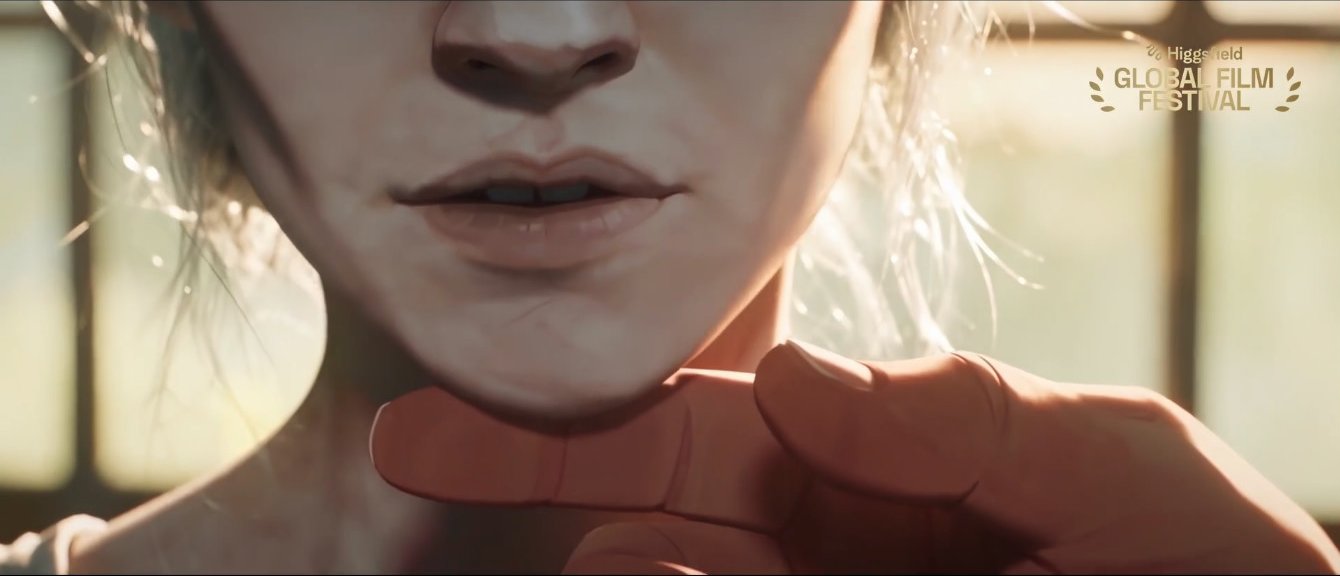
The road softens once more before the Gate — a bowl held to Aveline’s lips at ~20:45, the journey’s tenderness in a single close-up — and then she is where Dunstan promised: the water’s end, the Wish Gate, and whatever it is that waits on the other side of a wish.
Where It Strains
Honesty, before the ending carries us away. At 27:55 this is long for a story this simple in outline, and the middle road repeats its rhythm — encounter, exchange, onward — until the episodes blur. The film needed either more incident or less road. Worse, some of the dialogue is muffled or slurred badly enough that whole lines are lost even listening closely, with the sound up; in a film carried by talk, that costs real story, and I have scored it where it belongs, in the delivery of the screenplay and in the soundtrack. And the bowl at ~20:45: the hand holding it to her lips is oversized, its fingers thick and blocky, in a film that chose to put its own title in that hand. The bandaged hand that matters later is simplified too, and lip-sync drifts throughout. None of it breaks the film. All of it keeps the film from the polish its ending deserves.
Best Scene (22:20–23:20)
The battle, and the golden embrace
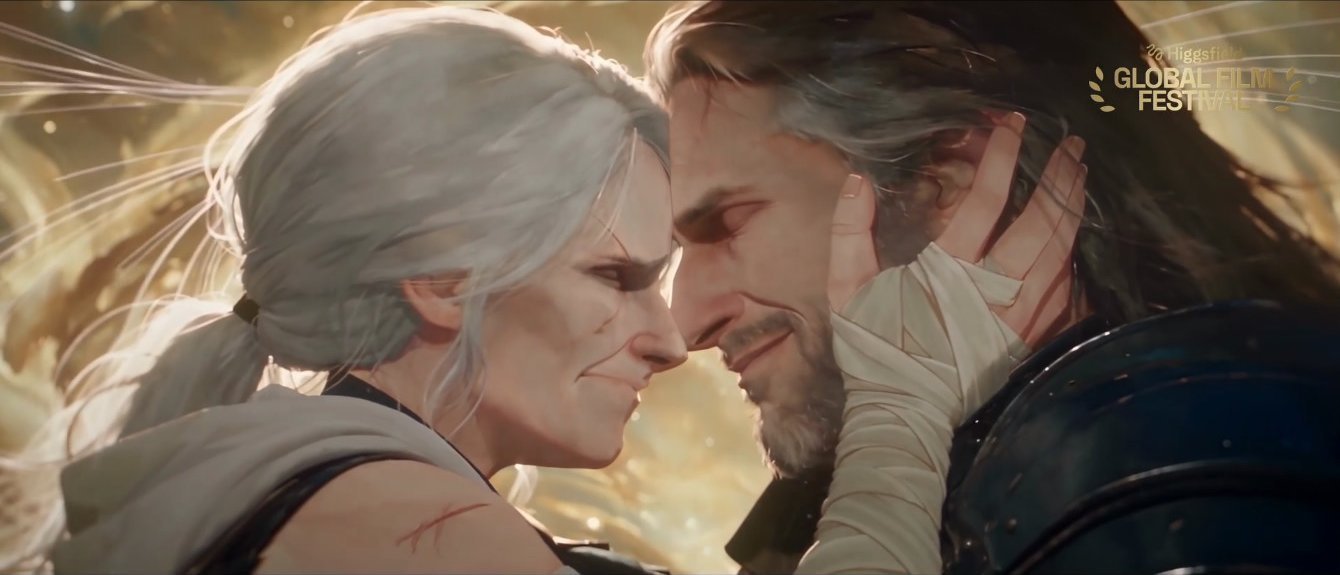
At the Wish Gate the film finally spends everything it has been saving. First the storm of it: a battle in the dark, armoured warriors, a red crystal creature shattering — and Aveline’s eyes flaring pink and purple in close-up, the wish’s power looking back at us. Then the fighting simply resolves, the way storms do in dreams, into golden light: Edric, older now, grey in his hair, forehead to forehead with her, her bandaged hand against his face.
It is the image the whole road was for. Twenty-two minutes of episodic journey can feel long; this minute is why the directors made you walk it. And the film is smart enough not to end there — because being shown him is not the same as being given the life, and the hardest scene is still to come.
“It Was Beautiful. It Wasn’t Me.”
The song at the Gate is her answer, sung rather than spoken. She does not want another version; she wants only the one that is true. The vision shows her everything, generously — the house beneath the sun, the road on which they both became everything they might have been — and her verdict on it is the most grown-up line in the film, the one this section is named for. She has walked through every answer just to learn which life was hers, and the beautiful one, she finds, wasn’t her.
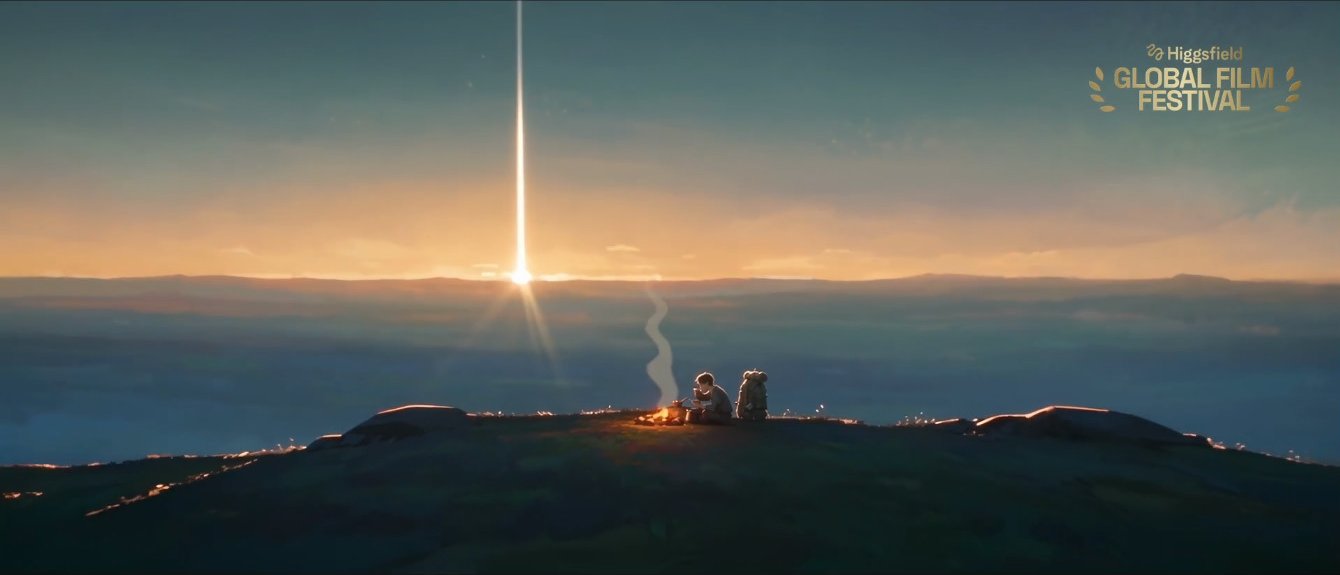
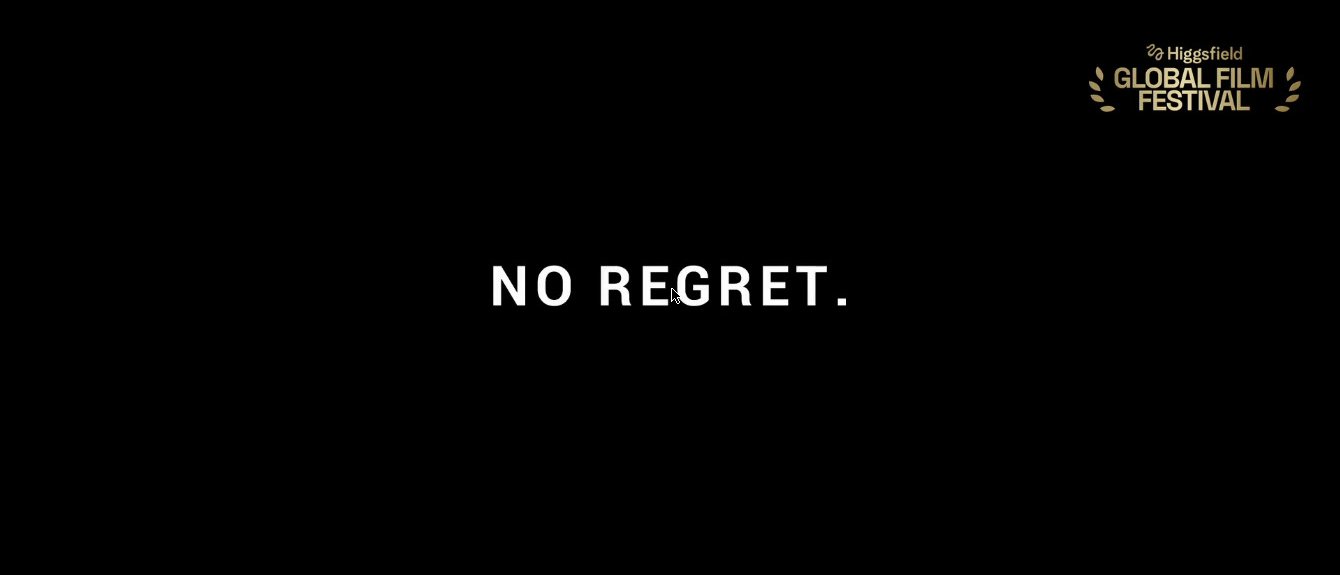
Her hand closes on his blue-gold sun medallion, and the film withdraws to its last story image: two small figures by a campfire on a hilltop at sunset, a beam of light rising into the sky. Whose fire it is, exactly, and where they go from it, the film declines to say. I read that restraint as the point — this is a coda about acceptance, not logistics — and others may read the two figures differently; the film leaves the reading to us, quietly, and trusts us with it. Its own last word is a black card, held a beat longer than expected.
Final Thoughts
Two Bowls is a fairy tale that argues with the fairy tale: the love is real, the road not taken is beautiful, and the film still sides, in the end, with the life that was actually lived.
I would recommend it to viewers who like their fantasy warm and Ghibli-soft and their endings honest rather than merely happy — with fair warning attached: bring patience for the long road and an ear willing to forgive the muffled lines, and the Wish Gate will pay you back. Aveline crosses the world to be offered everything she gave up. She looks at it properly, thanks it, and chooses her own life. There are worse definitions of courage.
Scene Breakdown
0:00–0:25 — The sunlit tree over golden grass, and the promise the film keeps repeating.
~1:20–2:50 — The hot bowl is offered: a small comedy of care, too hot to hold.
~2:50–3:45 — The roll-call of Geralds — brothers, other brothers, and one obvious cousin.
5:45–8:45 — Dunstan’s tavern: a daughter who was eight, and is fifteen now; the news that Edric is alive.
8:45–11:45 — The flashback: the dark castle, the ultimatum, the choice of the throne.
~17:40 — The scrap-metal golem, and the man who has died before.
~20:45 — A bowl held to Aveline’s lips, close up.
22:20–23:20 — Best Scene: the Wish Gate battle, the shattering crystal creature, and the golden embrace.
23:20–24:20 — The song’s answer, and the medallion clutched in a bandaged hand.
~26:20 — Two figures by a campfire on a hilltop, a beam of light rising into the sky.
~27:40 — The closing card: NO REGRET.
~20:45 — The hand holding the bowl to Aveline’s lips — the film’s own title object — is oversized, with thick, blocky fingers.
~24:20 — The bandaged hand clutching Edric’s medallion is drawn simplified.
Throughout — Lip-sync is loose, some dialogue is muffled or slurred, and faces morph slightly between shots — Edric young against Edric aged, Aveline’s eyes changing colour. (Her eyes glowing pink-purple at ~22:21 is a story beat, not a slip.)
Directed by U.R Panya and MCG Strivefee, both named in the film’s own credits. A 3D anime short in a Studio Ghibli-inspired style, made with a hybrid digital and AI-assisted animation workflow, planned shot by shot. Also on YouTube.
There are no reviews yet. Be the first one to write one.