

 Whispers From The Dark
Score breakdown
3.7K views
Folk Horror
Best Scene
Film Review
A narrated folk-horror miniature, told almost entirely in the host’s voice and painted in two colours: forest green and river red. The Red River is the quietest film in this batch, and the saddest — a story about a man who wanted to disappear, told by a storyteller who knows the river grants exactly that wish.
This review discusses the ending. If you would rather watch the film first, we recommend you do, and then come back.
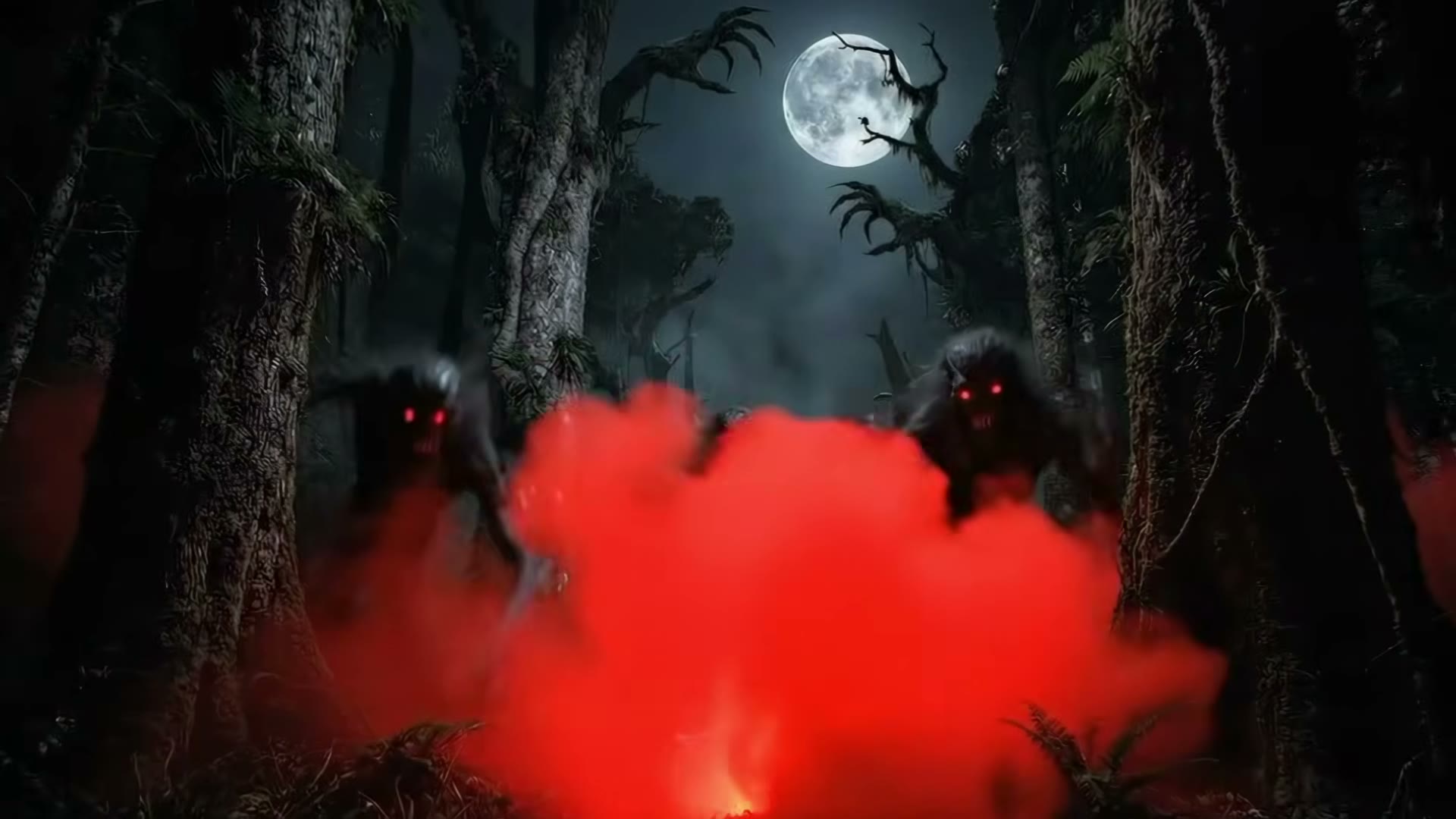
“Silence will fix things. It never does.”
The host opens from a graveyard campsite, roasting marshmallows over the premise: camping is “very popular with people who think silence will fix things. It never does.” Then the narration takes over completely. Eli, we are told, “wasn’t running from people. He was running from the part of himself he could never shut up — the guilt, the rot, the thing that woke him every night.” The film never specifies the guilt, and it is right not to: the story is about the weight, not the crime.
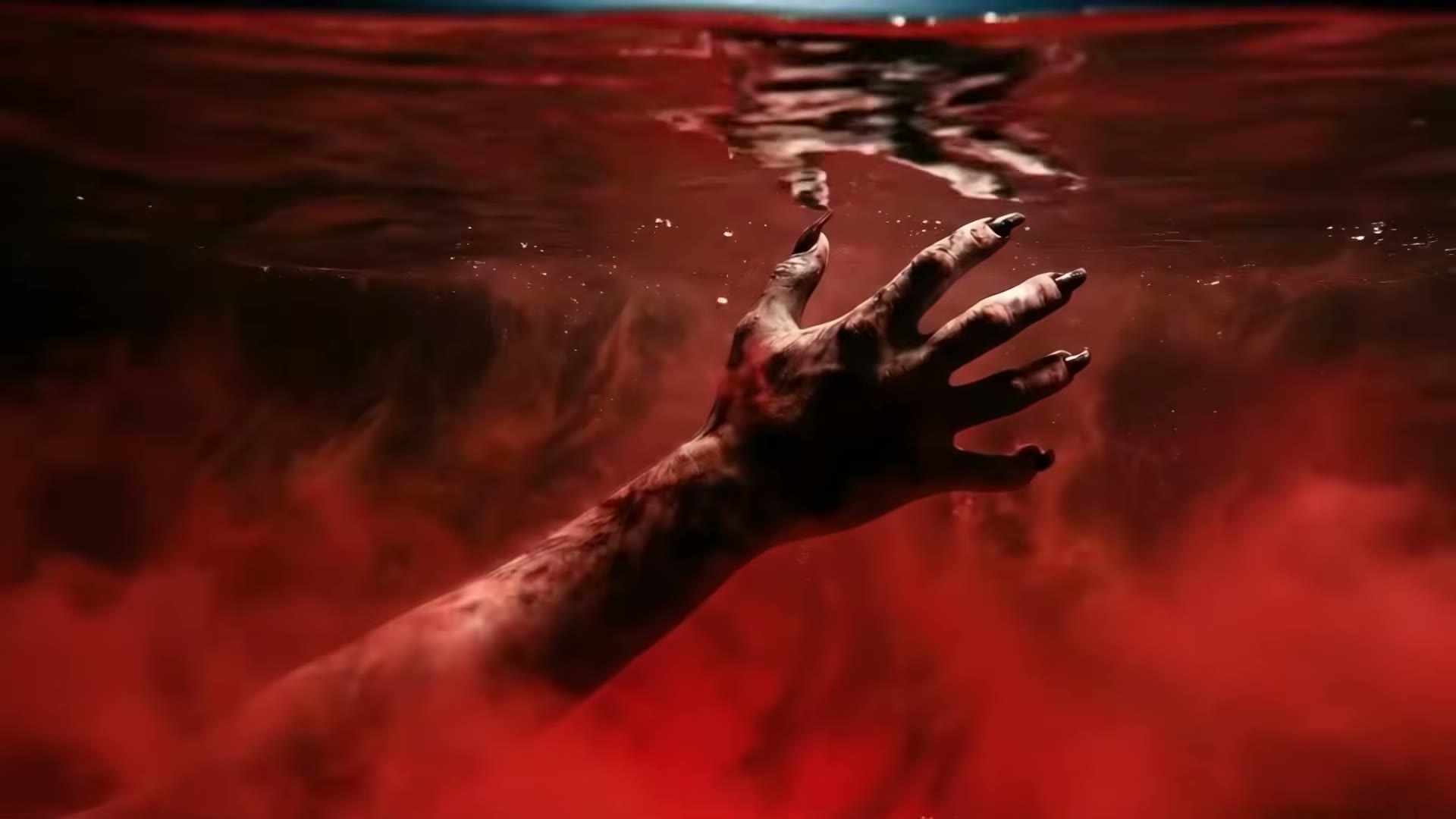
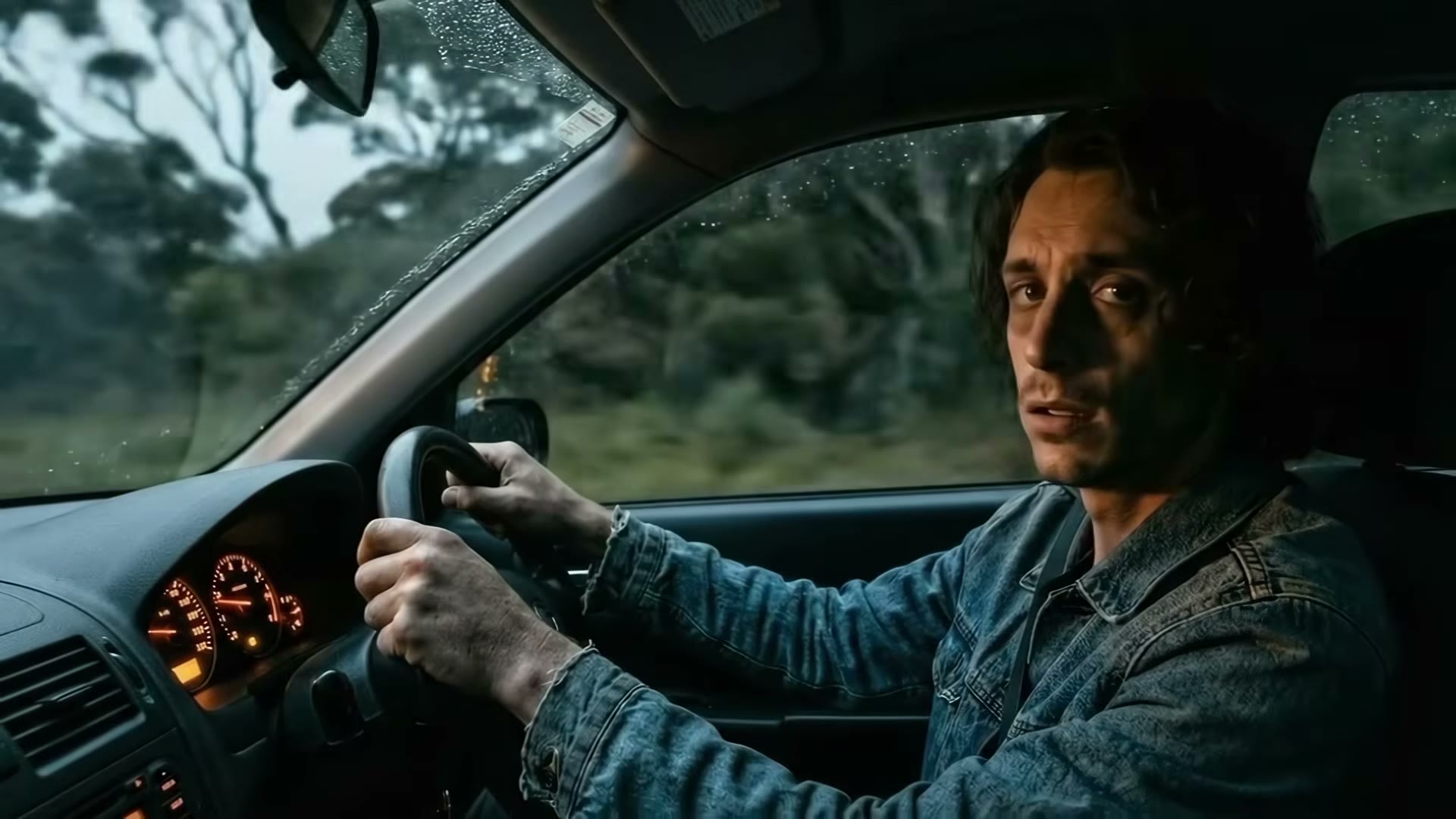
Eli himself barely speaks. He drives, he pitches his tent by the water, he walks with a lantern. The performance is in his face — gaunt, sleepless, already half-gone — and in the narration that walks beside him like a thought he cannot shake.
“Your darkness sings to me”
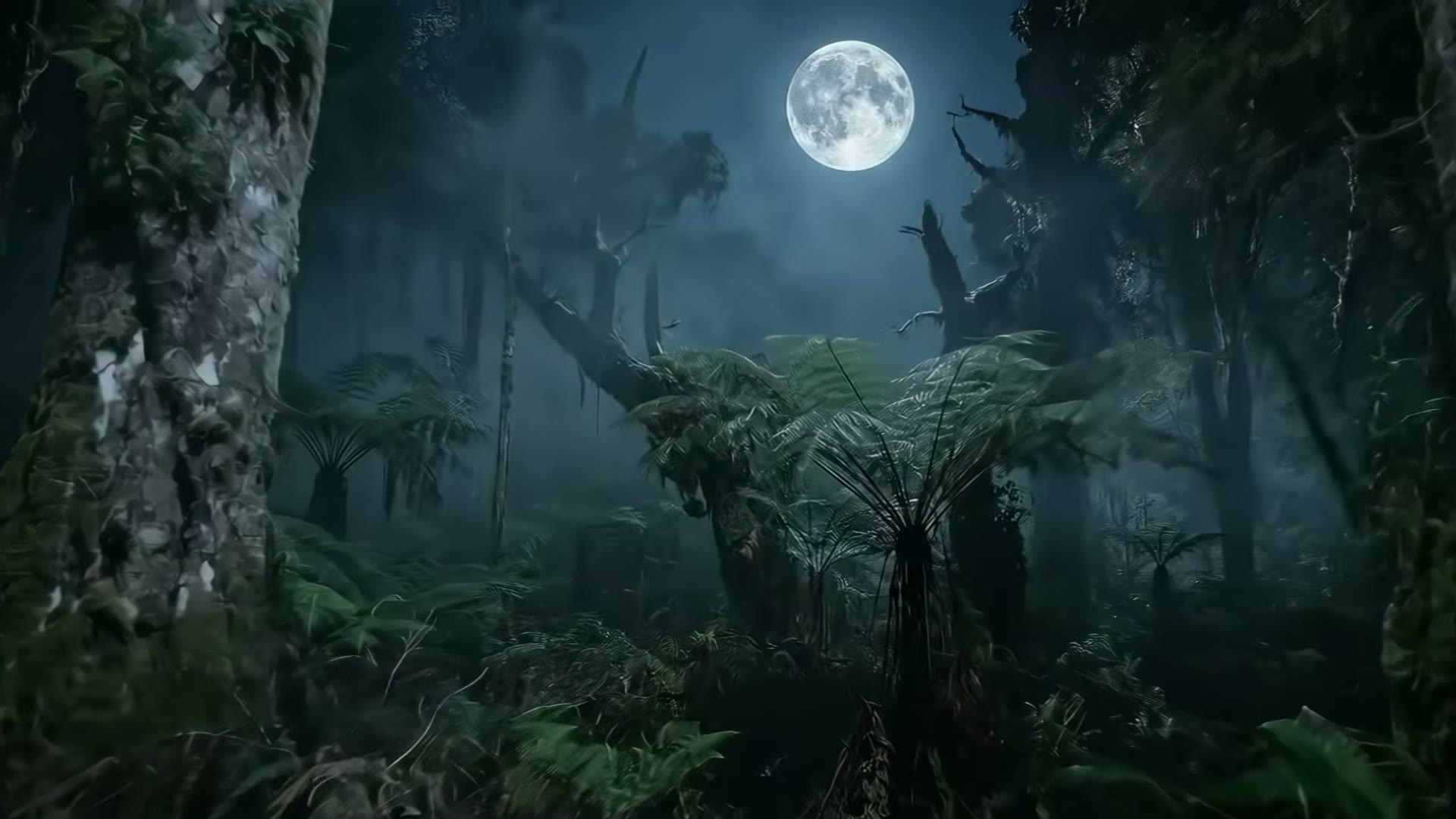
On the road, a woman is waiting — ancient, white-haired, unhurried. “I have been waiting for you, child. Your darkness sings to me.” She directs him to the river, and Eli follows “without thinking”, each step “less like a choice and more like fate pushing him forward”. The forest presses in. The whispers begin, “from something older than the trees themselves”.
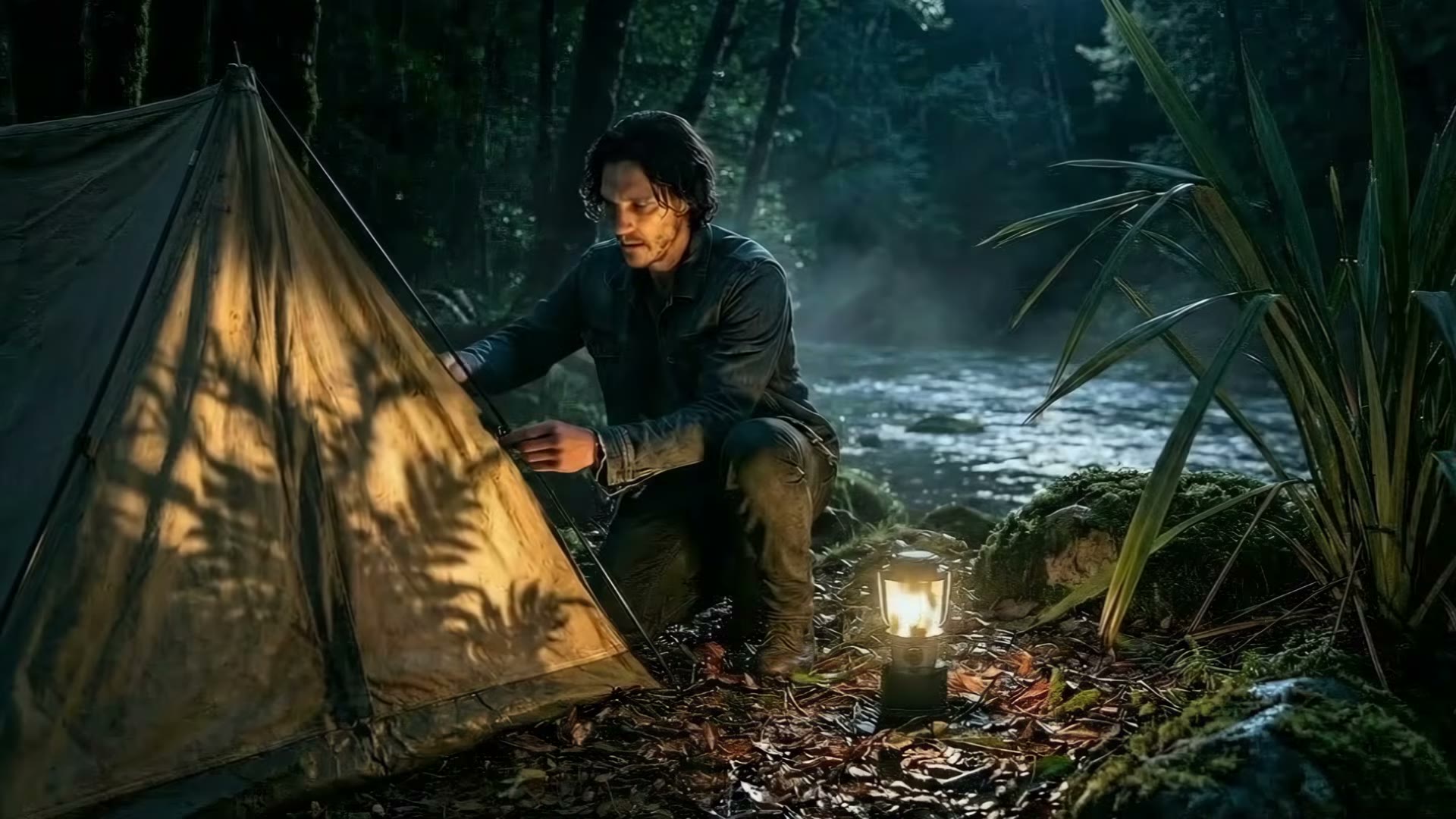
Then the film’s one great image arrives: the river answers, glowing red, pulling against the world, dragging the night upstream, the trees bending toward whatever lives beneath it. It is painterly rather than realistic — a storybook dread, deep red against black water — and it is exactly right for a tale being told rather than shown.
“The river feeds on the ones who want to disappear”
Eli understands at the end what the audience has been told from the start: “The river wasn’t offering forgiveness. It never had. It wanted him — his guilt, his fear, his surrender.” It takes him without struggle, and adds him, the narration says, “to the others it kept”. By dawn the forest is calm, his tent stands untouched on the bank, and there is no trace of Eli but the water, and the things watching from beneath it.
The closing sting widens the trap: on the road outside the forest, the woman waits for “the next person who won’t be missed” — and the film shows us that person, a woman driving alone, meeting the same figure standing in the road. A single scream carries us into the host’s shrug: “Well, that escalated gently… Sleep well, and maybe skip the midnight swim.” The joke is callous on purpose. The river is not.
Best Scene (2:27–2:50)
The river answers
The whispers stop being weather and become a voice; the water lights from beneath, red as a wound, and the current reverses — the night itself dragged upstream while the trees lean in to watch. It is the one moment the narration shuts up and lets the image preach, and the film’s whole palette — green world, red river — pays off in a single shot.
Final Thoughts
The Red River is a campfire tale in the oldest sense: a voice, a warning, and a place that keeps what it is given. It treats its subject — a man whose guilt has become unliveable — with a folk tale’s plainness and dignity, and lets the horror live in the landscape rather than in him.
As anthology craft it is the most painterly film here; whole sequences play like illustrations turning their own pages. Viewers who want their horror performed may find the narration distancing. Viewers who like being told a story, in the dark, by something that clearly knows how it ends, will be exactly where the channel wants them.
The Red River is part of the Whispers From The Dark horror anthology on YouTube, hosted by the channel’s goblin storyteller. Kineograph lists it as The Red River; its full YouTube title is “She Followed the Red River. It Was Waiting for Her” — the ‘she’ fits only the film’s closing sting, not its story.
Scene Breakdown
0:00–0:55 — The premise. The host, camping among gravestones, introduces a story about guilt, bad timing, and a river that takes things literally.
0:55–1:18 — The running. Eli’s flight into the wilderness; the guilt that follows him further than the road does.
1:18–1:34 — The woman on the road. “I have been waiting for you, child. Your darkness sings to me.”
1:34–2:27 — The walk and the whispers. Eli follows her directions; the forest closes in; something older than the trees begins to speak.
2:27–3:52 — The red river. The river glows, reverses, and takes him — added to the others it keeps.
3:52–5:32 — Dawn, and the next one. The untouched tent; the woman waiting on the road; a new driver; a scream; the host’s goodnight.
≈0:03 — The floating woman of the cold open is stiff and statuesque — an icon of the river rather than a person standing in it; the film’s most artificial figure, front-loaded where it can be forgiven.
The red whirlpool (≈3:45) is painterly rather than physical — water behaving like ink. In a narrated folk tale the storybook look reads as style, not error.
The heavy red grade across the river sequences hides a multitude of sins — which is, of course, partly the point of it.
Eli’s face — gaunt, curly-haired, sleepless — is identical driving, camping and sinking; the narration never has to apologise for him.
There are no reviews yet. Be the first one to write one.