

 Whispers From The Dark
Score breakdown
10.1K views
Found Footage
Best Scene
Film Review
The sharpest film in this batch: a found-footage livestream horror that understands exactly how the internet watches people die. Smile for the Camera builds its trap out of viewer counts, chat spam and one terrible piece of advice — never debunk a haunting on camera.
This review discusses the ending. If you would rather watch the film first, we recommend you do, and then come back.
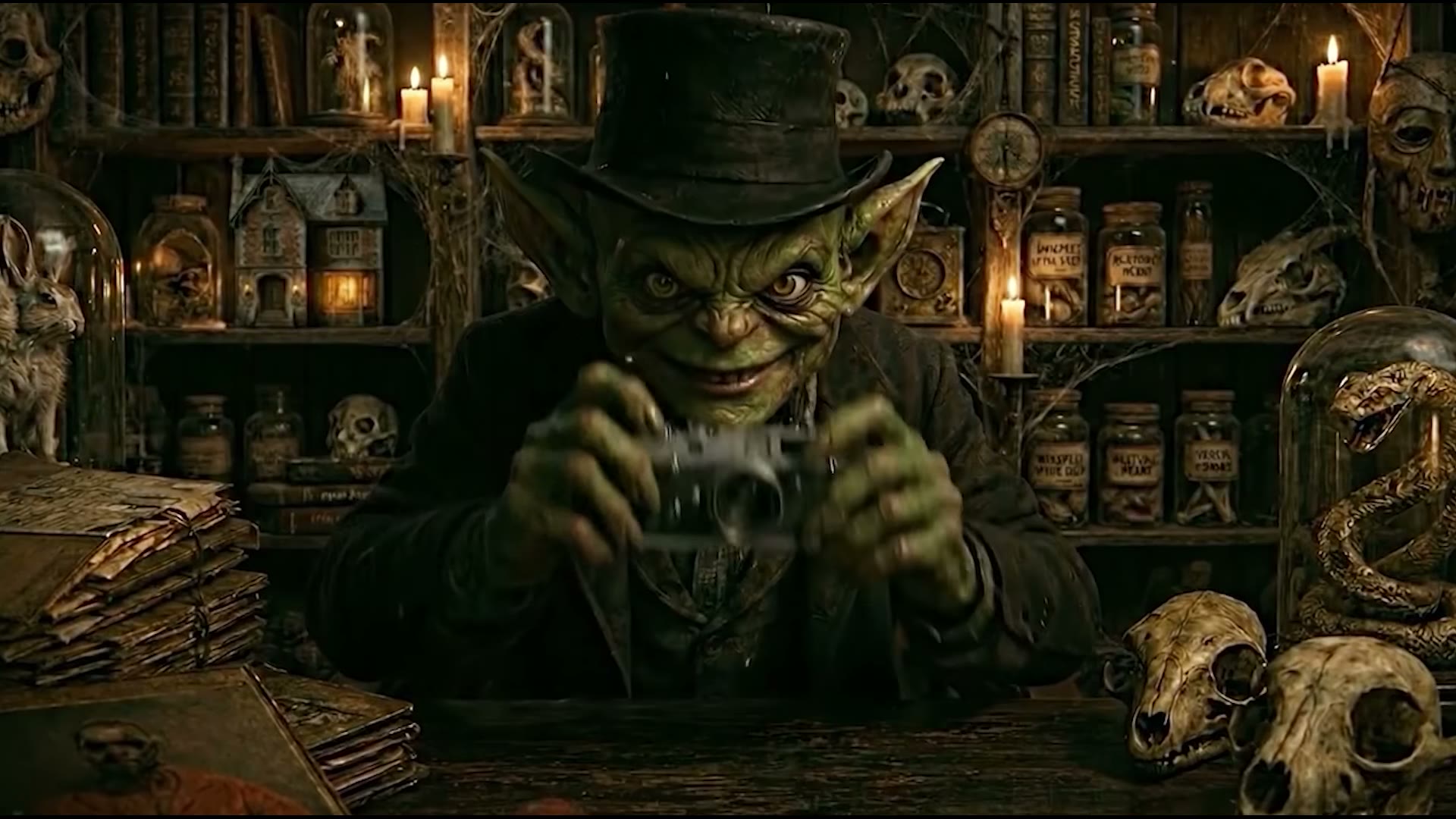
The man who smiled
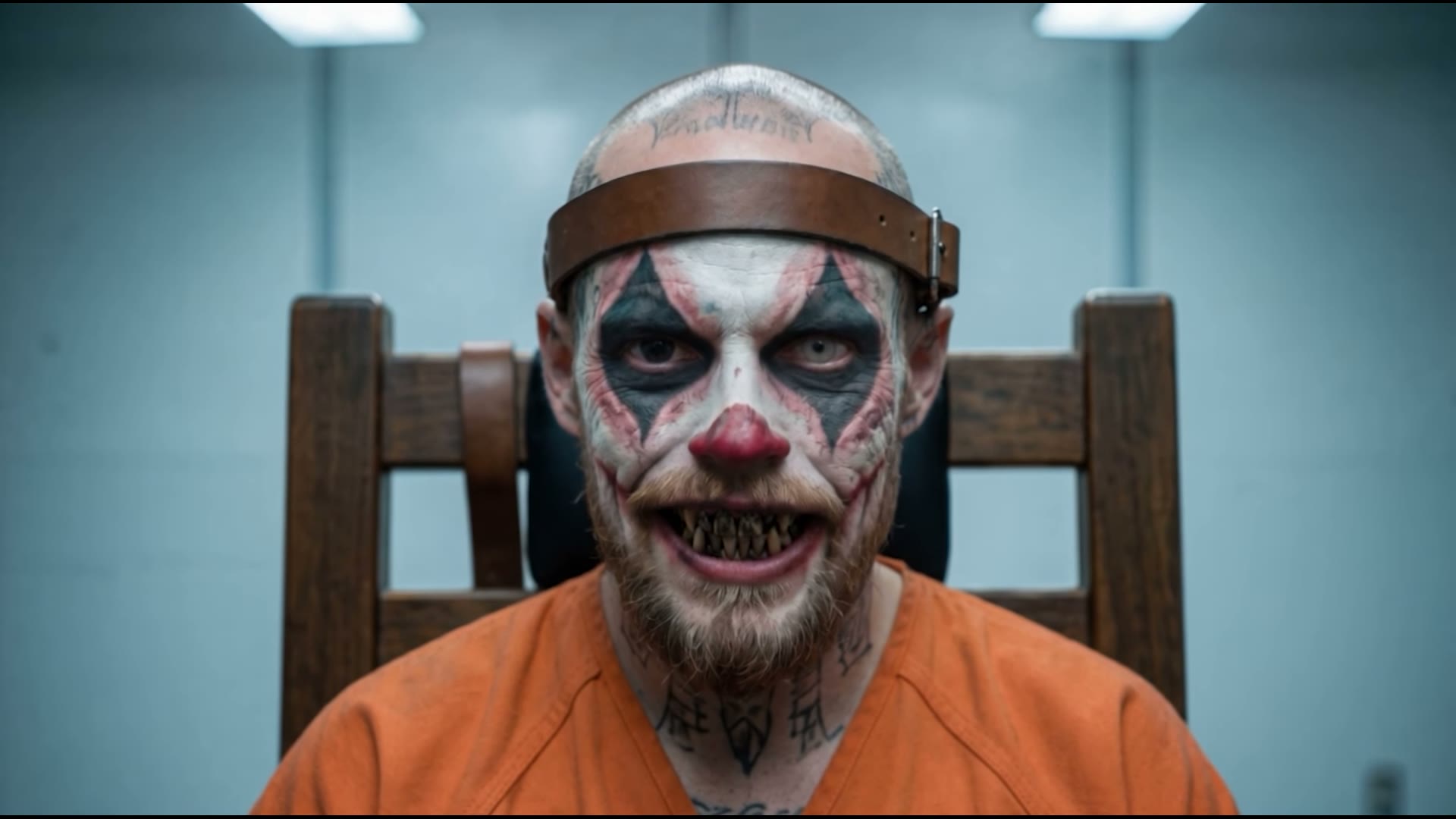
The host opens with a warning disguised as a history lesson: some cameras do not just record the dead, they remember the moment you lost it. Then the film gives us Edgar Marsh — “Smiles” — eleven victims, each found with their face painted white and red, frozen in a grin. The ritual, the investigators believed, was the point: paint the smile, claim the soul. Marsh goes to the electric chair still smiling, and the film cuts, that same night, to a warehouse, a headlamp, and a young woman going live.
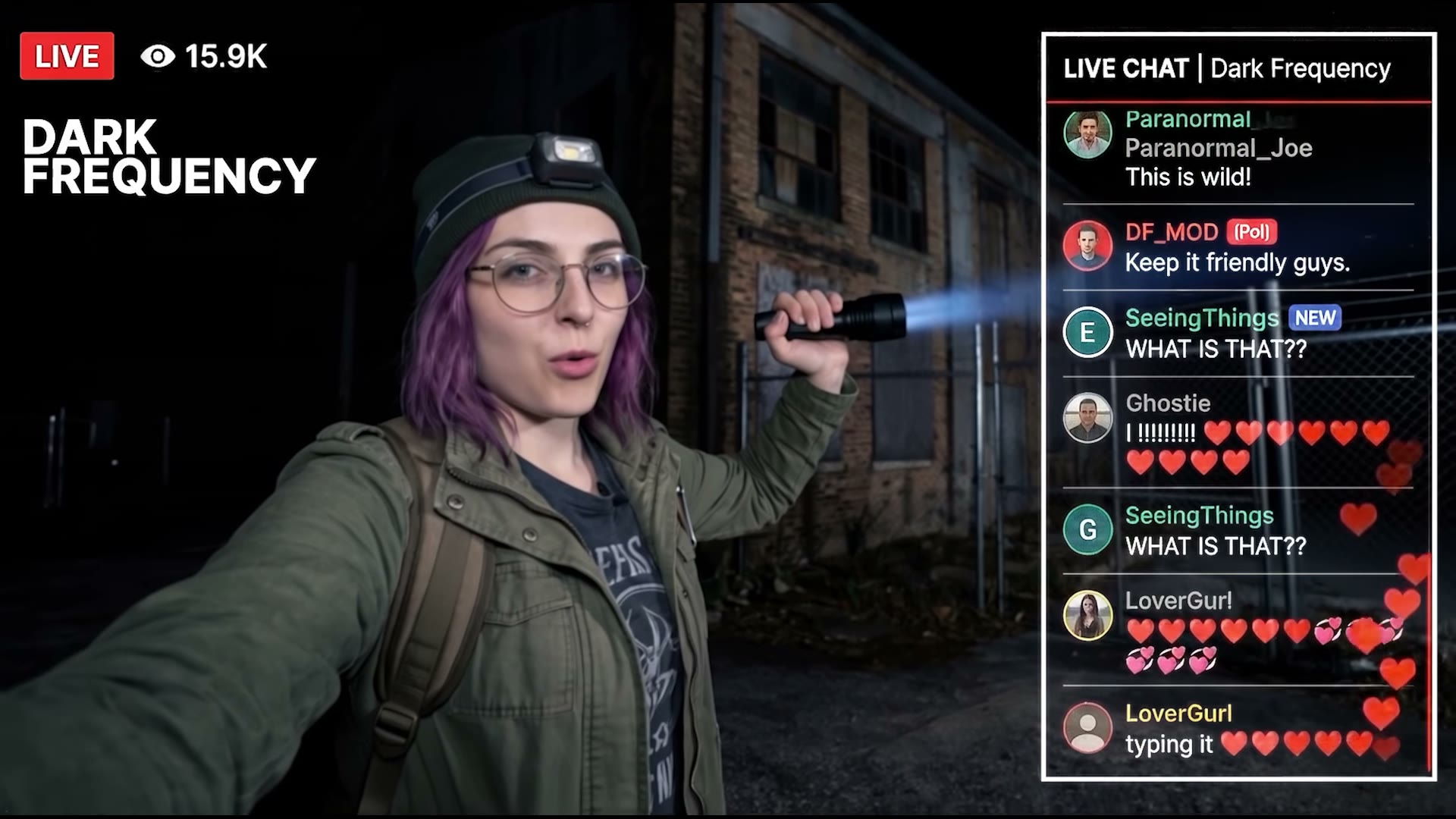
Casey — Dark Frequency to her viewers — is an urbex streamer doing a solo explore of Marsh’s warehouse for content. She is good at this: funny, brave, fluent in chat. The performance of fearlessness is the character, and the film spends its first act letting us enjoy it, because it is about to be invoiced.
He’s behind you
The stream turns the way these films promise and rarely deliver: the chat sees him first. Messages stack up — “He’s behind you” — the viewer count climbs past anything Casey has ever pulled, and the footage begins to misbehave. The stream ends, restarts, and plays back the same stretch of corridor with the numbers higher and the thing in the frame closer. Casey finds a red ball in the rubble — a child’s toy, in a killer’s warehouse, in the dark — and the film lets the colour do the screaming.
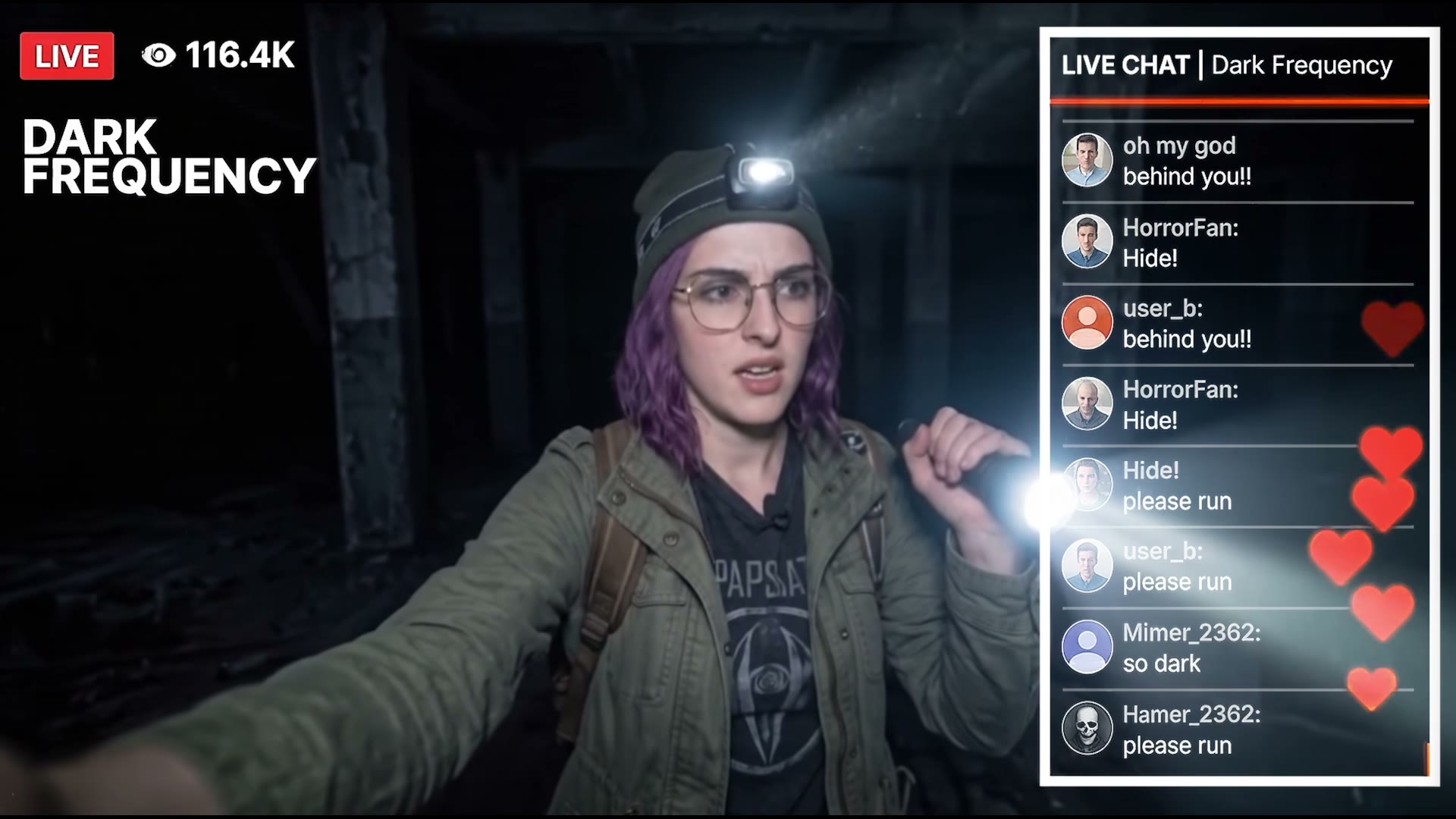
The loop is the film’s best idea, executed cleanly: horror as an algorithm, an audience that grows every time she suffers, and a haunting that has learned to use the platform better than she has.
The debunk
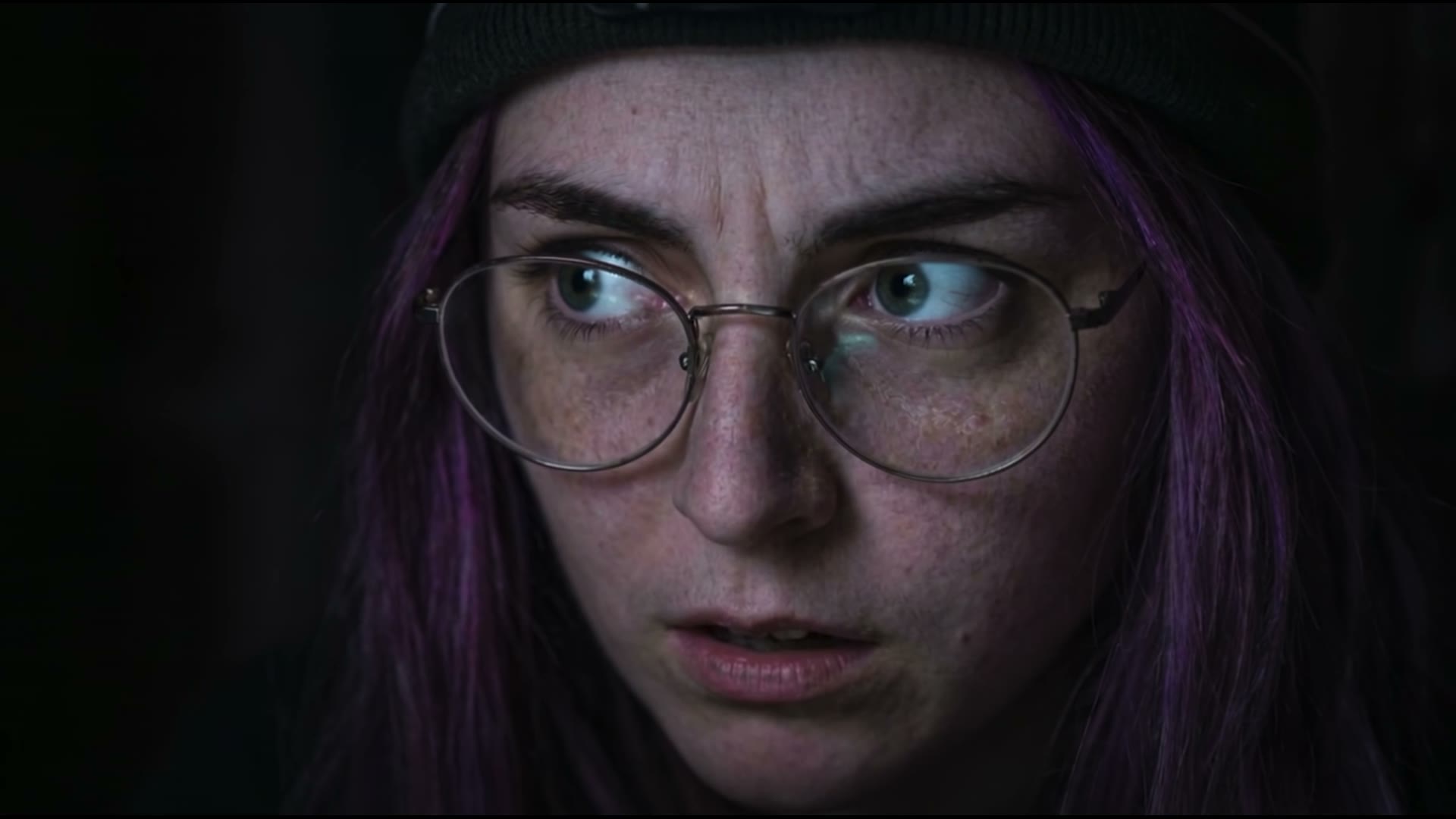
Then Casey does the thing the title warns about. Shaken, she records a follow-up claiming it was all faked — “your little AI video”, she calls it, a nicely poisonous touch in an AI-made film — and signs off mid-word. What the film shows us after that is wordless: Casey slumped in the dark of the warehouse, and then her face, close, lit by her own camera, wearing the painted grin. Marsh’s ritual, completed by upload.
It is a bleak, perfectly constructed ending, and it reframes everything before it: the stream was never her show. It was his, and the viewers were the congregation.
Best Scene (4:29–4:57)
The loop restarts
The stream glitches, dies — and comes back as a REPLAY, except the viewer count has multiplied and Casey is walking the same corridor again, saying the same things, while the chat screams at a girl who can no longer hear them. Found-footage films live or die on one image you cannot shake; the doubled stream, watched by ten times the audience, is this film’s.
Final Thoughts
Smile for the Camera is the most modern horror in the batch — a ghost story about attention, staged inside the exact machinery its audience is watching it on. It understands that the scariest thing a livestream can show you is the viewer count going up.
It also carries the batch’s most interesting credits: the film itself names Richy Hafner as its writer-director and Bad Batch Studio as its maker, inside the Whispers From The Dark anthology frame — a collaboration the channel wears openly, and the polish shows.
Smile for the Camera is part of the Whispers From The Dark horror anthology on YouTube. The film’s own title card gives its name as Smile for the Camera; it is listed on YouTube as “DON’T SMILE BACK”. Its end credits read: Story & Directed by Richy Hafner — a film by Bad Batch Studio.
Scene Breakdown
0:00–0:55 — The warning. The host on cameras that remember; the Marsh case: eleven victims, painted smiles, a soul-claiming ritual.
0:55–1:35 — The execution. Marsh in the chair, still smiling. The film’s title card: SMILE FOR THE CAMERA.
1:35–3:00 — Going live. Casey opens the Dark Frequency stream in the warehouse; the explore begins; the chat warms up.
3:00–4:29 — He’s behind you. The chat spots what Casey cannot; viewer counts climb past 100K; the red ball.
4:29–5:20 — The loop. The stream restarts as a replay with the audience multiplied and the figure closer.
5:20–7:07 — The debunk and the grin. Casey claims it was faked, mid-word; the wordless coda; credits: Richy Hafner, Bad Batch Studio.
Throughout the stream — The live-chat panel is AI pseudo-text: fine at speed, but pause on it and the usernames and messages melt into near-words. The film’s one structural cheat, and it knows it — the panel is set dressing, not document.
≈0:34 — In the opening extreme close-up, Marsh’s teeth soften and merge as he grins — two seconds where the paint is more convincing than the mouth under it.
≈5:30 — The debunk’s lip-sync is the weakest in the film; Casey’s mouth trails her words by a fraction, the one place her performance thins.
Against that: Casey’s face, hair, glasses and headlamp rig are identical across two separate ‘recordings’ inside the film — the loop only works because she does not drift.
There are no reviews yet. Be the first one to write one.