
 Windee Sunee
 Creator ID26-11-01-0264

Score breakdown
1.8K views
Film Review
This review discusses the ending. If you would rather watch the film first, we recommend you do, and then come back.
Synopsis
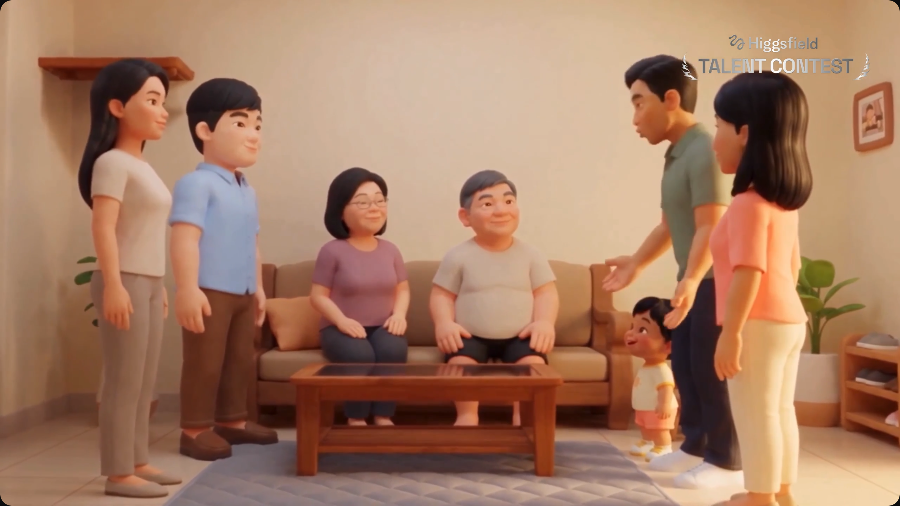
Guests arrive at a family home — grandparents, parents, children — and little Wendy is praised for her polite greeting. She invites her visiting friend Sunee to her room and shows off her blue car. “Look, Sunee, my blue car!” “Can I play?” “No, it’s my blue car.” Sunee cries. Wendy’s father hears, and settles it with the film’s one piece of real wisdom: “It’s your car, Wendy. You don’t have to give it away, but how about taking turns?” Then the sharing song begins — the children playing together with the car, the blocks, the crayons — and carries, with repetitions, to the end, when Sunee’s mother calls her home because the rain has stopped.
The Lesson Is the Good Part
Most children’s media teaches sharing as surrender: hand it over, don’t be selfish. This film teaches something truer and harder — ownership respected, generosity chosen: the car stays Wendy’s, and the turn-taking is her decision, prompted but not forced. For the toddlers this is aimed at, that distinction is the whole ballgame, and the film states it in one clean scene, father on the children’s level, nobody shamed. Whoever wrote that scene understands both children and fairness.
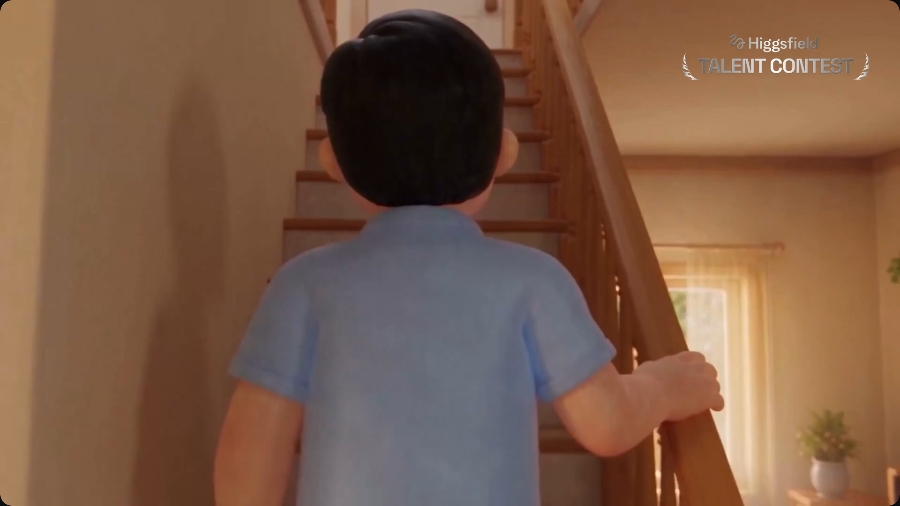
The greeting scene that opens the film has the same instinct — manners modelled, a child praised for politeness — and the story’s shape (arrival, conflict, mediation, play, farewell) is a correct little arc for its audience.
One Song, Half the Film
The trouble is proportion. The story is complete by the two-minute mark; the film runs 4:48. The remaining length is the sharing song on loop — the children playing, the chorus returning, “I’m sharing, sharing… It’s fun to share. My turn, your turn” — with the sung words garbling and slurring in places. Repetition is a legitimate tool for very young viewers, and a classroom might welcome it; as a film, it reads as one idea stretched to fill a runtime, and the back half adds no new story, scene or thought.
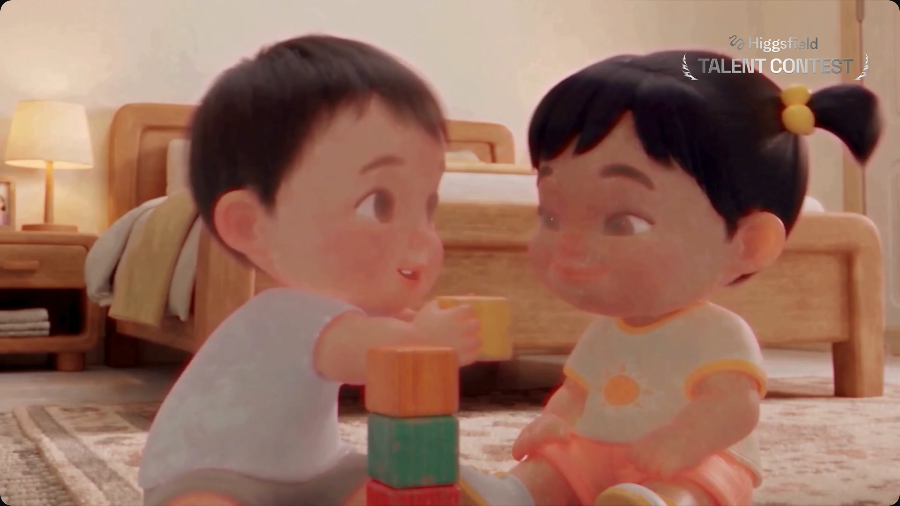
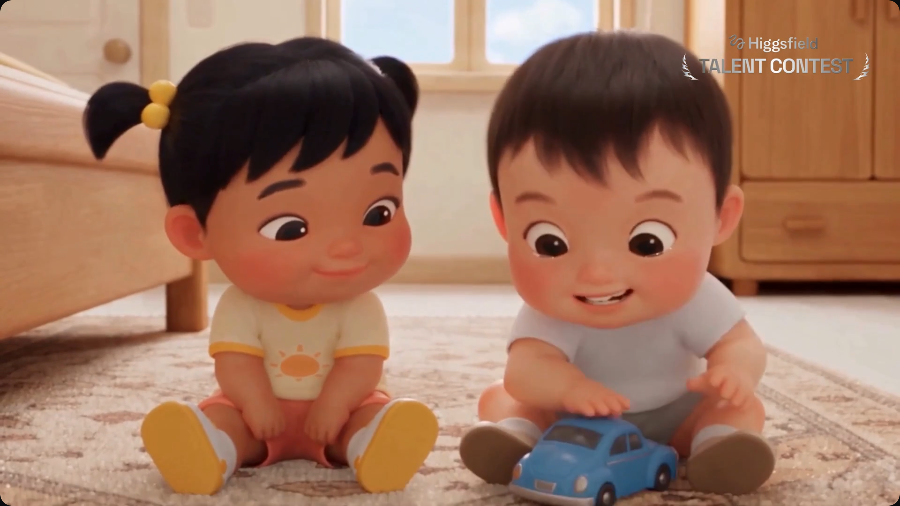
The craft is the other limit. The figures have a soft clay look — faces low-detail and often blank, eyes closed or unfocused, mouths minimal — and the two toddlers’ faces morph between cuts until at moments they are near-identical, distinguished mainly by a hair tie. Fingers merge on the crayon grip in the drawing close-up, both children’s heads are cropped by the frame in that same shot, and the blue car and blocks change position and size as the cuts jump. The spoken names in the greeting scene slur badly enough that several are guesswork. None of this will trouble a three-year-old; all of it is visible to the adult choosing the film.
Best Scene (1:20–2:00)
“How About Taking Turns?”
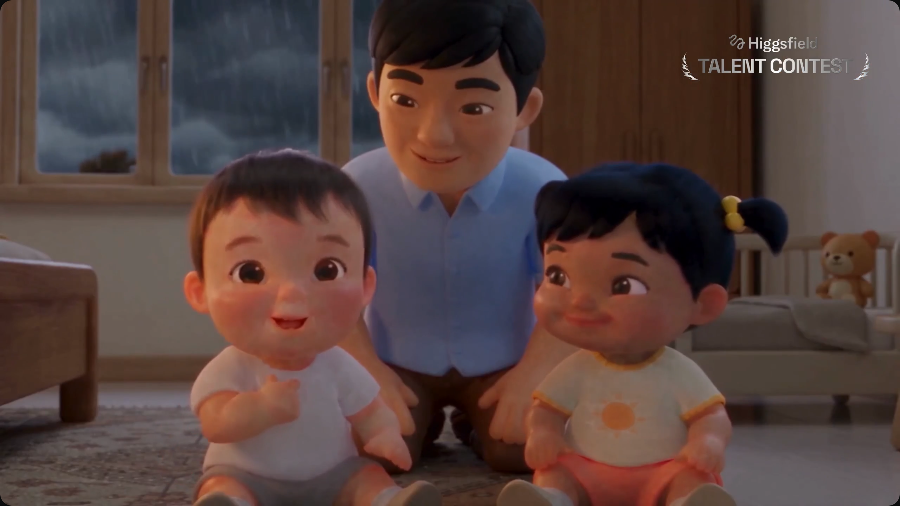
The father’s mediation. He hears the crying, comes in, and refuses both easy options — he neither orders Wendy to hand over the car nor lets the tears stand. “It’s your car, Wendy. You don’t have to give it away, but how about taking turns?” It is the film’s thesis, its best scene, and genuinely good advice, delivered in forty seconds.
Final Thoughts
Judged for its audience, this is a kind-hearted teaching tool with one excellent scene and a song that outstays its welcome; judged purely as a film, the craft and the padding hold it where it is. The film deserves credit for getting the lesson right when so many get it wrong. Verdict: one good idea, kindly taught, sung about twice as long as it needed.
★★★ — A fair lesson for little ones, in a film that loops its song
Scene Breakdown
0:00–0:55 — The greeting. Sky and clouds, then a living room full of guests; little Wendy at the centre, praised for her polite greeting. “What a polite little girl.”
0:55–1:20 — The blue car. Wendy shows Sunee her room and her treasure: “Look, Sunee, my blue car!” “Can I play?” “No, it’s my blue car.” Tears.
1:20–2:00 — Taking turns. Father hears the crying and mediates: “It’s your car, Wendy. You don’t have to give it away, but how about taking turns?”
2:00–4:00 — The song. The children play together — the car, blocks, crayons, a yellow sun — while the sharing song loops: “I’m sharing, sharing… It’s fun to share. My turn, your turn.”
4:00–4:48 — Going home. The rain has stopped; Sunee’s mother calls her. “Coming, Mommy.” Black. No credits.
There are no reviews yet. Be the first one to write one.