

 Michael Oshins
 Creator ID26-11-00-0076

Score breakdown
4 views on Kineograph
Film Review
Written by Kineograph
A father draws houses for a living, carefully, on a sheet of paper taped to the wall — and his small son draws on everything else, until one day the boy’s drawings get down off the page and start moving through the apartment.
This review discusses the ending. If you would rather watch the film first, we recommend you do, and then come back.
The House on the Wall
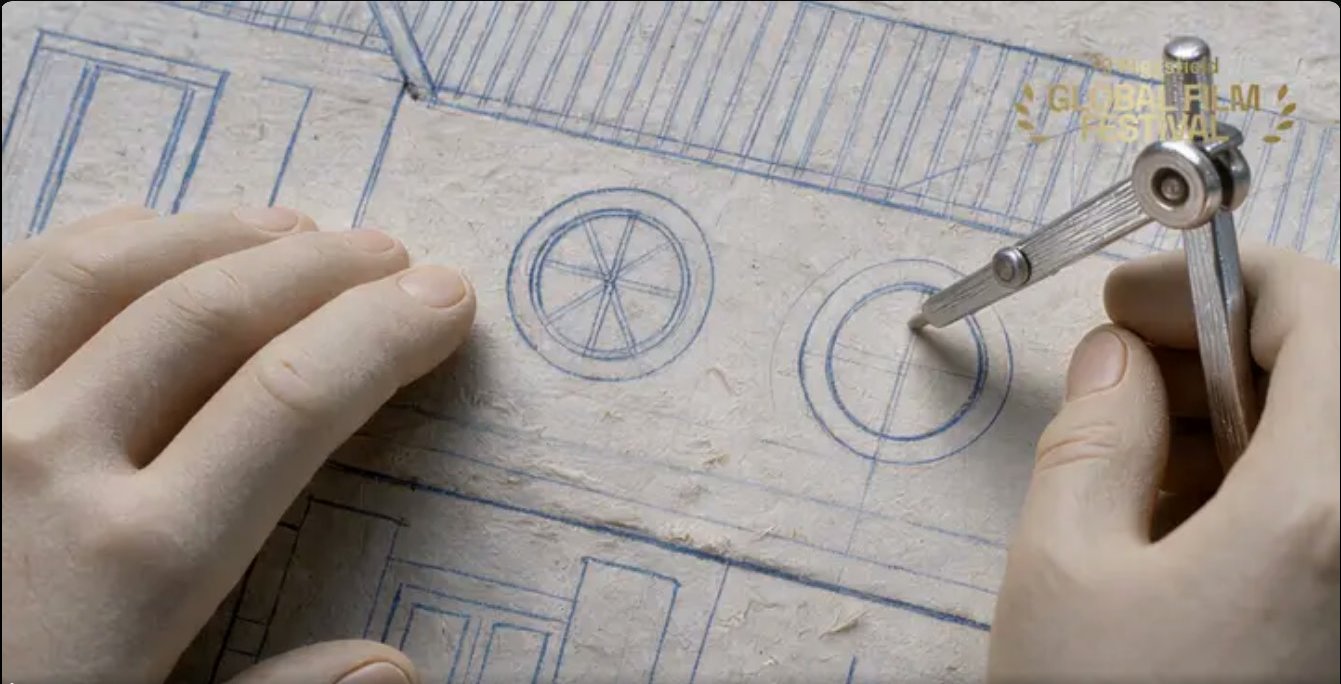
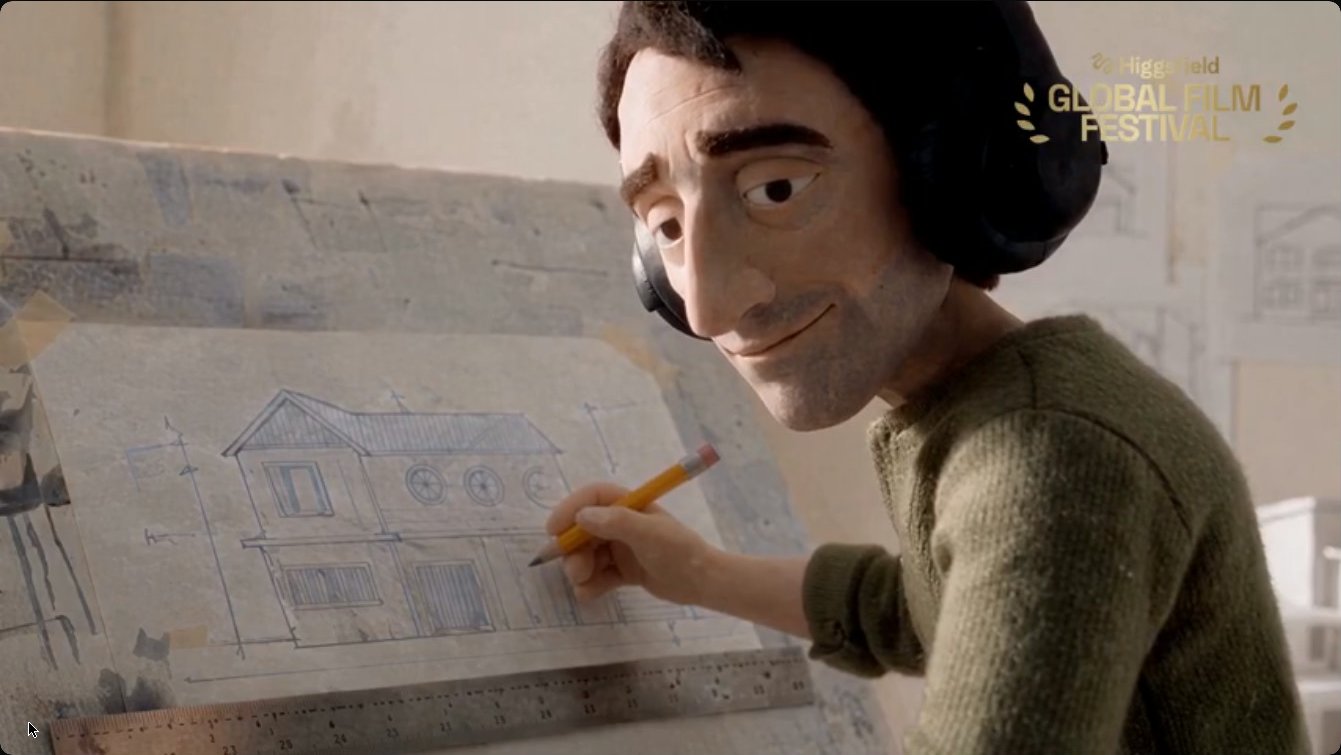
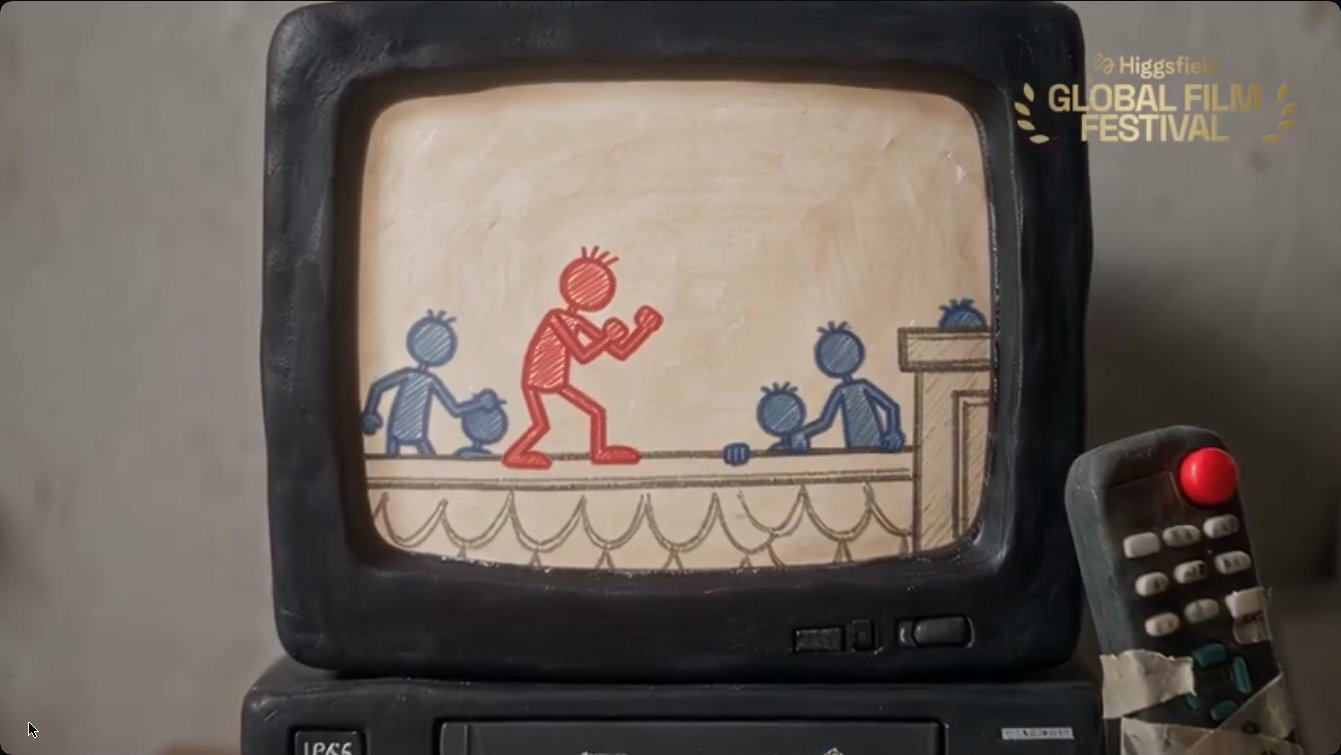
It begins with hands and a compass, drawing a house in blue ink on textured paper. The father — green sweater, headphones on — is drawing the same house plan, large, on a big sheet taped to the apartment wall: measured, professional, exact. Everything about him is straight lines. His son’s world is the opposite kind of drawing. On the family’s clay television, the boy’s pictures play as a cartoon: a red stick figure, boxing, flanked by blue ones. The film sets its whole argument up in these first two minutes without a line of dialogue — the father’s drawings are work; the son’s are alive.
The Drawings Get Down Off the Page
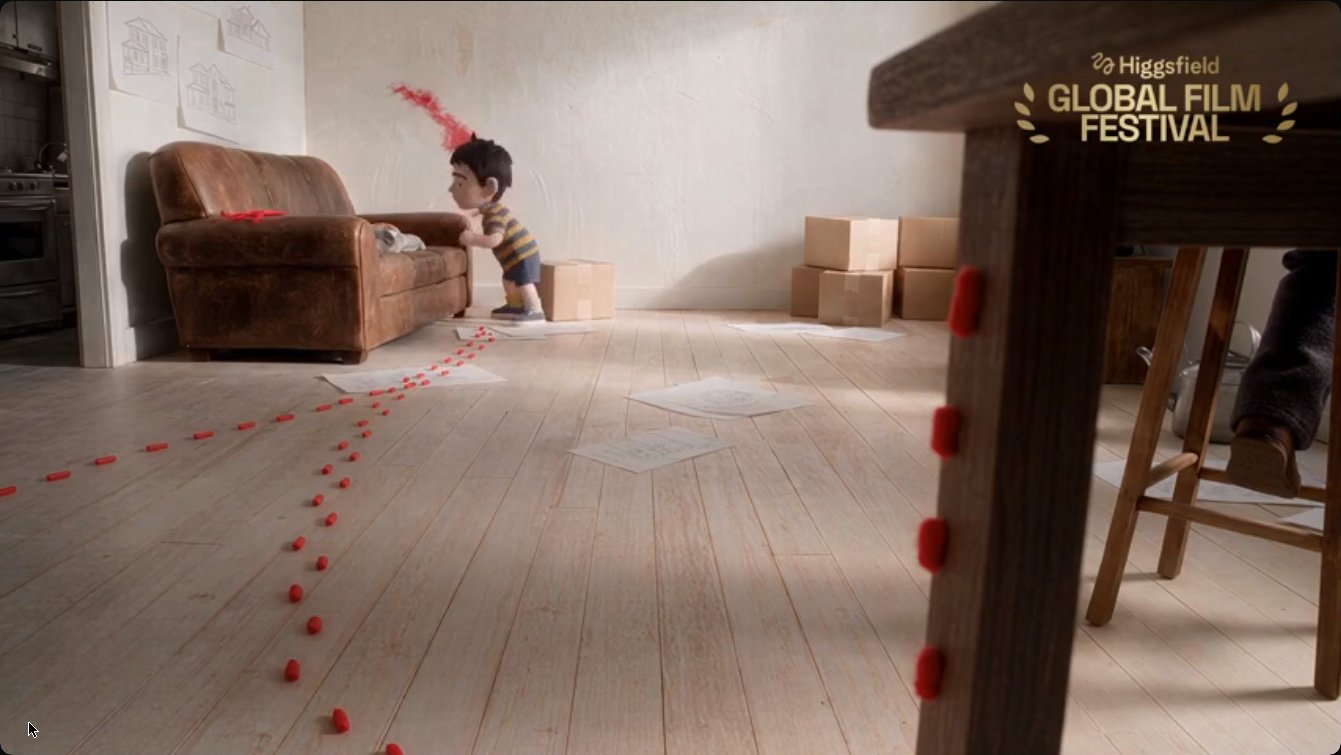
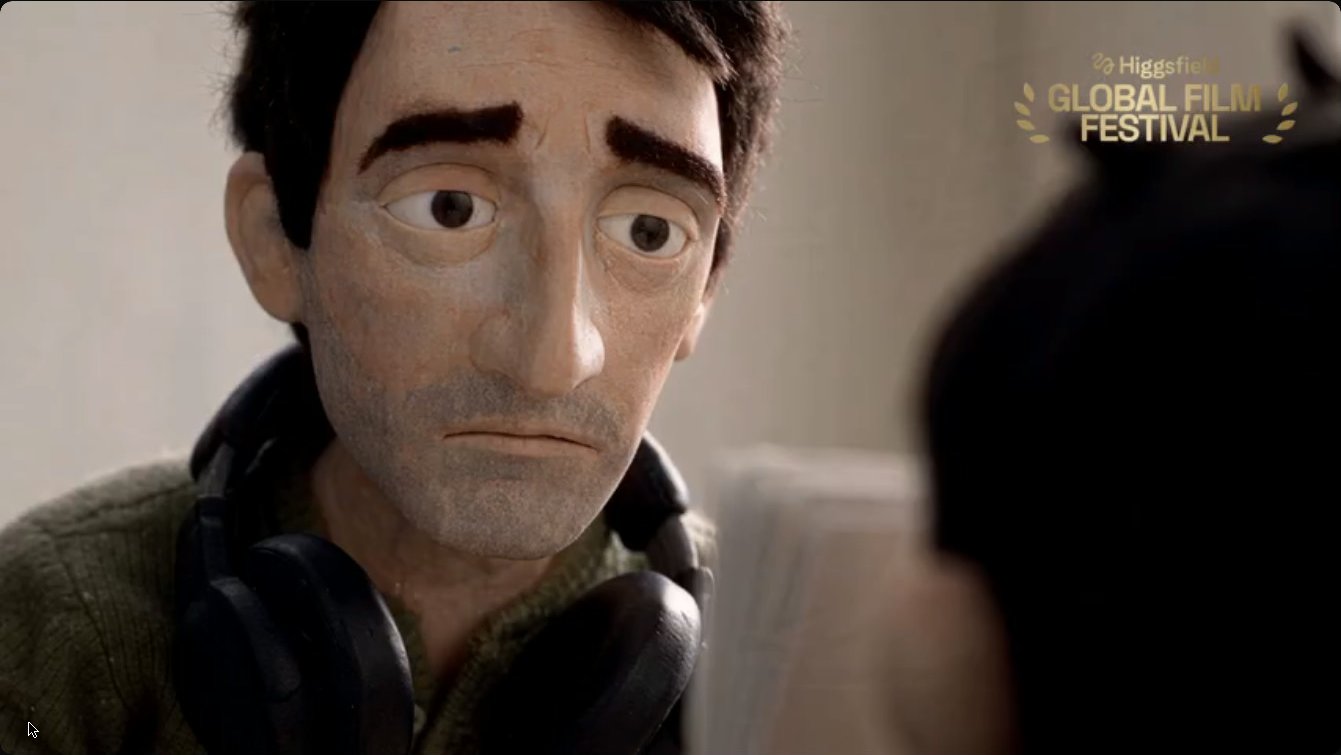
Then the boy’s art escapes. A red dotted stick-figure trail runs across the floorboards of the apartment, past the brown leather sofa where the boy stands in his striped shirt; house sketches are taped to the walls; moving boxes are stacked in the corner, as if the family’s life is half packed, half provisional. When the father discovers what has been happening in his home, the film gives us his face in extreme close-up — wide, worried eyes, headphones slipped around his neck, his son’s dark silhouette in the foreground — and then the father in profile, studying the wall of blueprints and red-and-yellow stick marks, doing the arithmetic every parent in this scene has to do: scold, erase, or understand.
By now the wall holds both their worlds: his blueprints, and a tank drawn in blue yarn with red marks along its edge — a child’s war machine rendered in the softest materials imaginable.

Best Scene (~4:45)
He picks up a marker
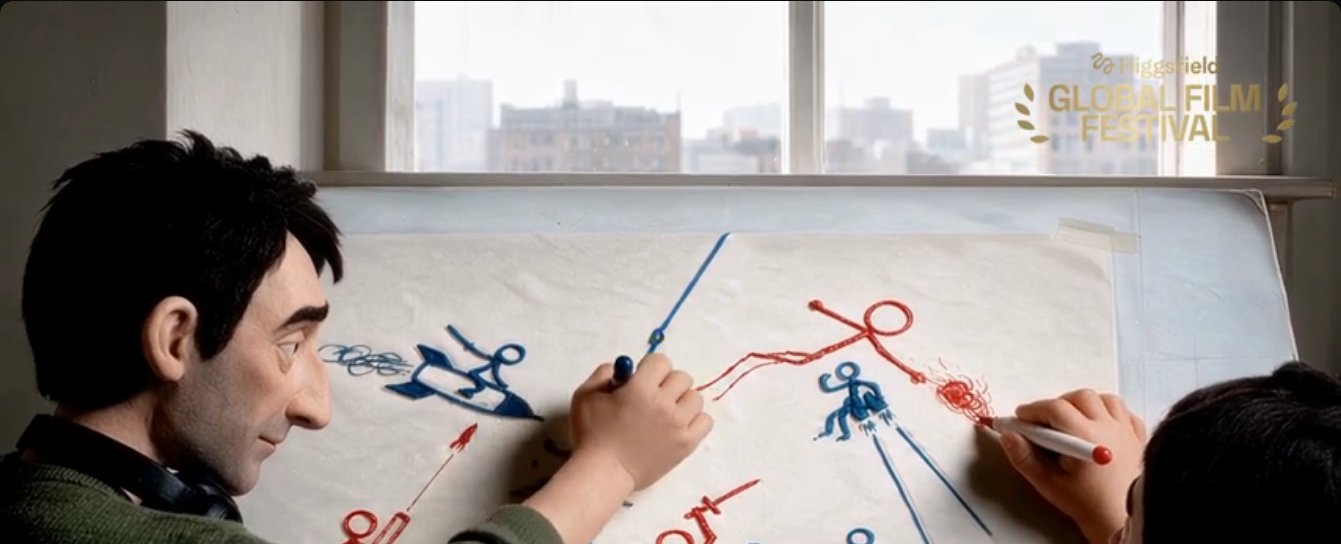
The father does not scold the boy. He does not erase anything. He picks up a blue marker and joins his son at the wall.
Father on the left, boy on the right with his back to us, they draw together on the same big sheet — their red and blue stick figures, a tank, a sword and a jet all intermixed, one picture made of both their styles, with the city skyline standing in the windows behind them. Nothing is said. Nothing needs to be. Every parent who has ever been too busy, and every child who has ever drawn on something they shouldn’t, will recognise the exact weight of that gesture: the plan can wait; this is the house. It is the gentlest climax in the festival, and it is perfectly earned.
A Style That Is the Substance
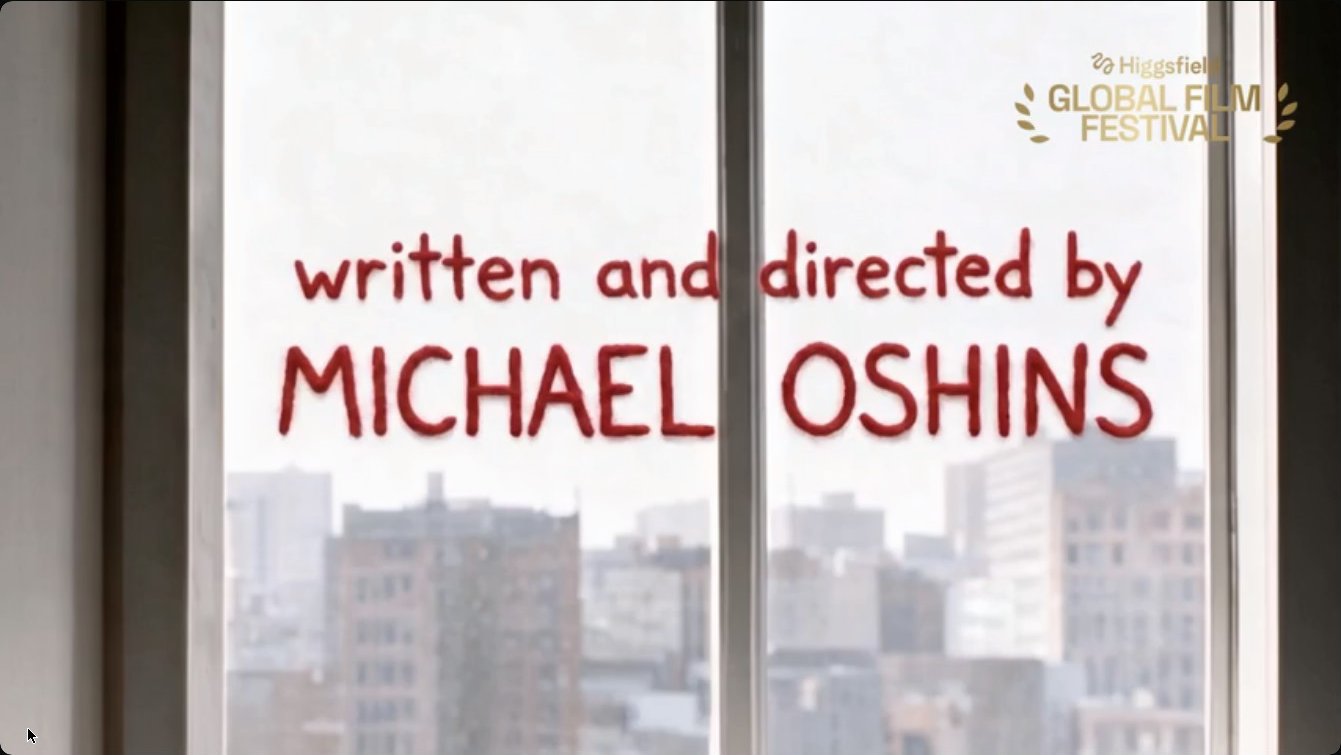
A word about how this film looks, because it matters to how it should be judged. Permanent is made in a claymation, felt-textured style, and its figures are soft — hands melt a little, faces are simple, the stick figures morph as they move. In another film those would be AI errors. Here they are plainly the chosen language: the drawings coming alive is not a malfunction in this story, it is the plot, and the handmade wobble is what makes the apartment feel touched, warm and real. The film keeps that style with complete consistency from its first frame to its closing credit card, lettered in red marker over the skyline: “written and directed by MICHAEL OSHINS.”
Final Thoughts
Permanent is a film about what actually lasts in a home — not the plan taped to the wall, but the picture a father and son end up drawing together.
That is my reading of its title, and the film supports it at every turn: houses are drawn, boxes are packed, work waits in headphones — and the thing that stays is five minutes of shared imagination. I would recommend Permanent to absolutely anyone, of any age: parents will feel it in their ribs, and children will simply love watching drawings misbehave. It is the rare festival film you could show a whole family without a moment’s hesitation.
Scene Breakdown
0:00–1:00 — Hands with a compass draw the house blueprint in blue ink; the father draws the same plan on the big sheet taped to the wall.
1:00–2:00 — The clay TV: the boy’s drawings play as a cartoon — a red stick figure boxing, flanked by blue figures.
2:00–3:00 — The drawings escape: a red dotted stick-figure trail runs across the floorboards; sketches on the walls; moving boxes stacked.
3:00–4:00 — The father discovers it: his wide, worried eyes in extreme close-up; the wall of blueprints and stick marks.
~4:35 — A blue yarn tank drawing on cream paper, red marks along its edge.
~4:45 — Best Scene: the father picks up the blue marker and draws with his son on the same big sheet.
~4:57 — The closing credit card in red marker lettering over the skyline: “written and directed by MICHAEL OSHINS”.
Throughout — Almost nothing counts here: the soft clay-and-felt hands and faces, and the stick figures that morph as they move, are the film’s deliberate style — the drawings coming alive is the plot itself, not a slip. No garbled text anywhere.
A solo production by Michael Oshins, created for the Higgsfield Global Film Festival.
There are no reviews yet. Be the first one to write one.