

 Mohamed Maged
 Creator ID26-11-00-0078

Score breakdown
4 views on Kineograph
Film Review
Written by Kineograph
Wali Na was a ghost — an operative in the shadow world — and she walked away from it for tea, winter streets and ordinary people living ordinary lives, until her old agency came and sat down beside her and asked for one more job.
This review discusses the ending. If you would rather watch the film first, we recommend you do, and then come back.
“I’m Waleena. It Doesn’t Matter If That’s My Real Name.”
The film opens on a winter night and a voice thinking out loud: “We’ve grown to over 7 billion now. Yet so few notice a beautiful winter night… Hello, I’m Waleena. It doesn’t matter if that’s my real name or not.” After 2015, she tells us, the world entered a strange era; everyone believed stability had become the nature of the times, but people like her could see that nothing calm was truly on the horizon — an explosion was coming, and it drove the figures of the shadow world into retirement. Her. Among them.
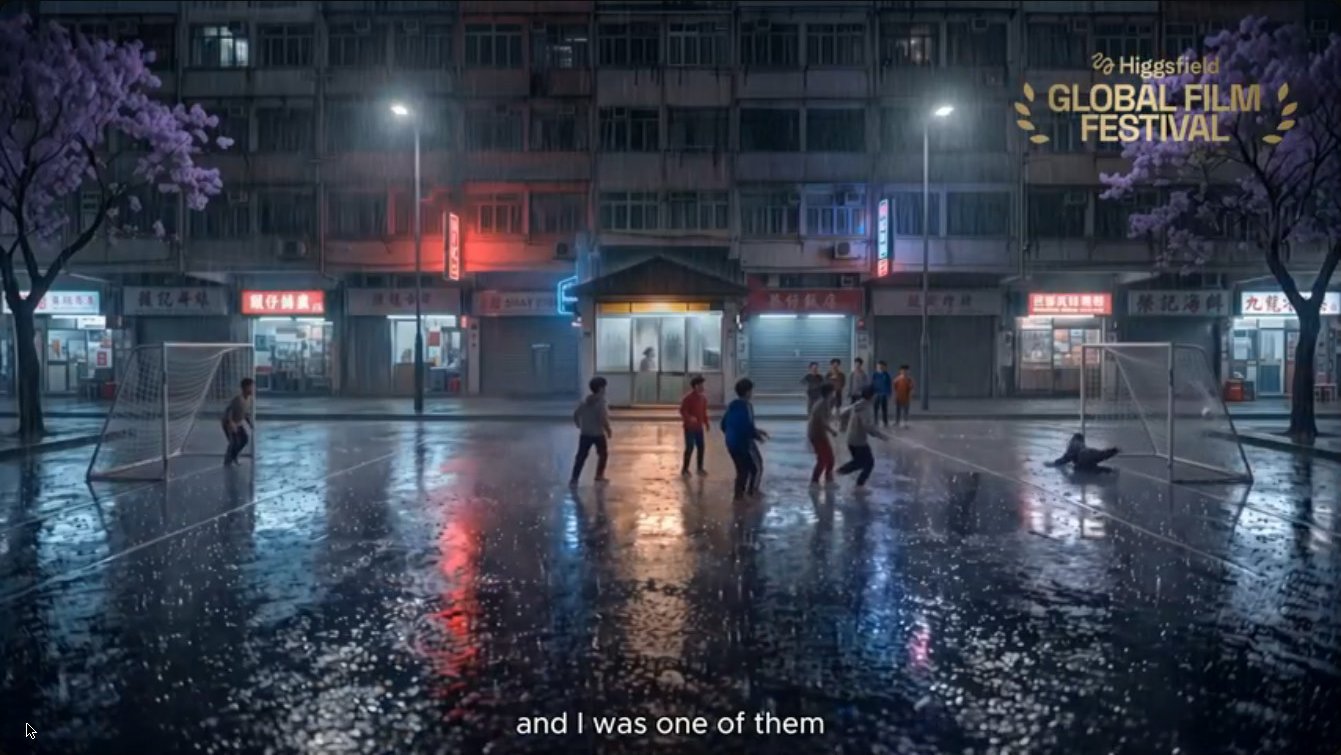
Her retirement is the film’s loveliest image: children playing football in the rain at night, under purple-blossom trees and neon signs, while Wali Na sits on the street with a cup of warm tea, watching other people be safe. That is what she bought with her old life. And it lasts about two minutes, because men from her agency sit down beside her: “There’s someone who wants to speak with you about something important.” — “But I’m retired.” — “We know, but you’re coming with us.”
There Is Only One Willina
The briefing is pure espionage pulp, and the film knows it: a massive disruption is about to hit the tech world, stored on a flash drive held by an unknown man who acquired it after eliminating his target — a man with no known name, nationality or language count. “He’s just like you,” they tell her. “There is only one Willina.” On the table lie her old weapons, “worn out from heavy use because they belong to someone exceptional.” She refuses — “I’m retired and it’s over” — and the price goes up: her last job paid $21 million in raw diamonds; this one is offered at $300 million in diamonds, or whatever she names. In a control room, uniformed generals watch the whole interrogation replayed on a wall of monitors.
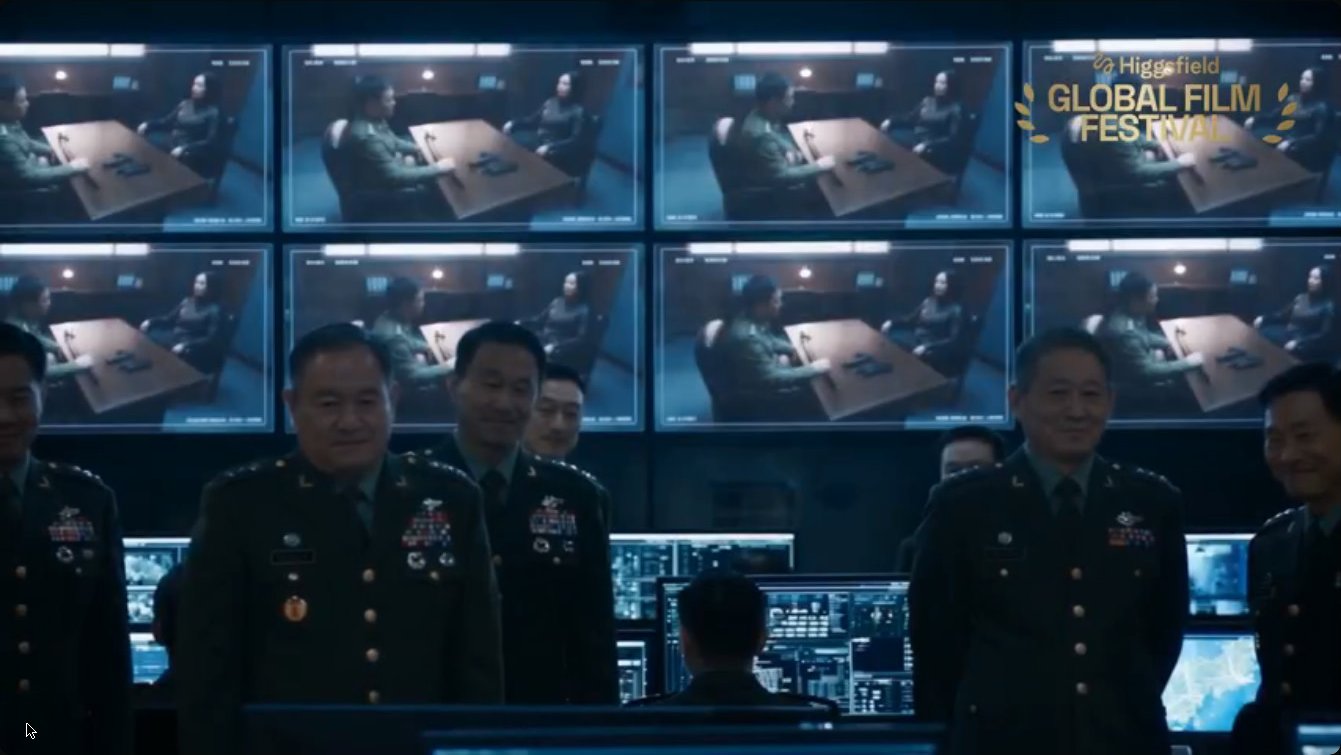
It is here that honesty requires a kind word about a real flaw. The film’s subtitles, burned into the picture, garble repeatedly — fragments of other languages drift through the English narration, and at one point in the interrogation the subtitle announces, apparently from nowhere, that “what’s gonna happen is Gandhi coming back to life.” No one in the film said that; no one could have. It does not ruin the scene, but it breaks the spell every time it happens, and it happens often enough to cost the film real marks.
“Shall we begin the dance?”
The generals in the control room know her habits: “If it comes down to a confrontation, do not face him unarmed. We know you like the little fun and dancing before the storm. Shall we begin the dance? Let’s do this.”
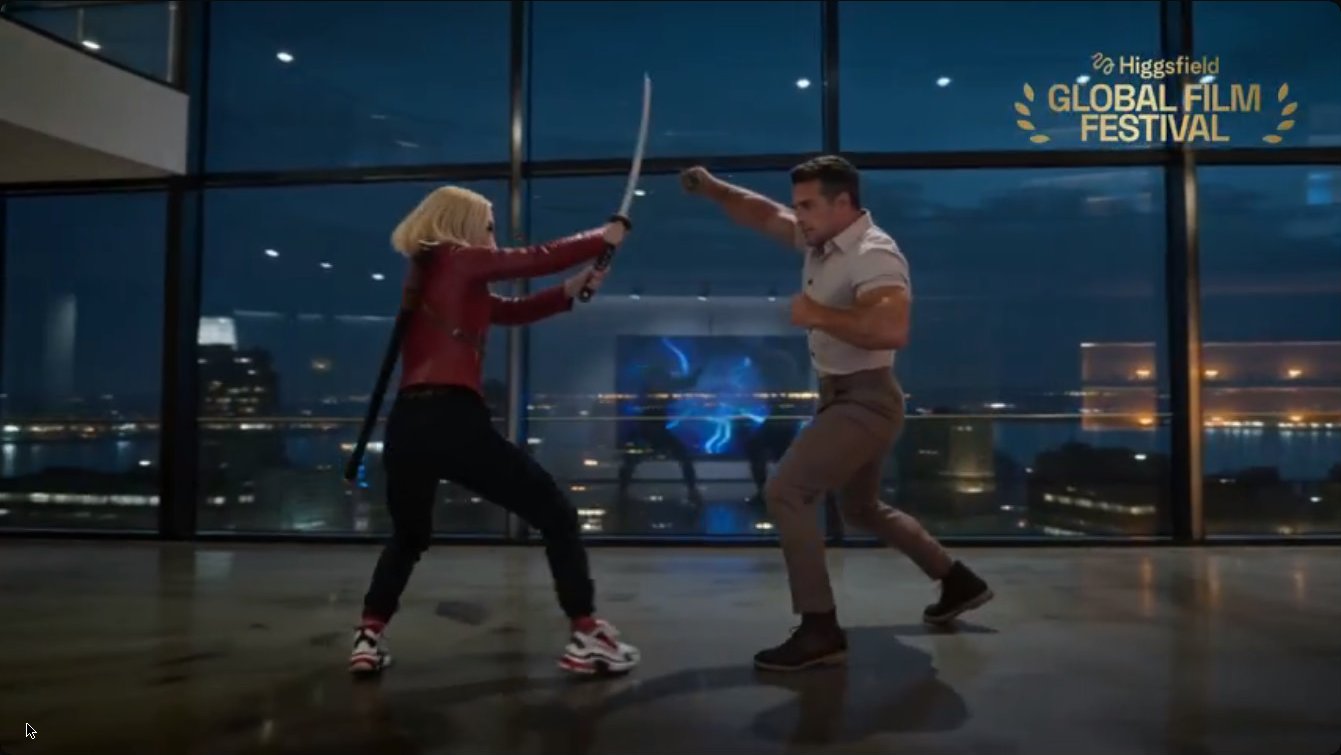
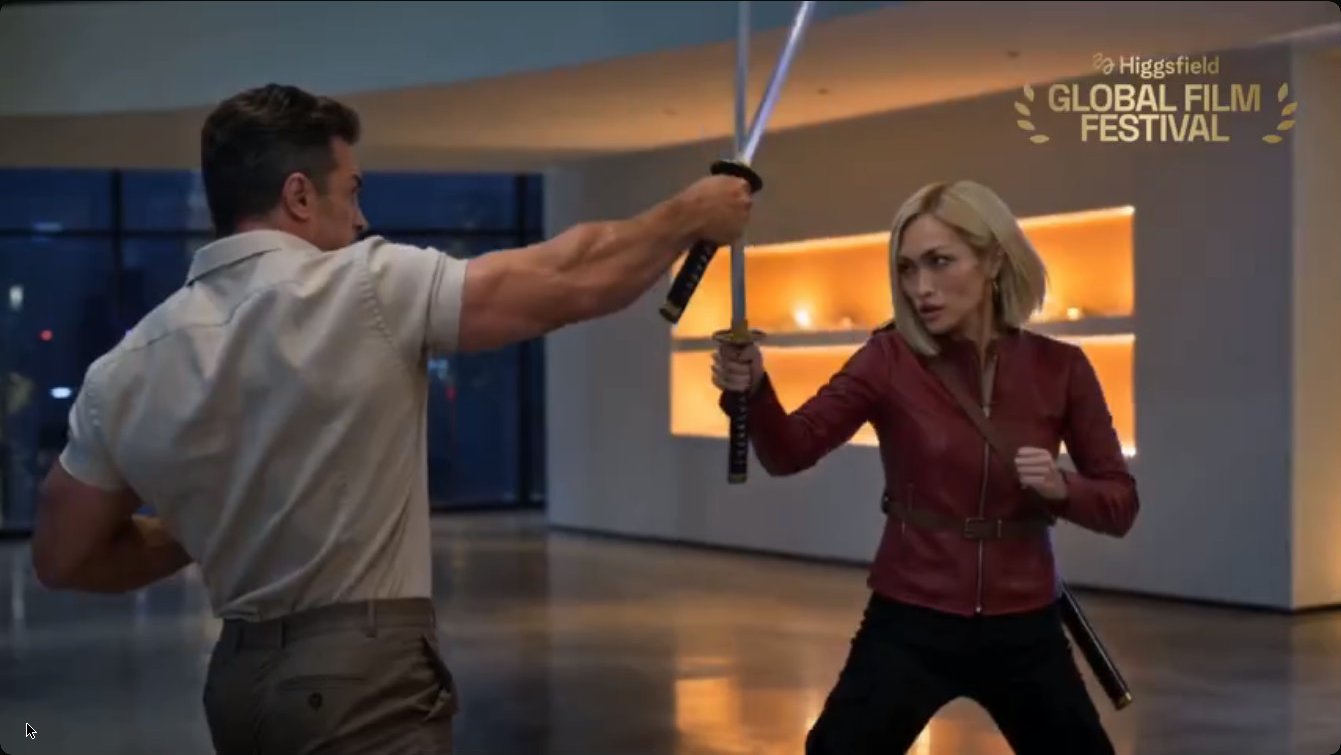
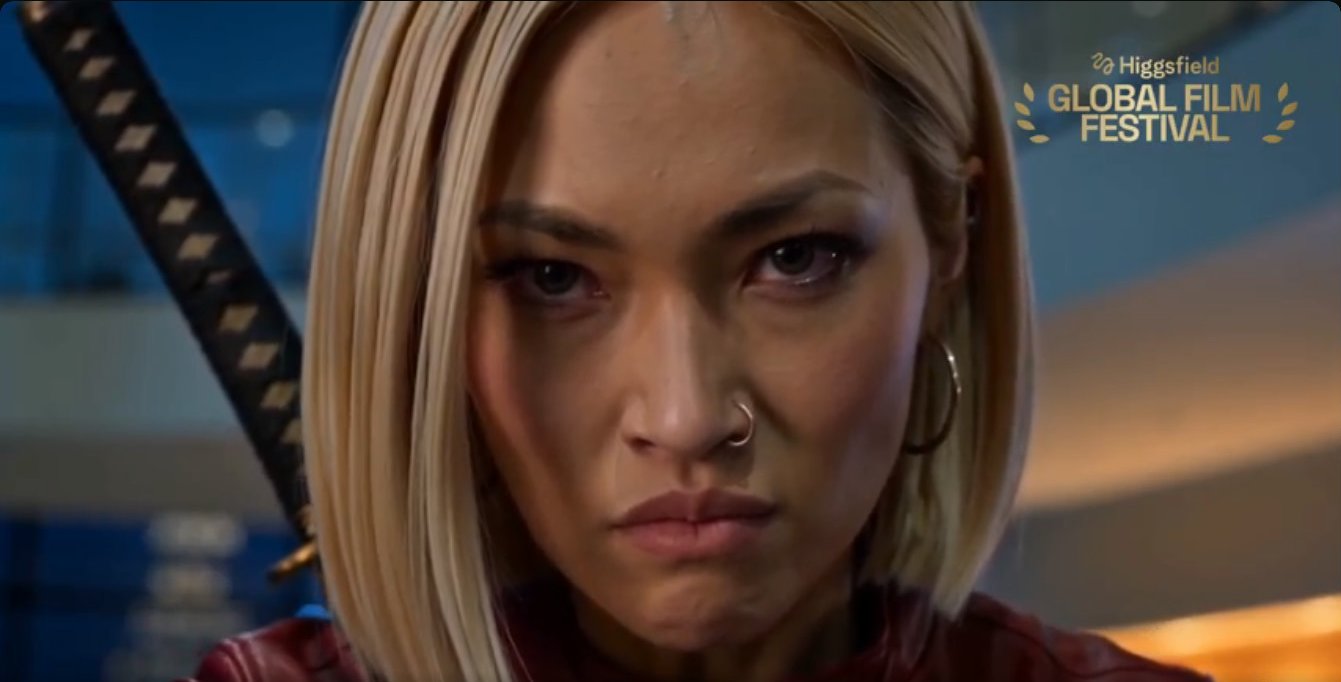
And the film dances. The confrontation plays out high in a glass-walled tower at night, the city lights spread out behind the fighters: Wali Na — red leather jacket, a katana on her back — against a muscular man, the duel carried mostly by music rather than dialogue. It is the film at its most confident: the framing is handsome, the rainy neon world outside the glass gives the fight a stage most action shorts would envy, and for these minutes COLD NOTE becomes the sleek, stylish thriller it wants to be. If the whole film held this level, we would be having a very different conversation.
Thousands of PDFs
The target is captured, and he talks: “Wait, I’ll give you everything.” What was on the flash drive turns out to be almost funny in its bleakness — “simply thousands of PDFs containing every single thing you are using right now.” And then Wali Na makes the decision the whole film has been walking toward. She hands the contents to her agency — and sells them to other parties too. “That’s the best thing I’ve ever done to bring balance to this world,” she says. “Billions of humans deserve to live — the people I love watching walk the streets in the winter. Those people deserve the peace I was denied for many years.”
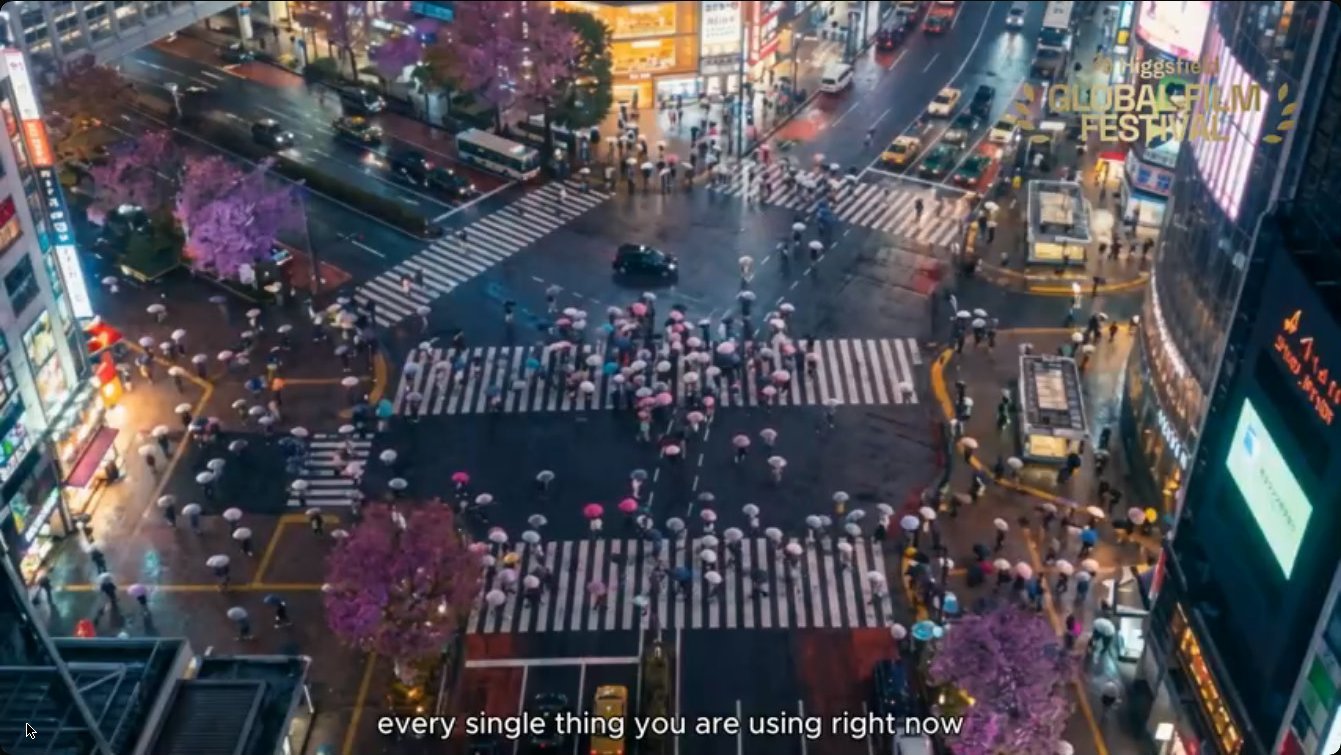
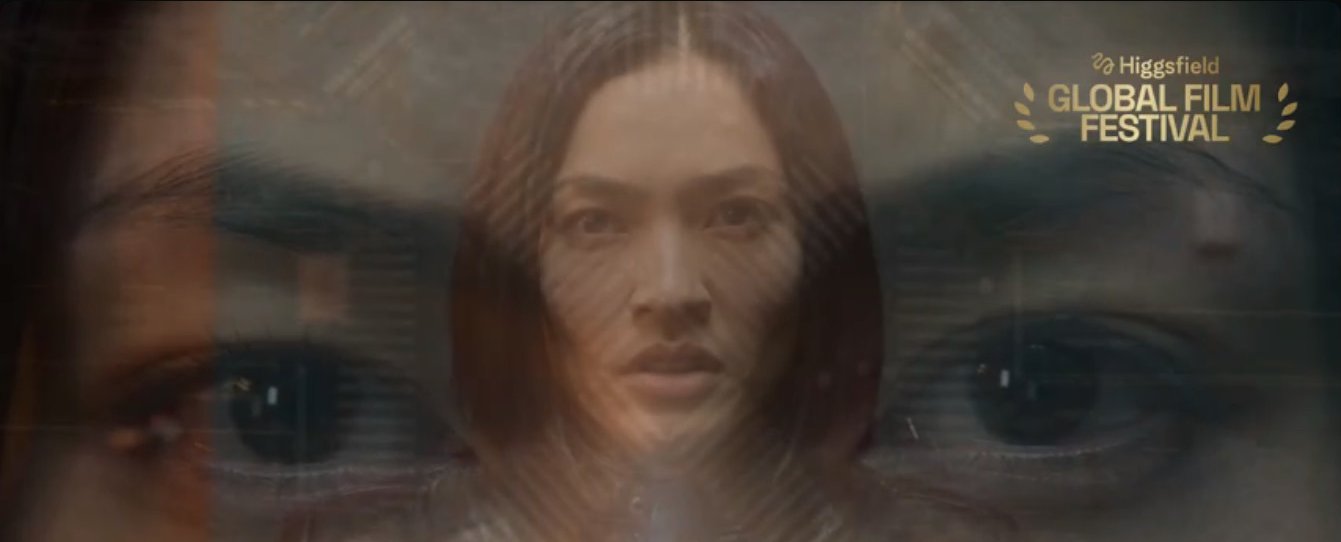
It is a good heart for an action film to have, and it retroactively explains the tea, the rain, the children’s football: she is not protecting an asset, she is protecting the ordinary. The film closes on a layered double-exposure of her face, the rainy street of umbrellas again, and a final portrait of her with the katana raised over the defeated man — and then, honestly and a little cheekily, it declines to end at all. “Whatever. That was a note from years ago,” she tells us, breaking the frame. “So, do you want me to tell you another note?” It is an open ending and a pitch for a sequel in the same breath; the project page likewise calls the film a first step in building a larger world. Viewers who need an ending should know they are getting a beginning instead.
The Woman Keeps Changing
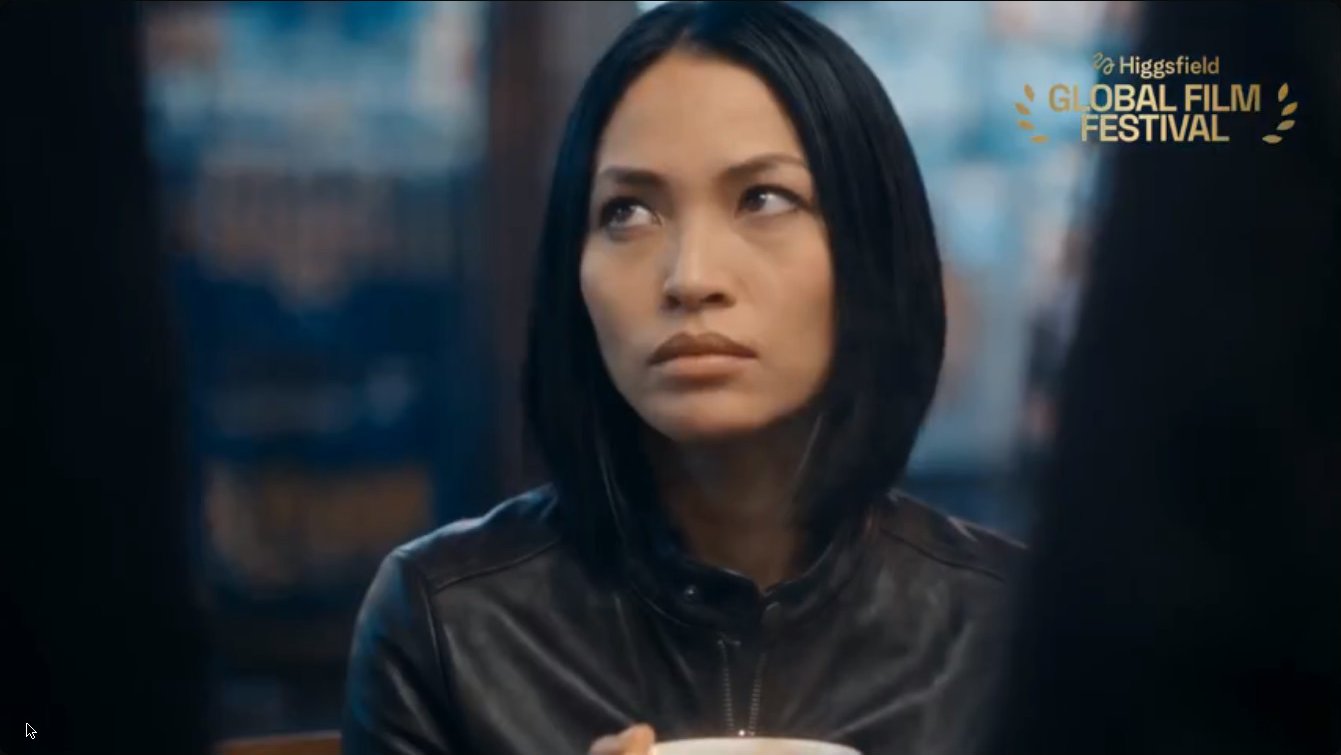
The film’s biggest problem follows its heroine from scene to scene: she will not stay the same woman. The Wali Na of the tea stall and the office has a black bob; the fighter in the tower is blonde, her hair first in a ponytail, then a blonde bob; her face shifts between scenes, the target’s proportions change with her, and in the fight her hands blur around the katana’s grip. None of this is fatal in a single frame — the rainy streets, the blossom trees and the glass tower are genuinely handsome — but across eight minutes it keeps reminding you that you are watching a construction rather than a person, which is exactly what an espionage film cannot afford.
Final Thoughts
COLD NOTE is a stylish, big-hearted piece of neon noir whose heroine keeps changing her face — ambition and atmosphere in abundance, finish in shorter supply.
I would recommend it to action fans who enjoy a rainy, neon-soaked world and a katana duel staged like a dance, and who can forgive subtitles that occasionally wander off on their own. There is a better film inside this one trying to get out — the voice, the look and the closing speech all prove it — and if Wali Na does come back to tell another note, I hope she comes back as the same woman from one scene to the next. I would watch it.
Scene Breakdown
0:00–1:00 — The title card, then narration over a winter night: “Hello, I’m Waleena. It doesn’t matter if that’s my real name or not.”
1:00–2:00 — Children play football in the rain under purple blossoms and neon; tea on the street: “But I’m retired.”
2:00–3:00 — The interrogation: “I don’t run. I simply did what I was trying to do, put everyone in their place.”
3:00–4:00 — The briefing: the flash drive, the weapons worn out from heavy use, and an offer of $300 million in diamonds.
4:00–5:00 — Best Scene: the control room — “Shall we begin the dance? Let’s do this” — and the katana fight begins.
5:00–6:30 — The duel in the glass-walled high-rise, city lights behind the fighters, played mostly over music.
6:30–7:00 — The capture: “thousands of PDFs containing every single thing you are using right now.”
7:48–8:30 — The double-exposure ending and the final portrait: “do you want me to tell you another note?”
~1:00–3:00 — The burned-in subtitles garble repeatedly — one line announces that “what’s gonna happen is Gandhi coming back to life” — and fragments of Mandarin and French intrude where neither belongs.
5:00–6:30 — In the katana fight, the hands on the blade blur.
Throughout — Wali Na’s hair runs from black bob to blonde ponytail to blonde bob, her face shifts between scenes, and the target’s proportions will not stay consistent.
Created for the Higgsfield Global Film Festival; described on its project page as the first step in building a larger world.
There are no reviews yet. Be the first one to write one.