

 Jacob Everett
 Creator ID26-11-02-0010


Score breakdown
296.5K views
Film Review
FALLEN LEAVES
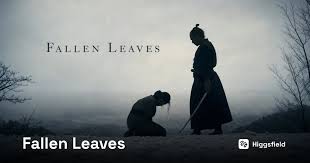
In the snow of a war-torn province, a peasant woman kneels before the men who have sentenced her to death for theft. A Sengoku-era story about a mother, a daughter, and how far a bond can travel after everything else has been taken.
Synopsis
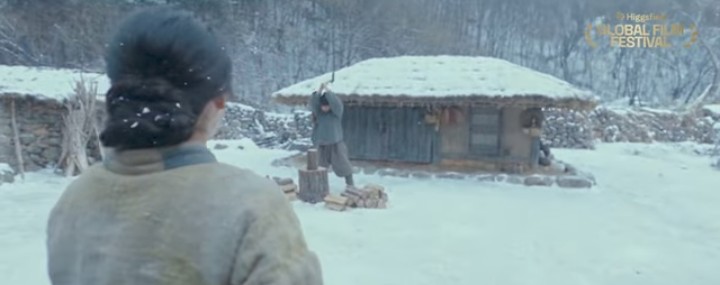
Fallen Leaves opens in the lawless countryside of the Sengoku period, where a peasant mother is dragged before her executioners for the crime of stealing food to feed her child. A sudden bandit attack interrupts the execution, and what follows plays as a desperate, adrenaline-fueled escape through the snow and back into the woods toward home — toward her daughter, and toward a husband cutting wood in the yard. Only in its final minute does the film reveal what it has been building toward all along: this was never an escape. It was a spirit’s last journey home.
The Review
This is my fourth time watching Fallen Leaves, and it is a film that only tightens its grip with repetition. What Jacob Everett has built here is a piece of classical, patient storytelling disguised as a survival chase — and by the time the truth surfaces, the rug-pull doesn’t feel like a twist for its own sake. It feels earned, and it feels devastating.
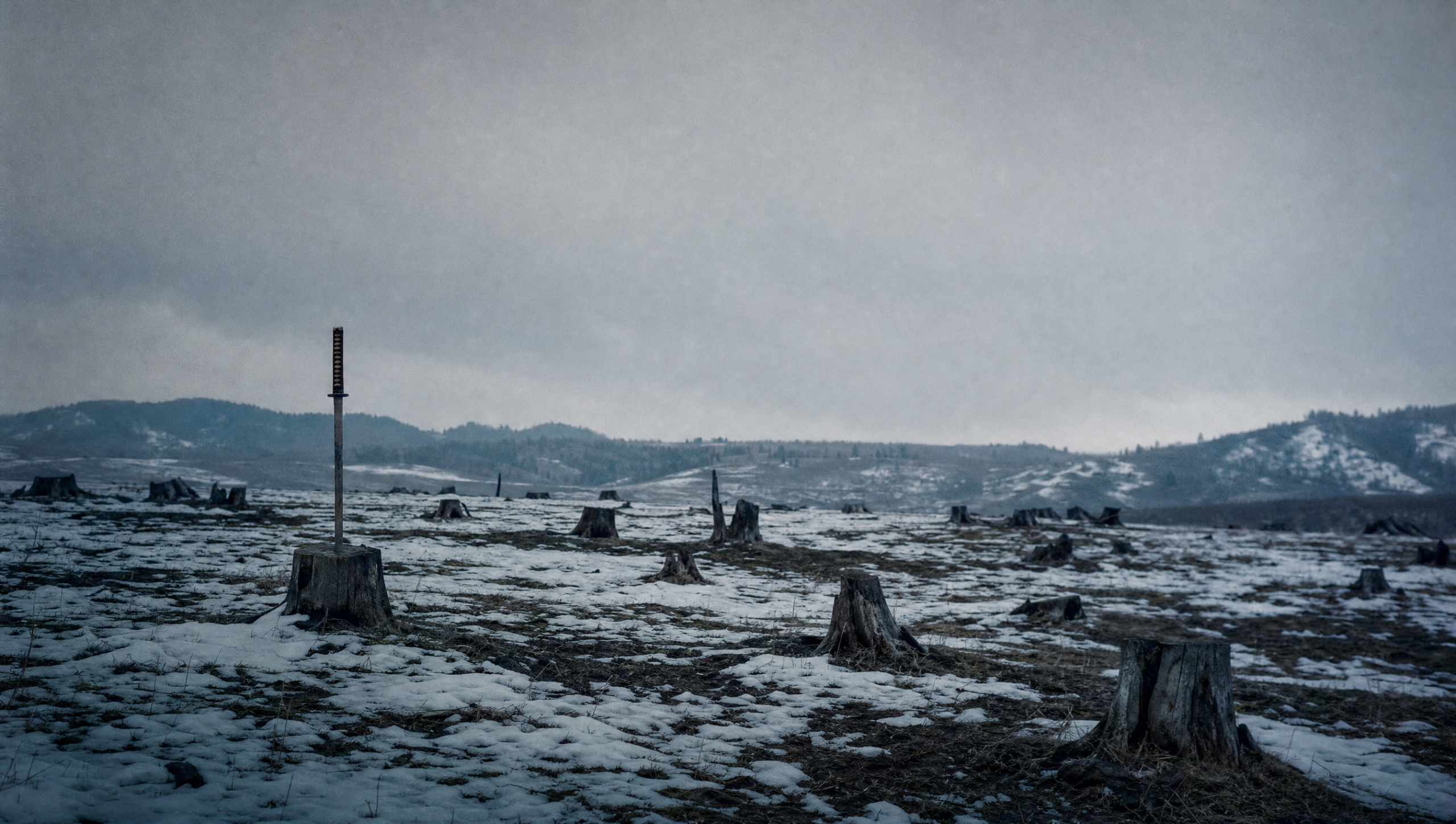
The visual language sets the tone before a single word is spoken. The film leans on naturalistic, handheld camera movement and a cool, desaturated color grade modeled on Fujifilm Superia 400 stock — a deliberate, film-emulated softness with a green-cyan bias in the shadows that keeps everything grounded and unglamorous. Nothing here is shot for spectacle. The execution field is bleak, underexposed, composed with a stark asymmetry — a lone katana driven into a stump, weighted hard to one side of the frame, with nothing but cold negative space filling the rest. It is a composition that tells you, before the plot does, that this is a world with no mercy built into it.
The sound design is where the film does its most sophisticated work. The scene of the executioner preparing his blade sits in near-total silence — not quite ambient, not quite scored, just a held breath — and it is far more unsettling than a swelling cue would have been. Restraint like that is a directorial choice, not an absence of one. When the drums do arrive, timed to the mother’s crawl through the snow, they are used the way a great score should be used: not to tell the audience how to feel, but to physically transmit the character’s adrenaline. The tempo climbs with her pulse, and by the handheld pursuit sequence, the drumbeat has become the audience’s own heartbeat.
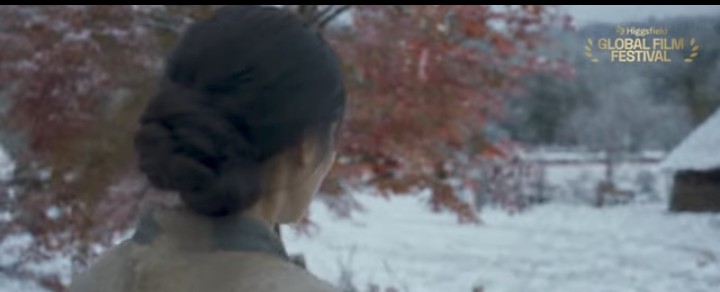
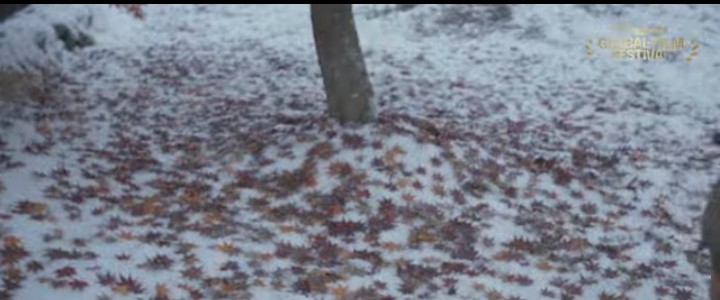
What elevates Fallen Leaves from a well-crafted chase to something closer to classical tragedy is its patience with foreshadowing. The shot of the mother passing a tree bare of snow, with fallen leaves resting undisturbed on top of the snowline, reads on a first watch as a small continuity oddity — snowfall should cover a tree, not leave leaves sitting cleanly over it. It is not an error. It is the film’s title made literal, a quiet visual cue planted in full view that reality has already come loose at the seams. That is disciplined, confident filmmaking: seeding the ending in an image the audience will only understand in hindsight, and trusting them to do the work rather than explaining it.
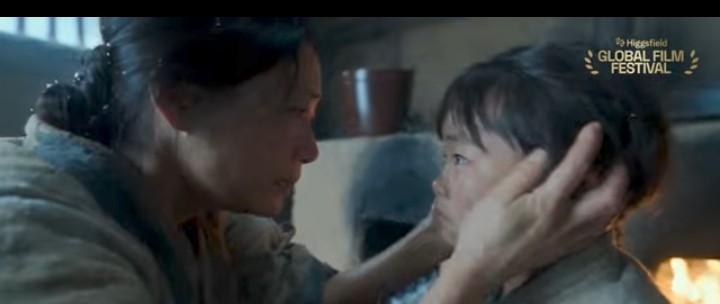
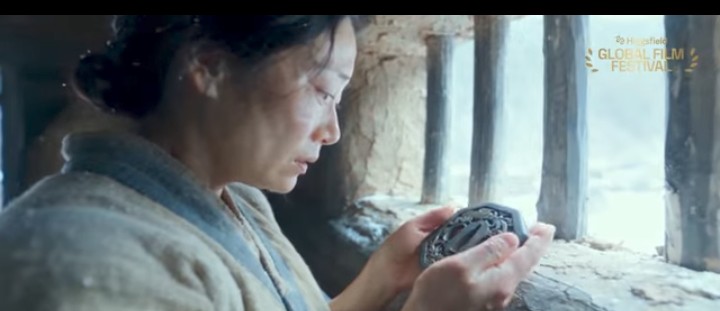
And then there is the emotional core, which is really the whole point of the film: the reunion. The mother bursting through the door, breaking down as she holds her daughter, is staged and performed with a rawness that sells the entire back half of the story. I was fully invested in this woman’s survival by this point — invested enough that the household details afterward, the talisman in the window, the husband chopping wood who never turns to see her, the blood on the ground back at the execution field, land as devastating rather than merely clever. Fallen Leaves asks its audience to hope, deliberately, only to take that hope away. It is not a film interested in a happy reunion, and it is honest enough not to pretend otherwise. It also quietly dismantles the myth of samurai honor along the way — nothing about this world protects the poor, and no code of honor arrives to save her. What saves her, in the end, isn’t rescue at all. It’s the pull of her daughter, strong enough to be felt by a spirit and by a child attuned enough to the world beyond to feel it back.
I will admit the ending left me sitting in silence. I had emotionally invested in this woman’s wellbeing for five minutes straight, convinced I was watching an escape story, and the film waited until the very last beat to tell me I was watching a haunting the entire time. That is a difficult thing to pull off without feeling like a cheap trick, and Fallen Leaves pulls it off because every technical choice in the film, the silence, the fading drums, the leaves that shouldn’t be there, was already telling the truth. I just wasn’t ready to hear it.
This is classical storytelling at its most disciplined — a film that trusts image and sound over exposition, and that earns its final gut-punch by planting it in plain sight from the very first frame. Beautifully crafted, beautifully scored, and beautifully cruel in exactly the way great tragedy is supposed to be.
Scene-by-Scene Breakdown
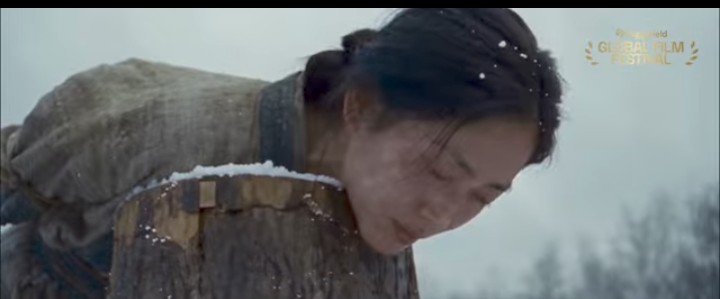
The film opens on the mother being dragged by two men, begging for her life — she has a child, and she stole food out of necessity. Her fear is palpable within the first 23 seconds.
She is led to her execution. By the 57-second mark, she has resigned herself to her fate — closing her eyes as a single tear falls.
The silence as the executioner prepares his blade is masterfully used — not quite ambient, not quite scored, just held tension. One of the film’s most effective sound-design choices.
At the last possible second, bandits attack the two men, giving the mother her chance to flee.
The drums begin, slow and deliberate, as the mother crawls through the snow. The tempo builds with every cut back to her.
This is the sequence I’m choosing as the best in the film, and it’s the shot that hooked me on my very first watch. The drums peak — fast, loud, relentless — as the mother runs for her life through a handheld frame that never lets her go. A bandit crosses her path on horseback; she falls, the horse thunders past, and she scrambles back up and keeps running. The camera work here is doing something specific and difficult: it isn’t just following the action, it’s transmitting the adrenaline directly, using the rising drumbeat as a physiological cue rather than a musical one. As the chase clears the trees, the drum fades and the camera tilts up to open sky, and the release of tension is as carefully engineered as the buildup was. It’s a complete arc in thirty seconds — dread, panic, survival, exhale — and it’s the emotional engine that makes everything after it land as hard as it does.
The score drops to near silence, which feels exactly right after the adrenaline of the chase.
The shot that had me rewinding on my first watch: the mother passes a tree bare of snow, with fallen leaves resting neatly on top of the snowline. It reads at first like a continuity error — snowfall should have covered both — but the title of the film says otherwise. This is intentional, and it’s the film’s clearest visual foreshadowing of the ending.
The score turns genuinely beautiful here, almost as if it’s carrying the daughter’s grief ahead of the scene we’re about to see.
We cut to the daughter, sitting alone in front of the fire at home, visibly sad.
The mother bursts through the door and pulls her daughter into her arms, finally letting her emotions go. The performance sells this completely — the pain feels real, not performed.
The mother tells her daughter to pack her things — they can’t stay here any longer.
She notices a talisman in the window, likely marking a death in the home. She hears wood being cut and steps outside to find her husband, who doesn’t see her. As his axe strikes the wood, we cut to blood on the ground — back at the execution field.
The reveal: there was no escape. The bandits saved her only in the sense that they gave her spirit a path home. Her daughter may have sensed her because children remain attuned to the spirit world in ways adults no longer are. Her husband never sees her — she was only ever there in spirit. It’s a gut-punch of an ending, and it recontextualizes the entire chase that came before it. That is why the fallen leaves rest untouched on the tree in the snow — her spirit belonged to a place where reality had worn thin.
There are no reviews yet. Be the first one to write one.