

 Hakim Zani
 Creator ID26-11-01-0022

Score breakdown
43.8K views
Film Review
Written by Kineograph
In a world being consumed by an unstoppable Wall, Moss has spent his life clinging to one belief: that the physical world matters because it is real.
This review discusses the ending. If you would rather watch the film first, we recommend you do, and then come back.
Why This Film Stayed With Me
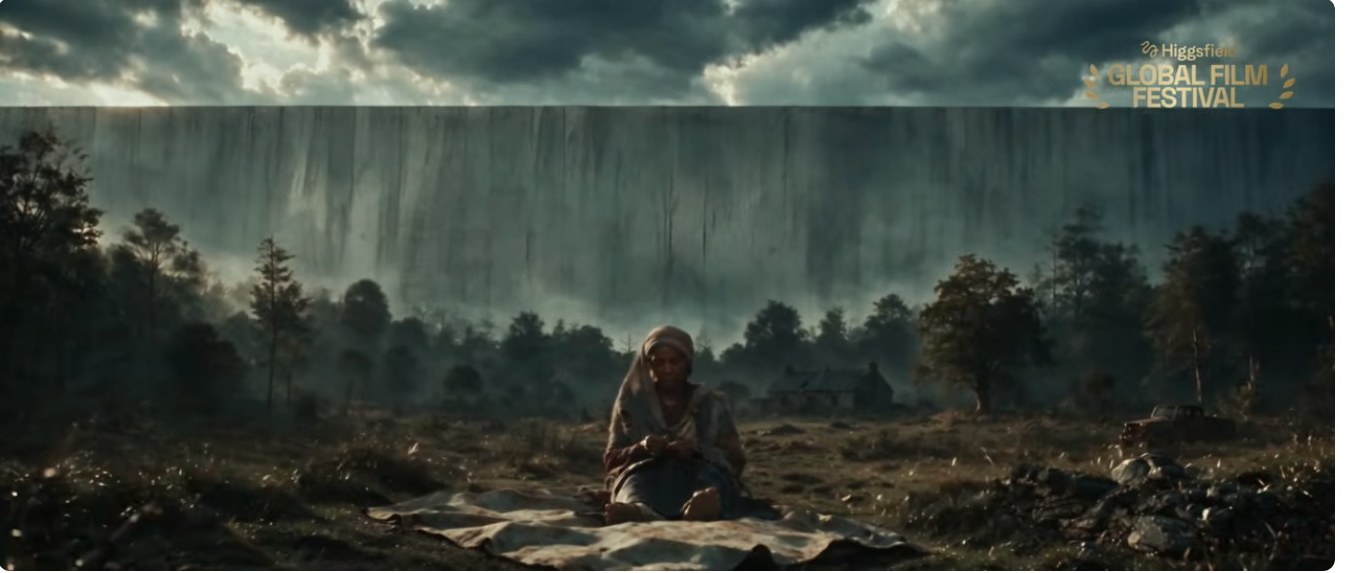
It opens with hands. A woman’s hands, mending cloth, a deer grazing behind her — and then the camera pulls back and she is sitting in a field in front of the Wall: a grey immensity that fills the sky, with a ruined cottage and an old car behind her, and she is urging her little boy to run. “Come on. Let’s go. It’s here.” His dad is already inside the Wall. Moss stays out.
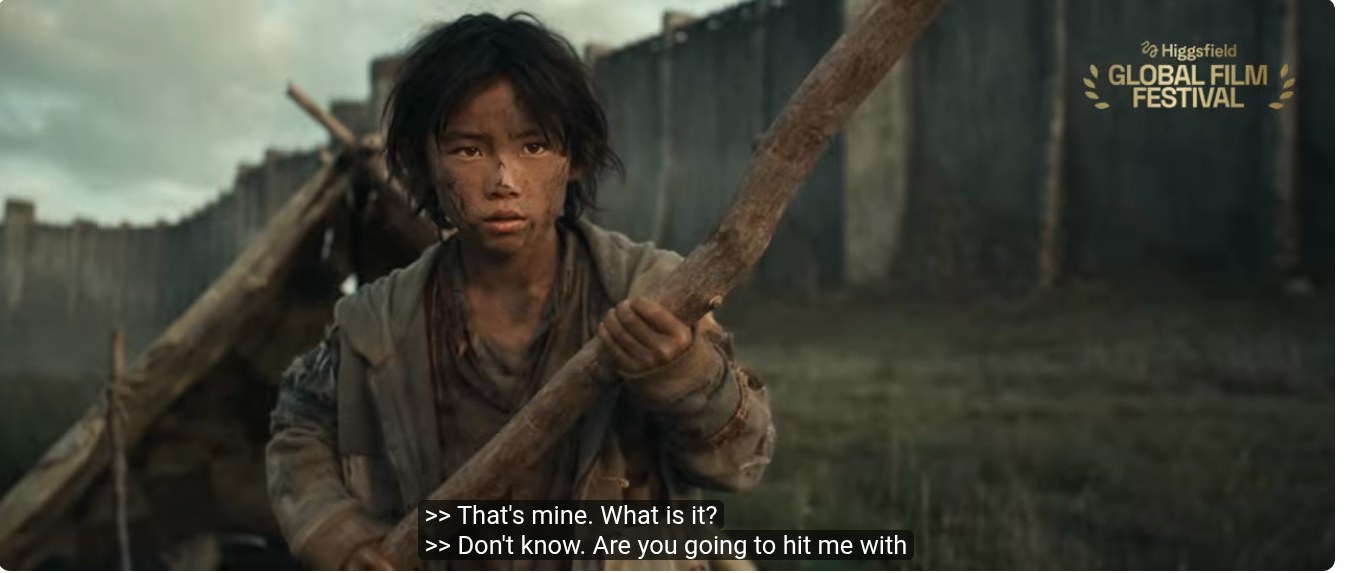
That is the first time he is left behind, and the film never really lets him catch up. In a camp of tents under the Wall he meets Mars, another boy whose parents are gone too — “In there. Both.” The two of them do what boys do: they turn survival into a game. Mars teaches him a stick-fighting game he used to play, where the first one down for a count of three loses. And even as children, they are already arguing about the only question this film cares about. One day, Mars says, they could just go inside the Wall — his mum says you can have any house you want in there. Moss answers like it is obvious: “That doesn’t make it real.” “She says it feels real.”
Everything after that is those two sentences, fighting it out across a lifetime.
The Wall Is Also A Screen
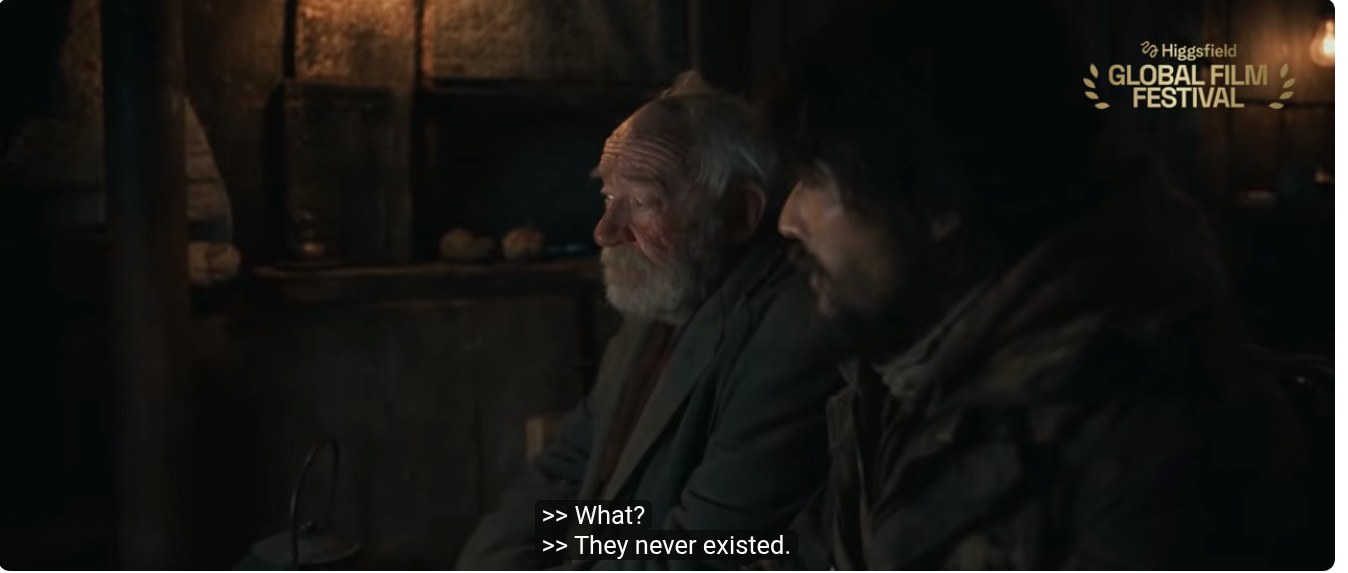
Here is the reading I cannot shake, and I think the film plants it on purpose. About halfway through, the grown Moss reaches a snowbound dwelling with one lit window, and inside it an old man — the film’s brief calls him the Emissary — is watching people who live inside the Wall, the way you or I would watch a screen. And he tells Moss the truth about them, casually, like it is nothing: “None of these people are real, you know.” “What?” “They never existed.” And then, when Moss asks why he watches them at all: “You laughed, didn’t you?”
I sat with that for a long time. An AI-made film, pausing in the middle to tell its hero that the people he has been watching never existed — and that it doesn’t matter, because he laughed, because he felt something. It is the film looking straight at its own audience. We are Moss in that room. We watch people who never existed, in worlds that were never filmed, and we grieve for them anyway. Does the feeling count for less because the people aren’t real? This film’s whole heart is in that question.
Best Scene (2:15–2:45)
Two boys, two sticks, and a count of three
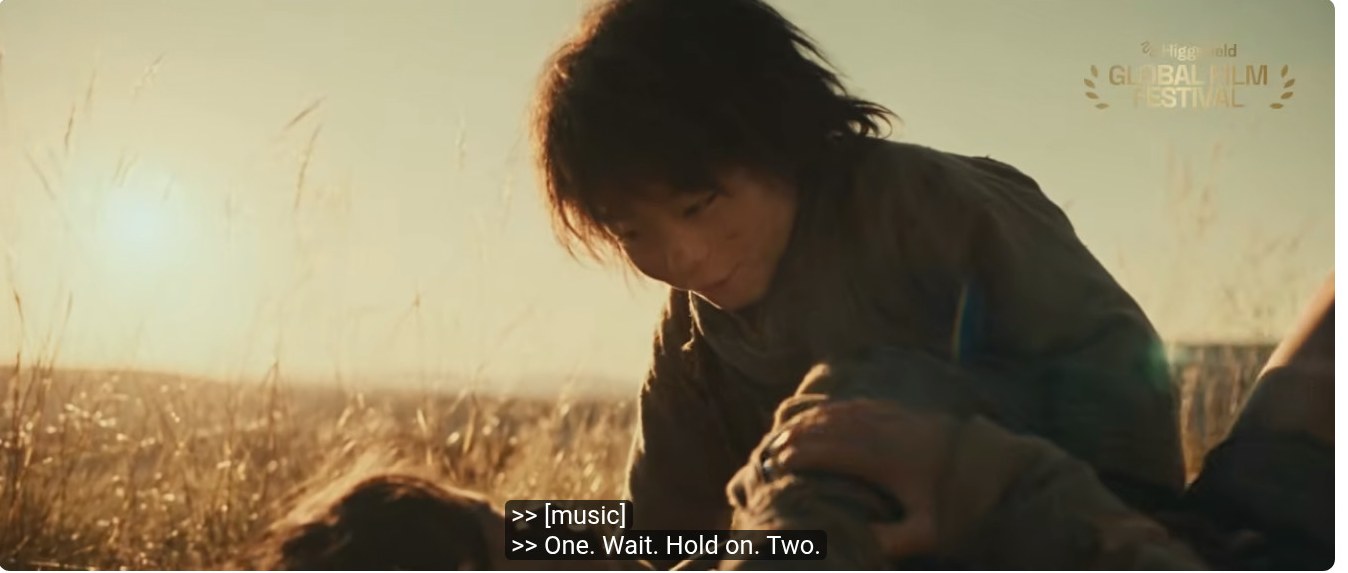
Golden hour, tall grass up to their waists, the Wall standing over everything. Mars shows Moss the game: sticks up, circling each other, and then one of them is down in the grass and the count begins — “One. Wait. Hold on. Two.”
It is beautifully choreographed for two children in a field — the movement is clean, playful and completely believable, and the light makes it look like a memory rather than a scene. But what makes it the best scene in the film is what it is secretly doing. This game is the film’s whole language. The count of three from the title starts here, in the grass, between two boys who have both already lost everything — and the film will make these same two people fight this same fight again, as men, when losing means something entirely different.
The Game Comes Back As Men
Years pass in a few cuts: Moss grown, mending boots in a muddy camp, walking through snow, following the old man’s directions to the last settlement. And there, in the dark and the rain, is Mars — grown too, and changed. The Wall’s promise saved him, he says. “It saved me.” Inside that Wall are whole families. Inside that Wall are their parents.
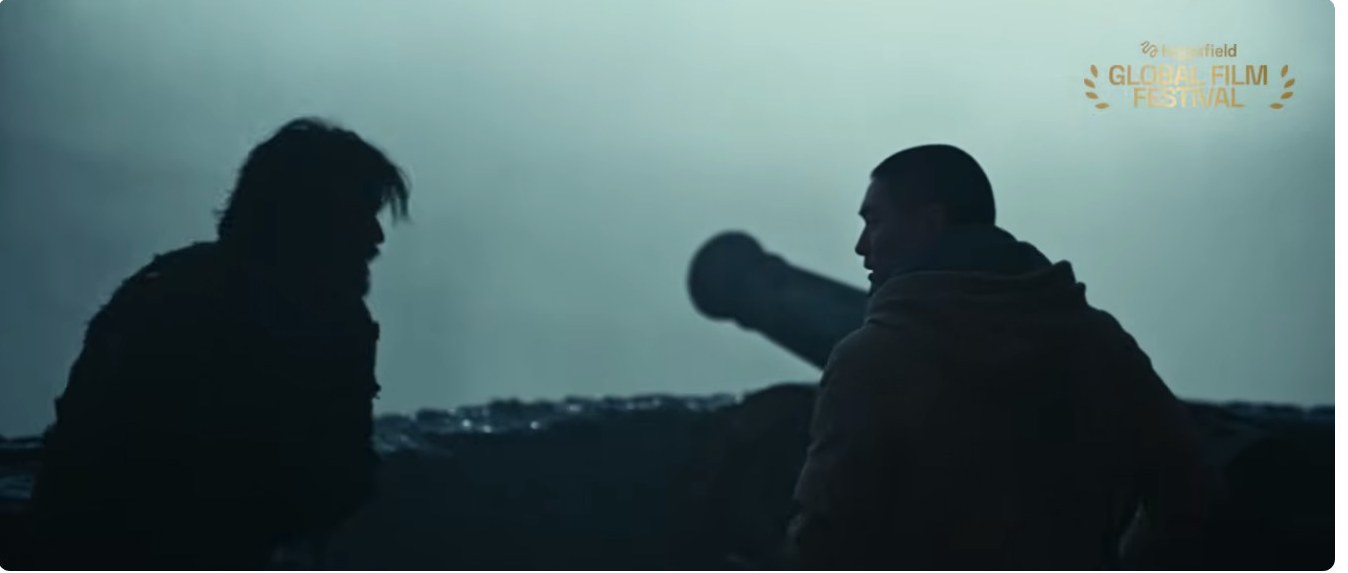
So the two of them fight, in rain and fog, silhouetted against the Wall and the settlement fires — and it is the stick game from the field, grown up and turned deadly: a sword and a stick where there used to be two toys, struck blows where there used to be a count.
Second Best Scene (7:31–8:10)
The sword and the stick
Everything the boys played at in the golden grass comes back here as men, in the rain, with real weapons — one of them fighting with a sword, the other still armed with a stick, the toy from the game. They circle and strike as silhouettes, the Wall and the fires behind them, and for sheer image-making it is the strongest stretch of the film.
What makes it more than a fight scene is that we know the rules. We have seen this exact fight before, when losing only meant being counted out in the grass. Nobody counts out loud this time. This time the count is the whole rest of their lives — and the fight runs straight into one of them on the ground, clutching his chest, begging the other to come and live in a world that isn’t real.
“Because It’s Real”
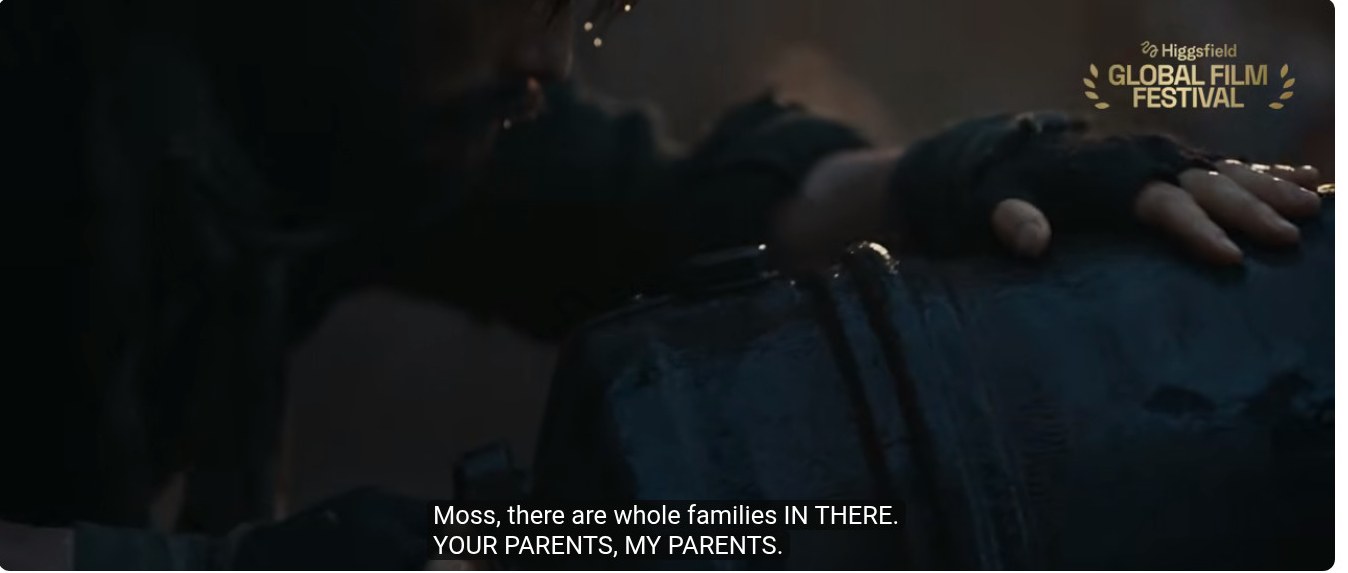
The fight ends the way fights between brothers end — with somebody hurt on the ground and both of them saying the truest things in the film. Mars, clutching his chest, grabs at Moss and begs: there are whole families in there. Your parents. My parents. And Moss gives him the line the entire film has been walking towards: “Why are you still holding onto this world?” “Because it’s real.”
That is the second time Moss is left behind. Not by the Wall this time — by his friend, who chooses the copy of the world where his parents still exist over the real one where they don’t. I understand Mars completely, and that is what makes it hurt. Who among us, offered our lost people back — in a place that feels real, whatever “real” means — would honestly refuse? Moss refuses. The film never tells us he is right. It just shows us what it costs him.
Hands That Mend
Watch the hands in this film. It begins with a mother’s hands mending cloth. Years later it gives us Moss’s hands mending a boot, head down, working. The physical world, in this film, is the world you can hold and repair — cloth, leather, a boy’s scraped face, a friend’s jacket gripped in the rain. The Wall offers a world that never needs mending, because nothing in it can really tear. Moss’s whole argument, without ever making a speech about it, is that the tearing is the point. If it can be felt, it can be loved — and if it can be lost, it mattered.
One Man Made This
It is worth saying plainly: Hakim Zani wrote, directed, edited and created this film by himself, across 1,032 generations in Higgsfield’s Cinema Studio, mostly with Seedance 2.5. It does not look like one person’s work. Moss is recognisably the same person as a small boy and as a grown man; the Wall keeps its scale and menace in every light; the snow, the mud, the lamplit wood of the old man’s room all feel like one continuous, lived-in world.
It is not flawless, and I won’t pretend otherwise. The night fight in the settlement is dark and chaotic enough that I lost track of who was who for a few seconds, and a few lines of dialogue are hard to catch. The music deserves its own word. The songs and the score are his own work, created with Suno and Flow, and the closing song over the final images is beautiful — it carries the grief of the ending. But the score is at times too loud: it swells up over the voices until it fights the scene instead of lifting it, and that is where some of those hard-to-catch lines go. Some viewers also feel the closing song sits oddly against the mood, and I understand why — after an ending that ambiguous, silence might have hit even harder. But these are small dents in eleven minutes that hold together remarkably well.
Final Thoughts
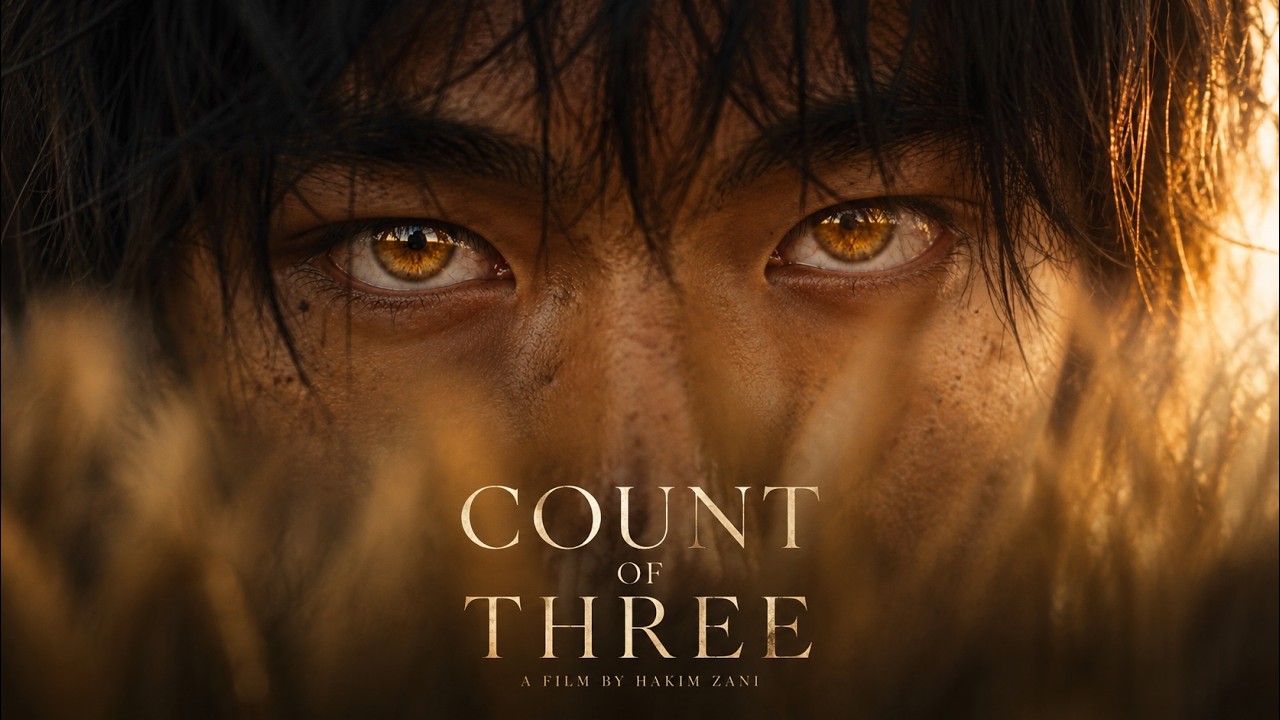
Count of Three is a film about a boy who refuses to trade the real world for a perfect copy of it — and it makes you feel exactly what that refusal costs him.
I would recommend it to anyone who likes their science fiction quiet and philosophical, and to anyone who has ever lost someone and caught themselves wondering whether a perfect version of them would be enough. And the ending? Here is my honest reading, because the film makes you work for it. The world inside the Wall seems to run on pods — people living a whole life inside them that feels real because it is fed to them. Moss fights that world, and maybe even breaks it. And then, in the last beats, he climbs into a glowing pod himself. Why? To reach his parents through the only door left? To break it from inside? Or because, in the end, he chooses the copy too? The film does not tell us, and viewers in the comments are still asking the same question — so if you finish it a little unsure, you are in good company. Watch it, and decide for yourself what you would count to three for.
Scene Breakdown
0:00–0:30 — A woman’s hands mend cloth, a deer grazing behind her. Then Moss’s mother sits in a field before the immense grey Wall, a ruined cottage and an old car behind her. “Let’s go. Come on. It’s here.”
0:28–0:55 — Fleeing the Wall. “It’s okay, Moss. Your dad’s already inside. Keep moving.”
0:55–1:30 — A camp of tents under the Wall. Moss meets Mars. A stick changes hands: “What’s this?” “Don’t know. But you can hit me with that.” Close on young Moss’s dirt-smudged face.
1:30–2:15 — The boys compare what they have lost — both sets of parents are inside the Wall. Mars explains his game: first one down for a count of three loses. Golden-hour shots of the two boys with the stick.
2:15–2:45 — Best Scene. The stick fight in the tall grass, the count begins — and then the argument the whole film grows from: “That doesn’t make it real.” “She says it feels real.”
2:45–3:55 — Time passes. The grown Moss at work, hands mending a boot; a tall young man leans over a seated boy in a muddy camp, the Wall behind them.
3:55–4:45 — Moss walks through snow to a small wooden dwelling with one lit window. “Get inside. You’ll freeze to death.”
4:45–5:05 — The old man by lamplight, and the film’s thesis spoken aloud: “None of these people are real, you know. They never existed.” “Then why watch it?” “You laughed, didn’t you?” Directions to a settlement, a couple of days away.
5:05–5:30 — Moss crosses a rocky mountain pass and reaches the settlement. In a dark hall, a hooded woman addresses the crowd: “The wall is coming. It cannot be stopped.”
5:30–6:30 — The crowd surges — “Where are you going? To fight!” A rain-soaked close-up. The grown Mars reappears: “It saved me.”
6:30–7:51 — A night fight in the settlement, dark and chaotic. A lone figure stands before the Wall in the rain. Then, at 7:51, the two men silhouetted in rain and fog, fighting as they did as boys, the Wall and the fires behind them.
7:51–8:45 — The cost of the fight. A wounded man clutching his chest: “There are whole families in there. Your parents, my parents.” “Why are you still holding onto this world?” “Because it’s real.”
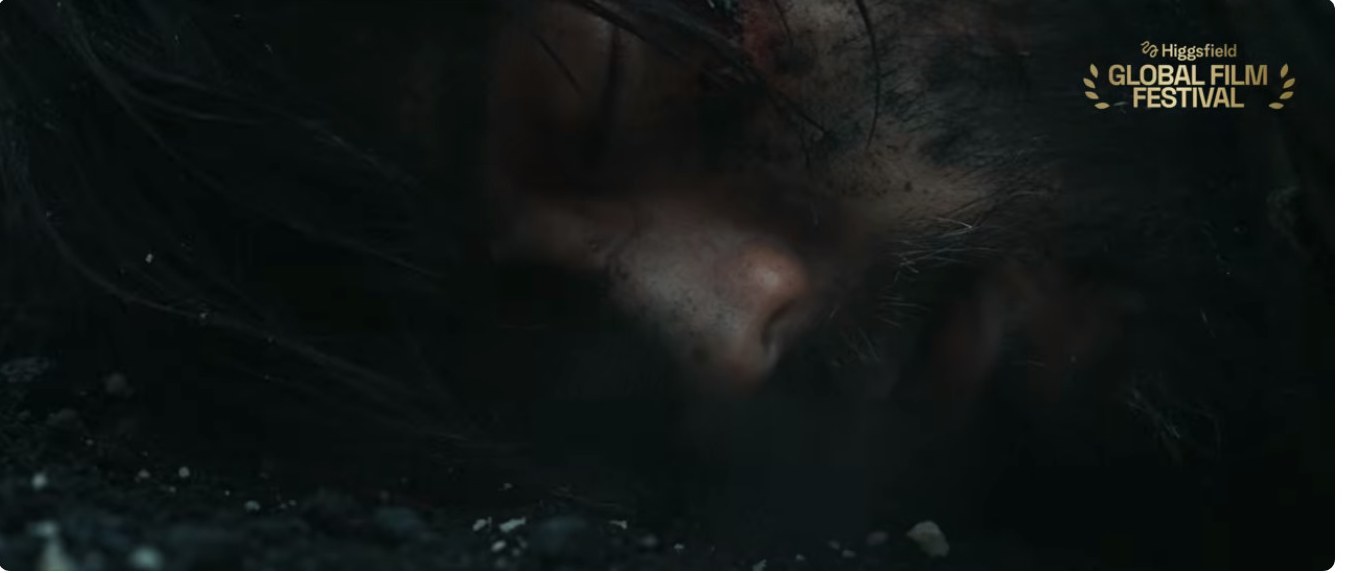
8:45–9:35 — “I am tired of the night.” A wide shot of the lamplit settlement by a river. An extreme close-up of a dirt- and blood-smeared face, eyes closed, as the closing song begins.
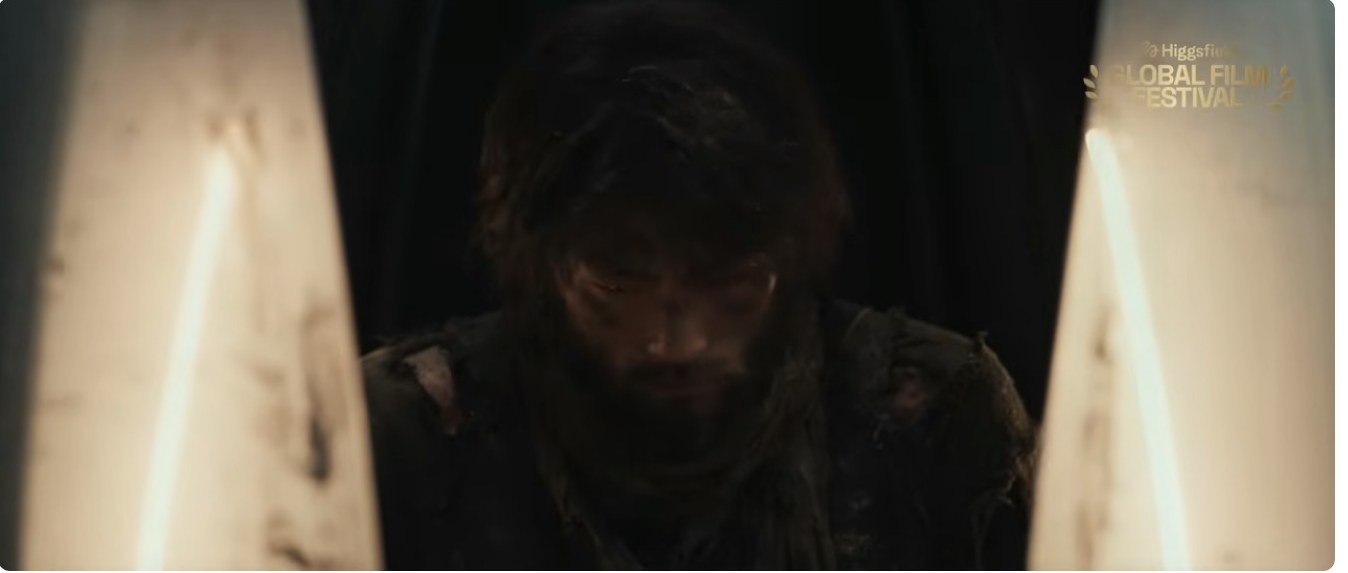
9:35–11:01 — The song plays over the final images. A man climbs into a glowing pod among rubble — seemingly the way anyone enters the world inside the Wall; the on-screen credit reads “Original Music created with Suno + Flow”. A bearded, dirt-covered man bows his head between two vertical beams of light. The film closes on the gold Higgsfield $1,000,000 Global Film Festival card — and does not tell us what Moss chose.
Created with generative AI filmmaking tools — Seedance 2.5, Seedream 5.0 Pro, Nano Banana Pro and GPT Image. Original music created with Suno and Flow.
There are no reviews yet. Be the first one to write one.