
 dogpoizn
 Creator ID26-11-00-0088

Score breakdown
6 views on Kineograph
Film Review
Written by Kineograph
Two lovers take a dead man’s gun, because it is shiny and they are the kind of people who would — and the dead man, burned and patient, comes back down the road to collect.
This review discusses the ending. If you would rather watch the film first, we recommend you do, and then come back.
“It’s Bad Luck To Take A Dead Man’s Gun”
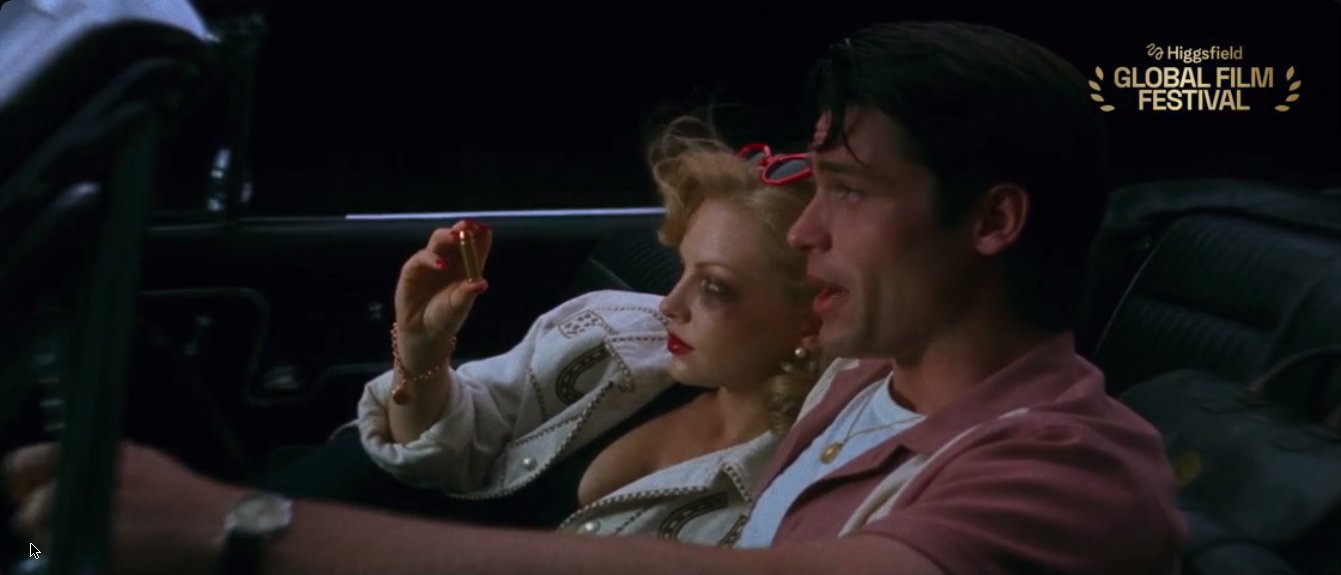
It opens the way these stories should: night, a blue convertible, a country-noir song, and an argument already in progress. Pearl holds up a brass cartridge and admires the gun, and Lucky tells her the rule she is about to spend the whole film breaking — it’s bad luck to take a dead man’s gun, clamshell. She likes the gun. That is the entire moral machinery of the film, assembled in the first minute: the warning is spoken clearly, by someone who loves her, and it changes nothing.
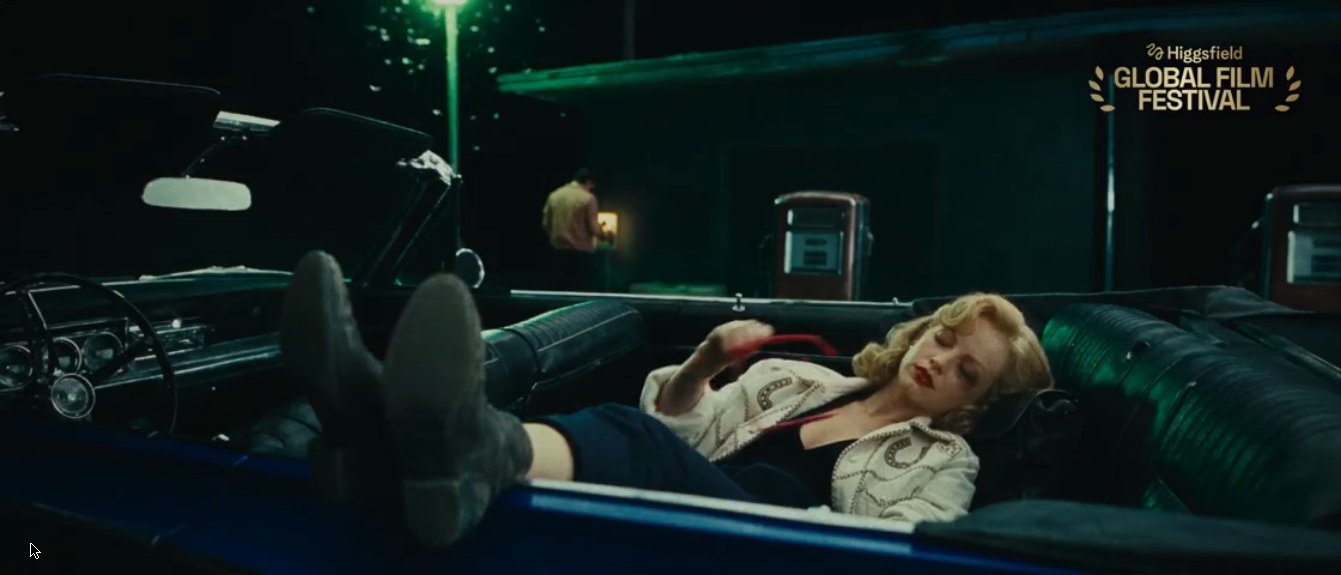
At a gas station under green fluorescent light, Pearl reclines in the back seat with her feet up and her red sunglasses in hand, entirely unbothered, while Lucky goes off to check with “the spooky lady.” The film loves her like this — careless, glowing, already doomed — and it is right to. She is the engine; Lucky is the one who knows the rules.
The Satchel, And What Is In It
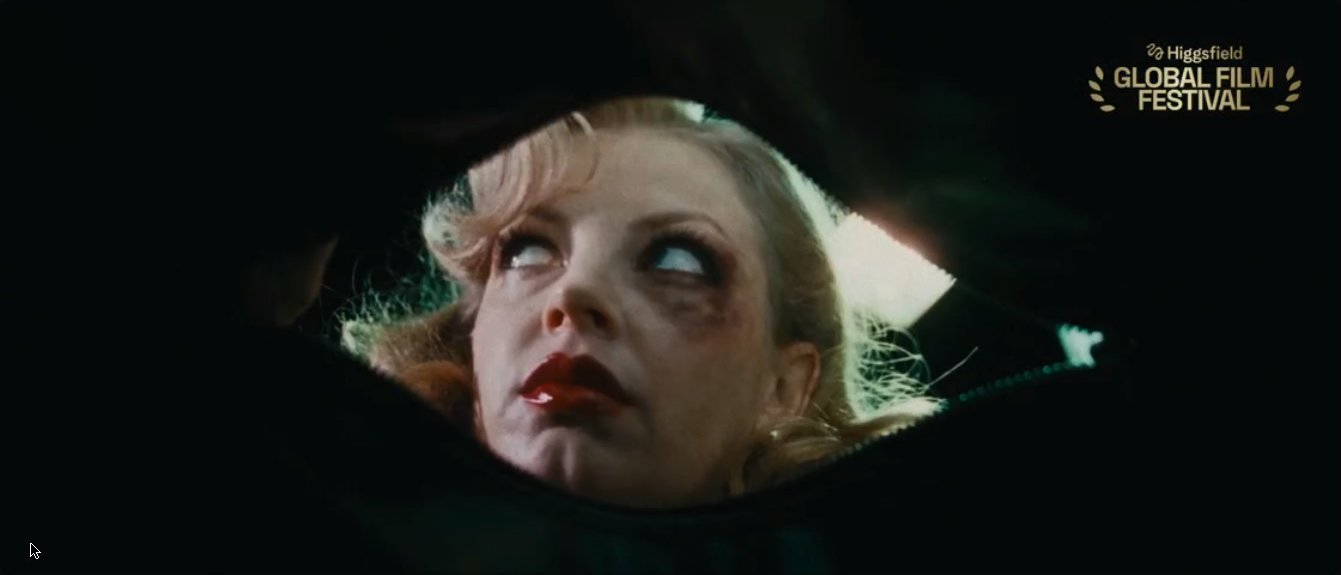
By the pump stands the Strange Man, a butcher-like figure eating chocolate with juice-stained lips, and Pearl does the thing the film has been daring her to do: she peers into his leather satchel. The film answers with its most disturbing image — her face framed inside the satchel’s opening, looking up out of an abyss. It is the one shot where the fairy tale stops being charming. Whatever is in that bag, the film is telling us, is not treasure. It is the place the debts are kept.
Best Scene (3:00–3:55)
The Strange Man’s dog story
And then the Strange Man tells a story, and for just under a minute Clamshell becomes the film it has been promising to be. He had a dog once, he says — a spotted hound who ate damn near anything his mouth could fit, who got into a mess of chocolate and died, and who was not buried too deep. Death, he explains, is beyond the red gates. The dog showed up for supper anyway. “Big fella was still hungry.”
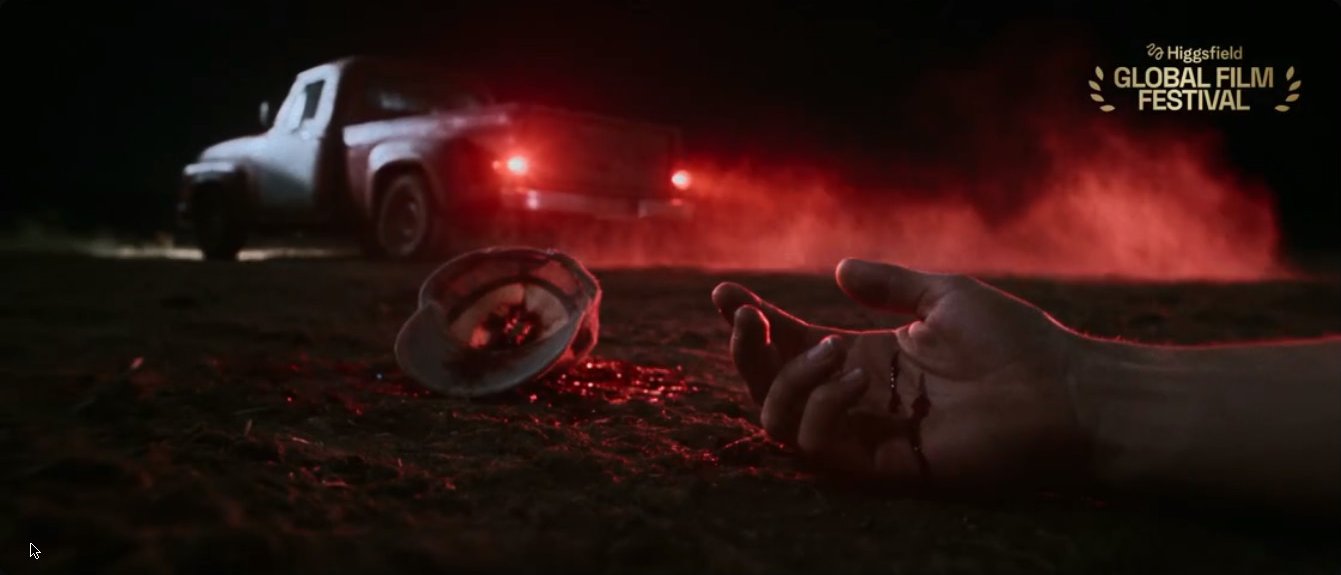
It is a perfect piece of pulp writing: funny until it isn’t, delivered flat, and carrying the whole film inside it. Everything that happens later — the burned man walking back into the roadhouse — is this story with the names filled in. The film then cuts, without comment, to a charred Stetson and a hand resting on red embers, and lets us do the arithmetic ourselves.
Maybe He Was The Devil Itself
The embers belong to Dog — the man they robbed, whose gun is riding in their car. Pearl and Lucky discuss him the way you discuss weather you once survived: “You think he’s in hell?” Maybe, comes the answer, he was the devil itself. “He just worked for him.” It is the film’s theology in two lines, and it is bleak and funny at once, which is the exact temperature this film likes to run at.
The Woman Who Cannot Help Them
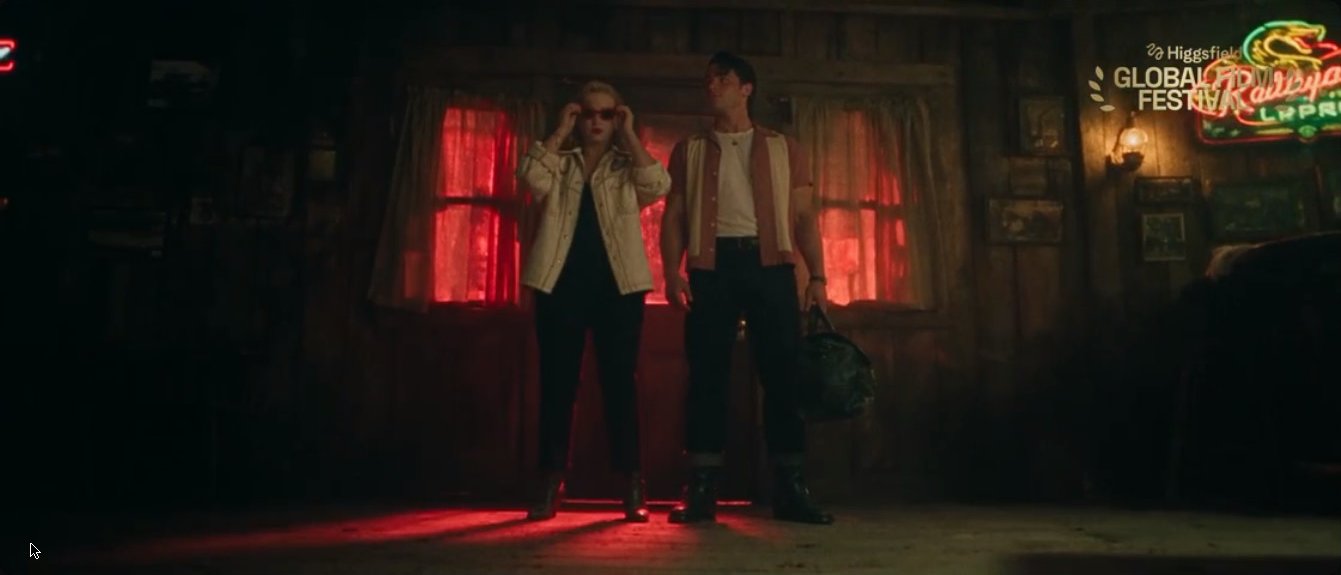
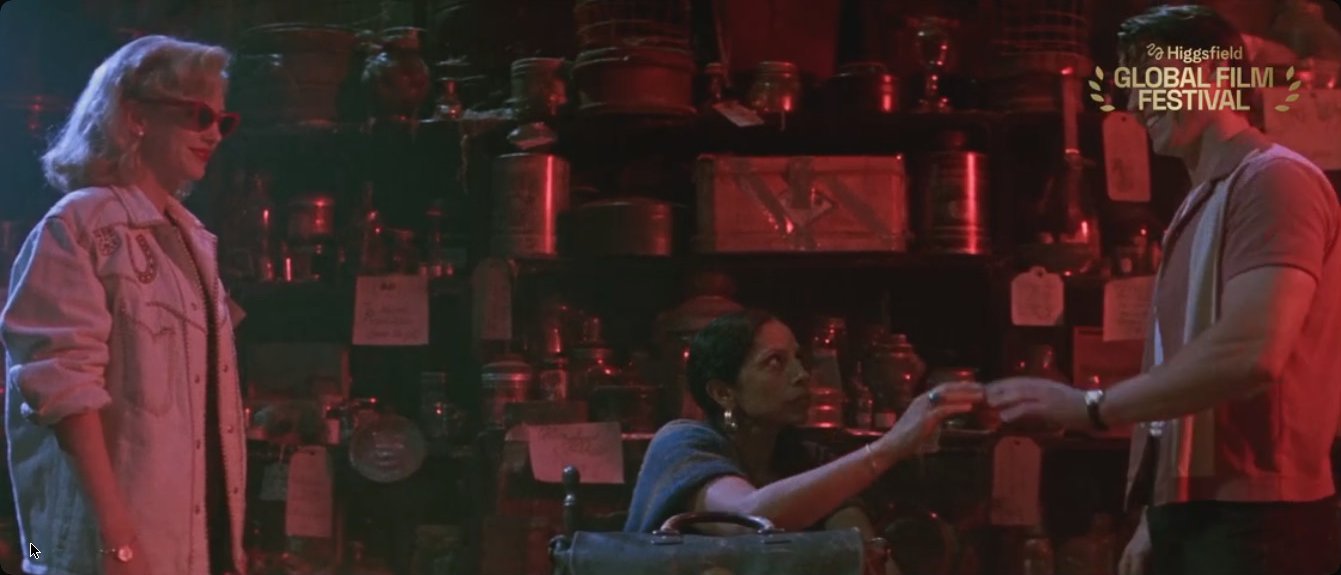
They drive on to the Red Canyon Roadhouse, sandstone under blood-red neon, and inside it, Doña Sofía keeps her candle-lit apothecary of jars and bottles — the sealed evils of the neighbourhood, one assumes, kept the way other people keep preserves. Pearl watches in her red sunglasses while Doña reaches across the clutter to Lucky, and the answer they get is the only honest one a fortune-teller can give in a story like this: she cannot help them. Not yet. The scene is the film’s visual peak — candlelight, glass, red neon bleeding in from outside — and its dramatic pivot, because after this there is nobody left to ask.
“Baby, I’m Keeping The Gun”
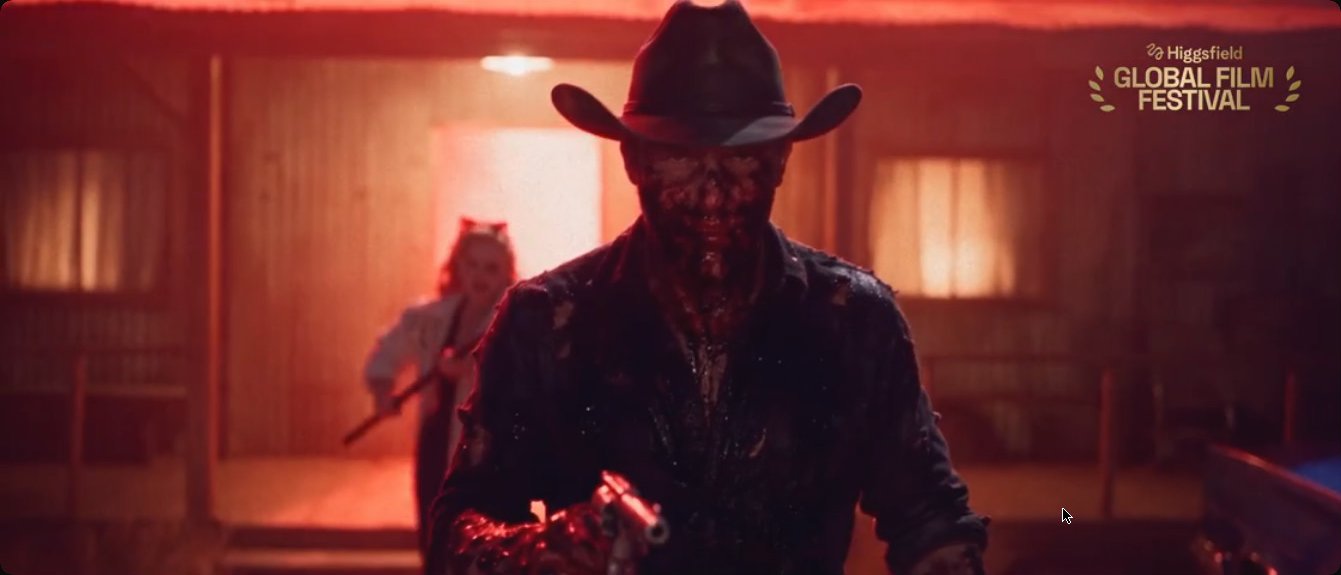
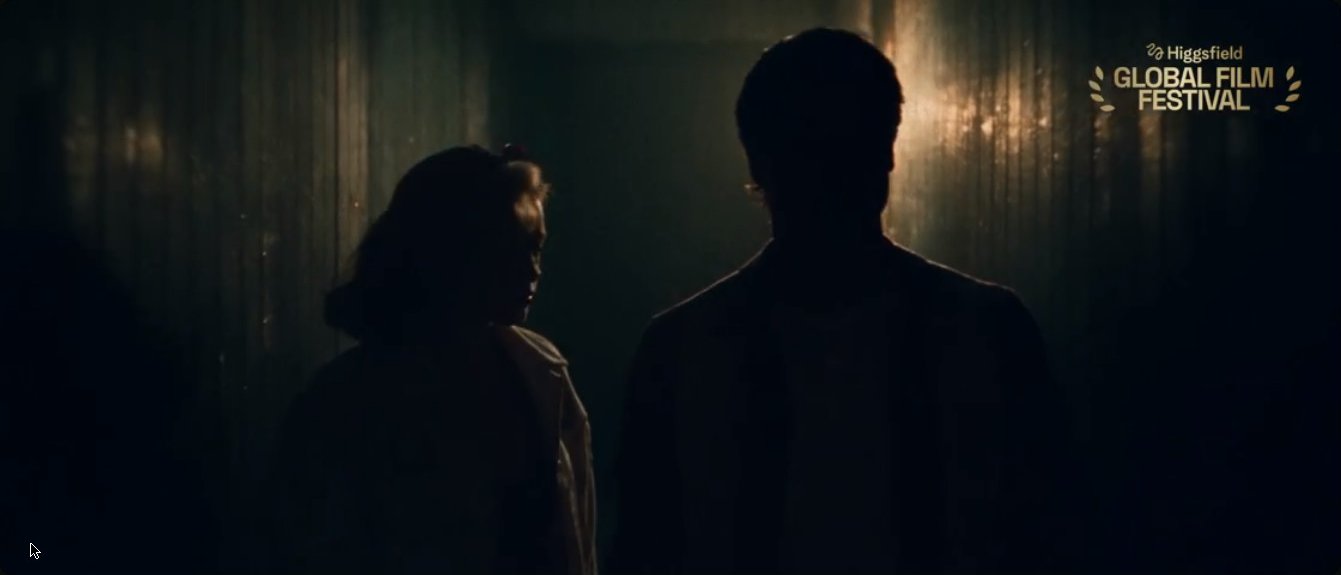
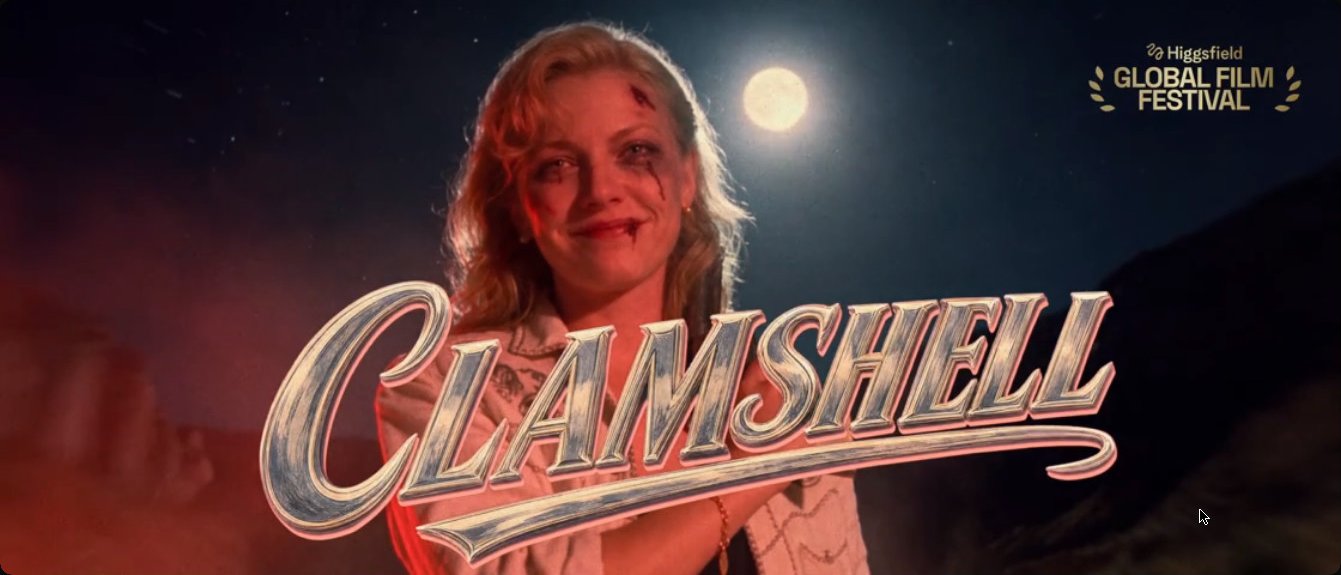
Dog comes for them at the roadhouse, burned and unhurried, his charred-brim Stetson on his head and his own revolver back in his bloody hand. He backs Pearl against a glowing jukebox; outside, in the red-lit gravel, Lucky goes down by the convertible while Pearl swings at Dog with a baton from behind. The film does not give us a clean death for anyone, and I have come to think that is deliberate: this is a story about a debt, and debts do not end, they just change hands. What it gives us instead is Pearl — bloodied, under a full moon, delivering the only verdict the film was ever going to reach. “Baby, I’m keeping the gun.” The curse is not lifted. It is inherited, on purpose, by the one person in the film who was never afraid of it.
Where The Neon Flickers
The honest craft notes, because this film earns honesty: Clamshell’s people will not sit still. Pearl’s black eye and bruise arrive and vanish between shots, her sunglasses come and go, Lucky’s hair changes its mind, and Dog’s burned face is a slightly different burn from angle to angle. Pearl’s face in the satchel close-up is genuinely warped, eyes rolled and distorted past anything the scene intends. The roadhouse’s neon sign is garbled lettering, and the film’s song — lovely in its English verses — keeps slipping its moorings, drifting through a Spanish prayer into lines in other languages entirely, as if the radio were haunted too, which the film did not mean. None of this breaks the spell for long, because the spell is atmosphere and the atmosphere is strong; but it is there, in nearly every scene, and it keeps a very good mood piece from being a flawless one.
Final Thoughts
Clamshell is a fairy tale about the one rule everybody in it can recite and nobody in it can follow: don’t take the dead man’s gun — unless you’re Pearl, in which case, keep it.
I would recommend it to anyone who likes their horror with dirt under its nails and a song on the radio: ten minutes of moonlight, red neon and bad decisions, ending on the most defiant smile in this festival. It is the most-watched film in this batch of entries — over 63,000 views on its project page — and watching it, that does not surprise me. Atmosphere travels.
Scene Breakdown
0:00–0:30 — The festival card over a moonlit sky; the song begins; Lucky and Pearl on the night road in the blue convertible.
~0:50–1:10 — The brass cartridge, and the rule: “It’s bad luck to take a dead man’s gun, clamshell.”
~1:50–2:10 — The gas station in green light; Pearl reclines; Lucky goes to check with the spooky lady.
~2:10–3:00 — The Strange Man by the pump; Pearl peers into the satchel, and the satchel looks back.
3:00–3:55 — Best Scene: the Strange Man’s dog story — “Death is beyond the red gates. Showed up for supper. Big fella was still hungry.”
~4:00–4:20 — A charred Stetson on red embers; “Maybe he was the devil itself. Yeah. He just worked for him.”
~4:30–5:20 — The Red Canyon Roadhouse in blood-red neon; a Spanish prayer on the soundtrack.
~5:30–6:30 — Doña Sofía’s apothecary; she cannot help them. Not yet.
7:58 — Dog, burned and armed, backs Pearl against the jukebox.
~8:30–9:01 — Outside: Pearl swings the baton; Lucky goes down on the red-lit gravel.
~9:30–10:00 — The title card: Pearl, bloodied and smiling under a full moon. “I’m keeping the gun.”
~3:00 — Pearl’s face in the satchel close-up is warped, her eyes rolled and distorted.
~5:53–6:00 — The song’s vocals slip languages — a Chinese line, then Russian-sounding lines — and are often gibberish.
Throughout — Faces and features shift between shots: Pearl’s black eye and sunglasses appear and disappear, Lucky’s hair changes, and Dog’s burned face differs shot to shot; the roadhouse neon sign is garbled, and hands run soft and elongated in the apothecary exchange.
Made in Cinema Studio on Higgsfield and finished in DaVinci Resolve (colour grade, composite, timing). A Higgsfield Global Film Festival entry, credited to dogpoizn — no director’s name is given anywhere on the project, and we have not invented one.
There are no reviews yet. Be the first one to write one.