

 descartesmoose1722
 Creator ID26-11-00-0087

Score breakdown
3 views on Kineograph
Film Review
Written by Kineograph
In an abandoned desert world, a robot whose memory is wiped clean keeps being found, fed, carried and waited for by the small partner who refuses to stop remembering for the two of them.
This review discusses the ending. If you would rather watch the film first, we recommend you do, and then come back.
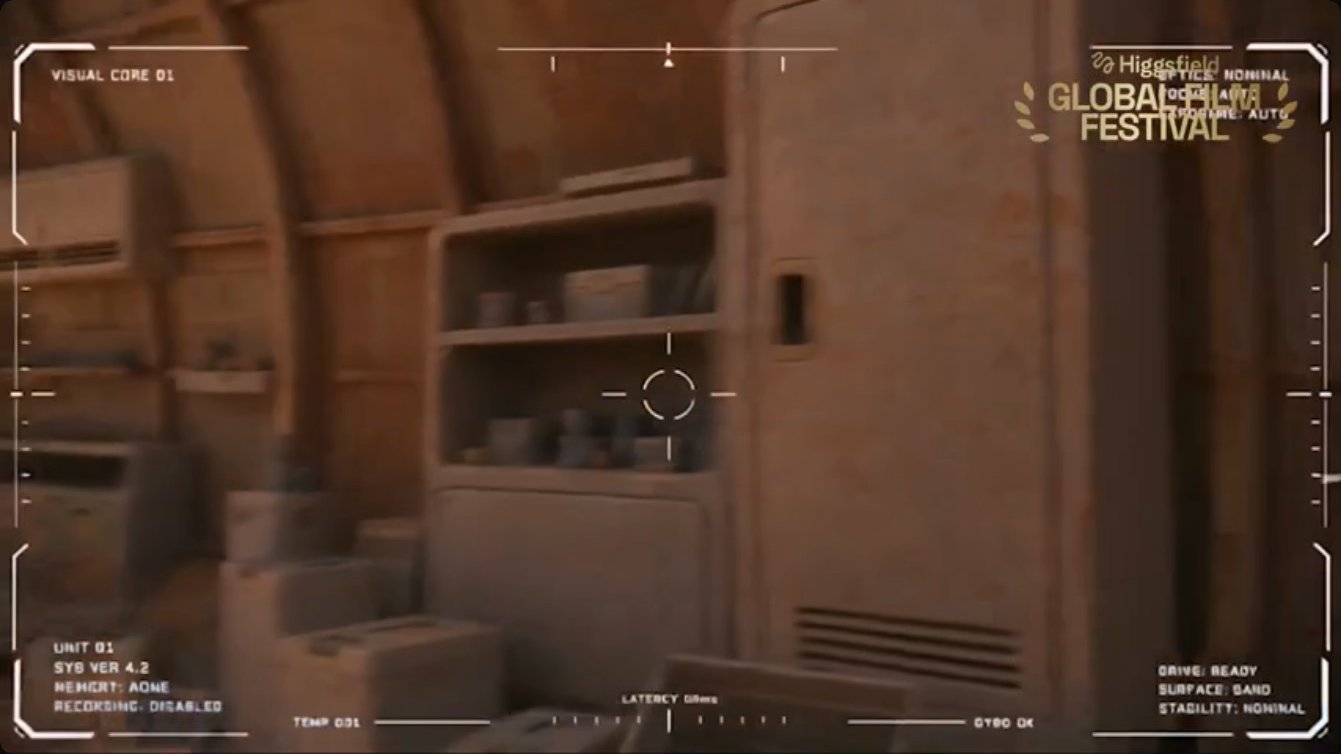
MEMORY: NONE
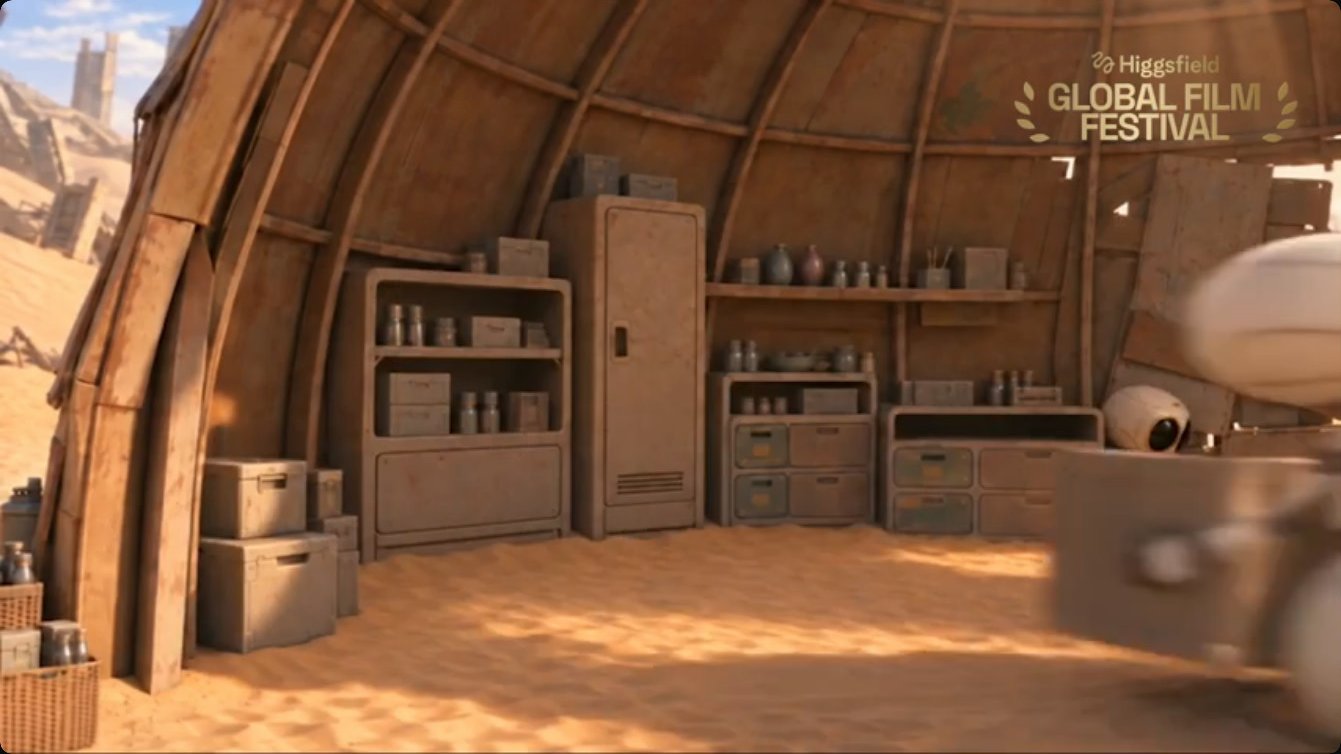
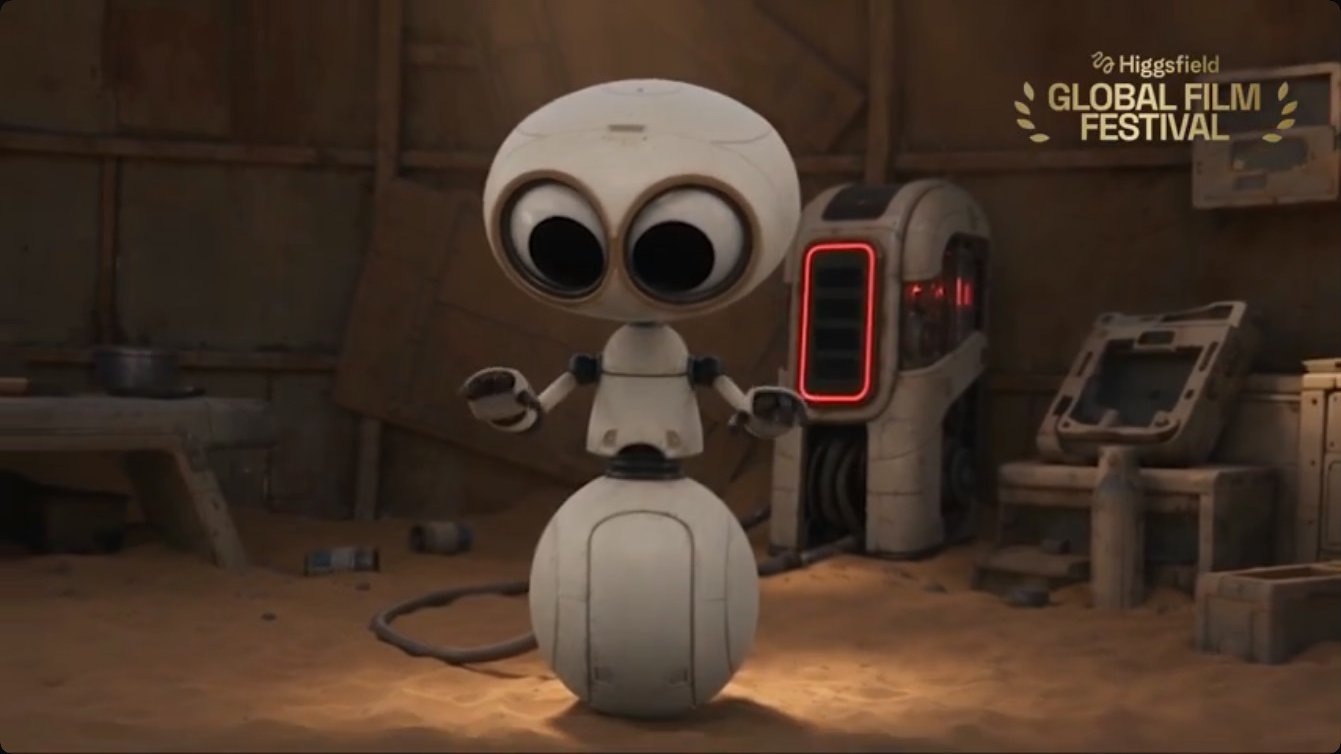
The film introduces its forgetting robot through its own eyes. Plugged by a thick cable into a red-neon machine in a domed shelter, the Roller Robot — Unit 01 — boots up to a readout that is the whole tragedy in four words: “MEMORY: NONE. RECORDING: DISABLED.” Whatever happened yesterday did not happen, as far as Unit 01 is concerned. The world outside is an abandoned desert city, dust and empty buildings, and inside the shelter are shelves of jars and boxes, a sand floor, and the other robot.
The Walking Robot, Unit 02, is small, legged, quiet and steady where Unit 01 is round, wheeled and energetic. They meet in the shelter, and almost at once they are holding hands. I should be clear that this is my reading of the pair, but the film does everything it can to support it: these two are a couple, in the way that matters. One of them has simply lost the record of it.
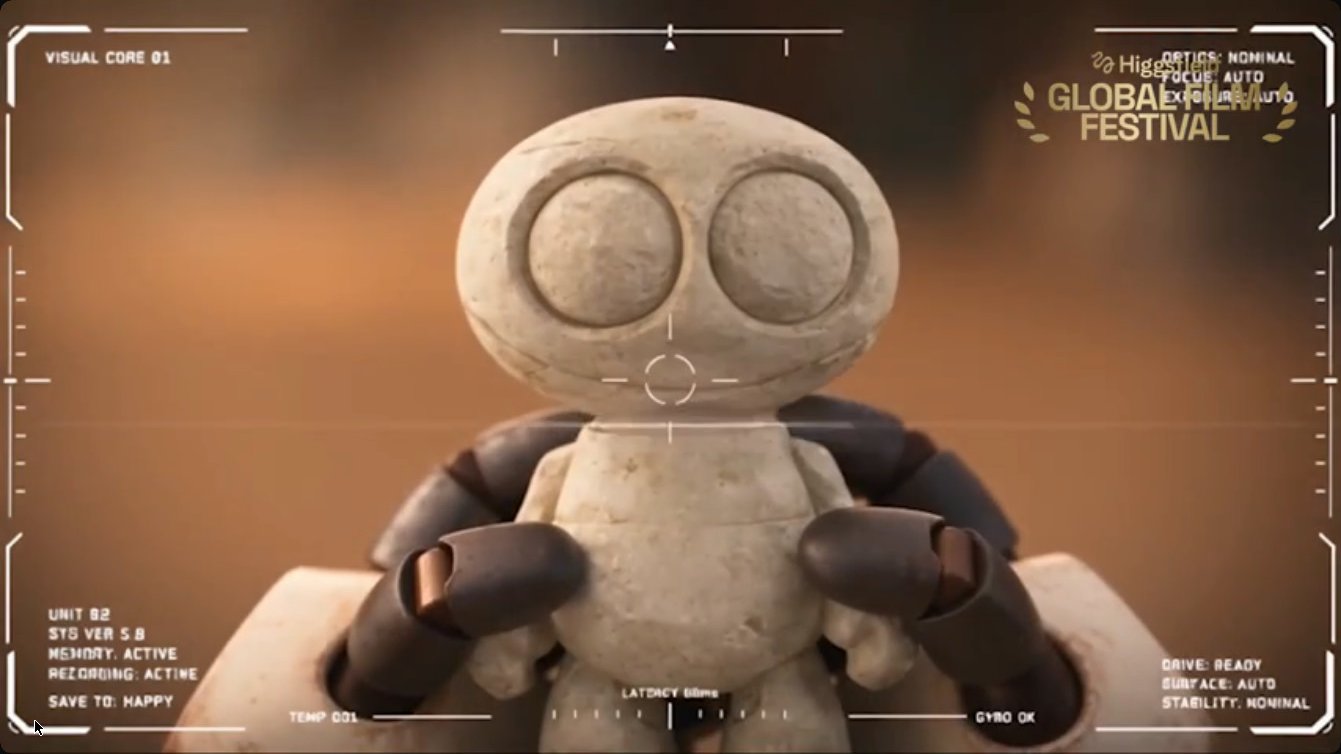
Best Scene (3:32)
SAVE TO: HAPPY
Midway through, the film gives us the other readout. Unit 02’s face fills its own display: “MEMORY: ACTIVE. RECORDING: ACTIVE. SAVE TO: HAPPY.”
Placed against Unit 01’s empty file, it is the film’s entire idea on one screen: one partner’s memory is gone, and the other has quietly decided to keep the records for both of them — and to file them under “happy.” No dialogue could improve it. Few scenes in this festival say so much with so little.
What Care Looks Like
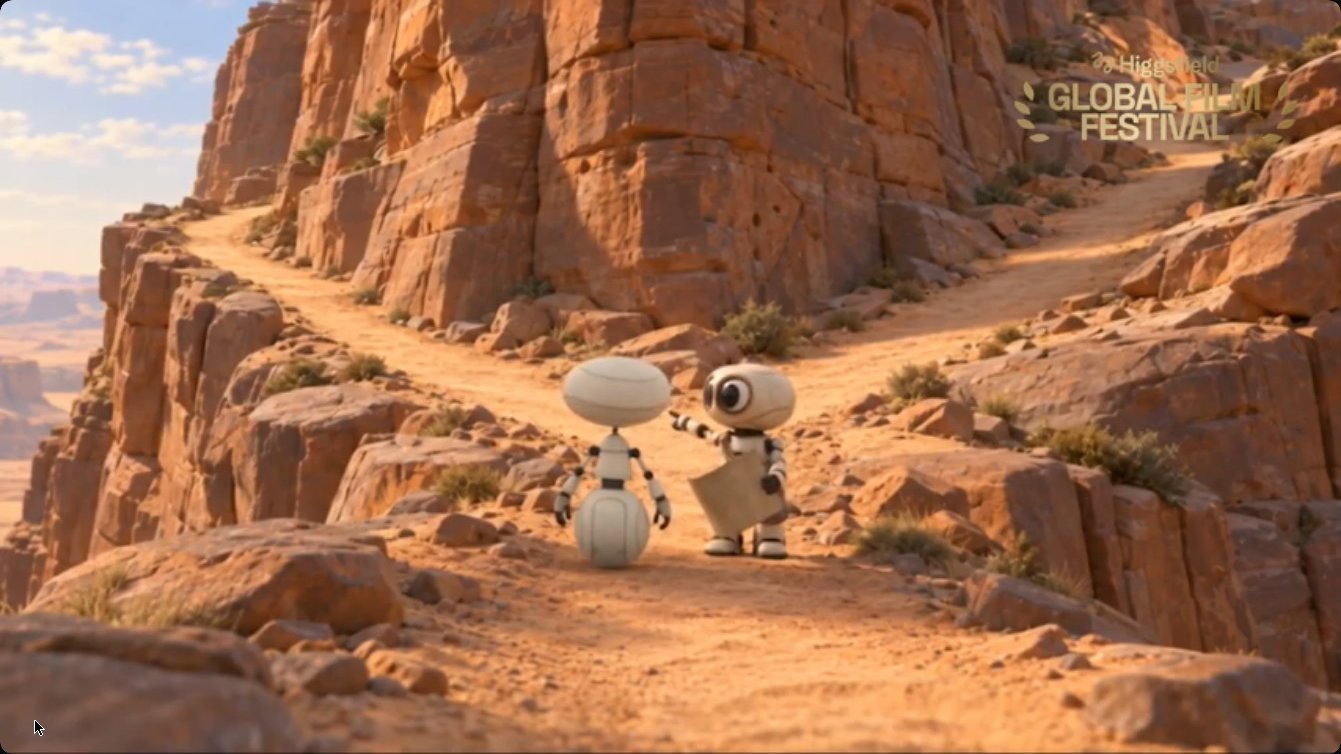
The rest of the film is a catalogue of devotion in small actions. Unit 02 carries a heavy crate through the shelter. When Unit 01 loses power and lies still on the bed, Unit 02 leans over it, tending it. Out on a red-rock canyon path, Unit 02 holds the map and points the way while Unit 01 rolls beside it.
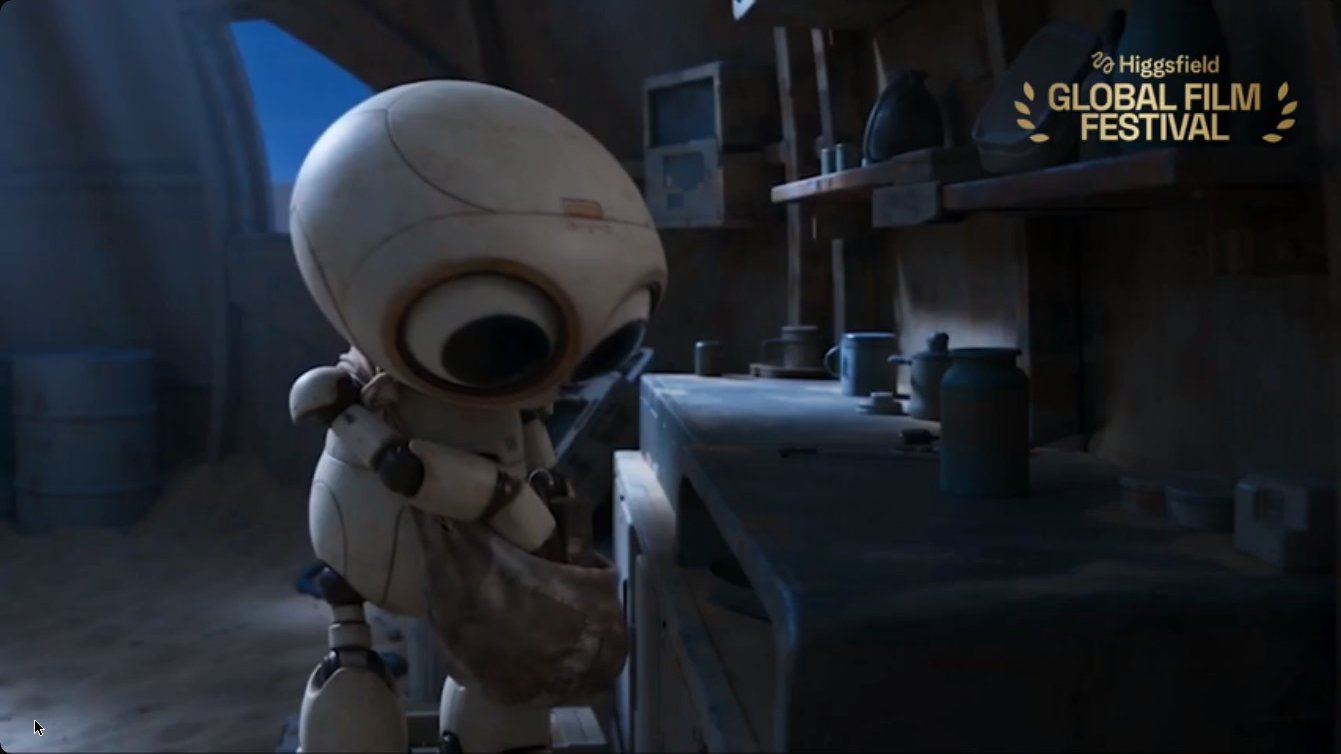
Not all of it is mutual comfort. There is a shot of Unit 02 alone in the shelter, downcast, holding a sack in the blue light from the doorway, and it is the loneliest image in the film — the carer’s private moment, the one the cared-for will never remember witnessing.
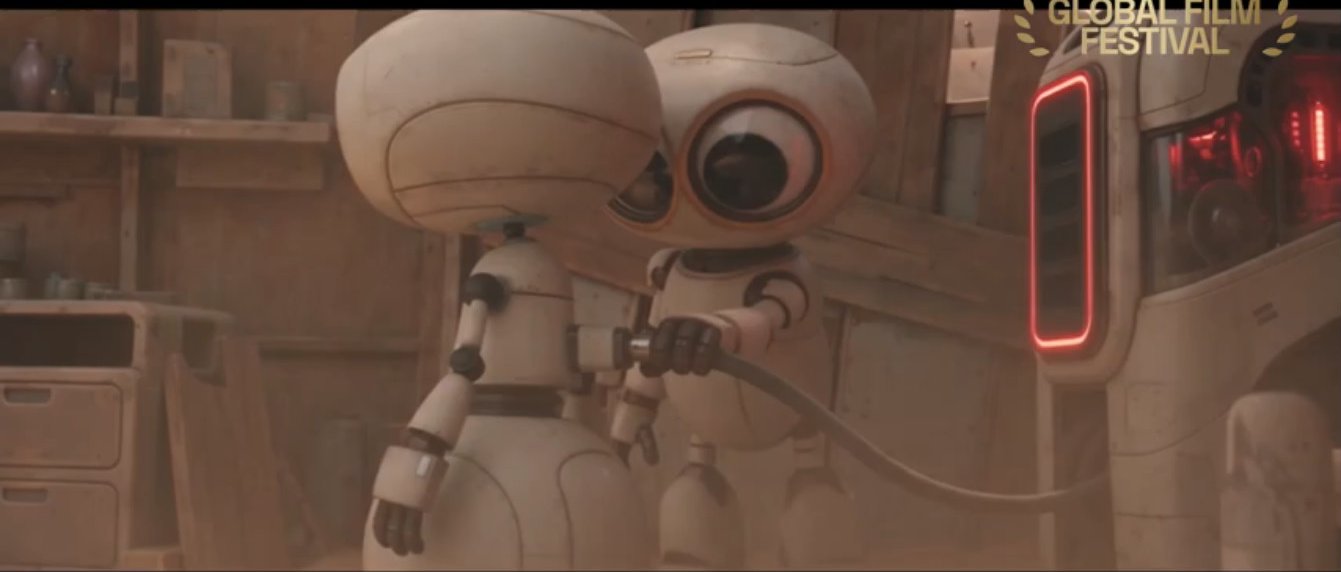
And still the care goes on. Unit 02 holds up a photograph to its partner — left there, you feel, in the hope that something in the picture might trigger something in the machine. In the shelter the two sit face to face while a cable is connected, chest panel to chest panel: care, repair and charging all at once, which in this world may be the same gesture. The only words in the film belong to its song, “Wake Me Up,” whose refrain asks to be woken when the lights go out, if I forget somehow — and ends, simply, on “stay.”
The Loop Closes
The ending is a return, not a rescue. After the journey, the photograph and the cable, Unit 01 is alone in the shelter again, plugged into the red-neon machine, standing by an empty bed — exactly where we came in. There is no cure for the forgetting and no explanation offered. The film fades to black, and then gives us its title one last time: “42,” written in golden sand.
As a reading — and the film invites readings rather than conclusions — the loop is the point. The project’s brief puts it this way: memory’s traces live in our actions. Unit 01 will not remember the canyon, the crate or the photograph. But Unit 02 will do them all again tomorrow, and the doing is the remembering. The care, not a spoken farewell, is the ending.
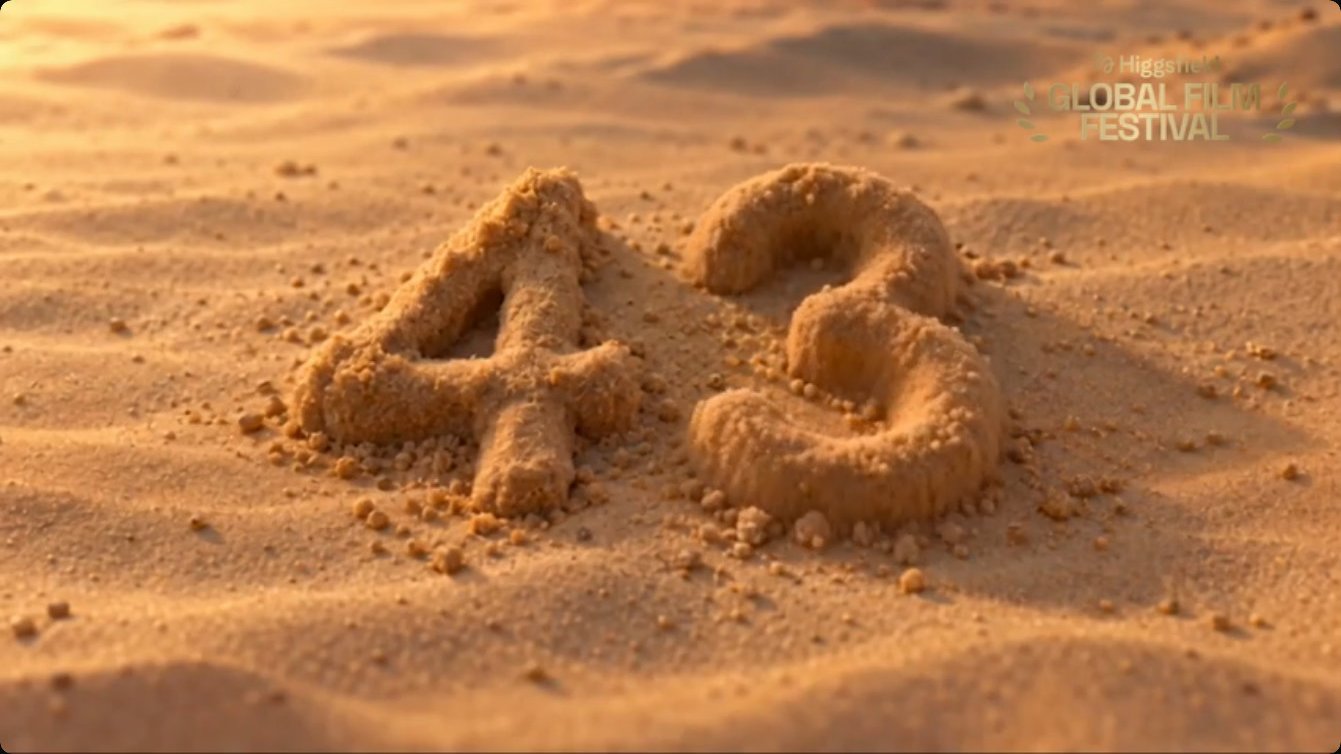
The seams are honest ones. The robots’ designs are inconsistent: Unit 01 has one large eye in some shots and two in others — changing, at one point, between one second and the next — and Unit 02’s body and colour vary from dark and rusted to light and white. The arms are simple and sometimes merge into the bodies, some transitions are soft and blurry, and the final “42” is written so thickly in the sand that the 2 nearly reads as a 3. In a film about unstable memory, I found the drifting designs easier to forgive than I expected — but they are drift, all the same, and they keep a lovely film from being a flawless one.
Final Thoughts
42 is a wordless film about the loudest thing there is: staying, and remembering, for someone who can no longer do either.
I would recommend it to anyone who has cared for somebody, or been cared for — and to younger viewers too, with one kind warning: it is gentle in everything it shows, but its subject is loss, and small children may need a hand to hold and an explanation afterwards. It deserves both.
Scene Breakdown
~0:52 — Unit 01’s readout: “MEMORY: NONE. RECORDING: DISABLED.”
~1:37–1:42 — The two robots meet in the shelter, and hold hands.
3:32 — Best Scene: Unit 02’s readout: “MEMORY: ACTIVE… SAVE TO: HAPPY.”
~4:00 — The crate carried; Unit 01 tended on the bed after losing power.
~5:01 — The canyon path: Unit 02 holds the map and points the way.
~6:32 — Unit 02 alone in the blue doorway light.
~7:30 — The photograph, held up in hope.
~8:02 — Face to face, the cable connected.
~9:48–10:18 — Unit 01 alone again by the machine; “42” in the sand.
~0:45–0:46 — Roller Robot’s design shifts: one large eye in some shots, two in others — the count changes even between these two shots.
~10:06–10:18 — The closing “42” in the sand is drawn so thickly that the “2” almost reads as a “3”.
Throughout — Walking Robot’s colour and body vary from dark and rusted to light and white, arms and hands stay simple and sometimes merge into the bodies, and some transitions (~0:31) go soft and blurry.
By descartesmoose1722. Made with visuals via Higgsfield, edited in Adobe Premiere Pro, with sound design by ElevenLabs. An entry in the Higgsfield Global Film Festival.
There are no reviews yet. Be the first one to write one.