 KINEO
Bring You Home
The Film Score

AI Slop Meter
Mostly clean 7.0/10Find this film in
Festivals and Awards
 Higgsfield Talent Contest
Score Breakdown
| Storytelling | 9.0 |
| Emotional Connection | 9.0 |
| AI Tool Management | 8.0 |
| Visual Craft | 8.0 |
| Writing & Dialogue | 8.0 |
| Soundtrack | 8.0 |
| Originality | 8.0 |
| Polish | 8.0 |
| Rewatch Value | 8.0 |
| Weighted total (/12) | 8.3 |
Watch on Higgsfield
⚠ Report a problem with this video
Kineograph does not host films on its platform. This video is embedded from the creator’s own account on a platform such as YouTube, TikTok, Instagram, Facebook or Suno. Any ads you see on this video are handled by that platform and the creator. Kineograph does not own this video and does not receive any ad revenue from it. We encourage you to support and follow the creators whose work is showcased on Kineograph. Visit their social media and/or personal websites.
Film Review
This review discusses the ending. If you would rather watch the film first, we recommend you do, and then come back.
Synopsis
It is Margaret's 68th birthday. Walter, her husband, telephones the family to invite them up for Saturday, and Daniel arrives with his little daughter. Margaret welcomes them at the door, and among them is Charlotte — her adult daughter, in a cherry-red cardigan, whom only Margaret can see. The family draws together at the kitchen table, plants red tulips in the autumn garden, and sits down to a candlelit birthday dinner, where the subject of a nurse to help a few days a week is raised, as gently as it can be. Margaret refuses: she is fine. Then, in the violet dark inside her own mind, Charlotte comes to say goodbye. Margaret holds her, and Charlotte breaks apart in her arms into glass butterflies. The birthday cake comes out with its "68" candles, Margaret makes her wish — "It already came true" — and the song takes over as the tulips bloom into spring. The family walks through a hilltop cemetery at sunset to Charlotte's headstone, where Margaret touches her daughter's photograph and Walter, who cannot see Charlotte, asks Margaret to pass on his greeting. The film closes on a red tulip and a dedication to everyone living with dementia, and the ones who remember for them.
The Phone Call
The film opens on a single red tulip petal falling against black, and then it is inside an ordinary house on an ordinary morning: a kettle on the stove, and Walter on the telephone in the hallway, inviting the family up for Margaret's birthday on Saturday. It is a small, exact piece of domestic filmmaking — the kind of opening that tells you the film trusts its audience to recognise a home when it sees one. When Daniel arrives in the car with his little daughter, the film's colour code is already doing its quiet work: Margaret in gold, Charlotte in cherry red, Walter in navy, Daniel in sage, the little girl in butter yellow. You can follow the whole family by colour alone, and the film knows it.
The arrivals are filmed with the patience of a much longer work. Margaret greets them at the front door, and Charlotte is there among them — the film does not mark her arrival with a sting or a reveal, and that is the point. She hugs her mother at the door the way a daughter does, and Margaret's face lights up the way a mother's does when her daughter comes home. Only gradually does the film let you understand what is happening: Charlotte is not here for the others. Walter cannot see her. When he asks, at the end, "Who's out there, Maggie?" and Margaret answers "Our girl," his reply — "Then tell her I said hi" — lands as the film's quietest and most devastating line, because it tells you everything about how this family has learned to live with Margaret's world.
Tulips in the Autumn Garden
The middle of the film is a birthday, and the film films it the way birthdays actually feel when someone in the family is unwell: warm, and strained underneath. Margaret and her little granddaughter draw together at the kitchen table — crayons, a stuffed bunny, a basket — and the little girl shows her the drawing: "Oh, look at that, is that me?" "That's you, Grammy." Then they go out to plant red tulips in the autumn garden, and the film gives the planting its full weight. A hand presses a bulb into dark soil. A muddy little hand touches Margaret's cheek and they both laugh. The planting lesson is that they go deep in the soil — that is how they come back. The tulip is the film's central image and its whole argument in one flower: something you bury in the dark, in autumn, that comes back in spring. The film never has to say that out loud. It plants the tulip and lets you watch it grow.
The dinner scene is where the film shows its nerve. Candlelit, roast chicken on the table, the birthday cake waiting in the background — and the subject of a nurse is raised, as gently as it can be. "Maggie, I found a nurse. Someone to help you to help us. Just a few days a week, Mom, for you." Margaret's refusal is immediate and absolute: "A nurse, I don't need a nurse. I'm fine." And Daniel, caught between his father-in-law and his mother-in-law, answers for her: "She's fine, Dad. I'm here." It is the film's most honest exchange, because nobody in it is wrong. Walter is right that Margaret needs help. Margaret is right that she does not want to be helped. Daniel is right to protect her dignity. The film lets all three of those truths sit at the same table without resolving them, and that restraint is what makes the scene feel like a real family rather than a lesson.
The Void
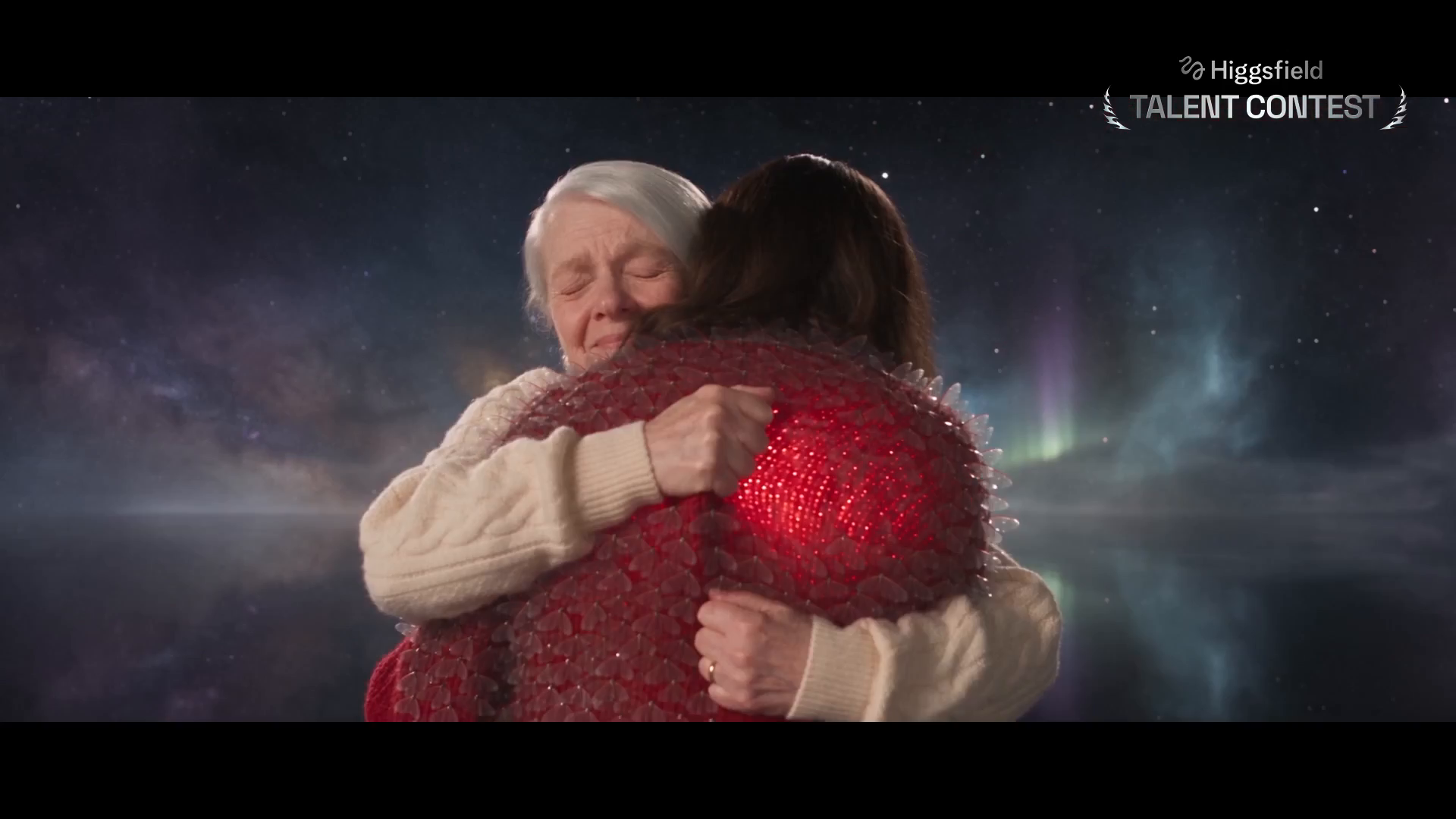
Then the film goes inside Margaret's mind, and it is the bravest passage in the four minutes. The world falls away into a violet-black space, and Charlotte is there, and the farewell Margaret has been avoiding finally arrives. "Come with me, Mom. It's OK." "Mom, I know it's hard, but you have to let me go." "I can't, no, again." It has been years, Charlotte tells her, and the family needs her. "You may forget my name, Mom. And that's okay. Your heart won't. I love you, Mom." And Margaret, holding her: "I love you first, baby. Just a little longer, please." "Charlotte! Wait!"
The embrace is where the film makes its one great visual choice. Charlotte breaks apart in Margaret's arms into glass butterflies — not a dissolve, not a fade, but a shattering into bright, fragile pieces that scatter across the dark. The page's own notes say this was the version that finally felt true, and it is easy to see why: a goodbye that comes apart in your hands is exactly what letting go feels like, and the butterflies carry the tulip's promise forward — something fragile that survives by changing shape. The film does not linger on the effect or explain it. It lets the butterflies go, and cuts back to the birthday.
Spring
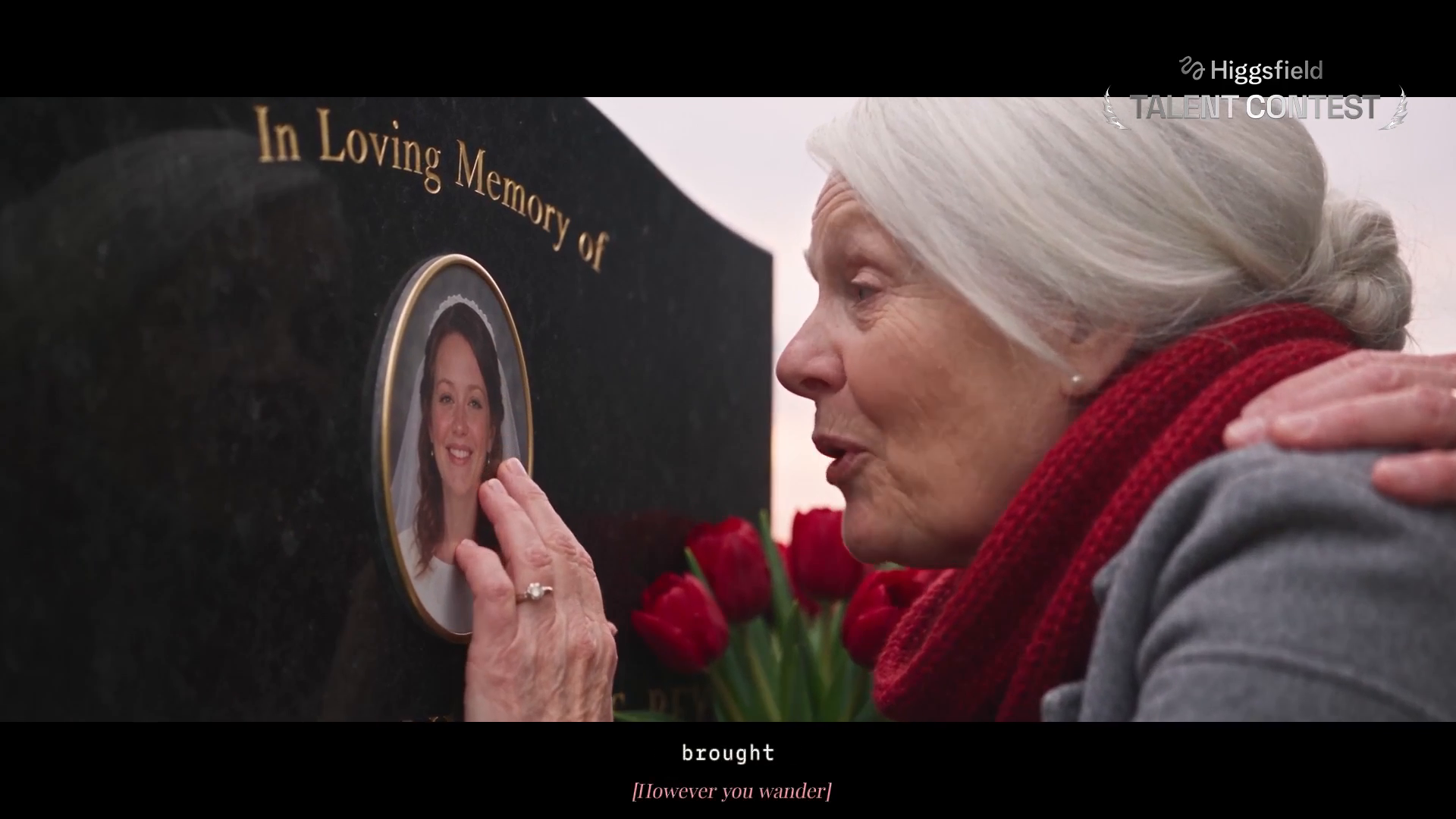
The last minute is carried almost entirely by the song, and the song earns it. The cake comes out with its "68" candles and red tulips, and the little girl asks the question every birthday asks: "Grammy, did you think of your wish? … What's your wish?" Margaret's answer is the film's thesis in four words: "It already came true." The tulips bloom into spring, the family walks through a hilltop cemetery at sunset, and the song's words — "Tuck in the tulips away from the cold," "They'll sleep through the winter. They'll sleep through the storm. They'll come back" — play over images of a family that has learned to keep going. At Charlotte's headstone, Margaret touches her daughter's photograph — a young woman in a wedding dress and veil, smiling — and Walter's hand rests on her shoulder. "Who's out there, Maggie?" "Our girl." "Then tell her I said hi."
The film closes on a red tulip and two cards. The first carries the fact the whole film has been standing on: "OVER 57 MILLION PEOPLE LIVE WITH DEMENTIA. FOR MOST OF THEM, IT'S ALZHEIMER'S." The second carries the dedication: "FOR EVERYONE LIVING WITH IT, AND THE ONES WHO REMEMBER FOR THEM." Then the title card — a tulip and a glass butterfly, "Bring You Home" — and the film is over. The maker's page dedicates the film to Mama Lolit — the grandmother whose life with Alzheimer's inspired it — and says it was inspired by true events. You can feel that in every frame: this is not a film about Alzheimer's as a subject. It is a film about one grandmother, and the family who remembers for her.
A word for the sound, because the sound is the film's spine. The original song "Bring You Home" — written for the film, its last line giving the film its title — runs through much of the four minutes, alternating with spoken dialogue and carrying the montage and cemetery scenes on its own. It is a soft, gentle vocal with piano, and it stays low under the dialogue until the last minute, when the film hands the whole story to it. The voices are clear and the mix is quiet and intimate, with kitchen and garden sounds underneath. Most of the dialogue is spoken plainly to camera or in close-up, and the burned-in subtitles — white for dialogue, pink italics for the lyrics — mean no line is ever lost.
Best Scene (2:50–3:20)
"Letting Her Go"
Margaret and Charlotte hold hands in the violet dark, red petals drifting past them, and then forehead to forehead, hands clasped, the two of them alone in the space inside Margaret's mind. Charlotte says what Margaret has needed to hear for years — that forgetting a name is not the same as losing a person, that her heart will remember what her mind cannot. And then the embrace, and the breaking apart into glass butterflies, and Margaret alone with her hand on her chest, watching the bright pieces scatter. It is the best scene because it is the film's argument made visible — letting go is not losing someone; it is letting them change shape, the way a tulip changes shape when it comes back in spring.
Final Thoughts
Bring You Home is a small film about a large subject, and it succeeds because it never tries to be large. It is a birthday, a garden, a dinner, a goodbye, a grave — five ordinary things, filmed with the care of someone who has lived them. Its middle moves quickly between its set pieces, and a couple of lines are hard to catch, but its images are patient, its central farewell is honest, and its final frame — a hand on a photograph, a husband's hand on a shoulder — is the kind that stays with you after the fade. Verdict: a birthday film about Alzheimer's that refuses to look away from the person who is forgetting, and finds the goodbye inside her.
★★★★ — A red tulip, a glass butterfly, and a song that brings them home
Scene Breakdown
0:00–0:10 — The opening. A red tulip petal falls against black. Then a kettle on the stove, and Walter on the telephone in the hallway, inviting the family up for Margaret's birthday on Saturday.
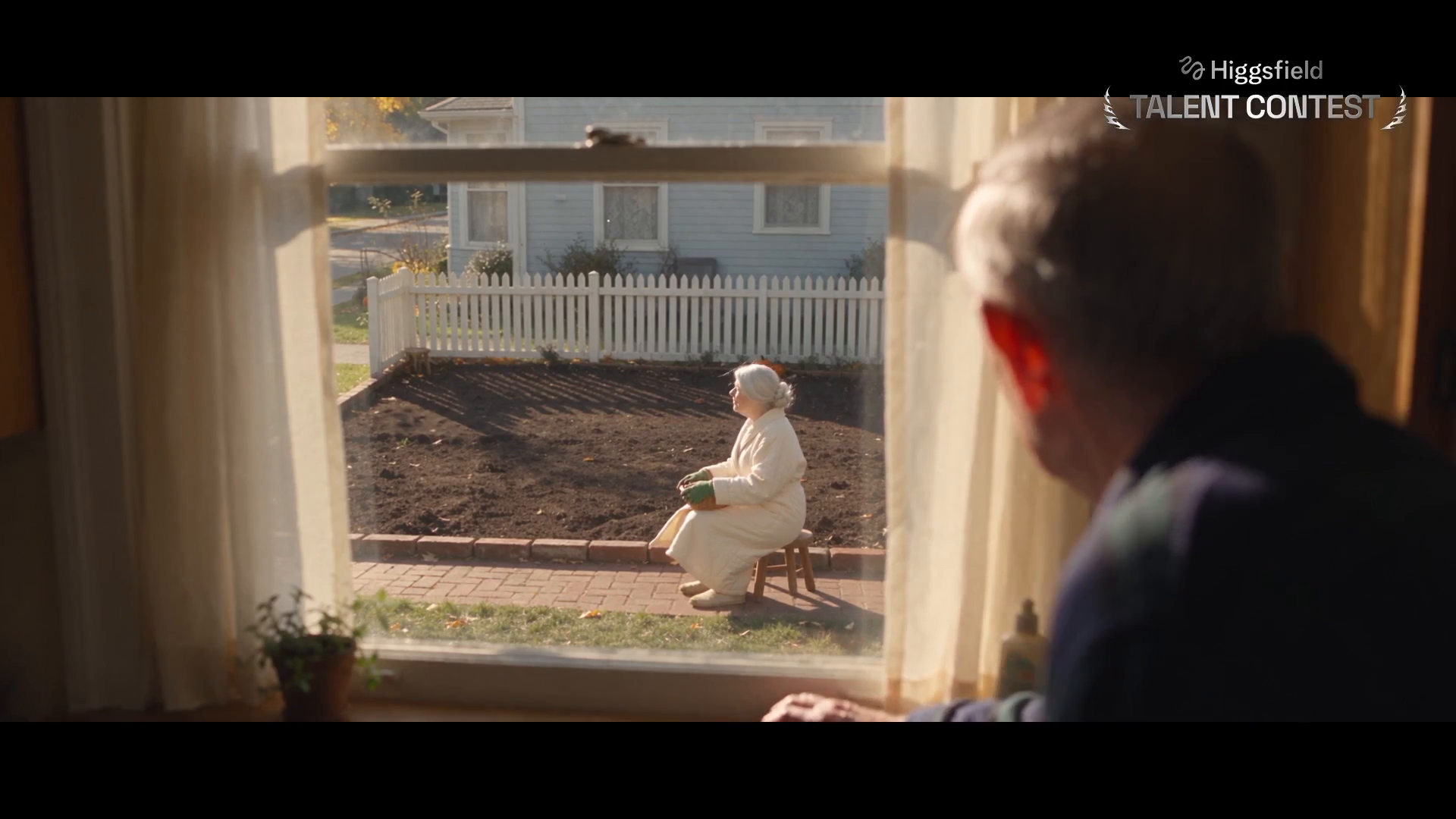
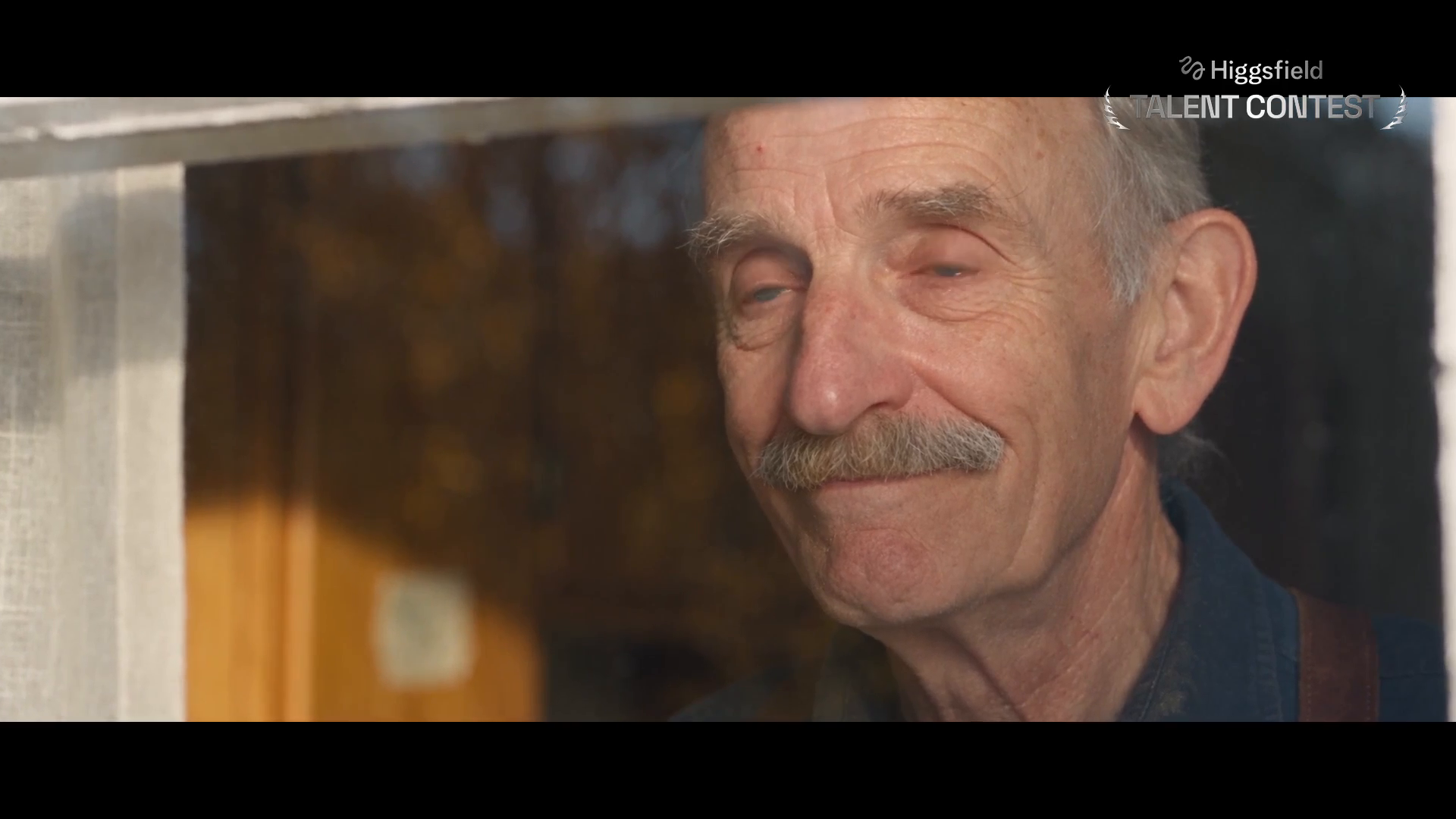
~0:15 — Watching from the window. Walter looks out through the window at Margaret, seated in the garden in the bare soil, holding something green in her hands.
~0:20 — The invitation. Walter on the telephone in the hallway, in his dressing gown.
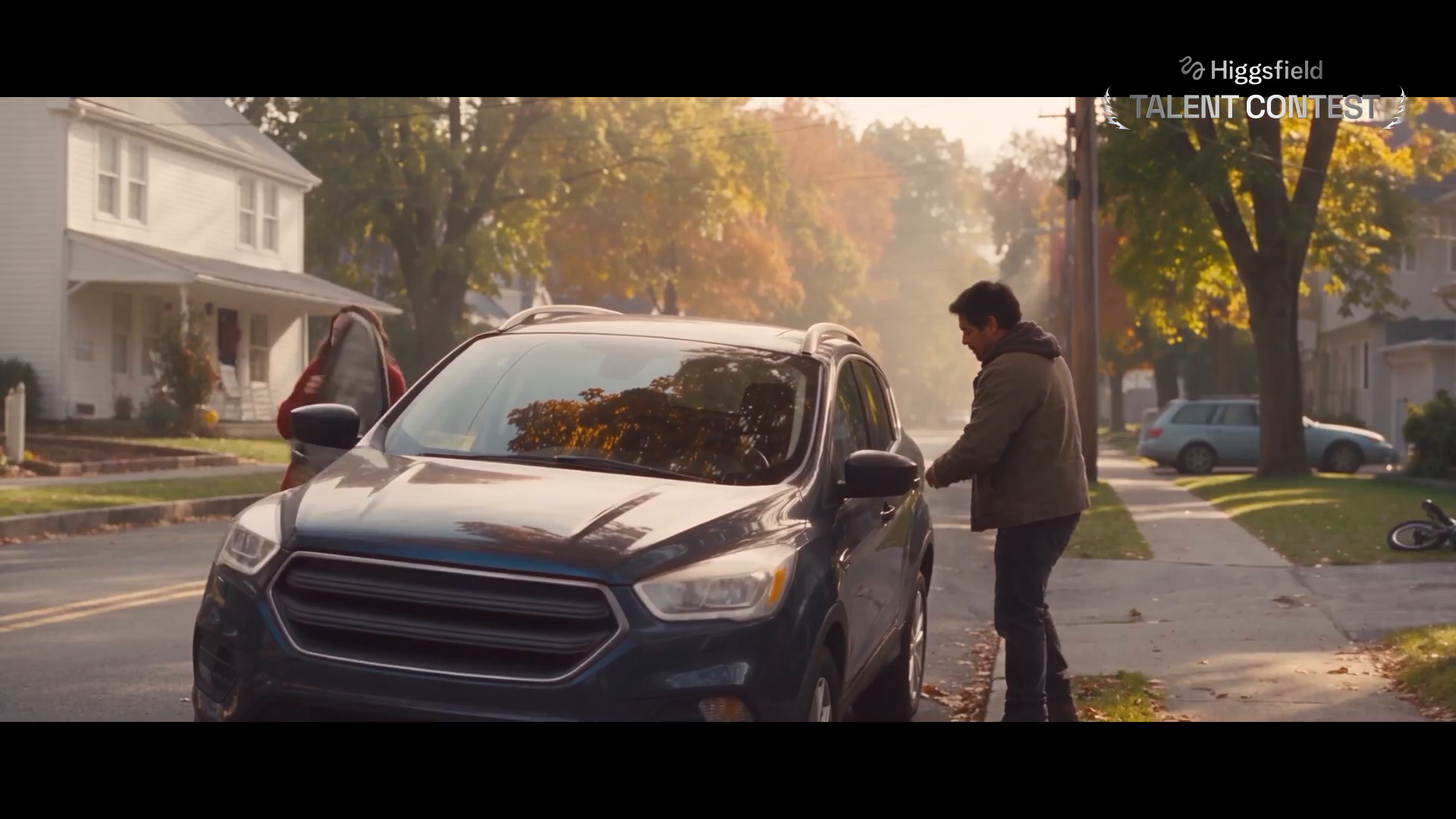
~0:45 — The arrival. Daniel arrives in the car with his little daughter, outside the house in the autumn light.
~1:05 — Home. Adult Charlotte, in her cherry-red cardigan, hugs Margaret at the front door.
~1:20 — The kitchen. Margaret and adult Charlotte close together in the kitchen, in warm light.
~1:35 — Drawing. Margaret and her little granddaughter draw together at the kitchen table — crayons, a stuffed bunny, a basket.
~1:50 — Planting. A hand presses a tulip bulb into dark soil in the garden; the basket of bulbs beside it.
~2:05 — Muddy hands. The little girl touches Margaret's cheek with a muddy hand; they both laugh in the garden light.
~2:20 — The quiet talk. Walter and Daniel talk quietly indoors, in warm light, about Margaret's condition.
~2:35 — Dinner. Candlelit, roast chicken on the table, the birthday cake waiting behind Margaret. The nurse is raised, and refused.
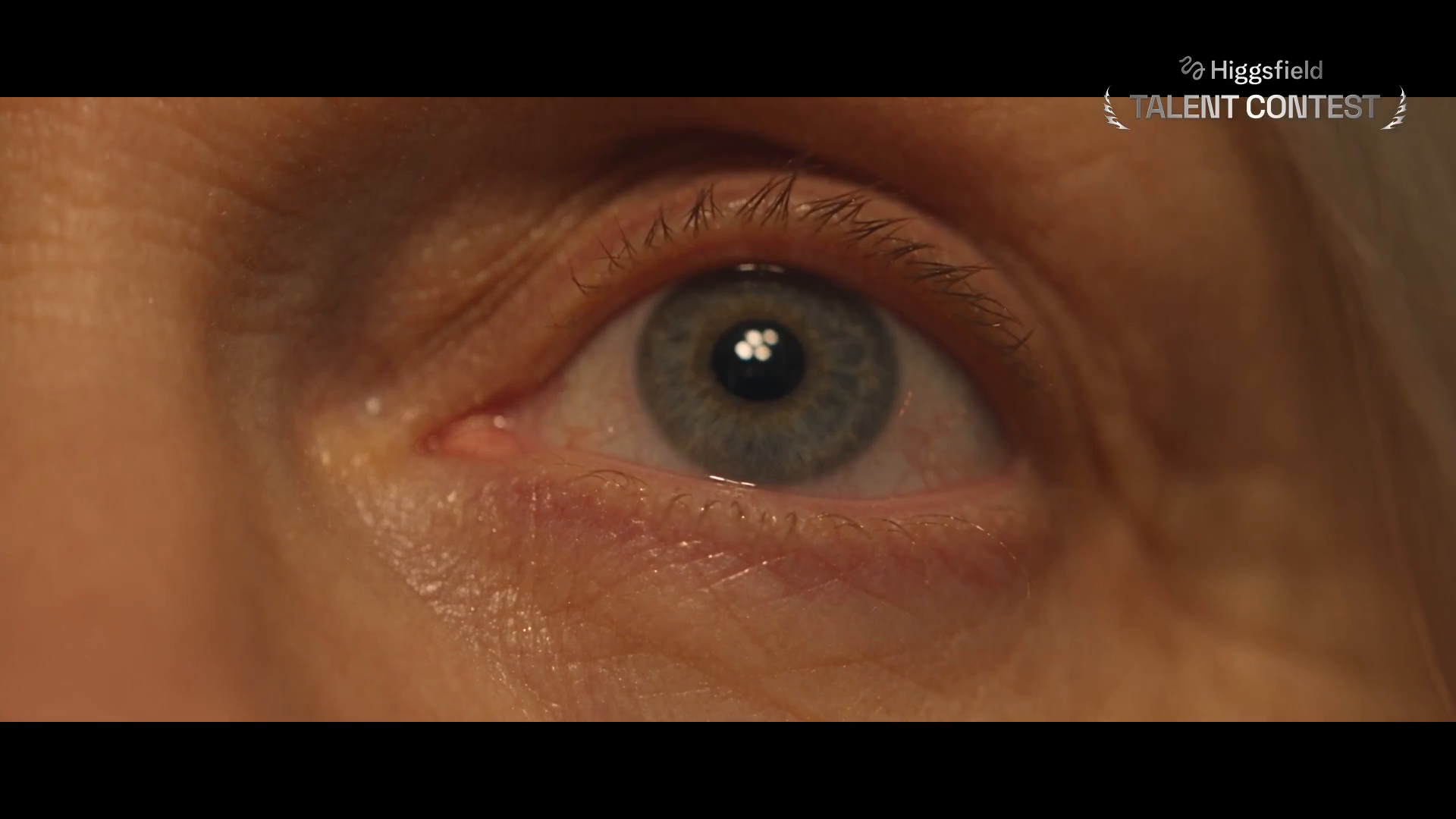
~2:45 — The eye. An extreme close-up of Margaret's eye — the moment before the film goes inside her mind.
2:50–3:20 — The void farewell. Margaret and Charlotte hold hands in the violet dark; forehead to forehead; the embrace, and Charlotte breaking into glass butterflies. Margaret calls after her: "Charlotte! Wait!"
~3:35 — The cake. The birthday cake with its "68" candles and red tulips; Margaret smiles through the flames. "It already came true."
~3:50 — The song takes over. Margaret rests her head on Walter's chest while Daniel holds the little girl; the lyric plays: "They'll sleep through the winter, they'll sleep through the storm."
~3:55 — The walk. The family walks through the hilltop cemetery at sunset toward the headstone, the little girl carrying red tulips.
~4:05 — The headstone. The little girl places red tulips at Charlotte's headstone; Daniel kneels beside her.
4:10 — The photograph. Margaret touches Charlotte's photograph on the headstone — "In Loving Memory of" — Walter's hand on her shoulder. "Then tell her I said hi."
~4:15 — Sunset. The family from behind at the headstone, the sun setting over the valley.
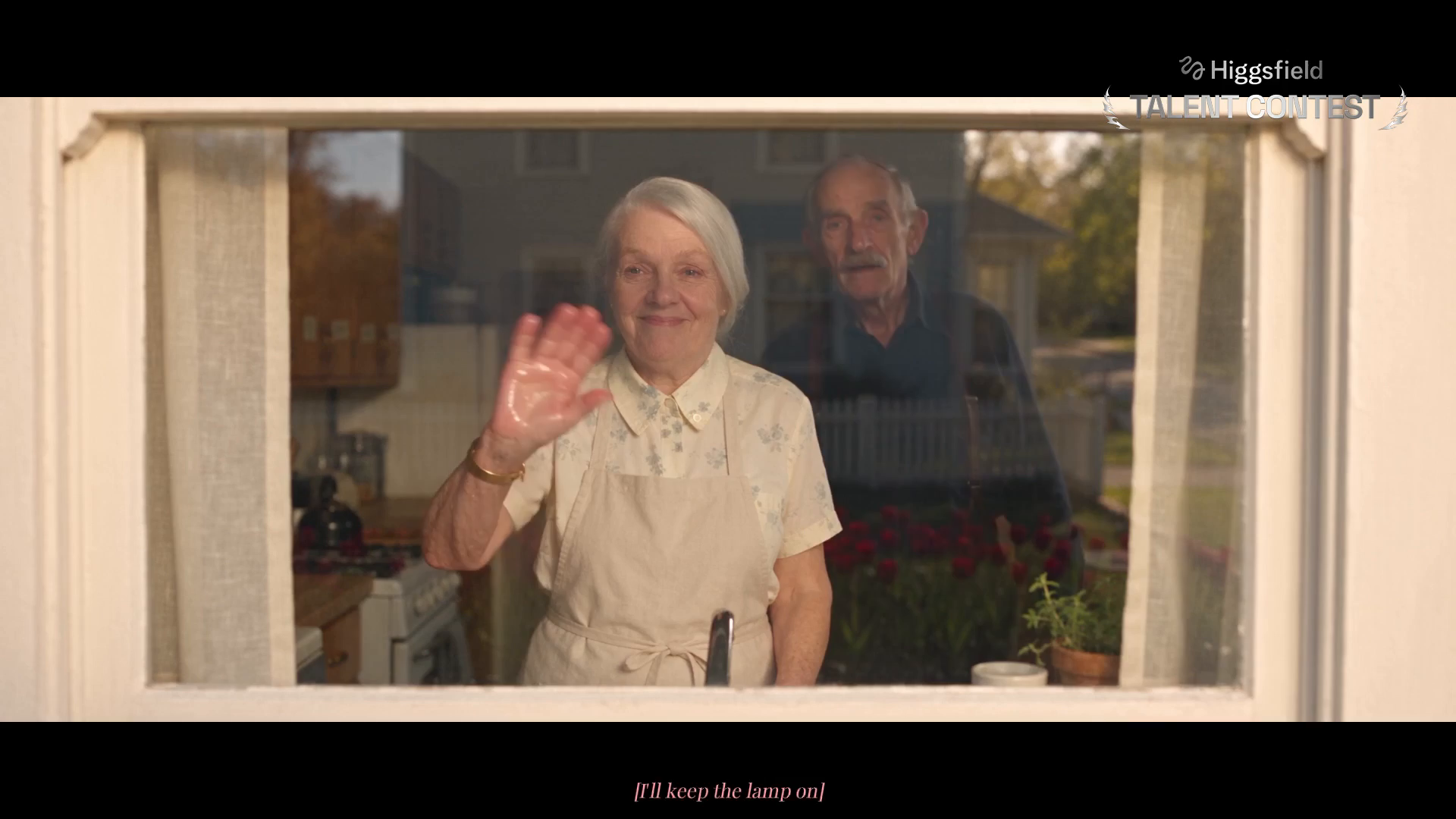
~4:20 — The wave. Margaret waves from the window, Walter behind her, red tulips in the garden — the memory the film keeps.
~4:35 — The statistic. A red tulip on black: "OVER 57 MILLION PEOPLE LIVE WITH DEMENTIA. FOR MOST OF THEM, IT'S ALZHEIMER'S."
~4:37 — The dedication. A red tulip on black: "FOR EVERYONE LIVING WITH IT, AND THE ONES WHO REMEMBER FOR THEM."
~4:40 — The title card. A red tulip and a glass butterfly on black: "Bring You Home."
~4:47–4:58 — Platform cards. A "$1,000" prize sting and a "CREATE A FILM LIKE THIS ON CINEMA STUDIO 4" card — platform material, NOT part of the film.