
 Whispers From The Dark
Score breakdown
52.3K views
Film Review
This review discusses the ending. If you would rather watch the film first, we recommend you do, and then come back.
Easy Money
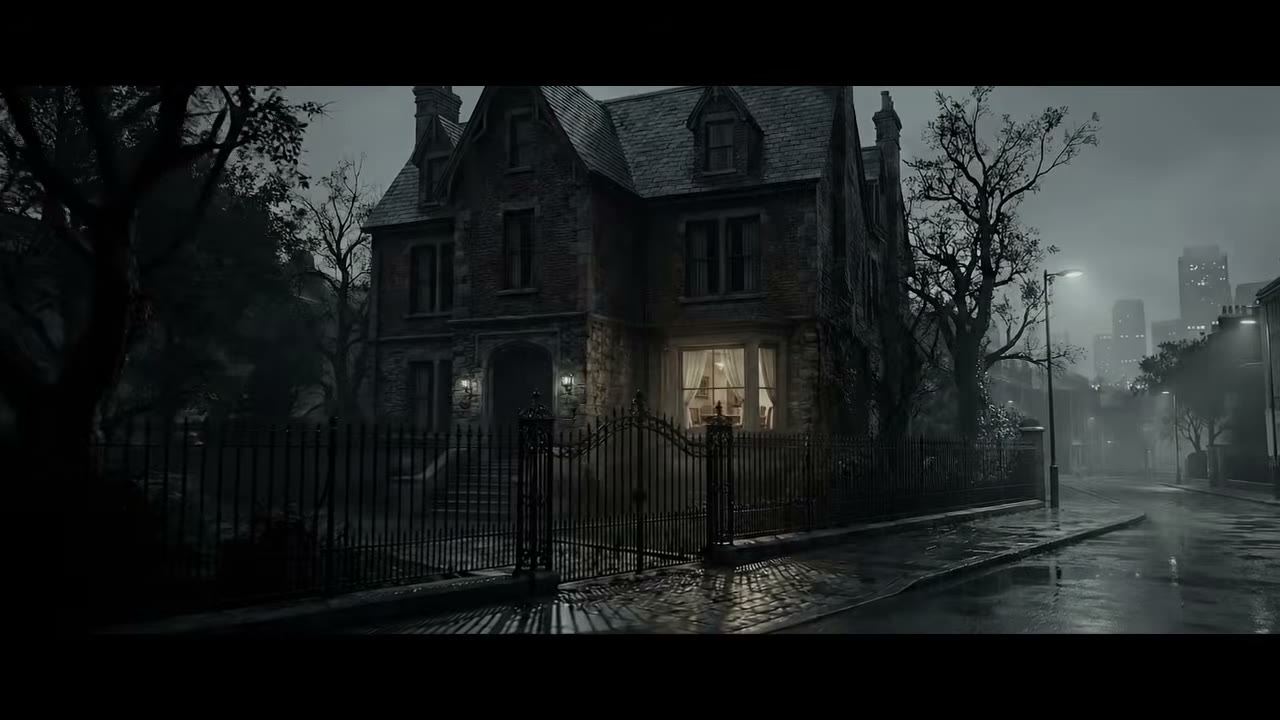
The setup is pure crime story wearing a fairy tale’s coat. Marcus and his partner stand at the iron gates of Blackwood Estate with a tip from a man named Tommy: the owner is deaf, totally deaf, the place is full of jewels, and it is easy money. “We just grab what we can see. In and out. 5 minutes.” Inside, the dining table is set like bait — jewels, an open jewellery box, cash simply sitting there — and greed does what the narrator promises it will: “The first taste is never enough. Hunger grows with feeding.” She is already planning to come back tomorrow. There is even more upstairs.
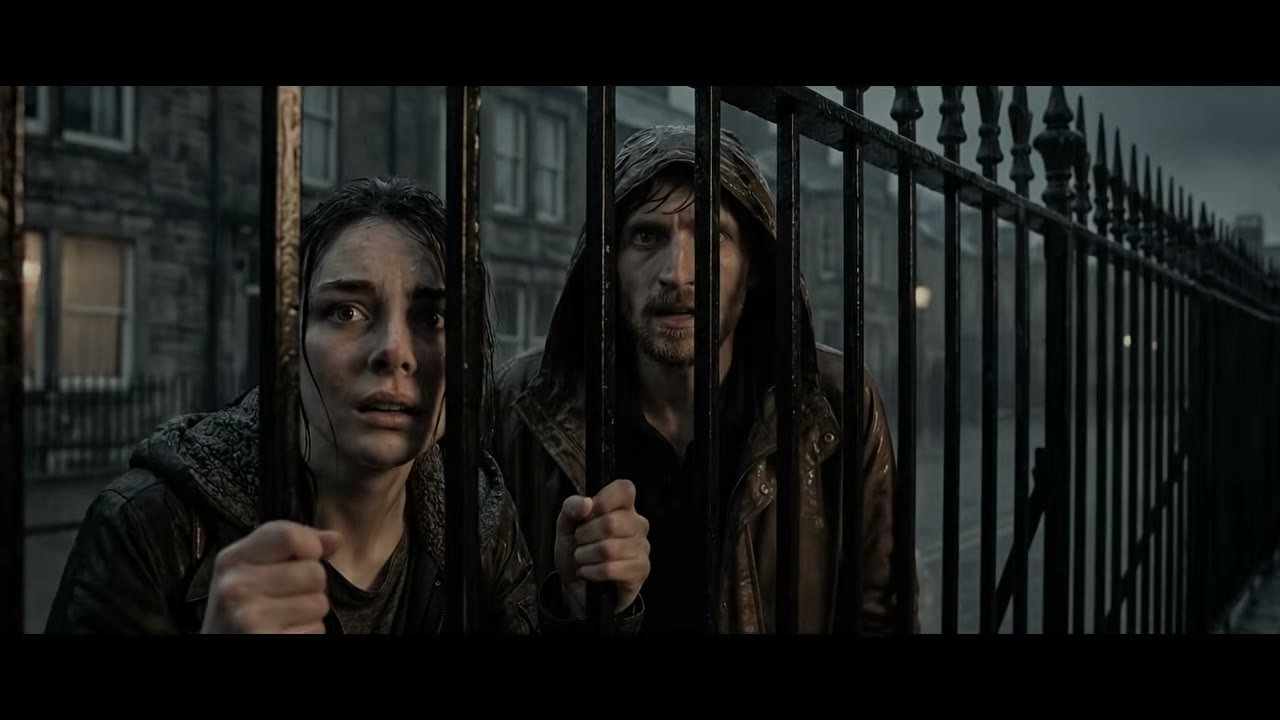
The house, of course, has other plans. Doors lock. A voice calls Marcus’s name in the dark. The witch sniffs them out through her own halls — and through it all hangs the question the film planted in its first minute and keeps watering: where is Tommy? Tommy, who knew so much about this house. Tommy, who said it was easy.
“Everyone Always Wants Dessert”
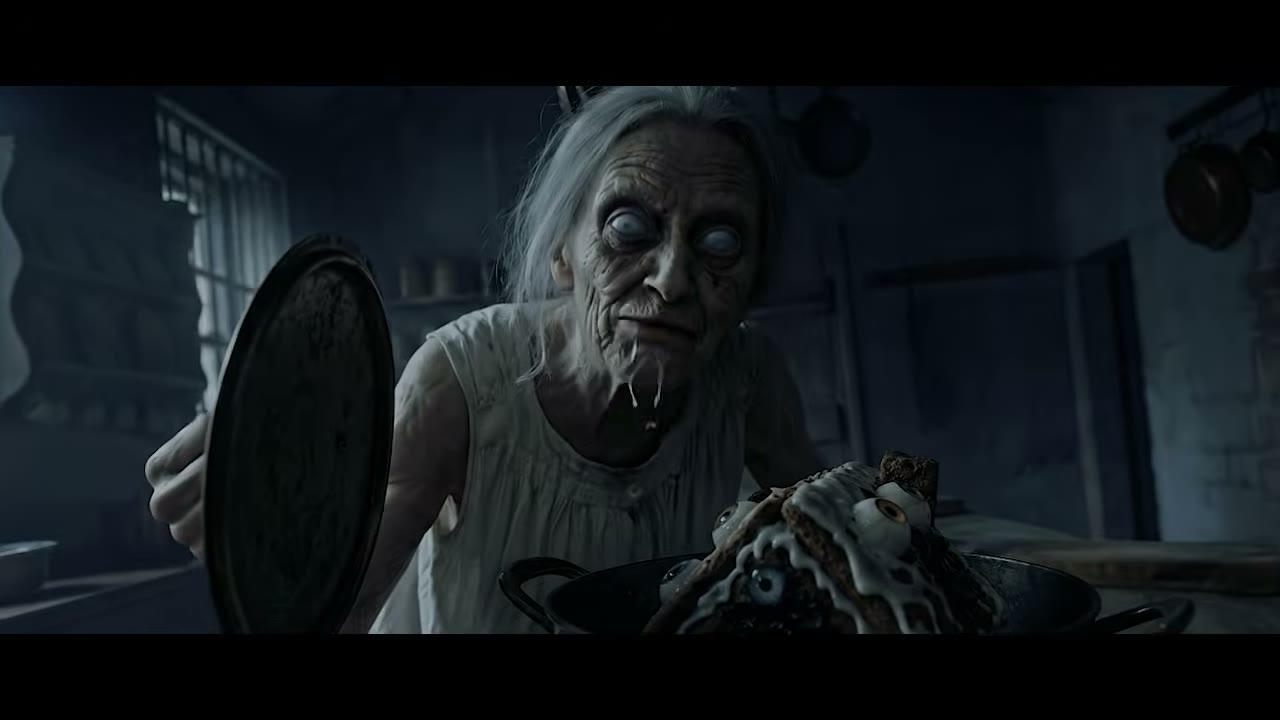
The payoff, when it arrives, is the best thing the channel could have done with this story. The witch — an old woman in white — confronts them carrying dessert: a grotesque cake whose icing forms a face, with staring eyeballs. “You came for dessert, didn’t you. Everyone always wants dessert. Tommy did too.” In five words the whole film clicks shut — the missing man, the title, the trail of breadcrumbs that led them here, which was never theirs. No escape is shown, and none is needed; by morning, the narrator tells us over the mansion in the mist, “the table is set again. The door is shut. The street is quiet. And somewhere a trail is waiting to be followed.” The trap resets. That cyclical chill is the film’s most professional touch.
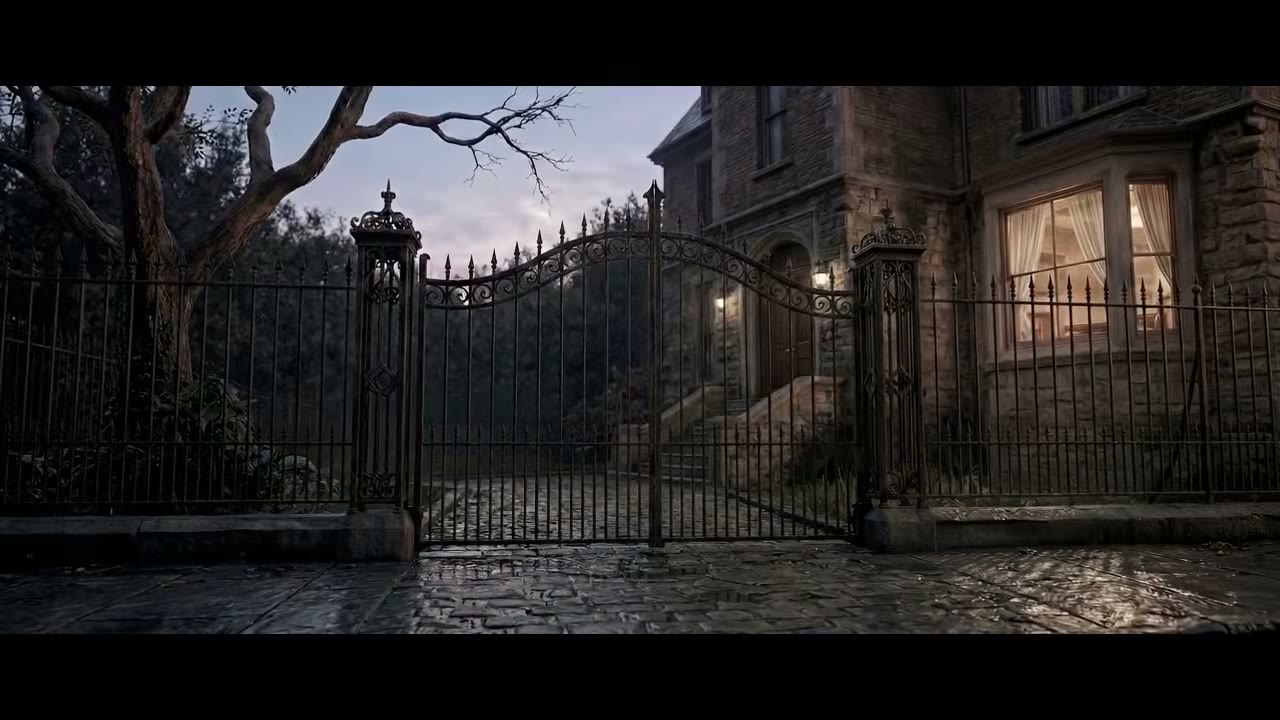
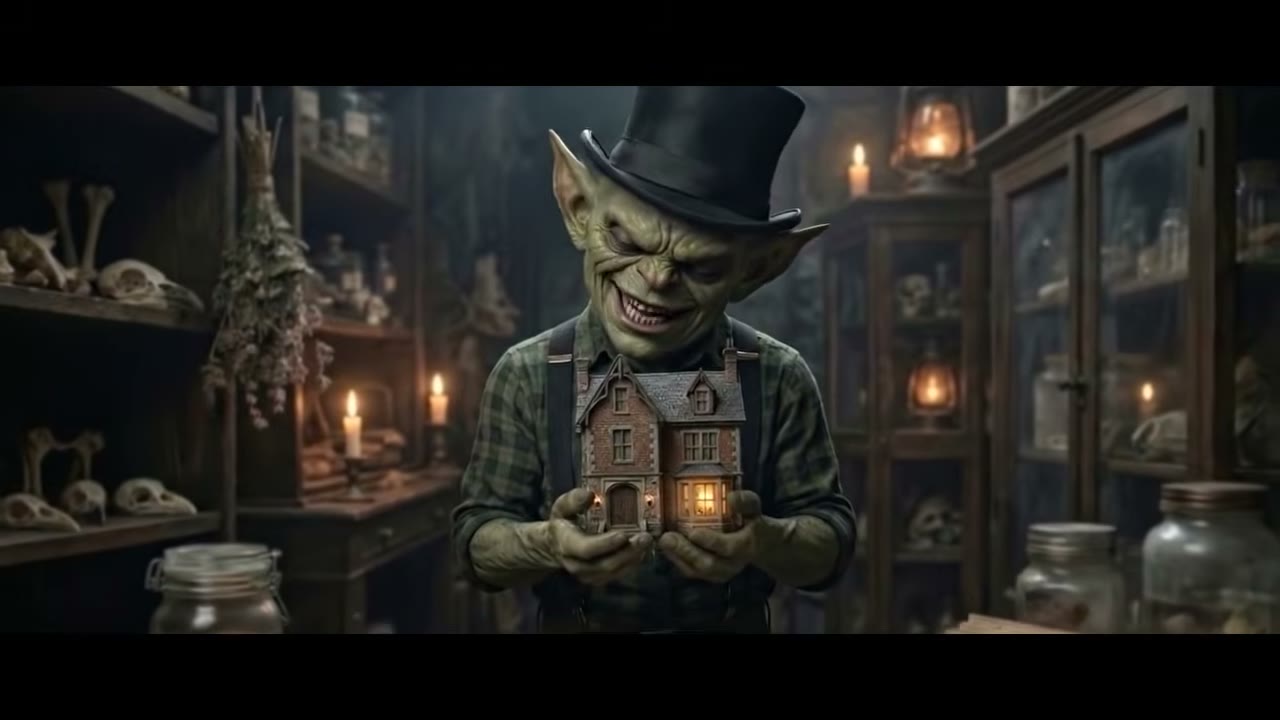
The craft unevenness is mostly in the people. The thieves’ voices are flat and synthetic, their mouths barely troubling to match the dialogue; their faces and clothes drift quietly between shots. Stranger still, the witch appears in three forms — a screaming creature in the opening shot, the goblin host of the framing segments, and the old woman in white — and the film never makes clear whether they are one being. Add a line of dialogue so mangled that no listener or transcript can recover it, a stutter in the narration, and one shot where the narration describes the dark estate over a street with no mansion in it, and you have a film whose atmosphere is stronger than its execution. But atmosphere is the product here, and on that measure Breadcrumbs delivers: the estate in the rain, the laden table, the gates at dawn are all frames that hold.
Best Scene (5:57–6:04)
Dessert is served
The witch in white, the living cake with its staring icing eyes, and one line — “Tommy did too” — that re-reads the entire film backwards. The Hansel & Gretel twist made literal, and the clearest, most memorable image in the piece.
Final Thoughts
Breadcrumbs is gothic pulp done with confidence — a fairy tale that punishes greed, hosted by a nightmare collector, and finished with a dessert nobody at home will forget. Its people are puppets in a way its house is not, and horror fans will forgive that trade more readily than most. Whispers From The Dark clearly have a format and an audience that loves it; this is a solid entry in their cabinet of nightmares.
Scene Breakdown
0:00–0:53 — The invitation. The collector of nightmares introduces the tale; Blackwood Estate stands in the rain, its light “an invitation the desperate cannot refuse”.
1:00–1:47 — The heist. Marcus and his partner at the gates: a deaf owner, easy money, in and out in five minutes.
1:48–3:04 — Greed and consequences. The table of jewels and cash, and the decision to come back for more.
3:05–4:20 — The trap closes. Locked doors, a voice calling in the dark, and the first sniff of the witch.
4:21–5:56 — The horrifying end. The chase through the house — and the name Tommy, spoken in horror.
5:57–6:54 — The cycle continues. Dessert is served; by morning the table is set again.
0:00, 5:58 and throughout — The witch comes in three forms — a screaming creature, the goblin-like host, and an old woman in white — and the film never establishes whether they are the same being. The human thieves’ faces, hair and clothes also drift subtly from shot to shot.
1:00–1:18, 2:10–2:24 — The thieves’ dialogue plays over mouths that barely move or fail to match the words, in flat, text-to-speech-like voices.
1:18 and 1:48 — One line is mangled beyond recovery — hearers and transcripts alike produce nonsense where a sentence should be. It is left unquoted here because nobody can honestly say what it was meant to be.
2:27 — The narration stutters over a repeated phrase (“the house the house knows this”).
0:31 — Narration and picture disagree: the estate is described sitting dark over a shot of a generic wet street with no mansion in it.
3:50–3:51, 5:57–6:04 — An extreme mouth close-up stretches and morphs as it pushes in, and the dessert’s icing face and eyeballs shift as the witch presents it.
There are no reviews yet. Be the first one to write one.