
 Andres Joan
 Creator ID26-11-01-0024

Score breakdown
1.3K views
Film Review
A LIFE
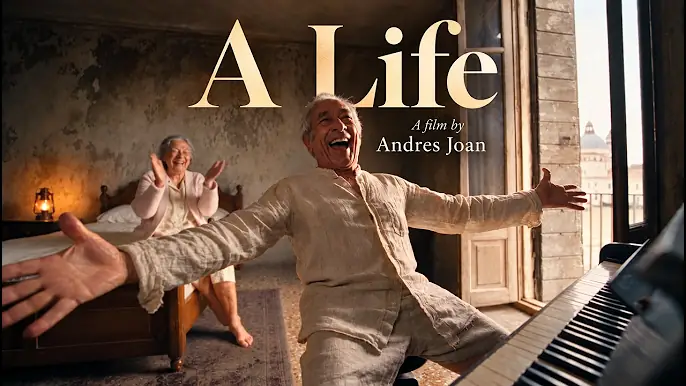
The life story of Earl, narrated to his grown grandson through the lens of his own questionable memories — a war, a woman named Valentina, and a mysterious figure who showed him every version of the life he could choose. A heartfelt, twenty-six-minute reminder of the way our grandparents used to tell stories, magic and all.
Synopsis
A Life is framed as an old man’s story to his grandson, Sebastian, told in that particular cadence every family recognizes — “hold on, let me switch to my storyteller voice.” Before he was born, Earl meets a figure he calls the Shepherd of Life, who shows him the full weight of the life ahead of him: love, war, loss, and a choice that isn’t really a choice at all. He lives it anyway, wounded in the Great War and saved by a woman named Valentina, only to be separated from her by circumstance. Fifty years later, with a sinking Venice as its backdrop, the film asks whether a promise made once can still be kept — and whether it even matters if the answer is yes.
The Review
A Life is twenty-six minutes long, and I did not feel a single one of them. That is the highest compliment I can give a film like this: it disappears into itself, the way the best stories our grandparents told us always did, half memory and half myth, and you stop keeping track of the runtime because you’re too busy sitting at Earl’s feet, listening.
The framing device is doing more work than it looks like at first. When we see the film from young Earl’s point of view as he speaks to his grown grandson, he still sees Sebastian as a boy — a small, quiet visual choice that says something true about every grandparent who has ever looked at us: to them, we never really grow up. It’s a lovely piece of subjective camera logic, using perspective itself as characterization rather than dialogue, and it sets the emotional register for everything that follows.
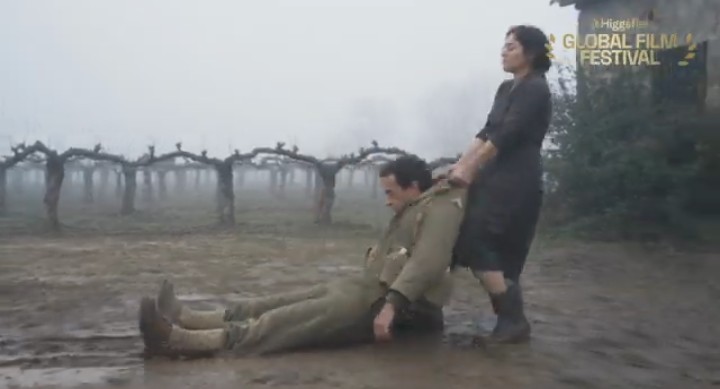
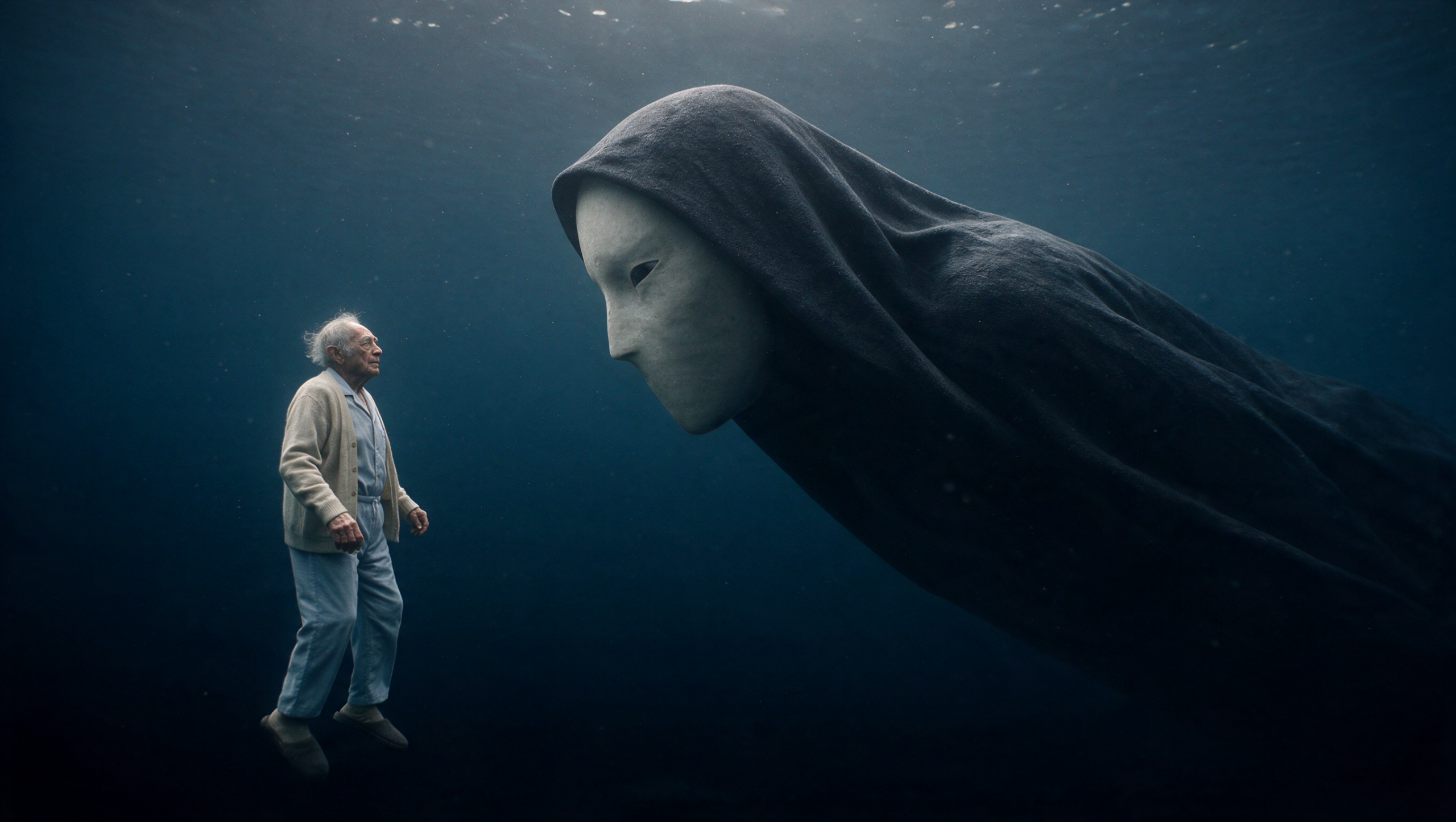
The Shepherd of Life is the film’s most inspired creation. She’s mysterious in exactly the right proportions — enough lore to feel like she belongs to a much larger mythology we’re only getting a glimpse of, not enough explanation to flatten the mystery. “Lay your hand upon me and you shall behold all that awaits you. This is the life you should live, if you choose to accept it.” That single line does the job of an entire prologue: it tells us Earl saw his whole life in advance, pain included, and chose it anyway, for his mother and for the people who would need him. That’s not a small piece of characterization to establish in one image and one voice performance, and the film pulls it off with real economy.
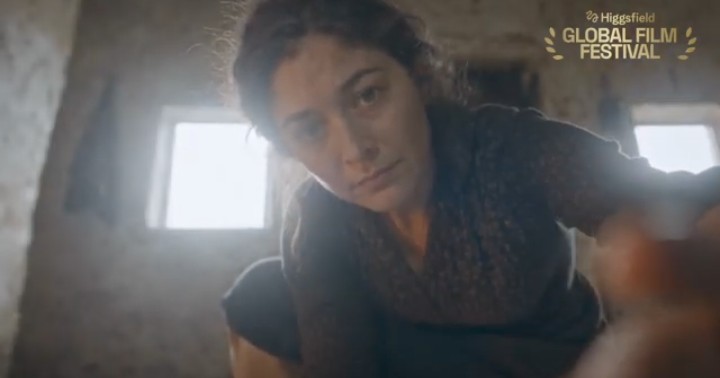
Valentina’s arrival mid-film shifts the tone from war story to love story without ever losing the fable quality that opened it. Their wartime rescue-and-reunion plays with real tenderness, and their fifty-years-later promise to meet again in Venice gives the back half of the film its shape: a slow, aching countdown that pays off the moment Earl sits down at a piano and Valentina hears it from somewhere else in the city. The score in that stretch leans into a warm, Andrea Bocelli-adjacent register, and it’s the right choice — it turns the reunion into something operatic rather than merely sentimental, which is exactly the register a story like this earns.
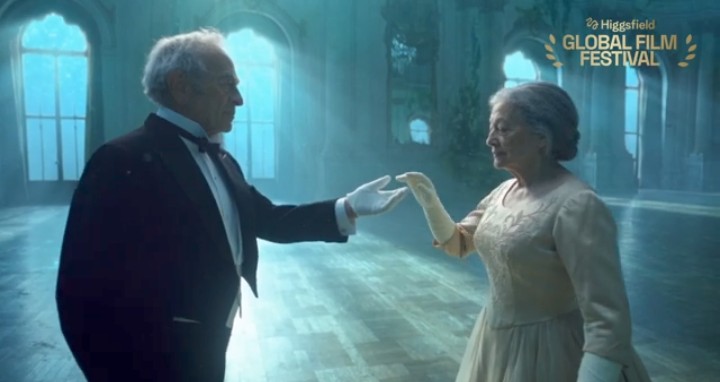
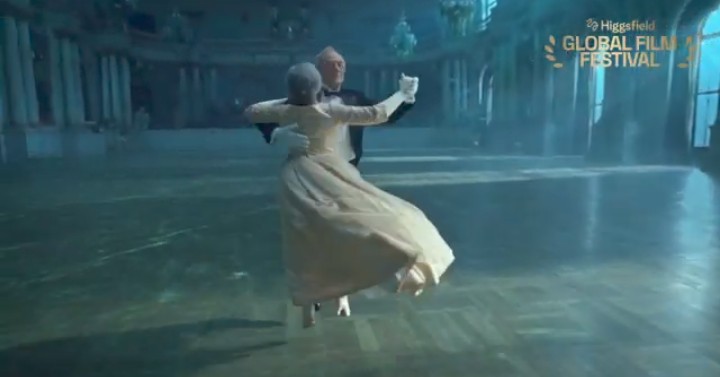
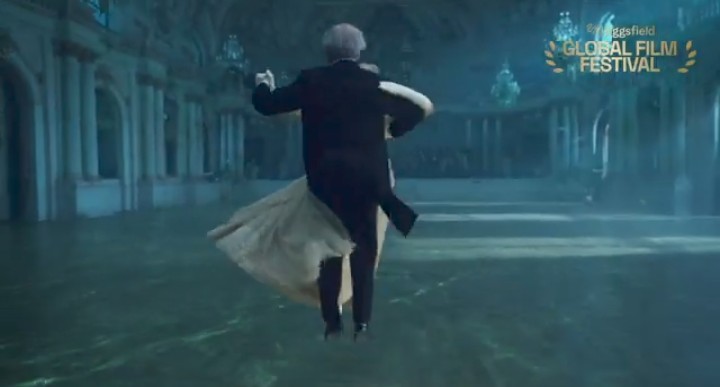
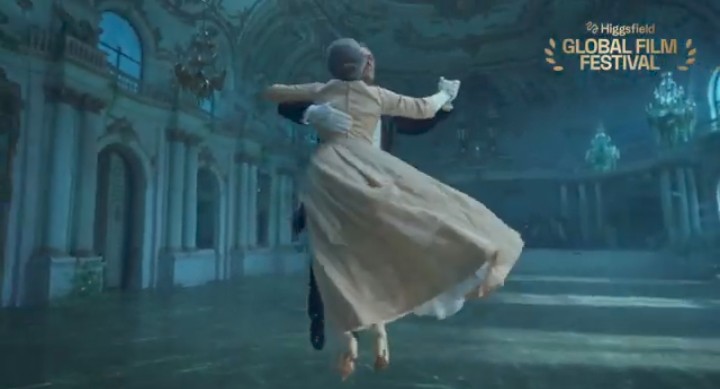
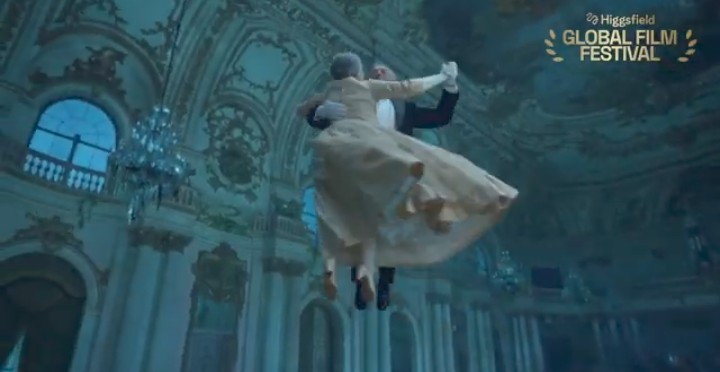
And then there’s the ballroom. The sequence where Earl and Valentina, dressed for the evening, dance through a grand hall and slowly lift into the air together as they turn is the clear emotional and technical high point of the film. It’s staged with real elegance — the choreography reads as a genuine waltz rather than a floating gimmick, her dress catching the air exactly the way fabric should as they rise, the camera holding a patient, unhurried distance instead of cutting away to hide the effect. It is the film’s one moment of outright magical realism, and it earns it, because everything before it has been building toward a feeling too large for the ground to hold. It’s the best-executed scene in the film by a wide margin, and it’s the image I suspect most people will carry with them afterward.
The film is honest about grief, too. “You didn’t warn me life was gonna hurt like this… never mind, you did warn me,” Earl tells the Shepherd near the end, and it’s a quietly devastating line precisely because it doesn’t ask for sympathy — it just accepts the deal he made at the very beginning. The passing itself is handled with real restraint, and the final letter that finds its way, decades later, to an old woman who turns out to be Valentina is the kind of ending that trusts its audience to sit with ambiguity rather than resolving it for them. Did he really find her in Venice, or was that his own version of the story he needed to believe? The film never says. I’m still turning that over, which is exactly what a good ending should leave you doing.
If there’s a note of honest criticism to give, it’s in the grandson’s final scene — the crying in that moment doesn’t quite land with the same conviction as everything Earl and Valentina carry earlier in the film, and it’s a small crack in an otherwise emotionally consistent performance throughline. It doesn’t undo what the film accomplishes, but it’s the one beat that pulled me briefly out of the story instead of deeper into it.
What stays with me most, though, is how much this film feels like sitting on the floor as a kid while someone’s grandfather tells a story that’s probably half exaggerated and entirely true anyway. A Life has that same warmth, that same gentle sense of humor tucked into the sentimental parts, and that same touch of the impossible slipped in so casually you accept it without question — cows that seem entirely too relaxed about the whole thing, a shepherd of souls, a couple who rises off a ballroom floor. That’s exactly the texture of the stories our grandparents used to tell us, and it’s rare to see a film capture that feeling this precisely.
This is a film built on voice, restraint, and one genuinely magical set piece — a family story dressed up as an epic, and an epic that never forgets it’s really just a family story. Heartfelt, funny in the right places, and one for the whole family to watch together.
Scene-by-Scene Breakdown
A small, funny grace note to open on — a field of impossibly relaxed cows, set against nothing in particular. It’s an odd, disarming first image, and it works because the film never explains it.
Grandpa Earl speaks to his grandson Sebastian. Told from Earl’s point of view, Sebastian is rendered as the young boy Earl still sees him as, despite being fully grown — a quiet, effective piece of subjective framing.
“Hold on, let me switch to my storyteller voice.” The shift in delivery here is the whole film in miniature — it’s the exact register of every grandfather who has ever told a story worth telling.
“Before I was born, I was in the before life.” The storyteller voice takes full hold, and it’s genuinely transporting — the film earns the feeling of being a kid again, listening.
“Welcome to existence, Earl from Missouri. I am the one who shepherds you toward life.” The Shepherd of Life is introduced, and her voice performance alone makes the character feel ancient and knowing.
“Lay your hand upon me and you shall behold all that awaits you. This is the life you should live, if you choose to accept it.” A mysterious, magnetic character established almost entirely through a single exchange.
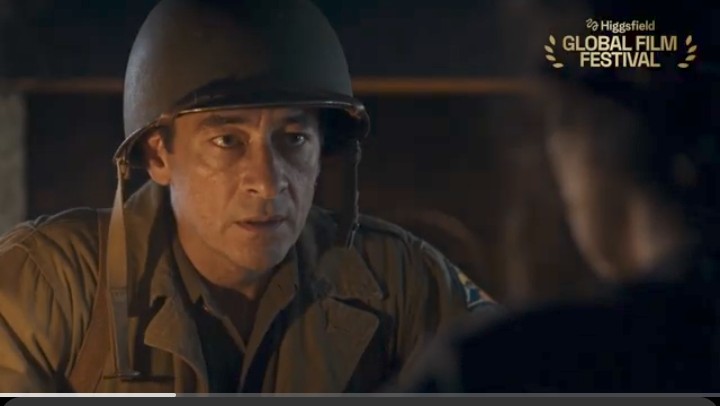
Earl sees the full life ahead of him — the pain included — and isn’t sure he’s brave enough to accept it. But he thinks of his mother and the people who will need him, and chooses to live, hoping people might someday learn to get along. He’s drafted into the Great War, is wounded, and nearly loses his life to the Shepherd before Valentina saves him.
Valentina’s introduction carries real emotional weight in her expression alone — no dialogue needed to establish who she is to this story.
“Neither one of us saved ourselves, so we saved each other.” The two grow to care for one another, but young Earl has to leave. Valentina proposes meeting in Valencia in fifty years — “they say death may spare you, as long as you have something left unfinished.”
Earl returns home to his family. In time, his wife tells him she can’t do this anymore and leaves.
In his solitude, Valentina begins appearing in his dreams. He searches for her and finds nothing.
Fifty years later, Venice is underwater — and Earl decides to go looking for Valentina anyway.
Valentina makes the same decision, and heads to Venice as well.
Earl sits at a piano, and Valentina hears him play from elsewhere in the sinking city. The score here shifts into a warm, Bocelli-style register that carries the reunion.
Their reunion — Valentina embraces him and cries from the sheer emotion of seeing him again. Beautiful, and completely earned by everything before it.
A tender montage of the year they spend together in a sinking Venice — the happiness, the tears, the ordinary peaceful moments. “You’d be surprised how wonderful doing nothing can be, when you’re doing nothing next to the right person.”
The best scene in the film. Earl and Valentina, dressed for the evening, begin to dance in a grand hall — and as they turn, they slowly lift off the floor, dancing suspended in the air. The choreography reads as a real, unhurried waltz rather than a special-effects showcase, and the camera holds its distance long enough to let the moment breathe instead of cutting away from it. Her dress moves with the air exactly the way it should, which is the detail that sells the whole illusion. Elegant, beautifully executed, and genuinely magical.
“You didn’t warn me life was gonna hurt like this… never mind, you did warn me.” The Shepherd of Life returns, and the line lands with real weight against everything Earl accepted at the film’s opening.
Earl’s emotion here reads completely real and affecting. The grandson’s crying in this scene is the one performance beat that needed more polish — it doesn’t fully convince. Earl asks his grandson to deliver a letter he’s leaving behind, knowing he won’t be alive by the time it arrives.
Earl’s passing is handled with real restraint and beauty — no melodrama, just a quiet close.
The letter finally reaches an old woman — who turns out to be Valentina.
“Maybe in the next life, we can give each other the chance that this life did not give us.” The film closes on Earl walking into the afterlife, smiling — an ending that leaves the Venice reunion deliberately unresolved, and is better for it.
There are no reviews yet. Be the first one to write one.