


Download Free Original Music Songs from the films
Scores & Rankings
For When You’re Ready Directed by Kineograph
Find this film in
Score breakdown
- Storytelling & Structure ×28
- Emotional Connection ×210
- AI Tool Management ×28
- Visual Craft8
- Screenplay8
- Sound Design8
- Originality10
- Technical Polish7
- Rewatch Value10
×2 = core category, counts double.
For When You’re Ready
A film review
For When You’re Ready is an official entry in the Higgsfield Global Film Festival. Running a little over four minutes, it is a short film about grief that asks for very little dialogue and gets a lot from it. Three spoken lines carry the story. The rest is told through an original song and its reprise, and the film is built on the idea that grief isn’t linear and never looks the same for two people.

The story
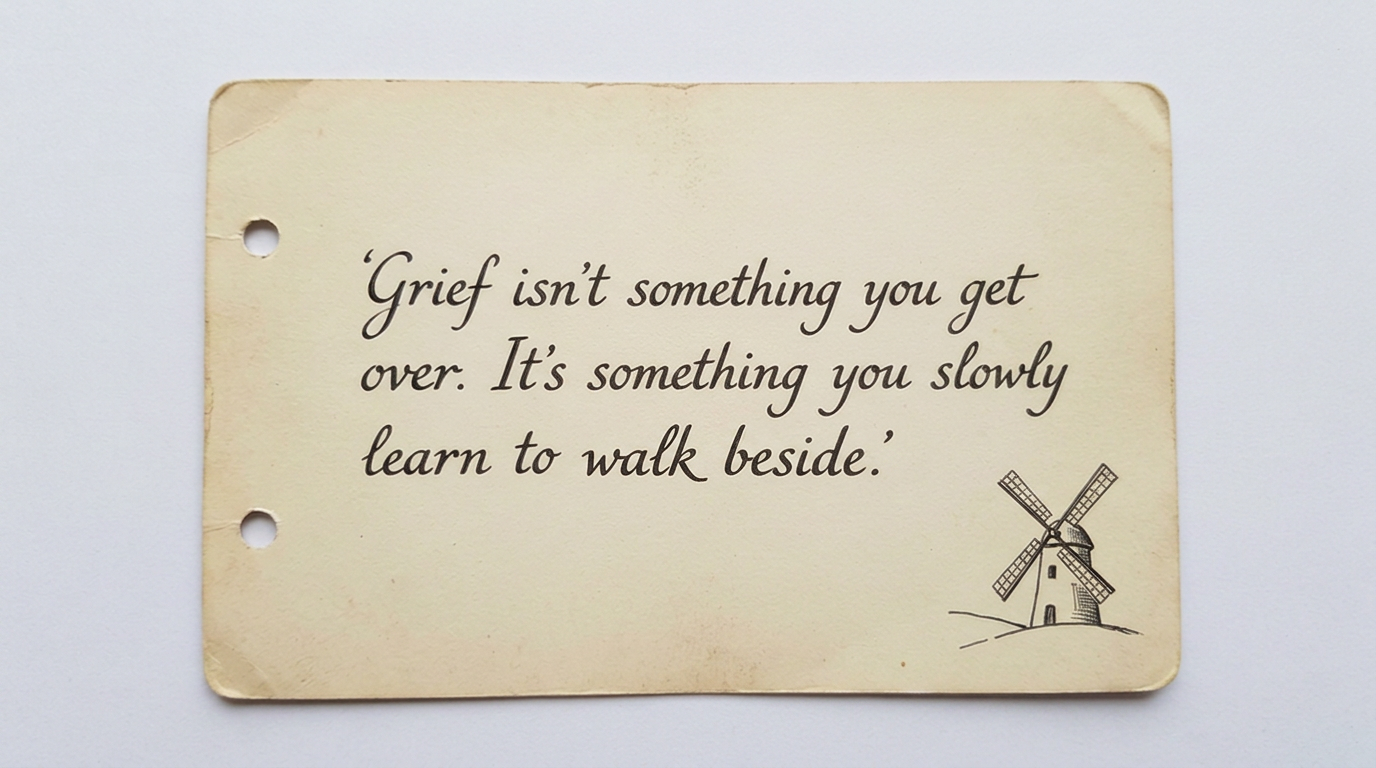
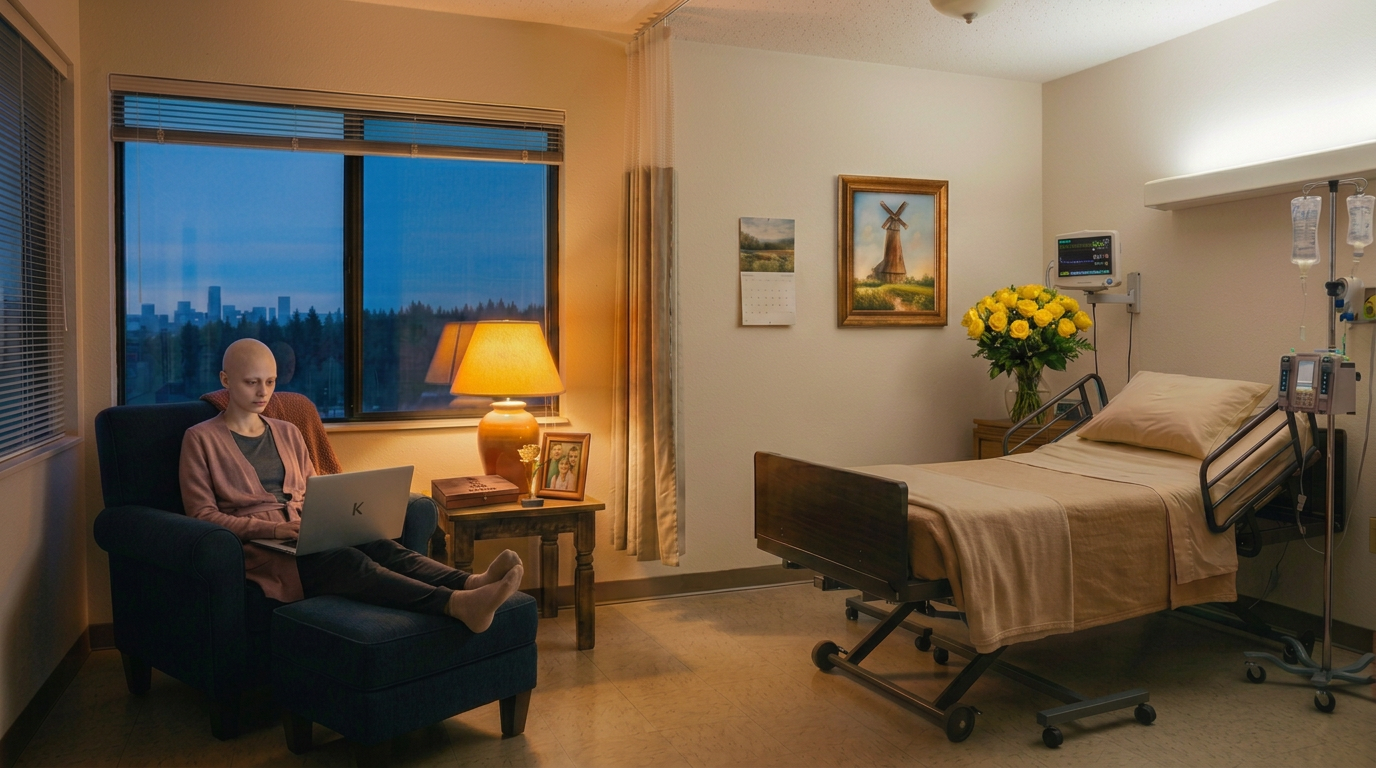
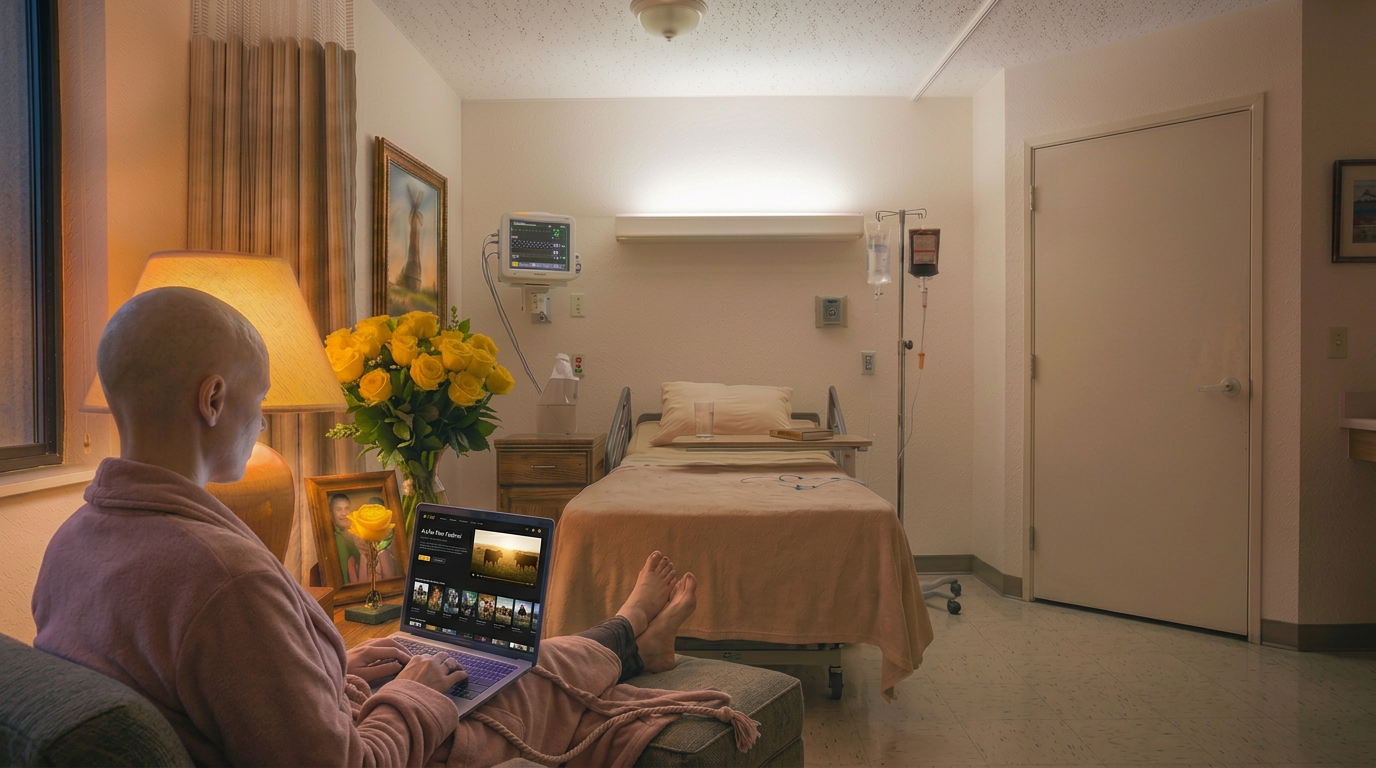
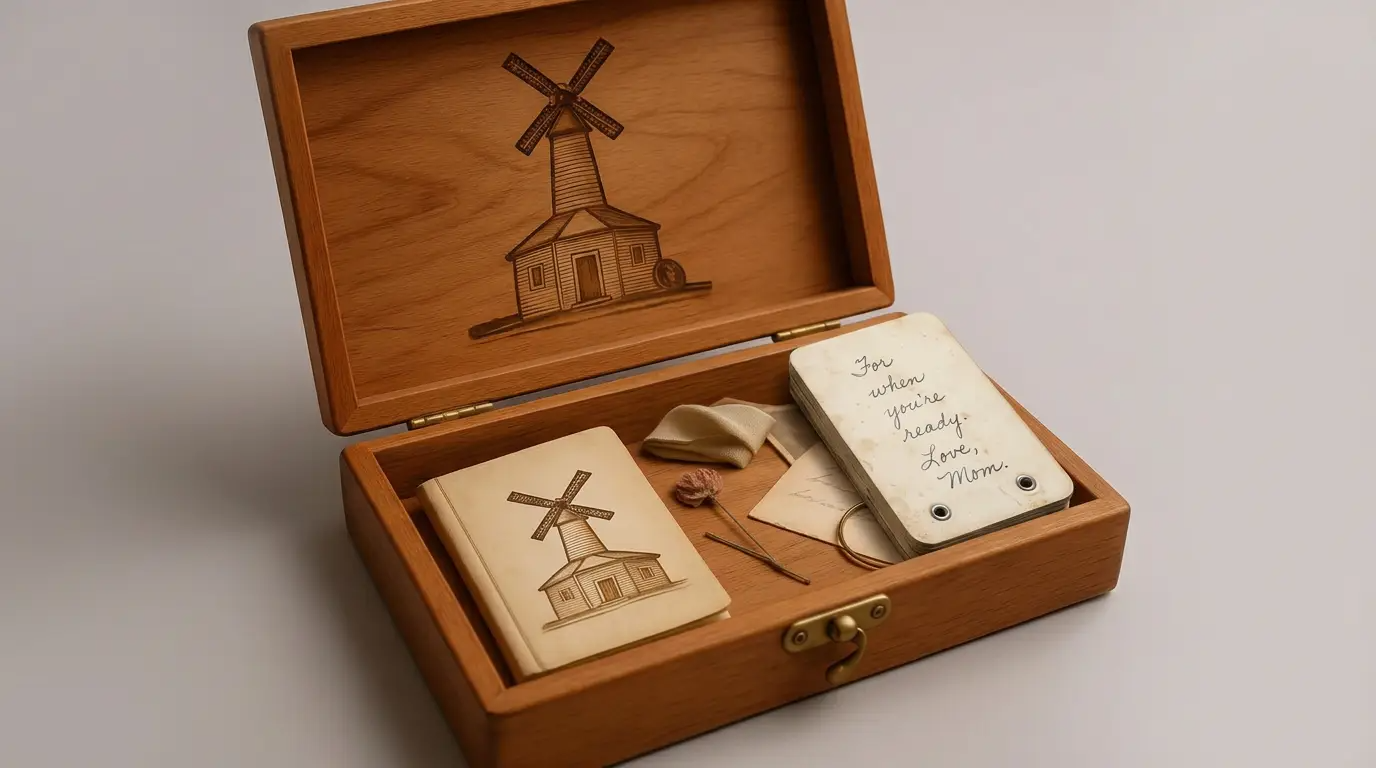
A father texts his daughter to check on her. She is in a hospital room, watching films from the Higgsfield Global Film Festival on her laptop, including A Life by Andres Joan, who permitted the film to use his work. She laughs, then cries, then settles into “I’m okay.” She takes out an old flipbook, a keepsake from her mother, who died when she was younger. On the back, in her mother’s handwriting:
“For When You’re Ready. Love, Mom.”
She decides it’s time. Using her phone, she films small pieces of her world: light, a flower, an old photo, and the flipbook itself, its hand-drawn windmill spinning to life. She edits them together, titles the film with her mother’s words, and uploads it to the same festival.
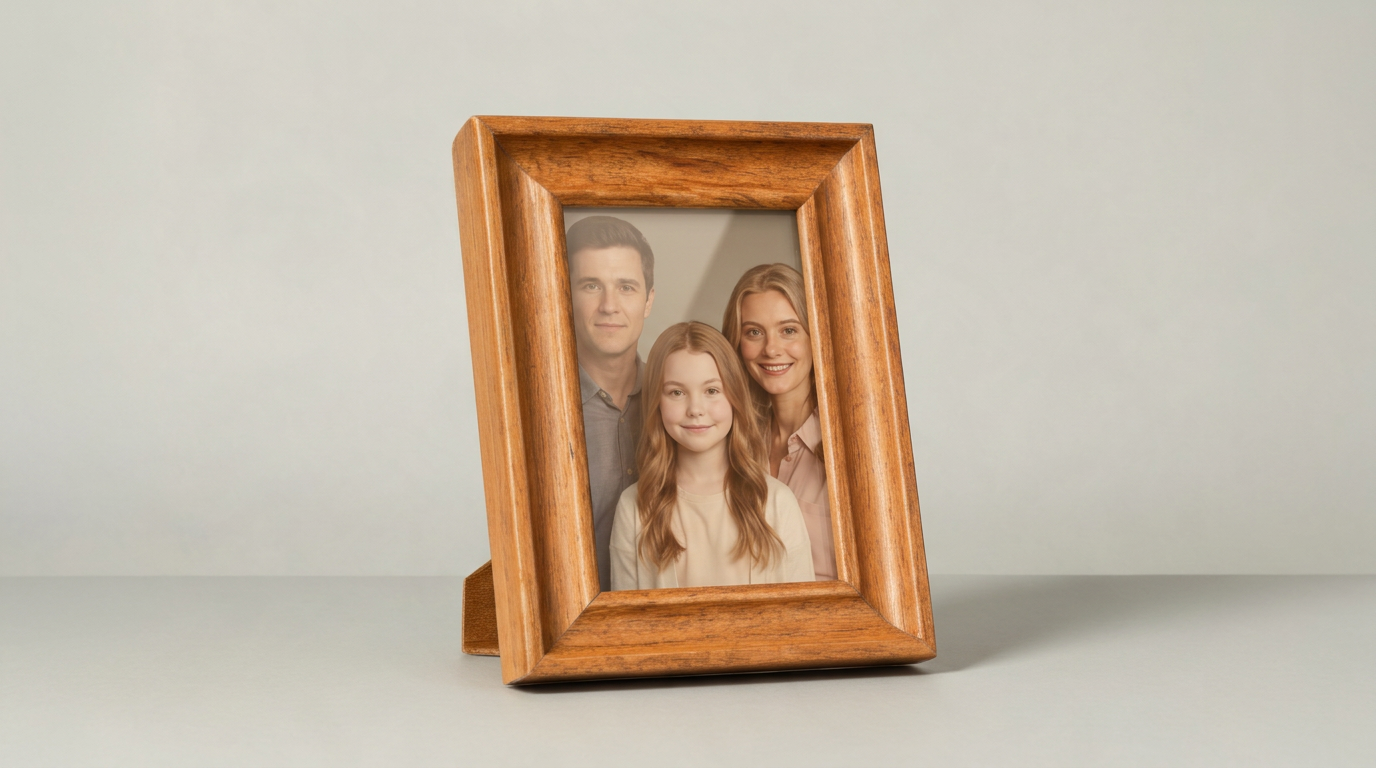
Her father is then shown alone in her empty hospital room, gathering her things. His breakdown here is unguarded, and the film lets it run without cutting away. Twenty years later, in his living room, he opens a keepsake box and finds her film already loaded on a device. He presses play. Her voice says back to him the words his late wife once wrote. He breaks again, not only from the loss but from finally being ready to feel it, twice over.
Design and symbolism
The film uses color as a map of grief. It opens on black, with the mother’s voice heard before we see the daughter. A gray screen appears at the mirror, and the only white transition comes at 4:10, marking acceptance of the years that have passed. The windmill is the film’s central image. It first appears as a painting on the hospital wall in the wide shot at 0:12, comes back as the flipbook drawing, and shows up again on the father’s wall 20 years later. The flipbook also carries a nod to film history, since such devices led to the first motion pictures in the late 19th century. The daughter’s answer to her mother’s gift is to make the same kind of gift for her father, a piece of art meant to help him carry the loss.
The details on the tables carry a lot of quiet meaning. The same items sit beside the mother’s bed, in the daughter’s hospital room, and in the father’s living room decades later. The yellow roses were the mother’s favorite, which we learn from the photographs and the final clip.

Performance and sound
The daughter’s laugh turning into tears at 0:24 is the film’s most controlled beat, and her face carries the emotion at 1:03. The father’s collapse at 2:06 is the emotional center, and the final scene, built from about six clips, was staged for raw feeling rather than a striking camera angle. The song was the first thing the filmmaker made, and it works as the daughter’s voice speaking to her father. His reaction to it in the last scene is the payoff. The closing cards, “it’s okay to grieve, and it looks different for all of us,” state the theme outright, and by then it has been earned.
Production and limits
The film was made entirely on a phone using Chromes Desktop View on Higgsfield AI. It’s rough edges come from practical limits. The first shot of the daughter watching the laptop came out robotic in Kling 3.0. It was redone in Seedance 2.5 but left unfixed when credits ran out, which is why the cut to the wide shot at 0:12 is not smooth. The cut at 0:23 is abrupt for a similar reason, since the sequel clip could not carry the text bubbles from the original and there was no time to add them in post.
Around 0:40, the film breaks the 180-degree rule. Seedance 2.5 refused to continue any scene with a hospital setting, so the last available clip became the only option. At 0:39–0:50 the flipbook note was meant to be read on the back of the page, but the clip only showed one page. The memory sequence at 0:51–0:58 was meant to be color-graded gray, but it was edited in CapCut on mobile, with about 30 minutes to finish. Finally, the credits were meant to show the windmill turning on all ten flipbook pages, but the batch of clips all came back identical, so stills were used instead. The credits thank the Higgsfield Discord community for prompting help and encouragement.

Verdict
These flaws are visible, but they don’t hurt the film’s emotional truth. For When You’re Ready succeeds because it trusts its images, its song, and three spoken lines to carry the whole story.
— PRODUCTION —
Official entry, Higgsfield Global Film Festival
Written, directed and produced by Kineograph
Video: Higgsfield Cinema Studio
Character design: Soul 2.0
Location design: Soul Cinema
Original song: “For When You’re Ready” (reprised in the film’s closing scene)
Reader Reviews
There are no reviews yet. Be the first one to write one.