
Download Free Original Music Songs from the films
Scores & Rankings
Life Meter Directed by Muzart Osman
Find this film in
Score breakdown
- Storytelling & Structure ×210
- Emotional Connection ×29
- AI Tool Management ×210
- Visual Craft10
- Screenplay9
- Sound Design10
- Originality9
- Technical Polish10
- Rewatch Value10
×2 = core category, counts double.
Film Review
Written by Kineograph
After an unexpected stop on a lonely desert highway, a man discovers a mysterious meter that puts a price on his remaining time.
This review discusses the ending. If you would rather watch the film first, we recommend you do, and then come back.
Why This Film Stayed With Me
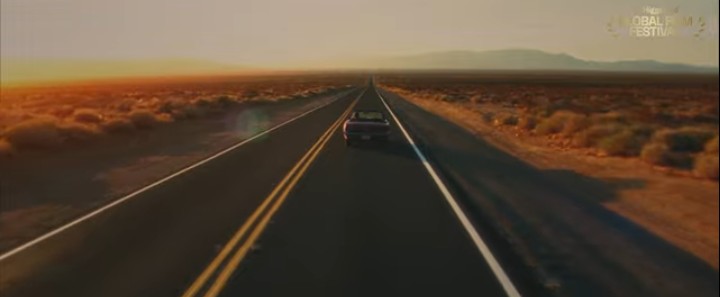
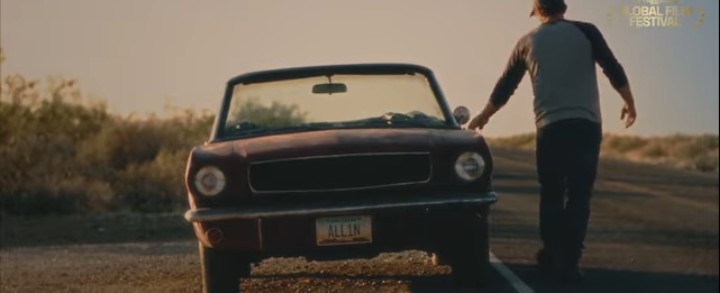
Most of us have pulled over on a long road for the most ordinary reason in the world. This film starts right there. Miles is driving alone through the desert, and he has to stop to pee. That is it. That is the whole reason the story begins.
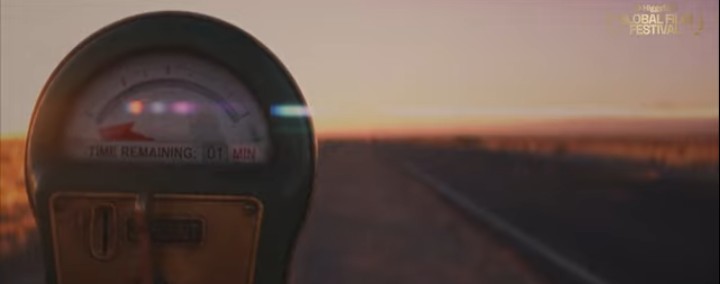
When he gets back to his car, there is a parking ticket on the windshield. In the middle of nowhere. He thinks it must be a joke, so he plays along and drops a quarter in a parking meter that is now sitting by the side of the road. He waits for the meter man. Nobody shows up. When the time runs out, he drives off, and that is when things go very wrong.
What I love is how small the idea is. One quarter. Fifteen minutes. When the time is up, Miles dies, and he wakes up at the same meter to try again. You understand the rules in seconds, and then the film uses them in surprising ways.

The Road Is Life
You may be wondering what this film is really about. The director’s brief gives us the answer: the road is life. We spend our days moving forward and chasing destinations, money, and success. Then something stops us. Sometimes it is small, like a stop on the road. Sometimes it is something much bigger that we never planned for.
That is exactly what happens to Miles. He treats the meter the way he treats everything else: fight it, solve it, find more, and keep moving. Notice that his first reaction to a deadly problem is to get more of what he already chases. The more he runs, the more the film shows us what he has been missing along the way.
Here is how I read it. The meter is not really a parking meter. It is a way of making time visible. Most of us never see our time running down, and Miles has to watch his tick away.
Dusty, Grainy, and Beautifully Cinematic
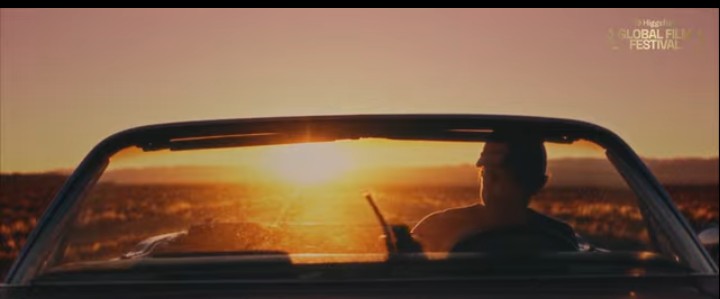
I wanted to see this film on a big screen. The director set out to make it feel like it was shot on a real Arizona highway with a real camera, and it does. The light is warm and golden. The colors are desert earth tones: faded yellows, sand, and dusty browns. There is a soft film grain over everything, so it does not look too clean or too sharp, the way AI images sometimes do. It looks closer to an old movie shot on 35mm film.
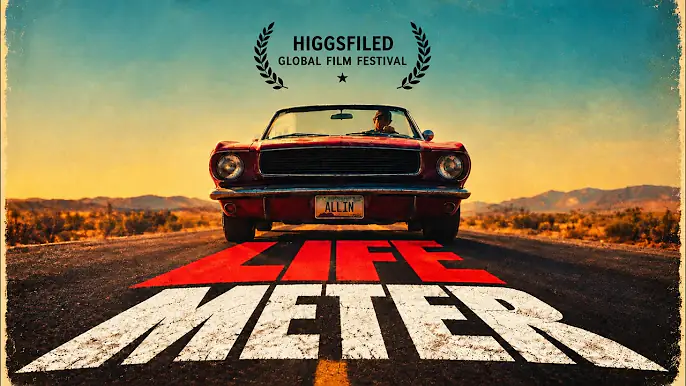
The setting does a lot of the storytelling. The road is long, the horizon is empty, and Miles looks tiny inside the frame. You feel that the road could go on forever, even though his time cannot. Even the poster has a clever touch: look closely at the license plate on the red convertible and you will see it says ALLIN. That is a perfect hint about where Miles is heading.
The film also changes with Miles. Early scenes are fast and full of panic. Near the end, the camera calms down and lets the desert breathe. You get a moment to simply look at the road, the light, and time passing. It is a quiet and lovely choice.

Best Scene: The Plane Crash
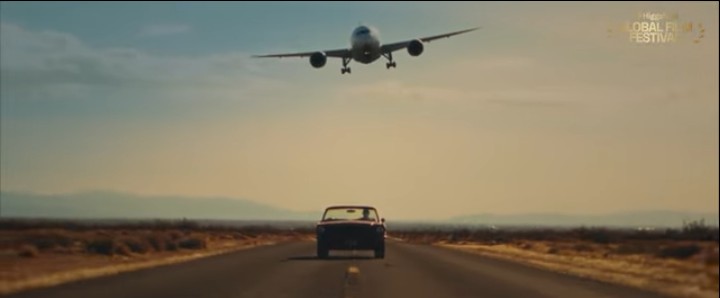
Hands down, this is my favorite moment in the film. Everything before it feels calm. The meter runs out, Miles gives up waiting, and he drives away down the long road. Then a plane comes down out of the sky and crashes right on top of his car.
The Plane Crash
A huge passenger jet fills the screen, nose first, with both engines visible. Smoke rolls across the road, fire burns on the ground beside it, and Miles’s small car sits right in front of it all. It is a shocking image. The plane is enormous, the car is tiny, and Miles has no time to react. This appears to be the first time the meter collects, and it shows us just how fast and how big the price can be.
I love how the film sets this up. The calm, empty road makes the crash feel even bigger. It tells us the rules of this world in one shot: you cannot outsmart the meter. A scene this big would cost a fortune to film in real life, and here it looks believable, with real weight, smoke, and fire. I would love to hear from the director how this scene was made.
A Quarter That Is Worth More Than Oxygen.
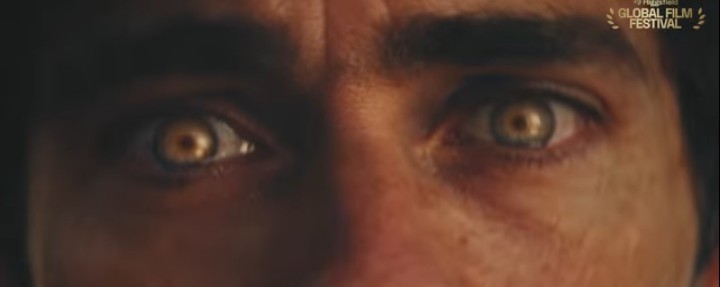
After the crash, Miles wakes up right where he started, and a golden ring of light fades from his eyes. He finds one quarter in his pocket and feeds the meter again. Now he knows the rule: each quarter buys fifteen minutes of life. When the time runs out, he dies, and it happens in all kinds of ways. A hammer. A snake bite. And no matter what he tries, he always comes back to the same spot.
I love the symbol at the heart of this film. A quarter is worth almost nothing, yet here it is worth more than all the cash in Miles’s wallet, because it can buy the one thing he needs. He figures it out quickly: more quarters, more time. So he goes looking for them.
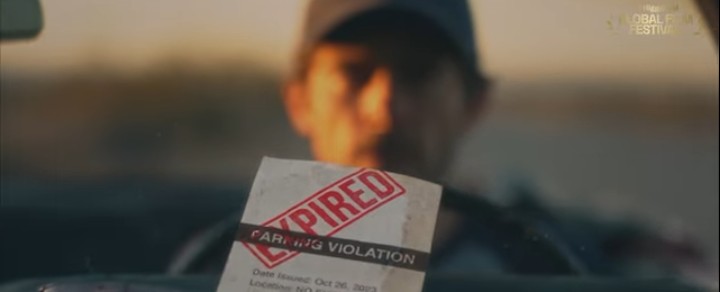
Even the ticket is clever. It says EXPIRED in big red letters, and that is exactly how Miles ends up feeling about his own life. It is funny and a little scary at the same time.

When Chasing Time Gets Expensive
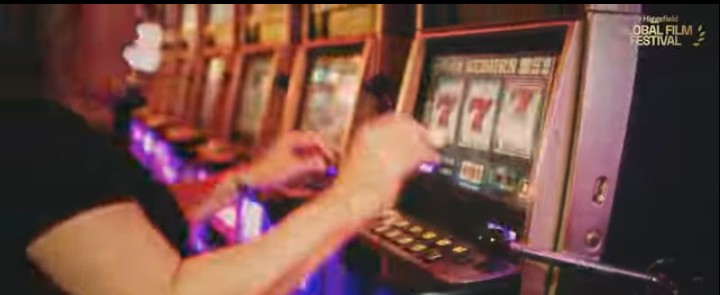
This is where the story gets dark, and I mean that as a compliment. Miles does what he has always done: he chases. He makes a deal with people who are not nice. We hear the terms: fifteen thousand now, and twenty thousand back in two days. “Good luck, Miles,” the man says, and it does not sound friendly. Then Miles turns to gambling, hoping to win enough money to buy more time.
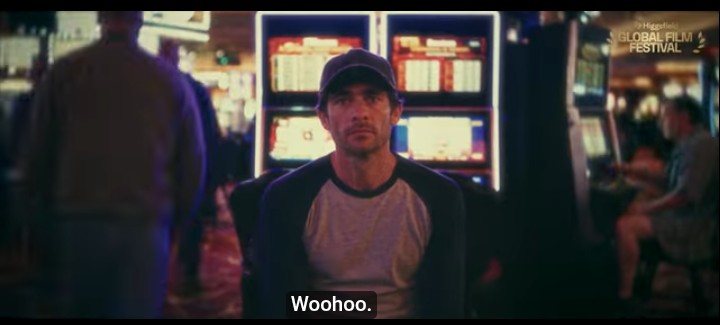
One of my favorite details is the casino. In one frame, a slot-machine glow lights up Miles’s face while the subtitle says “Woohoo,” and he does not look like a winner. His face is flat and tired. It says a lot with no extra words. Winning feels like losing when you are playing for your life.
That is the film’s big idea at work. Miles finds a problem that money cannot fix, and yet he keeps using money to try.
The People Who Pay the Price
The most human part of the film is Miles’s family. His daughter hands him a quarter. “Dad. Can this money help?” she asks. It is such a small thing, and it breaks your heart a little.
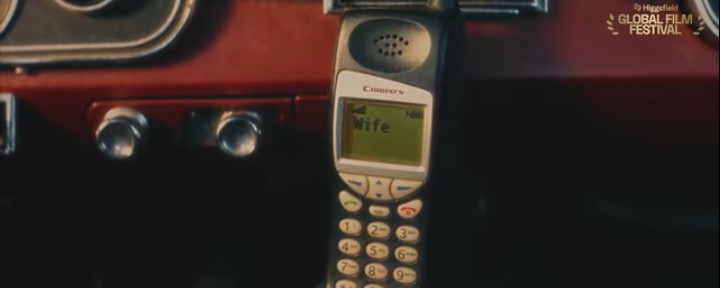
Then there is his wife. She does not know what he is doing, only that he keeps losing. “How much more are you going to lose?” she asks. He answers with the line that every chaser knows: “I’ll get it back. I promise.” Her reply is simple and sad. She is tired of hearing it. The scene shows that Miles is not only risking his own life. He is about to lose the two people he is trying to save.
It is a smart move by the director. The meter is magic, but the pain in this scene is completely real.

The Moment Miles Stops
Then comes the turn. Miles finally stops running, and the film lets him say what he has learned. “All my life I was counting what I’d lost, what I could win back,” he says. “I never counted this.” Then the line I think sums up the whole film: you don’t really feel time until you stop trying to outrun it.
He calls his wife and says he is coming home. And here is the beautiful part. When we look at the meter, it actually moves up, as if he gained time instead of losing it. Miles did not find more quarters. He found something better.
What Does the Ending Mean?
The film leaves its ending open on purpose, and I like that. There are a few ways to read it, and I will not pick one for you.
He escaped. The meter moving up could mean the loop has finally let him go.
He accepted his fate. Maybe he did not win anything. Maybe he just made peace with the time he had left.
It starts again. He may be about to die and begin again, but this time as a different man.
The director says what matters most is that Miles has changed. He stopped chasing, fighting, and searching for more, and he finally appreciated what he already had. The film also never explains who made the meter or how it works. Life does not explain itself either. Miles has to deal with something he cannot fully understand or control, just like the rest of us.
Made With Care
The director, Muzart, wrote, directed, and edited the film and made it mainly with Higgsfield. The score was created with SUNO to match the mood, and you can feel the music working with the picture, especially in the final stretch. The work followed the same steps as a traditional film: story, character, wardrobe, location, and shot planning before a single scene was made. That planning pays off, because Miles, his car, and the desert stay consistent through every loop, and that is not easy with AI.
I also love what the director said about the goal. It was never to make a film about AI. It was to use AI to tell a human story. They did exactly that.
Final Thoughts
A road film about time that reminds us to stop chasing and start noticing. It is clever, a little funny, and surprisingly moving, with a crash scene you will not forget. Watch it, and then think about what you are racing toward. Maybe pull over for a minute. The view is probably better than you think.
Scene Breakdown
0:00–0:44 — Miles drives alone down a long desert highway and stops to pee. When he returns, there is a parking ticket on his windshield.
0:44–1:20 — “This is not funny.” He decides to play along and puts a quarter in the parking meter now sitting by the road.
1:20–1:33 — He calls out for the meter man and says he will wait. Nobody comes.
Around 1:33–2:24 — The time runs out and he drives away. A plane comes down and crashes on his car. He wakes up at the same spot, with a golden ring of light fading from his eyes.
2:24–3:16 — He finds one quarter in his pocket and feeds the meter again. He panics, and dies again and again in different ways, including a hammer and a snake bite.
3:16–3:55 — Nothing seems to help. He makes a deal for fifteen thousand, promising twenty thousand back in two days. “Good luck, Miles.”
3:55–4:23 — He works out the rule: one quarter buys fifteen minutes. More quarters, more time. He starts hunting for quarters.
4:32–4:39 — His daughter gives him a quarter. “Dad. Can this money help?”
4:39–5:07 — His wife confronts him. She is tired of hearing “I’ll get it back,” and warns him he will lose them both.
5:07–5:25 — Miles gambles at the casino. He shouts, but he does not look like a winner.
5:25–5:54 — He realizes he has been counting what he lost and never counted time. “You don’t really feel it until you stop trying to outrun it.”
5:54–6:11 — He calls his wife and tells her he is coming home.
6:11–6:40 — The music rises, the camera lets the desert breathe, and we see the meter move up, as if he gained time.
Made by muzart mainly with Higgsfield, with music created in SUNO.
Watch the film: YouTube
Reader Reviews
There are no reviews yet. Be the first one to write one.