

The Vine
 Neural Fiction
Score breakdown
Read Review
90.1K views
Series Review
Fifty-nine years ago a nanomachine ate the world. What is left of humanity hides inside one walled city, behind a signal nobody understands — and the signal is failing.

The Last City
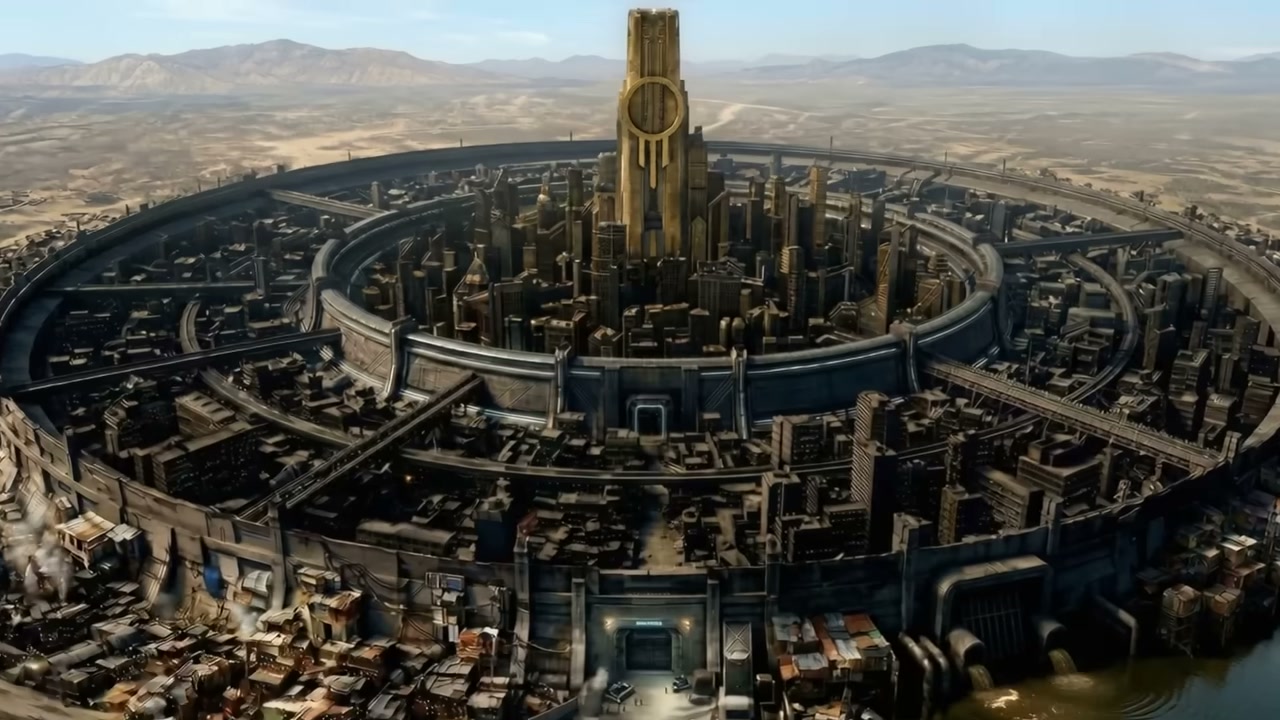
Tarsis is a perfect circle: rings of streets around a golden tower, wrapped in a wall, sitting in a dead world. The tower’s signal is the only reason the city exists — for 59 years it has held back the vine, the nanomachine growth that consumed everything else and turned the infected into husks. The pilot opens inside the walls, in the neon of the Aegis nightclub, where two friends talk their way past the door with a fake name and a smile. It is the last ordinary night this city is going to have: before the episode is out, an infected man shatters like crystal in the middle of the dancefloor, and the security force that answers leaves dead civilians behind it.
Outside
Intercut with the club is the world beyond the wall, where Kael lives. The creator’s description tells us he was raised in the ruins and survived alone for more than a decade, and the episode shows us what that means: a derelict flat, a pet rat, streets of rubble patrolled by the emaciated dead, and a rooftop fight for his life. Then, at night, the show’s strangest and best idea: Kael shares a cigarette with Martin — a husk who still talks, still jokes, still remembers being a man. The Vine keeps asking what the infected still are, and it never takes the easy answer. The pilot closes on Kael’s face in red darkness, one eye catching a glow it should not have.
The Cover-Up
The council scenes are the cold heart of the pilot. Fifty-nine years of safety rested on tower technology “beyond what any of us fully understand”, and now something has crossed it. The response is instant and procedural: footage wiped, witnesses dealt with, and the official story written before our eyes — “an isolated incident, a deranged individual, no infection, no breach. Just a lunatic in a nightclub.” It is the most chilling scene in the early episodes, and the series keeps paying it off: in Episode 2 the commander who asks to examine the Aegis body learns Umbra has already incinerated it, and by Episode 4 we learn that one of the club’s own guests was erased from every list of the dead. Standard protocol, they said.

Under the Walls, and Full Hospitality
Episode 2 widens the lens. A red-haired woman in the shantytown under the walls prepares to leave; Kael is taken by armoured troopers and saved by the arrival of something far worse — a tier-two mutation that tears through the squad holding him. The centrepiece is Commander Draven’s briefing to new Erebus recruits, a scene of pure, pleasurable exposition done right: tier-one husks; the freshly turned “breached”, who still look human and are not; the dormant ones near the tower that shut down to save energy — “You leave them. You don’t touch them. You don’t talk to them. You walk past them like they’re furniture. If you see glowing eyes on them, you are already dead.” Episode 3, “Full Hospitality”, follows Kael to Vidal, the smuggler who moves people into Tarsis — for those who can pay. Kael cannot. “The ones who have nothing,” the woman in the next cell tells him, “are the payment.” Her name is Syrah, his gilded suite is a cell with a comfortable bed, and men with gold masks are circling whatever Kael carries. The episode’s most haunting scene has nothing to do with plot: Vidal visits Baldomedo, a husk chained in a pit, who was an office worker once and has spent a week asking the same question — “Barbara, did you bring the photocopies?”
Babylon
Episode 4 is double-length and the series’ best. It braids three threads. In the tower, the white-robed Keepers confirm the unthinkable: every gram of fuel extracted reaches the tower, nothing has changed — and the tower is losing power anyway, while the Great Councilor quietly intercepts the report (“Bring everything to me first. Before the council”) and a refinery director who claimed to have found the cause has simply vanished. In a flashback braided through it, a Keeper child named Cera is given a radio by her friend Elsa — “Channel nine. You will be my eyes inside the tower” — before the family flees under the wall, following the water, and a voice is left repeating “It was nine. It was always nine. Why doesn’t she answer?” And in the present, Kael and Syrah walk those same tunnels — past the dormant, past a fused mass of husks like a drowned cathedral — while Kael finally tells the truth: he was a child in a Tarsis laboratory, tested and watched, until a man named Kane broke him out. Kane, the “Cain the Beast” of Erebus legend, is somewhere inside the city. Kael has come back for him. The episode ends in the shop of Rye, a fixer Elsa trusted, with an encrypted drive stolen from Vidal on the table and a name to find: Sajan, who was with Elsa at the Aegis that night. Yes — the Aegis. The girl from the pilot’s first scene was working the city’s real war the whole time, and the official lists say she was never there at all.
The Craft
This is photoreal, cinematic work across all four episodes: the aerial of Tarsis, the club’s neon, the grey ruins, the shantytown, the sewers and the tower’s golden hall all feel like one continuous, lived-in world, and the husks are properly frightening — mummified, vine-grown, wrong. The sound is the one uneven element: in the pilot’s club scenes the music sits on top of the dialogue and some lines are genuinely lost, though the council chamber, the briefing room and Episode 4’s long dialogues are crystal clear. What impresses most is the patience: mysteries planted in Episode 1 (a glowing eye, a missing helmet, a crushed tier-two skull) are still being cashed in Episode 4, and the cast — Kael, Syrah, Draven, Vidal — deepens every time the series returns to them.
Final Thoughts
This is the one I would put in front of anyone who thinks AI series are all slop. The Vine is serious, frightening, beautifully built science fiction with a cover-up ticking at its centre, a hero turning into the thing he fights, and a fourth episode that recontextualises everything before it. Four episodes is nowhere near enough — in the best way.
Scene Breakdown
Episode 1 — “Pilot” (14:47). 0:00–2:30 — The Aegis club: a fake name, a smile, and a night out inside Tarsis. 2:30–6:10 — The transformation on the dancefloor and the security response; outside, Kael’s ruin, the rat, and the first husks. 6:10–9:30 — Rooftop fight; the aerial of Tarsis; the council learns the wall has been breached. 9:30–11:00 — The cover-up is written: no infection, no breach, just a lunatic in a nightclub. 11:00–14:47 — Night in the ruins: a cigarette with Martin, and a final shot that changes how you read Kael.
Episode 2 — “Under The Walls” (16:52). 0:00–4:40 — The shantytown under the walls; a woman prepares to leave; word of a man who lives outside. 4:40–7:10 — Kael is taken by troopers — and rescued by a tier-two mutation. 9:20–11:30 — Draven’s briefing: the tiers of the infected, the dormant, and the glowing eyes. 11:30–13:00 — The tower signal is weakening; the Aegis body is ash; patrols double. 13:00–16:52 — Paco’s directions, a filthy shower joke, and the music that leads Kael to Vidal’s door.
Episode 3 — “Full Hospitality” (16:12). 0:00–3:45 — Vidal’s office: a stolen backpack, an Erebus tag with the name Kane on it, and the offer of full hospitality. 3:45–7:50 — The suite is a cell; next door is Syrah, who explains the tariff: those who have nothing are the payment. 7:50–9:45 — The hangar report, kept quiet: three Erebus down, and a tier-two husk with a crushed skull. 9:45–13:30 — The escape Vidal never sees coming; the hunt through the club (“I want him alive — kill the woman”). 13:30–16:12 — Baldomedo in the pit, asking for his photocopies; and a bargain struck in the dark: Syrah knows a way in.
Episode 4 — “Babylon” (26:12). 0:00–4:30 — The Keepers’ inspection: every gram arrives, and the tower fades anyway; Director Walter is missing; two children and a radio — “Channel nine — you will be my eyes inside the tower.” 4:30–8:15 — The Great Councilor intercepts the report; the flight under the wall, following the water; “It was always nine.” 8:15–14:55 — Kael and Syrah in the tunnels: the dormant, the fused mass, and the power he risks losing himself to. 14:55–17:10 — Draven’s audience: forty-three dead this week, and a sermon about faith and duty. 17:10–19:35 — The confession: a laboratory childhood, and the man named Kane. 19:35–26:12 — Rye’s shop: an encrypted drive, a girl who was never in the club, a name — Sajan — and a pigeon over the city lights.
Visitor Reviews
There are no reviews yet. Be the first one to write one.