
 Atomic West
Score breakdown
2.5K views
Film Review
This review discusses the ending. If you would rather watch the film first, we recommend you do, and then come back.
Clear the bodies, hang the banners
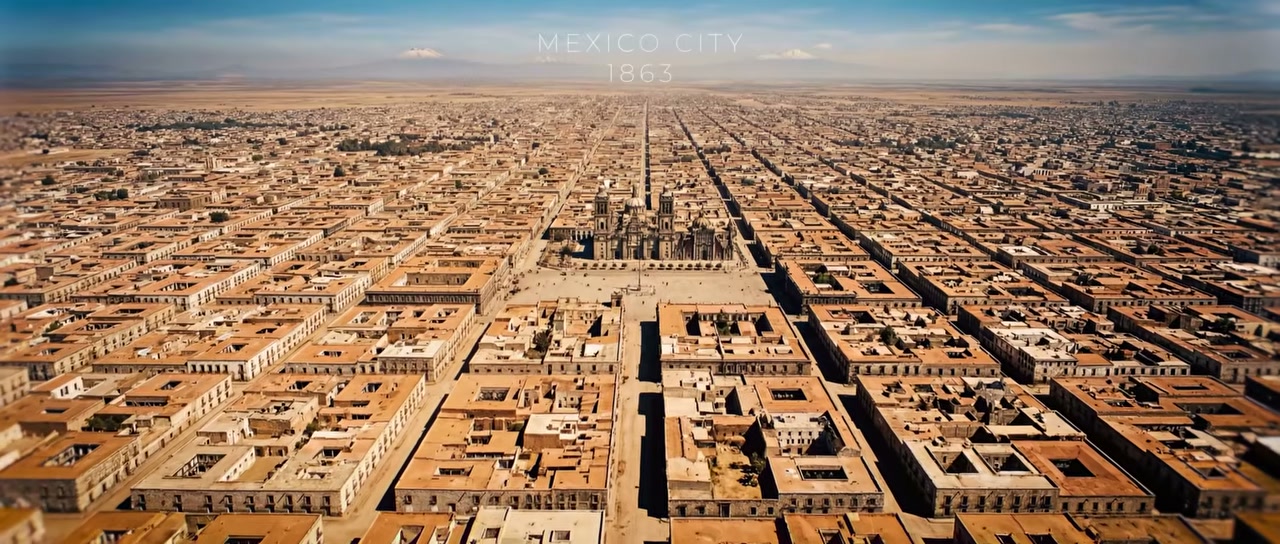
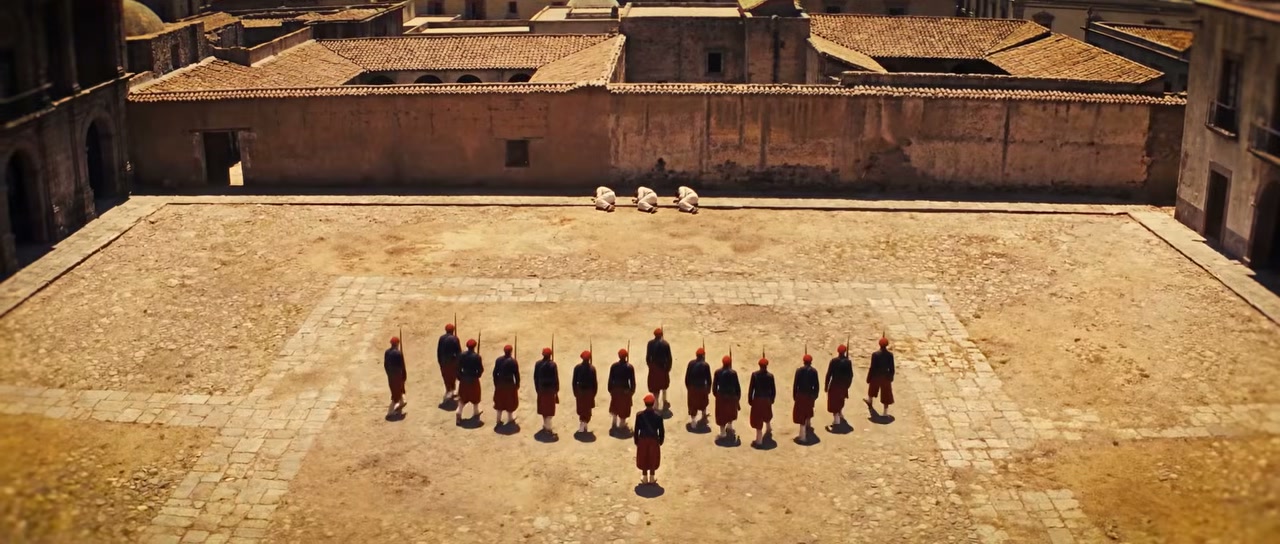
The film opens on black, with words it attributes to Empress Carlota: “So long as there is an Emperor here, there will be an Empire, even if it is only a few feet of earth. To abdicate is to condemn oneself.” Then, before any emperor appears, it shows us the price of the stage he will walk onto: Mexico City, 1863, a blindfolded prisoner against a wall, a line of French zouaves levelling their rifles, a shouted “VIVA, MEXICO” — and a wide, quiet courtyard with three bodies in the dust.
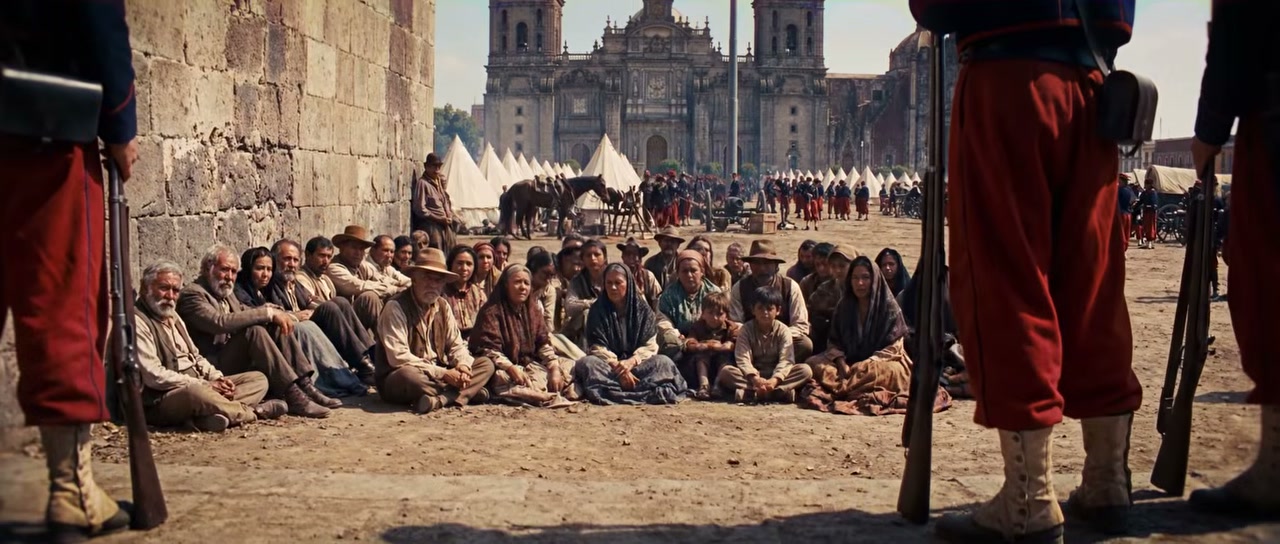
In the French camp spread across the Zócalo, the arrangements are discussed like theatre. “We’ll clear the bodies and hang up the Imperial banners,” the General says. “Your emperor will be stepping into a civilized garden, not a slaughter house… He won’t have any idea how much these people hate outsiders.” The Minister assures him the people desire a monarch, and is sent off with the film’s most chilling piece of casting: “The stage is set, Minister. Go fetch your Austrian.” “Yes, General,” comes the reply. “With joy.”
“You are a Habsburg, Max”
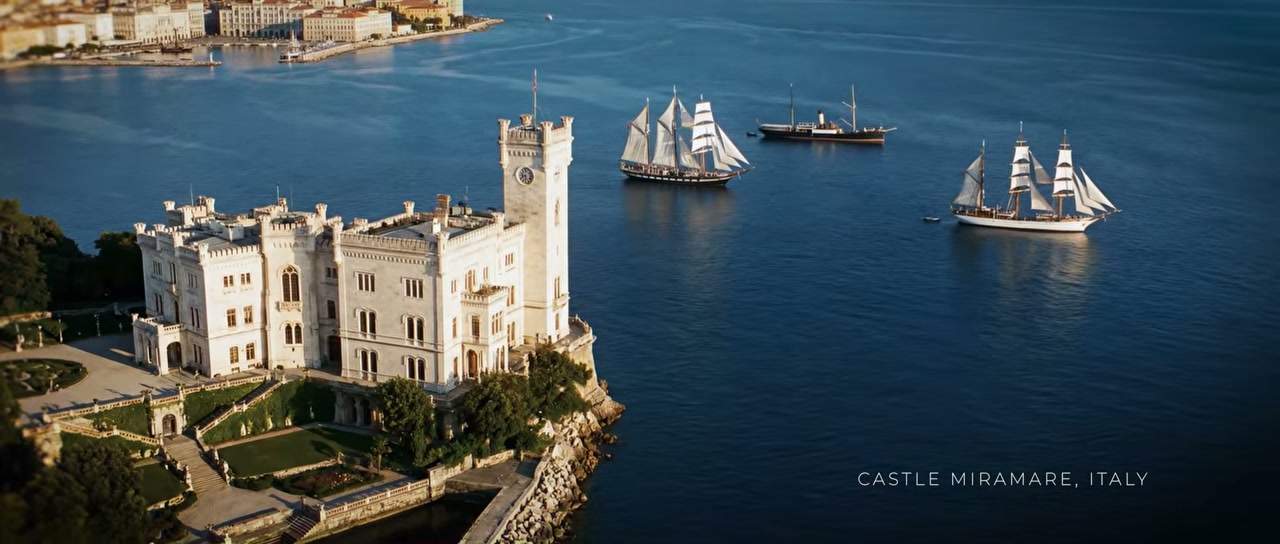
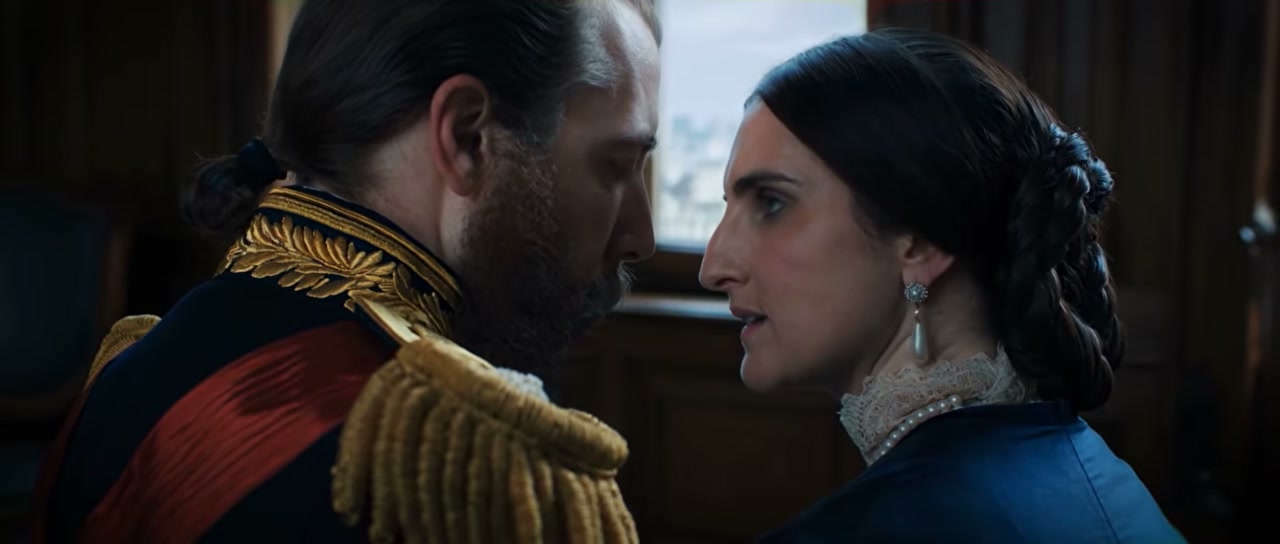
The Austrian, when we meet him at Miramar, does not want the part. Maximilian’s brother calls the Mexican crown a fool’s errand, and Maximilian himself asks the question the whole film hangs on: “Why should we have any power over a people so different from us and so far away?” He is content, he says, to live here with his wife. Carlota is not. “You are a Habsburg, Max. You are meant to rule.” It is she who believes, she who pushes, she who teases him over the sketch portrait he has made of her — it looks nothing like her, she says; it is missing something, he decides. A crown.
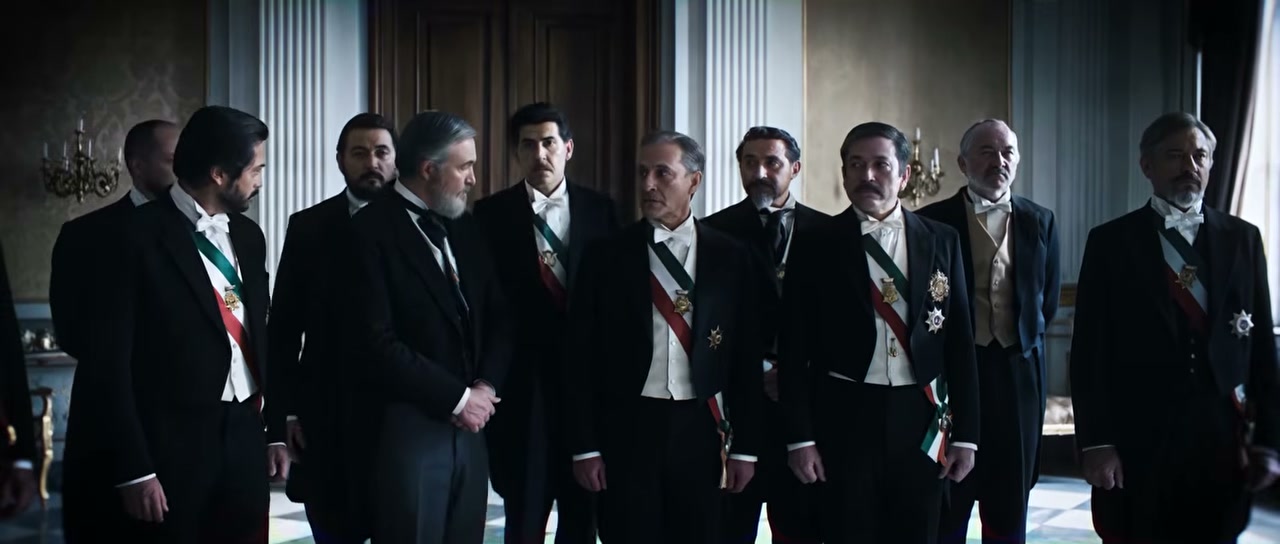
So when the Mexican delegation makes its formal appeal — “Millions of people are waiting for you to bring them into the light. Do not deny them”; a crown offered “not just as a title, but as her salvation” — the acceptance has been earned by the scenes before it. “With the grace of God, I accept the crown of the Mexican Empire,” Maximilian says, and pledges his life and honour to his new homeland. He means it. That is the tragedy, and the film knows it.
The Empress’s avenue, the Emperor’s garden
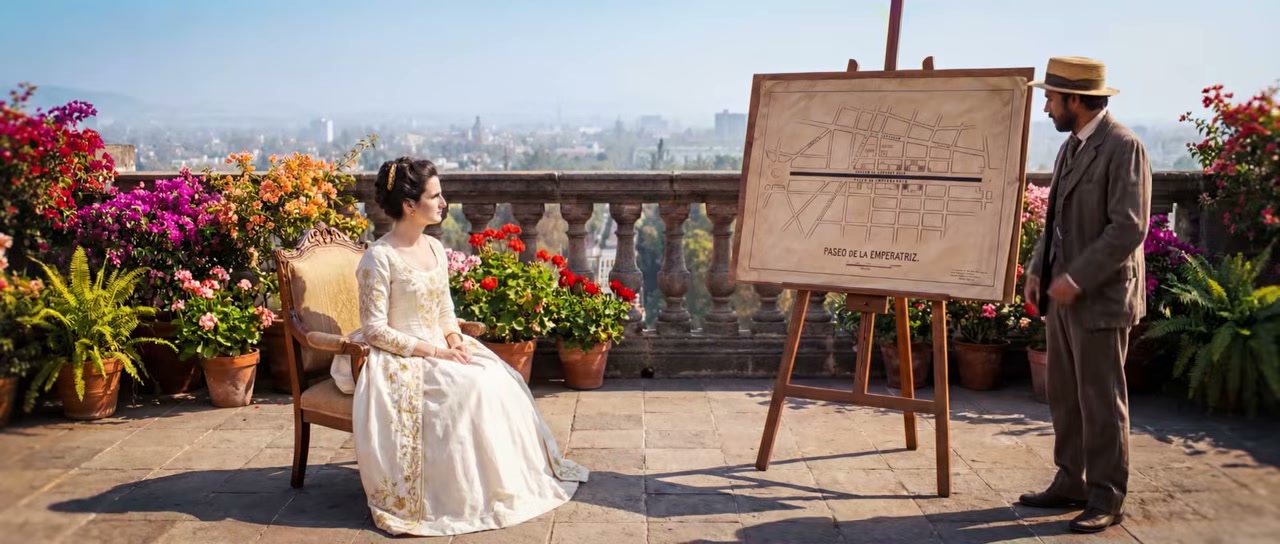
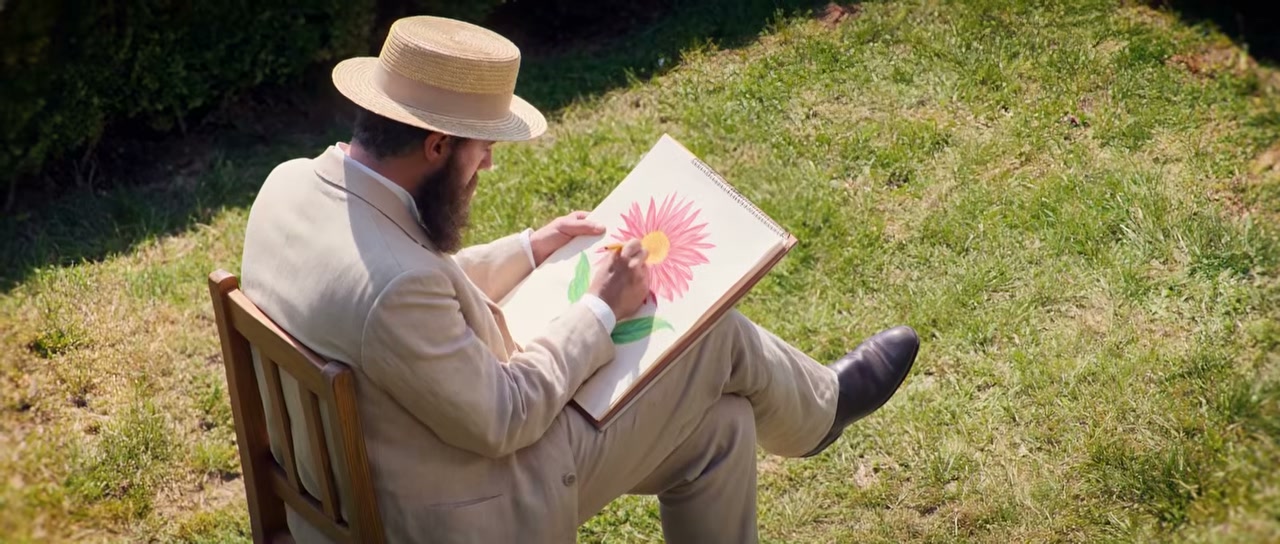
In Mexico the film splits the couple the way history did. Carlota, in white on a flower-filled terrace above the capital, is building: the plan on the easel reads PASEO DE LA EMPERATRIZ, and she wants her grand avenue wider, cost be set aside — “we’re building the spine of our empire… The treasury will provide.” Maximilian, in a straw hat in a quiet garden, is sketching a flower. It is the film’s gentlest image, and its saddest: a naturalist with an empire. For a few frames his face runs with blood — the ending, arriving early — and then the moment is gone, and so, soon, is everything else. Alone in darkness, he learns that the Empress is in Europe, and that Querétaro will be a tomb.
Best Scene (7:41–8:32)
“You placed the crown on his head”
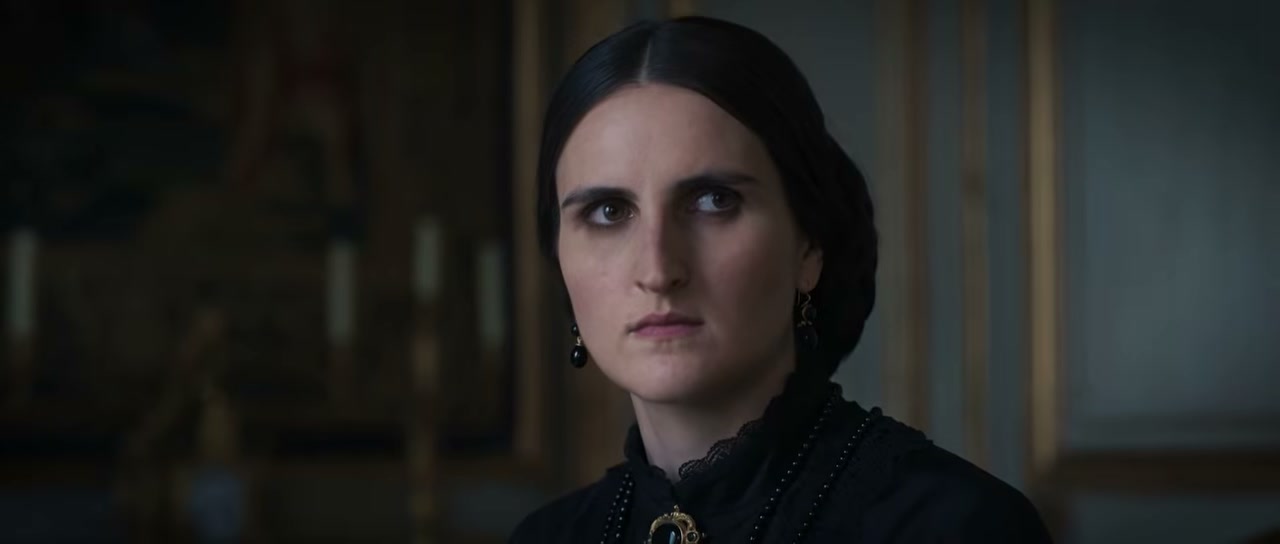
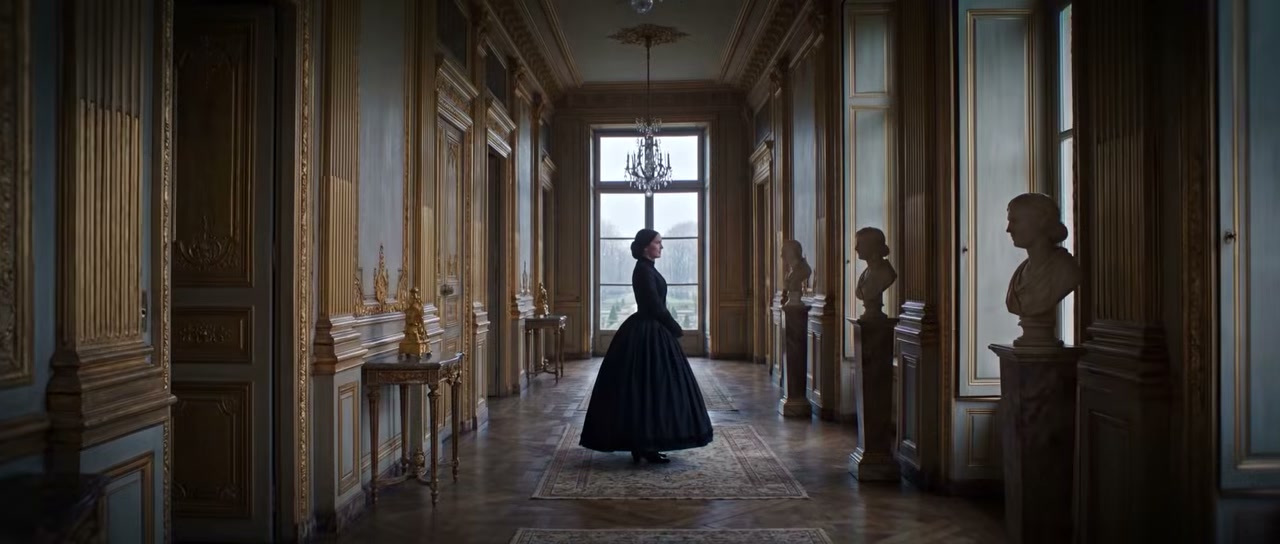
Paris. Carlota, in black, reads Napoleon III his own treaty back to him: French troops were guaranteed until the Mexican army was ready. “But it was a vow before God and all of Europe… My husband is abandoned. You placed the crown on his head only to wrap a noose around his neck.” Napoleon pleads America at his throat and Prussia on his borders — “I cannot spend another drop of French blood or another franc on a lost cause.” She takes the refusal standing, in tears, and gives him the creed the film opened with, now spoken aloud: “We are Habsburgs. We do not abdicate to bandits and we do not forget cowards.” Then she walks out into a gallery of marble busts, alone, and the film simply leaves her there — which is what Europe did.
Final Thoughts
The Last Emperor of Mexico compresses an enormous story into under ten minutes without ever hurrying its people: the reign itself is sketched in a terrace and a garden, because the film is interested in the decision and the desertion, not the pageant. It understands that this story was never really about an emperor — it is about the woman who believed in the crown longest, and the man who would not put it down.
Its closing choices are its most dignified. Maximilian’s execution is never staged; instead the film ends on his recorded last words — “I forgive everyone, and I ask everyone to forgive me. May my blood, which is about to be shed, be for the good of the country. Viva México, viva la independencia!” — and then on the real photographs of the two of them, with their dates beneath: his ending in 1867, hers not until 1927. Sixty years of widowhood, carried in a single caption.
The Last Emperor of Mexico is a historical drama from Atomic West on YouTube. The film carries no director or cast credits, in its frames or its description; its only cards are the quotations and photographs it opens and closes with, and it carries its own burned-in English subtitles throughout.
Scene Breakdown
0:00–0:55 — The sentence first. Carlota’s words on black; a blindfolded prisoner, a zouave firing line, “VIVA, MEXICO”; three bodies in a courtyard, and the French flag over the palace.
0:55–1:51 — The stage is set. The French camp in the Zócalo. Clear the bodies, hang the banners, and “go fetch your Austrian.”
1:51–3:33 — Miramar. Maximilian doubts; Carlota believes. “You are a Habsburg, Max. You are meant to rule.” A sketch portrait, missing a crown.
3:33–4:59 — The offer. The delegation’s appeal — a crown as a nation’s salvation — and the acceptance: “With the grace of God, I accept the crown of the Mexican Empire.”
4:59–6:00 — The Empress’s avenue. On the terrace above the city, Carlota widens the Paseo de la Emperatriz: “we’re building the spine of our empire.”
6:00–7:05 — The garden and the dark. Maximilian sketching a flower; a flash of his bloodied face; alone in the dark, he learns the Empress is in Europe.
7:05–8:32 — Paris. Carlota confronts Napoleon III with his treaty and his guilt; his refusal; her answer, in tears: “We are Habsburgs.”
8:32–9:43 — The gallery and the cards. Carlota alone among the busts; Maximilian’s last words; the real photographs, and their dates.
≈6:15 — The bloodied-face insert: the blood over Maximilian’s mouth and beard is glossy and theatrical, more stage blood than wound. It plays as a flash of his fate, but it is the film’s most artificial-looking few frames.
≈0:15 — In the firing line, the levelled rifles at the right of frame crowd and merge into one another; the cut to the courtyard aftermath covers it.
The Zócalo camp wide softens its mid-distance soldiers into mannequin clusters, and the tent rows repeat a little evenly — forgivable at this scale and light.
Carlota and Maximilian themselves never slip: the same two faces across Miramar, Mexico City and Paris, in silk, in white, in mourning black — and the avenue plan reads PASEO DE LA EMPERATRIZ, legibly and correctly, in wide shot and close.
There are no reviews yet. Be the first one to write one.