
 BARDSONGTAVERN
Score breakdown
425 views
Film Review
This review discusses the ending. If you would rather watch the film first, we recommend you do, and then come back.
The sea does not drown alone
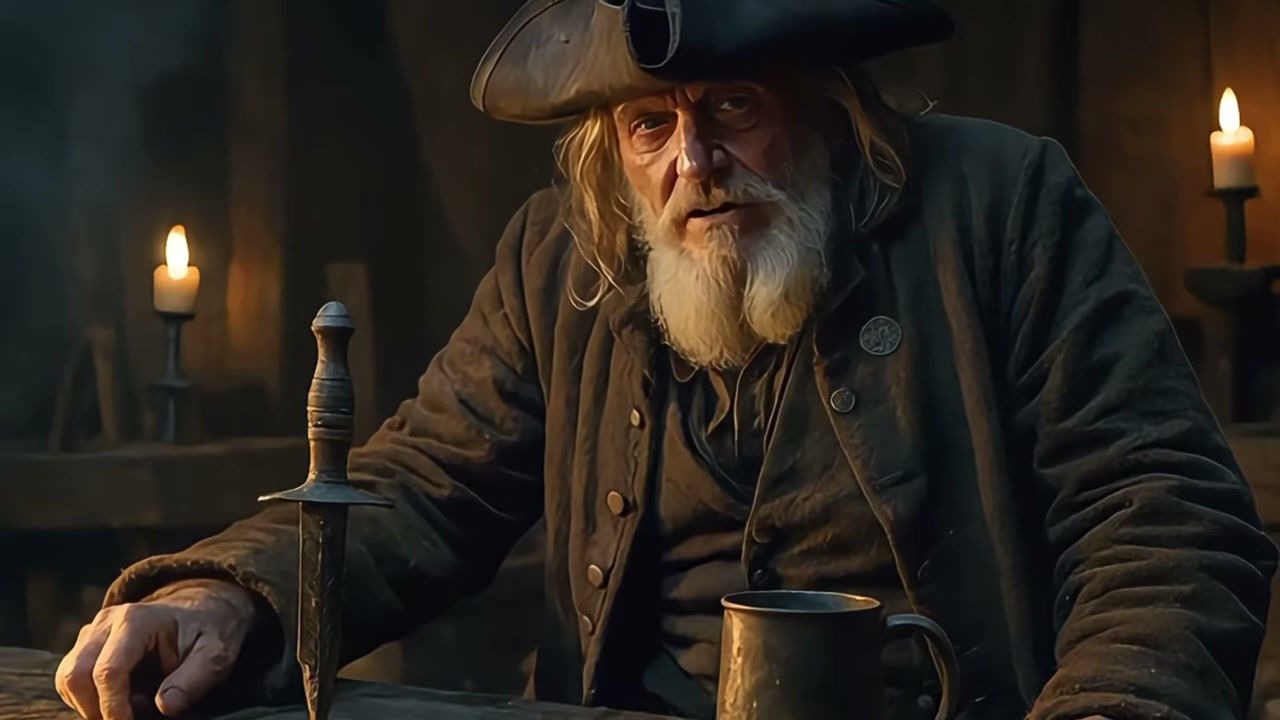
The framing is the film’s best decision. “They say the Trackless Sea is empty. That’s what fools believe.” Our narrator — white-bearded, tricorn pulled low, a dagger stuck upright in the table beside his tankard — tells the tale where such tales live, “where the lamps burn low, where wet boots dry beside the fire”, and he tells it with a gravedigger’s comic timing. A storm took his first mate and left his boots. “I kept the boots. Here, you can have them. Maybe they bring you more luck than him.”
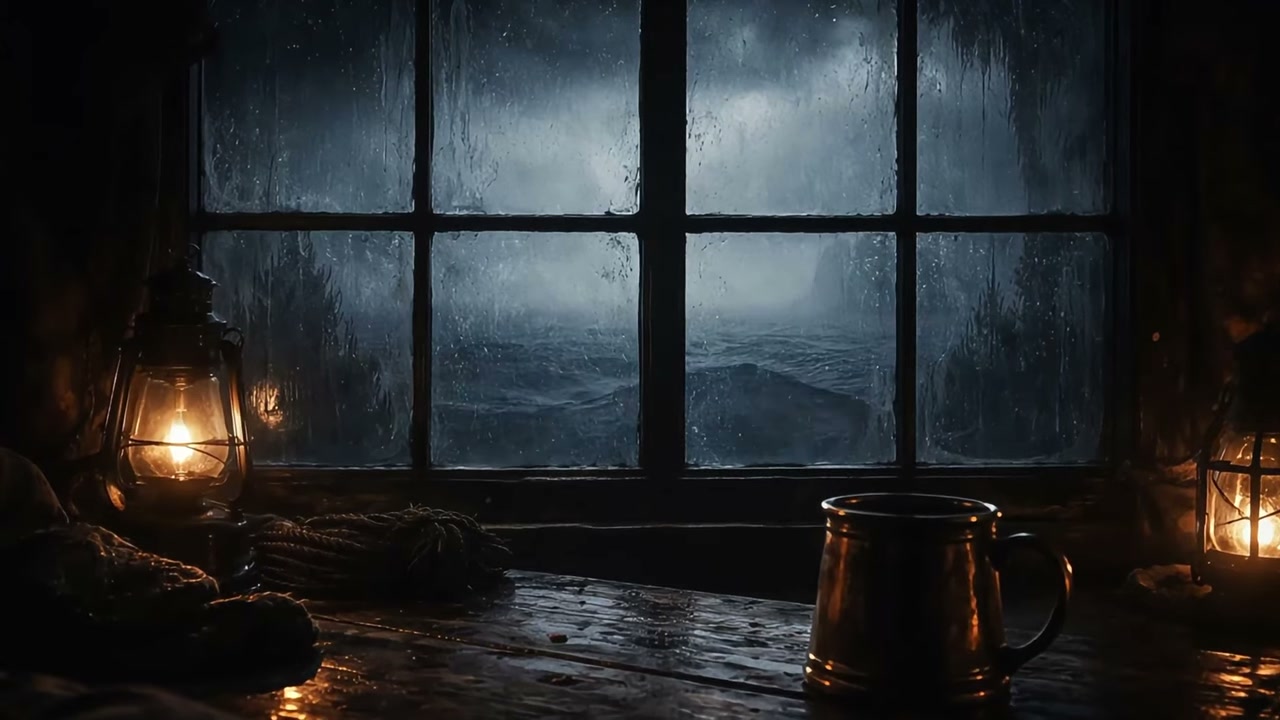
Out on the water, ships do not wreck — they vanish. “Not wrecked, not scattered, just gone.” Sailors blame krakens, but the film’s colder idea is bookkeeping: “Sometimes it’s the sea collecting what it’s owed.” So sailors pay in advance, a coin over the rail, “quiet and quick” — and the film follows that coin down through everything it buys.
She is not loved. She is paid
The coin is the small denomination. The larger one is blood: a knife drawn across the palm, dripping into the waves for Umberlee, queen of the depths, the storm mother. The narration gives her the film’s finest epitaph: “She is not loved. She is paid.” Her true church is not the shining temple in the great cities but half-flooded chambers where cultists wade waist-deep, drinking the sea as sacrament — and devotion, like everything else here, escalates. Animal sacrifices first. Then a drowned man’s hand, “a token of adoration”. Then victims lowered into dark pools for a waiting kraken. “Chosen ones, they call them.”
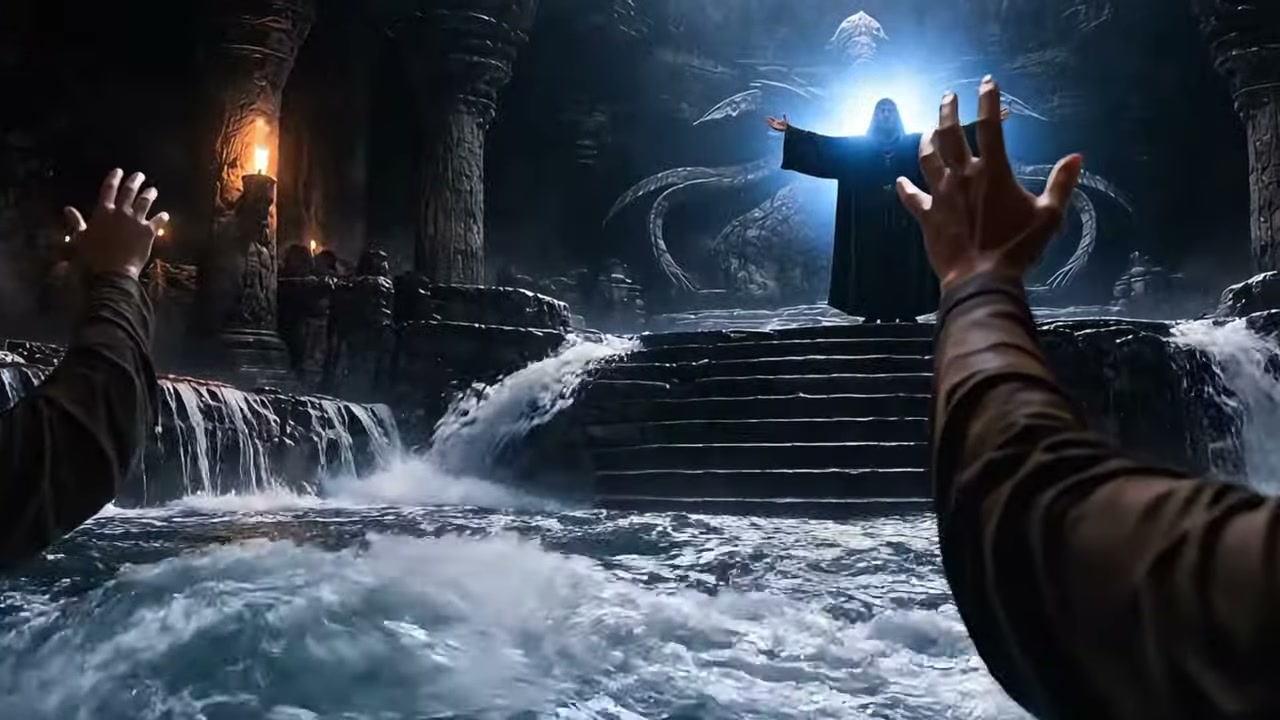
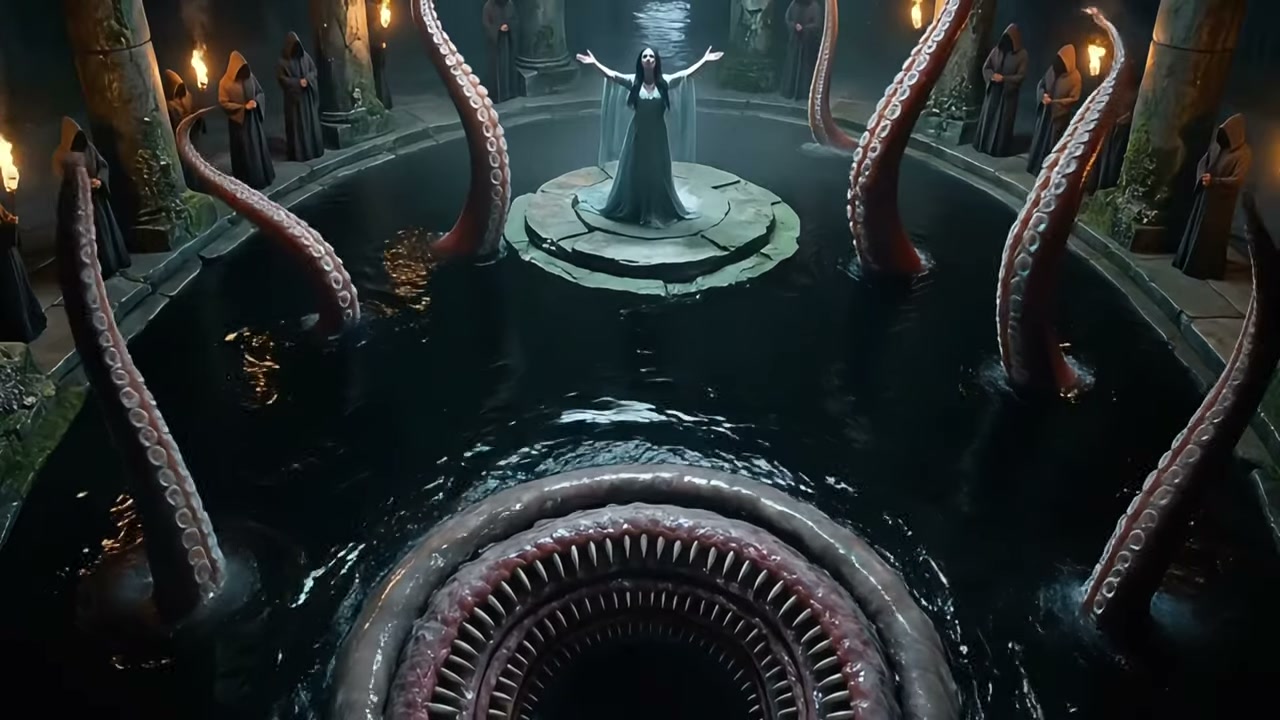
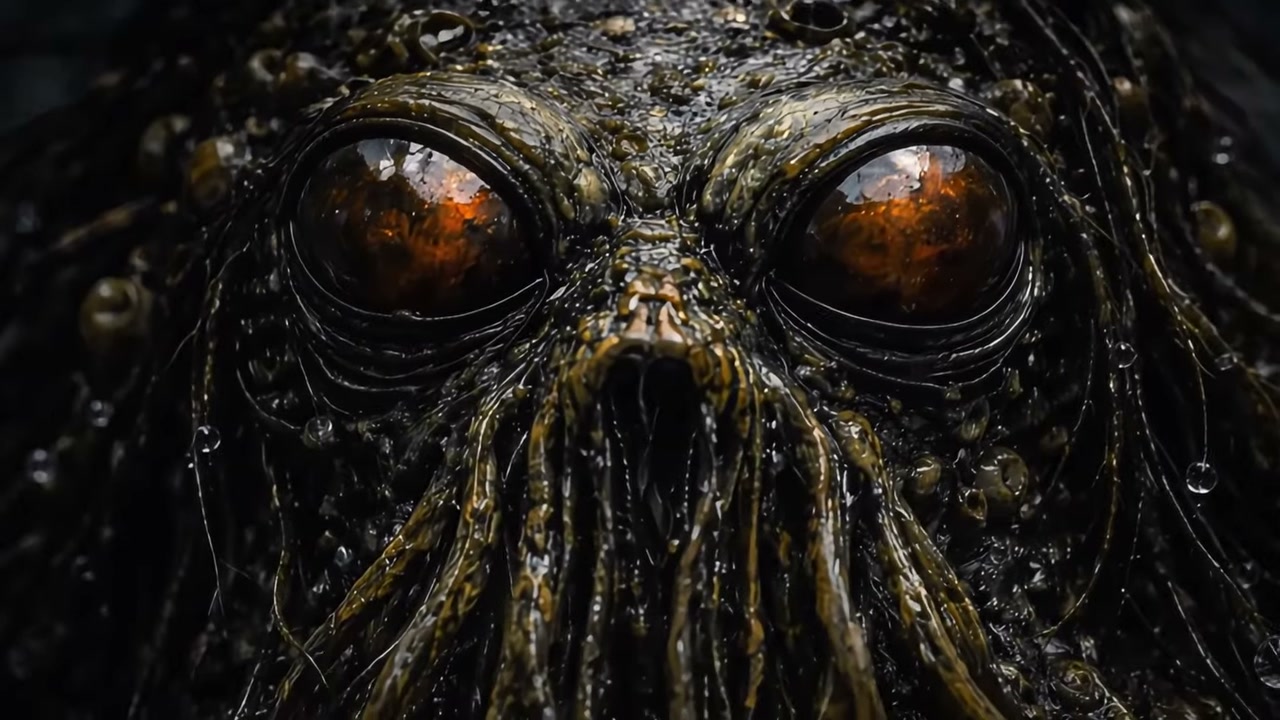
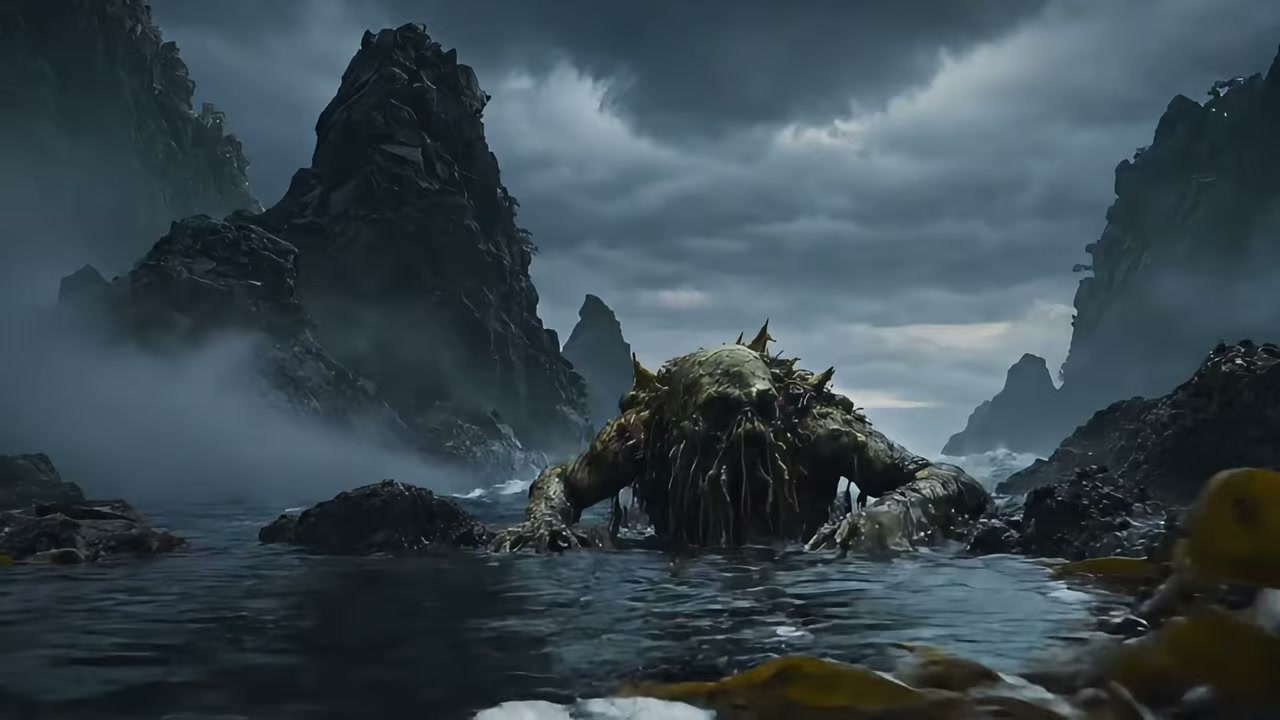
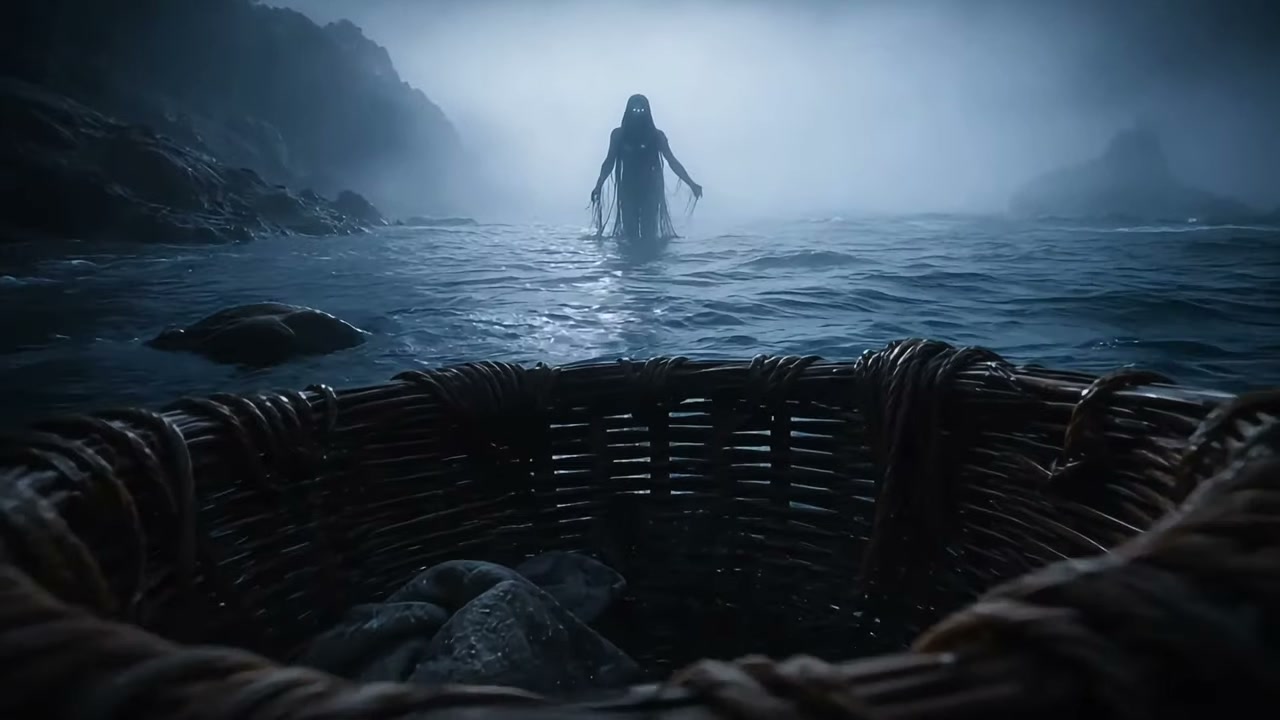
The darkest passage is the quietest. At the Purple Rocks, where the cliffs rise “like broken teeth”, every life begins with a debt that is paid early: at dusk the cliff-dwellers set their firstborn into the tide, “small shape wrapped and silent”, and nobody cries out — they only watch until the tide turns. Then the fog rolls in, and the sea spawn come ashore to claim what was given: the taken children, returned as barnacled, tentacle-bearded things with cephalopod eyes. “Because what the sea takes, it sends back changed.”
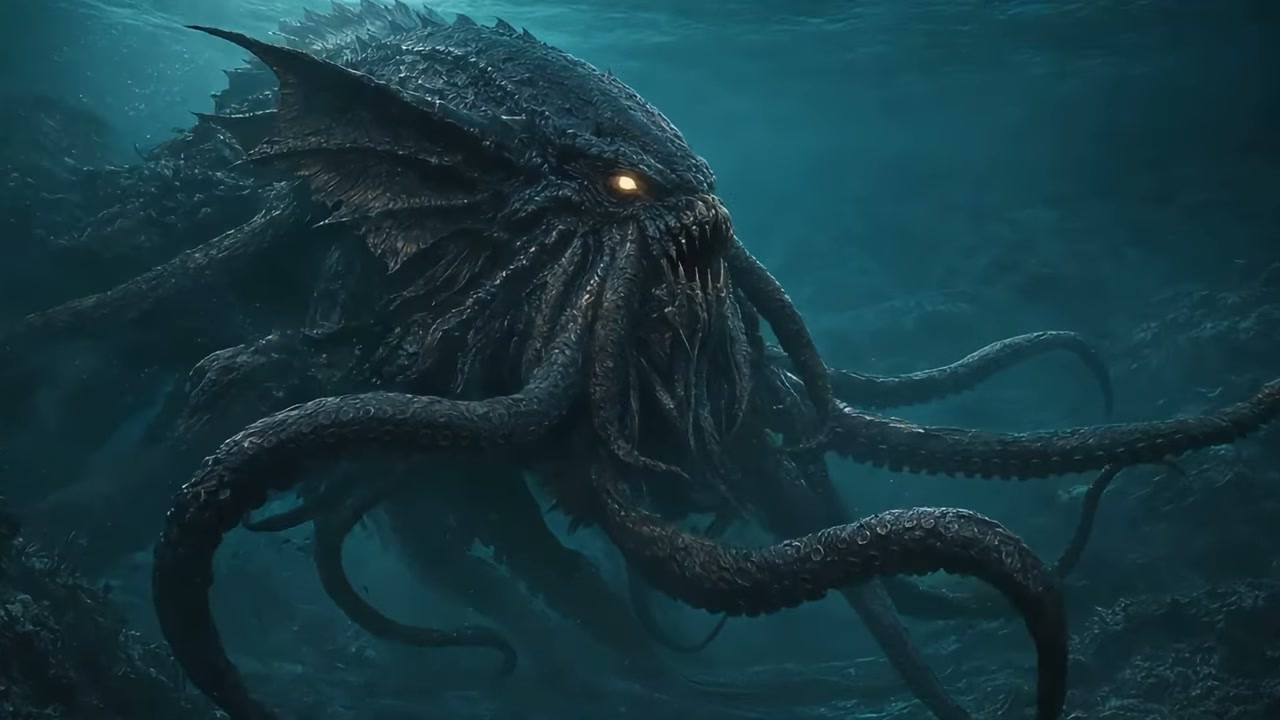
The film’s last movement tours the rest of the tenancy — sea hags who eat only half a crew (“A fair bargain, I would say”), merfolk princes, aquatic elves, treasure divers who surface rich, mad, or not at all — before settling on the mind beneath the whole economy: Slarkrethel, the kraken who founded the Kraken Society, “a mind that counts, waits, and remembers who has not yet paid.” The ending refuses a climax and offers a choice instead — serve above the waves or answer the call beneath them — sealed with a gambler’s shrug: “The sea always rolls last.” The camera finds a twenty-sided die on the table, showing a 20. The film knows exactly whose table it is sitting at.
Best Scene (5:07–6:04)
The sea spawn come ashore
Fog over black water at the Purple Rocks. A shape wades in out of the murk, eyes lit; then the spawn themselves haul out of the surf — barnacles, tentacles, skin “slick and cold as the deep” — and the film pushes into an extreme close-up of amber cephalopod eyes while the narrator delivers the thesis: what the sea takes, it sends back changed. No music sting, no jump — just the tide, delivering. It is the title’s promise kept in a single held image.
Final Thoughts
Judged as a story, this is a catalogue rather than an arc — a guided tour of a haunted sea with no protagonist to follow and an ending that hands the question to the audience. Judged as what it actually is, a tavern tale told by a master of the form, it is rich, funny in the blackest places, and built around one genuinely chilling idea. The sea in this film is not a monster but a creditor, and every coin, cut palm and swaddled child is a payment on a debt that can never be cleared.
The craft serves the telling: painterly candlelight against teal-black water, a narrator who is the same weathered man from first frame to last, and creature work — the spawn, the kraken — that holds up in close-up, where AI films usually come apart.
Rise of the Sea Mutants is part of Bardsong Tavern’s Season 1 on YouTube. It is Forgotten Realms-inspired fan work, and says so itself: its description declares it unofficial fan content under Wizards of the Coast’s Fan Content Policy, and its lore — Umberlee, Slarkrethel, the Trackless Sea — is drawn from that world. Its end card carries the channel’s seal and no personal credits, so the director credit rests with the channel.
Scene Breakdown
0:00–2:00 — The empty sea. The tavern frame; vanishing ships, the kraken’s throat-folding water, and the dead first mate’s boots.
2:00–3:20 — Paying the sea. Coins over the rail; the cut palm; Umberlee, her shining temples and her true, flooded ones.
3:20–4:32 — Greater gifts. Black pyramids; sacrifices escalate from fish to a drowned hand to the chosen ones in the kraken pool.
4:32–6:27 — The Purple Rocks. Firstborn to the tide at dusk; the watchers on the cliffs; the sea spawn come ashore.
6:27–7:44 — Other tenants. Sea hags, merfolk princes, aquatic elves, and the divers who chase sunken gold.
7:44–9:23 — The mind beneath. Slarkrethel and the Kraken Society; the silent crew; the closing choice, and the die that rolls last.
≈9:13 — The narrator holds a silver coin close to camera for the closing question, and its rim inscription is pseudo-lettering mush. The coin he tosses at ≈2:05 has the same soft engraving; only the closing d20 (≈8:45) is fully legible — and correctly so.
≈3:45 — The sacrificial knife’s jewelled hilt melts into ornament in close-up, though the bloodied blade reads clean.
≈4:10 — In the kraken-maw point-of-view shot, the bound hands in the foreground soften and merge where they meet.
≈6:15 — A towering sea-god appears as a translucent dissolve over the surf between glyph-carved pillars; the glyphs are pseudo-text and the figure is the film’s least solid image.
≈6:40 — The merfolk prince in gold armour renders like a video-game cutscene where everything around him is painterly — the one clear style break.
The narrator himself never drifts — same face, hat, coat and table dagger at 0:25, 4:24 and 9:13 — and the spawn’s design language holds across every variant the tide sends back.
There are no reviews yet. Be the first one to write one.