

 Whispers From The Dark
Score breakdown
17.5K views
Body Horror
Best Scene
Film Review
Body horror with a single, beautiful idea executed relentlessly: an organism that moves through rock and flesh alike as veins of living light. Veins of the Earth is the batch’s best-looking film, and its ending — a kindness that fails — is the coldest in the set.
This review discusses the ending. If you would rather watch the film first, we recommend you do, and then come back.
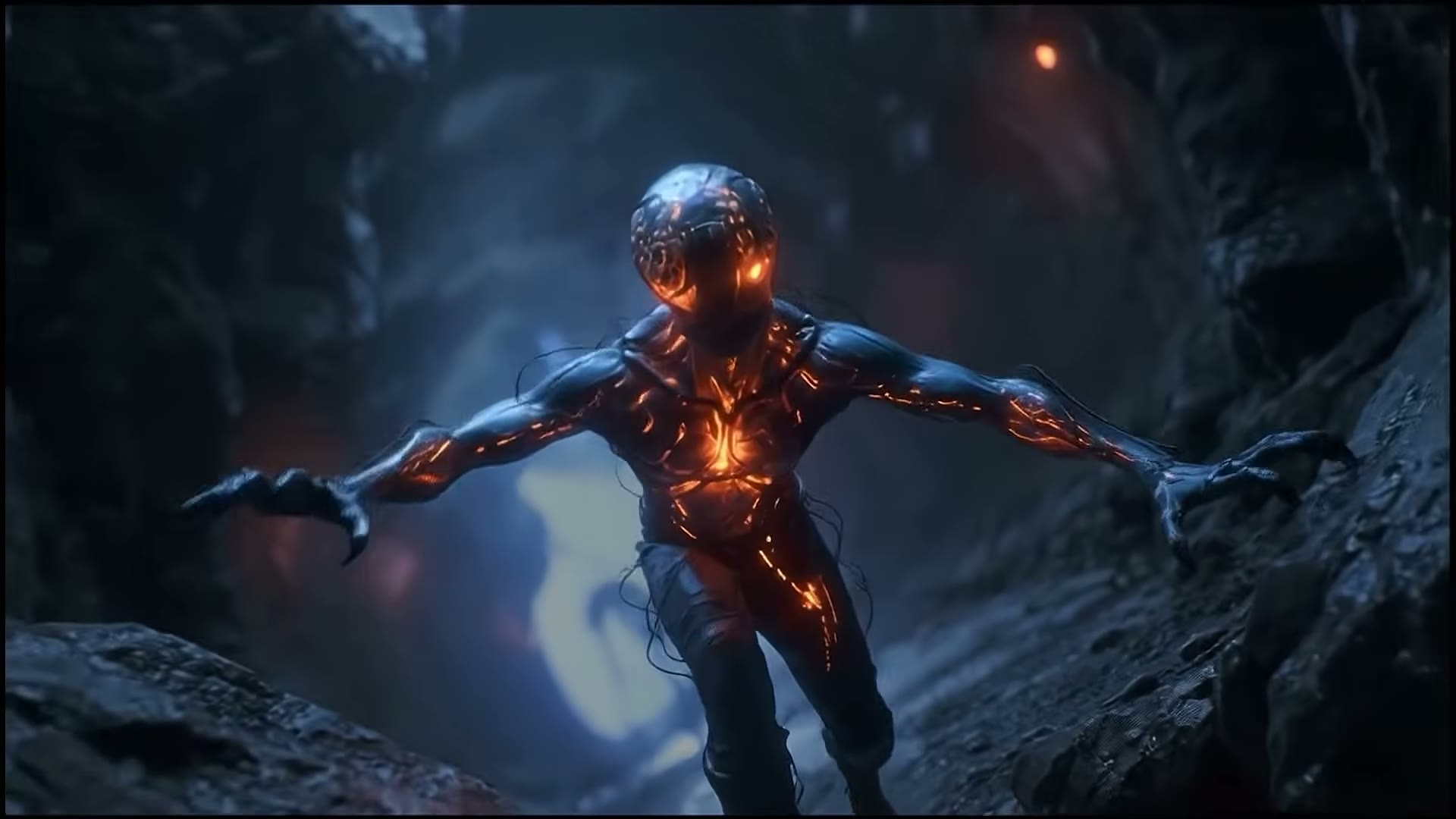
“Nothing geological makes these patterns”
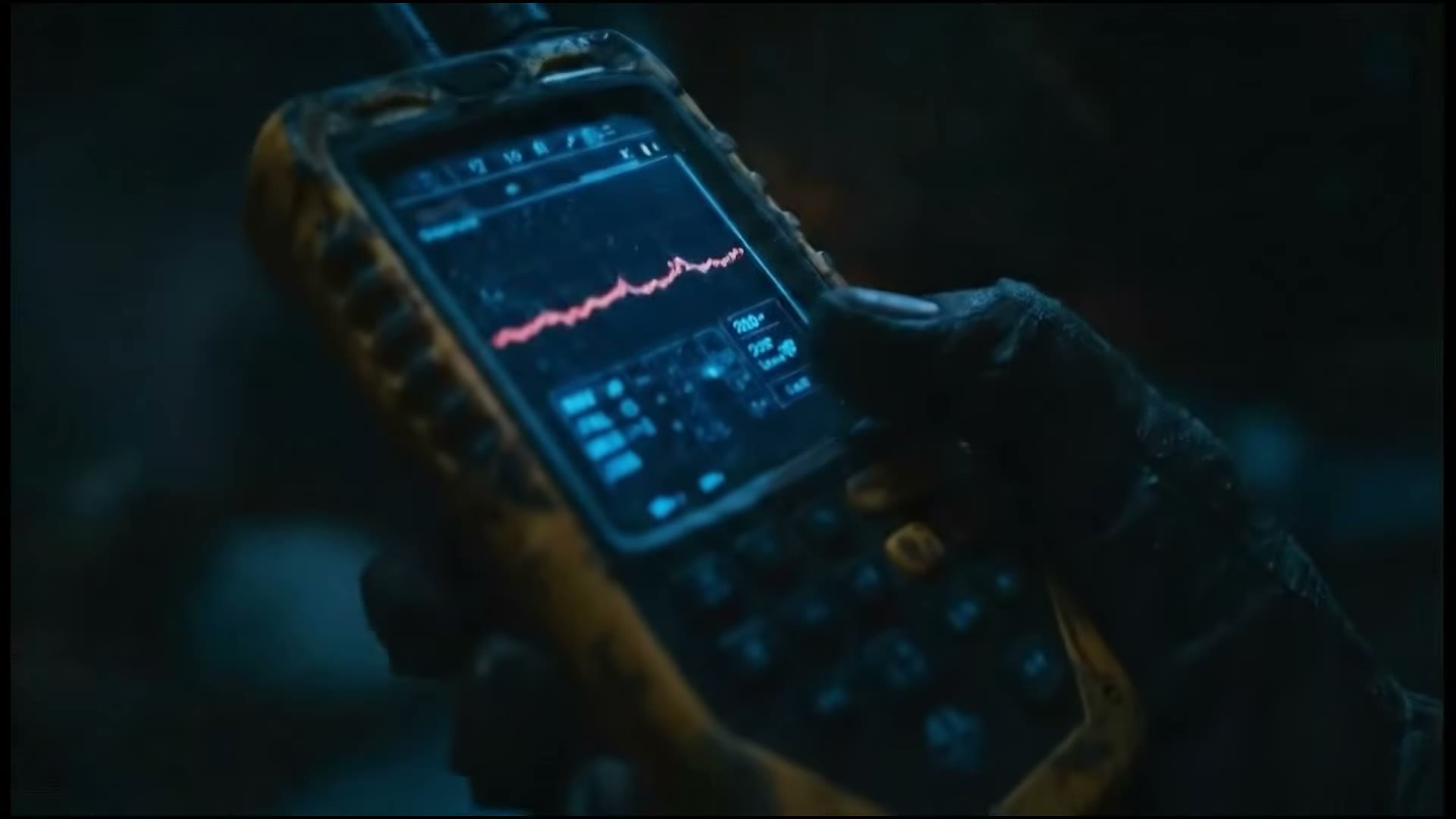
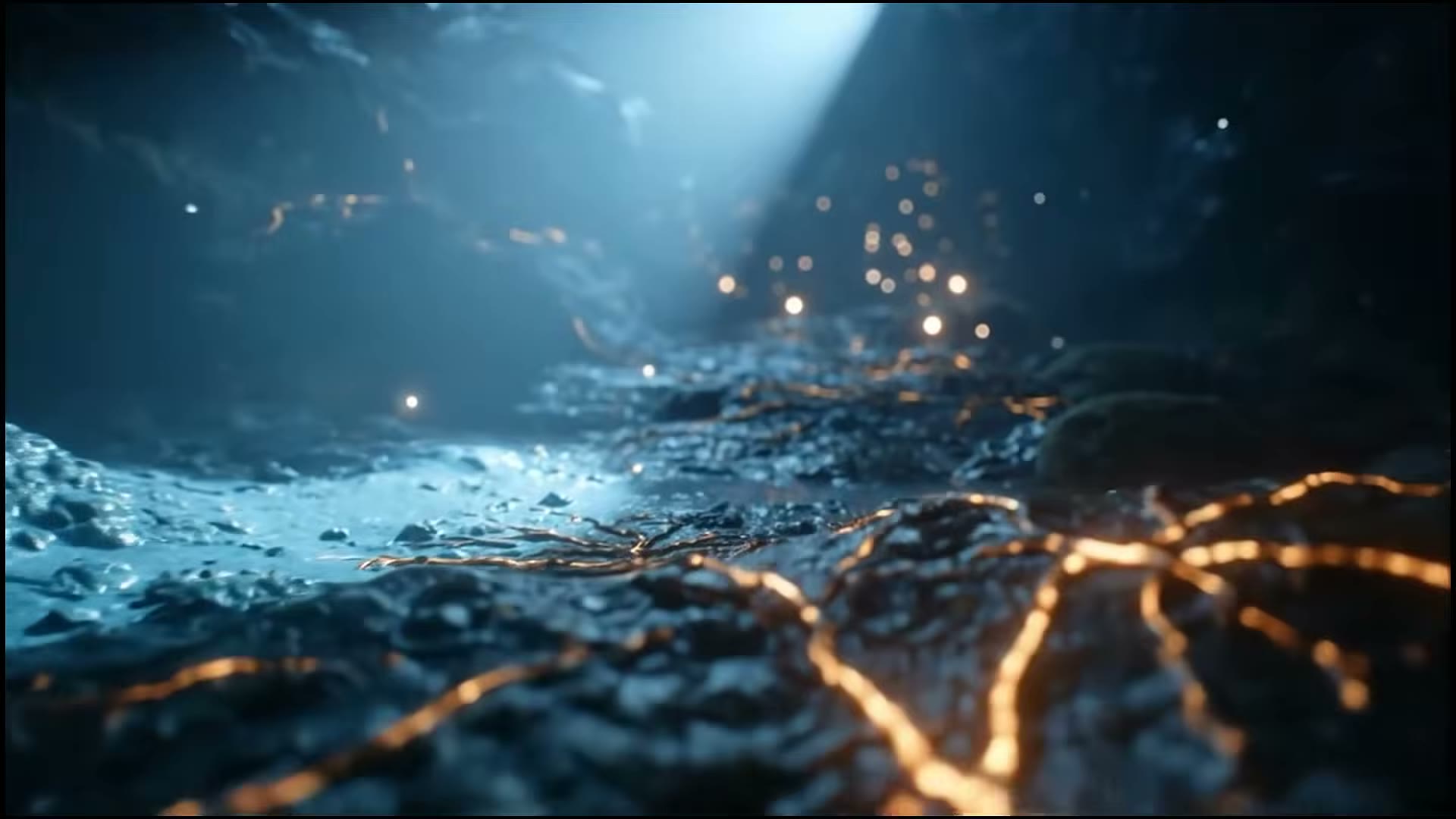
Lance Mercer goes down alone, and the film establishes him the way good science fiction does — through competence. Headlamp, instruments, readings that refuse to behave: “Nothing geological makes these patterns. Looks deeper than the readings. Much deeper.” The cave around him is already wrong in the right way: cracks of orange light run through the rock like something’s circulation, and his instruments keep finding more of it the deeper he goes.
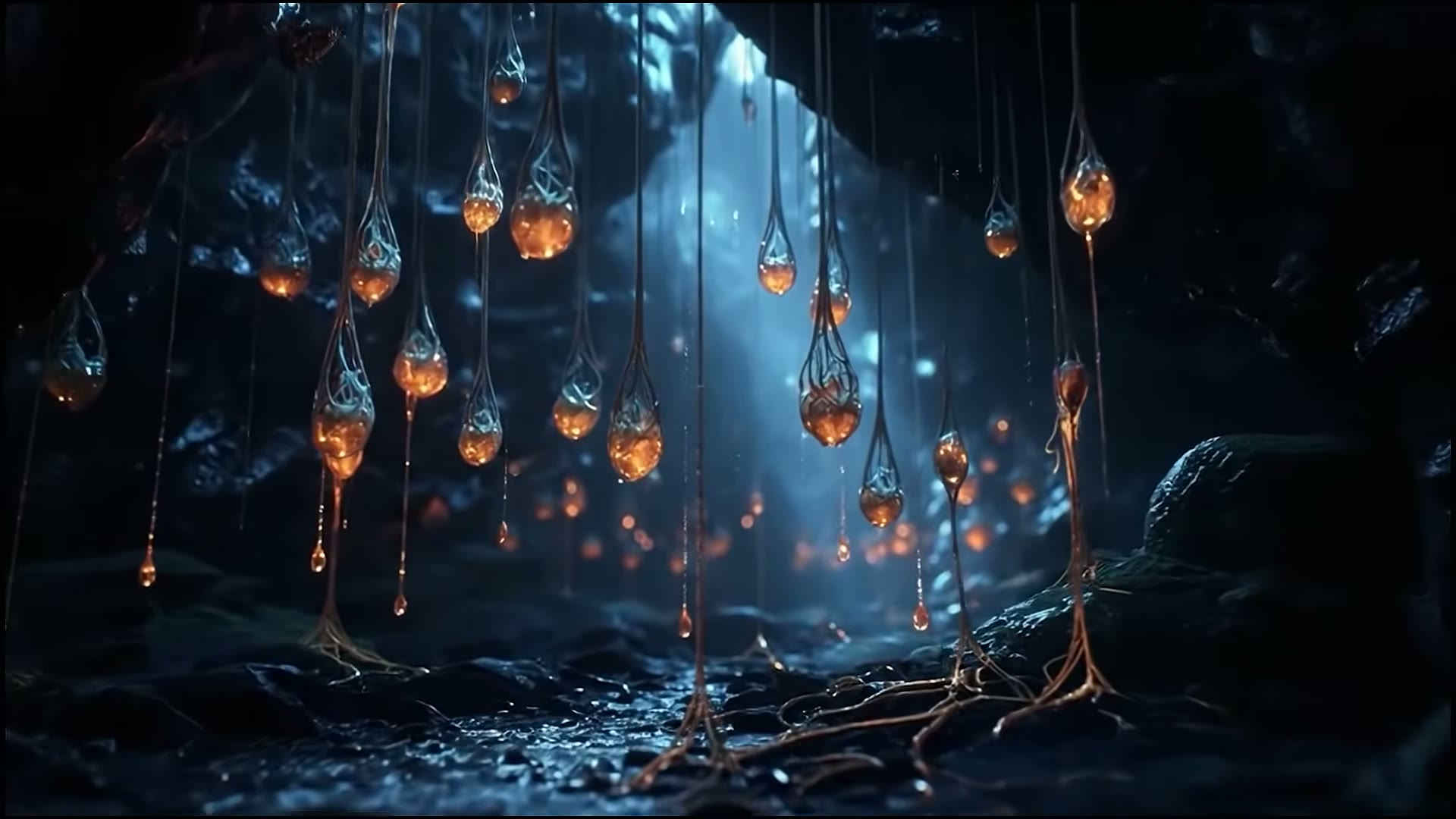
The hive, when he reaches it, is the channel’s prettiest set piece: a nursery chamber of amber cocoons hanging like lanterns, pulsing gently. “A hive nursery of some kind. But for what?” One cocoon, he notices, is different. The film has been patient for two minutes. It stops being patient.
“It’s inside my skin”
The cocoon opens on him, and the infection is rendered as light: veins of orange fire spreading under the skin of his hand, his arm, his face. Lance does everything right, which is what makes it unbearable — he calls it in immediately: “Base. Come in. Emergency extraction. I’ve been contaminated.” Base copies him; a team is coming; he starts the climb out. “It’s spreading too fast.”
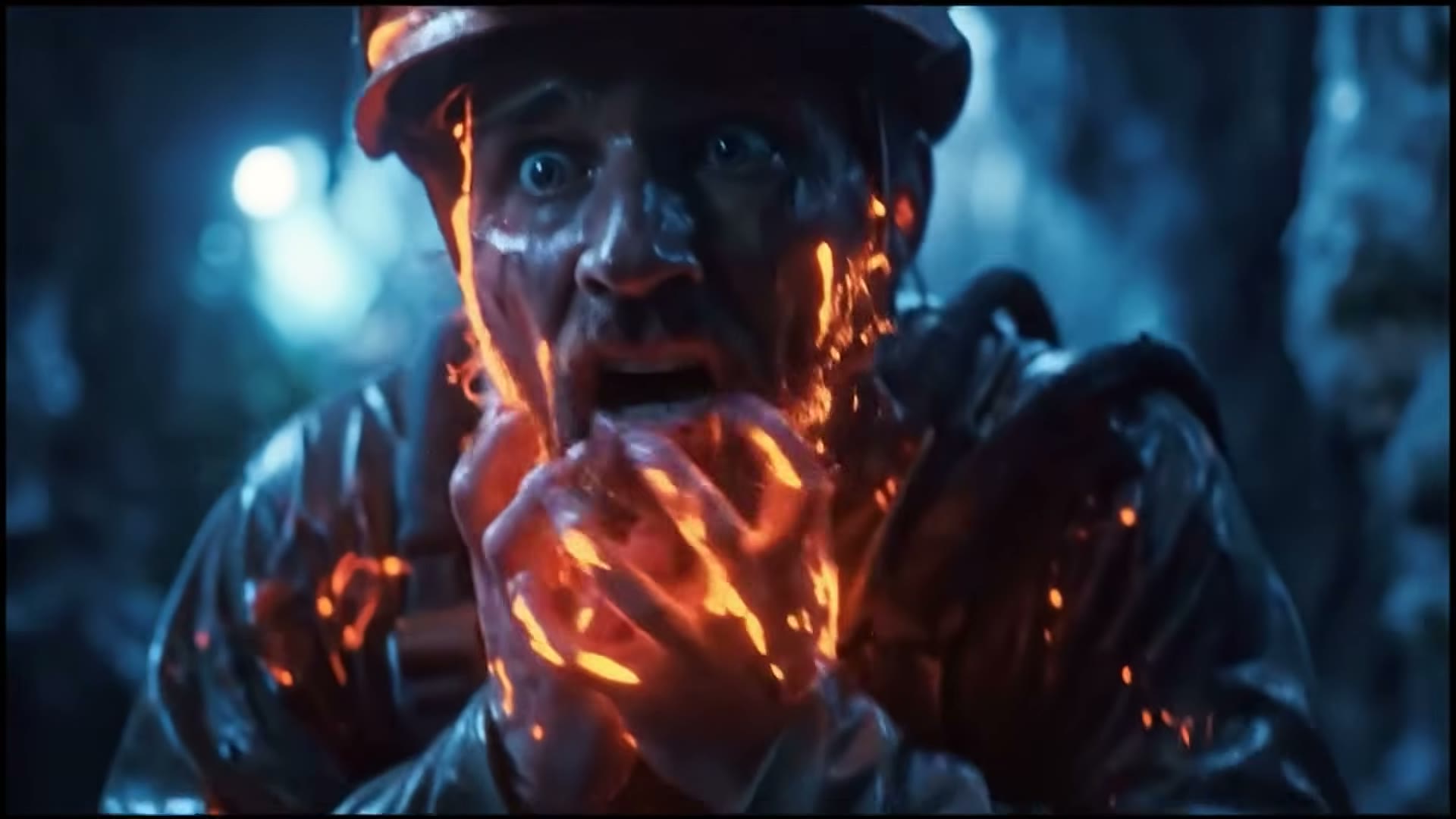
The middle of the film is a race played out over a radio — the team’s voices getting more frantic (“Lance, do you copy? What is your location?”), Lance’s answers getting shorter and stranger. His face holds through every stage of the change, the cracks of light widening across it, and that consistency is the effect: we watch one man become a window into something else, shot by shot.
“This can’t get out”
Lance’s last decision is the film’s heart, and it is made in fragments, alone, in the dark: “This can’t get out. They’ll be safe. She will be safe. Almost over.” He chooses the cave. The team, beaten by weather and silence, leaves reporting that “the organism seems to be receding” — the official story, believed by everyone who tells it.
Then the film shows us the truth it has been saving: a figure on the ridge under the moon, translucent, lit from inside by the same orange veins that run through the mountain — and a whisper in Lance’s voice: “Free at last.” The host signs off with the epitaph: “Might have looked like him, but trust me — different driver.” The sacrifice was real. It just didn’t work.
Best Scene (4:00–4:51)
The sacrifice in fragments
No music sting, no transformation spectacle — just a contaminated man in the dark, talking himself into the bravest decision in the batch in four short sentences, while the rescue team calls his name into a radio he has stopped answering. The horror is not what is happening to Lance’s body. It is that he understands it before anyone else does, and acts accordingly, and it still isn’t enough.
Final Thoughts
Veins of the Earth takes the oldest cave-horror shape — man goes down, thing comes up — and gives it a visual signature strong enough to carry the whole film: one vein of light, in stone, in amber, in skin, in an iris. It is the most disciplined piece of visual storytelling in this batch, and its final shot earns its chill honestly.
It is also the most purely cinematic of the seven: the host bookends it and otherwise stays out of the way, the dialogue is mostly radio traffic and one man’s breathing, and the story is told in light levels. If the anthology has a calling-card film for pure craft, it is this one.
Veins of the Earth is part of the Whispers From The Dark horror anthology on YouTube, hosted by the channel’s goblin storyteller — who wears a miner’s helmet for this one.
Scene Breakdown
0:00–1:10 — The descent. The host frames the tale; Lance enters the cave; the readings stop making geological sense.
1:10–2:04 — The hive. Veins of light in the rock; the nursery of amber cocoons; one cocoon is different.
2:04–2:55 — The infection. The cocoon opens; “It’s inside my skin”; the emergency extraction call.
2:55–4:00 — The race. Lance climbs as the light spreads through him; the team’s calls go unanswered.
4:00–5:20 — The decision. “This can’t get out.” The team withdraws ahead of the storm: “The organism seems to be receding.”
5:20–6:51 — Free at last. The transformed figure in the cave mouth, then on the ridge under the moon; the host’s epitaph.
≈6:00 — The fully transformed figure is slightly weightless in the widest ridge shot — it glides more than it walks. In closer shots, the translucency sells completely.
The organism’s design is the anti-slop: one glowing vein-network, identical in rock, cocoon, skin and iris — Lance’s face holds through every stage of the cracking, which is the hardest trick in the batch.
The radio handset’s screen shows a plausible waveform and readings; no pseudo-text failures spotted anywhere in the cave.
The host’s miner-helmet outro is a costume gag, not a seam — the anthology frame is played as theatre throughout.
There are no reviews yet. Be the first one to write one.