

 Lair Digital

Score breakdown
Film Review
This review discusses the ending. If you would rather watch the film first, we recommend you do, and then come back.
It Begins At The End
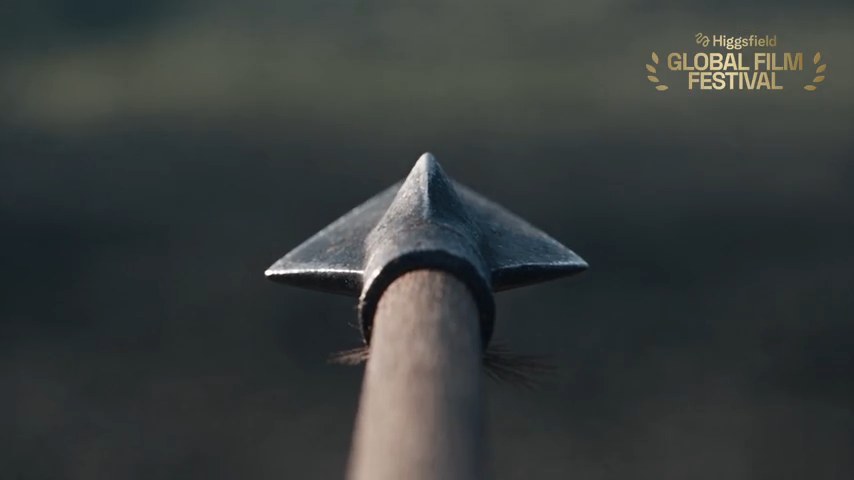
The first thing you see is the top of the arc: a vast army massed under storm clouds, black banners over a rocky plain, arrows standing out of a knight’s shoulder, and a king in a spiked black crown with paint streaking down from his eyes. The camera thinks in close-ups — muddy boots, gauntlets, a snarling enemy leader in a cracked helmet — and for the first half-minute almost nobody speaks. When a voice does come, it asks a question: “May I call on the King?” It turns out to be the whole tragedy in miniature, because the man who must do the calling, in the end, is the king himself. The narration gives the film its spine early, a refrain the rest of the running time keeps circling back to: “Still I am bound. Still I am alone.” Servus is built as a circle — king, then slave, then king again — and that refrain is the sound of the circle closing.
The Boy In The Mud
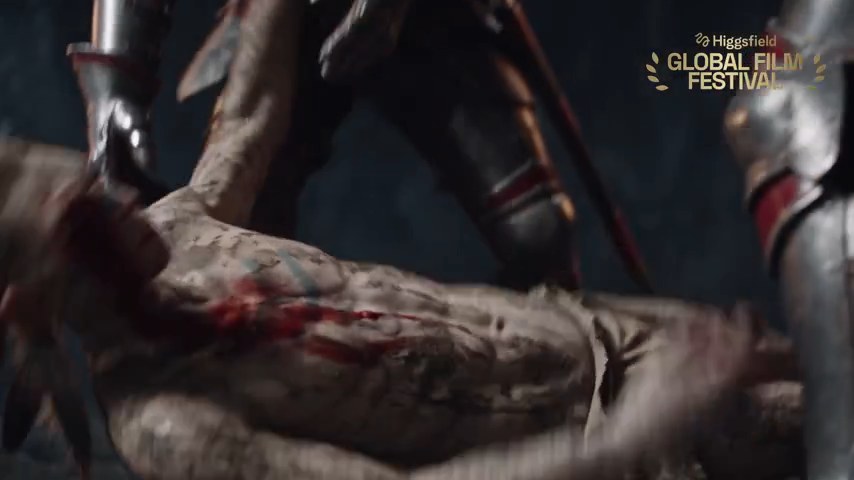
Then the film folds back, and finds its heart. A shirtless blond boy with blue paint on his face and chest crawls on hands and knees through the mud of a burning village, a dead body lying beside him, a rider on a black horse passing against the flames. He collapses face-down, blood at his mouth, and an armoured soldier kneels and puts a gauntleted hand on his back. “This one still lives.” It is the film’s one sustained human beat, and it lands because the camera simply stays with it. What follows is the offering: the boy is handed over with a dismissal — “Take this and trouble us no more” — given unto the dark, and claimed by it. An honest note on what you do and don’t see: the film’s own project brief describes a boy abandoned in a cave after witnessing his mother’s death, but on screen there is no cave, and the body in the mud is never identified. The darkness here is not a place. It is mud, firelight and a voice — and the film is arguably stronger for keeping it that way, even if it never quite says so on purpose.
A Slave, Then A Warrior
The middle of the film is a rise told as a montage, and the voiceover does all of it. “I was a slave. Then, a warrior.” Soldiers march through a ruined fortress; a near-naked warrior runs toward the fighting as a knight on a rearing grey horse charges past; and the narration climbs the ladder out loud — a warrior, then a king, the greatest man ever known, fighting beside kings and against them. Nobody in this film ever speaks to anybody else. Every line is the hero remembering, in archaic, poetic diction, and the choice cuts both ways: it gives Servus total tonal control and spares it every lip-sync pitfall, but it also means we never watch this man become anything. We are told, handsomely, in procession. It helps that the faces have a designed quality to them — the filmmaker drew and designed these characters by hand before animating them, and the paint-streaked, illustrated look of the hero at each age suits a story told like a legend rather than a life.
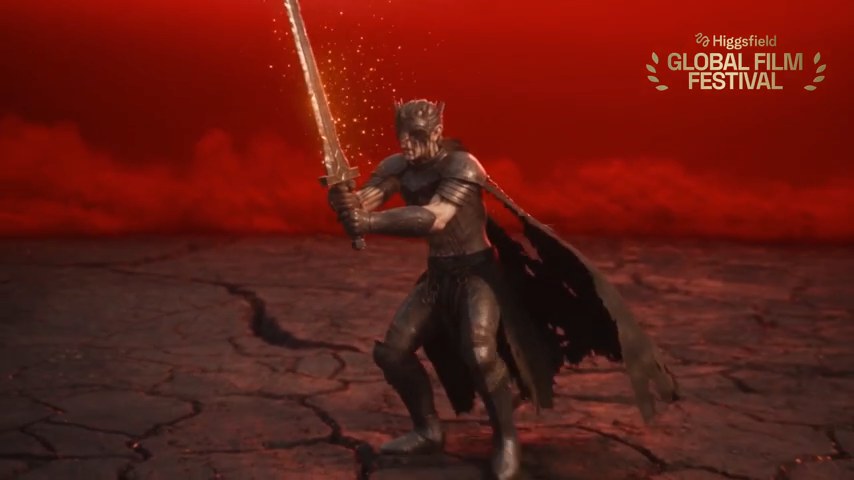
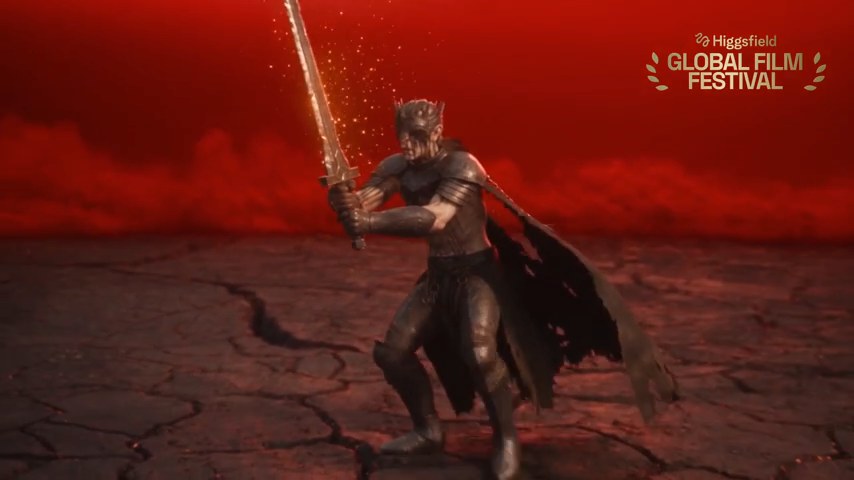
The Darkness, Called
The circle closes where it opened: the king in profile, an enormous rusted sword held upright, embers drifting, his army blurred behind him. Then the film does the bravest and strangest thing in it — it fades to black and stays there, a long dark held under the narration while the king calls on the thing that claimed him. When the picture returns it is the blood-red sky, the only red in a film of mud and ash, and a giant hunched creature of rock that the shirtless king drives his sword against while the voice arrives at the truth the whole film has been carrying: “I am a slave.” Crowned, victorious, summoning darkness itself — and still bound. It is a strong, bleak idea. And then the film stops. Not ends: stops, mid-battle, on an exploding combat frame, with no denouement and no answer to the question its own brief asks about what he has awakened. The brief promises more story than the film contains — a cave, a witnessed death, love and hope found along the way, none of it clearly on screen — and judged on what is actually here, Servus is a magnificent first act and a climax in search of the middle and the ending. Some viewers will find the poem is enough. I wanted the film its images keep promising.
Best Scene (1:31)
“This one still lives”
The boy lies face-down in the mud, bloodied, his blue paint smeared, the village burning behind him — and an armoured soldier kneels and rests a gauntleted hand on his back. It is the only gentle touch in a film full of blades, and everything Servus is about passes through it: this is the moment a weapon is chosen, and the last moment anyone treats him as a boy.
Final Thoughts
Servus is the rare AI fantasy short that knows exactly what it is about — a crown carried like a chain — and says it in images strong enough to survive the story it never quite finishes. The close-ups are superb, the refrain earns its repetitions, and the restraint of saving the blood-red sky for the climax shows a filmmaker thinking in pictures. The seams gather in the action shots, the hero’s face changes more between his ages than legend can quite excuse, and the missing third act is a real loss, not a quibble. But the boy in the mud stays with you after the battle noise fades — and so does the hand on his back.
Scene Breakdown
0:00–0:30 — The greatest war. An army under storm clouds, a painted king, and a single question — may I call on the King?
0:30–1:35 — The boy in the mud. The flashback: a burning village, a crawl through the mud, a collapse — and a soldier’s hand. “This one still lives.”
1:35–2:00 — Given to the dark. The offering. Handed over and claimed, the boy chooses the darkness that chose him.
2:00–3:00 — The rise. A march through ruins and a charge of horse and shields: slave, warrior, king, told in montage and verse.
3:00–3:40 — The summoning. The great sword, a long fade to black, and the darkness let forth beneath a blood-red sky.
3:40–4:53 — The battle resumes. The refrain returns, the demon enters the fight — and the film stops mid-blow, its question unanswered.
2:31, 2:45–2:50 — The horse charge is where the film’s seams gather. The horse’s front legs and the rider’s lower leg and stirrup merge into the dark mud; in the closer frame a near-naked man beside the horse sits in a position you cannot quite parse, and the rider’s gauntlet on the reins reads fingerless. The composition is strong — the anatomy inside it is not.
3:31, 3:35 — At the summoning, the hero’s face in close-up goes very soft and smeared for a beat, after much crisper close-ups earlier. The giant rock creature has no visible face and one vague, long arm, and its relationship to the enormous sword is unclear — the sword’s scale also jumps between shots, and at 3:01 it is too big for its blade to stay in frame at all.
Throughout — The crown will not sit still: a spiked black crown at 0:31, a different crown with the great sword at 3:01, a blood-red-topped helmet at 4:10. The hero’s face also changes materially between the blond boy, the bearded warrior and the black-painted king — plausible as age and status, but you are not always certain it is the same man. Smaller seams: the enemy leader’s irregular teeth and rope-like dreadlocks (0:12–0:15, plausibly deliberate scarring), indistinct faces in the background army (0:30–0:40), a smeary beard and feathered armour at 2:00, one soft pauldron close-up (1:20–1:25), a long fade to black (3:05–3:20) that reads as a generation break rather than a designed pause, and the final soldier’s glowing, pupil-less orb eyes (4:53).
Throughout (the good news) — The hero frames are genuinely clean: the army under storm clouds (0:01), the king’s painted close-up (0:31), the boy in the mud (1:31), the sword king in the embers (3:01), the boots and armour detail throughout. The title card is clean, there are no text glitches, and there is no lip-sync to fail — every line is voiceover, and the film is built that way on purpose.
A note on this copy, not the film — This is the festival submission version: the Higgsfield Global Film Festival mark sits in the top corner of most frames. It belongs to the submission, not the film, and it is not counted in the slop score.
There are no reviews yet. Be the first one to write one.