
 Labyrinth Studio
Score breakdown
132 views
Film Review
This review discusses the ending. If you would rather watch the film first, we recommend you do, and then come back.
Have You Seen This Dog?
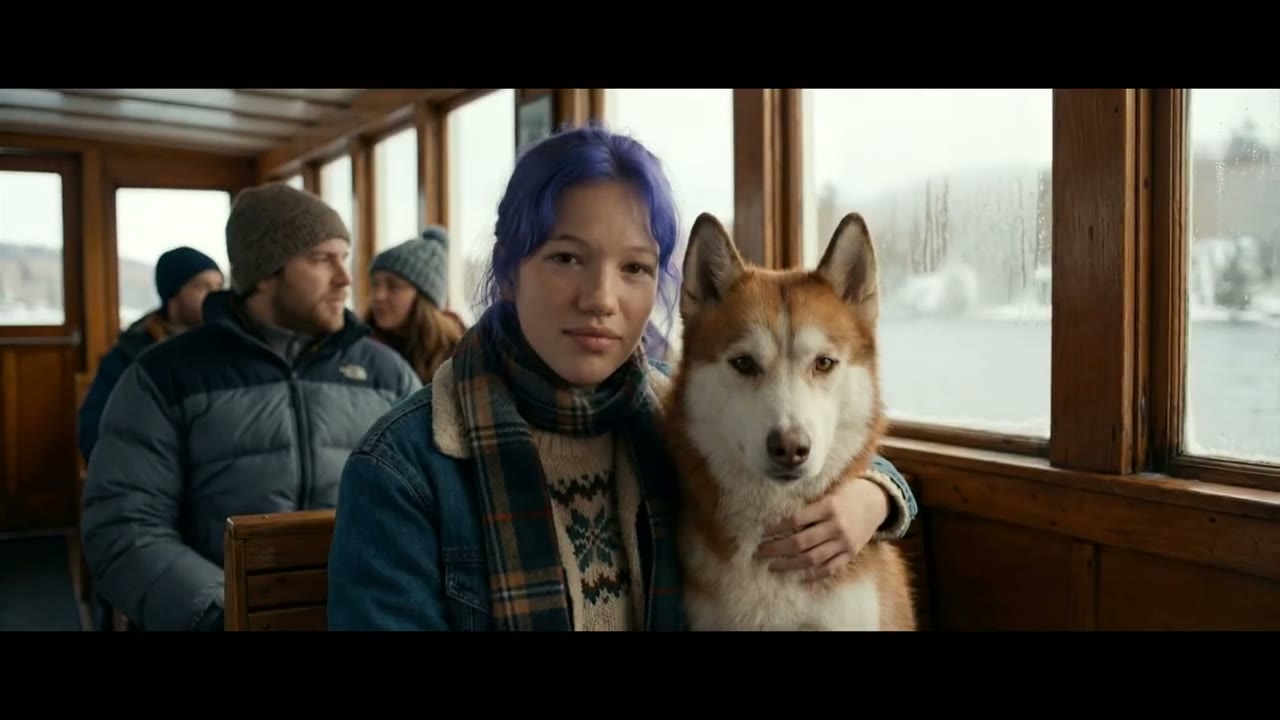
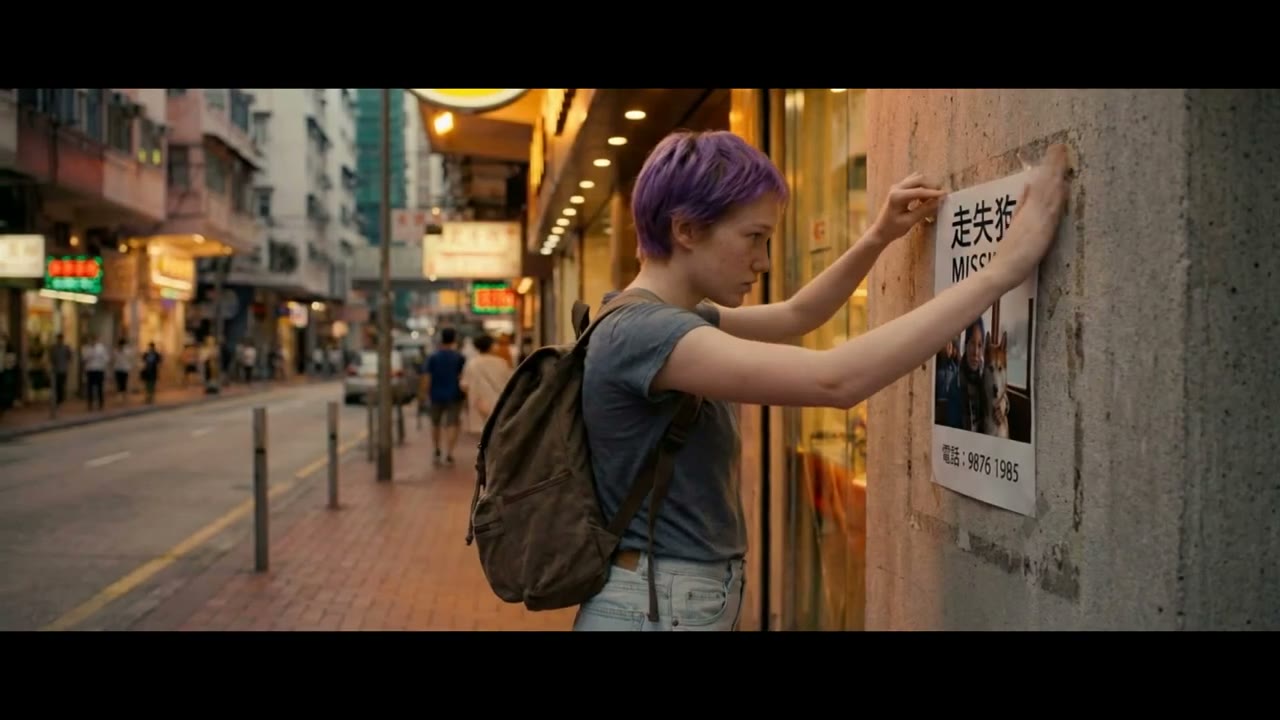
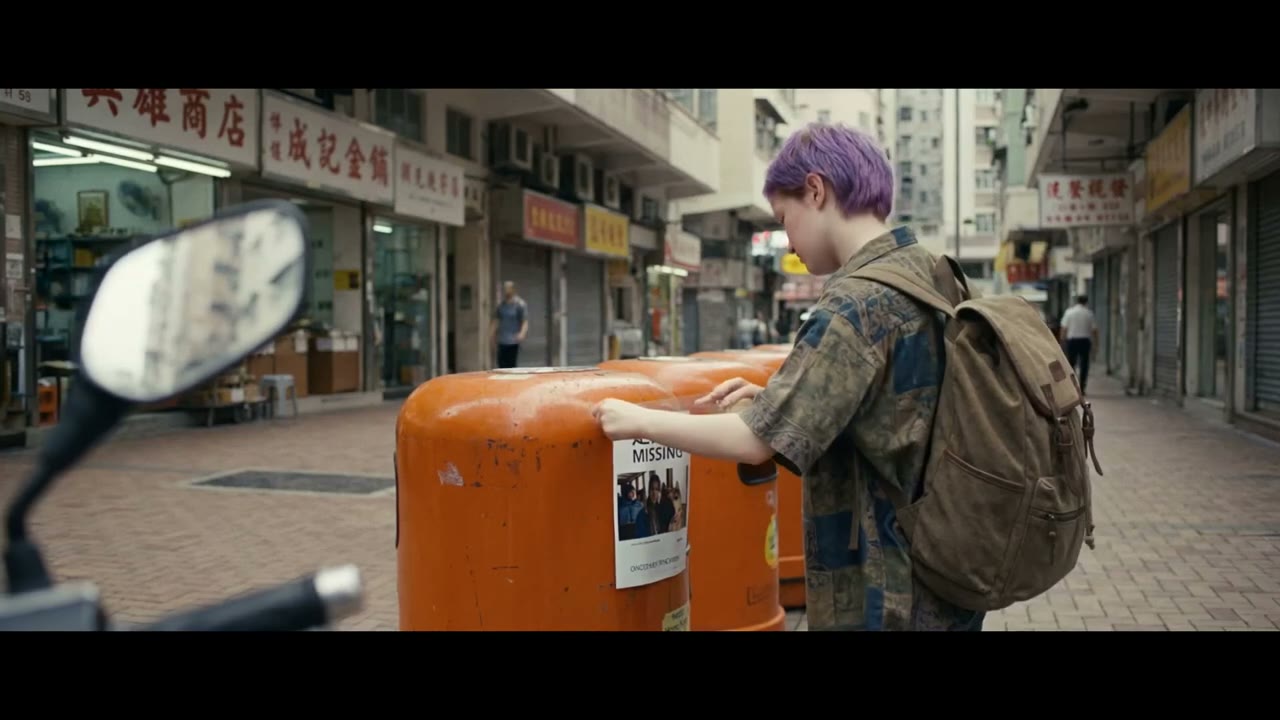
The structure is a walking tour of hope running out. A shelter shows her the wrong dog — “No, it’s not her. It’s not even a husky.” Then the posters go up on Hong Kong walls, the same legible poster every time (“MISSING”, her photograph, Bianca’s), and the search moves through the city: the Tai O stilt village, a laundry shop, a wet market where she chases a dark dog that is not Bianca, a truck driver and a tattooed man who saw a husky yesterday and can only say, “I’m sorry.” Between the searching, memories surface the way they do in real loss — Bianca asleep on the bed, Bianca on her lap on a tram, Bianca licking her face.
The film’s wisdom comes from an older woman who has clearly had this conversation before: “Huskys are like that. Very good-looking, smart, but they love to run off… I didn’t know she’d never run off before. Hope you get her back.” It is kindly meant and it changes nothing, which is exactly how such comfort works. The licensed string music does a great deal of the emotional carrying, and it earns its place.
“You Two Really Look Alike”
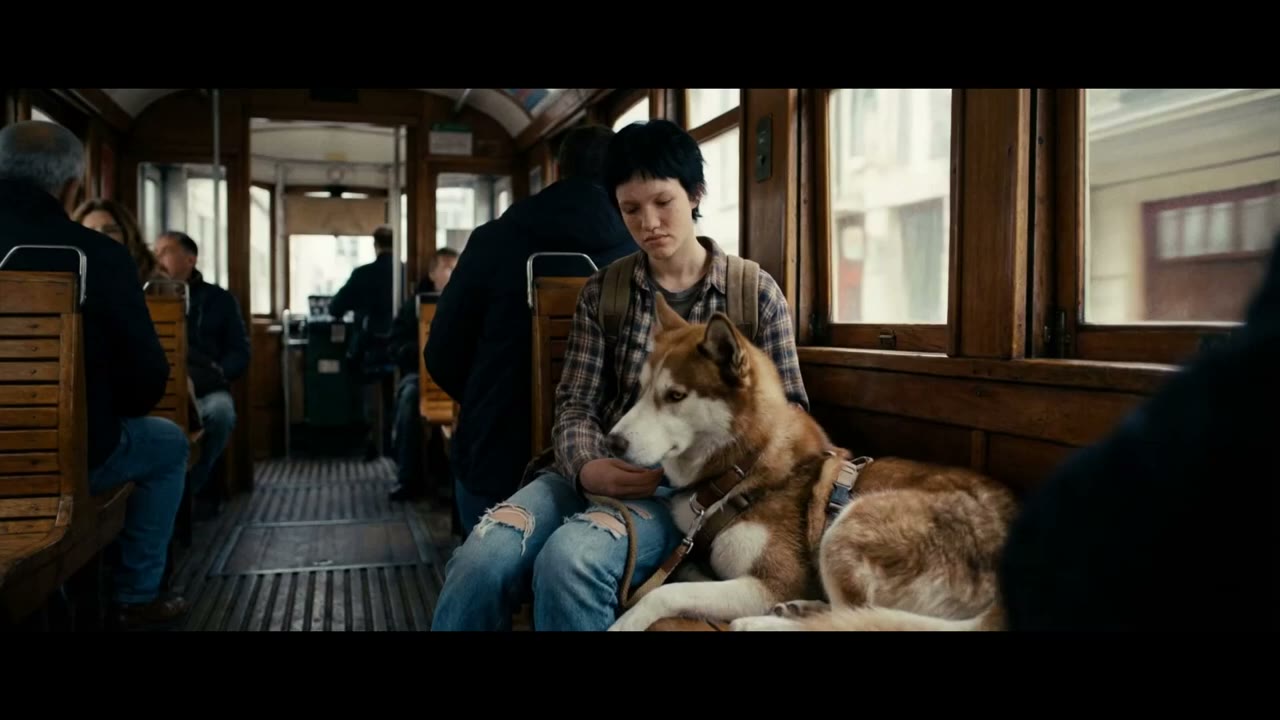
The best moment is a stranger’s kindness. On the tram, a red-haired young man holds up a Polaroid — her and Bianca, from the memory we have just seen — and tells her, “You two really look alike.” For one shot, the past and the present sit in the same frame, and she is not a distraught stranger with a poster; she is Bianca’s person, recognised. It is the film’s emotional thesis in a single line, and it is beautifully judged.
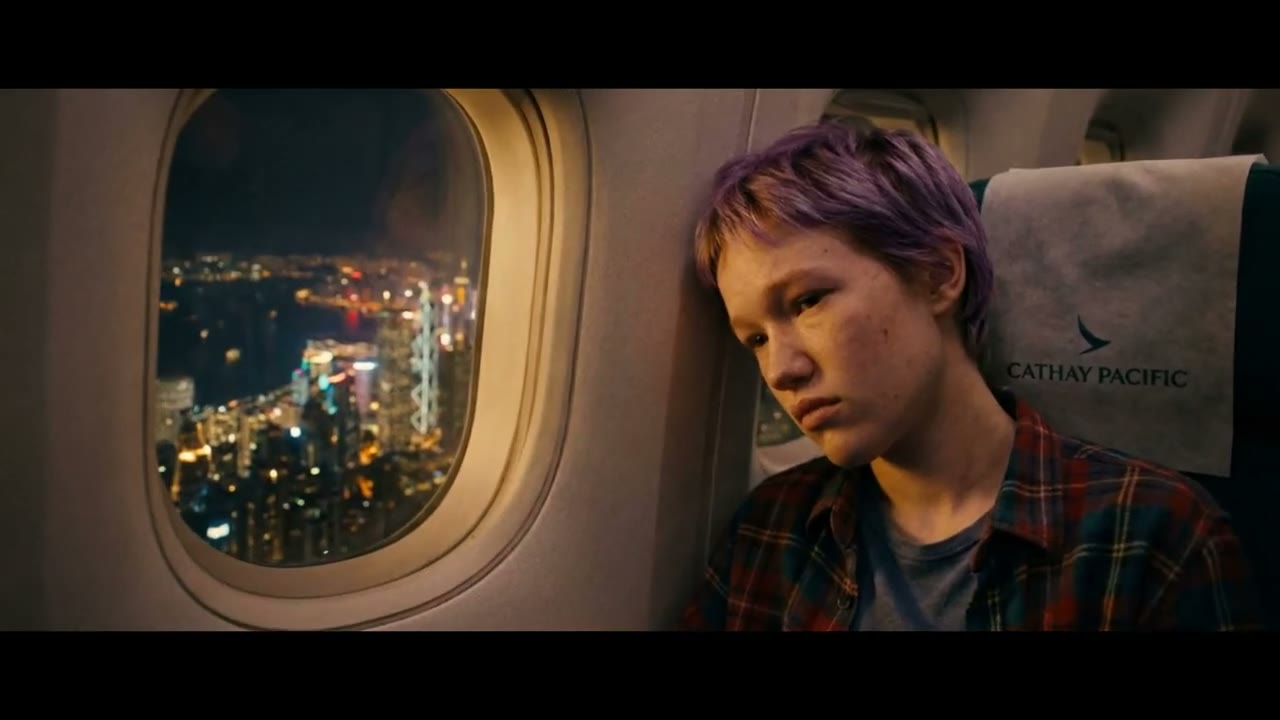
Then the film loses its grip on its own geography. A head resting against an aeroplane window at night. A sunny American suburb, clapboard houses and a school bus, the search still somehow continuing. A doorstep at house number 42, where an older woman answers with a pitying look — and the film ends, Bianca unfound, nothing explained. An unresolved ending is a legitimate choice, and I would defend it; drifting into another country without a word is not an ending, it is a seam. It does not help that our heroine’s purple hair becomes black, becomes red plaid, becomes blue — with her face shifting alongside — or that much of the dialogue is delivered as voiceover over mouths that barely move. We are asked to ache for a woman the film itself cannot keep hold of.
Best Scene (4:30–4:45)
The Polaroid on the tram
A stranger matches the Polaroid in his hand — the woman and Bianca together on a tram — to the woman standing in front of him, and the memory itself blooms into the present around them. “You two really look alike.” It is the one moment the film’s feeling, craft and meaning all arrive together, and it is one of the cleanest shots in the piece.
Final Thoughts
Looking for Bianca has a true heart and an unsteady hand — the rare AI film that aims at quiet grief and nearly lands it. As a demonstration that a video model can stage emotion and not just motion, it makes its case. As a story about one woman and one dog, it keeps misplacing both. Watch it for the tram, and for the courage of its sad ending; forgive it the suburb.
Scene Breakdown
0:00–0:45 — The search begins. The shelter’s wrong dog, the first poster on a Hong Kong wall, and the title.
~0:50–2:15 — Memories and false leads. Bianca remembered on the bed and at the seaside; Tai O, the laundry shop, and a chase after the wrong dog in the market.
2:22–3:45 — Dealing with the loss. The older woman’s kindness about huskies, a shout of “Bianca, stop” in traffic, and a man who saw a dog yesterday: “I’m sorry.”
4:00–4:45 — Following the trail. The bed memory, the neon street, and the tram — where a stranger’s Polaroid recognises her.
4:45–6:03 — Final resolution and credits. A night window, a foreign suburb, a doorstep at No. 42 — and no Bianca. Credits over a sung song.
Throughout — The heroine is re-cast by the edit: purple hair and a grey t-shirt become black hair and a black jacket, then a green jacket, red plaid, and blue hair — with her face shape, eyes and freckles shifting shot to shot. There is no story reason; she is simply a different woman in scene after scene.
Throughout — Much of the dialogue is voiceover laid over still or barely-moving mouths — lines play across close-ups of closed lips, so the conversations rarely feel spoken by the people on screen.
4:45–5:15 — The film leaves Hong Kong without explanation — an aeroplane window, then an American suburb with a school bus, then house No. 42. No journey is shown or mentioned.
1:45, 2:00, 3:17–3:31, 4:15, 4:57 — Background text is pseudo-script throughout: shop signs and truck lettering in blurred imitation Chinese, and a bus whose rear text is gibberish English. The MISSING poster itself, to the film’s credit, stays legible and consistent.
1:30, 4:02, 4:15 — Hands merge with a takeaway box; Bianca’s snout and tongue smear in the bed memory; and on the neon street the heroine’s reflection in the glass does not match her face.
There are no reviews yet. Be the first one to write one.