
 BARDSONGTAVERN
Score breakdown
719 views
Film Review
This review discusses the ending. If you would rather watch the film first, we recommend you do, and then come back.
Fear Takes Time
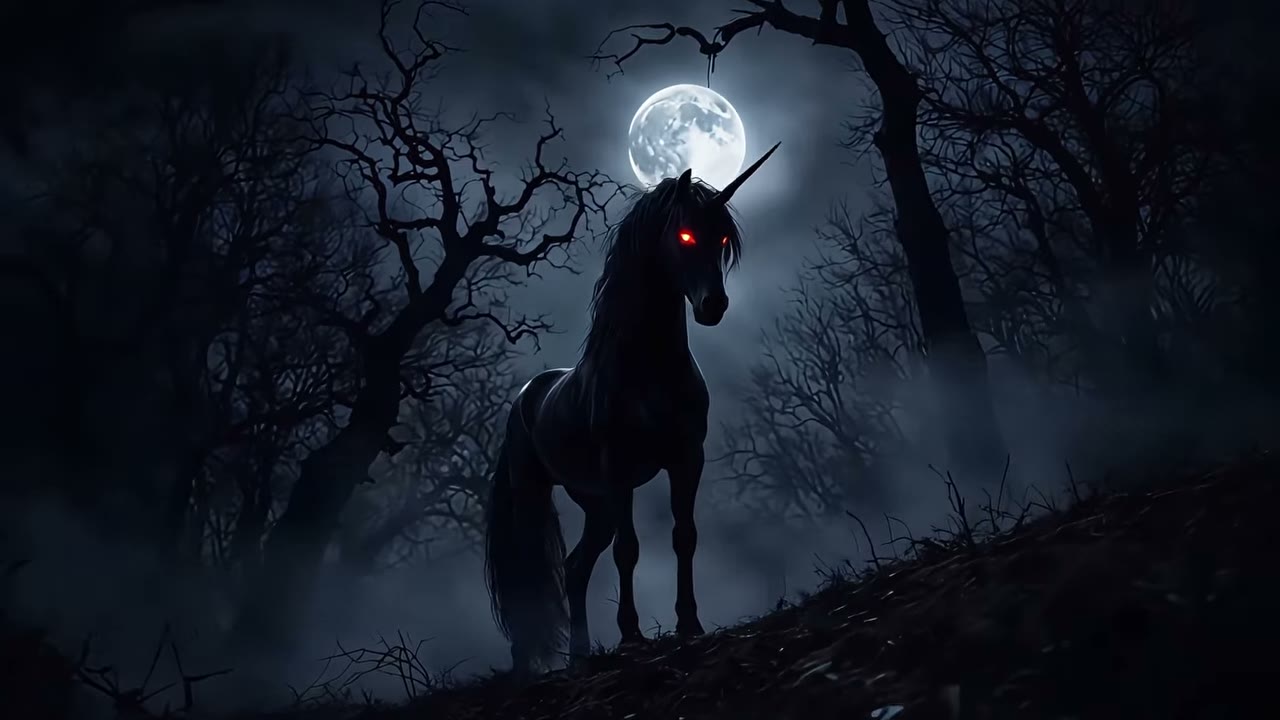
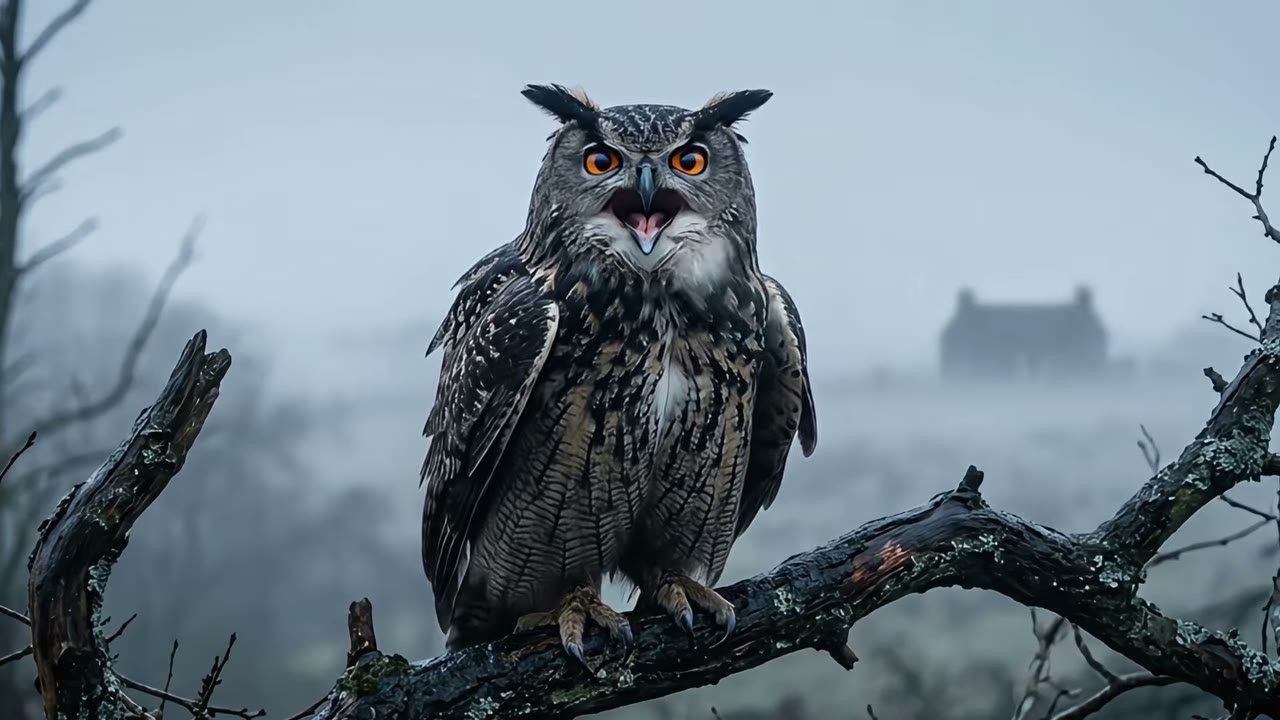
Lirien is a halfling thief who follows tavern talk of a black unicorn — and the fortune its horn might bring — into the wrong forest. She finds it: tall as a horse, black as ink, red-eyed, with teeth the narration itself admits are wrong. She tries to scream and cannot; her daggers slip from numb fingers into the leaves. And the unicorn, horn stopping inches from her chest, delivers the line the whole film grows from: “You need not speak. Your fear already has.” Then it lets her go. That is the horror of the piece — not a chase but a keeping. It slaughters the thieves whose camp she shelters in, off-screen, to the sound of tearing flesh. It follows her into town, where the deaths begin — a merchant by his cart, then another, and another, each nearer her lodgings — while candles burn all night and the dogs whimper at empty lanes, and high above the rooftops the owl watches, and does not hoot.
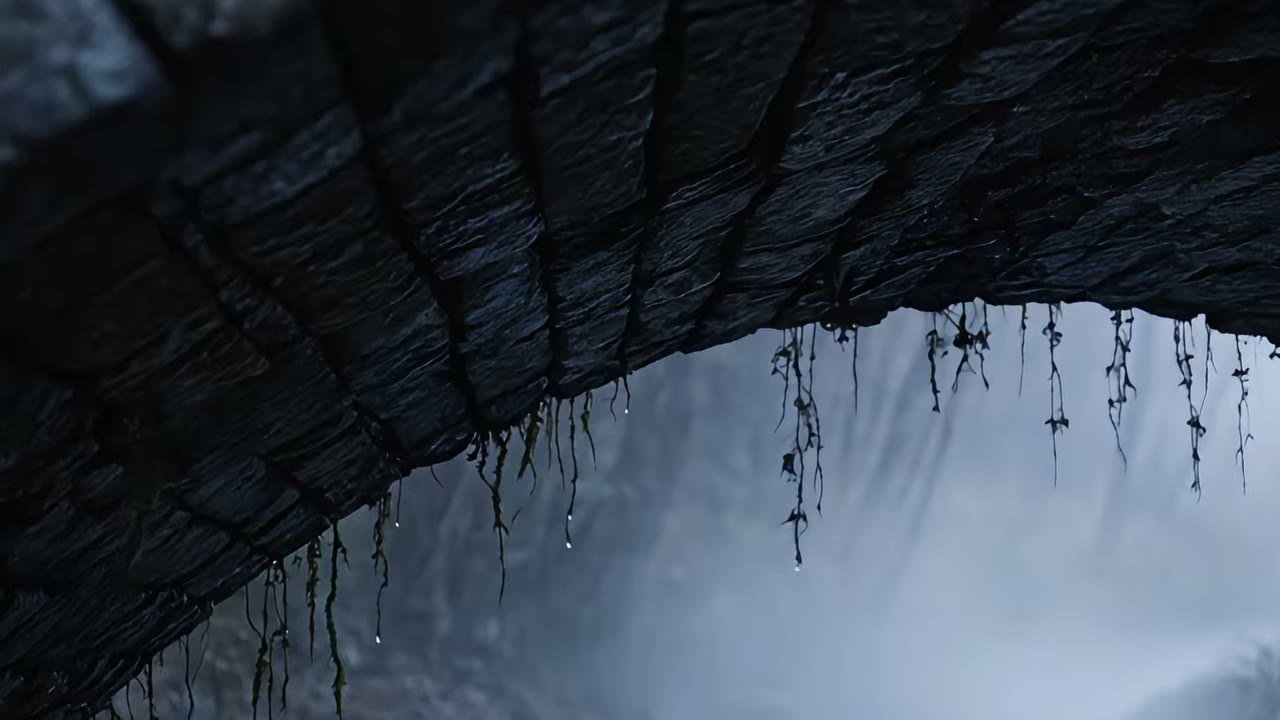
The middle of the film is a liturgy of failed refuges: a chapel, where a cleric gives her blessed water, silver thread and a prayer — and by nightfall the chapel is in ruins and the cleric gone; a wizard’s tower, where she learns the lore that explains and cannot save her — unicorns were not born, they were made, twisted and corrupted, and this one was wrought by a necromancer whose name Forgotten Realms players will know. It even saves her life once, on a stone bridge, putting a troll to flight with the light of its horn — not from mercy, but because she is not ripe yet.
“By Dawn, The Room Held Only Blood”
The ending is the tale’s coldest and best writing. Lirien reaches a roadside tavern near dawn and sleeps at last, boots on, because exhaustion finally beats fear — and wakes to find the unicorn standing beside the bed. We are not shown the kill. “By dawn, the room held only blood, torn bedding, and hoofprints.” Then the creature turns its attention outward, to the listener it has been ripening all along: “I kept you alive for a reason. Fear takes time. And the longer you listened, the closer it came. Who of you shall I devour first?” And beyond the beast, the owl finally hoots. As a piece of campfire horror, that is a properly chilling curtain line.
The seams, honestly logged: Lirien’s dropped daggers return to her hand twice, changing length as they go (a viewer comment on the page spots the same thing, which tells you how visible it is); one close-up gives her rolled-back, misaligned eyes and merged fingers; and in the wizard’s hall the corrupted unicorn is shown chained in a pool of blood as a WHITE unicorn — possibly a ‘before’ image, but the film never says so, and in a story whose whole identity is ‘black as ink’, it jars. A few narration lines garble into nonsense, and the unicorn speaks in the narrator’s own voice, which flattens its otherness. Set against that: the stills themselves are handsome, the creature’s design is consistent everywhere else, and by choosing narration over acted scenes the film avoids the lip-sync and performance failures that sink so many of its peers.
Best Scene (1:51–2:18)
The first encounter
The unicorn in full close-up — red eyes, bared teeth, the horn inches from Lirien’s chest — and its only line, spoken to a girl who cannot even scream: “You need not speak. Your fear already has.” The film’s idea, its look and its best writing arrive in a single moment.
Final Thoughts
THE BLACK UNICORN is a campfire tale with a genuinely frightening heart — a purity symbol reimagined as the most patient predator in the forest. As cinema it is modest — stills, pans and one voice — but as storytelling it is assured, and its ending earns its chill honestly. Fans of dark fantasy and tabletop lore will find a tale worth the telling; it is labelled fan content, and wears that label proudly.
Scene Breakdown
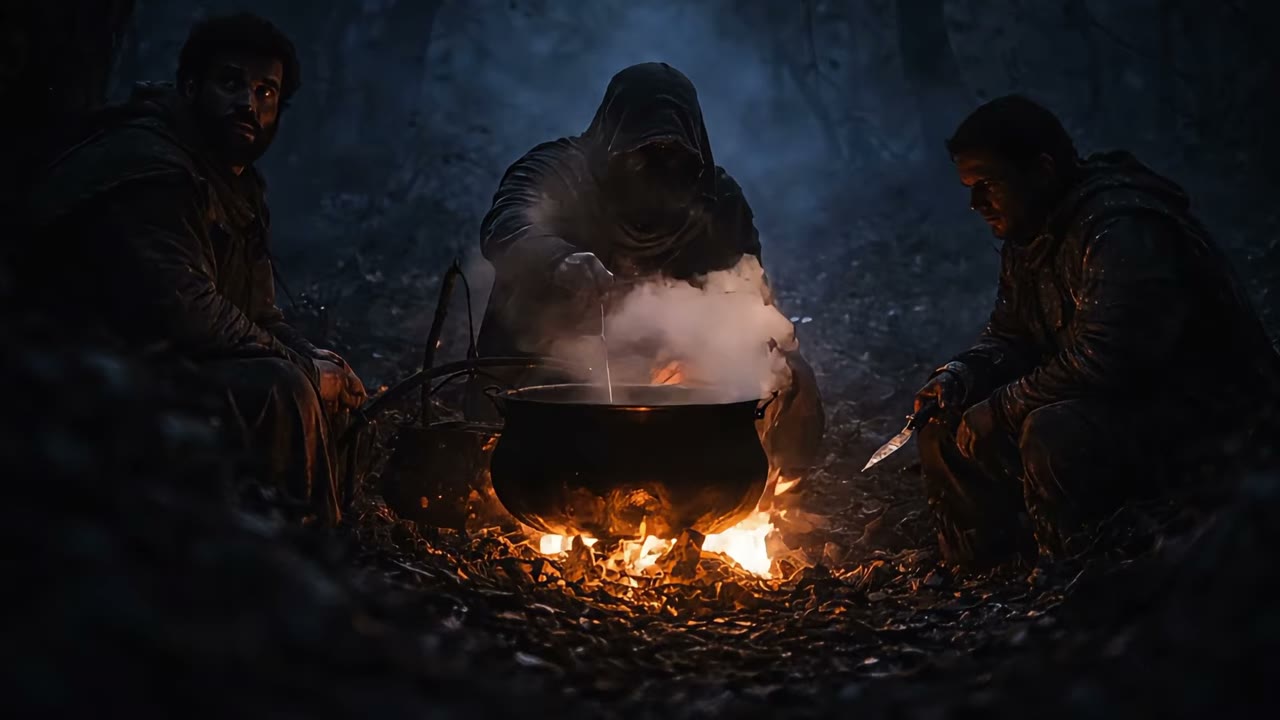
0:00–1:26 — The forest legend. Hooded figures around a cauldron, the horrors of the woods, and an introduction to Lirien, who follows a rumour of gold.
1:26–3:01 — The first encounter. The unicorn appears, disarms her without touching her, and lets her go — for now.
3:01–5:23 — Escape and pursuit. The thieves die off-screen; the town’s deaths creep closer to her door, street by street.
5:23–7:16 — Seeking answers. A ruined chapel, a vanished cleric, and a wizard’s lore: unicorns were made, not born.
7:16–9:18 — The final reckoning. The bridge, the troll — and a tavern room at dawn, where the running ends.
~2:08, 3:03, 7:40 — The dagger problem: the narration has Lirien’s daggers slip from her numb fingers and vanish into the leaves — yet she holds one at 3:03 and again in the bridge confrontation, its length and shape changing between shots.
3:03–3:09 — Her worst close-up: eyes rolled back and misaligned, showing mostly whites, and the fingers of her gloved hand elongated and merged into the dagger’s hilt.
~6:02–6:20 — The corrupted unicorn is pictured as a WHITE unicorn chained in blood before the wizard — while the narration and every other scene insist the creature is black as ink. If it is meant as a ‘before corruption’ image, the film never tells us.
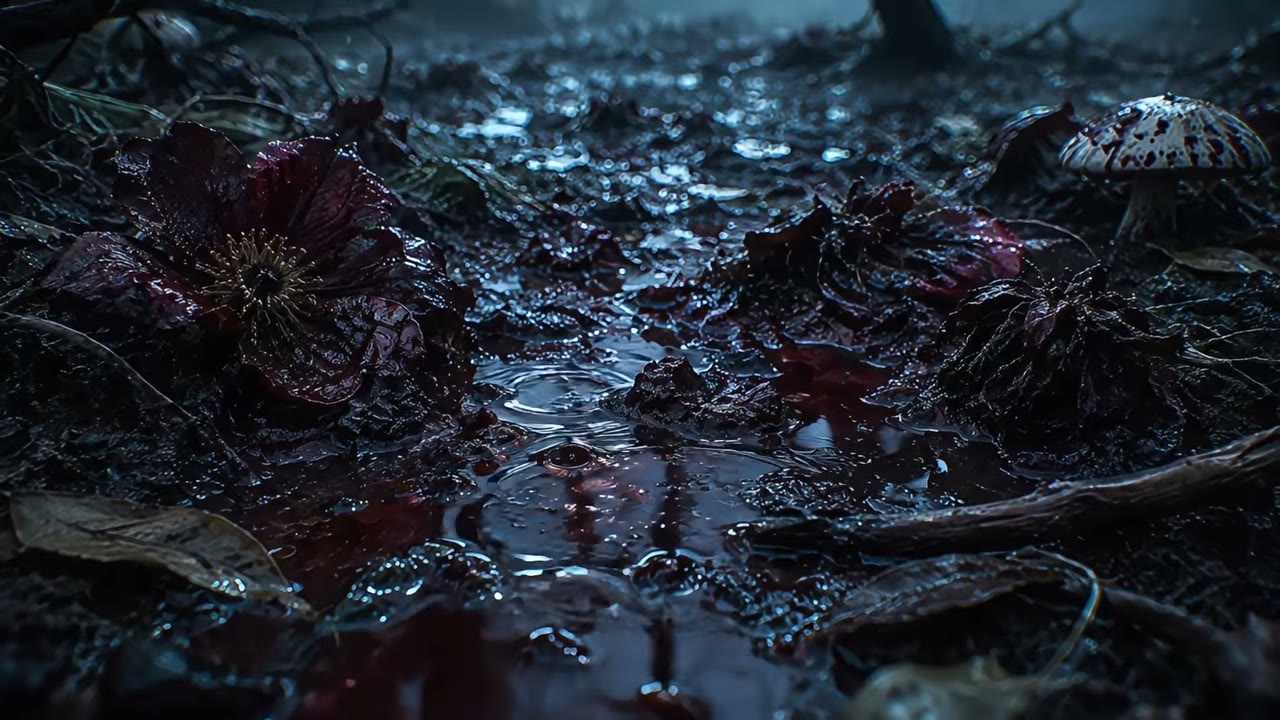
~2:18, ~5:40, 8:38 — A few narration lines garble semantically — a strange aside about mushrooms, a phrase about ‘graves’ that cannot be made sense of as heard — and the unicorn’s lines are delivered in the narrator’s identical voice, with nothing to set the creature apart.
There are no reviews yet. Be the first one to write one.