
 Nik Klabunde
Score breakdown
1.1K views
Film Review
This review discusses the ending. If you would rather watch the film first, we recommend you do, and then come back.
The Man Who Came For The Governor
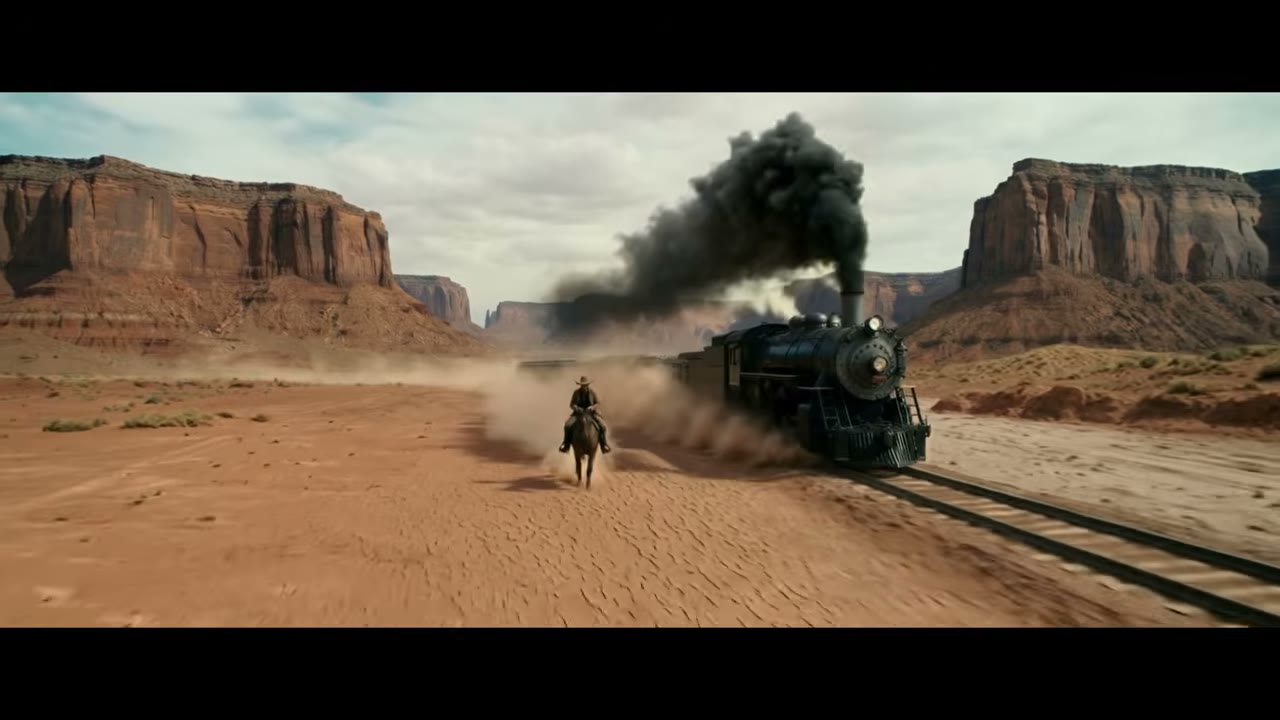
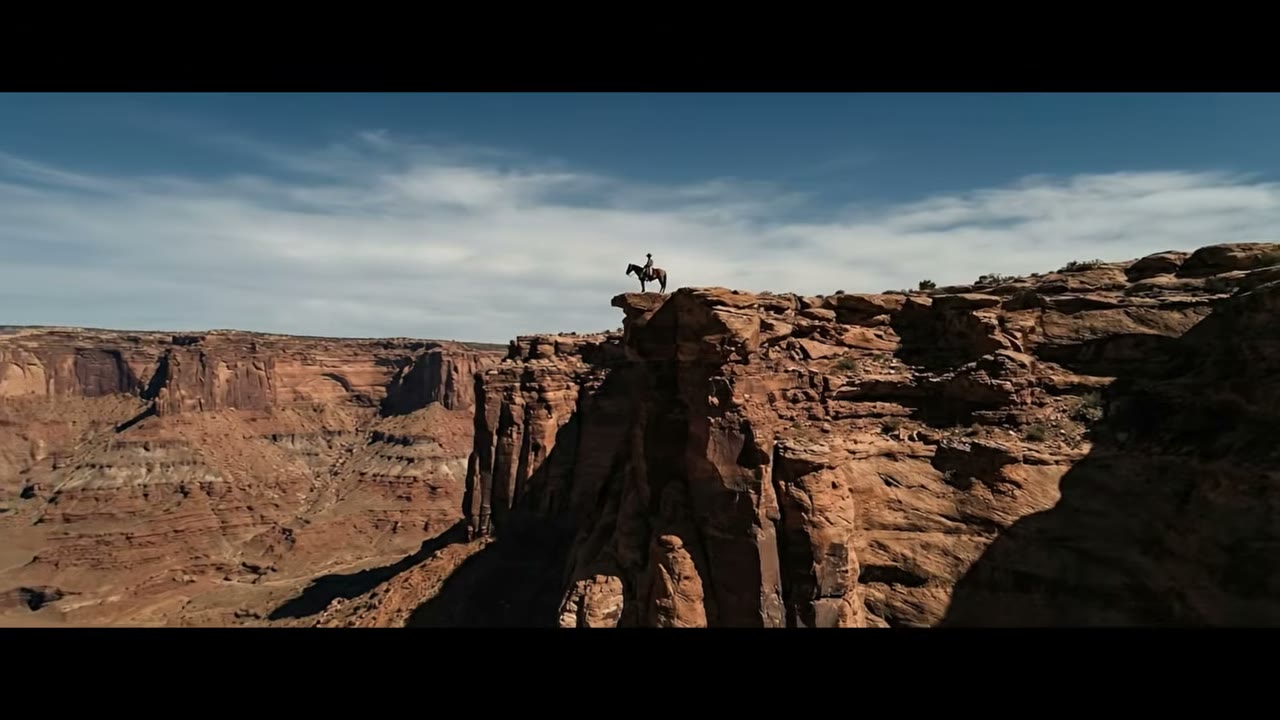
It opens the way a western should: a lone rider on a rock spire above a canyon, a train crossing the desert, a gallop through the dust alongside the locomotive. Then the film does something braver than any chase — it sits down. Inside the wood-panelled private car, the territorial governor is peeling a Bartlett pear at a white-clothed table, champagne on ice. The rider, John, comes through the door and, without a word of greeting, shoots the governor’s man dead. The governor does not flinch. He goes on peeling, and his first line tells you everything about the power in the room: “Close the door please, will you? You’re letting the dust in.”
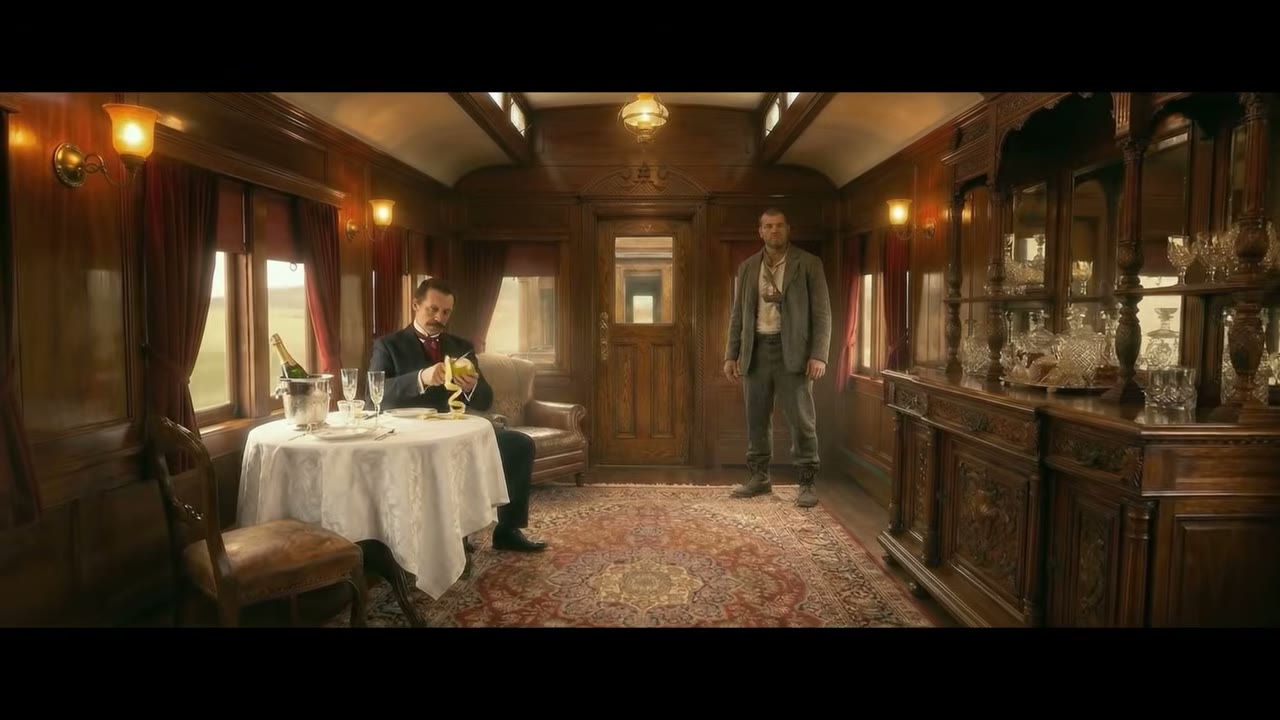
What follows is a guessing game played by a man who loves the sound of his own mind. He guesses the massacre at Red Creek. He guesses the railroad expansion. He assumes a five-hundred-dollar contract and rich backers with deep pockets. And through it all runs the pear: most fruit, he explains, rots honestly, from the skin down, and warns you — but a Bartlett ripens from the inside out, golden and perfect while its heart turns to mush. “That is the problem with this territory. It looks civilized now. We have trains, we have laws, but the center is soft. I assume you’re here to cut out the rot.” It is a villain describing himself without knowing it, and it is genuinely good writing.
$3,000 Against $50
The turn, when it comes, is worth the whole film. The governor offers $3,000 in bearer bonds to buy out the contract — “Take it. Buy a bath. Buy a name that has two syllables.” And only then does the truth surface: the bounty on the governor is fifty dollars. The great man’s outrage is the film’s best acting beat, delivered face to face: “$50? That isn’t a bounty. That’s a tip. It’s insulting. You’re going to refuse a fortune for chump change because of a piece of paper from 20 years ago.” John’s silence is the answer. Whatever that paper is — the film shows it in his hands in the opening shots and never explains it — it is worth more than a fortune. John fires. The governor ends face-down on his own white tablecloth, blood pooling beside the tipped champagne, and John takes the money after all: the bounty, one assumes, now payable.
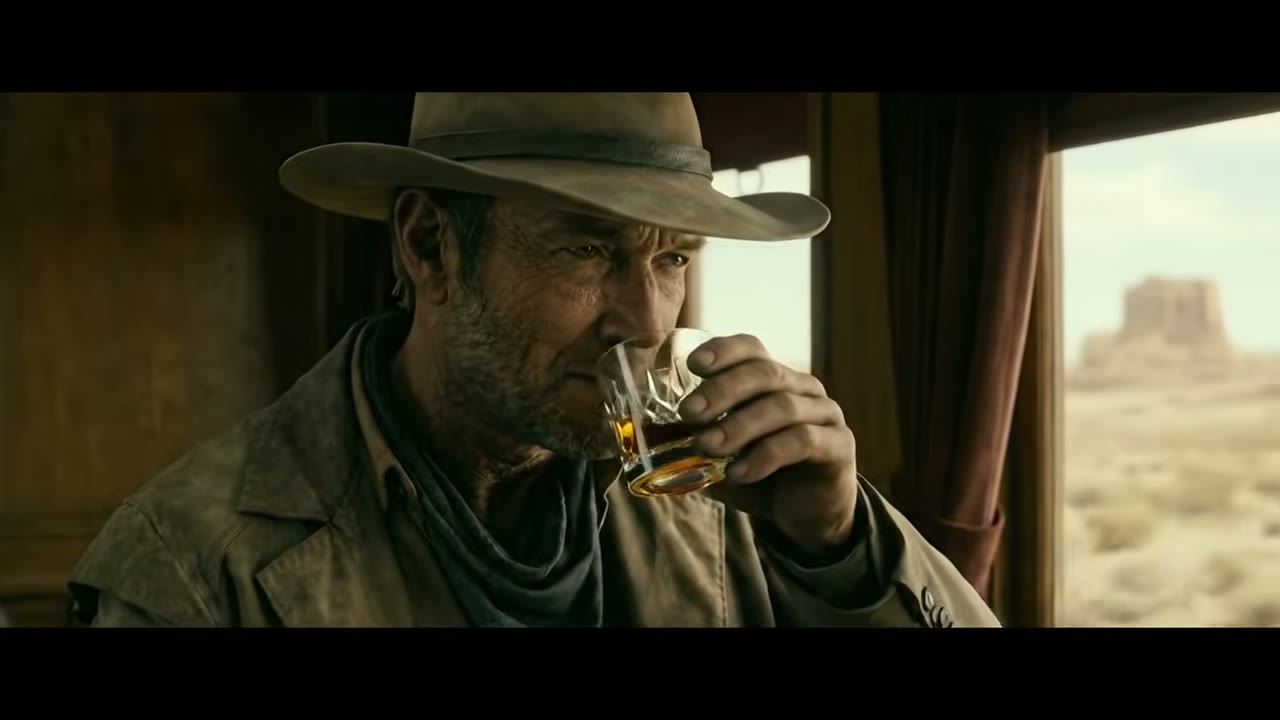
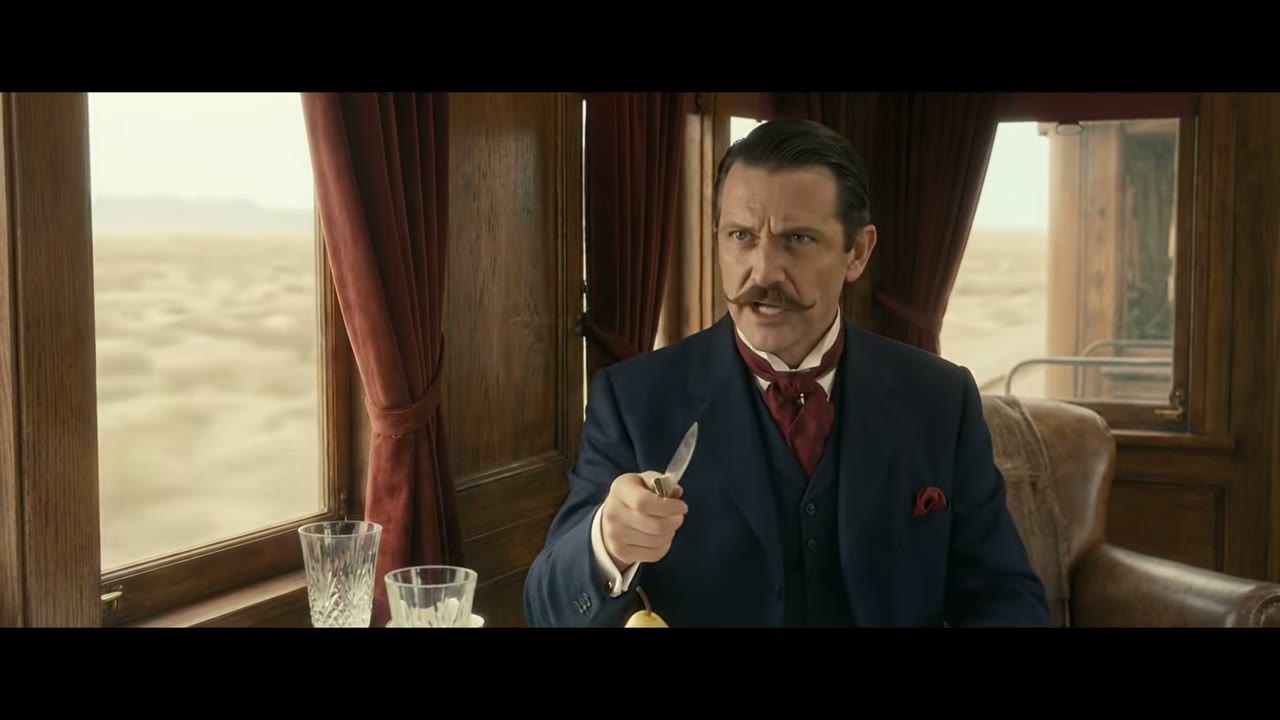
Honesty about the seams: Klabunde flags the biggest one himself — the train changes direction between shots, and he is right, it does. A man John shoots exists in exactly one wide shot and in no other. Champagne glasses come and go from the table, the pear changes shape in the governor’s hands, and in close-up the governor’s mouth, teeth and moustache smear as he talks — an unfortunate tax on a film carried by talk. A few lines dissolve into slurred nonsense, most memorably a champagne anecdote that contradicts itself mid-sentence. None of it sinks the film, because its centre — two men, a table, a metaphor, a price — is built in the writing, where this tool test could not wobble.
Best Scene (1:19–1:20)
Three attitudes to violence
One wide frame holds the whole film: John with his back to us, revolver still smoking; the governor calmly peeling his pear; the dead man slumped by the cabinet. Then a cut to an extreme close-up of John’s eyes over the gun barrel. The premise lands in two shots — John is not here to talk, and the governor knows it, and does not care.
Final Thoughts
Iron & Dust proves that in AI film, a good script is still the rarest special effect. It was made as a tool test and wears its inconsistencies openly — its own creator points at them and laughs. But its pear, its price and its final shot stay with you after many smoother films have faded. I would watch a feature built on this writer’s instincts.
Scene Breakdown
0:00–0:55 — Setting the scene. The rider above the canyon, the blank paper in his hands, the train, the gallop through the dust.
0:55–1:32 — The private car. John enters, shoots the governor’s man, and hears about the Bartlett pear.
1:32–2:22 — The Bartlett metaphor. A territory that looks civilized while its centre goes soft — and a guess: “You’re here to cut out the rot.”
2:22–3:49 — Negotiating terms. Names, motives and money are guessed at; John gives up almost nothing but his name.
3:49–5:14 — The bounty conflict. $3,000 offered, $50 revealed, a fortune refused — and the shot that ends it.
0:30–0:50 — The train’s direction of travel flips between the rear-car view, the side gallop and the locomotive close-up — the creator points this out himself in the description, to his credit.
~1:19 — The man John shoots appears in that single wide shot only; he is absent from the wide shots immediately before and after it.
Throughout — Props drift: champagne flutes and the bottle appear, vanish and return on the table, and the pear and its peel change length and shape in the governor’s hands.
1:40–2:00, 4:07–4:45 — Close-up faces smear — the governor’s mouth, teeth and moustache shift as he speaks, worst while shouting; John’s mouth and chin smear at 2:45. Mouth shapes often miss the words.
2:56–3:03, 3:28, 4:11 — A few spoken lines garble into slurred near-nonsense (an unidentifiable drink name, “the Maccado” as heard, a self-contradicting anecdote about champagne bottles), and the opening sung vocal cannot be made out at all.
There are no reviews yet. Be the first one to write one.