

 wrexon
 Creator ID26-11-02-0098

Score breakdown
4 views on Kineograph
Film Review
Written by Kineograph
In a world where death takes root, Ani of the Mushi — an ancient fungal civilization — descends through mushroom cities and crystalline enemies toward whatever waits below, in a film with no dialogue, no explanations, and some of the most extraordinary images in this festival.
This review discusses the ending. If you would rather watch the film first, we recommend you do, and then come back.
A World Where Death Takes Root
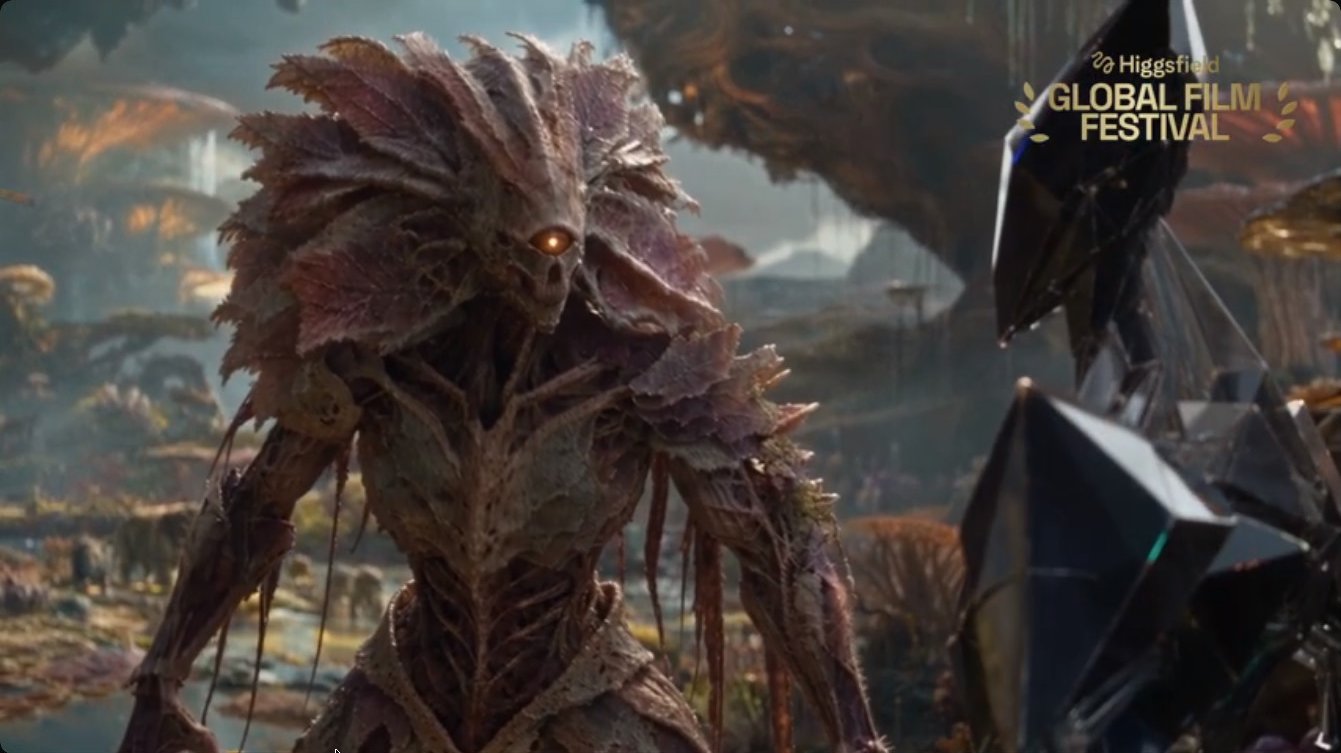
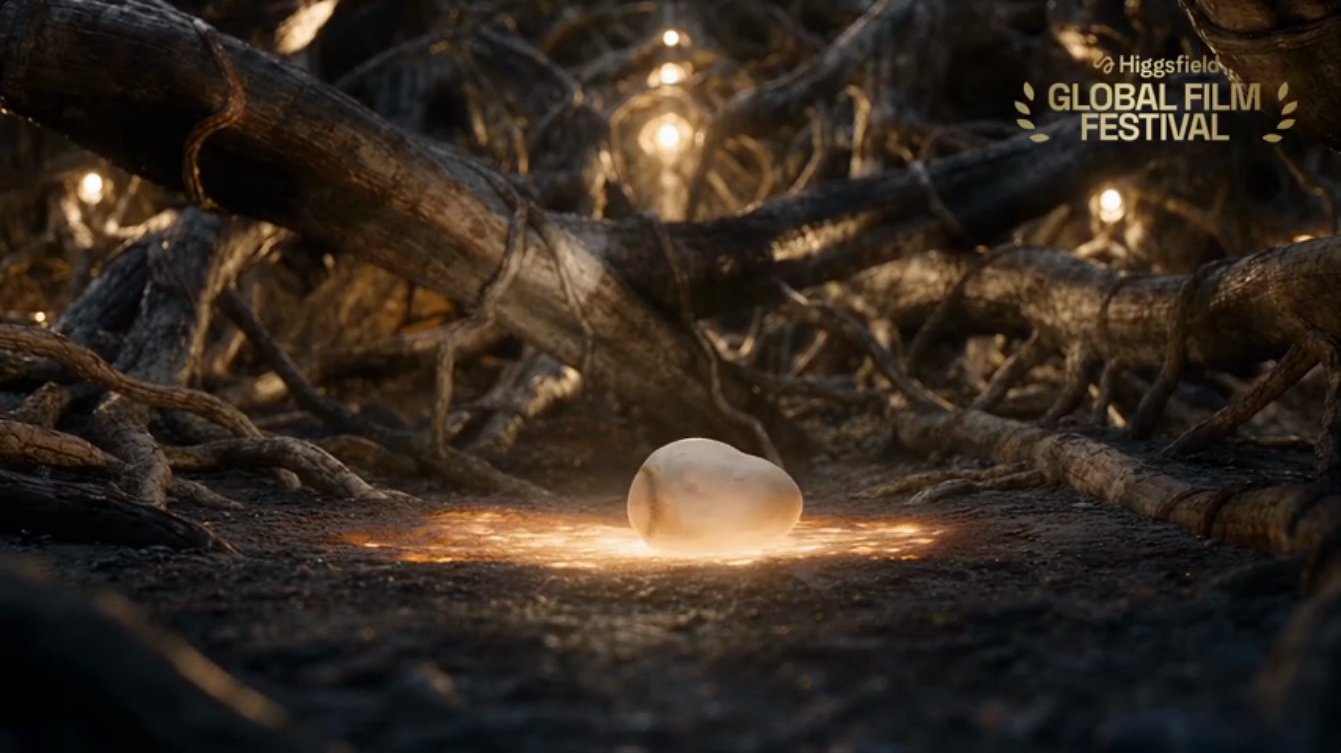
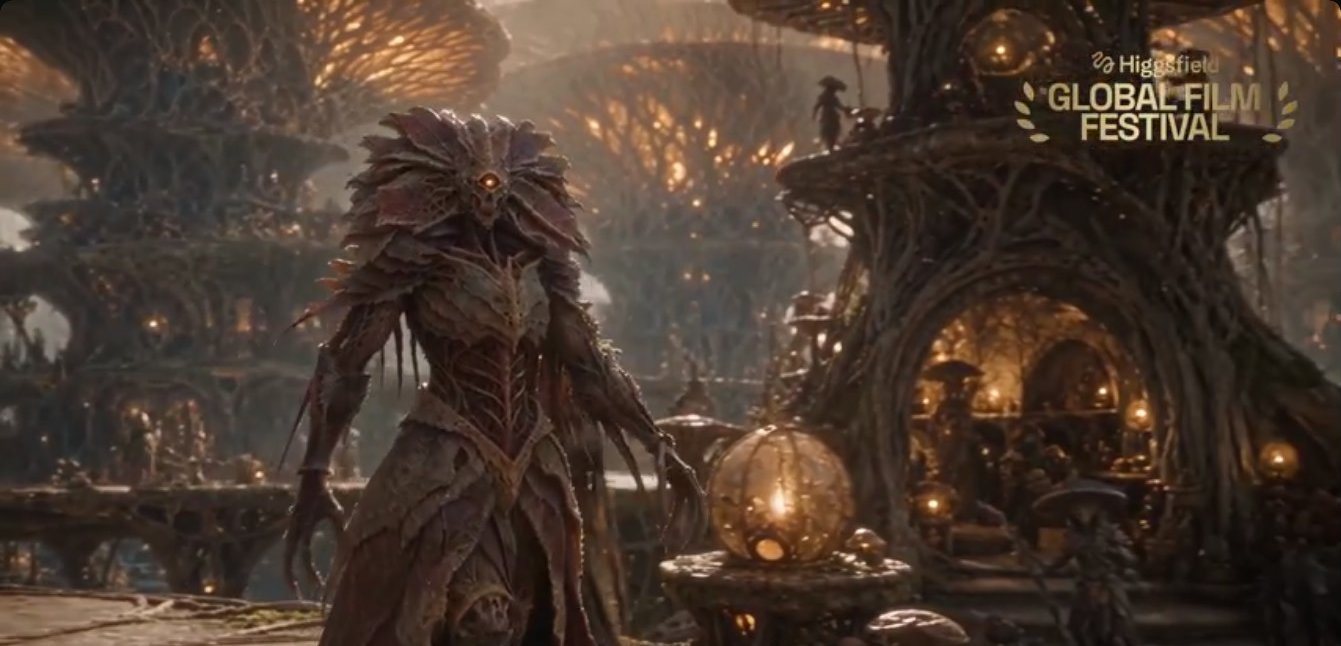
The project’s own description sets the terms: “In a world where death takes root, an ancient fungal civilization guards the mysteries growing beneath the earth.” The film begins with a glowing white egg, or seed, lying on a forest floor among roots and moss, and a psychedelic electronic score that will carry the entire film — there is no dialogue at any point, intelligible or otherwise. Then the world opens: a Mushi city in warm amber light, giant luminous mushroom caps, bridges, tall fungal figures. At its centre is Ani, a layered gill mane around her head, one dominant eye, a glowing orb beside her, among mushroom-hatted figures of her own kind. Nothing is explained. Everything is shown. For its first stretch, showing is more than enough.
The Enemy Is Crystal
The other civilization announces itself at 1:49: the first Vetriform in full — a black, crystalline, angular humanoid, faceted like cut stone, with a thin slit of rainbow-gold light running down its face, standing in a misty fungal landscape. The film’s whole argument is in that contrast, and it needs no words: the organic against the crystalline, growth against geometry, warm amber against cold black. Memory, conflict and transformation are the brief’s stated themes; what the film actually delivers is a mood of two kinds of matter regarding each other across a dying world.
Best Scene (~2:00)
Face to face in the misty valley
Ani and a Vetriform meet over mossy, fungal ground. Her chest glows with tiny orange embers; its spindly black crystalline legs blur in motion beneath it. It is the first direct confrontation, and the two stand at roughly equal scale — neither a monster towering over a victim nor a hero facing down a giant.
Everything the film is about is held in this one frame, in silence: two kinds of life, two kinds of matter, meeting in the mist. That it needs no dialogue is not a limitation. It is the point.
The Descent Turns Dark And Cold
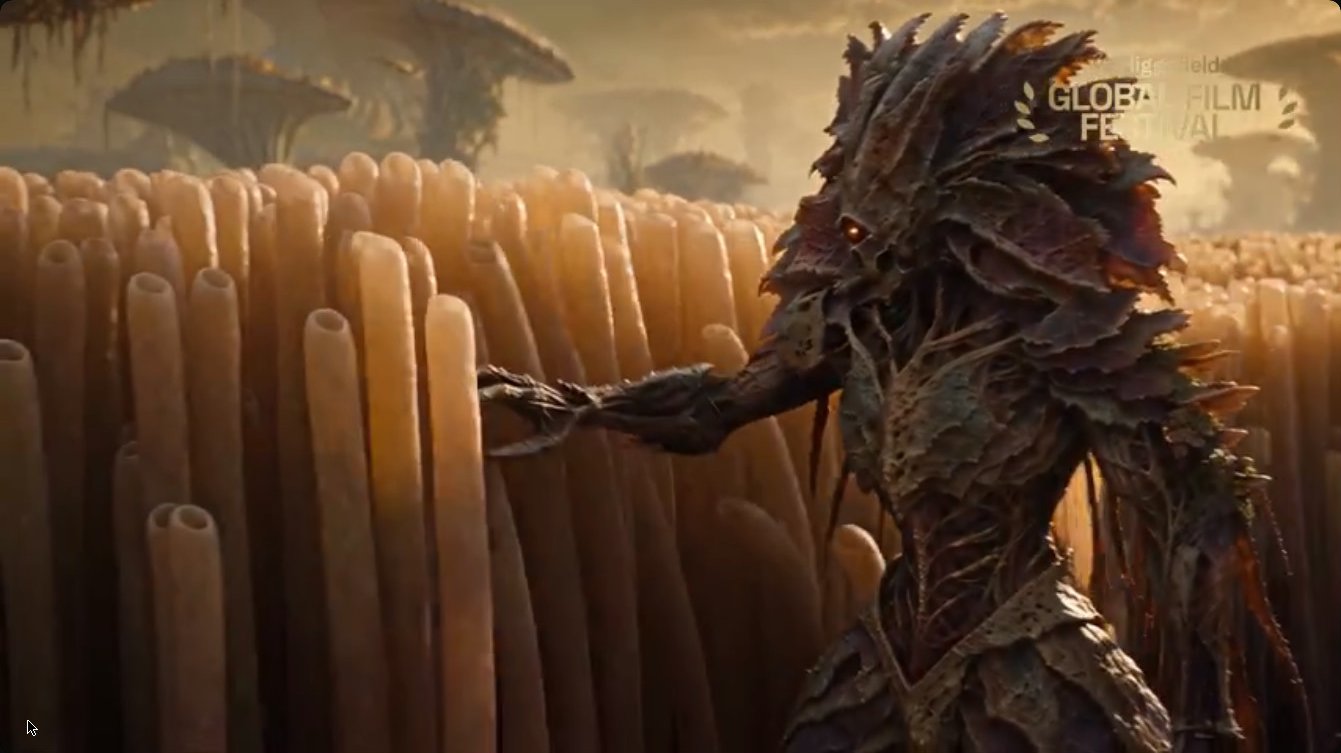
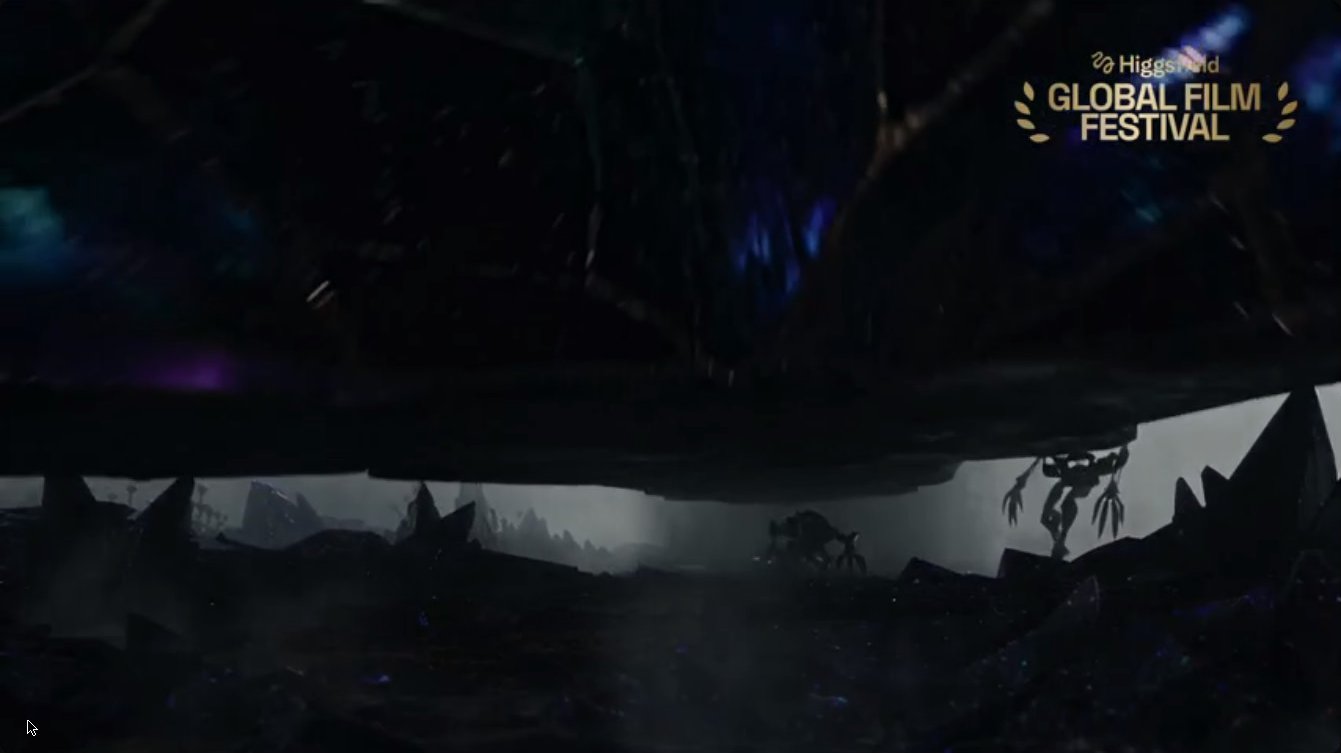
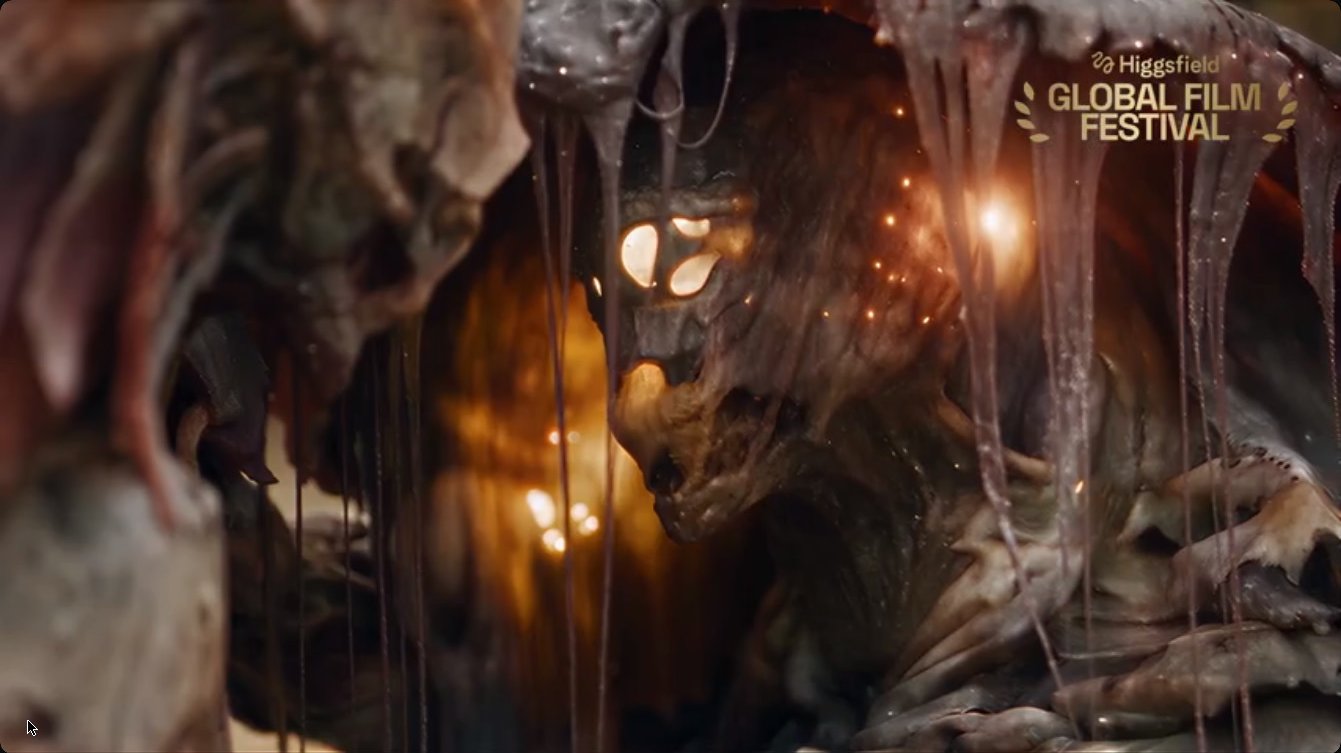
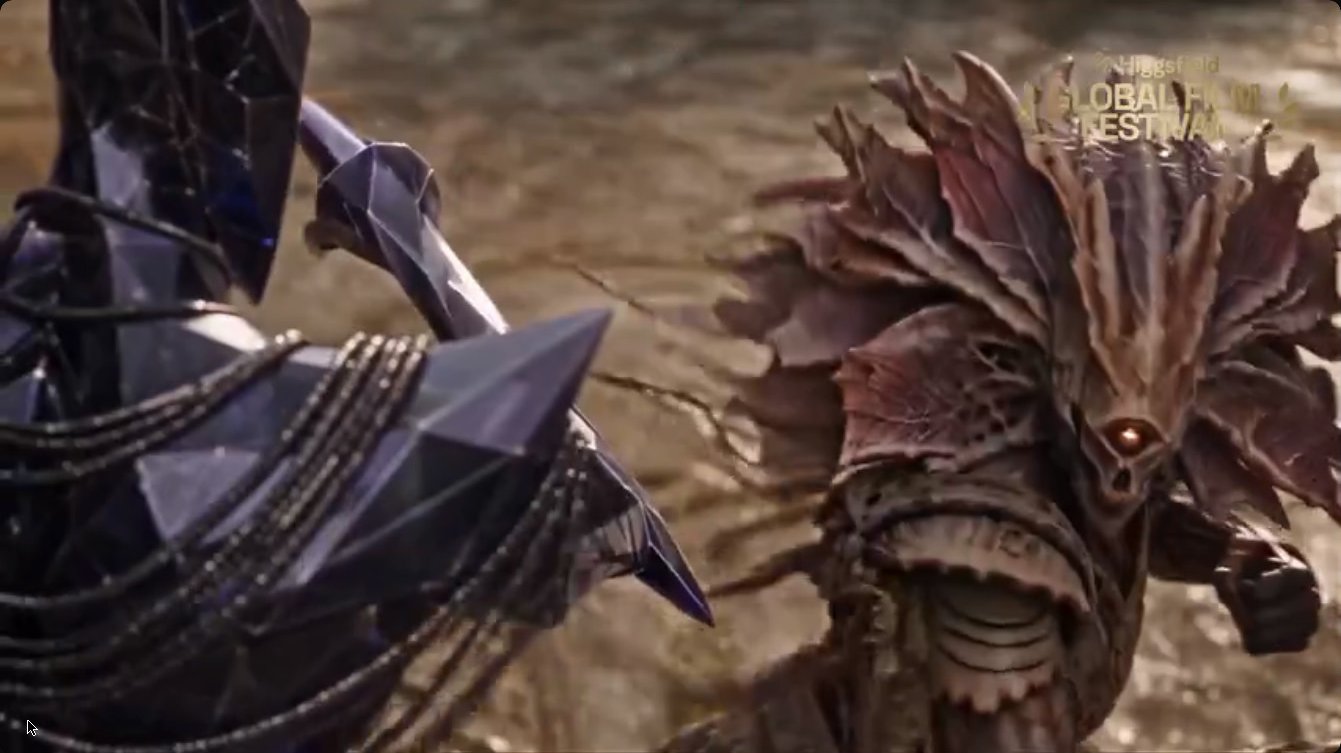
From there, Ani reaches toward a field of tall, pale, tube-like stalks — and then the descent darkens. At 6:23 we see the Collisi from below: a vast black crystalline structure, obsidian-dark, with a small spindly creature hanging underneath it against a pale horizon. At 9:23 comes the film’s most frightening image: a grotesque fleshy skull-face with glowing oval eyes, dripping membranes and tendrils, embers drifting in an orange-lit organic tunnel. It is body-horror-adjacent, and it is the main reason for this film’s PG-13 rating — there is no violence, no gore and no offensive word in it, but that face could genuinely frighten a young child. At 12:23, Ani and a Vetriform meet again in close confrontation on dusty ground, face to face, at parity.
The Skull With One Eye
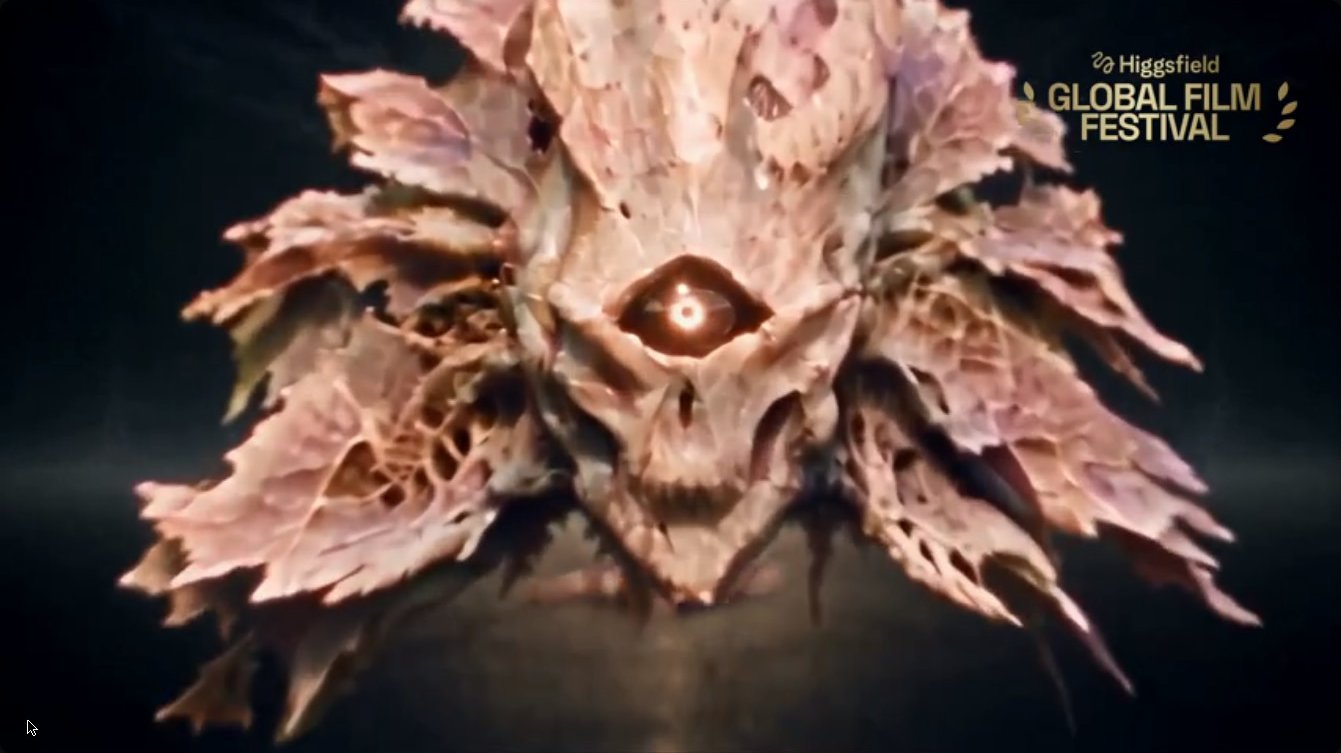
At 15:23 the film arrives at its emblem: a huge pale fungal skull, or mask, with a single glowing orange eye at its centre, layered petal-and-gill fronds around it, against black. Is it Ani, transformed? Or is it the Heart itself — the thing the title promises, waiting below? The film does not say, and I won’t pretend to know. What I can say is that the single eye has been the film’s through-line: it survives even the extreme transformation at ~1:30, where Ani’s face becomes skull-like, all bone ridges and fronds, and the one orange eye still burns at its centre. Whatever changes in this world, the eye remains. As I read it, that is the closest the film comes to a statement about identity — but it is my reading, not the film’s explanation, because the film offers none.
Morphing Is The Method — Mostly
Judging the AI craft in a film like this takes care, because transformation is its subject. Ani literally transforms on screen; a world of growing fungus is supposed to shift and swell. So I do not score dream-logic as error. But there is a difference between a designed transformation and a character who is simply not the same shape twice, and this film crosses that line often. Ani’s anatomy morphs between shots — her gill mane, limbs and silhouette change shape and number. The Vetriform’s crystalline facets shift and blur in motion, clearest around 2:19. The scale of the giant mushroom structures against the figures is inconsistent from cut to cut, and small background Mushi melt indistinctly into the landscape. The fleshy face at 9:23 has asymmetric, melting features that read as both deliberate design and AI morphing at once — which is, in miniature, the whole film. I watched in the player’s SD setting, so some softness is the stream’s, not the film’s. What remains is a world that feels unstable in ways that go beyond its intentions — forgivable in a work in progress, but worth naming.
And Then, Black
After the skull at 15:23, the music builds — processed, chant-like vocal textures rising in the mix, music rather than speech — and at about 18:23 the picture fades to black. It stays black until the player stops. No title card, no credits, no closing image, no explanation of what waits below, no victory and no defeat. In a finished film, that would be a failure of nerve. In the work in progress its creator honestly declares this to be, it reads as a page torn out mid-sentence. I am scoring the film I was shown — while noting, as its maker does, that the film I was shown announces itself as unfinished.
Final Thoughts
The Heart Below is the most visually daring film in this batch — a fungal world of real beauty and genuine dread — and it is, by its maker’s own account, not finished yet.
This is wrexon’s only project on the platform, and as a first showing of a world it is an extraordinary piece of imagination. I would recommend it to viewers who love abstract, image-led science fantasy and can meet a work in progress on its own terms: come for the world, not yet for a story. I hope wrexon finishes it. A world this vividly grown deserves an ending.
Scene Breakdown
0:00 — A glowing white egg, or seed, on the forest floor among roots and moss; the electronic score begins.
0:22–0:40 — The Mushi city: giant luminous mushroom caps, bridges, and Ani — gill mane, one dominant eye, a glowing orb.
~1:30 — A transformed Ani: a skull-like face, bone ridges and fronds — and the same single glowing orange eye.
1:49 — The first Vetriform in full: black crystal, faceted, a thin slit of rainbow light down its face.
~2:00–2:19 — Best Scene: Ani and the Vetriform face to face in the misty valley, her chest glowing with embers.
3:23 — Ani reaching a hand toward a field of tall, pale, tube-like stalks.
6:23 — The Collisi from below: a vast black crystalline underside, a small creature hanging beneath it; the descent turns dark and cold.
9:23 — The fleshy skull-face in an orange-lit organic tunnel — the film’s scariest image.
12:23 — Ani and a Vetriform in close confrontation on dusty ground.
15:23 — The pale fungal skull with a single glowing orange eye — Ani transformed, or the Heart itself.
~18:23–19:26 — Black. The music fades. No credits.
~2:19 — The clearest tell: the Vetriform’s crystalline limbs and facets shift and blur while it moves.
Throughout — Ani’s anatomy morphs between shots — the gill mane, the eye, the limbs and the silhouette change shape and even number; the giant mushroom structures change scale against the figures from cut to cut; and small background Mushi figures melt into the landscape.
9:23 — The fleshy skull-face’s features are asymmetric and melting — part deliberate design, part morphing; in a film this abstract the two are honestly hard to separate, and the watch was in the player’s SD setting, so some softness is the stream’s.
An entry in the Higgsfield Global Film Festival. The creator’s project page describes the film as currently in production — “a record of a world while it is being discovered” — and this review judges the version shown on those terms.
There are no reviews yet. Be the first one to write one.