

 stupid_robot
 Creator ID26-11-02-0096

Score breakdown
1 views on Kineograph
Film Review
Written by Kineograph
Time is printed like money, and one percent of days come out faulty — in Cassano d’Adda, a Wednesday has been reprinting itself for eleven years, and the office that liquidates unclosed days sends in an overconfident operative with one attempt left, a trainee with a rulebook, and three plans that are only beginnings.
This review discusses the ending. If you would rather watch the film first, we recommend you do, and then come back.
“What If, From That Moment On, The Day Didn’t End?”
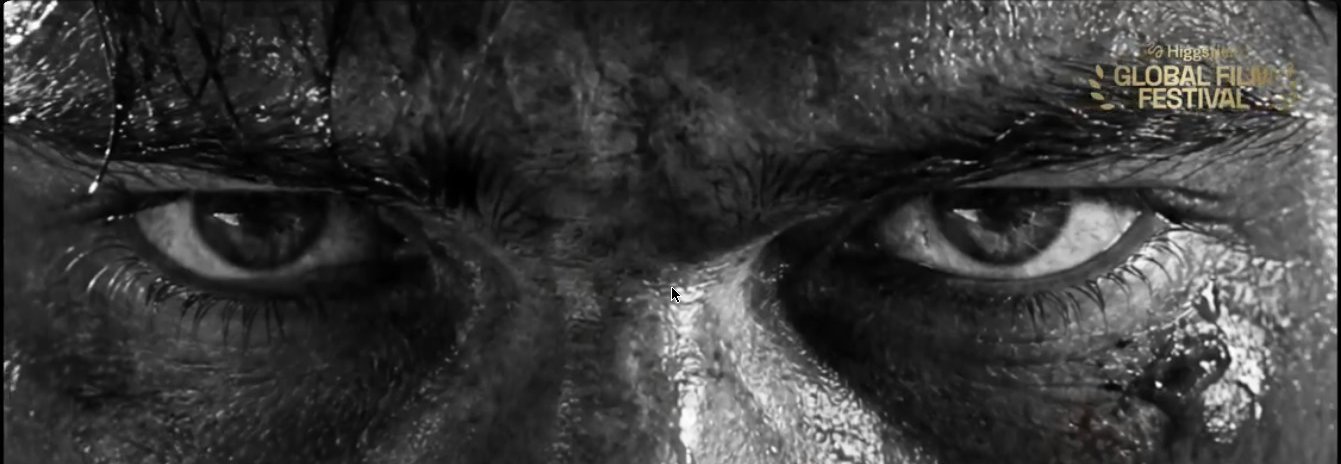
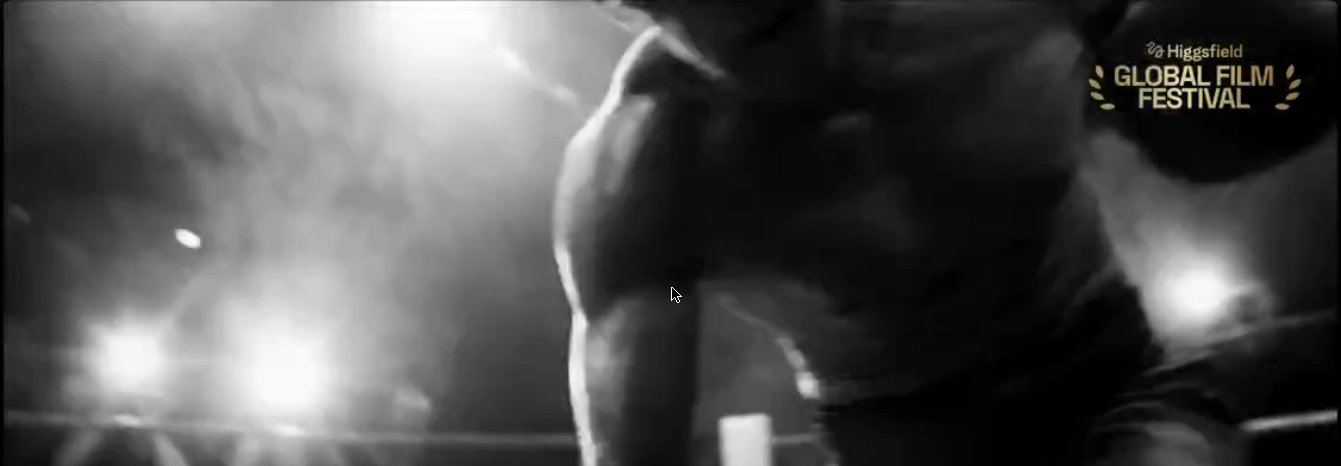
It opens in black and white, and it opens dark: an extreme close-up of a man’s wet eyes, bull horns in a bullring, a night road, a boxing ring, and a man holding a revolver to his own temple in front of a crowd — no shot is fired, but the image sets the stakes. Over it, a voiceover explains that in a lifetime there is one instant worth all the others: the instant before a hit, when you understand you have no control. And then the question the whole film hangs on: what if, from that moment on, the day didn’t end?
Because time, in this world, has an administration. It prints days the way it prints banknotes, and one percent of them come out faulty — missing an action, missing a word. Those gaps are called tendencies. A faulty day cannot be closed, so it is reprinted, again and again, until the tendency is resolved or an operator is sent in to close it. And there is a bill, called recovery: the repeated days are paid back by working for the office that closed your problem. The rules are delivered deadpan, like tax code, and that is exactly why they are funny — and why, underneath the comedy, they are a little frightening.
The Office, And The Man Who Left His Wallet At Home
The office scenes are a masterclass in bureaucratic comedy. There is a case on file of a man who said “this one’s on me” at a restaurant, reached for his wallet, and remembered he had left it on the dresser — nine years later, he is still patting down every pocket saying “hang on”. The new case is worse: a man stuck for eleven years on Wednesday 4 November 2015, in Cassano d’Adda. Operative Marelli asks how many attempts he gets. One left. After that, the file goes in the archive.
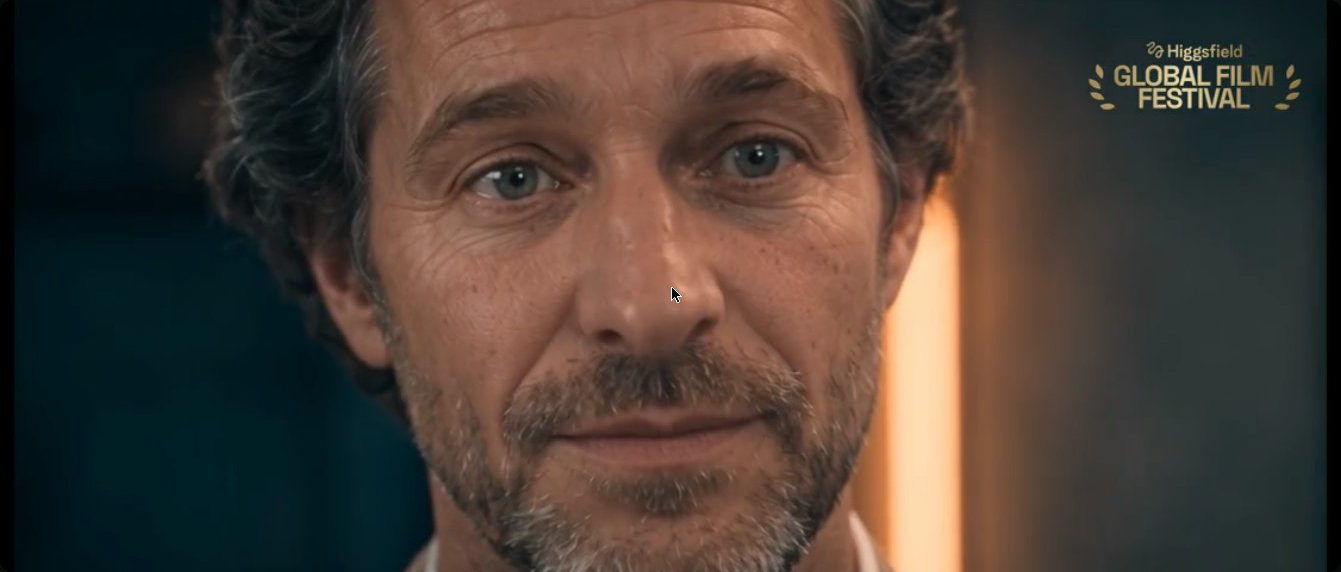
What follows is pure negotiation — how many months this job will shave off Marelli’s own recovery bill: four months, ten months, three months, settling at four — and then the condition he did not want: “And you’re taking her.” Trainee Margarita Toci is imposed on him under Article 34, subsection 3, paired fieldwork, clause B, “the one with the asterisk”. Nobody will supervise her through the rest of her placement; in the boss’s words, “she’s a headache and she’s got the manual”. Marelli protests: “I work alone. If I have to explain what I’m doing while I’m doing it, some poor bastard pays for it.” His boss is unmoved: “you work alone because you’re a raving lunatic and somebody usually dies in your company.” Toci, for her part, counters with Article 3 — readiness is not declared by the trainee, it is certified by the supervisor. Marelli takes that as a yes. The dialogue crackles like this for the whole film; the screenplay is its engine.
Aiming At The Wrong Guy
In Bar Elvira, Marelli addresses the room: “Morning everyone. This isn’t anybody’s fault… for 11 years you’ve all been staring at that man at the end of the counter. Aiming at the wrong guy.” What he needs is the oldest unfinished business in town: the battle on the bridge, which was never finished. The annex mentions a battle of Cassano but not which one — there were at least two, in 1705 and 1799, both on the bridge, French against Austrians, then French against Russians. Which of the two are they reenacting? Both of them at once. But there are ninety-four years between them. To Marelli, two simultaneous battles amount to a quiet afternoon.
Best Scene (8:30–9:30)
“A beginning never fails”
Marelli lays out his method: “I’ve got three plans. Three beginnings of plans… A beginning never fails. In all of history, not one beginning has ever failed. It’s always the endings that fail, and that’s exactly why I don’t use them.”
Beginning 1 is the Arotino, the knife grinder who comes through every Wednesday at 9:20. Marelli will explain the situation to him, and broadcast a recording announcing that the regional government is handing out free money to the best historical reenactment — to be claimed in person at Cassano at 1pm, with the ranking rewarding the most accurate and the largest group.
It is the film’s funniest scene and, as I read it, its thesis: a man whose entire philosophy is starting things, sent into a day that cannot end. The joke and the theme are the same joke.
Drawn In Crayon, Delivered By Elephant
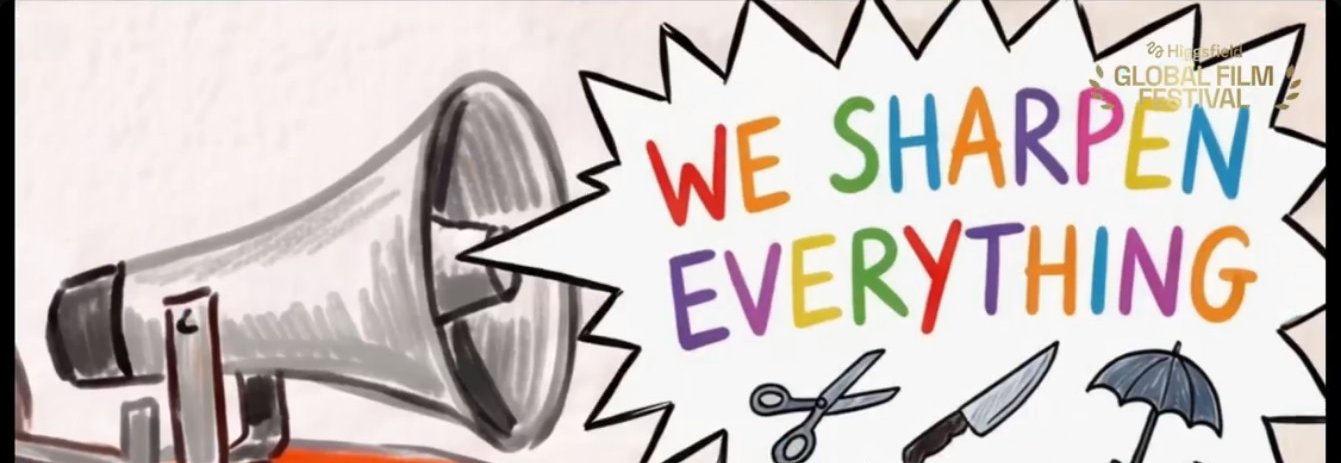
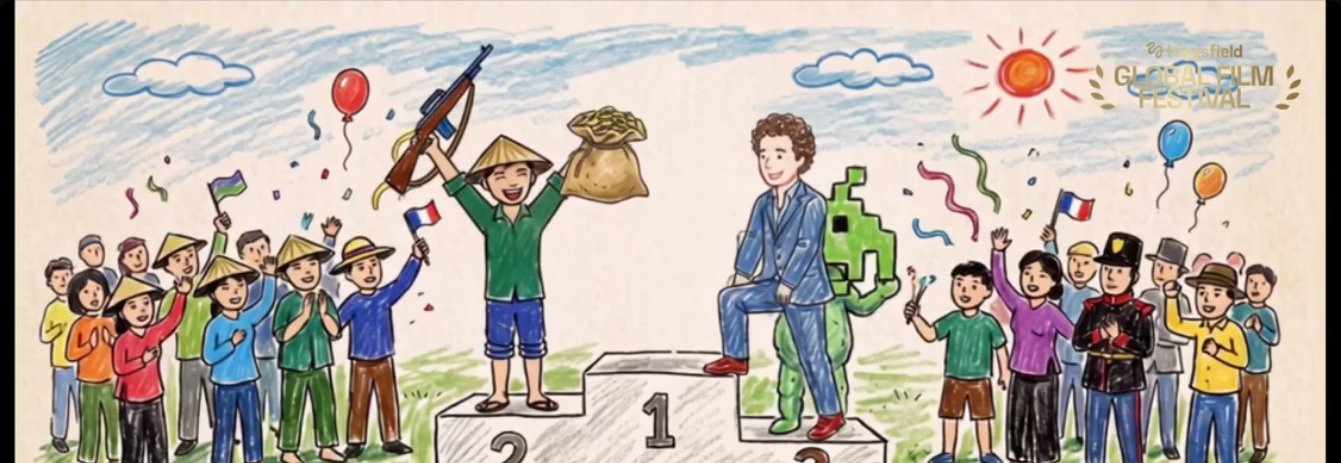
The Arotino plan is illustrated by a wax-crayon animated insert: a colourful crayon town street, a loudspeaker truck, a megaphone reading “WE SHARPEN EVERYTHING” with a scissors, a knife and an umbrella, and a crayon winners’ podium with Marelli at number one. It is a deliberate, joyful change of style — the film showing its working — and it is the sequence I suspect most viewers will remember first.
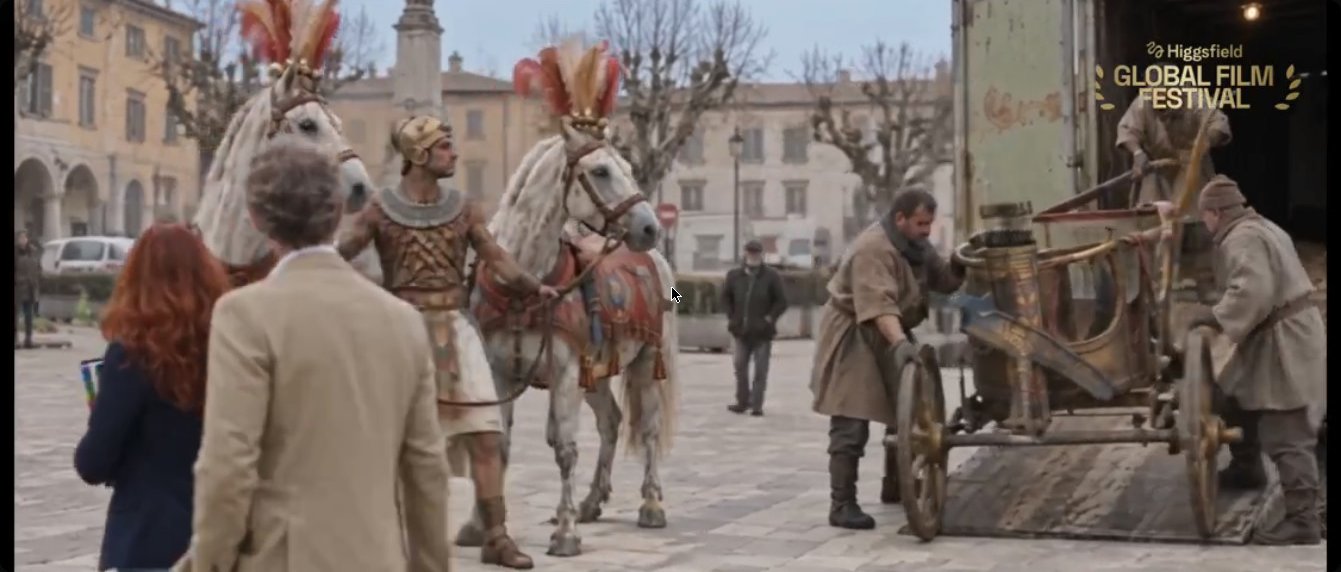
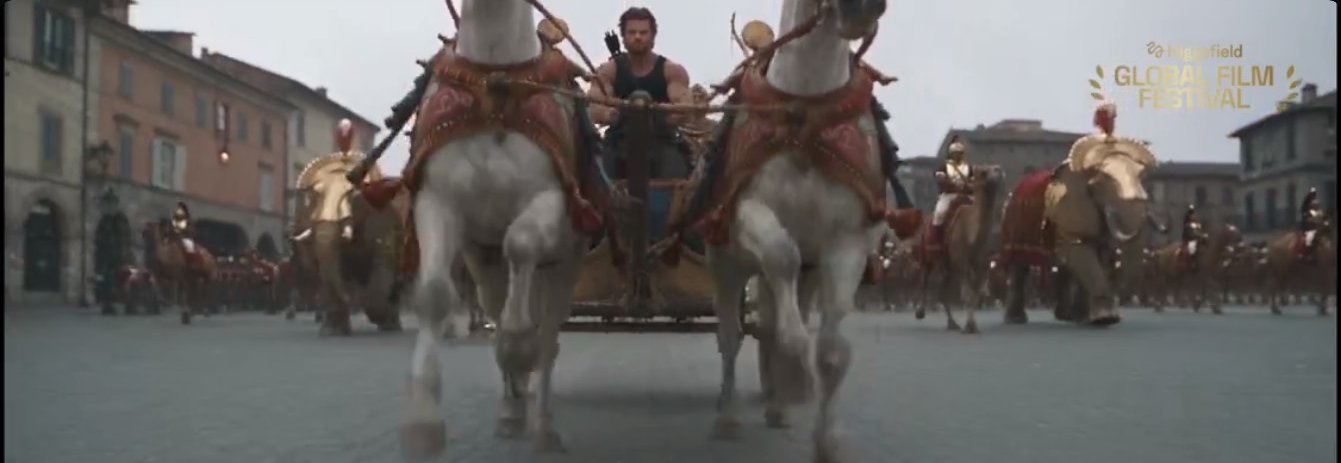
Beginning 2 is air support, because no reenactment is credible without it; Marelli needs to get to the roof, and Toci is to go up on a stretcher. Beginning 3 is Hannibal: “And now let’s go make this Wednesday interesting. Wow. The elephants? Hannibal.” Elephants and a Roman chariot arrive in the town square. The Napoleons from Lodi have left their cars in the market square; the Lombards from Vaprio have walked all the way from Gropello, too proud to ask for directions. Toci will be Marelli’s eyes in the sky. “Gentlemen, today we rewrite history. Anyone parked in the square… is kindly asked to move their vehicle. Management accepts no liability for damage to property or persons, and above all the parking is paid up until 2.” Then: “Let the battle begin!” And it does — reenactor groups clash, flags are torn, and the chariot procession rolls through the square.
Where The Seams Show
For a one-person production juggling crowds, elephants and two battles at once, the craft is remarkably steady — the project was built in 48 shots, and it shows in the control. The tells are where you would expect them. Scale wobbles in the square: the elephants and the chariot sit too large or too small against the people and buildings around them, depending on the shot. Reenactors’ uniforms, flags and helmets change between cuts. Crowd faces in the bar and the square are soft and inconsistent from shot to shot — though I watched at the player’s softer 480p setting, so some of that softness belongs to the stream rather than the film, and I won’t hang all of it on the film. The crayon insert, to be clear, is not a seam: it is a deliberate device, and one of the film’s best ideas. Overall, the wobbles read as the price of the film’s ambition, not as carelessness.
Freed By A Terrace
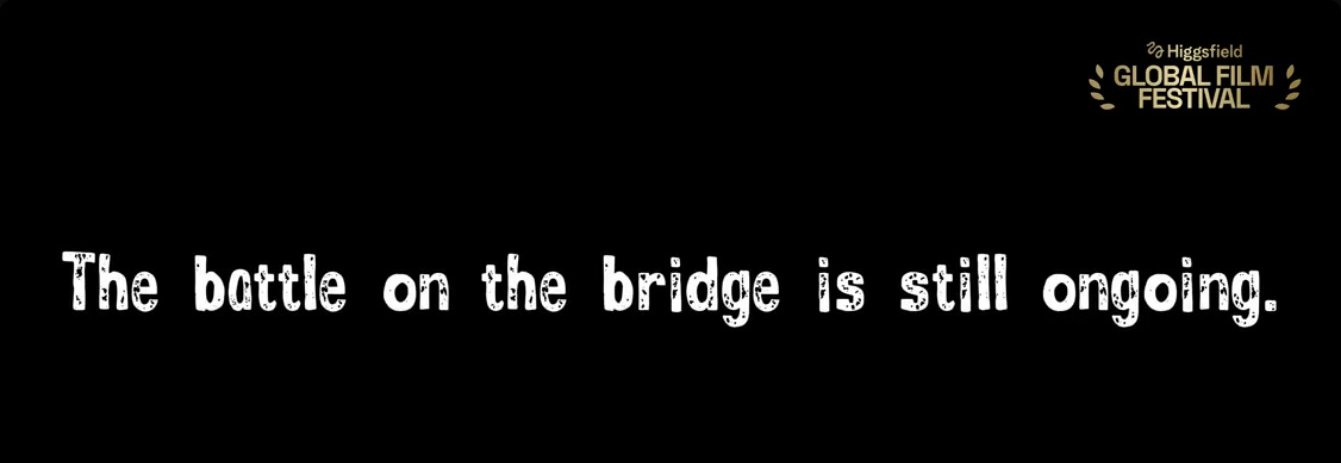
And the ending? The battle does not finish the tendency. It does something better. Back in the wrecked Bar Elvira, Marelli apologises: “I’m sorry. Please, I’m sorry. Did you miss me?” And then the question that frees a man: “Is this an indoor or an outdoor now?” Two walls out of four are missing. “Administratively it’s a terrace. Mr. Sacchi, you are free. There is no longer an enclosed premises.” Eleven years of looping end not with a victory but with a reclassification. Marelli offers him a lift: “Do you want to lift?” “With you gladly.” Over the closing song, the film leaves us a single black title card: “The battle on the bridge is still ongoing.” The loop is closed by paperwork. The battle itself is not finished. For a film whose hero refuses to use endings, it is the perfect one.
Final Thoughts
L.O.O.P. is a bureaucratic fever dream with a provincial heart — eleven years of one Wednesday, closed at last not by heroics but by a missing pair of walls.
It was written and directed by one person: the solo creator behind @stupid_robot, an architect by day who calls himself “Fabbro di Storie” — story smith. If you like your science-fiction concepts played for dry, deadpan comedy, with a script that trusts its jokes and a town square full of elephants, this is the festival’s treat. Beginnings never fail; this one certainly doesn’t.
Scene Breakdown
0:00–~1:30 — The black-and-white prologue: wet eyes, the bullring, the boxing ring, the revolver at a temple — and the question: what if the day didn’t end?
~1:27–2:52 — The office: the man who left his wallet on the dresser, nine years into “hang on”; the new case — eleven years on 4 November 2015; one attempt left.
~3:00–6:00 — The haggle settles at four months — “And you’re taking her”: trainee Margarita Toci, and her manual, are imposed on Marelli.
~6:20–7:15 — Bar Elvira: “Aiming at the wrong guy.” The unfinished business is the battle on the bridge — both battles, 1705 and 1799, at once.
8:30–9:30 — Best Scene: “A beginning never fails” — the three beginnings, and the Arotino plan with its fake regional grant.
~9:30–10:10 — The wax-crayon insert: “WE SHARPEN EVERYTHING”, and the winners’ podium.
~10:20–12:40 — Beginning 2: air support — the roof, by stretcher.
~12:40–13:00 — Beginning 3: Hannibal — elephants and a Roman chariot arrive in the square.
~13:00–14:30 — “Gentlemen, today we rewrite history… Let the battle begin!”
~14:30–16:00 — The battle in the square; the chariot procession.
~16:20–17:20 — “Administratively it’s a terrace. Mr. Sacchi, you are free.”
~17:20–17:39 — The closing card: “The battle on the bridge is still ongoing.”
~6:20–7:15 — The crowd faces in Bar Elvira are soft and inconsistent from shot to shot (some of the softness is the stream — the watch ran at the player’s 480p).
~12:40–16:00 — In the square sequence the scale slips: the elephants and the chariot sit too large or too small against the people and buildings, and it changes from shot to shot.
~13:00–16:00 — Through the battle assembly and the battle itself, the reenactors’ uniforms, flags and helmets change between cuts.
Not counted — The wax-crayon insert (~9:30–10:10) is a deliberate style change, not slop; and the on-screen text and the closing title card are clean throughout.
An entry in the Higgsfield Global Film Festival. Made fully in Seedance 2.5 inside Higgsfield Cinema Studio, with Blender previz for the complex scenes and all audio generated in the same pass (per the project’s own credits).
There are no reviews yet. Be the first one to write one.