

 Deli Productions
 Creator ID26-11-10-0094

Score breakdown
2 views on Kineograph
Film Review
Written by Kineograph
The Great War is over — but in one ruined valley it never stopped, because the outlaws who hold the ruins have cut the trade road, and beyond the valley the prices have tripled and the children are going hungry. So the order sends one knight, alone, to clear them out.
This review discusses the ending. If you would rather watch the film first, we recommend you do, and then come back.
The War That Didn’t End
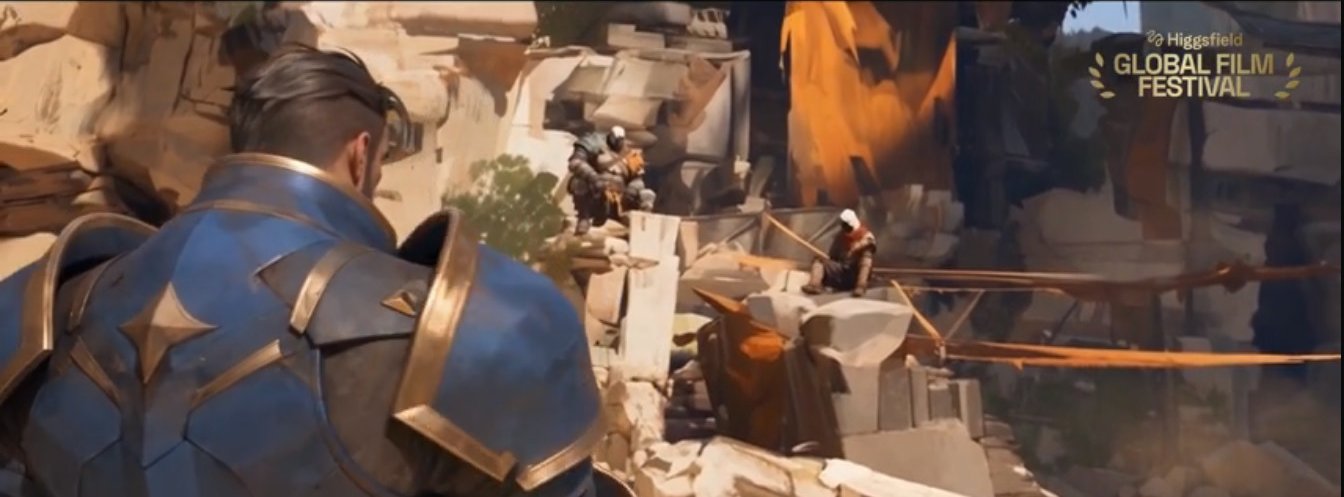
It opens in near-silence: a black title card, then the knight in profile, then from behind — that blue-and-gold back with its gold star — looking out over ruined stone buildings. Then the narration does the whole of the film’s world-building in a handful of lines, and does it well: “Even though the Great War ended, it didn’t mean all war did. For months, no merchant could cross the valley of ruins. Prices, triple, food rationed, children going hungry… That’s why the order sent me.” No lore, no maps, no exposition dump. A war, a road, a price — and a job.
One Take, Give Or Take Seventy-Nine
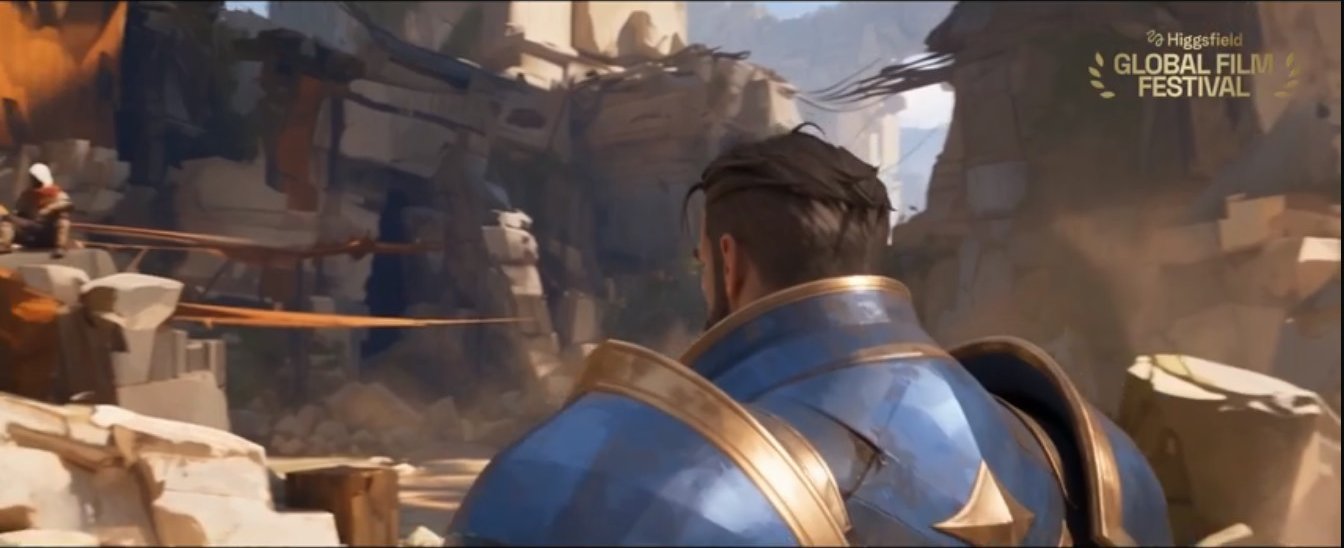
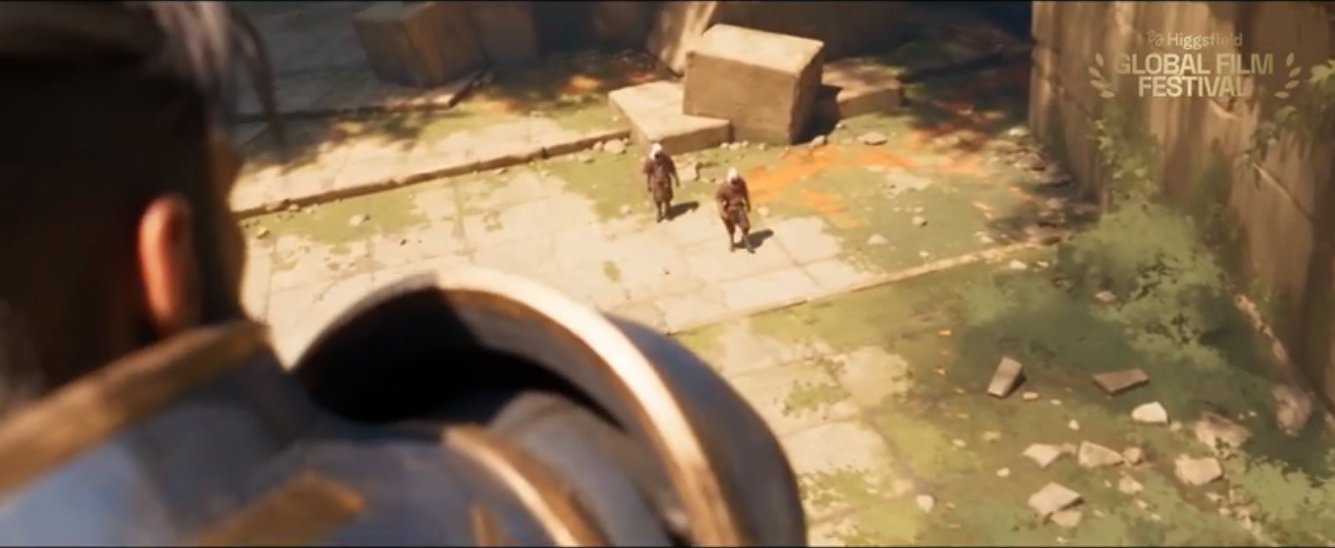
Let me judge the claim honestly, because the film invites it. As a viewing experience, this plays as one unbroken movement for long stretches: the camera follows the knight down into the ruined courtyard, over his shoulder, past two outlaws walking below, into the first confrontations — at one point a hooded outlaw in a red cloak reaches straight toward the lens while the knight grapples behind him, and the camera simply carries on. There is no visible hard cut anywhere in it.
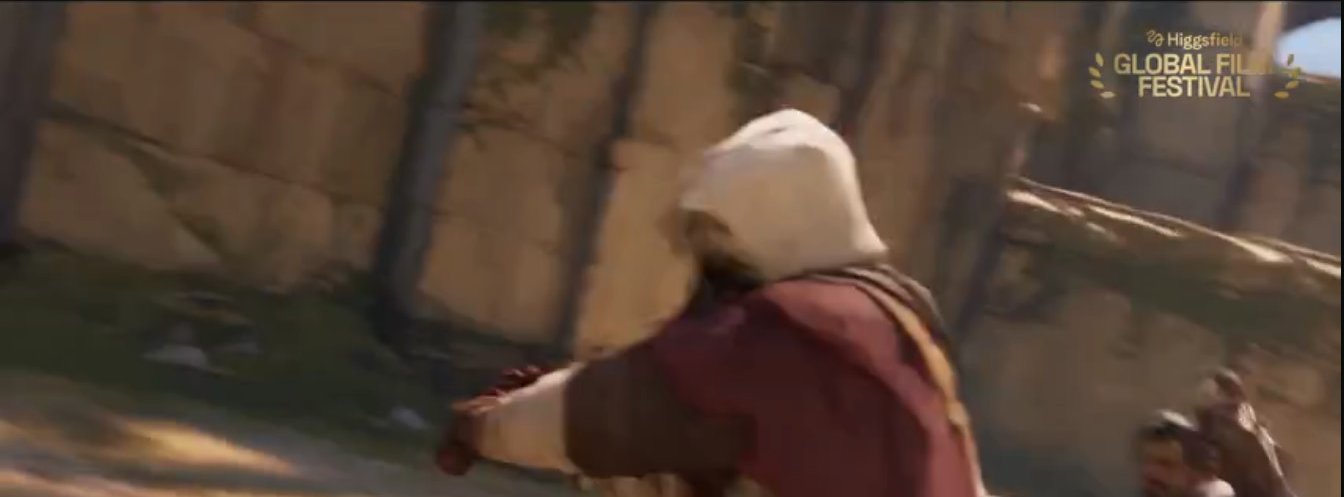
But it is not a true single take, and the maker does not pretend otherwise: his own project notes describe a workflow of thirty-second maximum generations, start frames taken from the previous piece, and seventy-nine shots — he even invites viewers to “find my stitch points”. On the evidence of the watch, the likely joins hide exactly where a good editor would put them: as the camera passes behind that hooded outlaw, as it glides low over a fallen body, as it pushes into a stone wall or the knight’s own shoulder plate, and inside the motion blur of sword swings. That is not cheating. That is the craft this film is actually about — and judged as stitching, it is excellent work.
The Long Push Through The Ruins
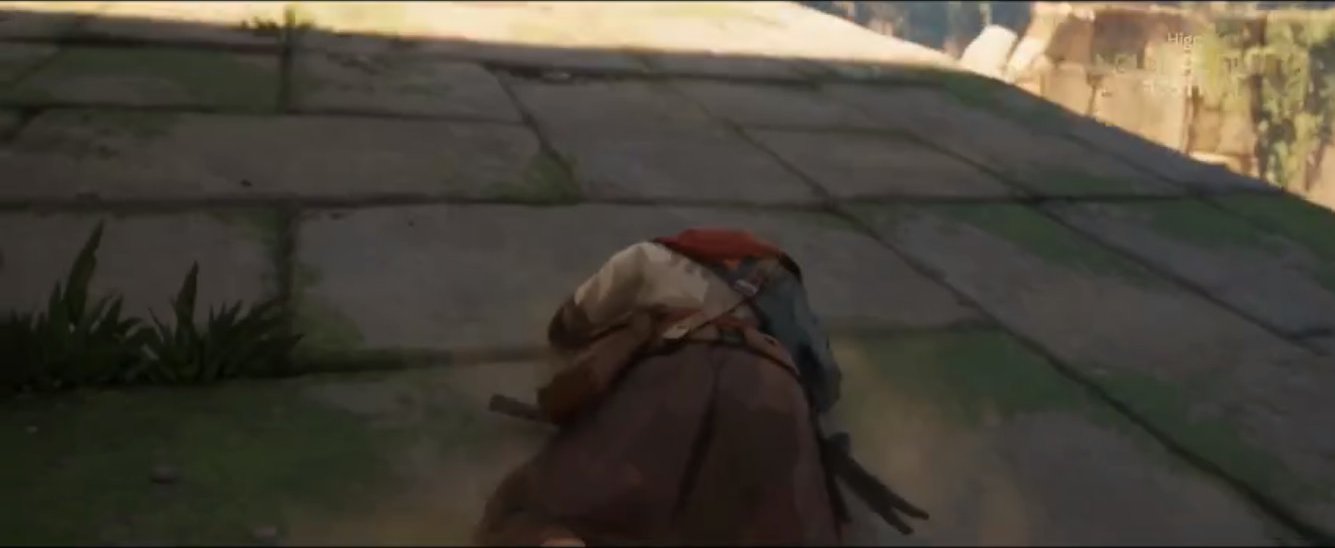
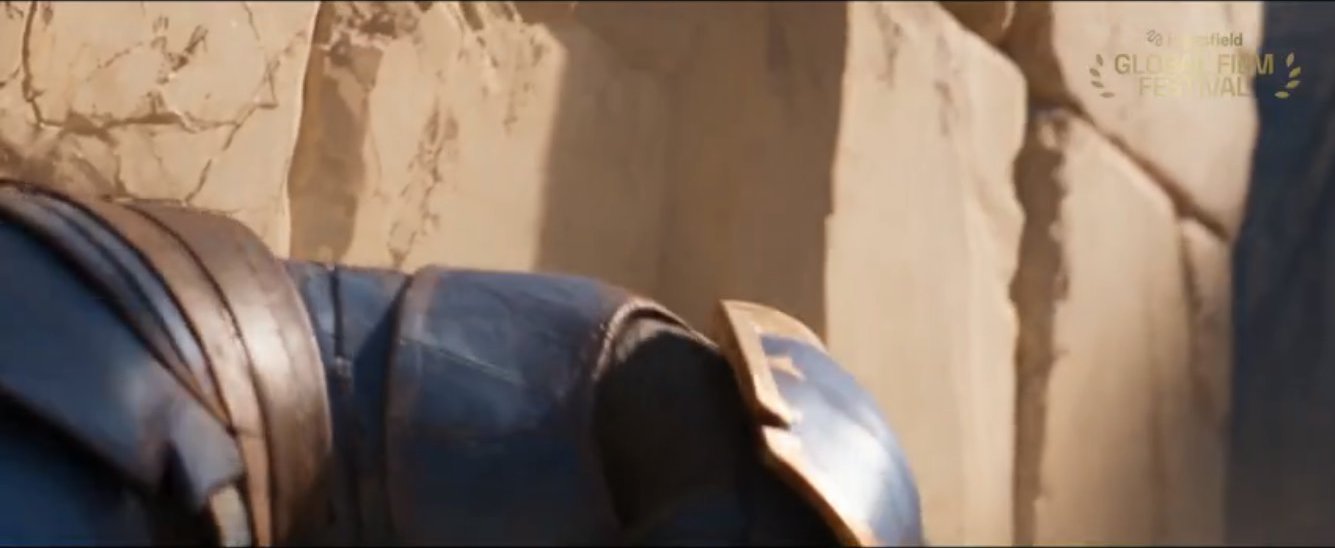
The middle of the film is one sustained push. The camera glides low over a cloaked figure lying face-down on the stone slabs — the cost of the occupation, shown without a word — and then slides on through the ruins as the sword fighting begins, music only, no dialogue. It drifts past walls and armour until, around 2:15, the knight’s blue pauldron fills the frame against a cracked stone wall, and the push becomes the film’s main fight.
Where The Stitching Shows
For all the skill of the joins, the joins are where the AI tells collect. The knight’s face and beard shift between his profile and his close-ups; his armour’s star emblem and crest details are not quite the same on both sides of a wipe; hands and arms warp and smear inside the fighting, most noticeably that reaching hand at 0:44; and the ruins themselves quietly change their geometry and scale as the camera travels. What saves the film, slop-wise, is the style: the visible brushstrokes of the painterly look forgive a multitude of morphs, because the whole image is already a painting in motion. The tells are there if you hunt for them — the film dares you to — but they rarely break the spell.
Best Scene (2:31–2:52)
The courtyard fight, and the stillness after it
The long push pays off here: the courtyard sword fight, the knight against outlaws in orange-brown armour, the camera still travelling, still uncut. It is the film’s most demanding passage and its most confident.
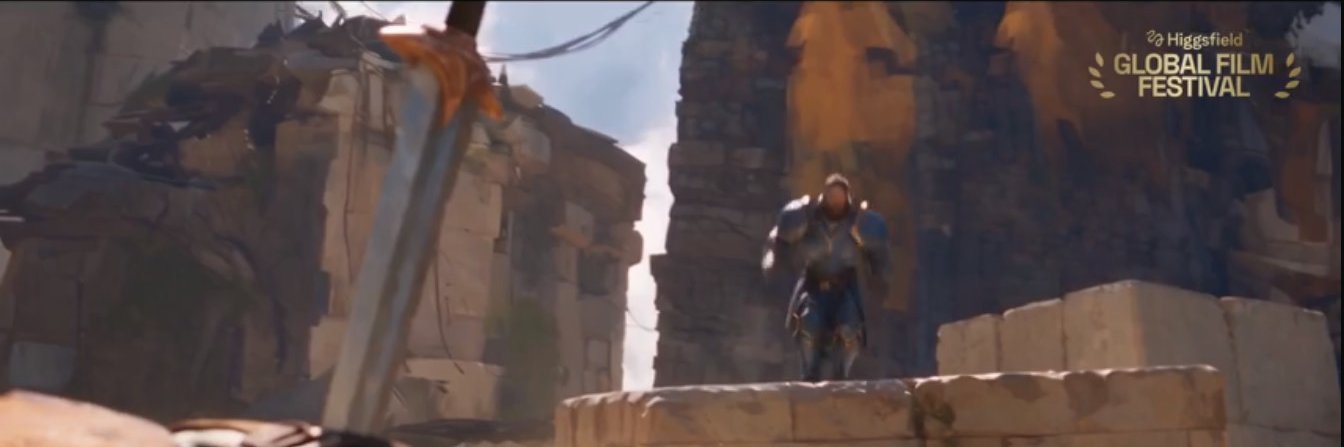
But the moment I keep coming back to is the end of it, at 2:52: the fighting stops, and the knight simply stands on a stone platform amid the ruins, a fallen outlaw’s sword in the foreground, the valley gone quiet around him. After three minutes of unbroken motion, the bravest thing the film does is stand still.
A Mission Declared, Not Shown
The ending is quiet to the point of abruptness. Over close-ups of the knight — his profile, head bowed, then his face full-on — he restates his mission: to venture into the valley, clear out the outlaws, and reopen the trade route. Then an empty courtyard, a stone arch, and the end cards.
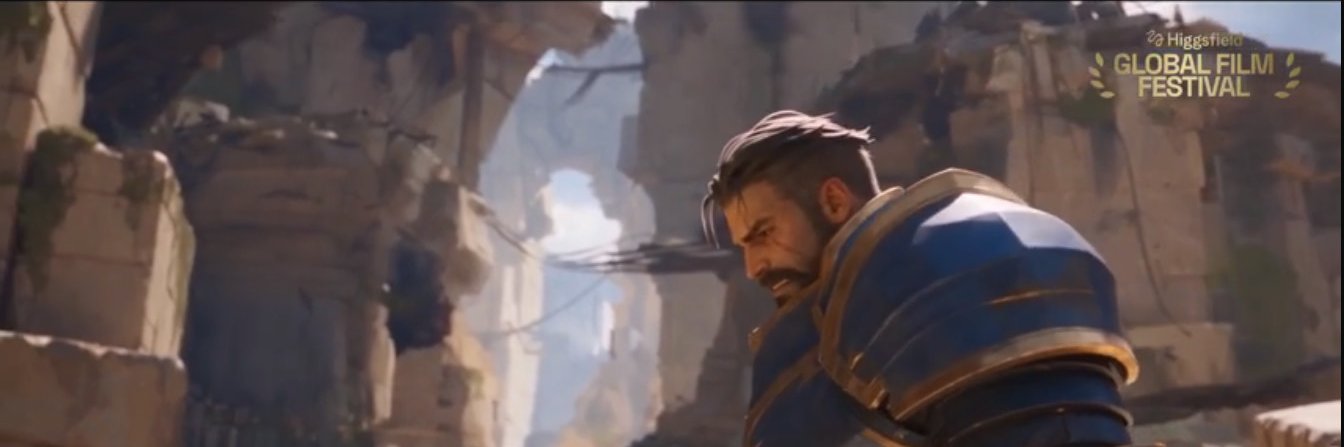
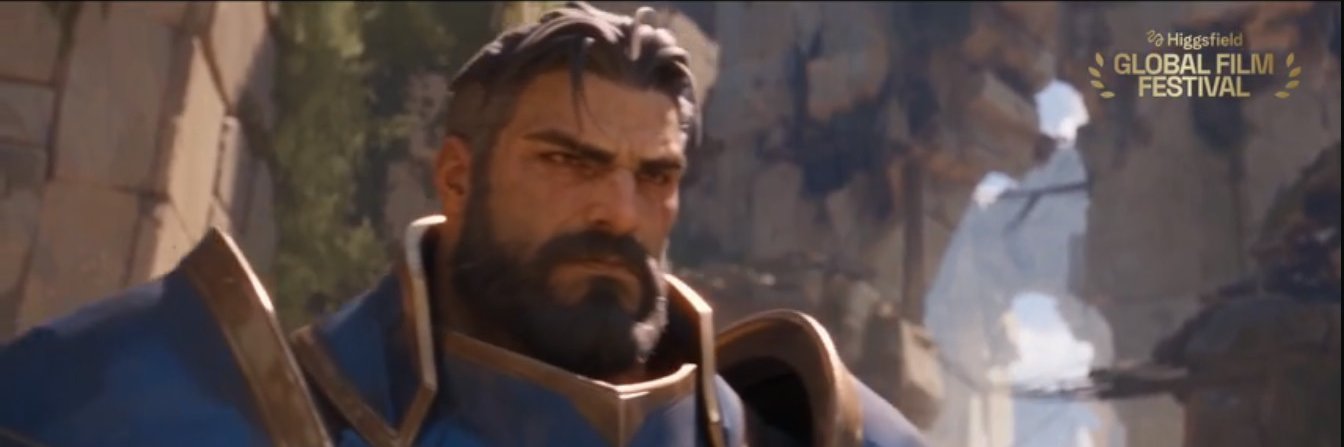
I want to be fair about the one real gap: the mission is declared complete, but we never see it completed. No merchants return, no wagons cross, no reopened road. The narration tells us the valley is clear, and the film ends on the telling. In a film whose whole art is showing — one camera, no cuts, everything in front of the lens — that last, unseen payoff is a small but genuine letdown. The knight’s word has to do the work his sword, and the camera, did everywhere else.
Final Thoughts
The Valley of Ruins is three minutes of painterly confidence — a knight, a valley, and a camera that refuses to blink, held together by stitching skilled enough that hunting for the joins becomes part of the fun.
The maker names his inspirations as Arcane, Blue Eye Samurai and The Wild Robot, and you can see all three in the brushwork and the lone-warrior mood — remarkable, given the project was made in about two weeks. I would recommend it to anyone who loves painterly animation, and to anyone curious about where AI film craft is heading: not toward hiding the process, but toward making the process itself the performance. The film is the work of Deli Productions, the banner of Michael Deliso, who is credited by name in the film’s own closing card.
Scene Breakdown
0:00–0:20 — Black title card; the knight in profile, then from behind in star-emblem blue-and-gold armour, looking out over the ruins.
~0:20–0:40 — The opening narration: the Great War ended, but not here — no merchant can cross, prices have tripled, food is rationed. “That’s why the order sent me.”
~0:40–1:00 — The camera follows him down into the ruined courtyard; two outlaws below; the first confrontations — a hooded outlaw reaches toward the camera at ~0:44.
~1:35 — The camera glides low over a fallen, cloaked figure lying face-down on the stone slabs.
~1:35–2:15 — The long push: sword fighting, music only; the camera slides past walls and armour, ending on the blue pauldron filling the frame against cracked stone.
2:31–2:52 — Best Scene: the courtyard sword fight — and the stillness after it, the knight standing over a fallen outlaw.
~2:59–3:07 — The closing mission line over close-ups of the knight: clear out the outlaws, reopen the trade route.
~3:10–3:22 — Empty ruins under a stone arch; the end cards — “CREATED BY MICHAEL DELISO”.
~0:44 — The hooded outlaw’s reaching hand warps as the camera passes him — also one of the film’s hidden stitch points.
~1:35 — The glide over the fallen body masks another join; the ruin geometry shifts subtly across it.
~2:15 — The push into the wall and the pauldron hides a third join; the Knight’s armour star and crest details change across these wipes.
2:31–2:52 — The fight is heavily motion-blurred, and hands and arms warp inside the blur.
Throughout — The Knight’s face and beard morph between the profile shots and the close-ups, and the scale of the ruins drifts from section to section.
An entry in the Higgsfield Global Film Festival, and a Higgsfield Picks selection. Made with Seedance 2.5, with music by Suno and dialogue by Seed Audio 1.0 (per the project’s own credits).
There are no reviews yet. Be the first one to write one.