
 Cam
 Creator ID26-11-02-0018
Score breakdown
792 views
Film Review
Written by Kineograph
One second before the most awaited game on Earth launches, millions of players press X at the same moment — and one of them wakes up inside Vice City, where a locked gold door becomes the obsession that eats ten years of his life.
This review discusses the ending. If you would rather watch the film first, we recommend you do, and then come back.
One Second Left
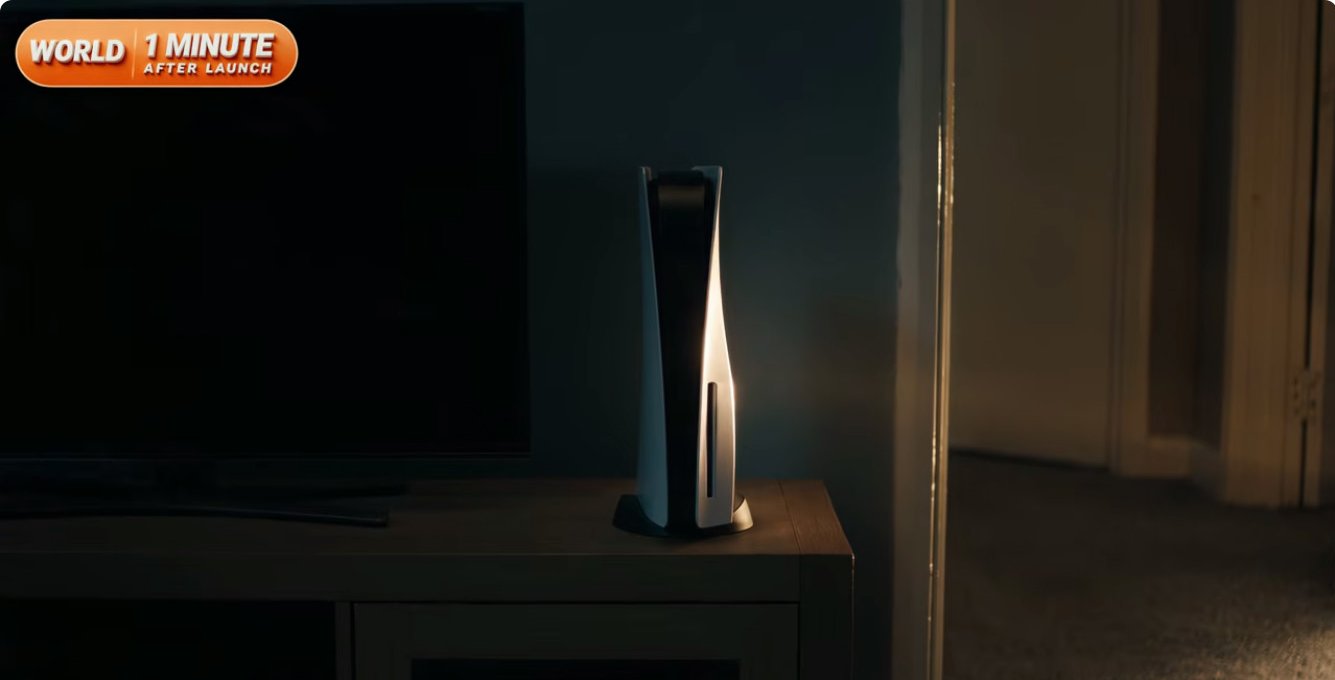
The opening is pure launch-day delirium, and it is the film at its sharpest. A minute after release, the live-viewer counters are already absurd — over a million watching on one platform alone — and some players are watching streamers while their own console sits off. Our man, though, is not watching. He wakes inside the game, gets filmed for Snapmatic like a local curiosity, and finds the thing that will ruin him: a gold door, locked, that “nobody’s ever got through.”
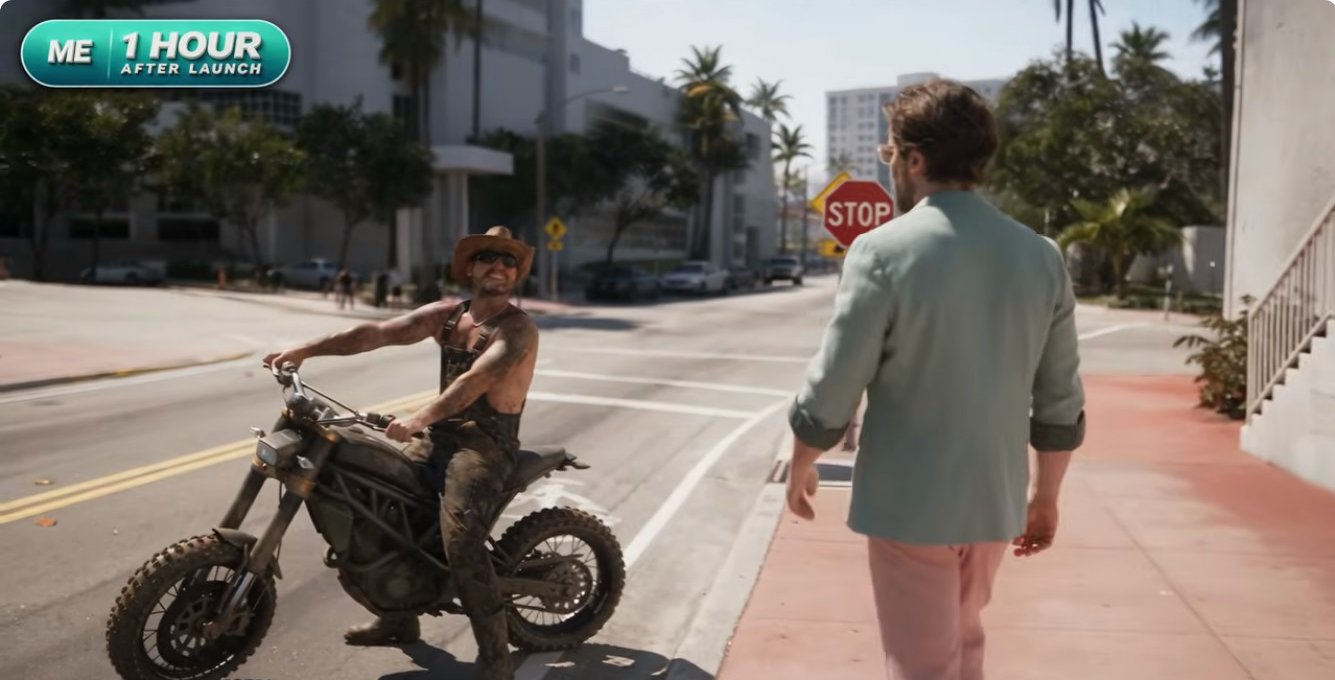
An hour in, the satire widens beautifully: he finally blinks; pizza and energy drinks find his mouth by instinct; twenty million people are playing; social media is exploding; first Easter-egg clips are spreading; workers everywhere are drafting sick notes. And in the middle of it, the film’s best small joke — a motorcyclist simply steals his bike. “Hey, that’s my bike.” “Sorry mate, need it more.” That is Vice City logic, perfectly observed.
The Door, The Docks, The Egg
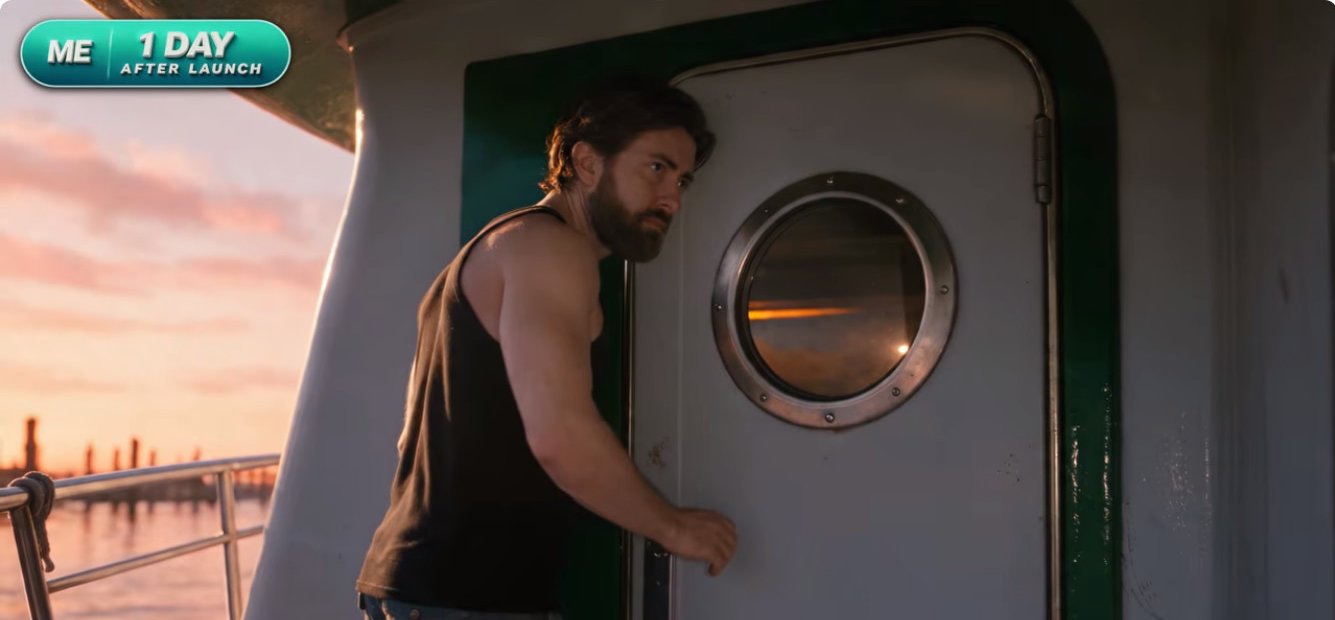
By one day after launch the world outside has emptied — streets quieter than a World Cup final day, an estimated billion dollars gone from the US economy, fifty million players online at once. The film keeps one foot in that mock-documentary register (a full Cluckin’ Bell order, recited like scripture) and one foot in its quest: everyone knows the gold door, and the man who runs the docks is said to have the key. The dock confrontation that follows is played as straight action-comedy gunplay, and what it produces is not a key but a mystery object — an unbreakable egg with no seam and no keyhole, which the dock owner chased for years and never opened.
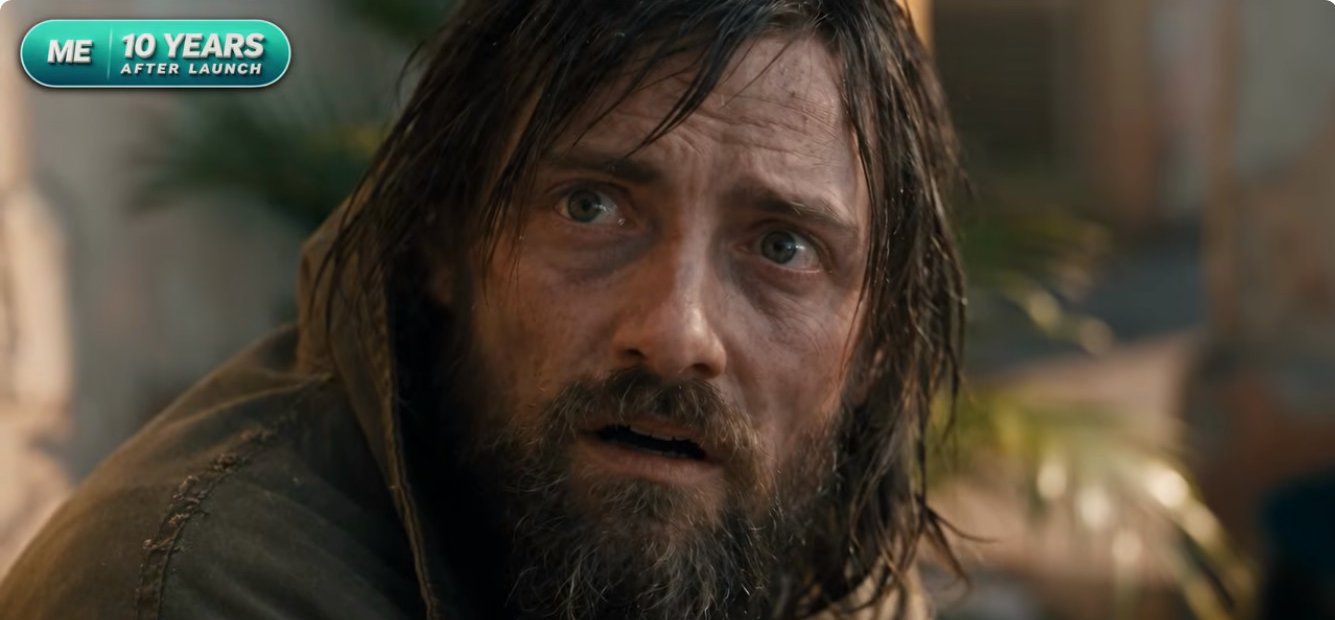
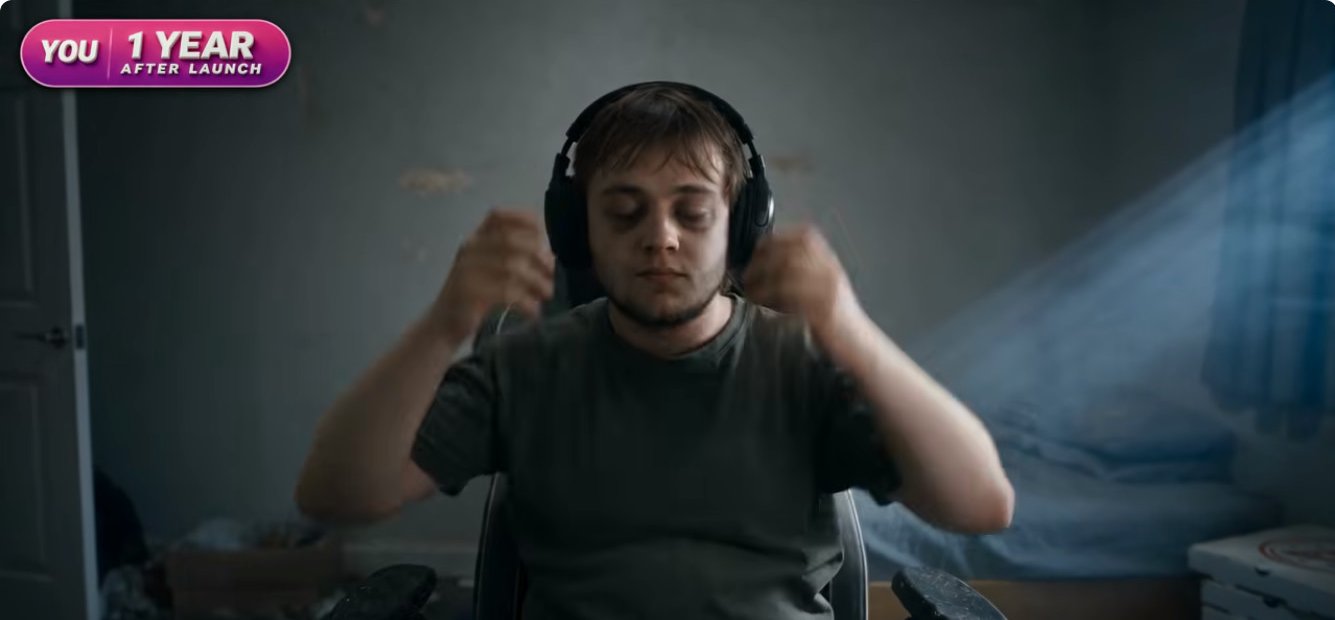
One year after launch is where the film turns. The chair is empty and dusty, ringed with pizza boxes, and then we see him: headphones on, hands raised, hollowed out. The story mode is long finished, the Online mode has been out eleven months, and he has played 2,856 hours — “not one was wasted,” he insists, which is exactly what a man says when all of them were. The egg defeats jewellers, cryptologists and locksmiths alike, and then, one night, he loses it.
Where The Seams Show
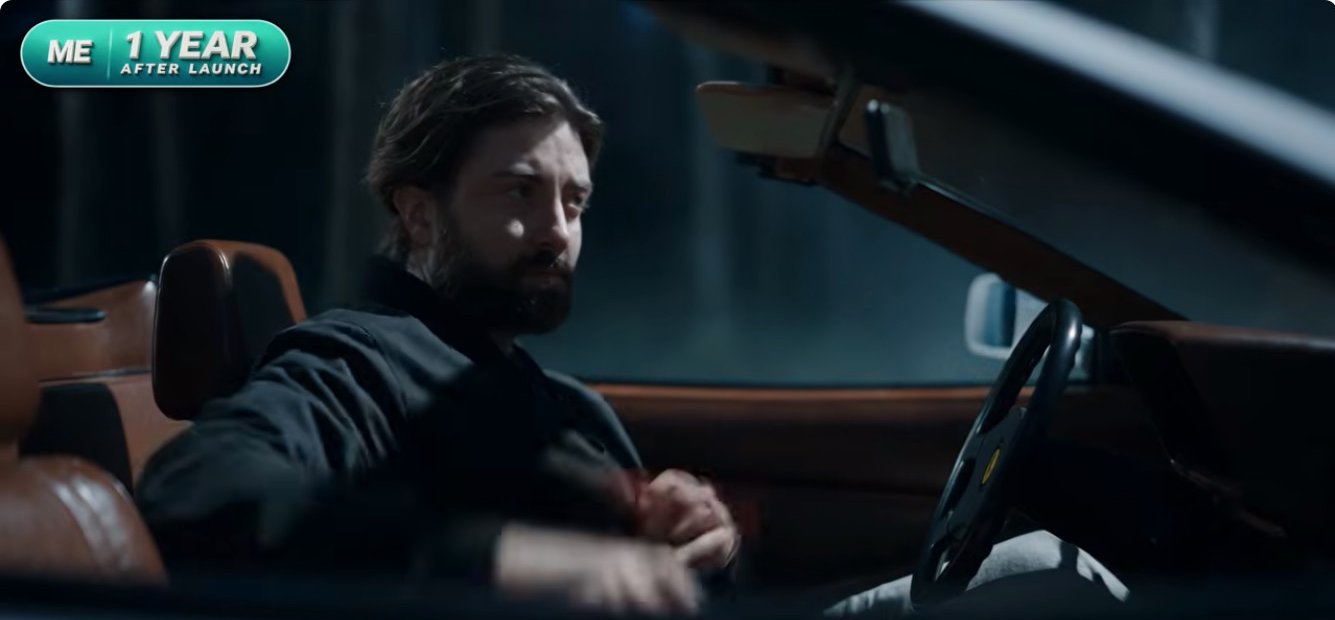
I want to be straight about the craft, because this film asks a lot of its tools. Faces, beards and hair morph across the time jumps, so the ageing never quite convinces; hands warp, notably in the raised-hands shot and at a steering wheel; the voice shifts between narrator and in-world character; and the egg itself does not stay the same object from scene to scene. Strangest of all is a found-tape interlude around the five-minute mark — an island log about wildlife and something that will not stay dead — which has nothing to do with anything around it. It reads to me like a stray generation left in the cut: a seam, plainly visible. And the old man in the cabin who finally opens the egg (“Only took 24 years”) is never clearly distinguished from the protagonist himself, which muddles a scene that should be a revelation. None of this sinks the film, but it is why my score for the AI craft sits where it does.
Ten Years
The final chapter is a descent told in years. Year two, he turns his life upside down. Year three, money is no problem, so he pays other people to search while he lives the boats-and-parties montage — and they come back empty-handed. Year five, barely sleeping. Year seven, the money gone. Year nine, sleeping on the street. The comedy has quietly become a portrait of obsession, and the film is honest enough not to dress it up: this is what it looks like when a person organises an entire life around a locked door.
Best Scene (8:45–9:30)
“All you had to do was ask”
At the gold door at last, he finds the keeper — a man who searched every day, every building, and never gave up — and the keeper asks whether he has come to mock him. Then the line the whole film has been walking towards: “Even now, you don’t realize. All you had to do was ask. This is what you search for.” Ten years of searching, and the answer was a question he never asked. It is a genuinely good twist, because it is not really about the door.
And then the film twists the knife with a grin: a countdown begins — “GTA 7 releases in. 3, 2, 1.” No escape, no return to the real world. The loop simply starts again. As an ending, it is the funniest and bleakest thing in the film at once.
Final Thoughts
It begins as a launch-day comedy and ends as a fable about obsession — the door was never the point, and the film knows it.
I would recommend this to anyone who has ever waited years for a game, a book or a film and wondered what the waiting itself was doing to them — and to anyone who wants to see a simple, escalating structure carry a comedy all the way into melancholy. The seams show, but the idea is strong enough to carry them.
Scene Breakdown
0:00–0:20 — Intro narration: one second left; the film announces its structure — 1 minute, 1 hour, 1 day, 1 year, 10 years after release.
~0:36 — “1 MINUTE AFTER LAUNCH”: viewer counters in the millions; the protagonist wakes inside Vice City and finds the locked gold door.
~2:00 — “1 HOUR”: the bike theft — “Hey, that’s my bike.” “Sorry mate, need it more.” Word spreads that the dock owner has the key.
~2:41–4:30 — “1 DAY”: empty streets, fifty million players, the Cluckin’ Bell order, a dock shootout — and the unbreakable egg, no seam, no keyhole.
~4:40 — “YOU 1 YEAR AFTER LAUNCH”: the dusty chair, the exhausted gamer, 2,856 hours played. The egg defeats every expert; then he loses it.
~5:00–5:30 — A found-tape island interlude, unrelated to the story — the film’s most visible generation seam.
~6:33–7:37 — The night drive to the log cabin; the old man who opened the egg: “Only took 24 years.” “It’s closer than you think.”
~7:37–9:30 — “10 YEARS”: the search consumes everything — money, sleep, home. Best Scene at 8:45–9:30: the keeper at the gold door, and the countdown to GTA 7.
~5:00–5:09 — interlude generation — At first I saw it as an advertising but it is part of the game vibe.
4:40 / 6:33 — Hands warp and blur — the exhausted gamer’s raised hands, then hands on the steering wheel in the night drive.
Throughout — Faces, beards and hair morph across the time jumps, so the ageing never quite matches; the egg prop is inconsistent, voices shift between the narrator and the in-world characters, and the cabin old man’s identity against the protagonist stays ambiguous.
A YouTube release by Cam (Time Travel Cam), one of Kineograph’s registered creators. His earlier film A Father Has 1 Bullet Left is also listed on this site.
There are no reviews yet. Be the first one to write one.