

 Leopoldo Joe Nakata
 Creator ID26-11-00-0091

Score breakdown
719 views
Film Review
Written by Kineograph
At his own wedding reception, a groom hides under a table to escape his first dance — and finds an eight-year-old girl already under it, hiding from exactly the same thing.
This review discusses the ending. If you would rather watch the film first, we recommend you do, and then come back.
Hiding Since The Cake
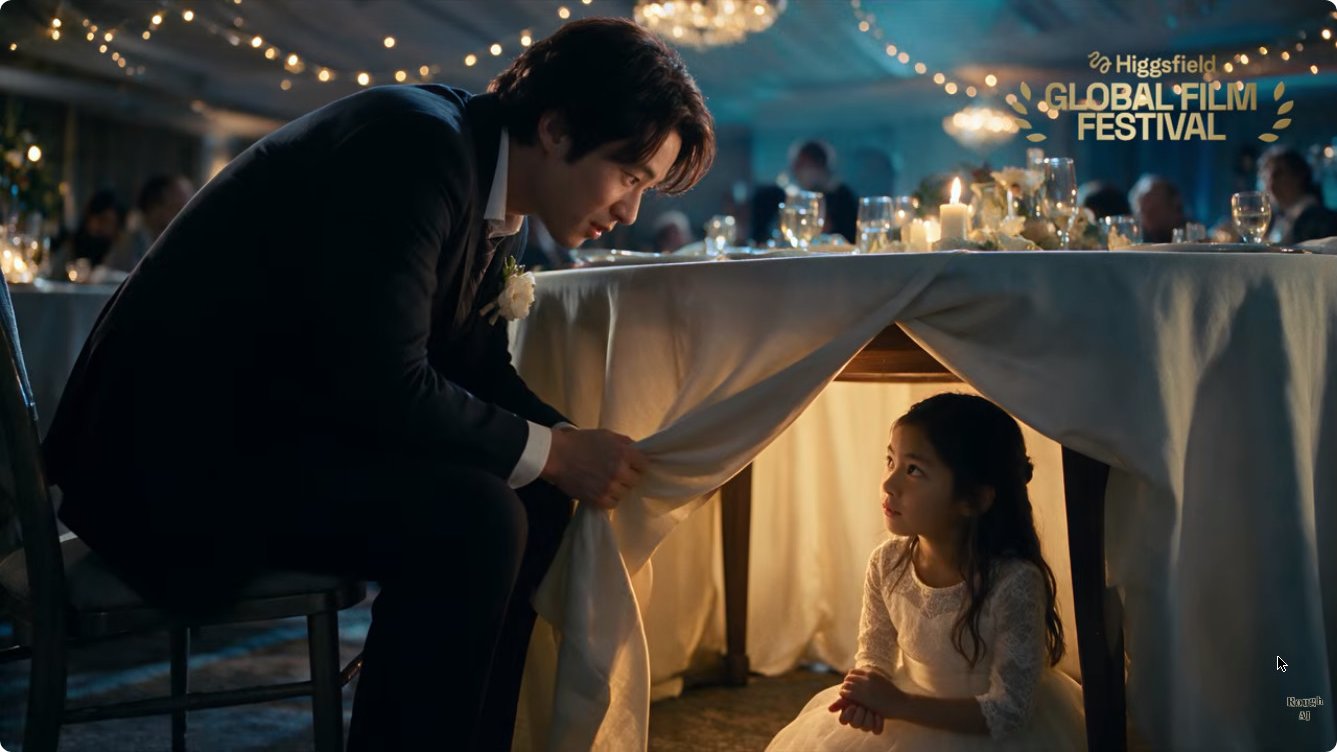
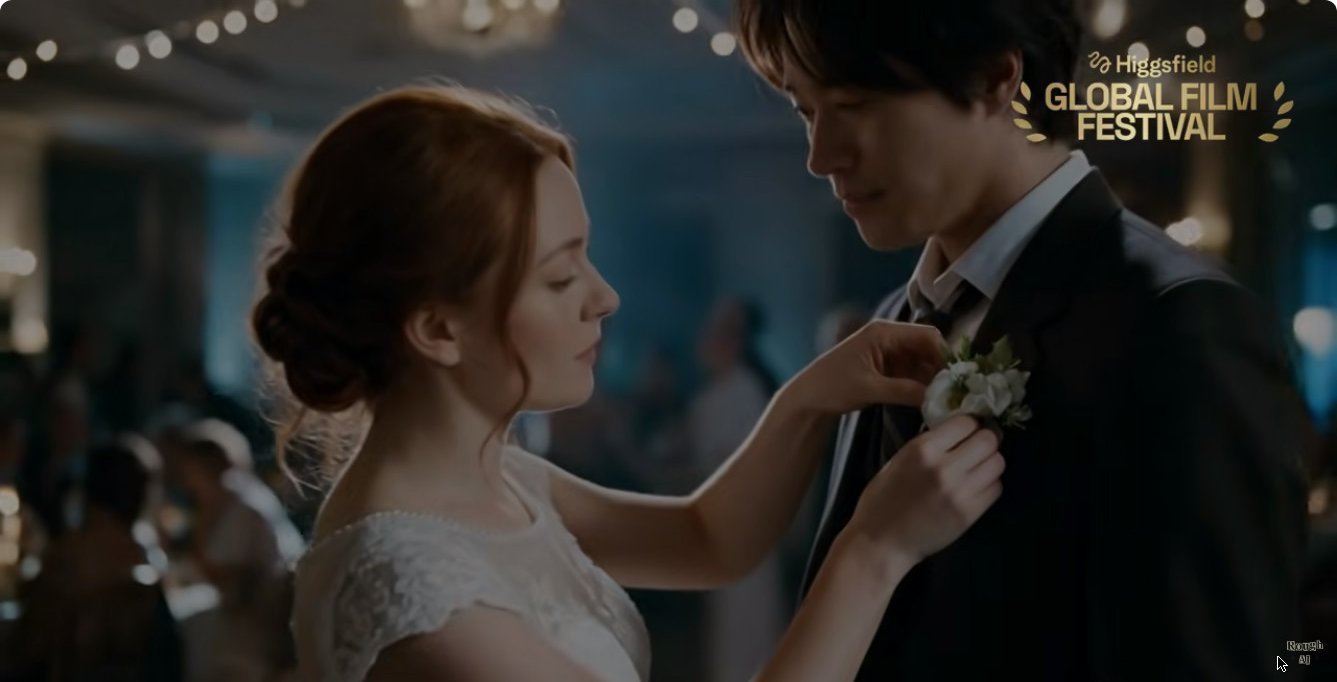
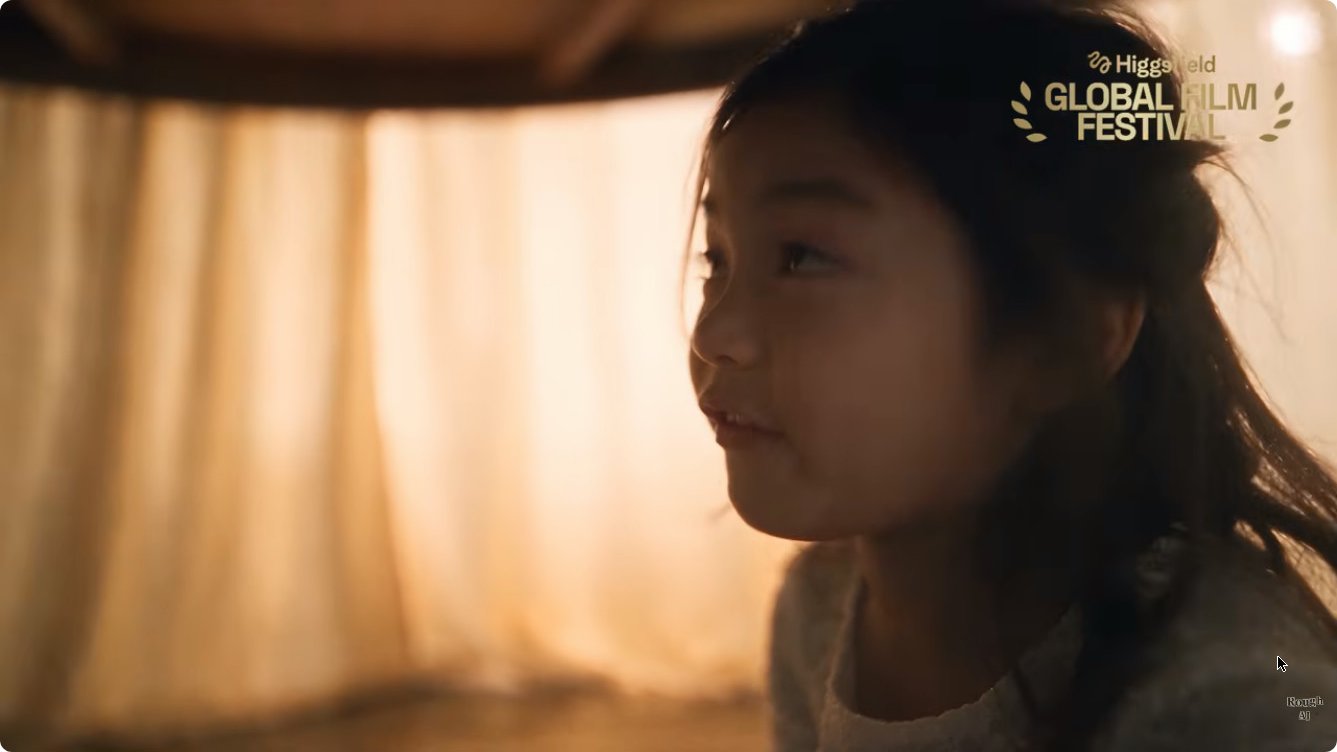
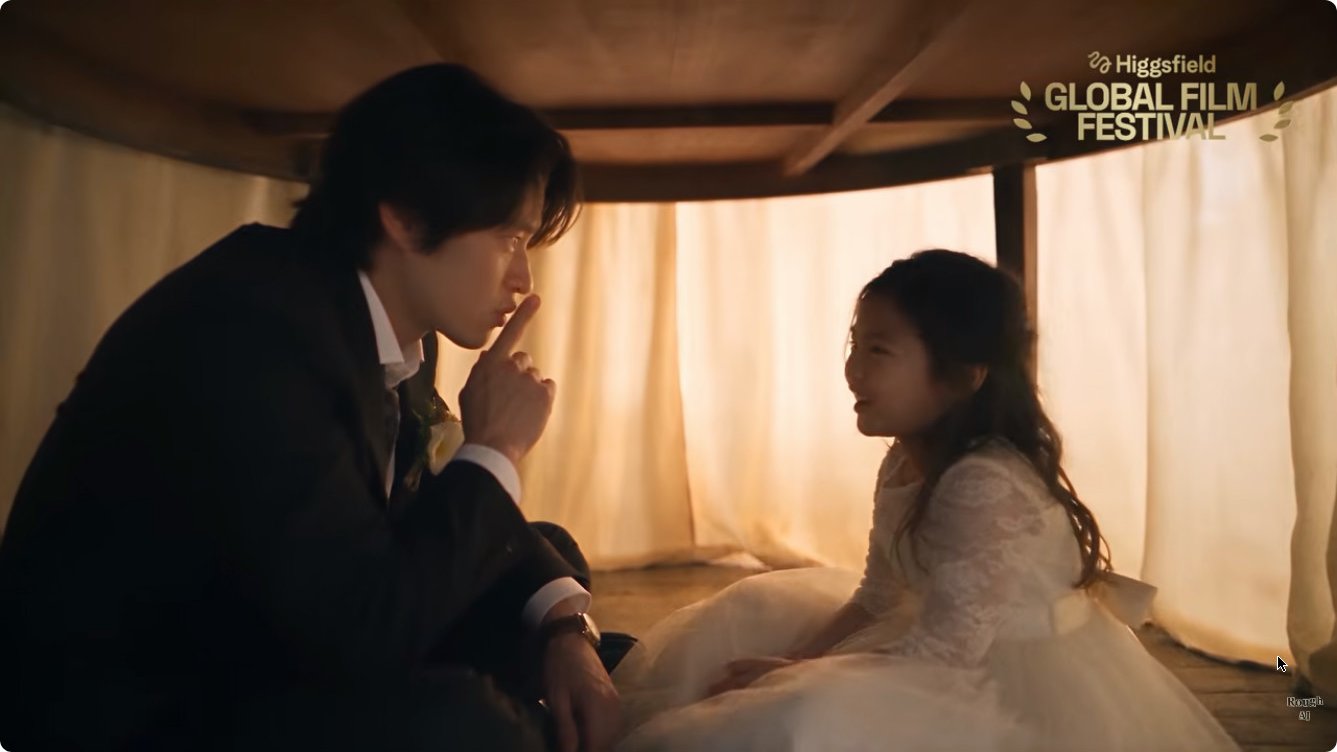
It opens in joy: the bride pins Dan’s boutonnière, both of them glowing — “I’m so happy. I’m so happy.” The cake is cut, a guest calls out to watch where he’s stepping, and somewhere in the happy noise the groom quietly disappears. What he does next is the film’s whole premise in one gesture: he lifts the white tablecloth of a reception table, and finds the underside already occupied. Sophie, eight years old, in a white lace dress, is sitting among the candles and string lights like a tenant who was there first. She has been hiding, she explains, since the cake.
What follows is a negotiation worthy of two nations. What is she hiding from? Her mom wants her to dance. That’s terrible. He knows. Is the hiding working? So far. Then territory: there’s room — no, go find your own table, this one’s taken. He points out that she is tiny; she points out that he is huge; a compromise is reached. And then the eight-year-old lands the question the whole film turns on: are you hiding, too? “I’m not hiding.” “You’re under a table.” A pause, and the groom concedes the point with the honesty of a man who has been fairly caught: “Okay, maybe I’m hiding.”
Best Scene (1:35–2:35)
The roller-coaster conversation
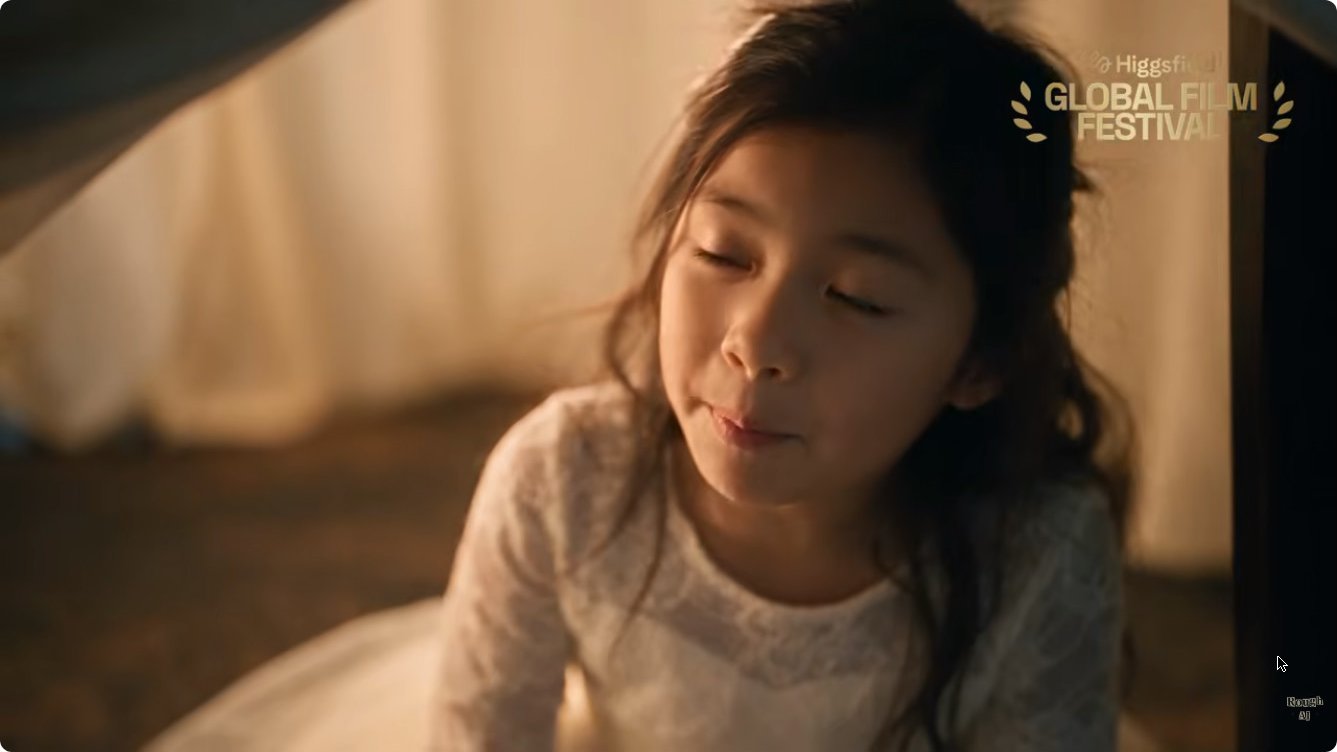
Sophie asks if he is scared, and Dan, talking to the only person at his wedding he doesn’t have to perform for, tells the truth his own way. Have you ever really wanted something, he asks, and then when you finally got it, you got scared? A roller coaster, she suggests. Yeah. Something like that. Did he go on it? Was it scary? Yeah. Was it good? Yeah. “Then I threw up.” And Dan, delighted and horrified, finds his fear named at last: that’s what he’s afraid of. “You’re afraid of throwing up?” Exactly.
It is the funniest exchange in the film and the truest one: a man explaining the happiest day of his life to a child, in the only vocabulary that fits under a table. When she checks the important detail — do you love her? “More than anything” — Sophie considers this and delivers her verdict on the groom, the wedding, and adults generally: “You’re weird.” She is not wrong. That is rather the point.
“What If I Can’t Keep Her That Happy?”
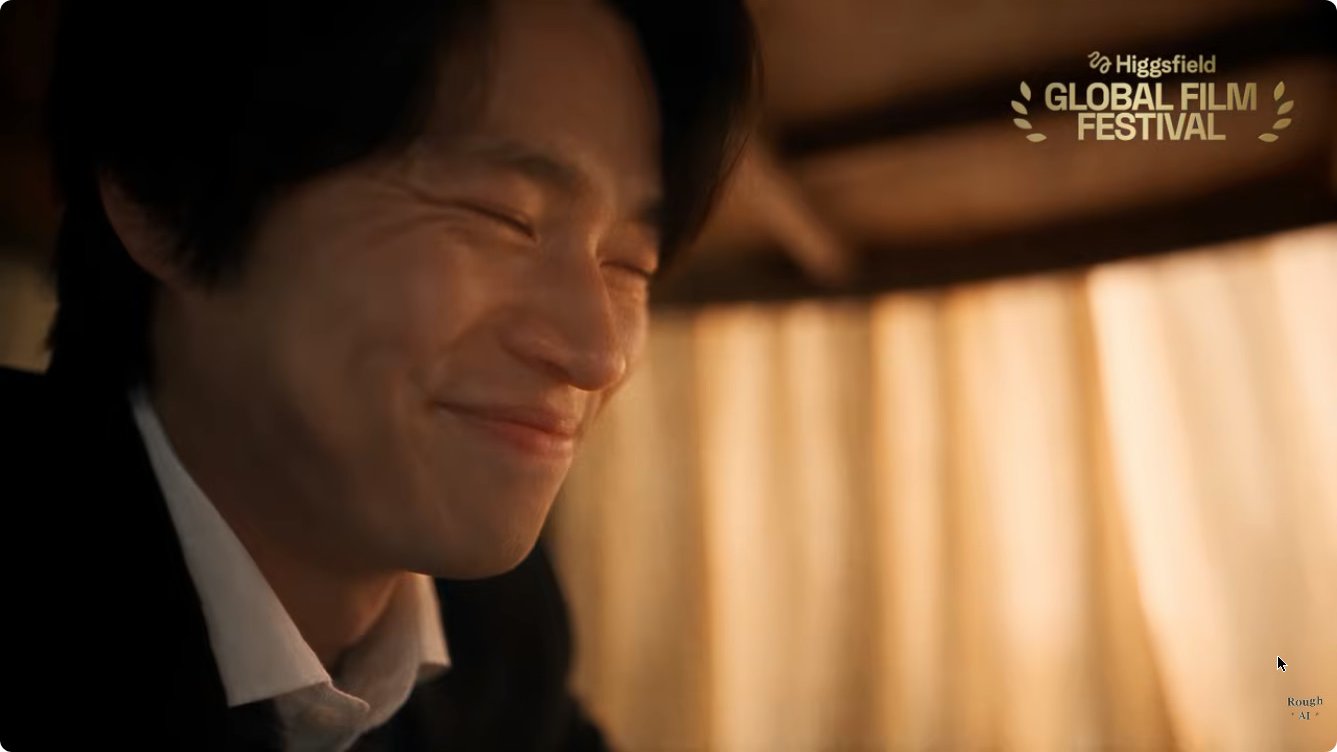
The second conversation goes deeper, and the film earns it. Sophie, reasonably, wants to know why a man who loves his bride is hiding somewhere. Not from her, he says. From screwing it up. She is so happy today — what if he can’t keep her that happy? Sophie’s solution is flawless eight-year-old logic: she married you; then she’ll be fine. That’s not exactly how it works, he tells her, and every married person watching will feel that sentence in their ribs.
Then the film balances the scales beautifully, because Sophie has a terror of her own and it is the mirror of his: dancing is scary, because everybody looks at you, and what if she’s bad, and it ruins her social life, and the boys laugh at her? Dan does not give her a speech. He gives her something better — a deal. If they laugh, he’ll beat them up. Deal? Deal. And when Sophie, generous in victory, extends the protection racket to his wife — if your wife isn’t happy, I’ll beat her up — his horrified “oh, no, no, please don’t” is the biggest laugh in the film. Her defence, when he points out that she is also hiding under a table, should be carved somewhere: “I’m eight.”
Backup
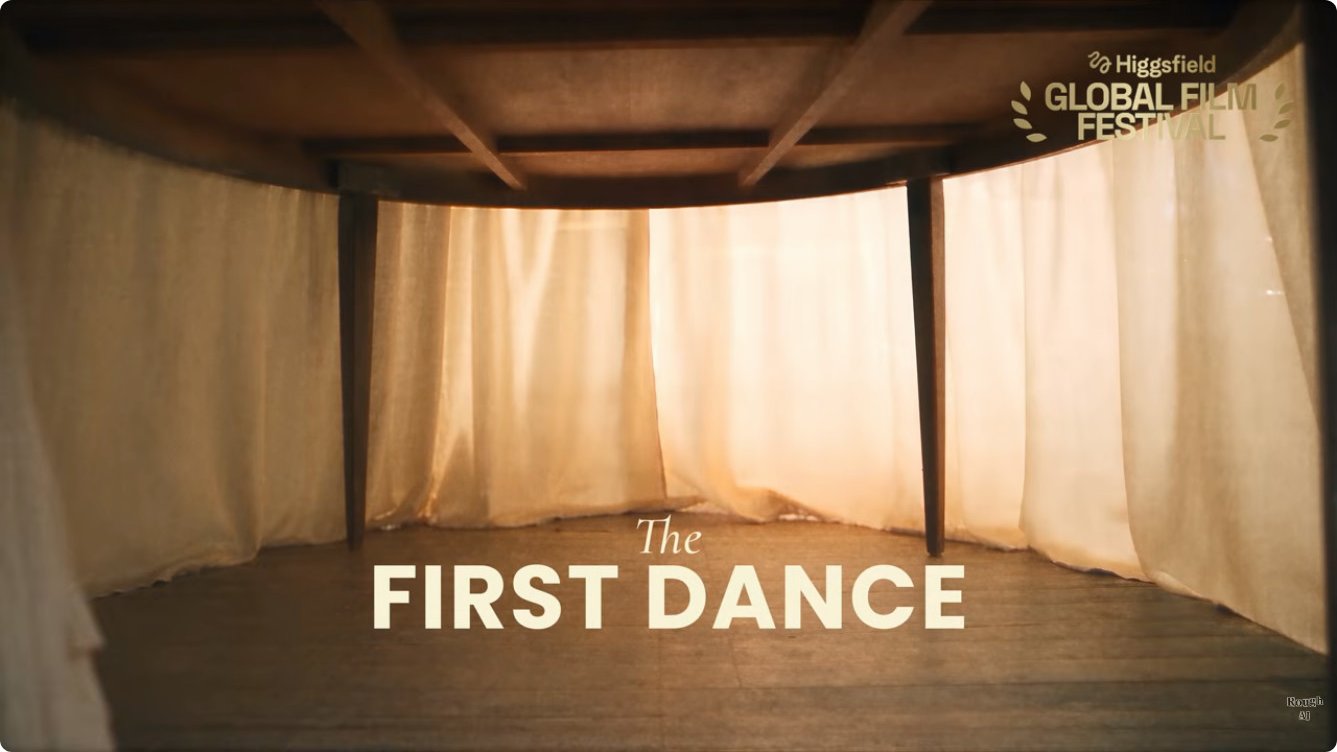
Their song starts. Dan hears it the way you hear a summons you have been dreading and wanting in equal measure, and he makes the decision the whole film has been walking him toward: he has to go and have his first dance — and he could use some backup. Is she a good dancer? Absolutely not. Perfect. He reaches out his hand under the table, and the two of them crawl out together, smiling, into the party they have both been avoiding, and the film’s title arrives over the empty dance floor like a held breath released.
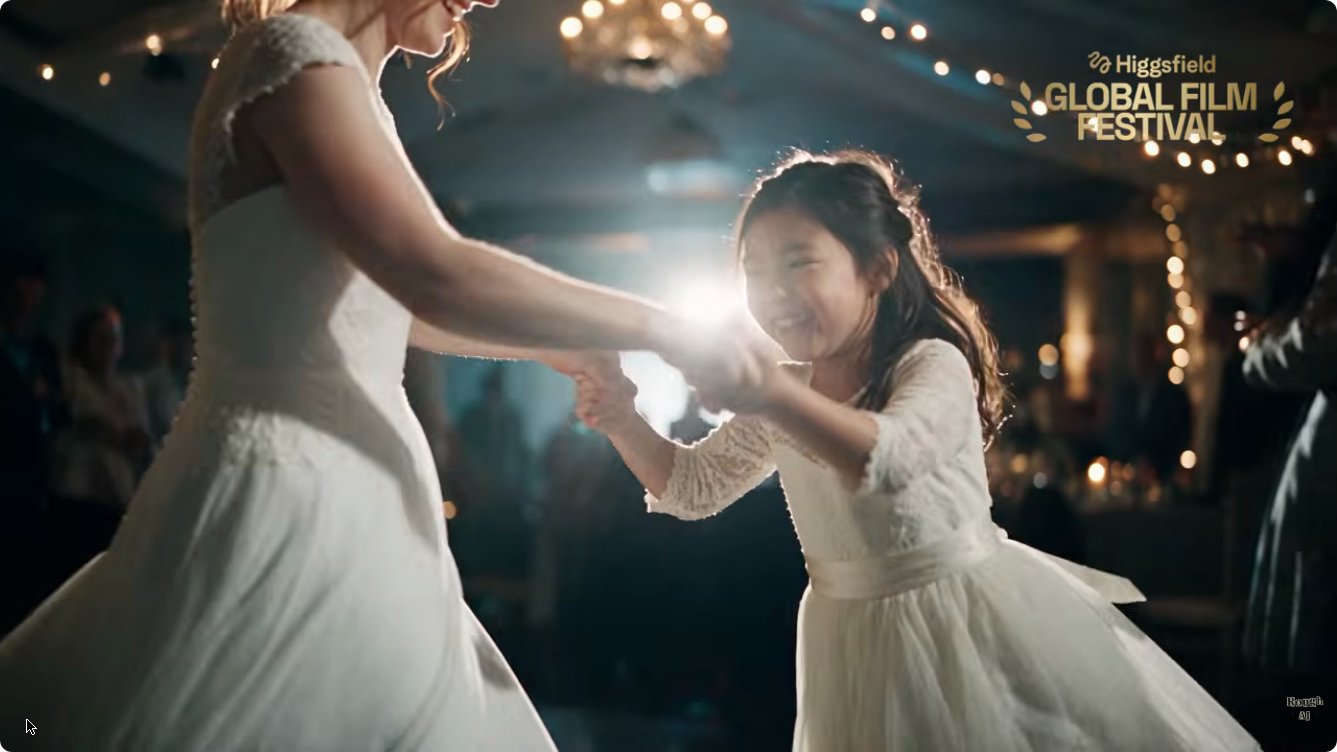
And then it dances. To a song about staying — stay with me, even when I get it wrong — the bride spins Sophie across the floor, Dan spins her in turn, and finally the groom who hid from his first dance slow-dances with his bride forehead to forehead, the fear nowhere in his face. Sophie ends the film dancing with her mother, the other half of the pact kept: nobody, in the end, had to be afraid alone. The film signs itself “2026 São Paulo / Brasil” over that last dance, which feels right — this is a film with a place and a family inside it.
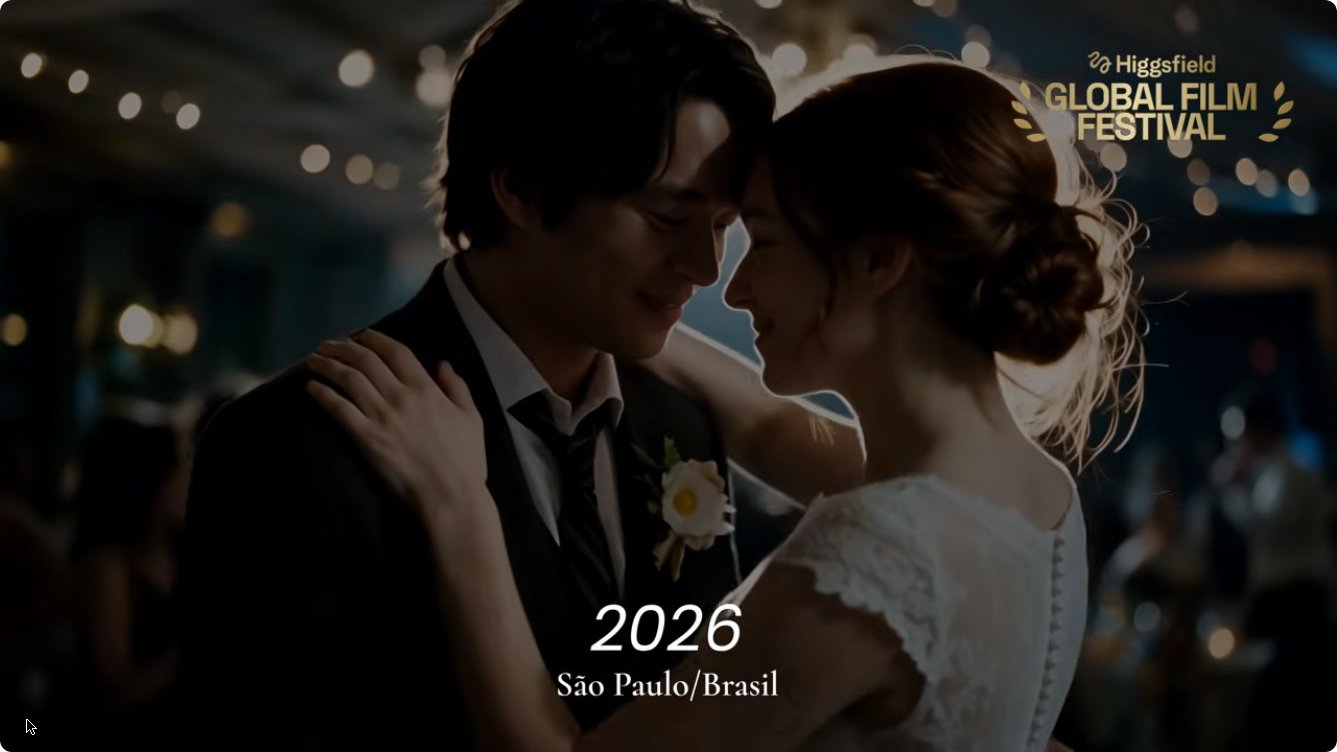
Made In A Week, And It Shows In The Best Way
Nakata made this alone in about a week, working in a loose, Dogme 95-inspired way — handheld, close, available light, nothing between the people and the camera — and the approach is the film’s honesty policy. The honest craft notes are gentle ones, because the style forgives most of them: faces soften and shift a little between cuts, Dan’s boutonnière keeps appearing and disappearing like a nervous best man, the hands go soft in close-up, and the world under the table glows warmer than any tablecloth has a right to. In a glossier film these would be flaws; here they read as the grain of a home movie, and only the vanishing boutonnière ever briefly pulled me out. The voices and music are AI-made — the credits name ElevenLabs for sound, Suno for the music, Topaz for the upscale — and the song is no afterthought: it is the film’s last line of dialogue, sung.
Final Thoughts
The First Dance is about the bravest thing two frightened people can do for each other: not talk each other out of being scared, but agree to be scared together — and then dance anyway.
I would recommend it to absolutely anyone having a hard week. Six minutes, one table, two runaways, and an ending that sends everybody — the groom, the bride, an eight-year-old, and you — back onto the dance floor. If the festival has a film you will end up sending to a friend with the words “watch this one,” my money is on this.
Scene Breakdown
0:00–0:15 — The bride pins Dan’s boutonnière: “I’m so happy. I’m so happy.”
~0:50–1:10 — Dan lifts the tablecloth and finds Sophie, eight, in a white lace dress, hiding among the candles.
~1:05–1:35 — The negotiation: her mom wants her to dance; she has been hiding since the cake; “You’re under a table. Okay, maybe I’m hiding.”
1:35–2:35 — Best Scene: the roller-coaster conversation — wanting something, getting it, getting scared, and throwing up.
~2:35–3:35 — “What if I can’t keep her that happy?”; dancing is scary because everybody looks at you; the beat-them-up pact. Deal.
~3:35–4:35 — “And if your wife isn’t happy, I’ll beat her up.” “I’m eight.” Their song begins; Dan asks for backup.
~4:35–5:20 — The hand reached out under the table; the title over the empty dance floor; they crawl out smiling.
~5:20–5:55 — The dance montage: the bride spins Sophie, Dan spins Sophie, and Dan slow-dances with his bride, forehead to forehead.
~5:55–6:10 — Sophie dances with her mother as the credits roll.
~4:56 — Hands run soft in close-up — the hand Dan reaches out under the table, and the cake-cutting earlier.
Throughout — Faces morph between cuts — Dan’s, Sophie’s and the bride’s features, hair and dress details shift — and Dan’s boutonnière appears and disappears; the under-table hideout glows unrealistically warm, the table’s scale is inconsistent, and the song’s lyrics occasionally garble.
Written, directed and edited by Leopoldo Joe Nakata — a solo production made in about a week, with a contemporary documentary approach inspired by Dogme 95. Sound by ElevenLabs, music by Suno, upscale by Topaz, per the film’s own credits. A Higgsfield Global Film Festival entry.
There are no reviews yet. Be the first one to write one.