

 Cătălin Pădurețu
 Creator ID26-11-00-0081

Score breakdown
3 views on Kineograph
Film Review
Written by Kineograph
A beloved collector is dead, and his wonders are selling for millions — but the final lot is not a thing at all. It is the living beings he housed down the corridor, and the room is asked for one dollar.
This review discusses the ending. If you would rather watch the film first, we recommend you do, and then come back.
Going, Going, Gone — But Only For The Objects
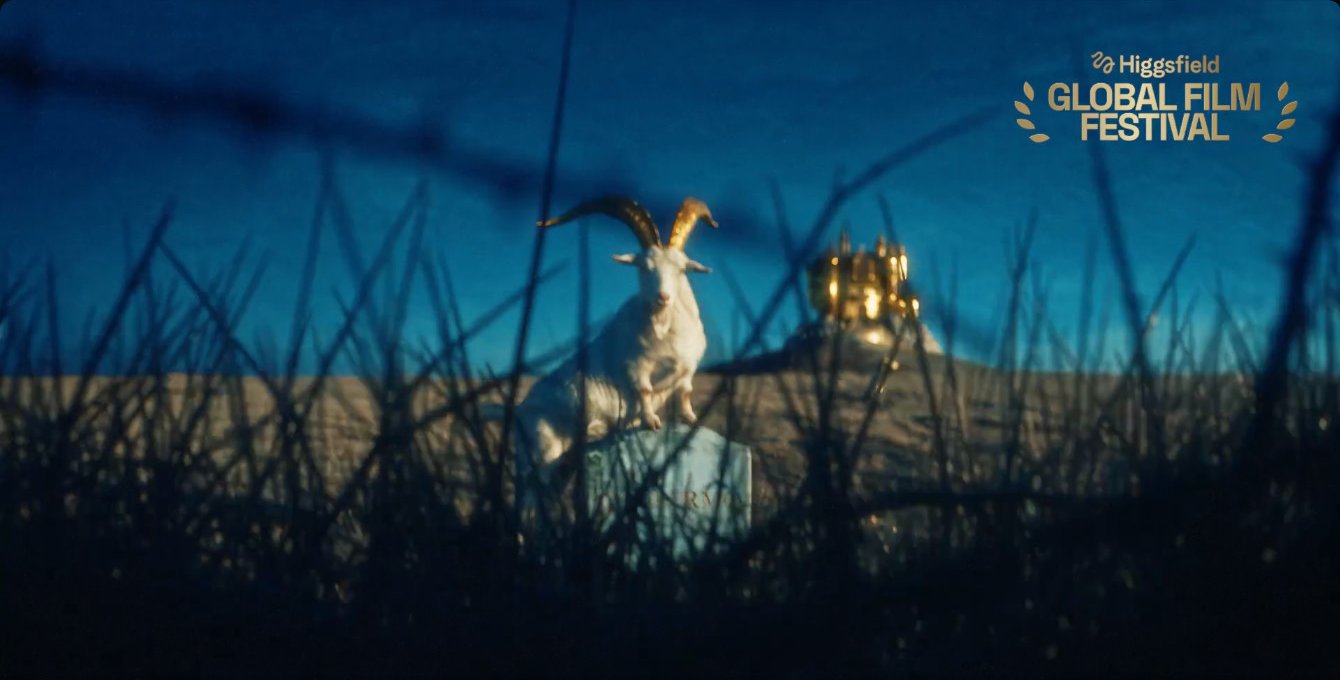
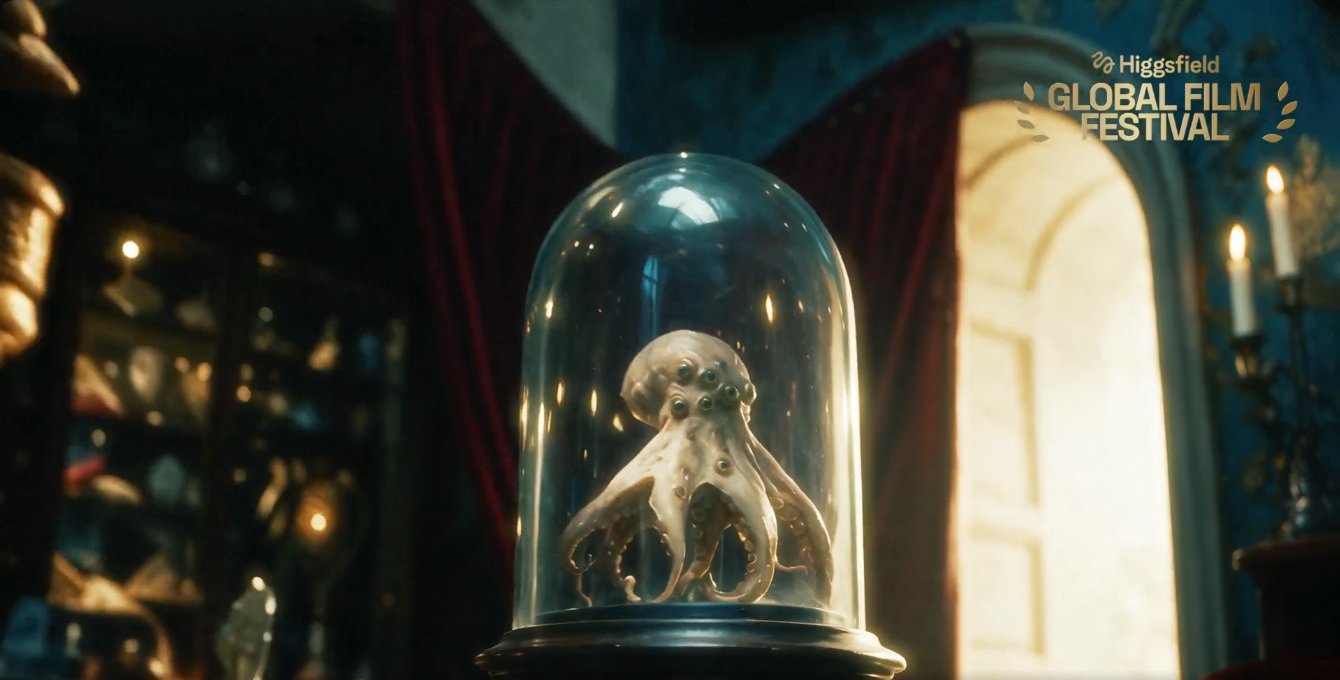
It opens on a framed portrait: a girl with a long nose and a wide, toothy grin, in a red dress and a red bow, captioned “PART OF THE LOT 369 FROM THE ESTATE SALE.” Under it, whispers: “Come on. I’m here. I’m here…” Then a white horned goat-like creature sits on a tombstone in tall grass at dusk, a golden house behind it, and a small pale octopus waits under a glass dome in a sunlit doorway. Whatever this house was, it was not ordinary.
The auctioneer welcomes the room to “the estate sale of our beloved collector” and promises wonders, and the wonders deliver. Lot 1 is “a marvelous sculpture. At least the backbone of it.” Lot 5, “a chronological device, but looks like it sees into the future.” Lot 11 is “not just a doll… This one in particular doesn’t come alone,” and it sells for 11,000. The camera loves the auctioneer in extreme close-up — mouth, teeth, enormous gold glasses — while the bidders stir in their red theatre seats.
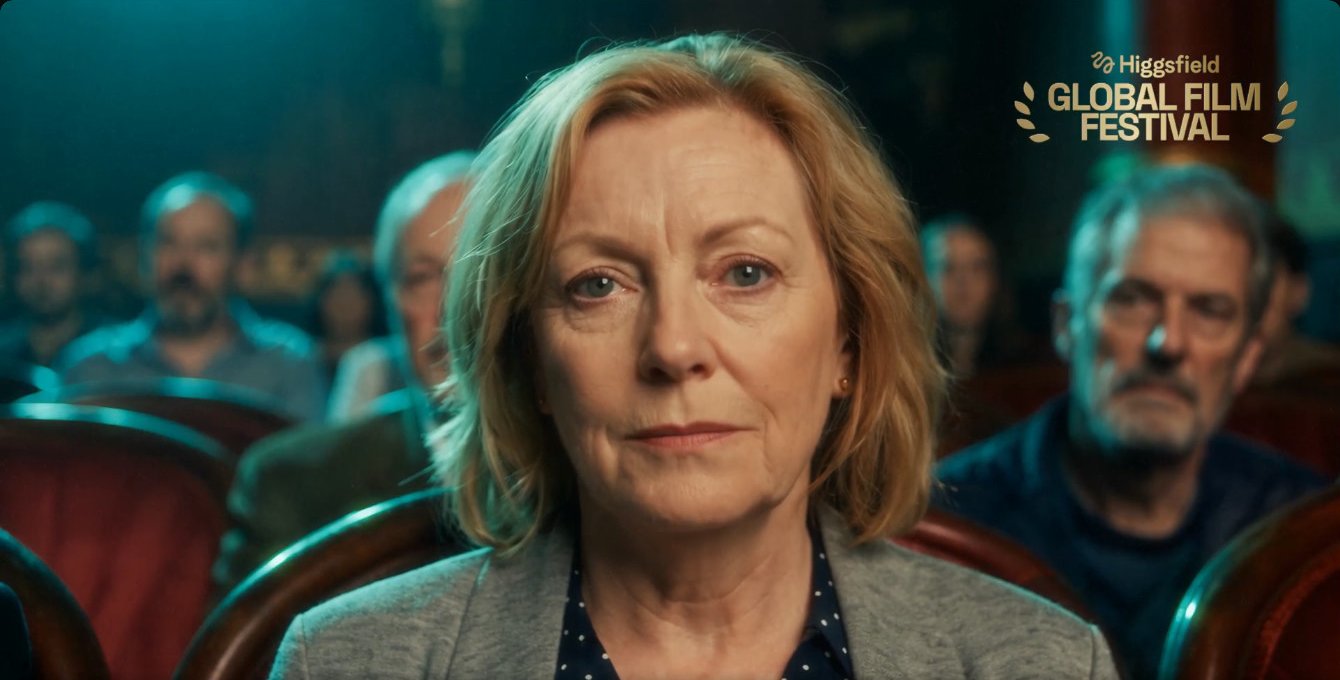
Then the prices climb into another register. A blade “coming all the way from Romania. Wielded, they say, by Vlad himself” — 40,000. An organ “rescued from a burning cathedral in France” — 200,000. And finally “something truly remarkable: a movie camera with a special function.” The close-up tightens. “It captures the human spirit.” The camera sells for 1.4 million. A room that can price a soul at 1.4 million believes it has seen everything. It has not seen Lot 369.
Lot 369: “Please Don’t Be Scared”
“Now, ladies and gentlemen, we have come to the final lot of this estate sale. Lot number 369. A lot that was not included in our catalogue.” The last of the collector’s gatherings, we are told, he “housed here on the property” — and the only way to view the lot is to “walk down the corridor and peep through.” First room: Sir Furnius, who “almost got lost in a labyrinth once.” The auctioneer reassures us: “Please don’t be scared as they don’t bite. They are just as curious as you all are.”
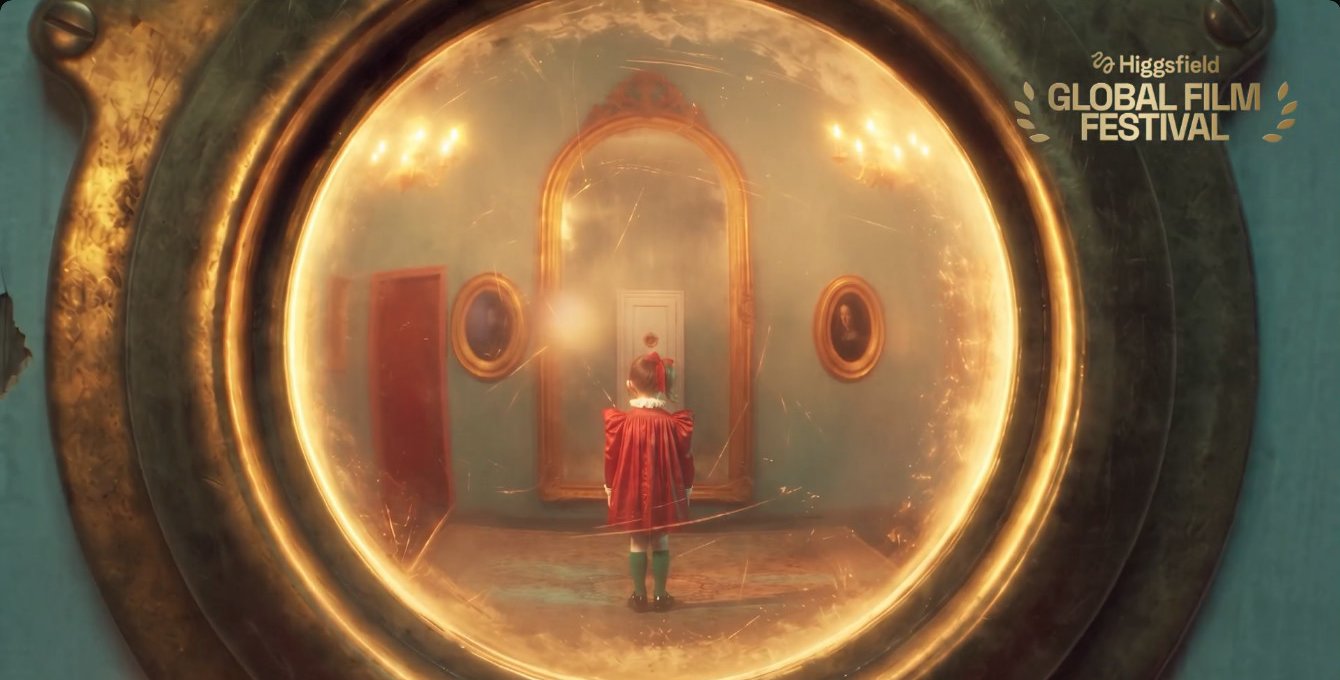
Second room: Joy, glimpsed through a circular peep — a small figure in a red dress with a red bow, very much the girl in the opening portrait. “She has the most precious smile you will ever see. I’m not sure about the biting aspect on this one.” It is the film’s tone in a single line: the patter of a salesman, the fondness of a friend.
And so the tour proceeds, room by room, and I would not trade any of it. The Great Damiano’s act turns out to be an empty room — star wallpaper, a red sofa, one large cushion under moonlight, and nobody in it at all, the driest joke in the film. Bloby, who likes flowers, is a huge mound of red cushions. Junior just loves shiny things; Mrs. Piranda is caught doing her evening routine; Ash, when he is anxious, shies away completely; Marlene is doing her late night swing; Diddias is “two souls, one body, pure love.” Mr. Lionel, a large hairy creature with long ears, tucked in bed under a red blanket, is introduced as “a real star, cast as the villain for centuries, but a total darling.” That is the auctioneer’s gift throughout: every being is presented the way you would present a friend.
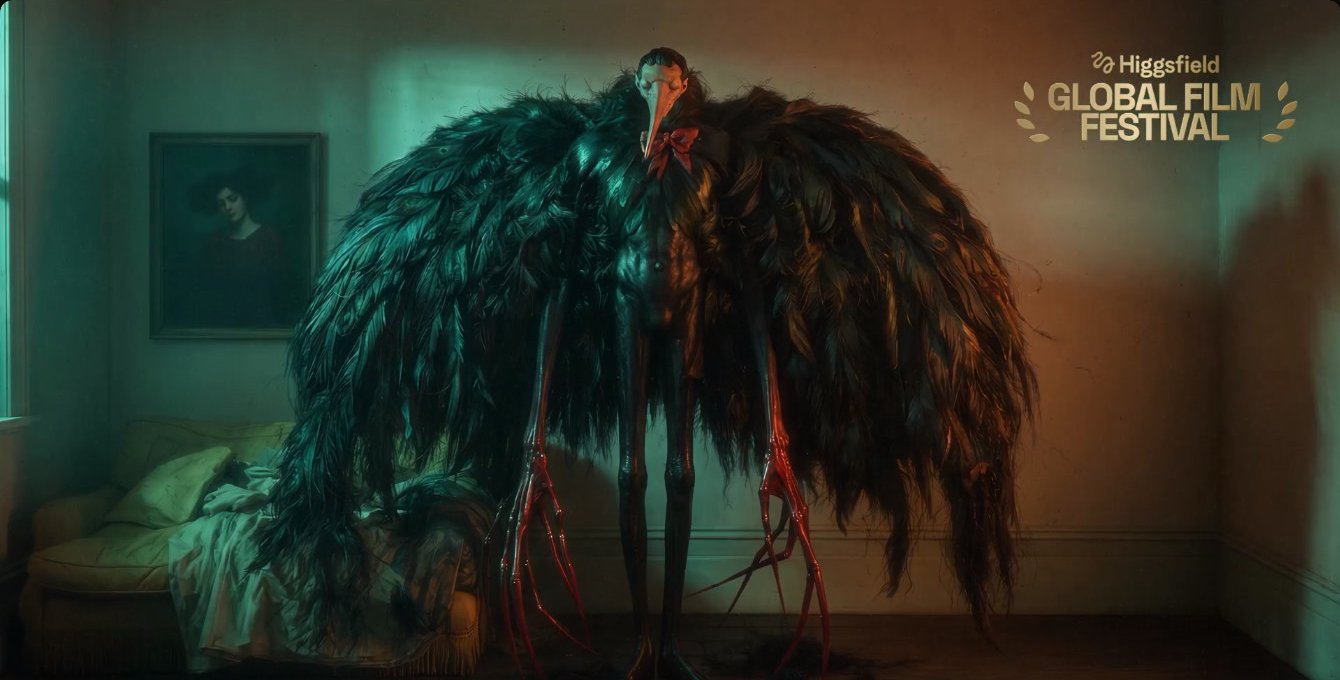
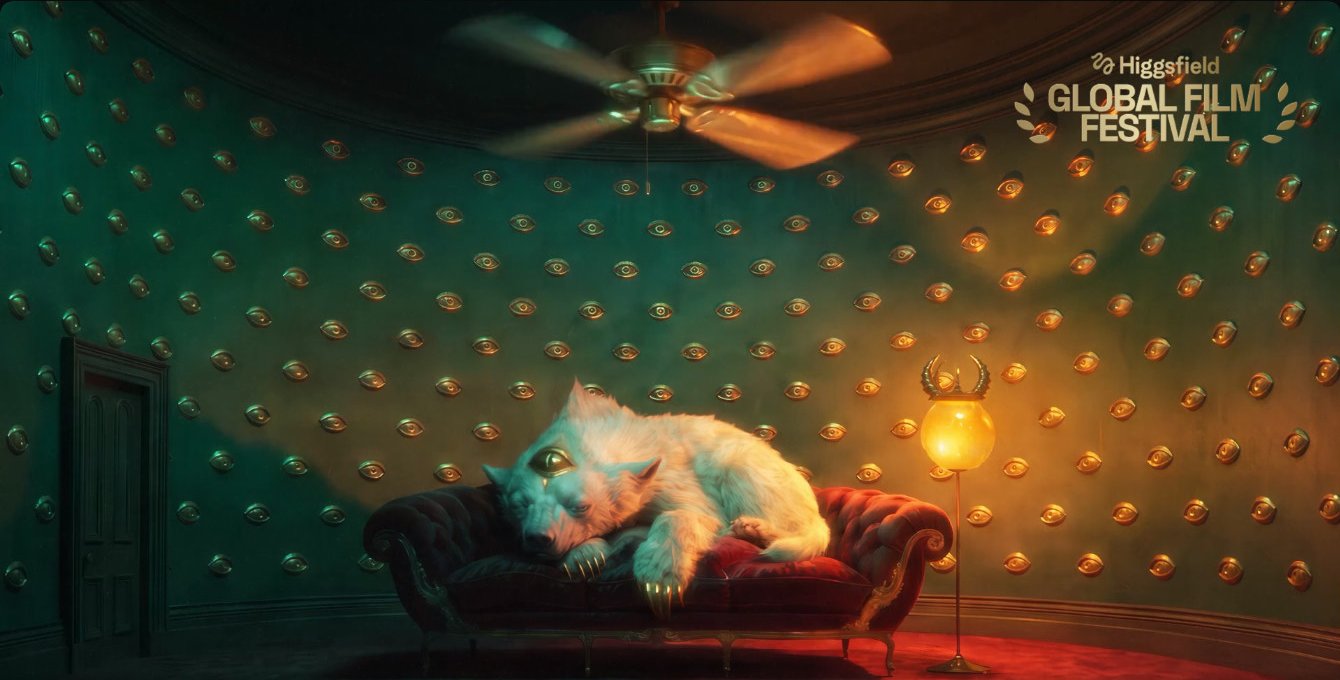
Peregrin stands freshly groomed in his room — a tall black-feathered bird with a long orange beak, a red bow tie and long red claws. And the host of the house sleeps on a red sofa in a room wallpapered with golden eyes: “Sleeps like a prince, dreams like an emperor.” Hold on to that line. The film will.
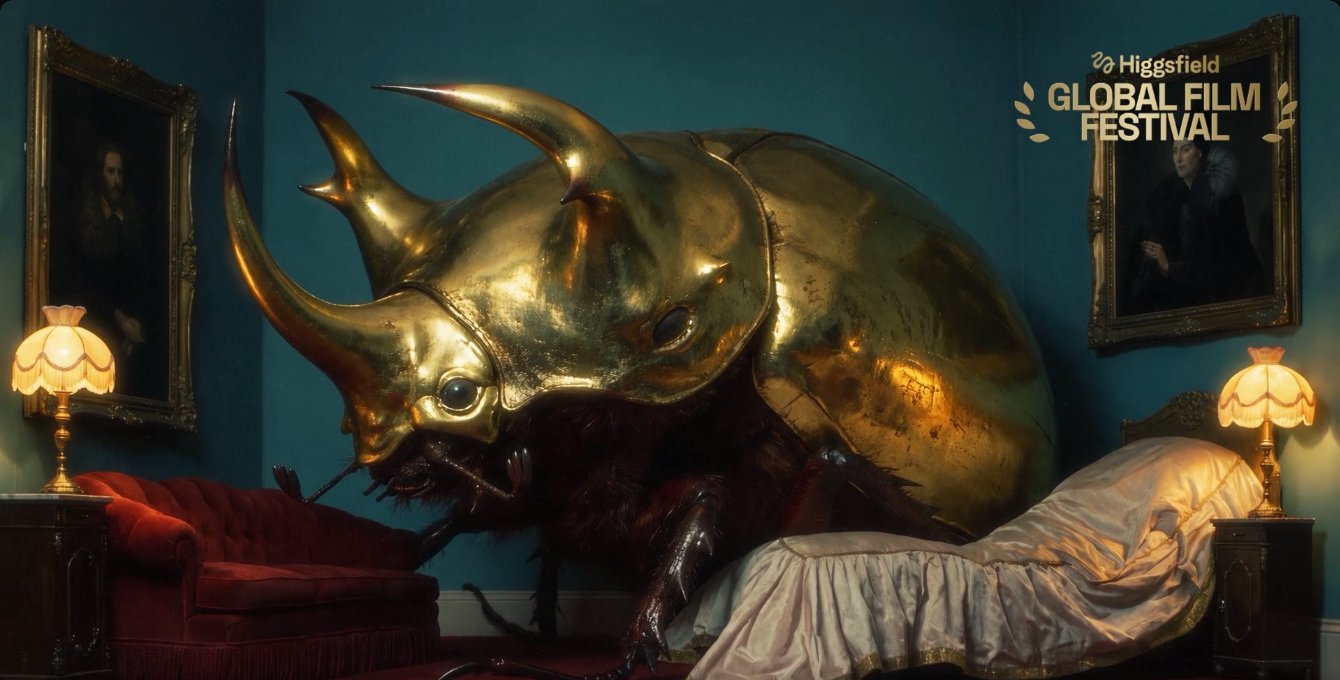
Two of the housed deserve their own moment. The first is Mr. Hornerby (he stands at the top of this review) — a giant golden horned beetle, standing in an ordinary bedroom among teal walls, a bed and lamps, introduced as a fellow who was “probably way past his bedtime,” and bid, simply, “Goodnight, sir.” Scale, gold against teal, and a bedtime tenderness where any other horror film would put a scare: it is the whole film in one image. The monster is not a monster. The monster is a neighbour who is up too late.
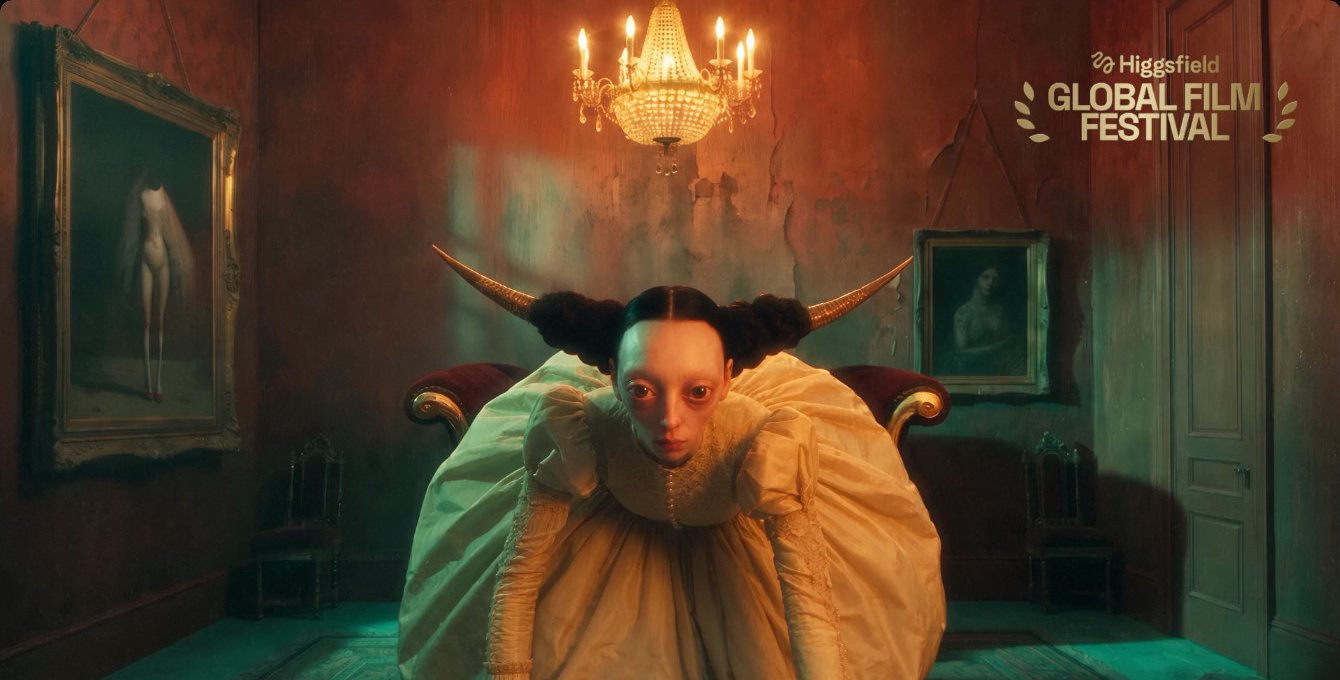
The second is Lady Victoria, in the last room: eight feet tall, horned, in a huge cream dress, leaning down toward the camera in a red-and-teal hallway under a chandelier. “She will definitely stand out of the bunch.” She is the climax of the tour and she knows it — grandeur without a whisper of threat. Beyond her, the tour ends outside: Helios, a giant pale-green head with a golden eye and red tentacle-like hair, resting in misty mountains; and Reginald, putting his little ones to sleep. “Good night, all you beautiful ones.”
One Dollar. Anyone? No One?
And now the film does the bravest thing in it: it stops. “This, ladies and gentlemen, is the entirety of Lot 369. Bidding starts at… One dollar. Anyone? No one?”
Silence. The auctioneer, in profile behind his gold glasses, waits. “Come on, people. It’s just one dollar.” Nobody bids. Not one paddle. Not one dollar.
I want to sit with that silence a moment, because the film does. A backbone: sold. A doll: 11,000. A blade: 40,000. A camera that captures the human spirit: 1.4 million. And a household of living beings — named, introduced, every one of them somebody’s goodnight — offered entire for a single dollar, and the room will not pay even that. The film never raises its voice about this. It simply lets the silence run for half a minute, and the silence is the loudest thing in it. I found myself genuinely angry at a room full of imaginary bidders — which is how you know the trick has worked. The monstrous thing in this film was never down the corridor.
“Did You Just Have A Nightmare?”
The turn comes softly. By a fireplace, a small white furry creature with golden claws is asleep on a red cushion in the auctioneer’s lap, and he speaks to it the way you speak to a child after a bad dream: “Oh, you poor soul. Did you just have a nightmare?”
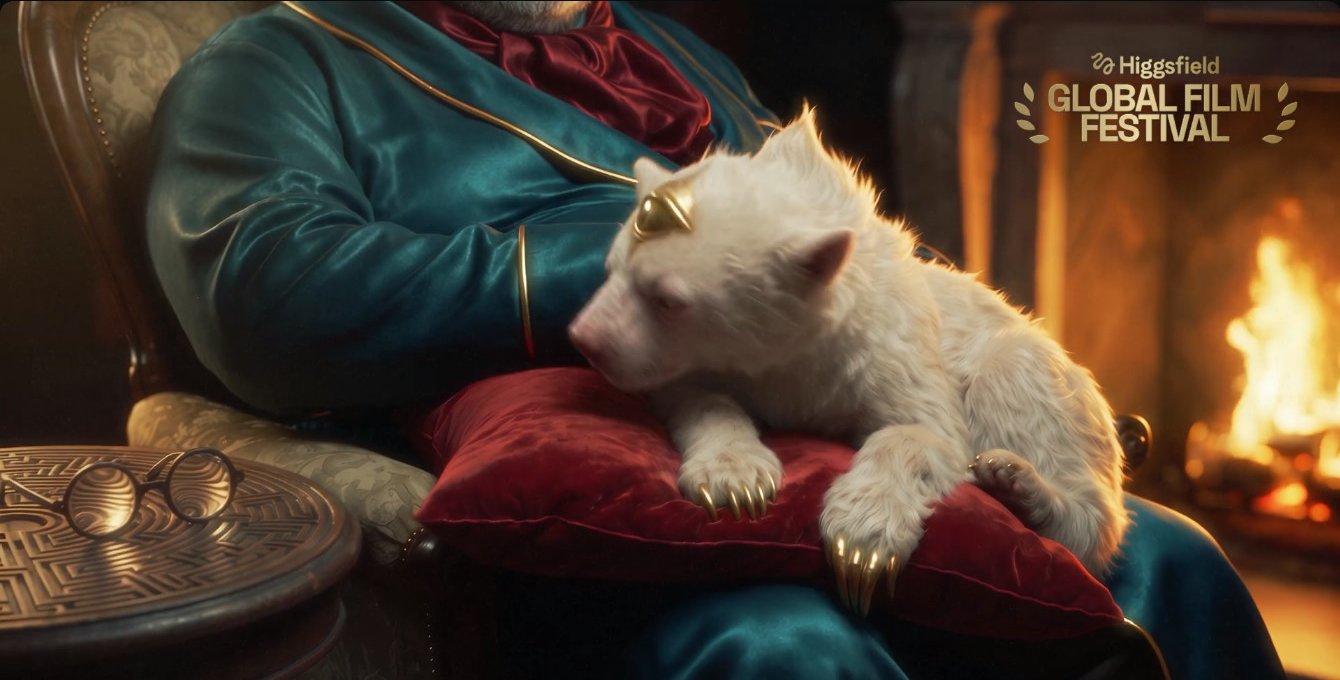
And then the creatures answer the auction in their own voices. They were selling us, all of us, for one dollar. “I’m worth at least 50. One dollar is outrageous. I have a golden eye.” The protest is led by the film’s one strong word — a Spanish expletive, delivered with feeling — and honestly, fair enough. Six minutes of being appraised, and the appraised finally do the appraising.
Was any of it real? The film plants its clues like a trail: a creature asleep in the auctioneer’s lap; a host who “sleeps like a prince, dreams like an emperor”; whispers at the very start — “I’m here. I’m here” — and, to close, a wordless dream landscape of icy mountains, giant crowned eyeball creatures, gold domes and a headless suited figure. Perhaps the whole corridor tour was the sleeping creature’s dream, and the auction its nightmare. Perhaps nothing was dreamed at all, and these beings simply speak the language of dreams because dreams are where they live. The film declines to say, and on this one I am happy to follow its lead — both readings make the ending sadder, and better.
Best Scene (5:33)
“Hellooo!”
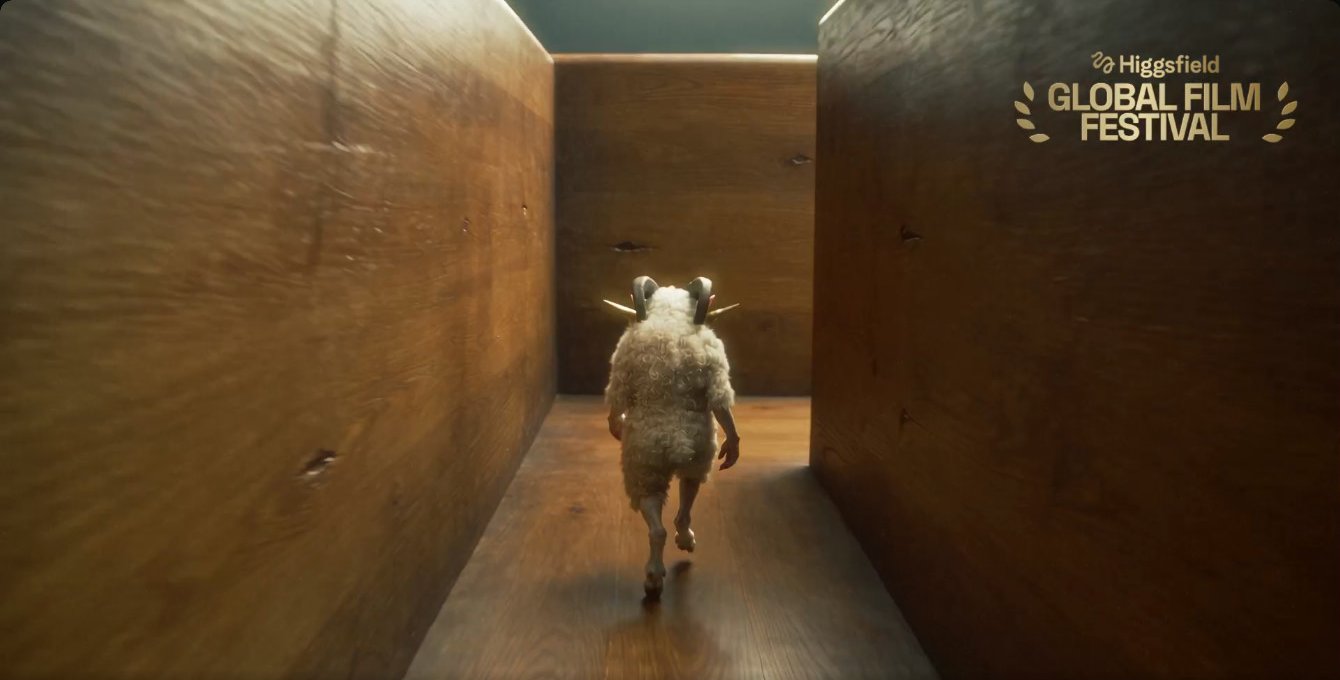
Last, the film gives us a small fluffy horned sheep-like creature, seen from behind, walking away down a wooden corridor. “Hellooo!” it calls — to the house, to us, to no one in particular. And with it goes the line the protest left ringing: “Next time, I am dreaming somewhere fancier.”
It is the thesis of the film performed instead of stated. The being the room valued at less than a dollar does not wait to be rescued, or sold, or even apologised to. It simply leaves — on its own small feet, down its own corridor, off to dream somewhere fancier. Dignity, as an exit. I have thought about that little walk for days.
A Thank-You Note, Honestly Delivered
Bear Atelier is Cătălin Pădurețu, working solo, and he frames this film himself as “a thank-you note to the great Guillermo” — del Toro. The kinship is real and it is earned: the collector’s house is pure macabre on the surface, all horns and beaks and golden eyes, and underneath it is doing the most del Toro thing imaginable, which is insisting that the creatures are the ones with souls and the well-dressed room is where you should be afraid to sit.
The making matches the manners. The characters and mood were begun in Midjourney, everything was generated on Higgsfield, the audio is AI-generated throughout — and then, a telling detail, the film was edited, graded and subtitled with traditional tools, by hand. On the slop meter this is a clean piece of work, and the reason matters: the creatures’ impossible scales are not artifacts. A giant beetle in a normal bedroom, an eight-foot lady in a hallway, a giant head in the mountains — those are decisions, and they hold from shot to shot. The genuine flaws are small ones: the auctioneer’s mouth and teeth smear a little in the extreme close-ups the film loves; one bidder’s face is polished a touch too smooth; and the film’s own subtitles carry two typos, “definetley” and “did you just had a nightmare?”, which I confess I read with real affection — like a flourish of handwriting in the collector’s own catalogue.
Final Thoughts
The Estate Sale prices a camera that captures the human spirit at 1.4 million and a whole household of living souls at one dollar — and in the silence that follows, it finds the only monsters in the building.
I would recommend it to anyone who likes their fantasy macabre on the surface and kind at the core. It is creepy the way a fairy tale is creepy — the creatures are grotesque and entirely sympathetic, there is no gore and no cruelty on screen, and its single strong word is spent on a just cause. In six minutes, with an auctioneer’s patter and a corridor of impossible tenants, Cătălin Pădurețu has made the gentlest monster film of this festival. Next time, I too will be dreaming somewhere fancier.
Scene Breakdown
0:00–0:08 — The portrait: “PART OF THE LOT 369 FROM THE ESTATE SALE.” Whispers: “Come on. I’m here. I’m here…”
0:08 — A white horned goat-like creature on a tombstone in tall grass at dusk, a golden house behind it.
0:30–1:00 — The sale begins: a backbone sculpture; a chronological device that “looks like it sees into the future”; a doll that “doesn’t come alone” — 11,000.
1:00–1:30 — Vlad’s blade (40,000); an organ rescued from a burning cathedral (200,000); a camera with a special function: “It captures the human spirit.”
~1:30–2:00 — The camera sells for 1.4 million. Then: the final lot, 369, “not included in our catalogue.”
2:00–3:00 — Down the corridor: Sir Furnius; Joy and “the most precious smile you will ever see”; the Great Damiano’s empty room.
3:15 — Mr Hornerby, the giant golden horned beetle, in a bedroom: “Goodnight, sir.”
3:30–4:04 — Mr. Lionel, “cast as the villain for centuries, but a total darling”; Peregrin; the host asleep: “Sleeps like a prince, dreams like an emperor.”
~4:15 — Lady Victoria, eight feet tall, leaning toward the camera: “she will definitely stand out of the bunch.”
~4:28 — Helios in the misty mountains; Reginald: “Good night, all you beautiful ones.” The entirety of Lot 369: “Bidding starts at… One dollar.”
4:30–5:00 — Silence. “Come on, people. It’s just one dollar.” No bid comes.
~5:12 — “Oh, you poor soul. Did you just have a nightmare?” The creatures answer back: “I’m worth at least 50.”
5:33 — Best Scene: “Hellooo!” — “Next time, I am dreaming somewhere fancier.”
5:42–5:55 — The dream landscape: icy mountains, giant crowned eyeball creatures, gold domes. Music only.
1:26 — One bidder’s face is noticeably AI-smooth among the red theatre seats.
~1:30 — In the extreme close-ups the film loves, the auctioneer’s mouth and teeth smear slightly.
~4:15 and ~5:12 — Two subtitle typos are the film’s own: “definetley”, and “did you just had a nightmare?”
Throughout — The creatures’ impossible scales — a giant beetle in a normal bedroom, an eight-foot Lady Victoria in a hallway — are deliberate design, hold consistently, and are not counted as errors.
A solo project by Bear Atelier (Cătălin Pădurețu). Characters and mood begun in Midjourney; generated on Higgsfield; all audio AI-generated; post-production in traditional tools. The creator frames the film as “a thank-you note to the great Guillermo” (del Toro). An entry in the Higgsfield Global Film Festival.
There are no reviews yet. Be the first one to write one.