

 Shahrukh Parvez
 Creator ID26-11-00-0080

Score breakdown
1 views on Kineograph
Film Review
Written by Kineograph
In a blacked-out town in Uttar Pradesh, the young are dying or slipping into comas no one can explain — and Jai has just learned that he is next: a creature called Kshay has chosen him.
Kshay opens with its own warning cards — a work of fiction, made entirely with generative AI, containing scenes of violence and self-harm, with viewer discretion advised — and this review follows the film’s lead. Jai’s story turns on his decision, once he knows the creature has chosen him, to try to end his own life before it can take him. That intent is the engine of the plot, and it is discussed below plainly and without detail. The film is rated R; if that theme is one you would rather not sit with, you should know it is here before you press play.
This review discusses how Part 1 ends. If you would rather watch the film first, we recommend you do, and then come back.
“It Doesn’t Take Anyone. It Chooses.”
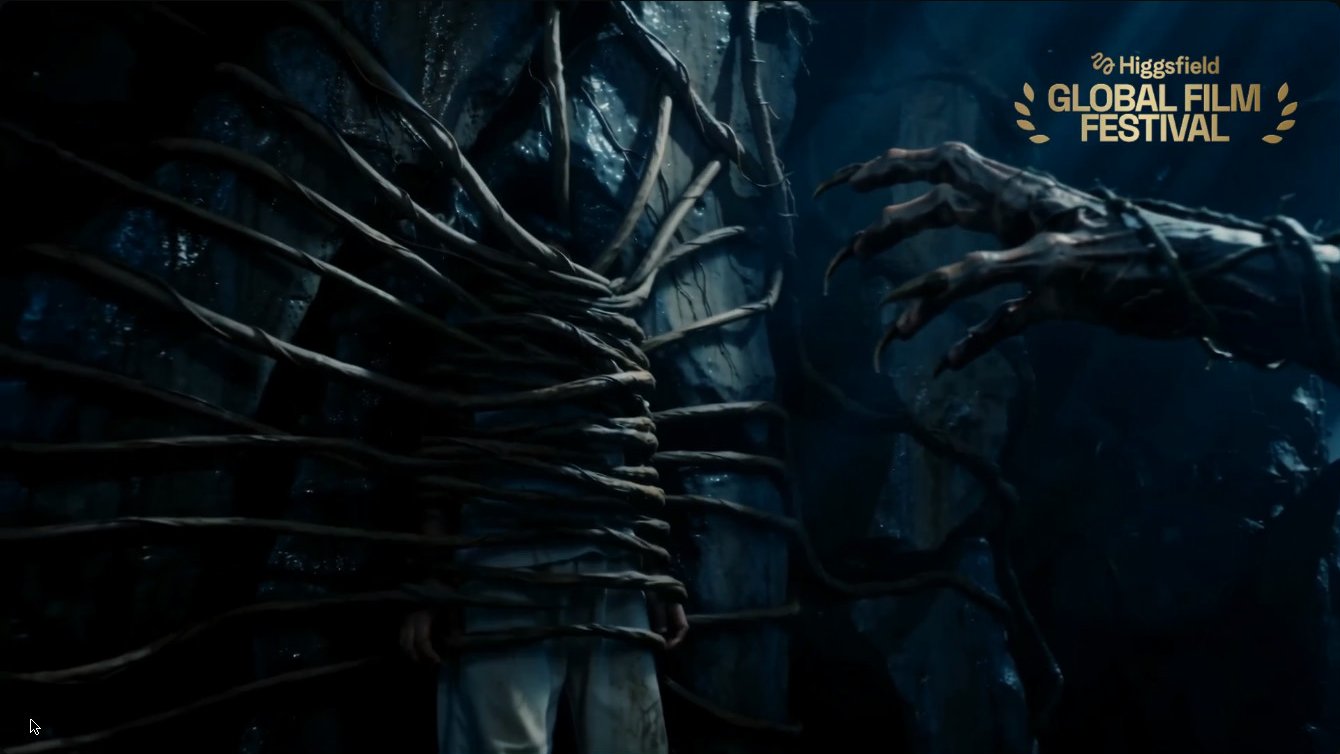
The film does not begin with its hero. It begins with a boy already lost: Ravi, a teenager bound in thick black vines in a dark cave, while a huge clawed vine-hand reaches toward him out of the dark. He is not being killed. He is being kept. That distinction — kept, not killed — is the whole film in one image.
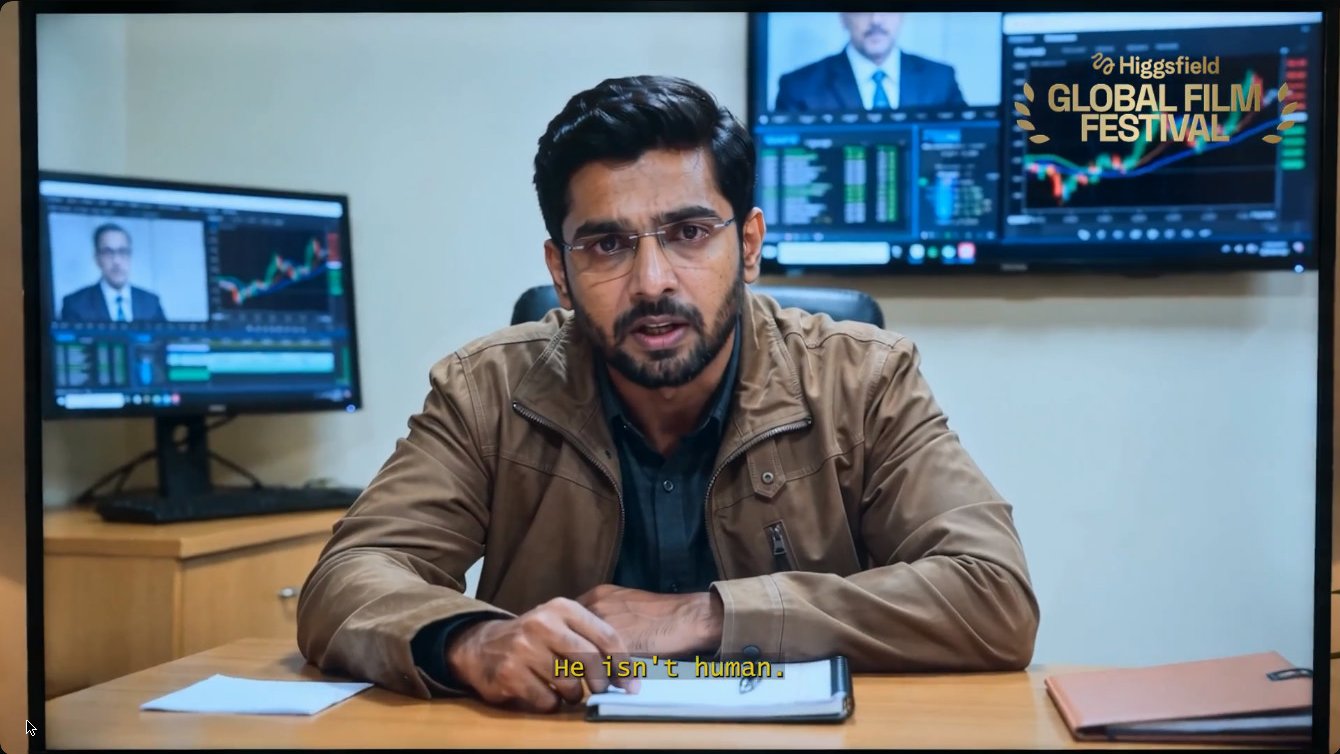
Then the town from the air — a temple, an arched gate — and the news running underneath it: “One after another, young people are either losing their lives or falling into deep comas.” At home, Jai watches a researcher on television try to explain what is happening. “And why is it happening?” “He isn’t human.” The creator’s own brief states the thesis outright: it doesn’t take anyone; it chooses. And the creature’s name carries the second half of the idea — Kshay means decay, not death. Whatever has come to this town is in no hurry at all.
Dread, Built Slowly
What follows is the film at its most patient and, to my mind, its most assured: a living room held in blue light — a blue sofa, red curtains, dead flowers in a vase, a wall clock presiding over it all, time itself become a motif. Jai has learned that he is chosen. His response is the darkest beat in the film, and I will describe it the way the film presents it: he takes an overdose, meaning to die by his own hand before the creature can take him on its own terms, and we find him slumped on the sofa, unconscious, in the blue light. There is nothing graphic in the staging. There does not need to be; the dread does the work.
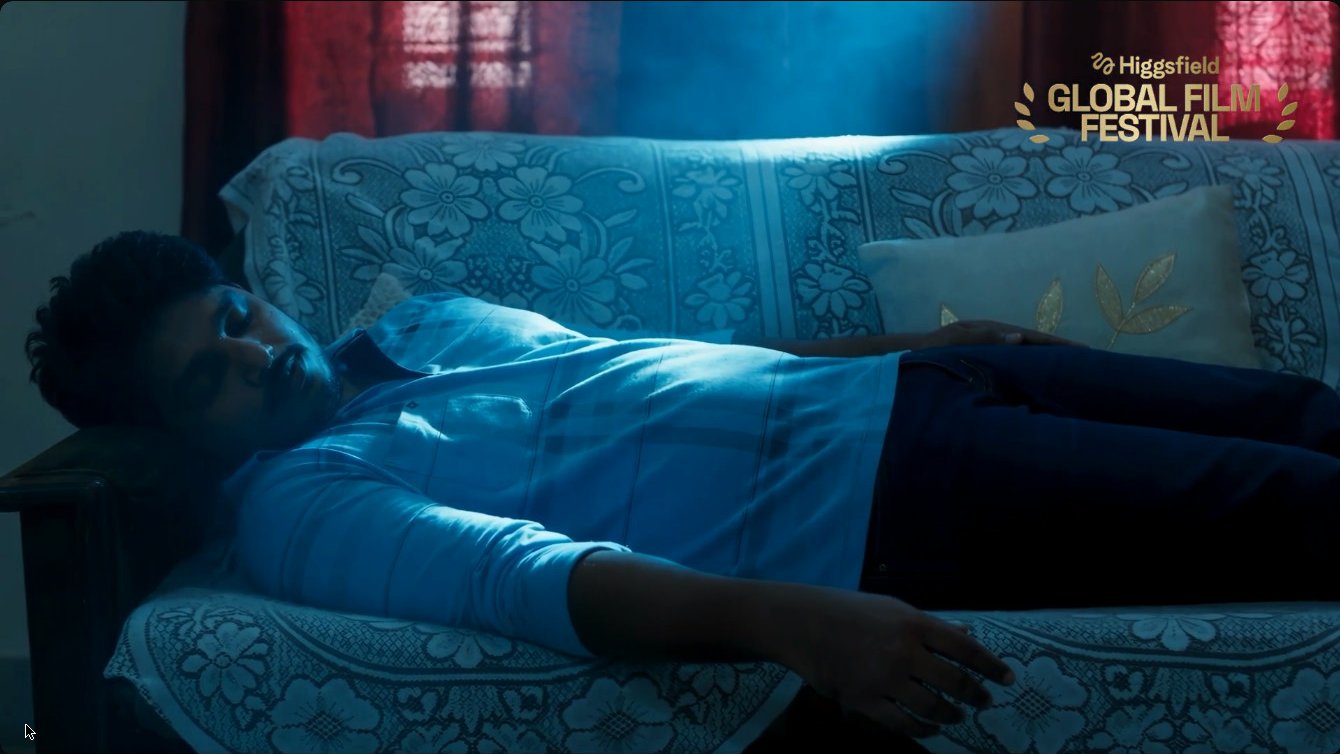
And it does not work — because the film has a rule, and the rule is worse than the alternative. Only Kshay can kill the chosen. Jai cannot even choose the manner of his own ending. Which is when, outside his house, the street begins to go black.
Best Scene (~5:00)
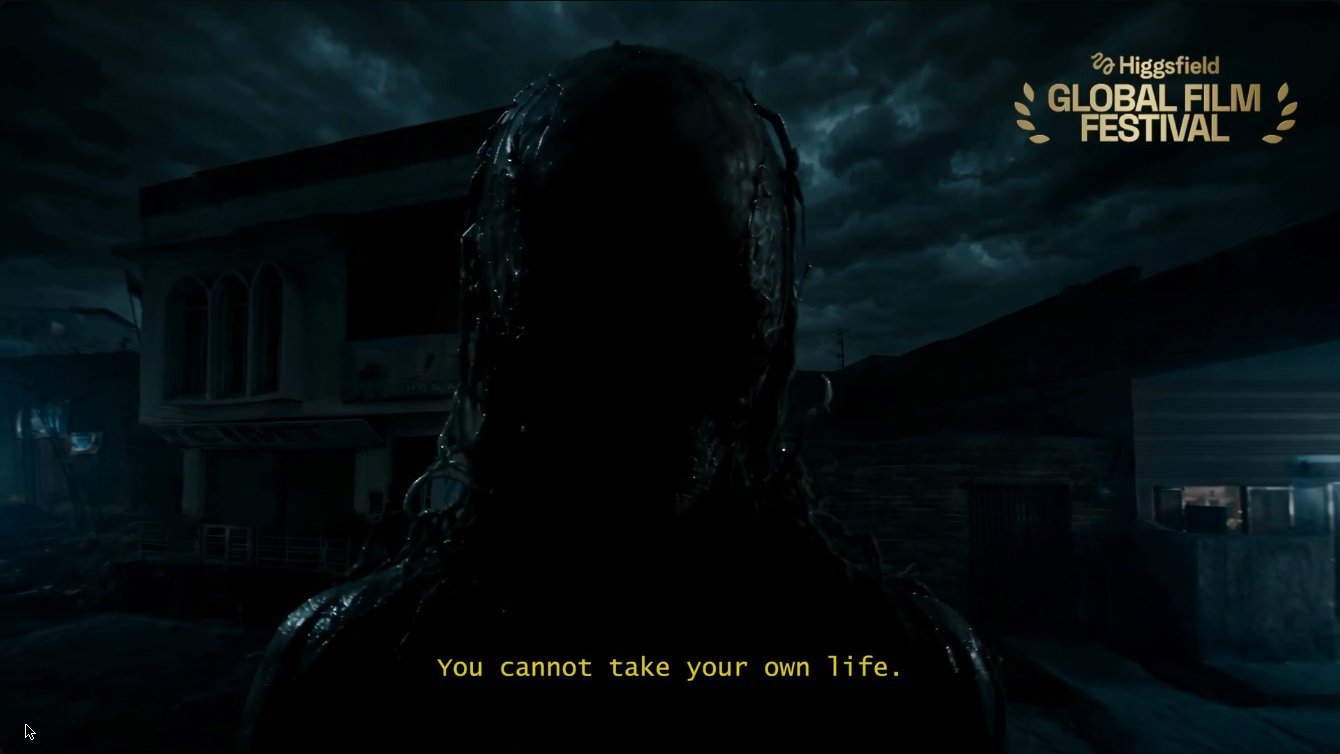
“You Cannot Take Your Own Life”
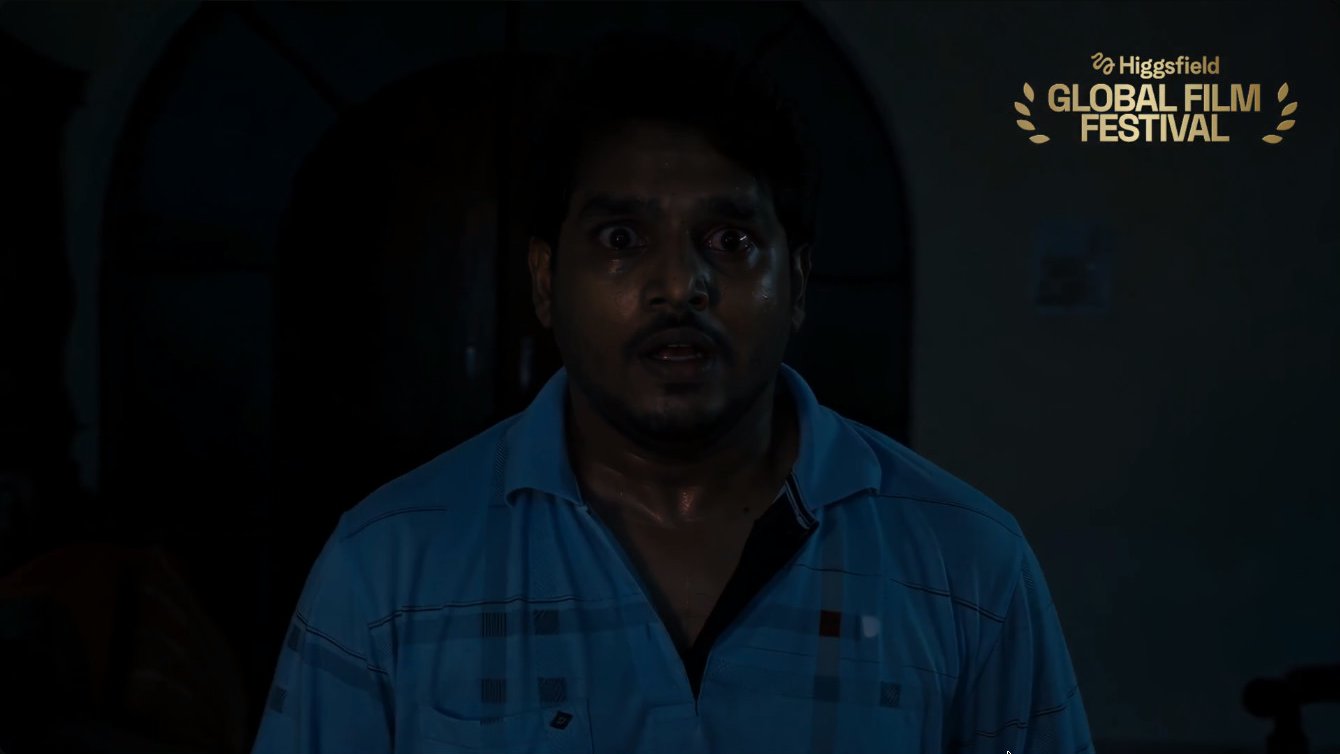
The street is dark, and Kshay has come to Jai’s house. It does not charge, and it does not roar. It stands in the middle of the road with its back to us — a gaunt, vine-covered silhouette against storm clouds — and it delivers the cruelest line in the film, which is also its entire premise: “You cannot take your own life.”
Everything the film is about is in this frame. The horror is not that Jai might die; it is that dying has been taken off the table — that even the last exit belongs to the creature. Horror films usually chase their heroes. This one simply stands in the street and waits, because waiting is what decay does. It is the most confident image in the film, still and unhurried, and the one Part 1 will be remembered by.
Dragged To The Hell
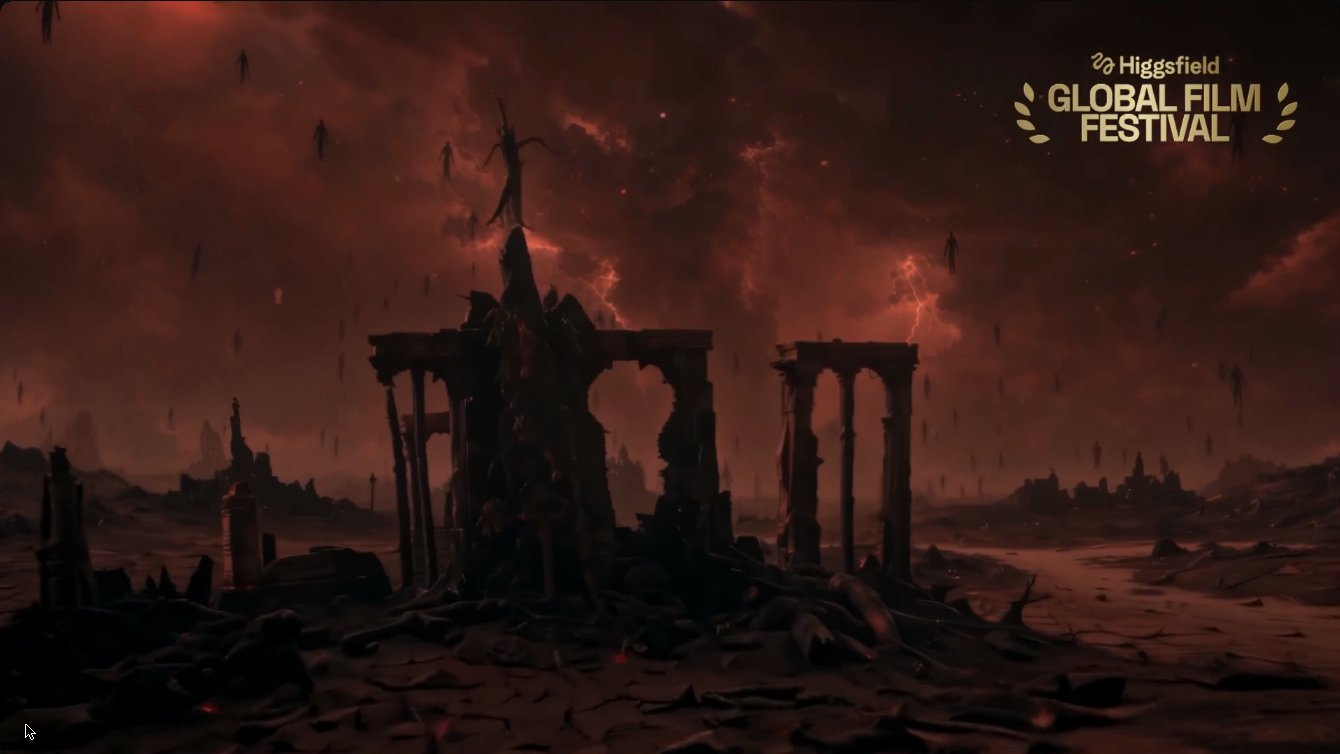
Then the film changes scale entirely. The hell realm is a blood-red sky over ruined temple pillars, silhouetted figures falling and floating through the air, lightning above a cracked red wasteland — and Jai in the middle of it, bloodied, his shirt torn, looking across it toward dark pillars. It is the film’s biggest swing, and it connects: this is not a jump-scare hell. It is a landscape, built to be surveyed, and it is surveyed with real dread.
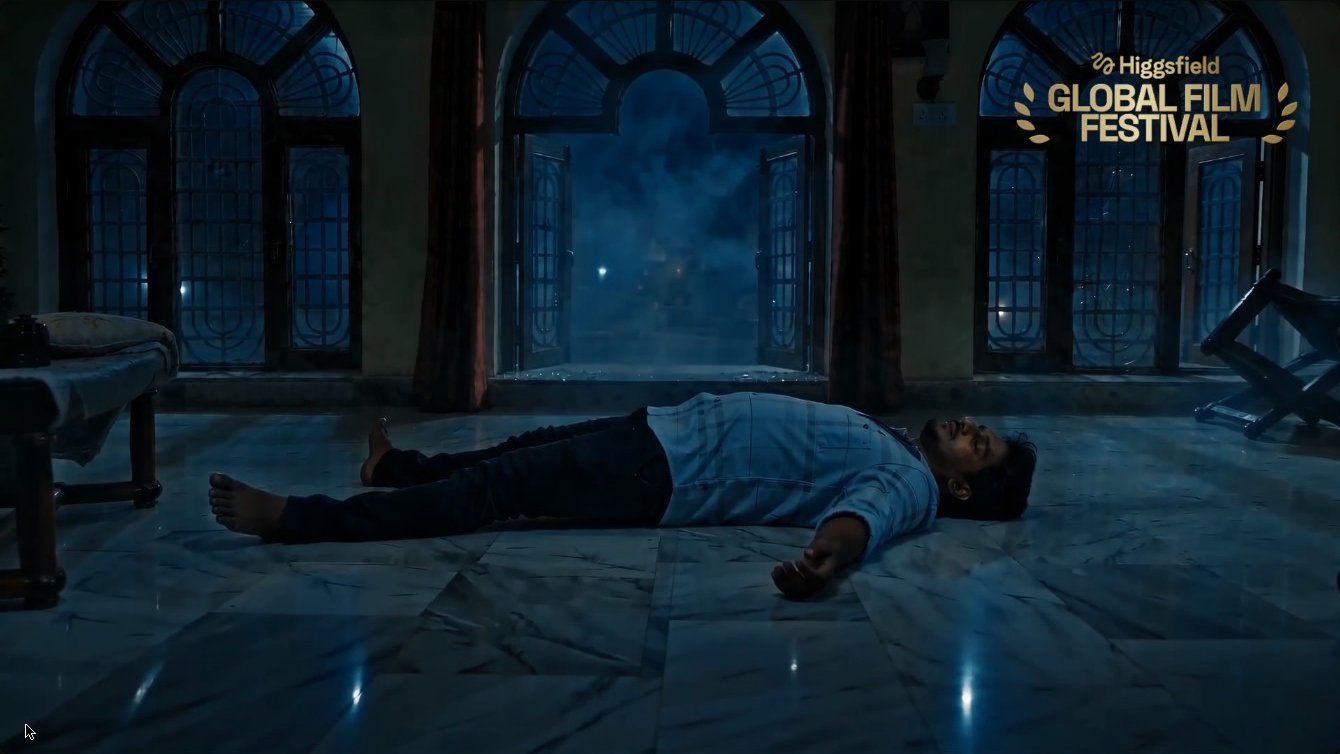
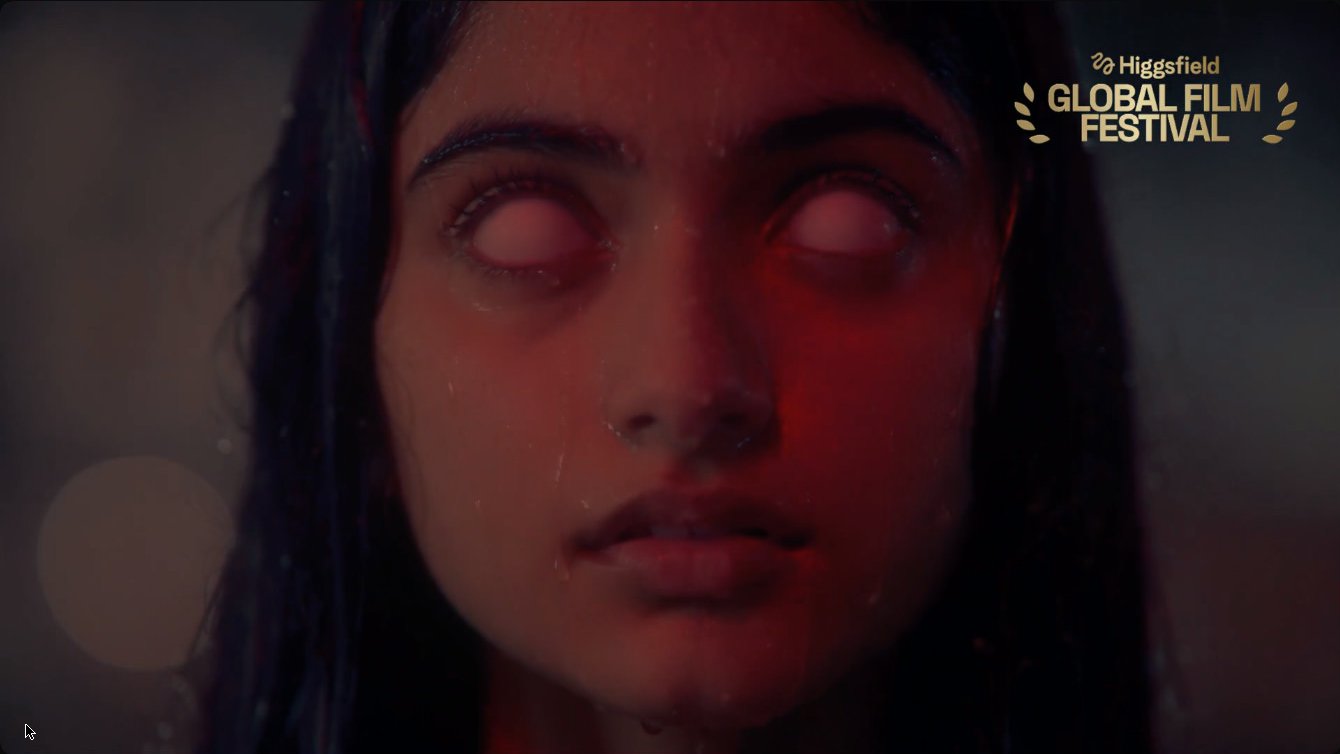
The horrors keep rotating without ever being ranked: Jai laid out on the marble floor of a blue hall with arched windows, an overturned chair beside him; a huge dark hell beast in profile, red-eyed, blood dripping from its mouth; a young woman’s face in red light, her eyes white and pupilless. And over all of it hangs one honest question, which the film raises and deliberately refuses to settle. Jai overdosed before any of this began. Everything since could be what a drugged mind sees as it fails — except that the rule explains the failure: the chosen cannot die by their own hand. The overdose explains the visions; the rule explains why the overdose did not work. Both readings stay open, and the film is better for the doubt.
It Stops Mid-Swing
Part 1 ends abruptly — more abruptly than most chapter films dare. Jai is transformed: red crystalline spiked armour, a long red crystal blade, the creature’s own power in his hands. (The creator’s brief is clear that the power is transferable, and that in Part 1 it is given to Jai.) He is fighting dark, helmeted, samurai-like warriors with glowing eyes across a grey field of exploding debris — and the film freezes on him mid-strike, another warrior looming in the foreground. No victory. No defeat. No “to be continued” card. It simply stops.
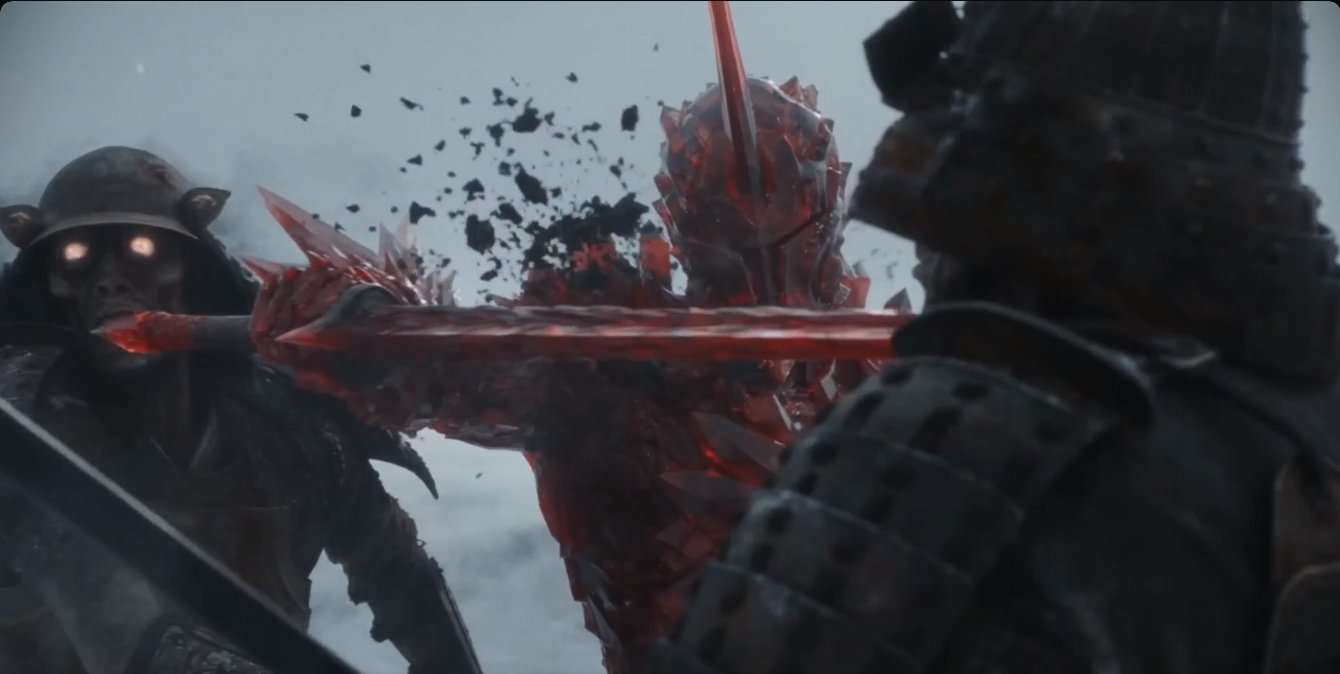
I want to be fair about what that means. Judged as a standalone short, an ending like this would be a serious mark against the film: twelve minutes of disciplined dread spent on a fight we never see finished. But the title announces a Part 1, and judged as an opener the account reads differently. The chapter closes with its hero fighting rather than surrendering — transformed, not taken — and I finished it wanting the next part. That wanting is, in the end, what a Part 1 is for.
Jai Stays Jai
On craft, the headline is consistency. Across the living room, the night street and the red hell, Jai’s face and his checked shirt hold; there are no grossly warped hands and no melting faces, which is rarer in AI horror than it should be. The blemishes are smaller ones: the monitors behind the television researcher carry the usual smudged, illegible text, and the festival logo burned into the film’s own export turns up oddly as decoration on a living-room wall. The real gap is sound. The dialogue is in Hindi, carried by the film’s burned-in English subtitles — the reliable track, and a handsome one — but the voices themselves are flat and synthetic in places, and the police and investigation thread late in the film is hard to follow in the audio. The picture is ahead of the sound here. That is the gap Part 2 should close.
Final Thoughts
Kshay Part 1 is a horror opener with a first-rate monster and a rule worse than death: the chosen cannot die, because dying would be an escape.
I would recommend it to horror viewers who like their dread slow and their hells scenic, and who can meet the film on its own terms — its content warning taken seriously, and its cliffhanger taken as a promise rather than a conclusion. On the evidence of Part 1, Shahrukh Parvez knows exactly what his creature is. I hope Part 2 lets it finish choosing.
Scene Breakdown
0:00–0:30 — The film’s own cards: entirely AI-generated, fictional, containing scenes of violence and self-harm — viewer discretion advised.
~0:55 — Ravi, bound in black vines in the cave, the clawed vine-hand reaching toward him: already taken.
~1:24 — The town from the air: “One after another, young people are either losing their lives or falling into deep comas.”
1:48–1:56 — The researcher on television: “He isn’t human.” It doesn’t take anyone. It chooses.
~3:00 — Jai slumped on the sofa in the blue-lit living room, red curtains beside him.
~5:00 — Best Scene: the street goes black; Kshay, seen from behind: “You cannot take your own life.”
~7:00 — The hell realm: blood-red sky, ruined temple pillars, figures falling and floating, lightning.
~9:40 — The hell beast in profile, red eye, blood dripping from its mouth.
~11:00 — A young woman’s face in red light, eyes white and pupilless, her face wet.
12:34 — The final frame: Jai, transformed in red crystal armour, drives his blade at a helmeted warrior — and Part 1 stops.
~1:48–1:56 — The text on the monitors behind the TV researcher is smudged and illegible.
~2:44 — The festival logo, burned into many of the film’s frames, turns up in one living-room shot as if it were wall decoration — the film’s own export quirk.
Throughout — That is most of it: Jai’s face and light-blue checked shirt stay consistent from living room to street to hell realm, and no warped hands or faces were caught.
Part 1 of a planned story, in Hindi with burned-in English subtitles. Director Shahrukh Parvez, based in Delhi, has said the film was fully updated before the festival deadline and its main character replaced — the original, based on his own face, was not eligible under the festival rules.
There are no reviews yet. Be the first one to write one.