

Download Free Original Music Songs from the films
Scores & Rankings
It Wasn’t Meant Directed by Bardicy
Find this film in
Score breakdown
- Storytelling & Structure ×28
- Emotional Connection ×28
- AI Tool Management ×29
- Visual Craft9
- Screenplay8
- Sound Design8
- Originality10
- Technical Polish8
- Rewatch Value7
×2 = core category, counts double.
Directed by Bardicy • Runtime 4:10
Film Review
Written by Kineograph
Haunted by OCD and his rich father, a man’s night out collapses when a betrayal makes his worst fears real.

Synopsis
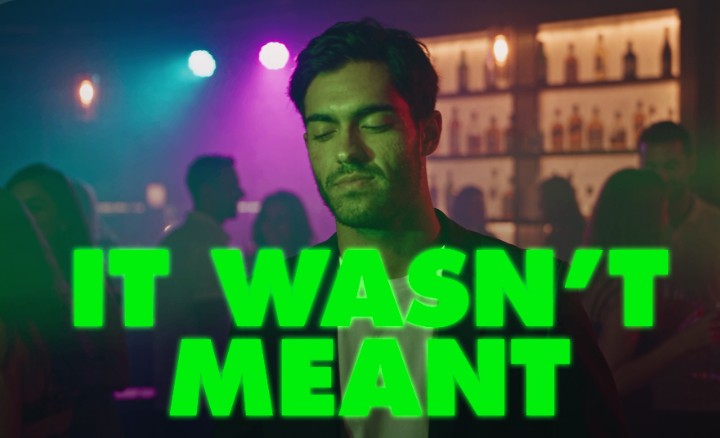
Adam is a young man living with the exhausting grip of obsessive-compulsive impulses, and every day he does what he always does: he checks the electrics, again and again, to make sure everything at home is safe. One night, his cousin invites him to go to the club with her, and for once he decides to say yes.
He leaves without checking. His cousin tells him to loosen up and not to worry about it. For a few hours, he is free. He has fun. And while he does, a fire starts at his house.

The Review
One Night of Freedom
The film begins with something very human: the wish to be like everyone else for one evening. Adam does not go to the club because he stops caring. He goes because he is tired, and because someone he trusts tells him it will be fine. The scenes of him letting go are bright and joyful, and they are meant to be. We want him to have this. We want, just once, for his racing mind to quiet down.
That is what makes everything that follows so painful. The film places a short stretch of happiness next to an enormous loss, and it does not let us look away from the distance between the two. The euphoria and the devastation are only a few moments apart, which is exactly how disasters tend to feel when they arrive.


Living with OCD, Handled With Care
What stands out most is how the film treats Adam’s OCD. It is not a quirk and it is not a punchline. It is shown as a real, tiring battle that sits at the center of his everyday life: the fixations, the intrusive doubts, the checking that never feels like enough. The film understands that for someone living with it, checking the stove is not about being careful. It is about trying to quiet a fear that never fully goes away.
Because the film takes his condition seriously, the moment he leaves without checking carries real weight. For anyone who has never lived with it, it may look like a small thing. The film helps us understand why it is enormous.
Drowning in Guilt
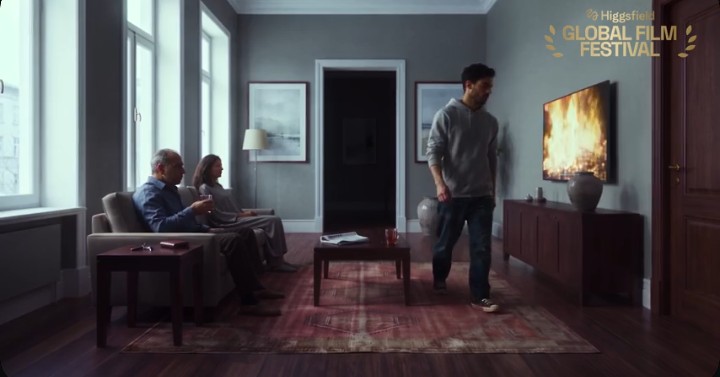
When the fire takes his parents, the film turns from celebration to grief with brutal speed. Adam is left drowning in guilt, convinced that he could have prevented it, and that it was his fault for not checking the stove. It is a heartbreaking portrait of how guilt can take over a mind that is already carrying so much. And the cruelty of it is that his own fear seems to be proven right. The thing he has been afraid of for years has finally happened, and in his mind, it happened because he let go.

The Betrayal
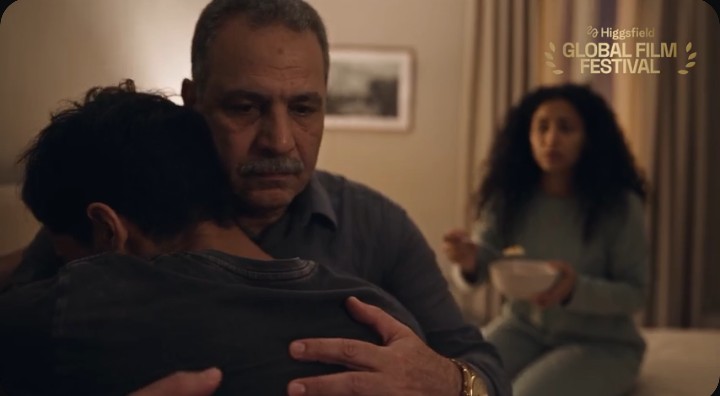
Then comes the twist that gives the film its real sting. Adam’s uncle caused the fire. He wanted his nephew to believe it was his own fault, so that he could control the money left behind by his brother, Adam’s father.
It is a chilling revelation, and it recasts everything we have seen. The guilt Adam carries was never simply his own. It was planted and nurtured by someone who understood exactly how his mind works. The uncle did not just take his family from him. He turned Adam’s deepest vulnerability into a weapon, using the very thing that makes Adam careful to make him feel responsible. That is a quiet kind of evil, and it is all the more disturbing because it comes from inside the family.

What the Film Is Really Saying
The filmmaker describes the message this way: our most destructive battles are not always external, and when unaddressed obsessive fixations and quiet fractures in trust line up, a single overlooked moment can dismantle everything we hold onto. It is a cautionary exploration of accountability, and of how running from internal turmoil through fleeting escapism can magnify the fallout.
But the twist adds something that I find even more important. It reminds us that the guilt we feel is not always an honest measure of what we did. Sometimes it is something placed on us by someone else, and the first step toward freedom is asking whether it was ever ours to carry. Read that way, the title takes on a tender second meaning: it wasn’t meant to happen, and it wasn’t his fault. That reading is my own, but I think the film earns it.
A Glimpse of a Larger Story
It is worth noting that this short is a focused vignette from a feature-length screenplay the director wrote. You can feel that. In just over four minutes, the film builds a character, a family, a loss, and a betrayal, and it leaves the sense that there is much more to say. It makes me want to see the rest.
Final Thoughts
It Wasn’t Meant is a compact, emotional psychological drama about obsession, guilt, and betrayal, and it treats living with OCD with honesty and care. It shows how thin the line is between a night of freedom and a lifetime of grief, and how cruel it is when someone else uses a person’s deepest fear against them.
It will leave you thinking about the weight we carry for things that were never our fault, and about the people who are kind enough to help us put it down.
Reader Reviews
There are no reviews yet. Be the first one to write one.