

Ndakainamatira Nyaya Iyoyi
 GraceWave
Score breakdown
11.9M views
Single Review
Written by Kineograph
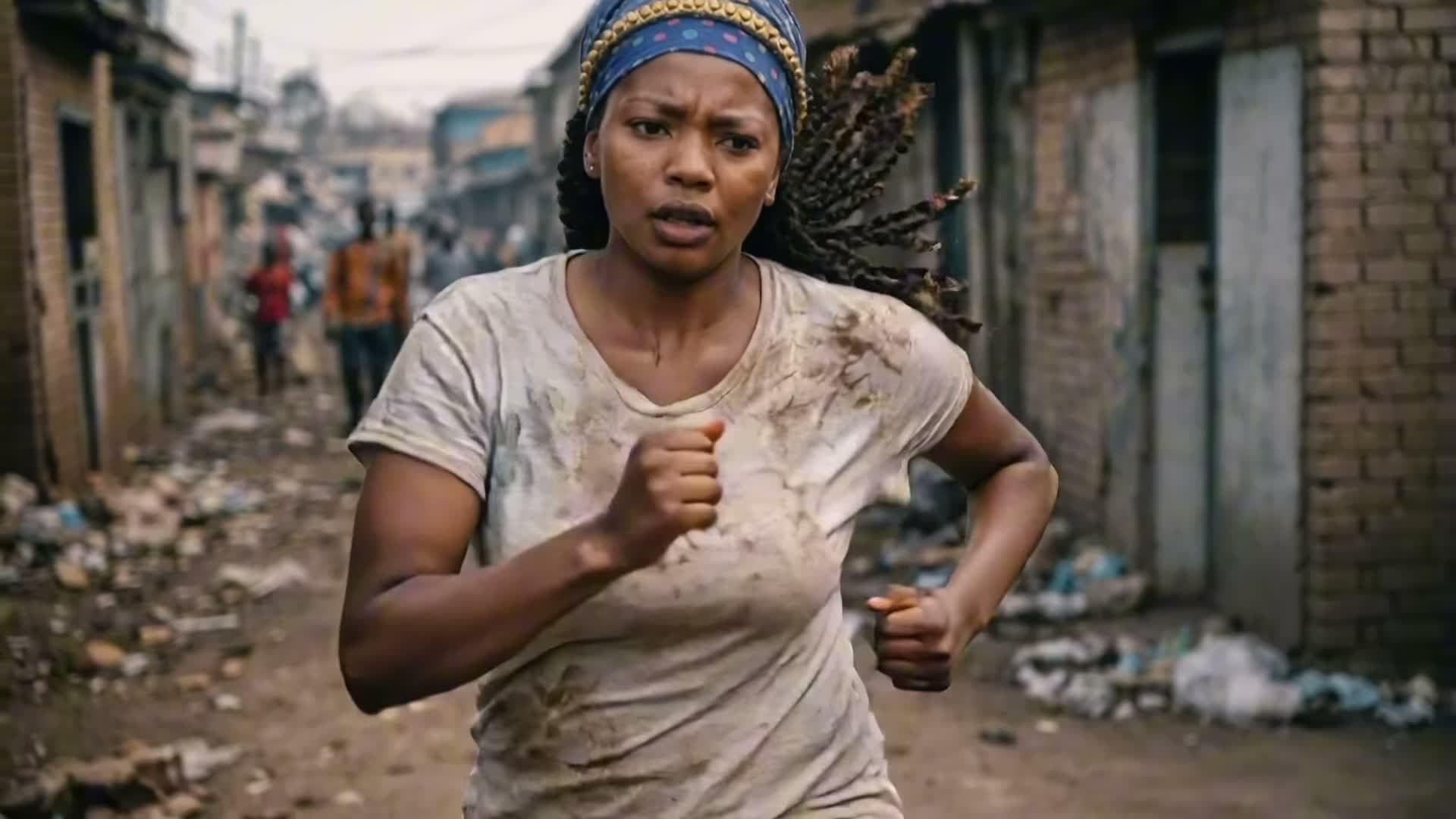
A woman prays in a poor street, on a bare floor, in a parked car, in an empty church — and the film waits until its final seconds to show you what the praying was for.
The Song
The singing arrives in blocks, with instrumental stretches between them that give the film room to change scenes — worship built like a story, not a loop. There are calls of “Hei!” over the opening seconds, a lead voice that sings like it means every word, and at 3:12 the film cuts to the singer herself at a studio microphone, white hoodie, eyes closed, which reframes everything around it as performance and testimony at once. The refrain returns at the same points the prayer does — around 1:57 and again near 3:41 — and the arrangement saves its fullest sound for the hospital sequence. It runs 4:21 and earns most of them.

The Film
Read in order, the scenes are a life being prayed through: desperation first (the street, the floor), persistence next (the car at night, the church pews), then the turn — a doctor in a corridor at 3:48, and at about 4:12 the woman herself, smiling, holding a newborn baby. The film never states what the years before cost her, and it does not have to; the early frames of grief do that work. It is the most complete short story either of our music batches has carried. Its weaknesses are the familiar ones: the woman’s face is not quite the same woman in every chapter, and the film’s biggest moment is slightly fumbled by its own framing.
Best Moment (4:12)
The smile, and the newborn
After four minutes of praying in streets and empty rooms, the last scene answers in one shot: a hospital, a beaming mother, a baby’s head at the bottom of the frame. “Based on a true story,” the description says. This is the frame eleven million people came for.
Where It Strains
In continuity: the street woman in the headwrap and the woman of the church and hospital chapters are played as one life but not quite one face. There is a full black frame at about 1:00 that lands like a dropped stitch between chapters. And at the climax the camera crops the baby mostly out of its own reveal.
Final Thoughts
A testimony with a beginning, a middle and a baby — the rare AI single that trusts a story to do what a chorus usually does.
Play it when someone you know is still waiting for their own last scene.
Scene Breakdown
0:00–0:20 — Calls over the opening; a woman running, then kneeling to pray in a poor street.
0:36 — On a bare floor, head in her hands.
~1:00 — A black frame; the story changes rooms.
1:48 — Praying with clasped hands in a parked car at night.
2:36 — The same prayer in an empty church.
3:12 — The singer at a studio microphone, eyes closed.
3:48–4:21 — A hospital corridor, a hurrying doctor — and the newborn.
Video: the lead’s identity drifts between chapters (the street woman differs from the church/hospital woman, though a white lace outfit links the later scenes); hands blur and fuse in the hospital corridor (~3:48); a full black frame at ~1:00; the newborn at ~4:12 is mostly cropped out of the bottom of the frame.
Audio: no artefacts we could identify; note that automatic captions garble the Shona badly, which is a captioning failure, not a fault in the singing.
Single by GraceWave. The description’s own line “PRAY. IT WORKS — BASED ON A TRUE STORY” is quoted as published. Details are from the video’s YouTube page and our own listening.
There are no reviews yet. Be the first one to write one.