
Download Free Original Music Songs from the films
Scores & Rankings
Vortex Directed by Fele Gobina
Find this film in
Score breakdown
- Storytelling & Structure ×210
- Emotional Connection ×210
- AI Tool Management ×29
- Visual Craft10
- Screenplay10
- Sound Design10
- Originality10
- Technical Polish10
- Rewatch Value10
×2 = core category, counts double.
Film Review
VORTEX
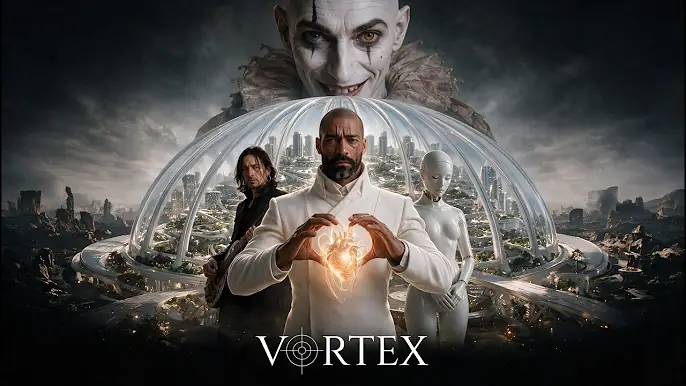
Inside a domed civilization that has known seventy years of peace, a king begins to remember what he built his kingdom to forget. Beneath the science fiction is a father’s story — how far a man will go, and how much of himself he is willing to erase, to keep his daughter safe.
Synopsis
Vortex is a science-fiction drama set in a post-apocalyptic world where a thriving civilization survives inside a vast protected dome. For seventy years, its people have known stability, prosperity, and freedom from war, disease, and poverty under the rule of Rudolf, a charismatic king who has become inseparable from the city itself. During the anniversary celebration of this seemingly perfect society, the appearance of a strange performer begins to disturb the order Rudolf has spent decades preserving. Fragmented images, unfamiliar music, and traces of a memory he cannot explain start breaking through his carefully constructed reality — and as he searches for their source, Rudolf is forced to question the world he created, and the things we choose to forget in order to feel safe.
The Review
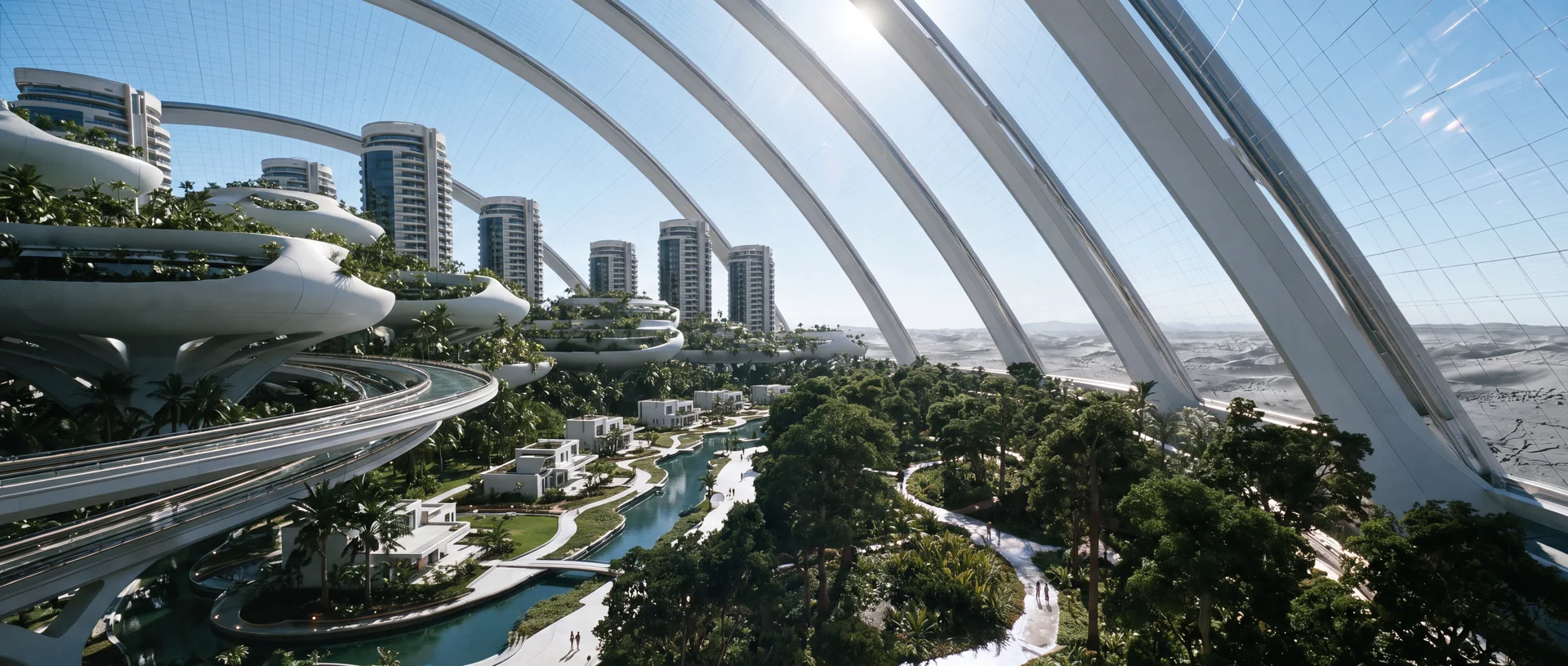
There is a version of Vortex that plays as pure world-building spectacle, and for its opening stretch, that’s exactly what it delivers. The dome city is magnificent from the first frame — a place the film clearly wants you to want more of, and it earns that curiosity through sweeping, confident establishing shots that let the scale of the civilization speak for itself before a single line of exposition explains it. Underneath that spectacle, though, is a much smaller, much harder story, and it’s the one that actually stays with you: a father, faced with an impossible choice, willing to erase himself entirely to save his daughter.
The score deserves real credit here. The soundtrack in the opening minutes strikes exactly the right register — wonderous, faintly magical, but grounded enough to never tip into fantasy. And then there is the original song, first heard from a lone guitar player and later reprised as the film’s recurring emotional signature: “El que lo sabe todo, el que no sabe nada” — the one who knows it all, knows nothing. It’s a haunting, deceptively simple line, repeated at the moments that matter most, and it does what a great original song is supposed to do in a film like this: it becomes the emotional shorthand for everything the story can’t say in dialogue. This is, without question, a Best Original Song contender. Few scores this year have carried this much narrative weight on a single repeated phrase.
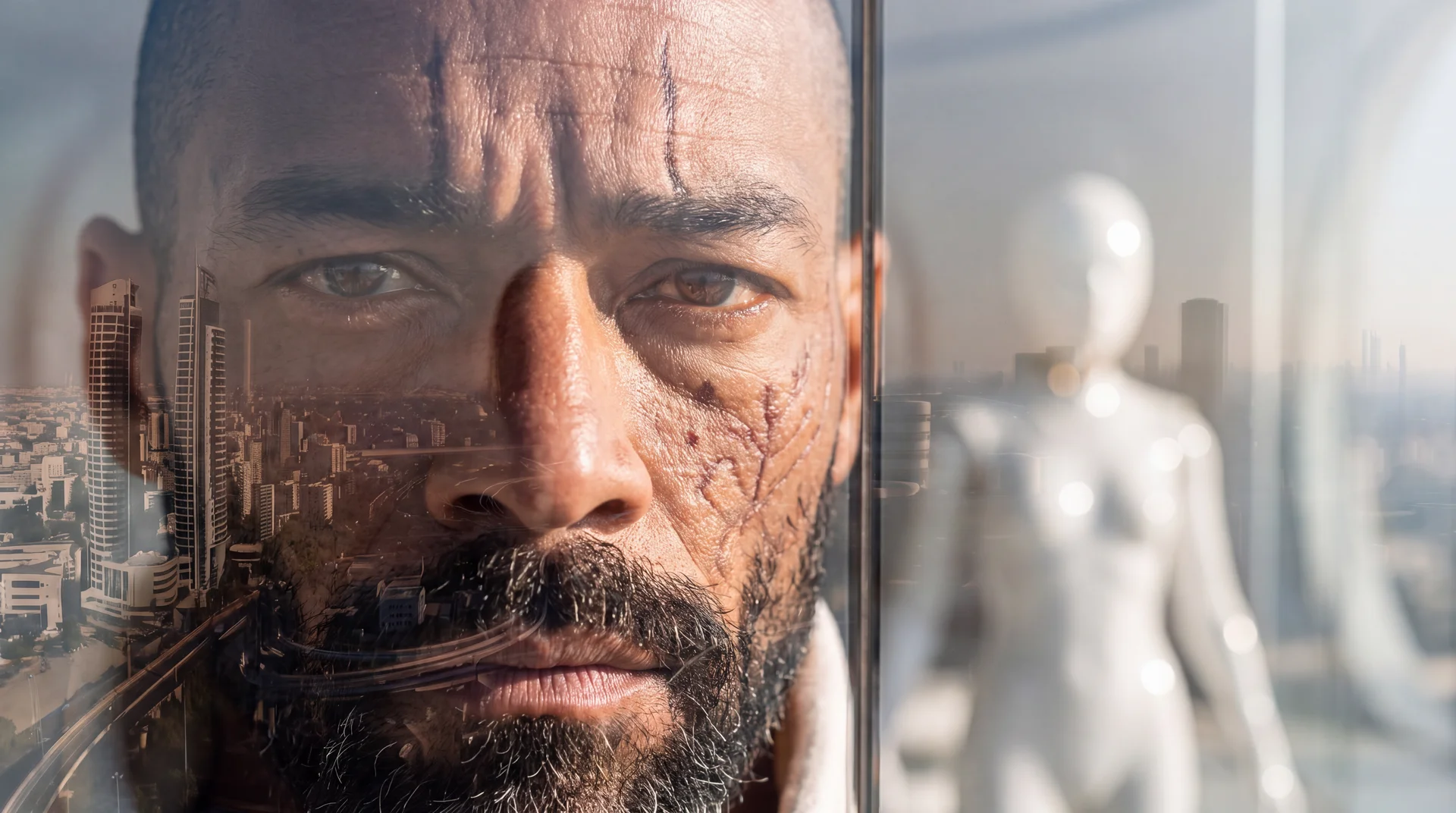
In the interest of an honest review, the film does stumble in its middle stretch. Around the twelve-minute mark, a dialogue exchange feels underdeveloped, as if a connecting scene was left on the cutting-room floor. And for a handful of minutes starting around 13:25, the illusion the first act so carefully built briefly cracks — a reaction beat from the king that doesn’t quite land, a performance that momentarily loses the specific flow that made the character feel so alive up to that point. It’s a small stumble in an otherwise disciplined film, and it’s worth naming precisely because everything the film gets right elsewhere makes it stand out by contrast.
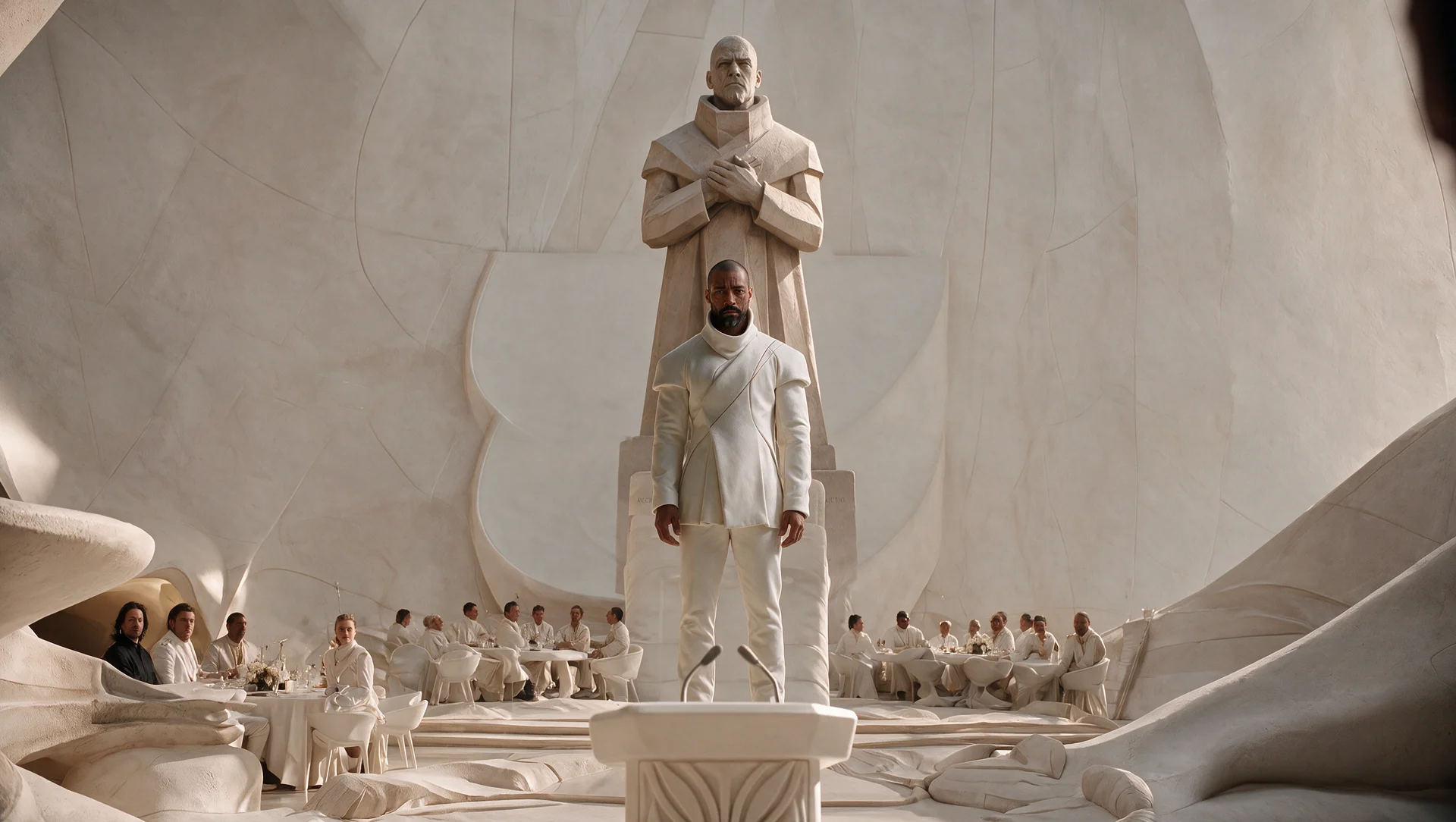
Visually, the film takes a genuine risk in the sequence leading up to the 18-minute mark — a rapid, disorienting camera technique that spins around the character from every conceivable angle, behind, above, beside. It is a legitimate technical showcase, proof of real command over the tools at hand, even if its intensity may be difficult for some viewers to sit with. And then it resolves into the film’s defining moment.

The unbroken handheld take from 18:19 to 19:58 is, simply, cinema gold. Nearly a minute and forty seconds of sustained, smooth, handheld camerawork that never breaks its composure, never cuts away, never lets the tension drop — this is the kind of shot that takes extraordinary planning and execution to pull off, and it’s a genuine achievement, especially within a generative pipeline where sustained continuity like this is exceptionally difficult to hold. It’s the film’s best single piece of filmmaking, full stop, and it’s the sequence that makes the entire watch worth it.
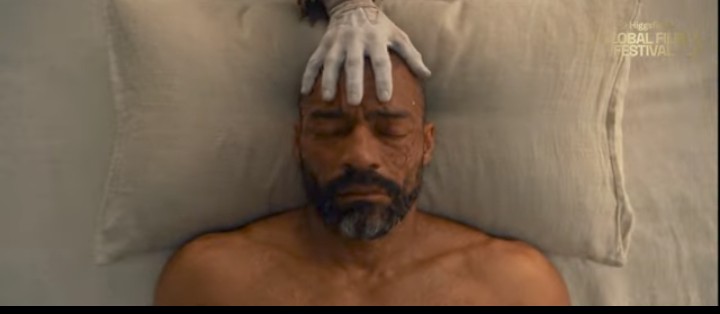
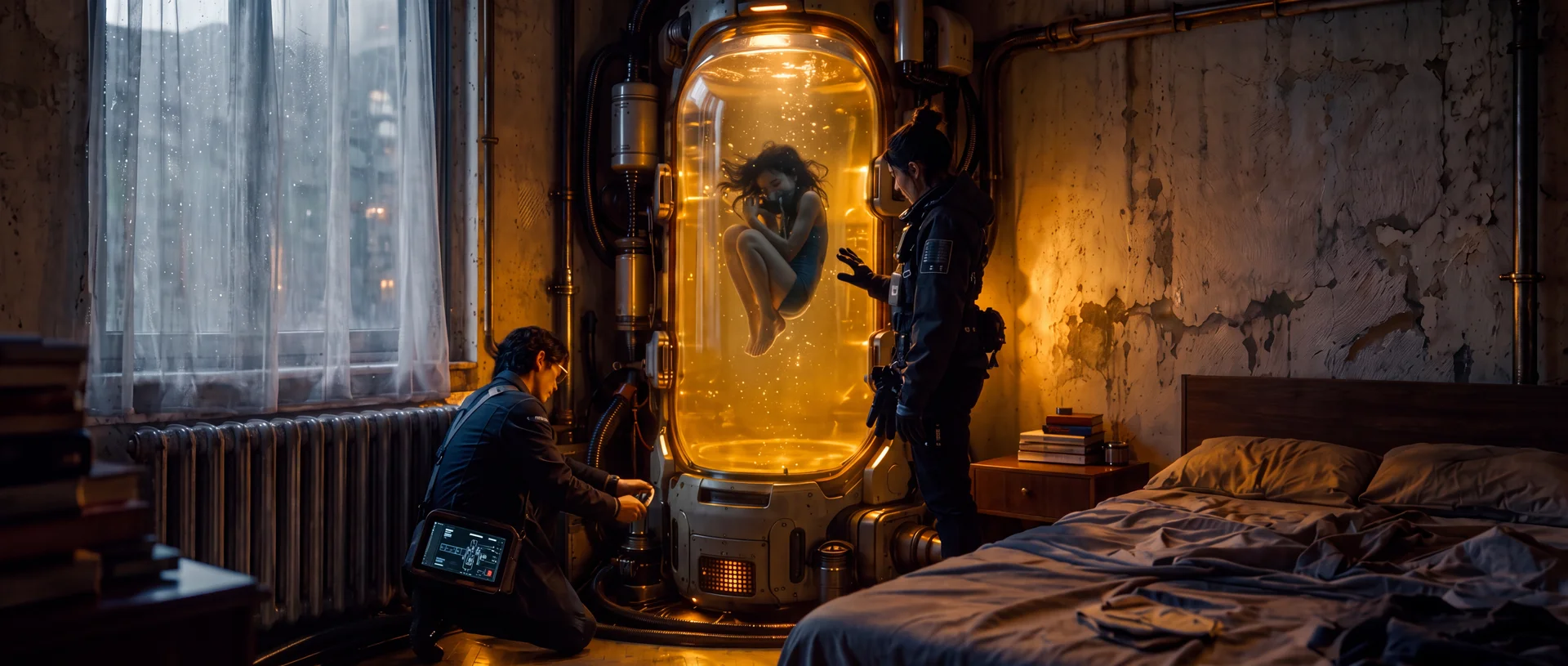
Where the film closes is where its real subject reveals itself. What plays throughout as science fiction — a domed civilization, a fractured memory, a king unraveling — is, underneath all of it, a story about a father who gave up everything to protect his daughter. The final seconds answer the question the whole film has been quietly asking: how did this man go from ruling a kingdom to giving away his own heart? He took her place. He is not the king anymore, not really — he is a father, asleep inside a tube, having traded his entire identity for one more chance at her survival. It’s a devastating, tender inversion of everything the film spent its runtime building, and it recontextualizes every earlier scene of Rudolf’s confusion as something far more human: a man losing a life he willingly gave away.

Beneath its science-fiction architecture, Vortex is a father-daughter story told with real ambition, one extraordinary standout shot, and an original song that will stay with you long after the credits. A film about the price we’re willing to pay for the people we love — and about a man who paid it in full.
Scene-by-Scene Breakdown
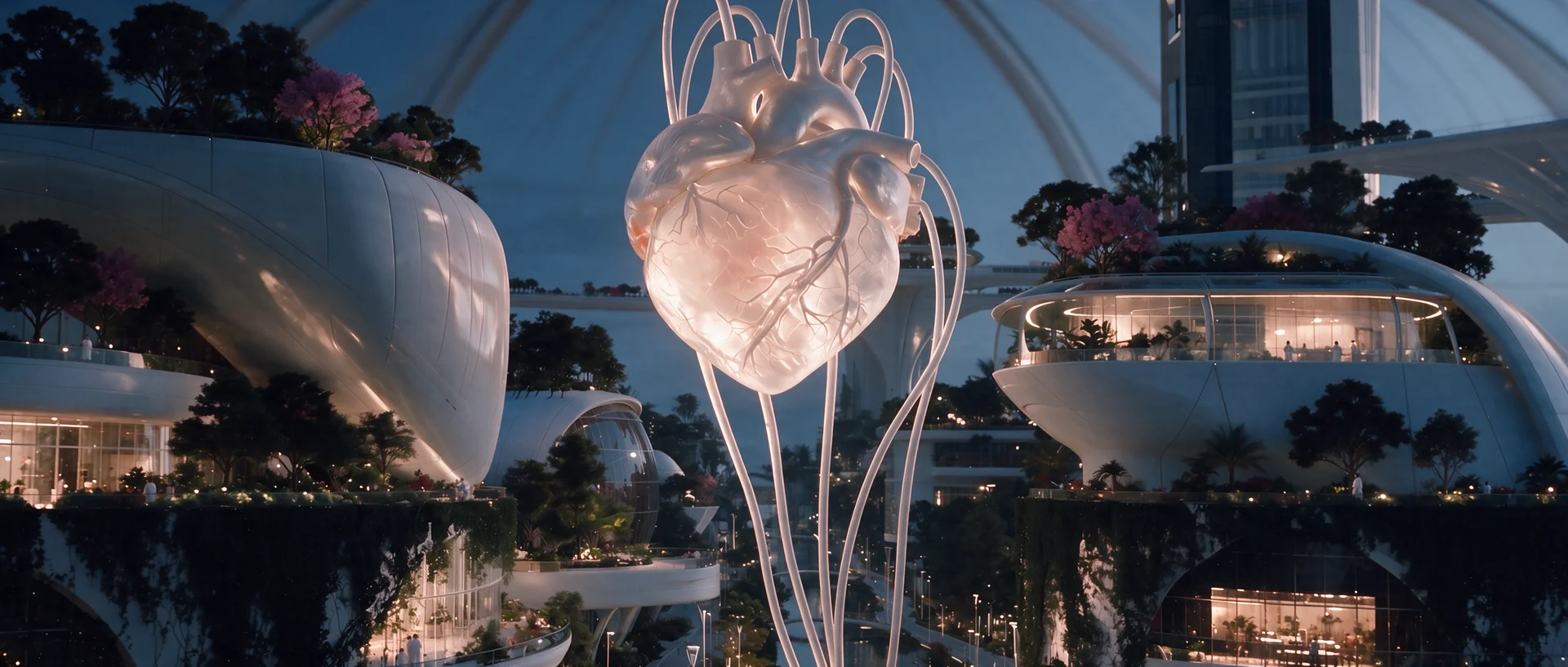
The intro is magnificent — a world you immediately want to see more of. Confident, scale-driven establishing work.
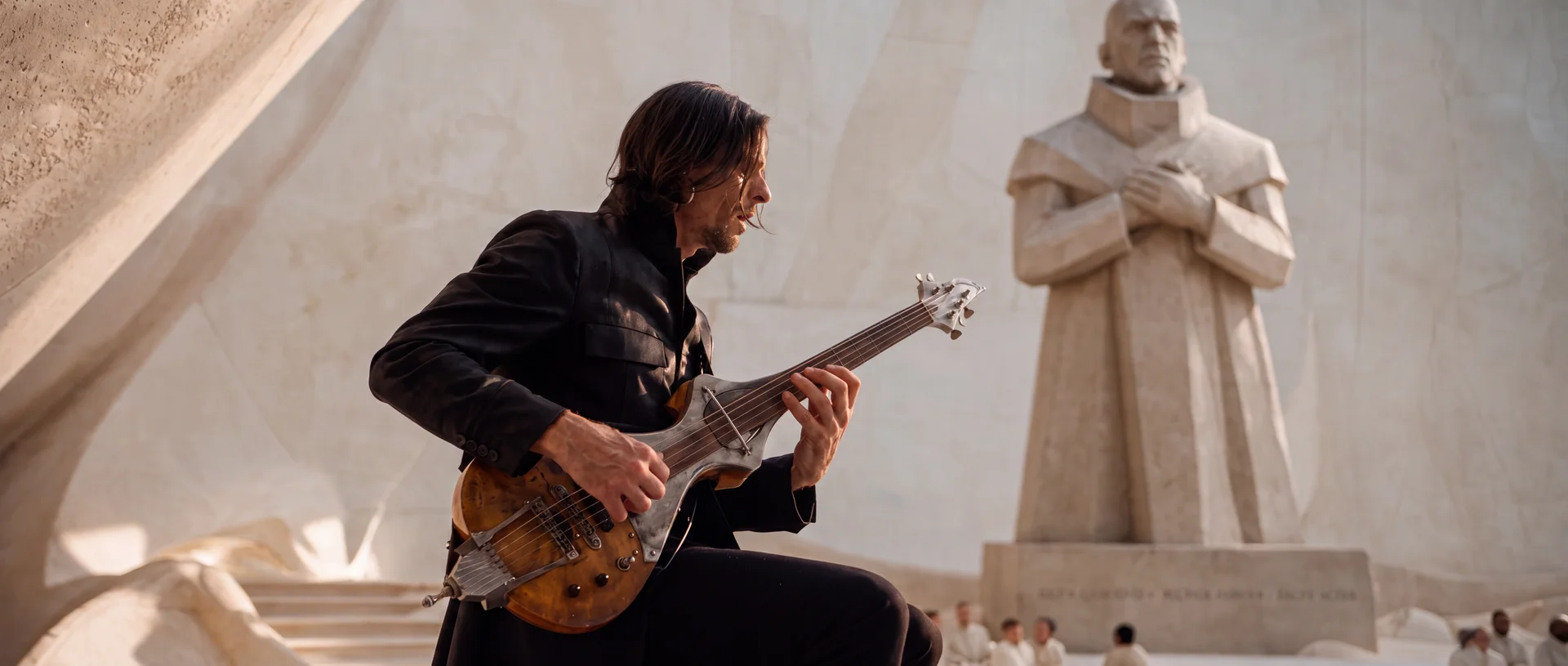
The score is exactly right for the visuals — wondrous, a bit magical, but real enough to keep the world grounded.
A beautiful sweeping shot over the city. Incredible, and one of the film’s clearest displays of scale.
The guitar player’s song is soothing and understated — the first appearance of the melody that becomes the film’s recurring emotional thread.
“El que lo sabe todo, el que no sabe nada” — the one who knows it all, knows nothing. A captivating character introduction, carried by gesture and by a song that is simply excellent.
The dialogue here doesn’t quite land — it reads as though a connecting scene is missing, and the exchange feels less purposeful than the rest of the film.
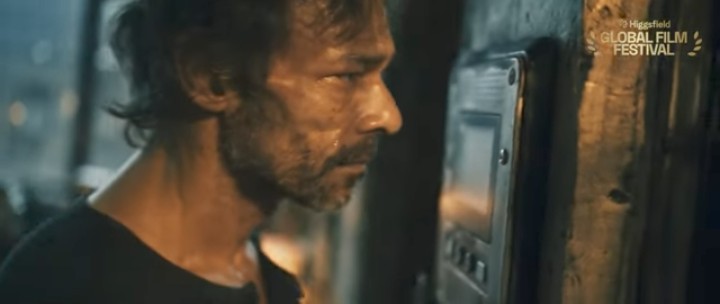
Up to this point, the film plays with the immersion of a Hollywood production. From here, the illusion briefly cracks — a reaction from the king, following a struck bandit, that feels out of step with the character established in the first act. The performance loses the specific flow that had defined him up to now, and the singer feels slightly off as well. A rare wobble in an otherwise disciplined film.
A technically ambitious sequence — the camera spins around the character from every angle, behind, above, beside, showcasing real skill with the tools at hand. It’s a genuinely beautiful, high-difficulty shot, though its rapid, disorienting motion may be intense for some viewers to watch comfortably.

Cinema gold. An incredible, unbroken handheld take running nearly a minute and forty seconds, executed with a smoothness that must have taken an extraordinary amount of effort to achieve. This is the standout achievement of the entire film — sustained camera control, tension, and composure held for the full length of the shot without a single break in the illusion. It is, simply, perfection.
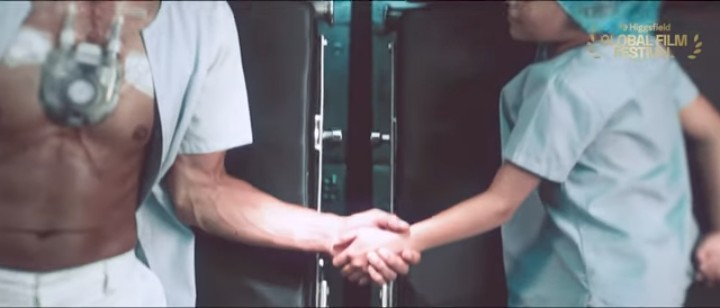
The closing narration, meant to serve as the voice of reason, doesn’t quite land vocally — it pulls back from the dread and sorrow the scene is reaching for, at exactly the moment the father’s helplessness to save his daughter should hit hardest.
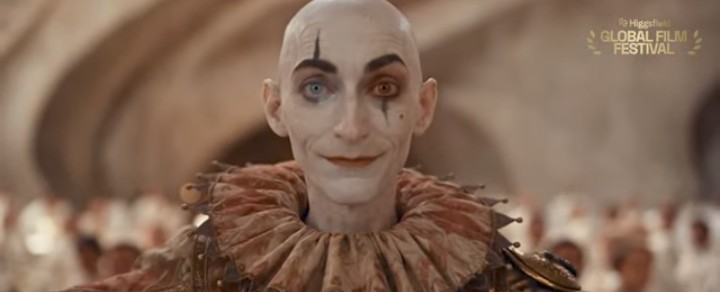
“El que lo sabe todo, el que no sabe nada” returns one final time. The ending is genuinely touching — the mystery of what happened to the father resolves in the final second: he traded his place as king for his daughter’s survival, and now exists in a dream-state inside the tube. Everything the film withheld about his confusion finally makes sense.

Reader Reviews
There are no reviews yet. Be the first one to write one.