
 Khaled El Refay
 Creator ID26-11-01-0267

Score breakdown
23 views en Kineograph
Film Review
Synopsis
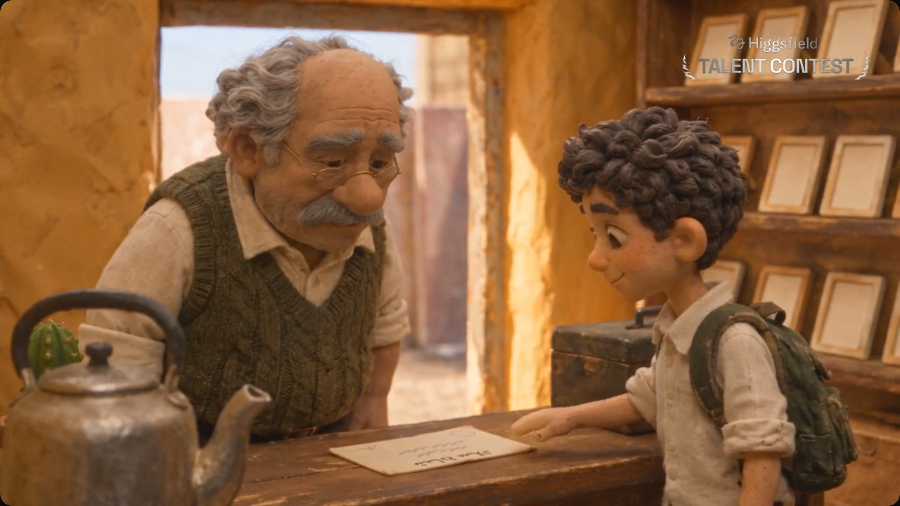
Ragab’s studio has ochre walls, shelves of empty frames, a camera on a tripod and a kettle for tea. His customers get the same three instructions: “Sit. Look at the camera. Don’t smile.” Hamdy, an old man in for a pension photo, tells him, “My wife fixed my collar for photos. She died in winter,” and asks, “Next time, take it like someone will miss me.” Ragab says nothing — but he keeps a box of old photographs, and he understands. Then Yassin arrives: “Do you print a photo for school?” “It’s not free.” “I’ll pay you when I sell.” The boy works; his uncle is his guardian on paper; his mother is in Minya. A school photo needs a guardian’s signature, the office refuses without one — “No guardian signature. Bring me his uncle. Tomorrow” — and Ragab makes his decision the way he does everything, flatly: “He earns 50 pounds a day. School is not free. I’ll pay. His mother signs. I take him to Minya. First train.”
The Knot
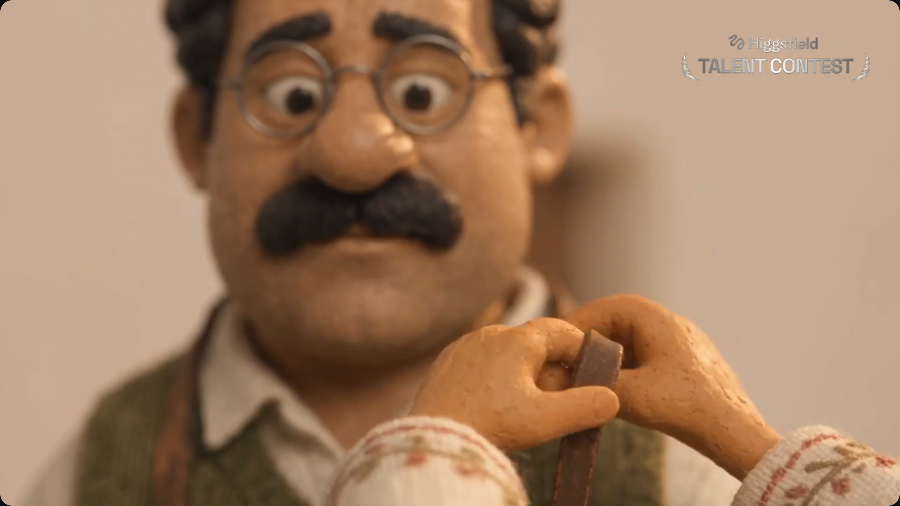
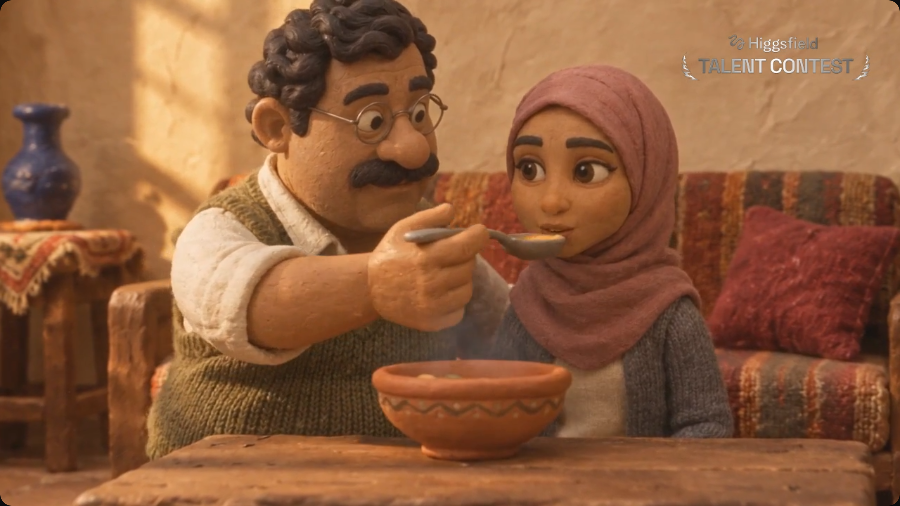
Every turning point in this film passes through a knot. Ragab’s camera strap is tied in one, and at the government office, refused and raging quietly, he clutches the strap with the knot huge in the foreground of the shot — a man holding on to the one thing he has left to hold. On the train, Yassin finally asks: “Why is it tied?” “My wife tied it.” “So you don’t drop it.” “Where is she?” “She got sick.” And the film cuts to Samira in a bed, pink headscarf, Ragab spoon-feeding her soup, holding her hand — no dialogue, no swelling speech, just care remembered at the speed of a train window. The knot is the film’s whole method in miniature: a small, practical, handmade thing, tied by love, that keeps the precious thing from being dropped. It is there again across his chest beside his sling at the end, and hanging beside the camera for the final portrait. (One continuity slip: the strap changes colour between the office and the aftermath — a small thing, noticed only because the film has taught us to watch that strap so closely.)
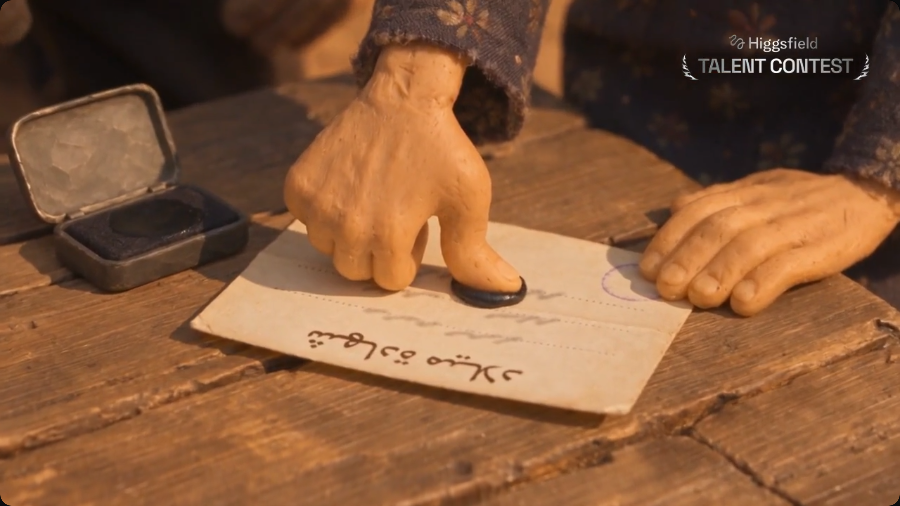
In Minya the mother, who cannot read the papers, says what poverty says: “I can’t read your papers. He works. It’s enough.” Ragab answers with the film’s thesis in one dry line: “He’s smiling. I told him not to.” She signs with her thumbprint — the camera holds on her thumb pressed to the ink pad — and the village portrait is taken against a mud-brick wall. New black school shoes appear in a box on top of the stamped paper, tied with a red ribbon.
What the Film Trusts You to Feel
The last act contains the film’s boldest and most debatable choice. Yassin, triumphant on the street — “Mr. Ragab, I sold! I can pay you!” — and then the film cuts to a pavement: a hand, broken round glasses, scattered coins, a car approaching with its headlights on. No impact, no body, no explanation of whose hand it is. We next see Ragab with his arm in a sling, walking past his own shuttered studio. The ellipsis is extreme — a beat this important arguably deserves one more shot of clarity — but its intention is plain: this is a film that shows you a thumbprint instead of a signature and a knot instead of a speech, and it trusts objects to carry what faces cannot. The score does not always deserve that trust: its sung passages dissolve into nonsense syllables at several points, including over the first-school-day finale, and in a film this carefully spoken the lapses are audible. The dialogue itself, Egyptian-accented and sometimes muffled, would benefit from subtitles; there are none.
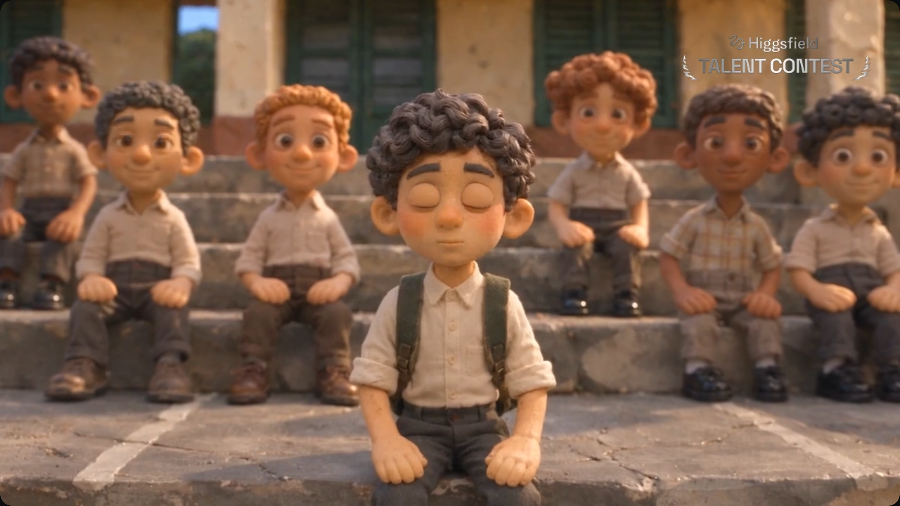
And then the ending pays everything off. First school day: Yassin front and centre on the school steps in his uniform, five schoolboys behind him, all of them smiling. Ragab raises the old camera, the knot hanging beside it, and gives the instruction he has given for fifteen years — changed by one word’s worth of a lifetime: “Look at the camera. Stay still and smile.”
Best Scene (3:36–4:05)
“The Knot”
On the train to Minya, a ten-year-old asks about a knot in a camera strap, and in four short exchanges — “My wife tied it.” “So you don’t drop it.” “Where is she?” “She got sick.” — the film tells an entire marriage, a bereavement, and the reason a grieving man is on this train at all. The cut to Samira, fed and held in silence, is claymation doing what clay does best: tenderness you can see the fingerprints in.
Final Thoughts
Khaled El Refay is an incredible storyteller, and this film is the proof of method: nothing here is decorated, everything is placed. The empty frames on the studio shelves, Hamdy’s collar fixed by a wife who has died, the thumbprint, the shoes with the red ribbon, the knot — the film is a chain of small objects, each one carrying exactly the feeling it was given. That its maker builds this from plasticine, fingerprints visible, only deepens it: this is a story about hands — signing, feeding, tying, holding — made by hand. Verdict: a tender, exact, quietly devastating film about what it costs to get one child into school, and what it gives back. Watch it, and smile.
★★★★ — Fifteen years of “Don’t smile,” undone by one boy
Scene Breakdown
0:00–0:55 — The studio. A crowded market street; Ragab walks through with a loaf of bread. Morning in the studio — ochre walls, empty frames, the camera cleaned. Hamdy’s pension photo: “Look at the camera. Don’t smile.” “Next time, take it like someone will miss me.” Ragab opens a box of old photographs.
0:55–1:55 — Yassin. A ten-year-old with a backpack and blue plastic slippers: “Do you print a photo for school?” “I’ll pay you when I sell.” His uncle signs for him; his mother is in Minya. Ragab, curled on a bed in sunset light, decides.
1:55–3:00 — The refusal, and the plan. The government office: a stamped document, the strap clutched with its knot in the foreground. “No guardian signature. Bring me his uncle. Tomorrow.” Ragab’s answer: “I’ll pay. His mother signs. I take him to Minya. First train.”
3:00–4:15 — The train, and the knot. Aerial fields and a canal; Ragab reads aloud, the camera on the table between them. “Why is it tied?” “My wife tied it.” “So you don’t drop it.” Samira remembered — soup, a held hand. Yassin falls asleep on his shoulder.
4:15–5:05 — Minya. The mother: “I can’t read your papers. He works. It’s enough.” “He’s smiling. I told him not to.” Her thumb pressed to the ink pad; the village portrait against a mud-brick wall; new black school shoes in a box tied with red ribbon.
5:05–6:05 — The street, and after. “Mr. Ragab, I sold! I can pay you!” Then the pavement: a hand, broken glasses, scattered coins, headlights. Ragab’s arm in a sling, the knotted strap across his chest, his studio shuttered as he passes.
6:05–6:40 — First school day. Yassin in uniform on the school steps, five boys smiling behind him. Ragab raises the camera, the knot beside it: “Look at the camera. Stay still and smile.”
There are no reviews yet. Be the first one to write one.