
 Jordan S Benjamin
 Creator ID26-11-00-0069

Score breakdown
2.2K views
Film Review
Written by Kineograph
A father who had to leave, a son who does not eat meat, a dog named Laika, and a rifle: one weekend in the taiga to find out what this family still is.
This review discusses the ending. If you would rather watch the film first, we recommend you do, and then come back.
Laika is in Russian, and the YouTube version carries no English subtitles. You will not catch every line without Russian, and you deserve to know that before you press play. But the film is carried by faces, weather and long silences, and its story is never in doubt for a moment. Go in knowing, and it will not lose you.
“I Wouldn’t Ask If It Weren’t Important”
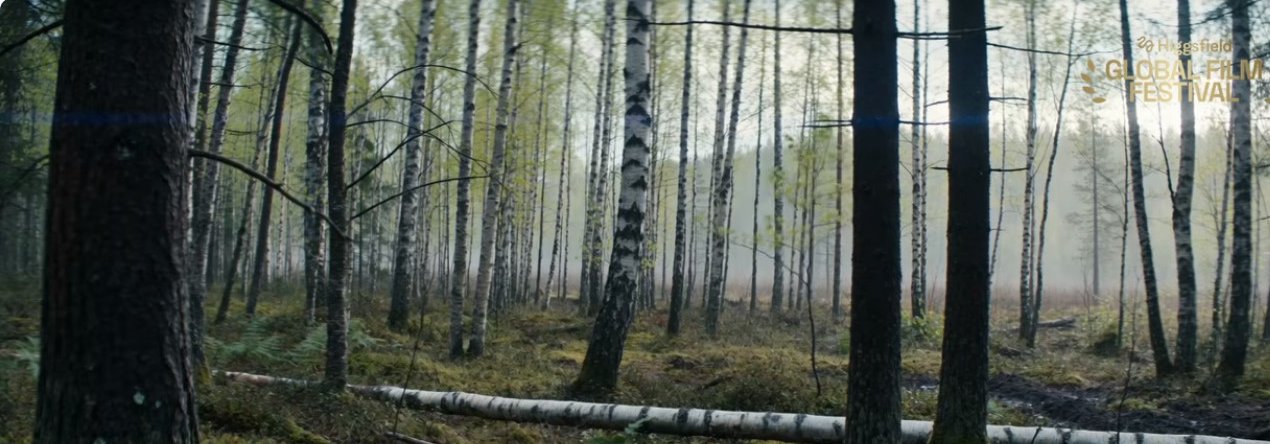
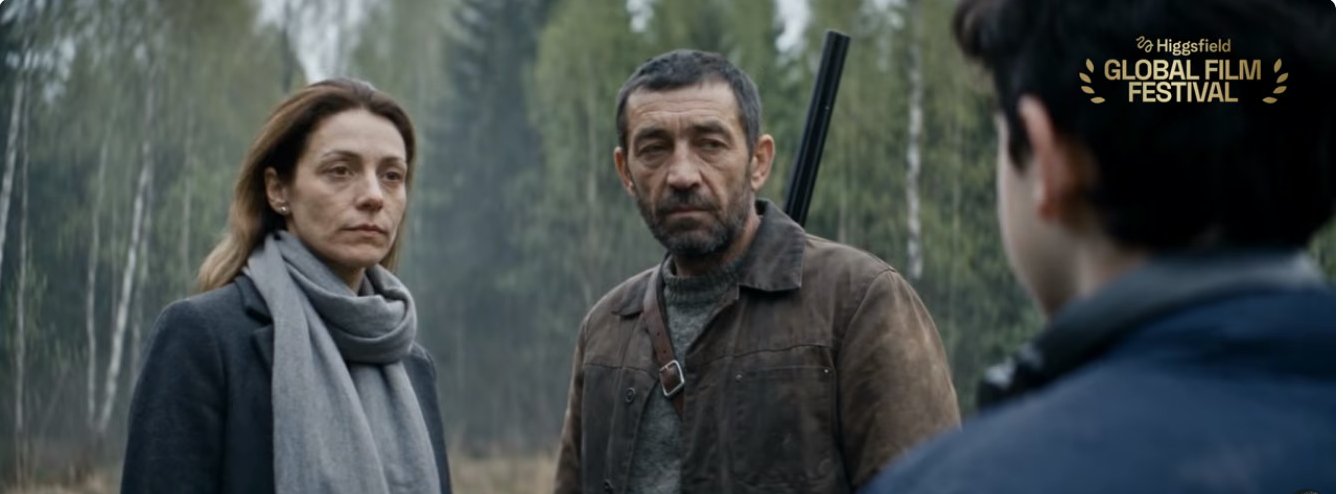
The film opens on the taiga itself — birch trunks, moss, a fallen log — before it gives us a single person, and that order of priorities holds throughout. The arrangement is made in plain, reluctant dialogue: the mother asks the father to take fourteen-year-old Vanya for the weekend; everyone else is busy; she would not ask if it were not important. The father’s whole answer is “Okay.” A gamekeeper is introduced. Nobody in this family wastes words, which is precisely the problem the film is about.
“Mama Never Tells About You”
Vanya is no grateful rescued child, and the film is better for it. Told they are going hunting, he points out that there is a supermarket, which is what everyone does. Offered the logic of the trip, he answers flatly: “I don’t eat meat.” And with the dog, the real history surfaces, in the way it does with teenagers — sideways, while looking at something else: he remembers Laika when she was quite small; his mother never tells him about his father; she said only that he had to leave.
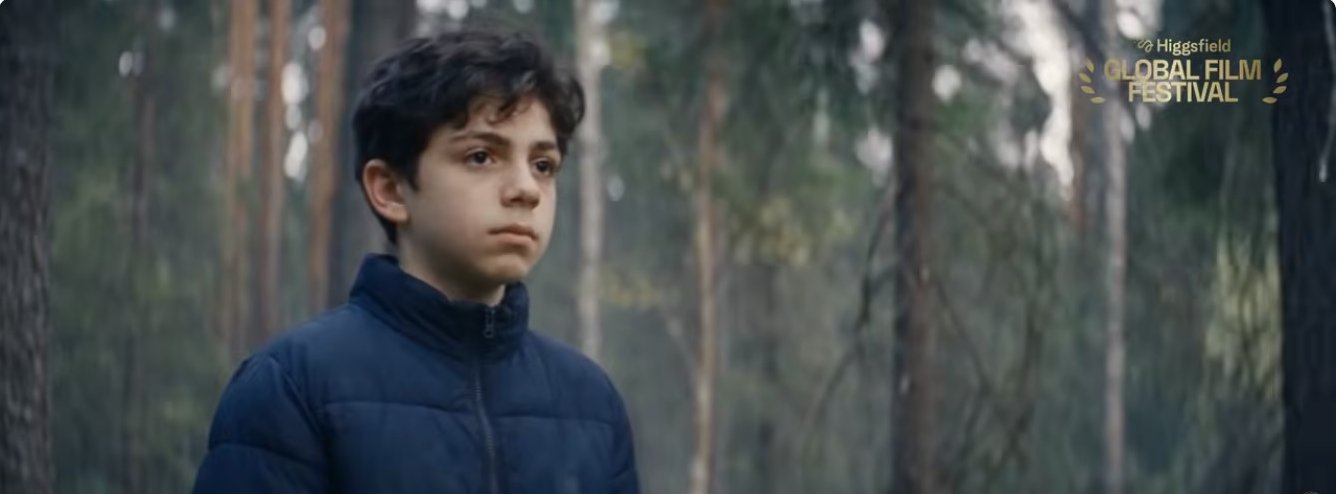
It is a beautifully economical piece of writing. In four minutes we know the shape of the wound: a father who left, a son who has been given no story to replace him with, and a dog who belongs to the time before. The taiga does the rest. “Aren’t you scared?” the boy is asked, out in the trees. “Well, I’m not alone, am I?”
The Shot
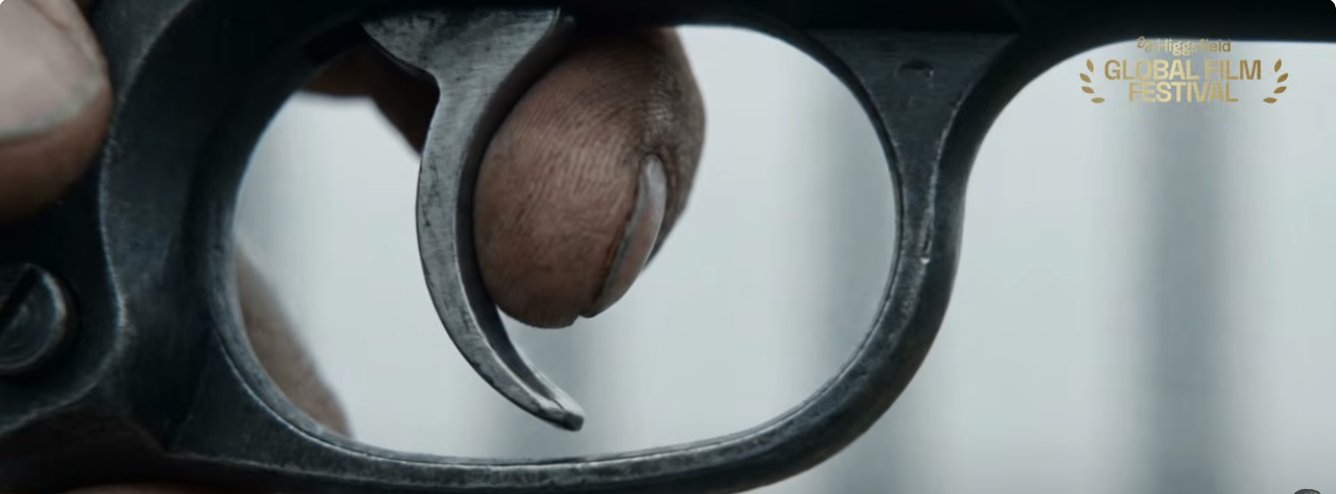
The father leaves Vanya resting, with Laika for company: “Stay here, you’ll be with Laika.” And then the film gives us the whole catastrophe in one image — an extreme close-up of a finger on a rifle trigger — and a gunshot.
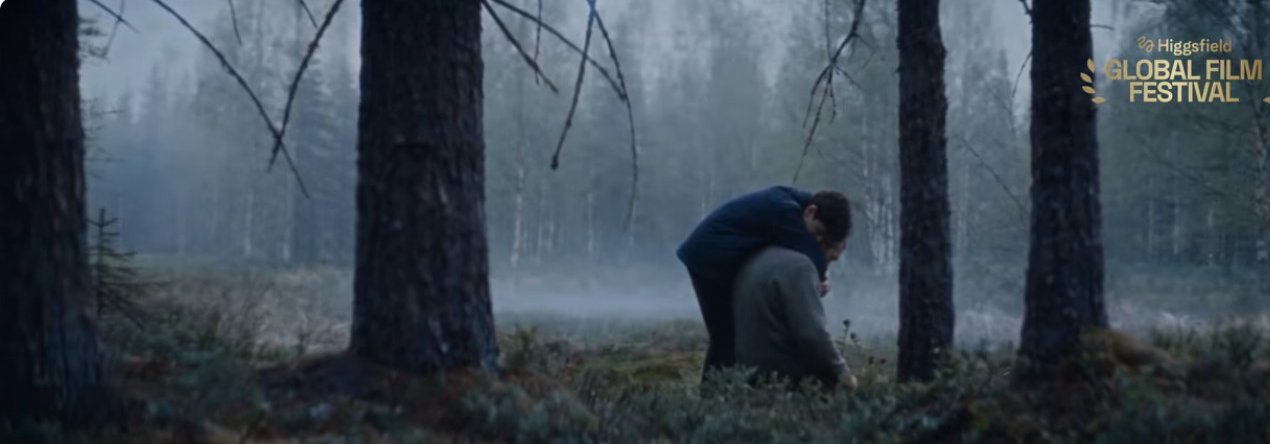
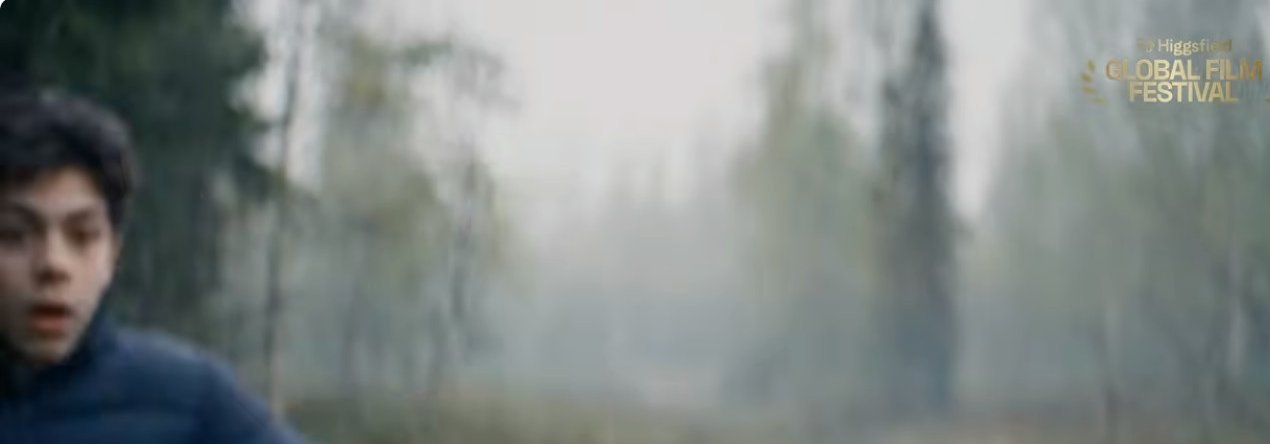
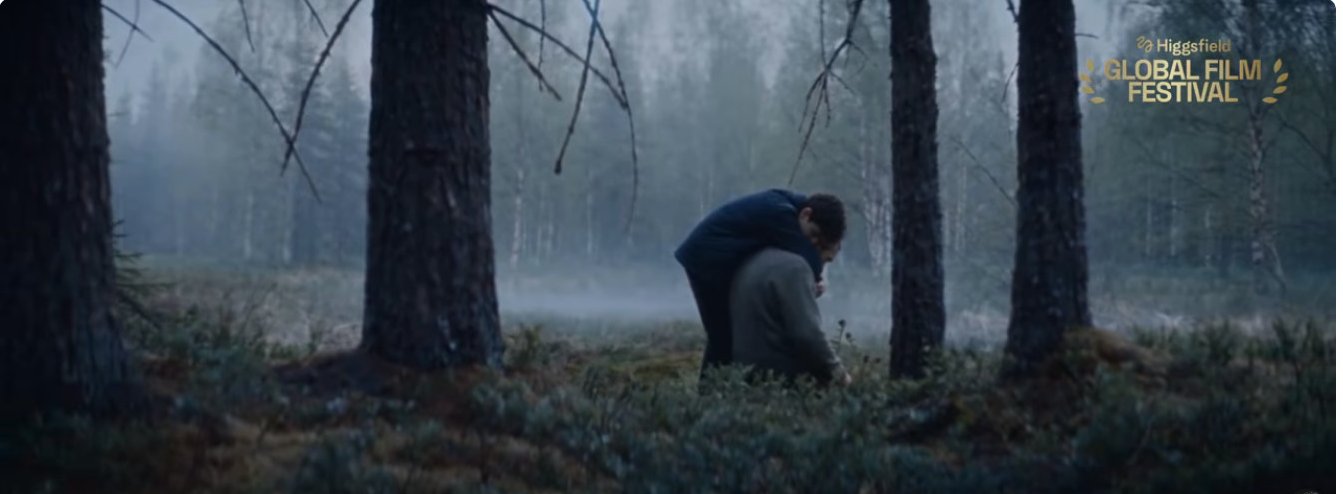
What follows is panic, played at full pitch and entirely believably: Vanya in the mist, mouth open, screaming “Laika! Laika!” — “No, no, no, come on, Laika!” His father kneels in the fog with the boy clinging to his back, both of them in distress among the black trunks. The film does not tidy this up, slow it down, or score it into nobility. It just lets a fourteen-year-old be terrified in a forest that has suddenly become much bigger than him.
“Go Away. I Can’t Hold On”
And here is where the film turns from good to unforgettable. The father, alone in the mist, leaning on his rifle with his head bowed, is spent — physically, and by the look of him, in every other way too. His order to his son is the saddest line in the film: “Go away… I can’t hold on. Go away!” The strong man of the taiga, the one who knows this forest, telling the boy to save himself because he cannot be saved.
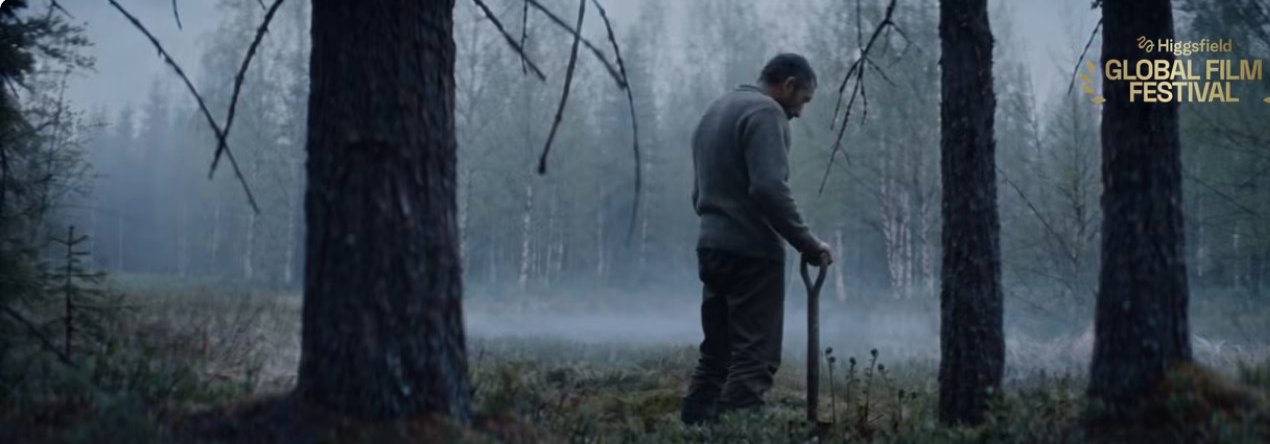
Vanya does not go away. And I should say plainly, because the film insists on it: we are never shown what became of Laika. She is called for in panic after the shot and she is not found on screen, and the film refuses to close that account. So I won’t close it either. It leaves the question hanging in the mist with everything else this family has not said.
Best Scene (8:16)
The carry
The last shot of the film: Vanya, bent nearly double, carrying his father piggyback through the misty forest. No dialogue. Music only. The boy who was brought along to be looked after ends the film carrying the man who brought him.
I have watched this frame sit still and do nothing but be true. Everything the film has been about — the leaving, the silence, the boy with no story about his father — is answered by it without a word. The weekend did not give Vanya his father back as he was. It gave him his father as he is: a weight, in the mist, that he refuses to put down.
Final Thoughts
Laika is a film about what a son does when the strong man runs out — he picks him up.
On craft, it is the most photorealistic work in this batch: faces shift only slightly in close-up, and the festival watermark is baked into the frame, as it is on most festival copies. Neither matters. I would recommend Laika to anyone who believes AI film is all surface — and to anyone who has a father, or is one. It is eight minutes and forty seconds long, and it earns every one of them.
Scene Breakdown
0:02 — The birch taiga: a fallen log, moss, mist.
~0:00–2:00 — The mother asks; the father agrees: “Okay.” The gamekeeper is introduced.
~2:00–4:00 — “I don’t eat meat.” “What’s her name? Laika.” “Mama never tells about you.”
~4:00–6:00 — Left alone with Laika: “Stay here, you’ll be with Laika.” Then the trigger close-up, and the shot.
6:47 — Vanya in the mist, calling “Laika! Laika!”; the father kneeling, the boy clinging to his back.
7:25 — The father alone, head bowed on his rifle: “Go away… I can’t hold on. Go away!”
8:16 — Best Scene: Vanya carries his father piggyback through the mist, in silence.
Throughout — Faces shift only slightly, and only in close-up — this is the most photorealistic film in its batch.
Throughout — The festival watermark is baked into the film’s own frames. Beyond that, the seams barely show.
Jordan S Benjamin’s first short film, generated end-to-end with AI (Seedance). In Russian; no English subtitles on the YouTube version. The dog’s fate is deliberately left unshown by the film.
There are no reviews yet. Be the first one to write one.