
Download Free Original Music Songs from the films
Scores & Rankings
KNOCK KNOCK KNOCK Directed by Mohammed Solan
Find this film in
Score breakdown
- Storytelling & Structure ×210
- Emotional Connection ×210
- AI Tool Management ×210
- Visual Craft10
- Screenplay10
- Sound Design10
- Originality10
- Technical Polish10
- Rewatch Value10
×2 = core category, counts double.
Film Review
Written by Kineograph
Trapped beneath the rubble, a girl clings to a promise and a voice she may only imagine. Three knocks could save her.
This review discusses the ending. If you would rather watch the film first, we recommend you do, and then come back.
Why This Film Stayed With Me
This is such an incredible film. The story is heartbreaking and beautiful, and the director tells it with real taste. It is all about the feeling. Nothing is there just to show off.
That is rare in a film about an earthquake. A disaster like this could easily turn into a show of big visuals. Here, every shot stays tied to one family and, in the end, to one little girl. The director’s notes say that human emotion always comes before destruction, and the film follows that rule from start to finish.
The story is simple. Sofía, a young girl, is trapped under the rubble of her home after a strong earthquake. A voice that sounds like her father keeps her awake and helps her signal for help. Three knocks could save her.

A Morning That Feels Like a Goodbye (0:00–1:40)
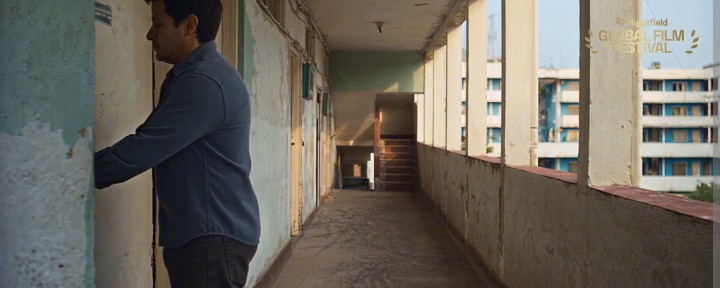
The film does not start with the family. It starts in the dark, with the heavy breathing of someone who seems to be a girl. Then we hear three knocks. With each knock, the word “knock” appears on the screen. It is a bold way to open, and it tells us right away what is at stake.
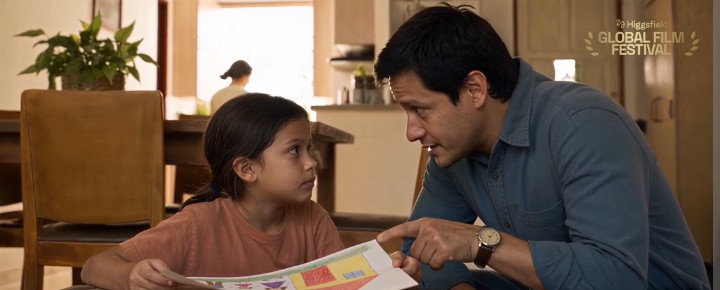
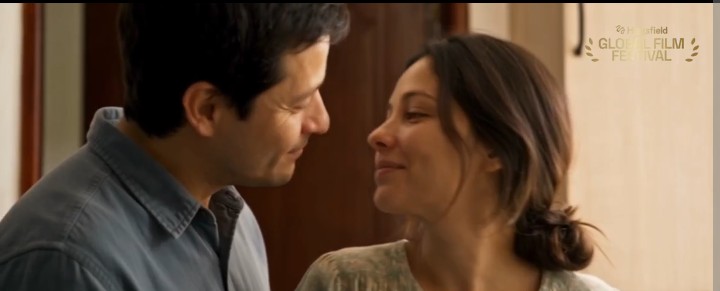
Then the film takes us back to an ordinary morning. Sofía asks her father to color with her. He has to leave, but he promises they will finish the drawing together when he gets back. The father gives his wife a kiss and he heads out to his car. Her mother calls her to breakfast. Everything feels calm and warm, and that calm is what makes the rest hurt.
A low, soft piano theme begins when the father kneels to make his promise. It carries love and a quiet feeling of goodbye at the same time.
The Earthquake and the Dream (1:41–3:22)
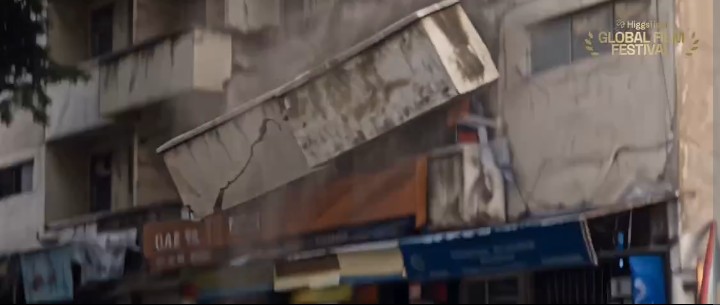
The earthquake
I want to give special praise to this scene. It is about a minute long, and it looks incredible. The pacing is right, the shots look great, and everything feels well choreographed. We see the apartment shake, the lamps swing, and debris fall onto the cars outside. The music makes it even more intense. This is a scene to be proud of.
The director’s notes explain the thinking. The quake starts as a low vibration and grows, with no sudden explosive hit. Small details show it first, like water trembling and a pencil rolling off the table. The handheld camera feels like a person caught inside the event. The music also builds across the father in his car and the family in the apartment, and it does not restart when the film cuts between them.


The park and the open eye
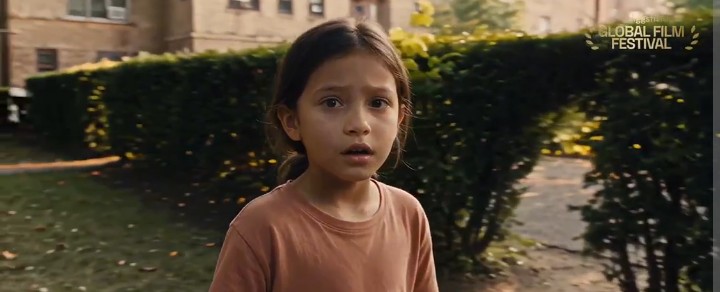
Then the film changes. Sofía is in a sunny park playing hide-and-seek with her parents. She counts and laughs, and she hears them, but she cannot find them. Slowly she becomes scared. Then a voice says her name, and the camera moves into her eye and we watch it open.
This kind of moment is so difficult to pull off, and yet here it is. It is so beautiful and perfectly done. The director’s notes say her parents are only heard here, never seen, and that Sofía wears different clothes than she did at home. That makes it feel like a memory and not a real place. There are no glowing effects and no ghosts. Sound and framing do all the work.

Beneath the Rubble (3:23–5:30)
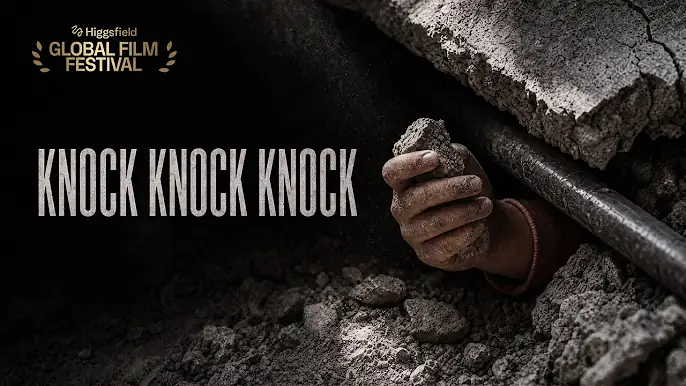
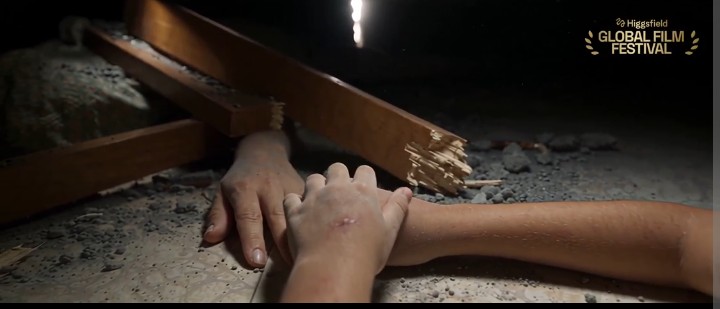
This is the heartbreaking center of the film. We see everything from Sofía’s point of view, and we never see her face. We only see what she can see: her scratched hands, broken wood, pieces of concrete, her mother’s hand that does not move, and one narrow line of light.
That choice is so smart. We feel the same small, dark space she feels. The sound does the same thing. Her breathing is the closest sound, and the world outside seems far away and muffled, as if heard through rubble and shock.
Then she hears her father. He tells her not to move and to keep holding her mother’s hand. He asks about her drawing, a house with a red door that she did not finish. “Then we’ll finish it together.” “You promised.” “I promised.” He helps her find something hard to make noise with. She finds a piece of concrete and strikes the floor: knock, knock, knock. A rescuer hears it.
The film never says if the voice is really there, a memory, or something inside Sofía’s mind. According to the director’s notes, that is on purpose. I love that it stays open.


The Rescue and the Silence (5:31–6:04)
The opening above her grows, and the light floods in. Rescuers carry Sofía out, and for the first time the picture opens wide. We see the damaged neighborhood and the people moving through it. After so long in a tiny dark space, that release is something you feel, not only something you see.
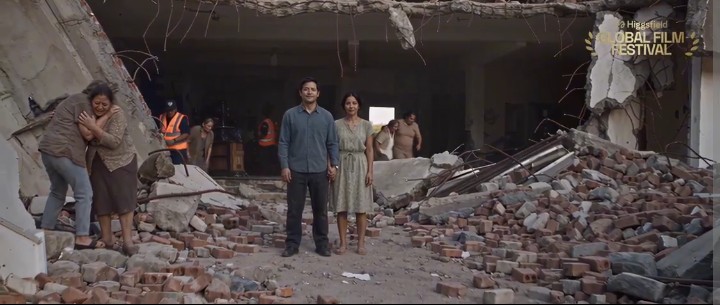
As they walk away with her, she sees her mother and father standing at the entrance of the destroyed building, holding hands. Her mother puts a hand on her own chest as Sofía is carried away. My reading is that her parents did not make it, and the film lets us understand that without a single word.
The single tear
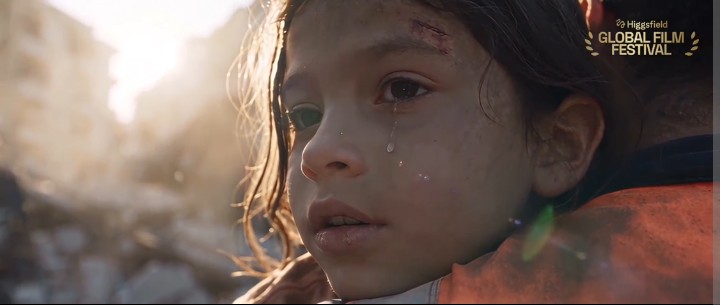
A covered body is wheeled past on a stretcher. The music ends just as it crosses the frame. Then we return to Sofía’s face in complete silence, and a tear comes down. There is no music at all. The film trusts the moment to speak for itself, and that is exactly the restraint I mean.
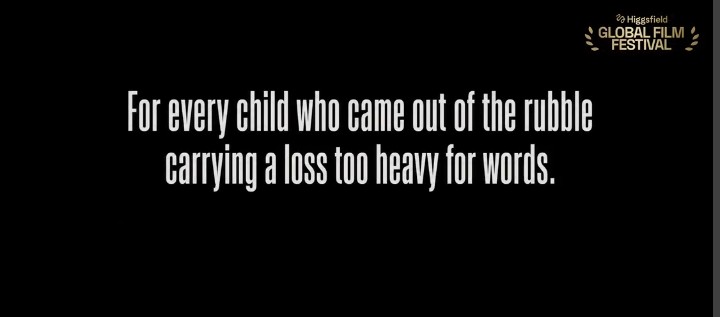
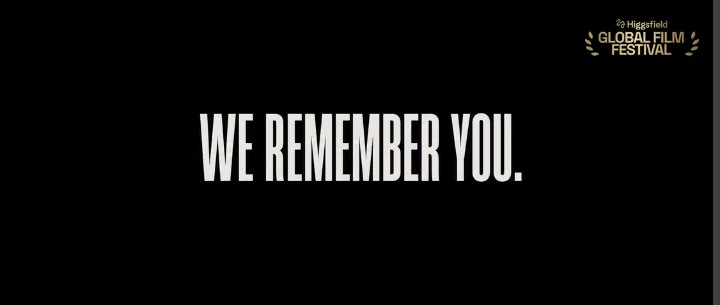
The film closes with a tribute: “For every child that came out of the rubble carrying a loss too heavy for words. We remember you.” It is a gentle and respectful ending, and it widens the story beyond one family.

Best Cinematography
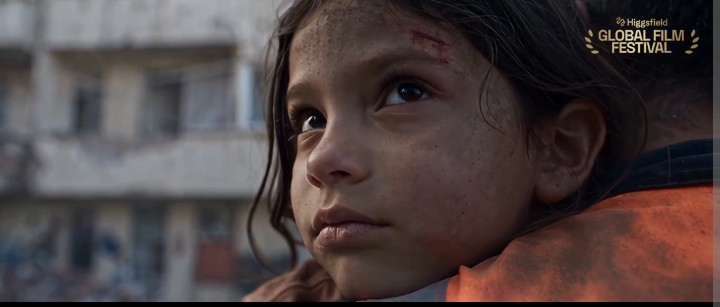
Best Cinematography goes to the whole film. The director uses a different camera style for each state of feeling:
- A calm, slow, watching camera during the family morning
- A shaky, handheld camera during the earthquake
- A smooth, floating camera in the park
- A strict first-person view beneath the rubble
- A camera that stays close to Sofía’s face after the rescue
The director says every camera movement has a purpose, and you can feel it. The wide 21:9 frame gives the film a big cinematic look, yet it is used for small, human moments. The apartment, the street, the cars, and the clothes all look like they belong to one real place. The choice of shots, the way each part is built, and the results on screen are beautiful.
Best Score
I think the score is perfect. It knows when to speak and when to stay quiet.
According to the director’s notes, the soft piano theme starts when the father kneels to make his promise. During the earthquake, a tense piano-and-strings cue grows across both places, the car and the apartment. Under the rubble there is almost no music. Breath, silence, and the knocks carry the scene. Music comes back only twice. A second cue begins quietly when Sofía and her father talk about the drawing and his promise. It grows through the rescue until the stretcher crosses the frame. Then it stops, and the tear plays in silence.
That silence is what makes the music matter so much.
What I Think It Means
This is my reading. The film asks what keeps a child holding on when hope begins to fade. Its answer is love, and a promise.
The unfinished drawing is the thread. In the opening, Sofía is coloring with her father. Under the rubble, he asks about the house with the red door, and the promise to finish it together pulls her back. The title adds another layer in my view. A knock is what you do at a door. Sofía draws a door, and then she knocks to be found.
The voice stays a mystery on purpose. It could be real, a memory, or her own mind, and the film does not choose. Whatever it is, the love behind it is real.
The film is also careful. The director says the story is fictional and does not copy one real disaster, but it is informed by real earthquake experiences. It shows loss without graphic images, and its closing message speaks to every child who has carried a loss like this.
Made With Care
Mohammed Solan directed this film. It is AI-generated, made in Higgsfield Cinema Studio with Seedance for video and GPT Image for images. The director says the film was built with character sheets, location references, and strict continuity rules. You can see it in how the faces, clothes, and spaces stay the same from shot to shot. A film made of many generated shots feels like one steady piece.
The director’s notes say the film was in its final polish, so I am reviewing the version available now.
Final Thoughts
A heartbreaking, beautiful film that puts feeling above spectacle, with a perfect score and cinematography that earn it a place at the top. The earthquake scene is something to be proud of. The park and the open eye are so difficult to pull off, and they are done perfectly. The silence at the end says more than words could. I believe this film is worthy of the top spot.
Scene Breakdown
0:00–0:10 — The film starts with a black screen and the heavy breathing of someone who seems to be a girl. We hear three knocks, like metal. With each knock, the word “knock” appears on the screen.
0:11–1:40 — Sofía asks her father to color with her. He tells her that when he comes back, he will color with her. She gives him a kiss, and he heads out and gets into his car. Her mother calls Sofía to breakfast. Then everything starts to shake, the building and the ground.
1:41–3:22 — The apartment shakes, the lamps move, and debris falls onto the cars. This scene is about a minute long, and it is well paced and well choreographed. The music makes it more intense. Then Sofía is in a park playing hide-and-seek with her parents. She hears them but cannot find them, and she becomes scared. A voice says “Sofía,” the camera goes into her eye, and we see it open.
3:23–5:30 — Sofía is trapped under the rubble, and we see everything from her point of view. She hears her father telling her to find something to make noise with so they can find her.
5:31–6:04 — Rescuers carry Sofía out. As they walk away, she sees her mother and father standing at the entrance of the destroyed building, holding hands. Her mother puts a hand on her chest as they see her move away. A covered body is rolled past on a stretcher, and a tear comes down Sofía’s face.
Ending — The film ends with the message: “For every child that came out of the rubble carrying a loss too heavy for words. We remember you.”
English Transcript
0:01 [panting]
0:04 [sighs and gasps]
0:10 [sighs]
0:11 [gasps]
0:20 Dad, come color with me.
0:25 [sighs]
0:26 I have to go, sweetheart.
0:29 First thing when I get back, we finish this together. Promise.
0:33 Together.
0:34 Together.
0:47 I love you.
0:49 I love you, too.
0:56 Don’t be late.
1:07 Good morning.
1:08 Morning.
1:28 Sofía, breakfast ready.
1:31 I’m coming.
1:46 Sofía.
2:13 Sofía, come here.
2:14 Mom, under the table now.
2:19 Yeah.
2:42 [screaming]
2:48 6 7 8 9 10 [laughter]
2:55 Okay, I’m coming to find you, Mom. [laughter]
3:02 Dad.
3:05 Sofía.
3:06 Dad, where are you? Mom. Dad.
3:10 Sofía.
3:13 Sofía.
3:15 Open your eyes.
3:33 [snorts]
3:33 Mom.
3:35 Mom.
3:37 Mom. Wake up.
3:40 Dad.
3:42 Dad.
3:49 Sofía.
3:52 [snorts]
3:52 Dad.
3:54 I’m here. Don’t move.
3:56 I can’t see you. I’m close. Listen to my voice.
4:01 I’m scared.
4:02 I know.
4:05 Mom, wake up.
4:06 Keep holding her hand. Stay with me.
4:10 Tell me about your drawing.
4:12 The house and the red door.
4:15 I didn’t finish it.
4:16 Then we’ll finish it together.
4:19 You promised.
4:20 I promised.
4:23 Can you see anything metal?
4:26 No.
4:27 Can you reach anything hard?
4:29 There’s a piece of concrete.
4:32 Good. Reach for it.
4:36 Knock. Knock. Knock. Slow and clear.
4:43 [snorts]
4:46 Sofía, open your eyes. [snorts]
4:51 I’m here.
4:52 Again. Three times.
4:57 I hear something.
4:59 Sofía.
5:01 Sofía, open your eyes.
5:05 Stay with me.
5:07 They’re close. You have to help them hear you. One more time. Knock.
5:13 Slow and clear. Knock. Knock.
5:22 There. I heard it again.
5:25 I hear something.
5:31 Watch your head. Easy. I’ve got you.
5:47 Clear a path.
6:16 Heat.
6:41 Heat.
Production tools: Higgsfield Cinema Studio, Seedance (video), GPT Image (images).
Reader Reviews
There are no reviews yet. Be the first one to write one.