
Download Free Original Music Songs from the films
Scores & Rankings
Am I Ugly Directed by Lyricalsoundscape
Find this film in
Score breakdown
- Storytelling & Structure ×28
- Emotional Connection ×28
- AI Tool Management ×28
- Visual Craft8
- Screenplay9
- Sound Design9
- Originality10
- Technical Polish9
- Rewatch Value10
×2 = core category, counts double.
Film Review
Written by Kineograph
A moth chef who sees the beauty in others through her food must confront the one reflection she cannot understand: her own.
This review discusses the ending. If you would rather watch the film first, we recommend you do, and then come back.
Why This Film Stayed With Me
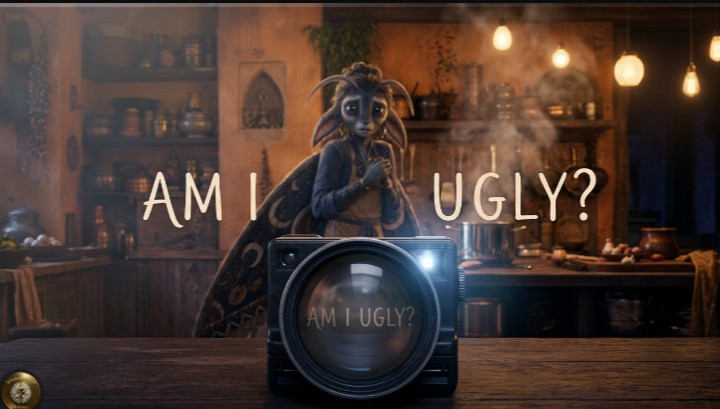
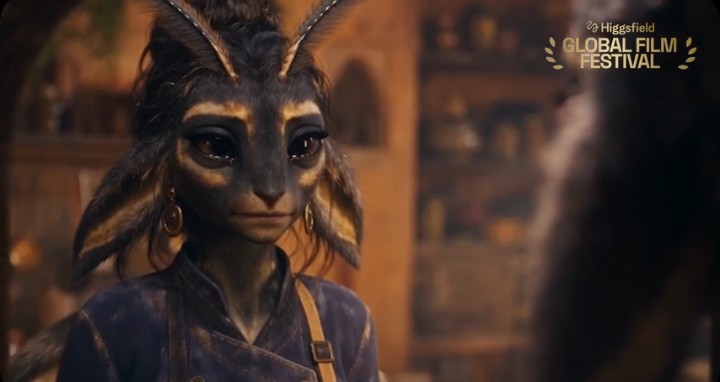
Some questions are hard to ask out loud, and “Am I ugly?” is one of them. Am I Ugly? asks it for almost five minutes, through a moth-winged chef in a glowing kitchen, and it never feels heavy-handed. It stayed with me because the film is so gentle with her. It lets the doubt build slowly, and it lets the answer arrive quietly.
The setup is simple. She prepares food, keeps catching her own reflection, and keeps asking what everyone else sees. Then a camera appears and photographs her, and later a visitor sits down at her table and says one sentence that changes how she looks at everything. The full play-by-play is in the Scene Breakdown below, so here I want to talk about what the film is doing.
Every Shiny Surface Asks the Question
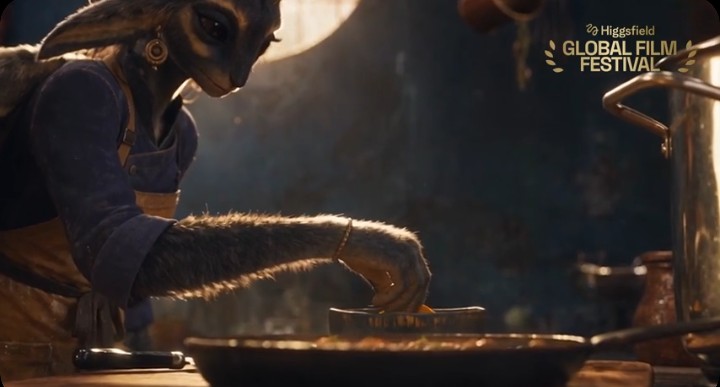
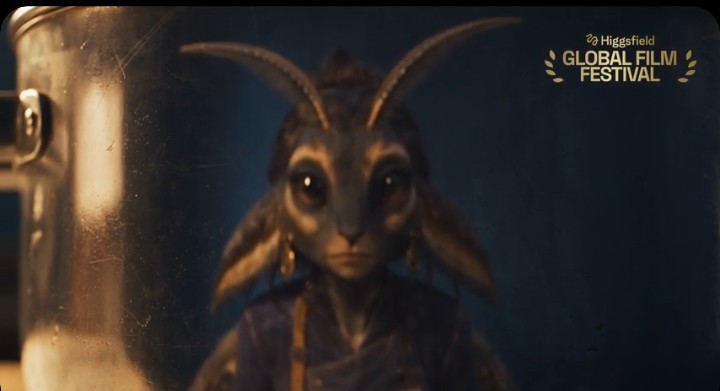
The smartest choice in this film is that the kitchen itself keeps asking. The mirror, the cooking pot, the metal spoon: each one is a surface she cannot stop looking into. We first see her at the mirror, then at the pot while she works, and later in the spoon. The film returns to these shiny surfaces again and again, and by the end you realize they were never neutral. Each one hands her doubt something to hold onto.
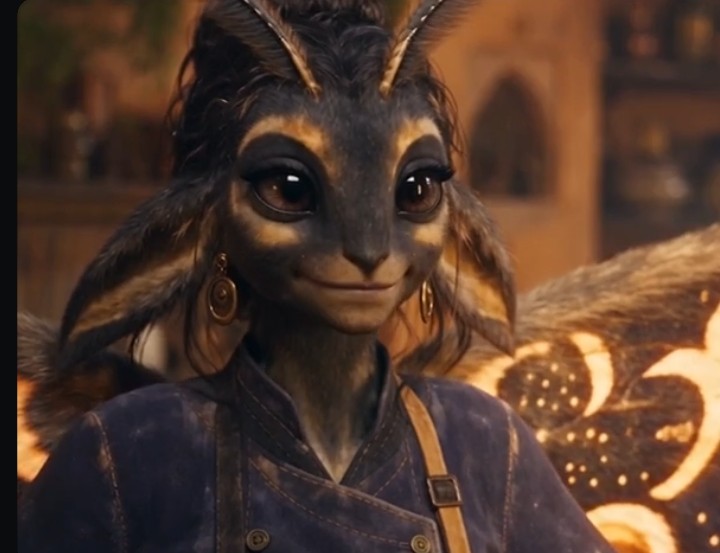
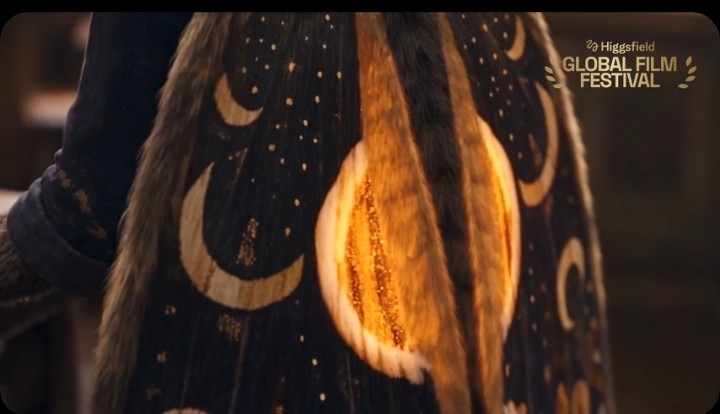
My favorite moment in this stretch is when she says “Is this what everyone sees” and opens her wings, and the marks on them light up. The film shows us something beautiful at the exact moment she is doubting herself. That gap between what we see and what she sees is the heart of the film, and it makes the question hurt in the right way.
The Camera Stands In for “Everyone”
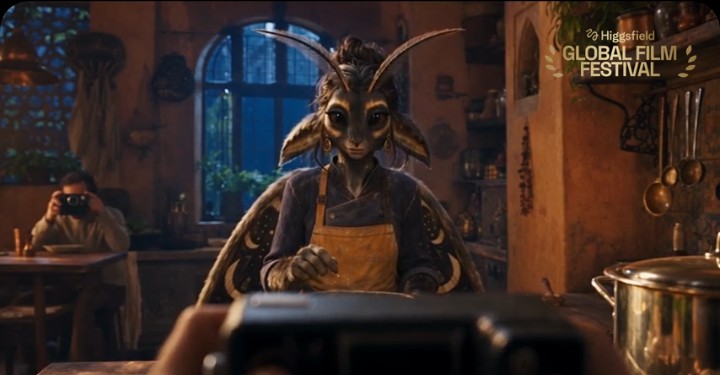
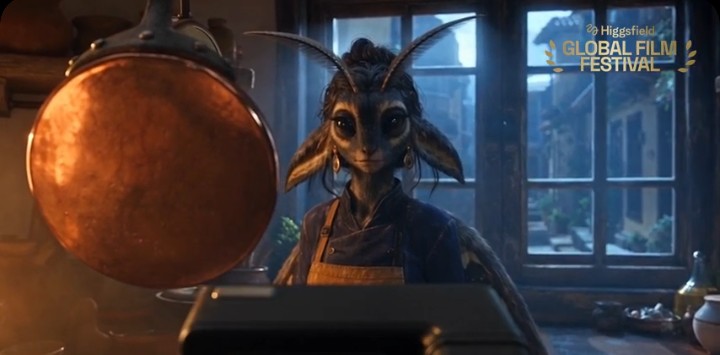
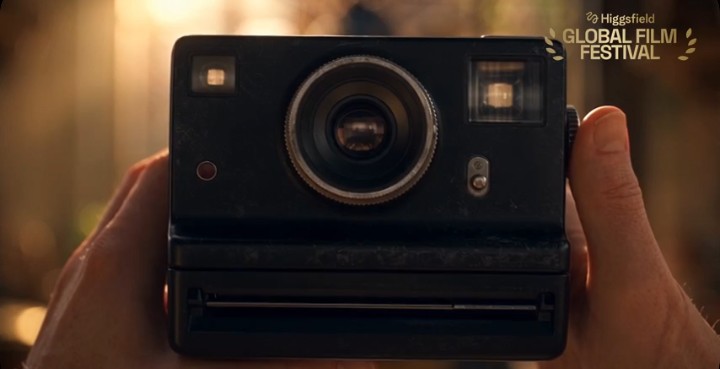
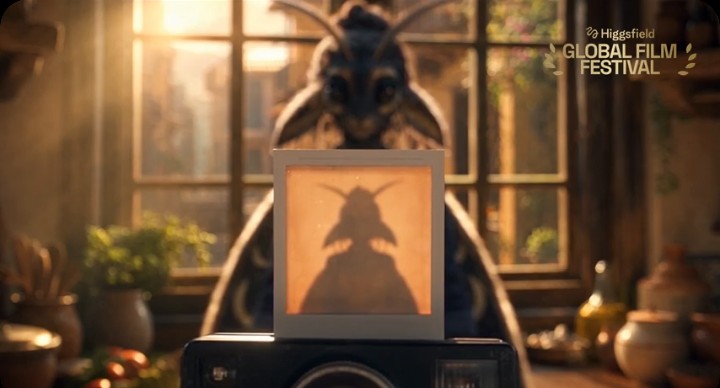
The boldest stretch comes between 2:01 and 4:00. A camera appears in front of the screen and takes her picture, and she looks shocked and surprised. It follows her as she moves. Then the camera is held by human hands, and a Polaroid develops and reveals a picture of the moth.
This is my reading, not something the director has said: the camera is the outside gaze, the “everyone” she asked about at the start. A photograph is the most literal answer to “what does everyone see,” and the film gives her that answer. What I find honest is that it still does not settle anything. She goes right back to studying her reflection in a metal spoon. Proof from the outside is not enough when the problem is how you look at yourself.
The human hands are the one thing I cannot fully explain, so here are two ways to see them. If they are deliberate, they could be the real world reaching into her fantasy kitchen, a reminder that the judgment she fears comes from people, and that makes the camera’s gaze feel more human. If they are not deliberate, they may simply be a quirk of the AI model while rendering the video, and then they are a small weak spot: the film never mentions the hands again, the story does not need them, and they can pull the viewer out of the moment. I do not know which it is, and the director has not said. I would love to hear from the director whether the hands were meant to be there.
The Curry and the Spoon
The creature at the table (4:01–4:59)
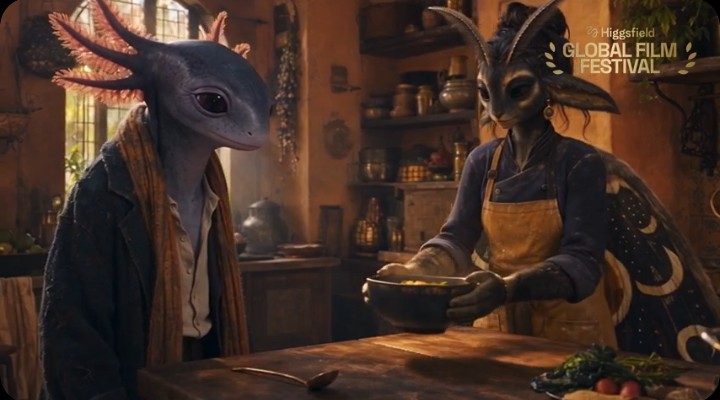
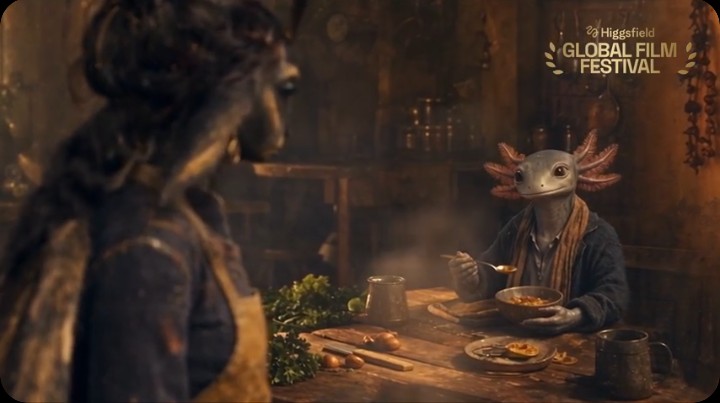
This is the scene the whole film has been walking toward, and I think it is beautifully written. A gentle, axolotl-like creature comes in and sits down to eat. She asks him, “Am I ugly?” He says it depends, on what you are tasting: “If you taste the curry, you don’t inspect the spoon.” Her answer is the line that carries the film: “I never tasted myself.”
My reading is that the spoon is every reflective surface she has been judging herself by, while the curry is what she actually makes and gives. She has spent the film inspecting the spoon. It is a small, kind, perfectly built metaphor, and it explains the whole film in one breath.
The Pot at the End
What makes the ending work for me is that the film does not stop at the line. After she says she never tasted herself, she looks into the pot and sees herself in its reflection. It is the same kind of shiny surface that fed her doubt all film. Nothing about the pot has changed. To me, what has changed is how she is looking at it.
That is a quiet visual payoff, and it closes the loop the film opened. The idea lands, and so does the emotion. The film also trusts the viewer to feel it without anyone explaining the moment, which is exactly what I want from a short like this.
A Warm World, Carefully Made
The look of the film deserves its own praise. The kitchen glows with lantern light, the textures feel lived in, and the character design is expressive enough that a face with no human features can carry shock, doubt, and a small smile. The glowing marks on her wings are a lovely detail, and the creature at the table has a calm, kind presence that makes his advice believable. Keeping a character this consistent and this readable across a whole film is not easy with AI, and it is a big reason the question lands as hard as it does.
Final Thoughts
A short, tender film about learning to judge yourself by what you give instead of what you see in the glass. It earns its length, it trusts its central metaphor, and it ends on an image that rewards anyone paying attention. I would happily recommend it to anyone who has ever stared at their reflection and asked the question. Take five minutes and watch it.
Scene Breakdown
0:00–0:13 — The camera moves through a window to where the moth is preparing food. She then goes to the mirror.
0:14–0:45 — She asks, “Am I ugly?” and wonders if this is what everyone sees. She opens her wings, and the marks on them light up.
0:46–2:00 — She adds pieces to the food and looks at her reflection in the cooking pot.
2:01–4:00 — A camera appears in front of the screen and takes her picture. She seems shocked and surprised, and the camera follows her as she moves. It is then held by human hands, and a Polaroid develops, revealing a picture of the moth. She keeps looking at her reflection in a metal spoon.
4:01–4:59 — Another creature comes in and sits down to eat. She asks, “Am I ugly?” and he answers that it depends on what you are tasting. She says she never tasted herself, then sees her reflection in the pot.
Watch the film: Am I Ugly? by Lyricalsoundscape
Reader Reviews
There are no reviews yet. Be the first one to write one.