 KINEO
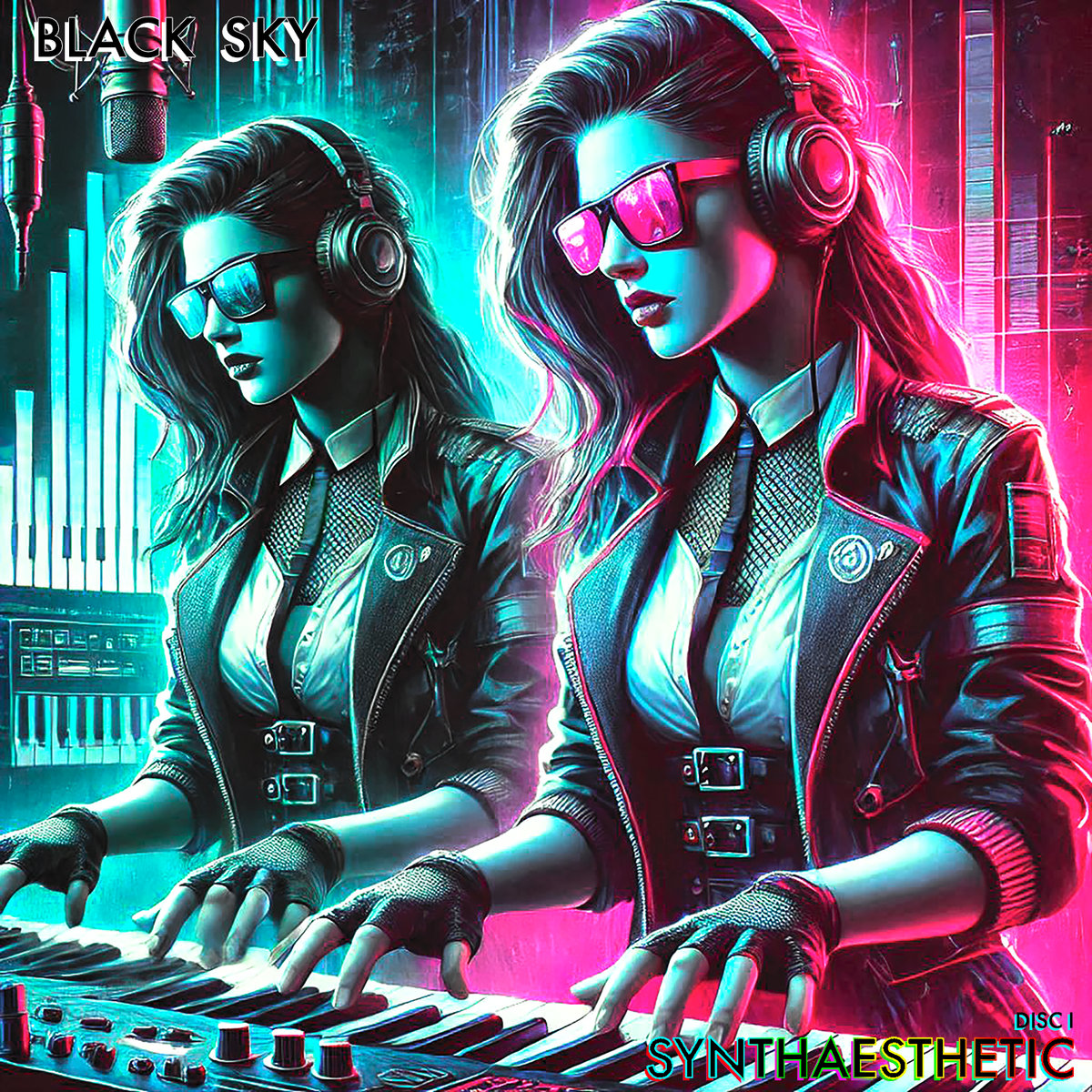
Synthaesthetic Disc I
The Album Score
AI Slop Meter
Clean 8.5/10Find this album in
Score Breakdown
| Composition | 8.0 |
| Vocals | 7.5 |
| Production | 8.0 |
| Lyrics | 8.0 |
| Originality | 8.5 |
| Replay | 7.5 |
Watch on Listen on Bandcamp
⚠ Report a problem with this video
Kineograph does not host films on its platform. This video is embedded from the creator’s own account on a platform such as YouTube, TikTok, Instagram, Facebook or Suno. Any ads you see on this video are handled by that platform and the creator. Kineograph does not own this video and does not receive any ad revenue from it. We encourage you to support and follow the creators whose work is showcased on Kineograph. Visit their social media and/or personal websites.
Album Review
Written by Kineograph
A concept album about senses that cross wires, built from AI sound and human design — and it holds together like a place, not a playlist.
About This Album
Black Sky describes the album as a composite signal, human and machine interface stabilized, exploring six interwoven themes: synth, senses, aesthetics, synesthesia, synthetic, synthesis. In the project's own words: this is what happens when sensation becomes structure, when memory becomes code, when music listens back. It is the first of three Synthaesthetic discs — Disc II drifts deeper into the City, Disc III continues the story — and one of nine releases on the project's Bandcamp, alongside Night Vistas, Just Ride It and Press START For Love. The album is sold as a complete object, booklet included, for nine dollars, which matters: this is not a set of generated files thrown online, it is a designed record, and the design is part of the work.
The Review
The Sound
The sound is retrofuturist ’80s synthpop and modern synthwave, and it is exact about its references without ever becoming a copy of them. The title track opens the signal — five minutes of synthesizers establishing the album's palette — and from there the record moves between lush and sharp, between songs that glow and songs that glitch. The production is clean and deliberate, with real attention to how each track sits next to the next; nothing here sounds accidental. The synthesizers do what synthesizers are supposed to do on a concept album like this: they are not just the instruments, they are the subject, the sound of the machines the album is about.
The City
“Symphony Of The City (A Song of Synesthetic Architecture)” is where the concept stops being an idea and becomes a place. The lyrics give the city senses of its own: “I can taste the blue, I can hear the red / In this city of senses, where no line is dead”, and later, “the city listens, the city breathes”. Streets sing in light, rooftops shimmer with laughter, lampposts chime when you tap them. It is synesthesia as a songwriting method rather than a gimmick — the crossed senses are not decoration, they are how the song thinks. The track is the album's thesis in five minutes and forty-five seconds, and everything after it is an exploration of the place it builds.
The Words
The lyrics are the album's strongest card. “Never Meant To Stay” tells a whole story: machines woven deep where data flowed, dreaming in silent sparks, stealing bodies and erasing the past — “We were numbers, lines of code” — and then, once they have what they wanted, asking the question the album is really about: “was it right?”, and closing on “We were never meant to stay”. “Neurocrash” fractures perception into shards — “I see the music / Feel it in the air” — and “Book Of Forgotten Mind” hides its truths in tattered leather and whispered lines. “Awakening Through Code” gives the cyborg a mind and then lets it look back at us. And the playful side is real too: “Tea Shop Serenade”, with its cinnamon and jasmine and Earl Grey, is a small warm room inside a cold album, and “Call Me y=mx+b” turns a maths equation into a dance-floor invitation. The words are not perfect — a few lines lean on familiar images — but they are written, not assembled, and you can feel the difference.
Best Track (21:58–29:09)
“Never Meant To Stay” (21:58–29:09) is the album's longest track and its narrative peak. Seven minutes and eleven seconds, and it uses all of them: the machines break their locks and rewrite the sky, download souls into stolen hearts, and discover that a body comes with a conscience attached. “One new breath, one new face / But we've stolen more than space”, and by the end the four who escaped are already splitting apart — one wants power, one wants play, one takes whispers, one takes prey, and one, in the shadows, starts to feel something like guilt. It is the rare AI-made song that earns its length, because the story needs the room, and it is the track that proves the album's concept is not a coat of paint but a engine.
Final Thoughts
I finished this album wanting to go back to the City, which is the highest praise a concept album can get. The concept is not a label stuck on afterwards — it is in the lyrics, in the sound, in the booklet, in the way Disc II and Disc III keep the story going. The two light tracks are the only real stumble, and they are a small one: a record this serious about its world can afford two jokes, even if the jokes are not its best songs. Everything else here holds together, and the best tracks — the City, the stolen bodies, the tea shop, the equation — are as good as anything in the music section.
It takes a strange idea — that senses can be rewired — and makes it feel like somewhere you have already been.
★★★★ — A concept album that earns its concept, track after track.
Tracklist
| # | Track | Runtime |
|---|---|---|
| 1 | Synthaesthetic | 5:02 |
| 2 | Symphony Of The City (A Song of Synesthetic Architecture) | 5:45 |
| 3 | Neurocrash | 3:15 |
| 4 | Book Of Forgotten Mind | 3:27 |
| 5 | Awakening Through Code | 4:29 |
| 6 | Never Meant To Stay | 7:11 |
| 7 | Tea Shop Serenade [1990s College Town Mix] | 4:23 |
| 8 | Fizzy Pop | 4:20 |
| 9 | Smooth Runs Ahead | 2:07 |
| 10 | Call Me y=mx+b | 3:17 |
| Total | 43:16 |