
Download Free Original Music Songs from the films
Scores & Rankings
One Last Act Directed by I. Alebiary
Find this film in
Score breakdown
- Storytelling & Structure ×210
- Emotional Connection ×210
- AI Tool Management ×210
- Visual Craft10
- Screenplay10
- Sound Design10
- Originality10
- Technical Polish10
- Rewatch Value10
×2 = core category, counts double.
Film Review
ONE LAST ACT
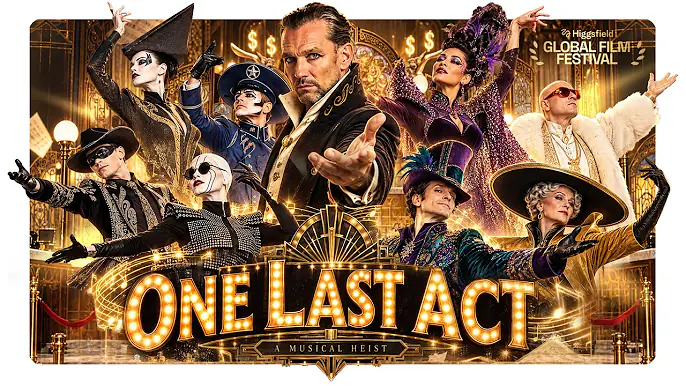
A gentleman thief returns for one final job, and the bank he’s robbing turns into a stage. A surreal, cabaret-soaked heist musical that struts, dances, and sings its way to a gut-punch of an ending.
If there were a Best Costume Design category, this film takes it, full stop. No debate.
Synopsis
One Last Act is a surreal theatrical heist musical set inside a vivid, stylized 1960s-inspired bank. A mysterious gentleman returns for one final job, triggering a tense, darkly playful confrontation between his crew, the police, security, and the bank itself — all of it told through choreography, music, and a cast of bold, larger-than-life characters. What starts as a robbery slowly reveals itself to be something else entirely: not a job for money, but a performance for one very personal reason.
The Review
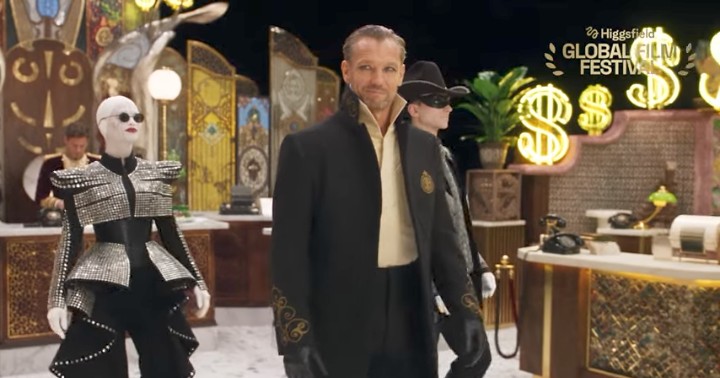
I’ll say it plainly: this film is a blast. One Last Act gave me full Moulin Rouge energy from the first strut down that gold-lit lobby, and I mean that as the highest compliment I can give a musical — that same sense of a world so committed to its own theatricality that you stop questioning it and just start moving with it. This is a heist and a musical fighting for the same screen time, and instead of picking a winner, the film just lets them become the same thing. The robbery is the choreography. The entrances are the musical cues. It’s a clever structural idea, and it actually works.
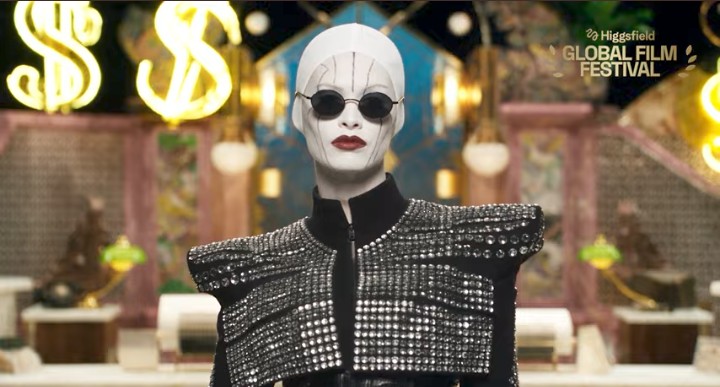
And can we just talk about the costumes for a second? Every single character walks in with a full silhouette, a full attitude, and an outfit that tells you exactly who they are before they open their mouth. The gentleman’s crew alone is a masterclass — sequins, metallics, feathered hats, sharp tailoring next to pure cabaret excess — and none of it reads as costume for costume’s sake. It’s character language, exactly like the brief promises, and it delivers. Those shoes at the 0:10 mark set the tone immediately: this is a film that sweats the details.
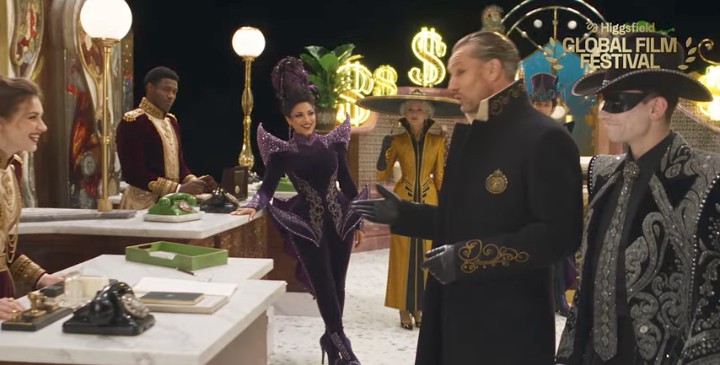
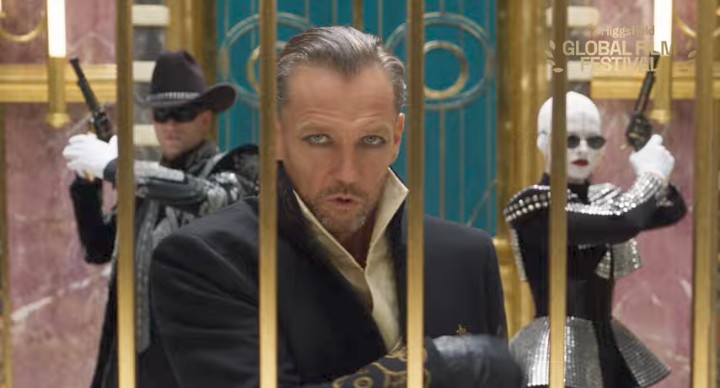
The characters are where the film really wins me over, though. The white-headed woman in the beaded shoulder armor is an instant favorite — every single time she moves through frame she’s got this “yeah, and what?” energy that’s just magnetic, equal parts menace and charisma. The gentleman himself carries real weight and swagger, and the old woman in the gold coat beside him is doing so much with a single arched glance that she barely needs a line. The bank teller who tells him “don’t go down there” and the vault guard who refuses to open the gate both get genuinely funny, quick exchanges that land — witty, playful, and never at the expense of the film’s tension. This is a cast of characters you actually like spending time with, which is rarer than it sounds in a heist story.
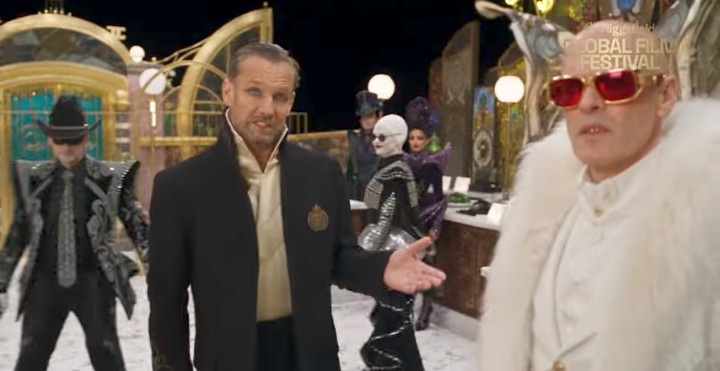
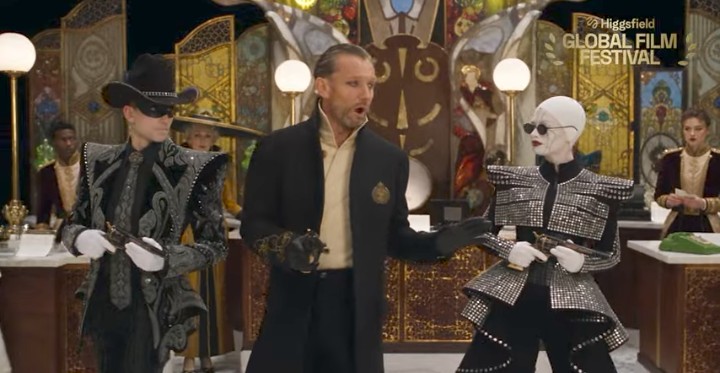
Structurally, the film is smart about escalation. It opens with the crew alone, lets the ensemble build one performer at a time, and only brings the police in around the two-minute mark — and when they arrive, they bring their own choreographed number with them, dressed in a way that reads almost Napoleonic against the bank’s Art Deco glamour. It’s a genuinely fun sequence, the kind that makes you want to get up and move with it, and it’s proof the film understands musical staging isn’t just decoration here, it’s how the plot actually escalates.
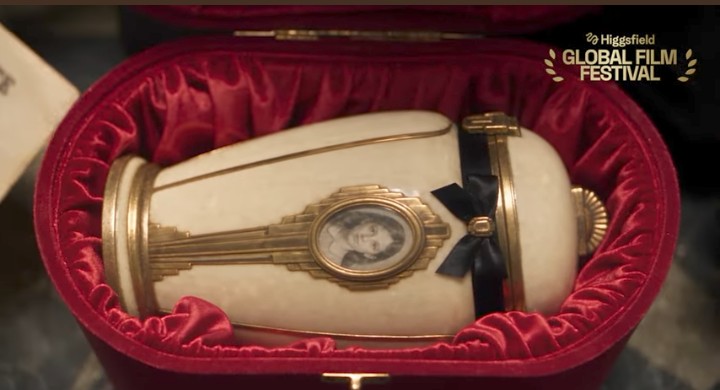
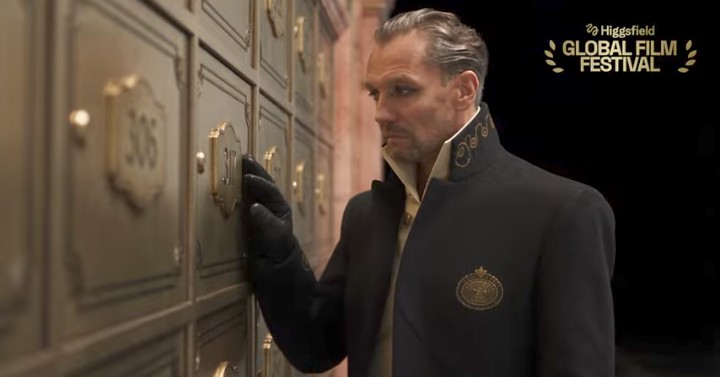
Then the film pulls its rug, gently and beautifully. What we assume is a job for money turns out to be a search for a single safety deposit box, number 317, holding the ashes of what the film strongly implies was his late wife. The name on the court order is blurred out, which is a lovely, restrained touch — the film trusting the mystery instead of spelling it out. “I came for what was mine,” he says, and the whole ensemble closes in around him, tapping their feet, hands extended, giving him one last collective bow. It reframes everything that came before it: the swagger, the performance, the spectacle, all of it was grief wearing a very well-tailored suit.


This is a film that knows exactly what it wants to be — loud, glamorous, funny, and unexpectedly tender underneath all that sequin and shoulder armor. The wardrobe alone is worthy of top prize, but the characters, the choreography, and that final reveal are what make it a film worth returning to.
Scene-by-Scene Breakdown
Those shoes. The film establishes its costume obsession before a single word is spoken.
The costumes go from “nice” to “okay, this must be good” territory almost instantly. A strong opening statement.
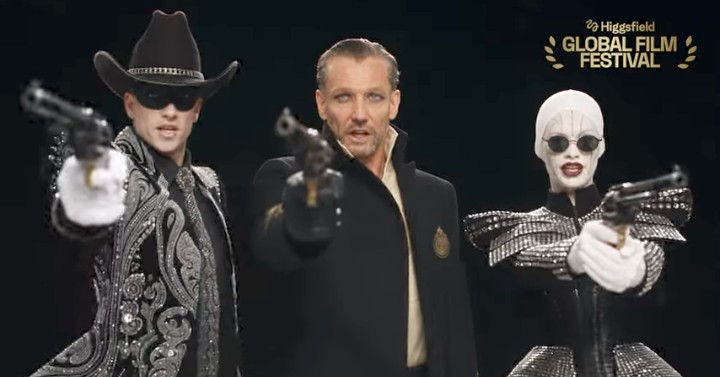
The music kicks in, and the crew walks in with pure swagger.
The white-headed woman makes her mark with a “yeah, and what?” strut. The purple-dressed woman in the background is gorgeous, and the gentleman and the old woman in gold enter with costumes that steal the frame completely.
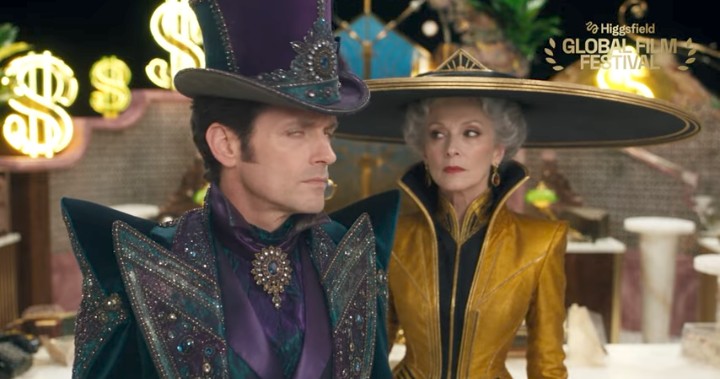
The vault guard’s strange, all-around headpiece is a fun costume swing. By 1:12 the white-headed woman’s swagger and the beat behind her are the highlight of the sequence, and by 1:25 the whole ensemble is dancing together.
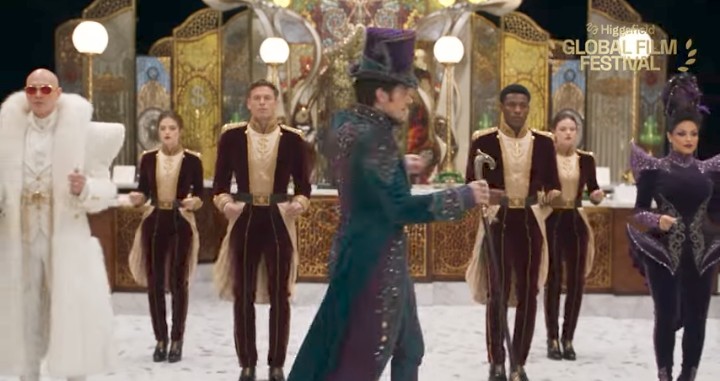
“Then what, then what, then what.” A guard in a pointed, Doritos-style hat faces off against the gentleman: “Open the gate.” “You know I can’t.” “I know.” “Then don’t ask.” Funny, sharp dialogue with real voice behind it.
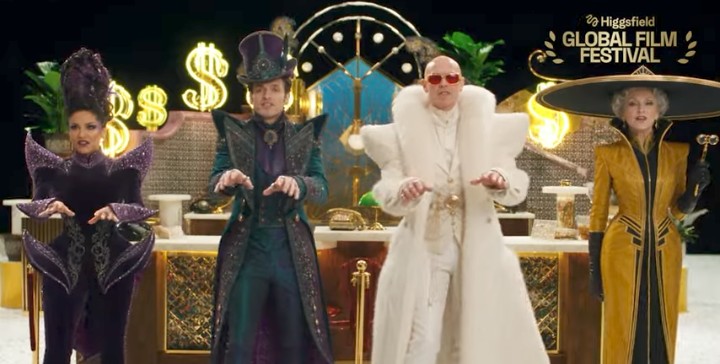
The police finally arrive, and they bring their own dance number with them — dressed with a look that reads almost Napoleonic against the bank’s Art Deco gold. This sequence is just plain fun, the kind that makes you want to get up and dance along with it.
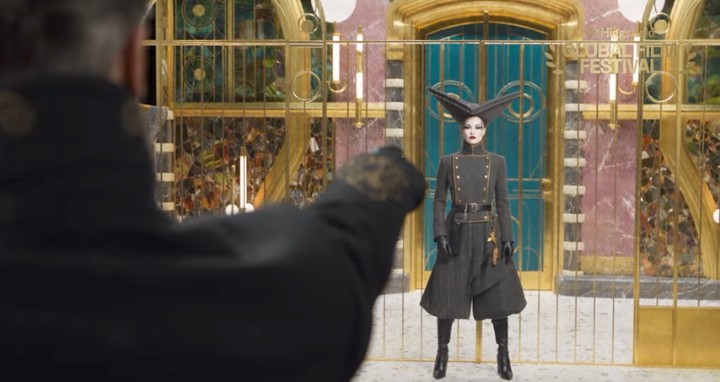
“Is it money? Is it gold? Why come back when you’re already old?” A bold, funny line. “Don’t go down there, don’t make it worse, you walked away once, don’t turn it in reverse” plays over a dance between the customers and the bank tellers — everyone in the groove together. The vault set design itself feels like a nod to old classic movie sets.
The music shifts as he finally finds box 317 — a nice echo of 307 from The Prompter. As the police run up the stairs to the vault, the lighting drops darker, leaning into moody spotlights while the customers keep dancing below.

The reveal: he came for ashes, almost certainly his wife’s. The name on the court order for the estate is deliberately blurred out — a restrained, effective touch that keeps the mystery intact.

“I came for what was mine.” The full ensemble closes in around him, feet tapping, hands extended in a final farewell. A beautiful, unexpectedly touching capstone to all the spectacle before it.

The end credits, with the lights flickering on and off, close the film with the same theatrical flourish it opened with.
Reader Reviews
There are no reviews yet. Be the first one to write one.