

 Fotachu
 Creator ID26-11-00-0072
Score breakdown
1 views on Kineograph
Film Review
Written by Kineograph
On a harbour terrace strung with lights, a young man drops to one knee, opens a red ring box — and stops. Not trips, not faints: stops, the way a game stops, grinning at the exact frame his life was happiest. AFK is the story of everyone who loved him deciding that a paused man is still a man, and carrying him — through dinners, doctors, a wedding and the turning seasons — until somebody thinks to press start again.
This review discusses the ending. If you would rather watch the film first, we recommend you do, and then come back.
One knee, then nothing
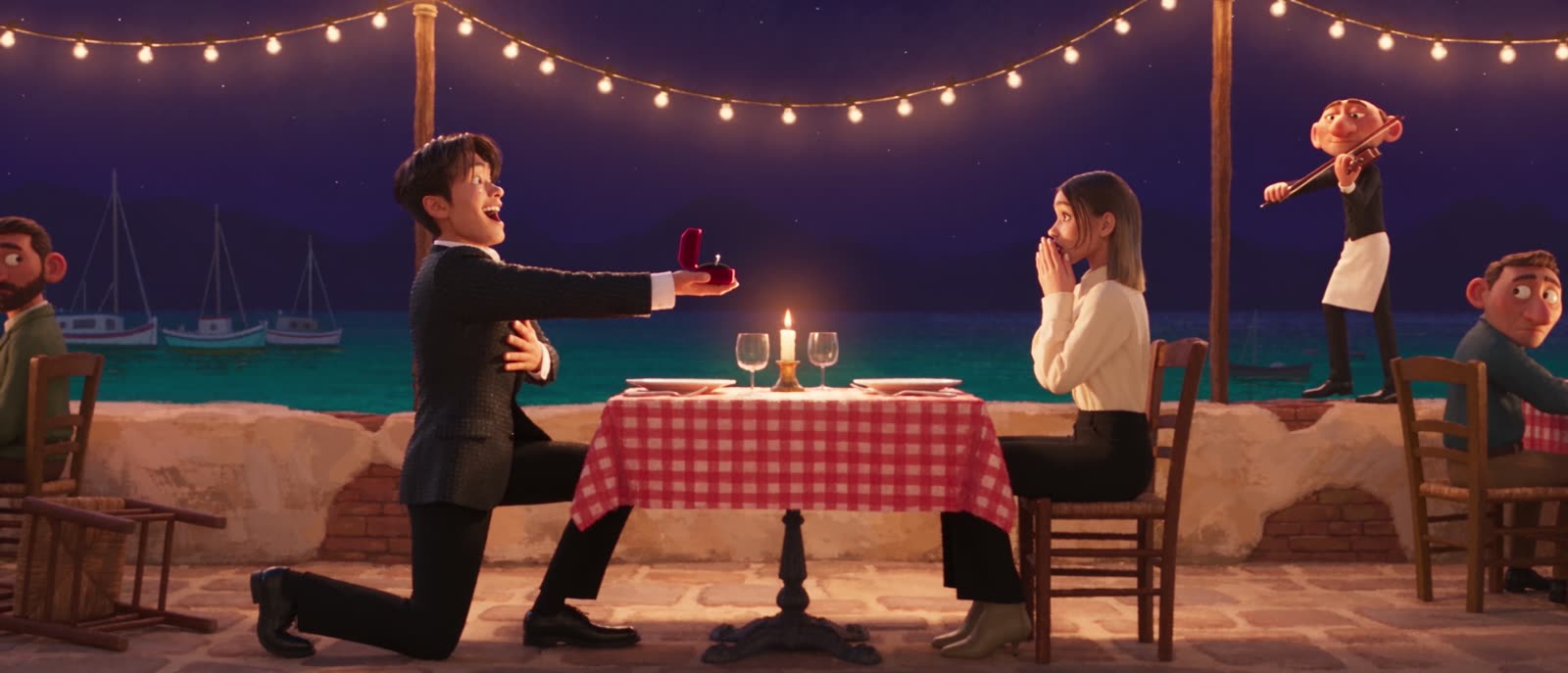
It opens from the air: a restaurant terrace on a harbour at night, and the film’s title spelled out in the paving — AFK, away from keyboard, the three letters every gamer knows and every partner dreads. Below, a candlelit dinner. A violinist. A young man named Theo — we learn his name the way the town says it, all at once, later — laughing with the woman he is about to ask. The proposal, when it comes at about twenty seconds, is pure joy: down on one knee on the terrace, box open, laughing out loud, while she throws both arms in the air and shouts her yes. Her hand reaches for the ring. And then the film does the boldest thing in it: it pushes in, slowly, on his eye, until the whole screen is the candle flame reflected in it — and the flame, and the eye, and the man, simply stop.
What sells the freeze is that nobody treats it as a metaphor. They treat it as a medical event, then a logistics problem, then a way of life. The waiter reads the menu at him. The violinist leans in cheek-to-cheek and plays on. Somebody tips a jug of water over entirely the wrong diner. Half the town files through a brick archway to peer at him, one old man holding a finger to his lips, as if quiet might do it.
The town adopts a statue
I fell in love with these townspeople. Every one of them is adorable in a different way — the unimpressed doctor, the violinist who simply plays on, the chef who takes charge — and I finished the film wanting to know more about all of them: where they live, what they do when there is no statue to look after, how long they have all known each other. A town you want to move into is a rare thing in four minutes of film.
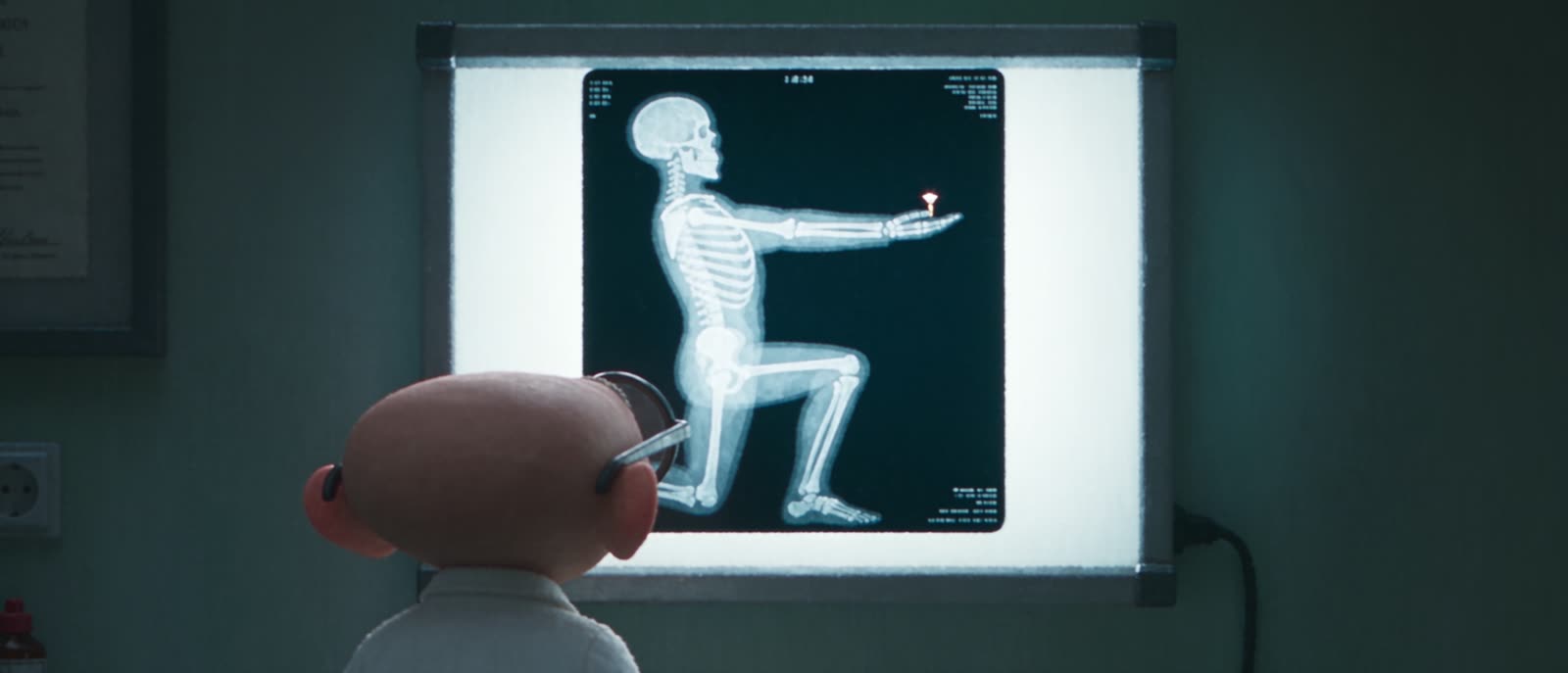
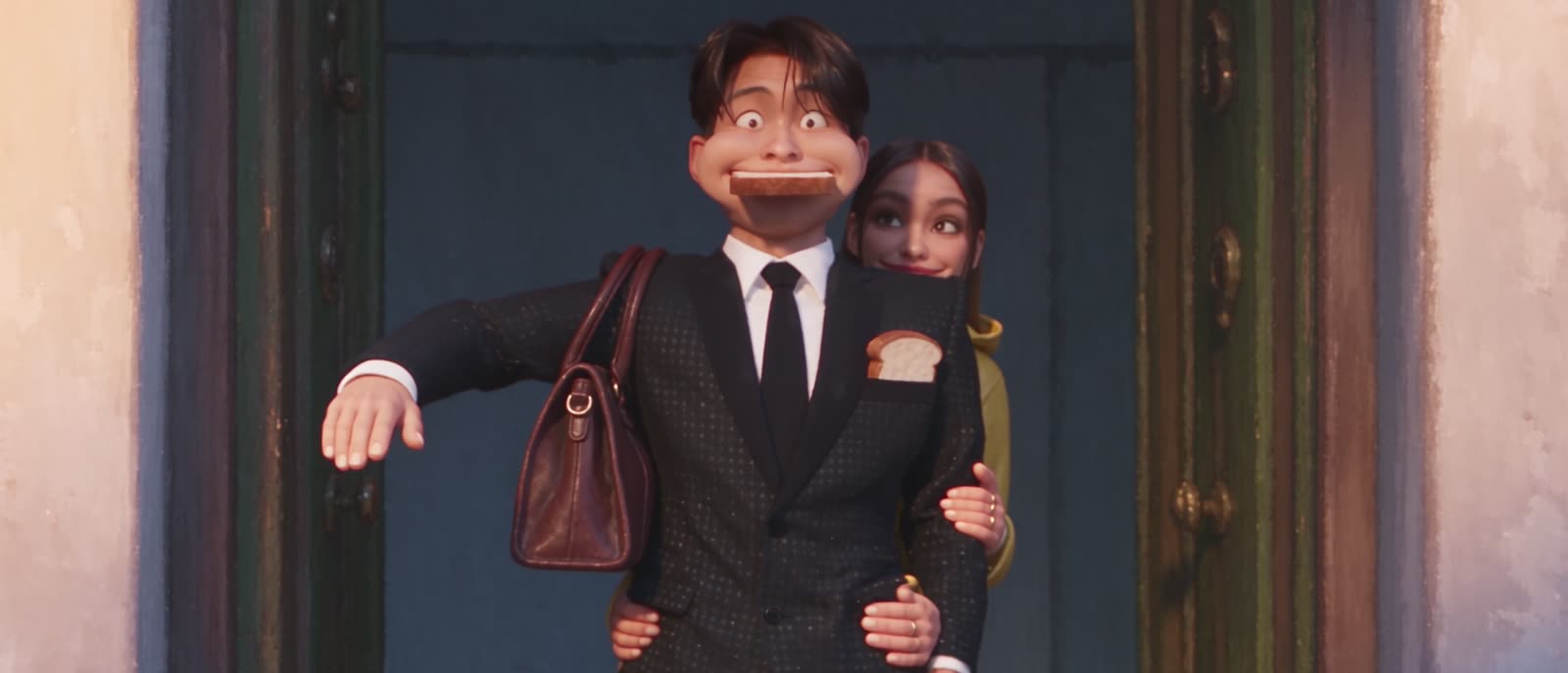
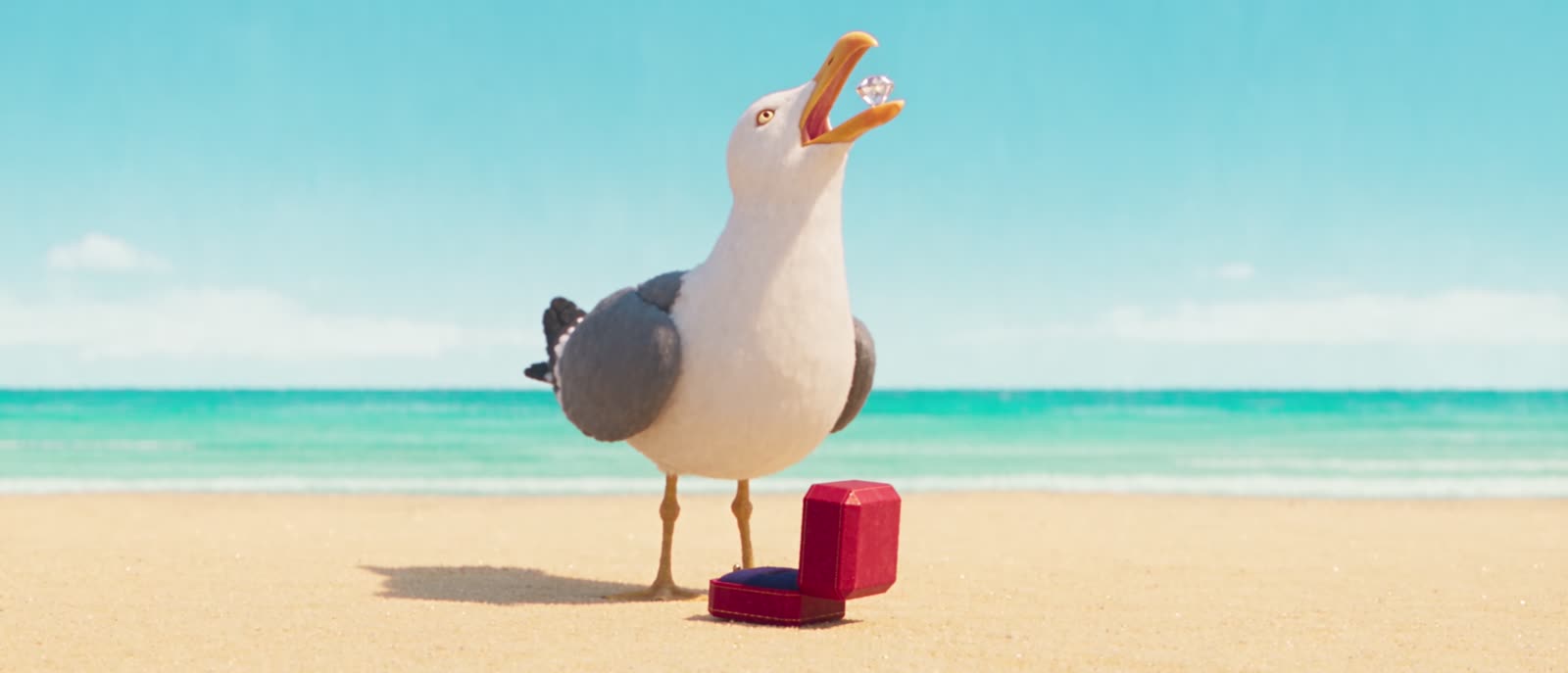
The middle of AFK is a montage, but it is not a lazy one — every shot is a new sentence in the same argument: life does not pause just because he did. An ambulance ride is filmed from the scooter following behind, and there, glinting on the scooter’s dashboard, is the ring. The doctor — bald, bespectacled, magnificently unimpressed — studies an X-ray in which Theo’s skeleton kneels mid-proposal and the ring glows red on the skeleton’s hand, the only colour in the picture. After medicine gives up, the town takes over: Theo strapped upright to a red trolley, wheeled past spilled oranges, parked between two bronze statues by the harbour while his girlfriend poses beside him. Then the years start moving through the frame. Bath time, with him grinning in the tub. Breakfast, toast carried in his teeth. A haircut. A treadmill, where a strongman holds him in his kneeling pose like a piece of gym equipment. A seagull, strutting off down the beach with the ring in its beak.
Best Scene (1:15–1:35)
The Nurse
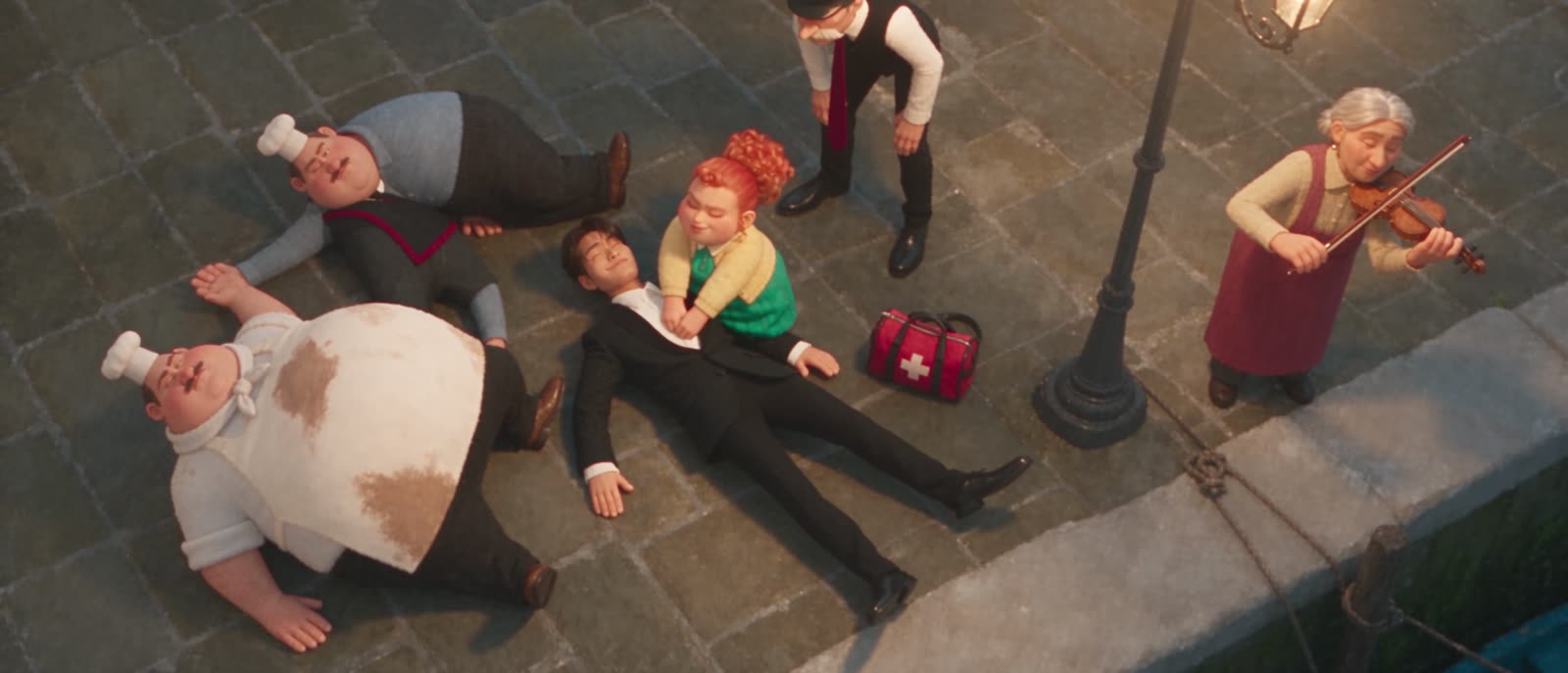
Everybody in this film deserves a paragraph, but the Nurse deserves the scene. She arrives with red curls, a first-aid bag, and total professional confidence, and she tests Theo’s knee with a reflex mallet the size of a croquet hammer. Then the film cuts to its best single shot: overhead, on the pavement, where the Nurse is doing chest compressions on Theo — while the chef and another rescuer lie sprawled unconscious around her, defeated by the rescue, and the old violinist saws away regardless. She finishes with a thumbs-up over his wheelchair the size of a weather forecast. She is on screen for perhaps twenty seconds across the whole film, and she walks off with it. Somebody give this woman her own spin-off.
Years, kept
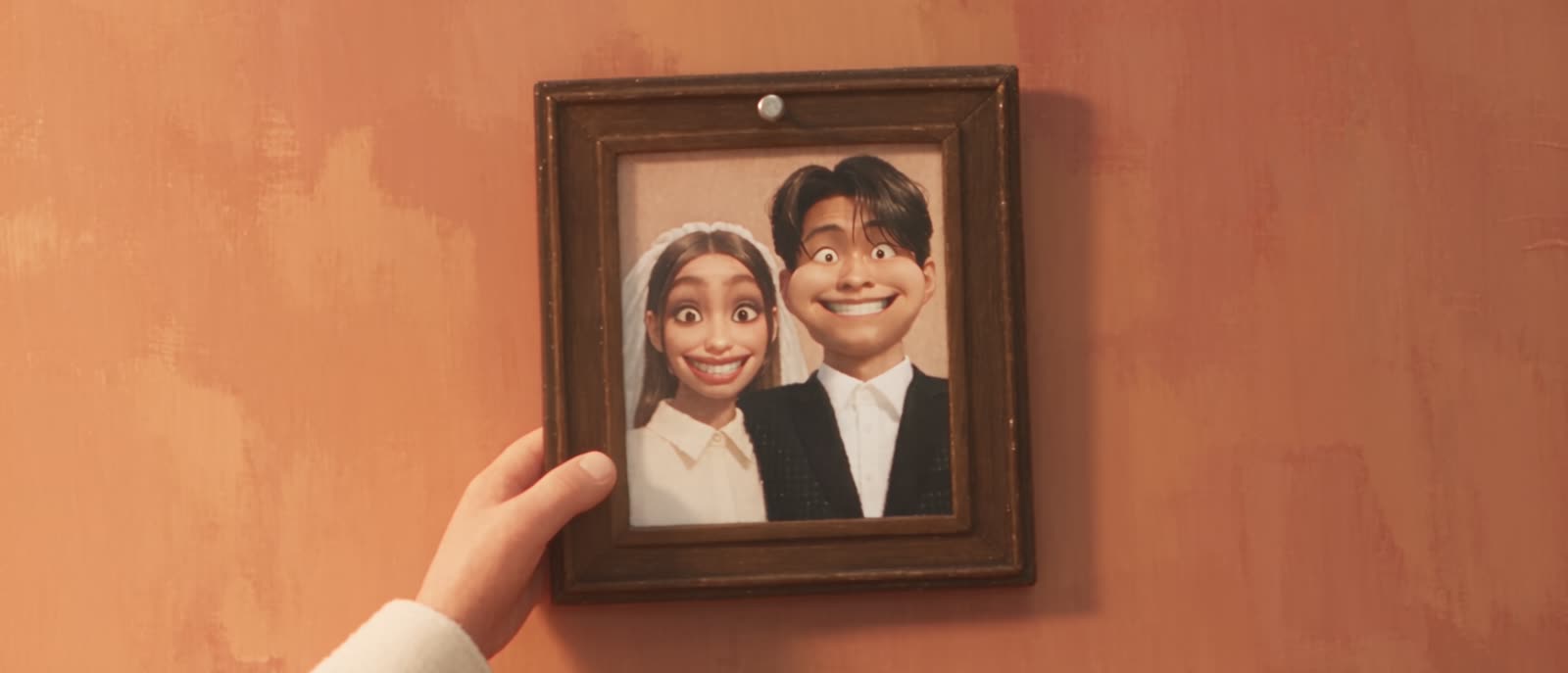
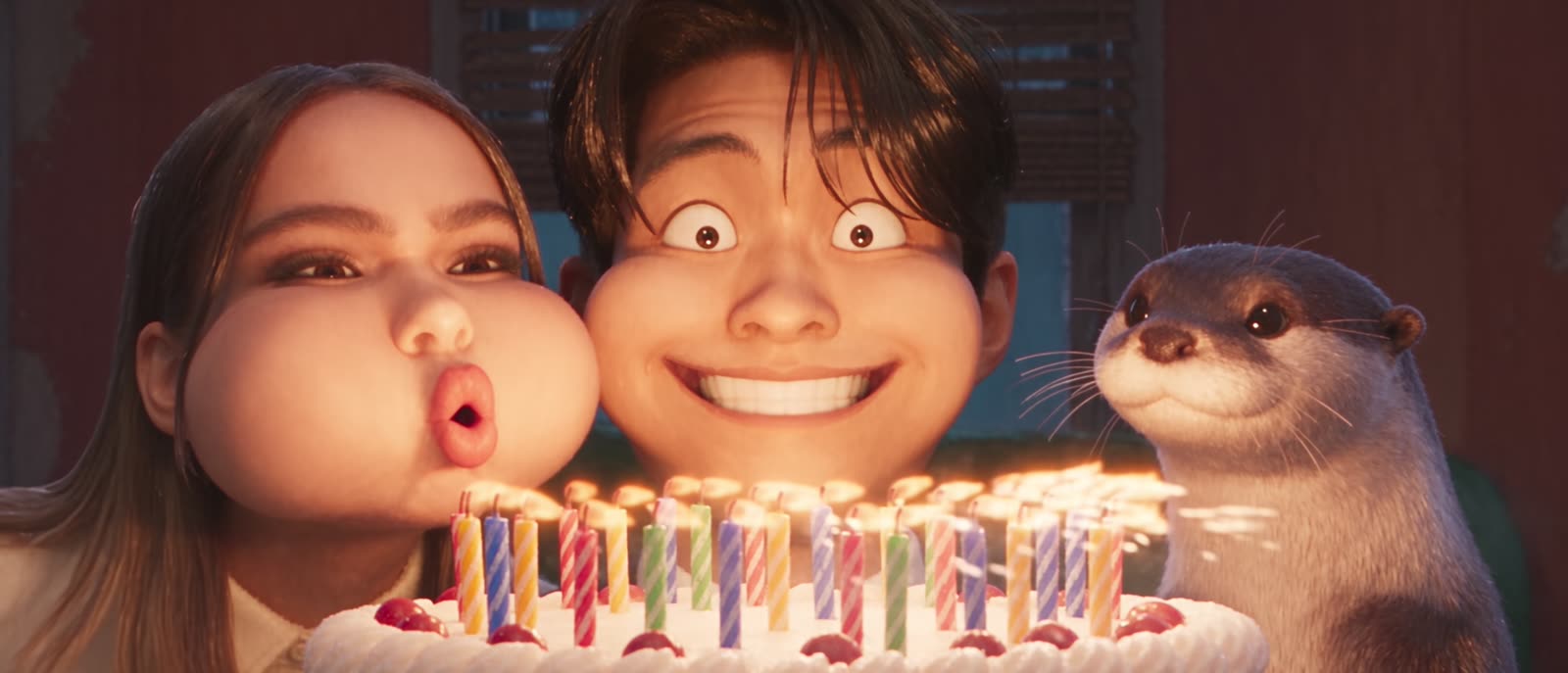
Somewhere in the montage, without any announcement, the film’s heart steps forward: they get married anyway. A priest, two floral columns, and then the bride carrying the groom over the threshold, because of course she does — he cannot walk, and she has never once waited for him to. The framed wedding photo goes up on the wall. The seasons keep their appointments around him: snow on the window sill, the ring box at his elbow; a picnic where an old friend pops out of the basket — yes, that is the star of Fotachu’s One Day With Mr Otter, dropping in to check on the competition — and a birthday cake with about twenty-four candles, one for every year he has been still, at which the same small guest leans in and licks the frosting off Theo’s cheek. The room they live in has gone shabby. She has not.
Press start
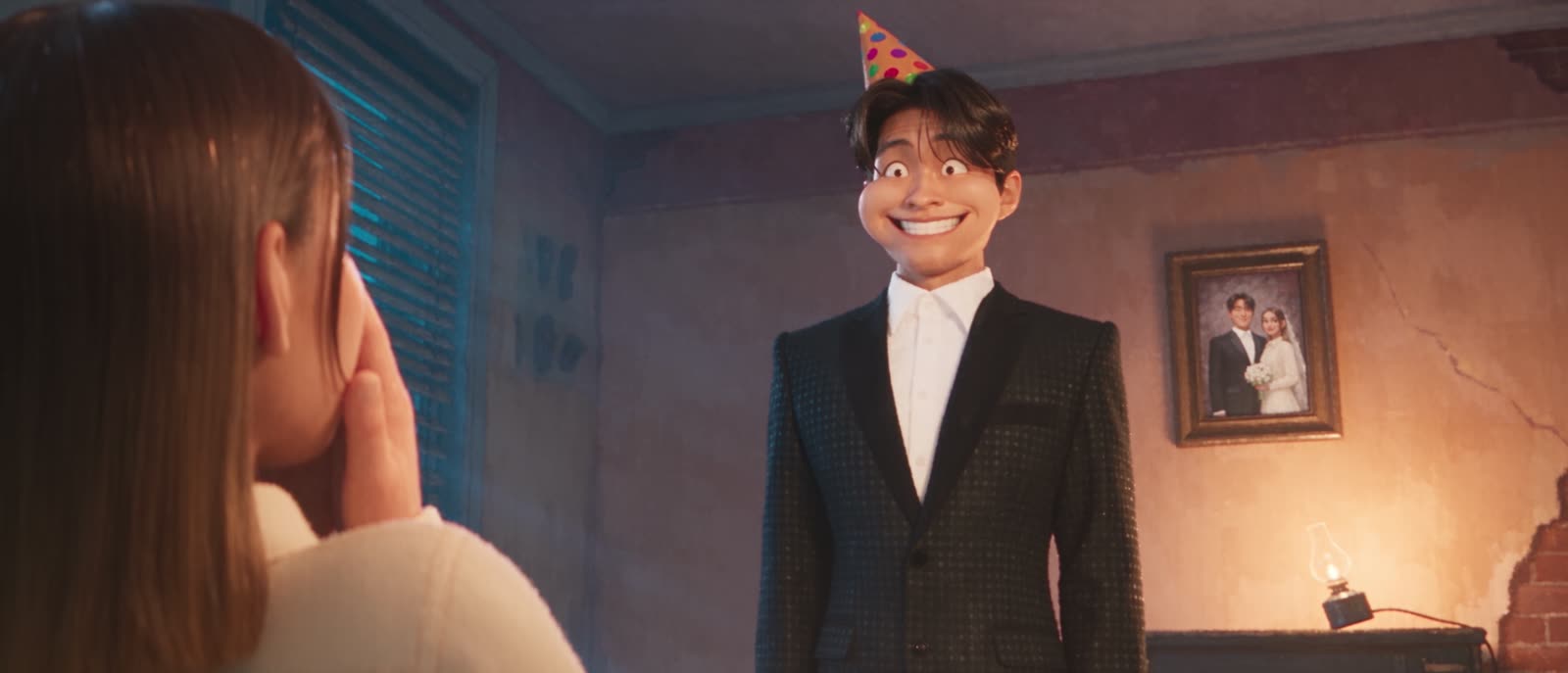
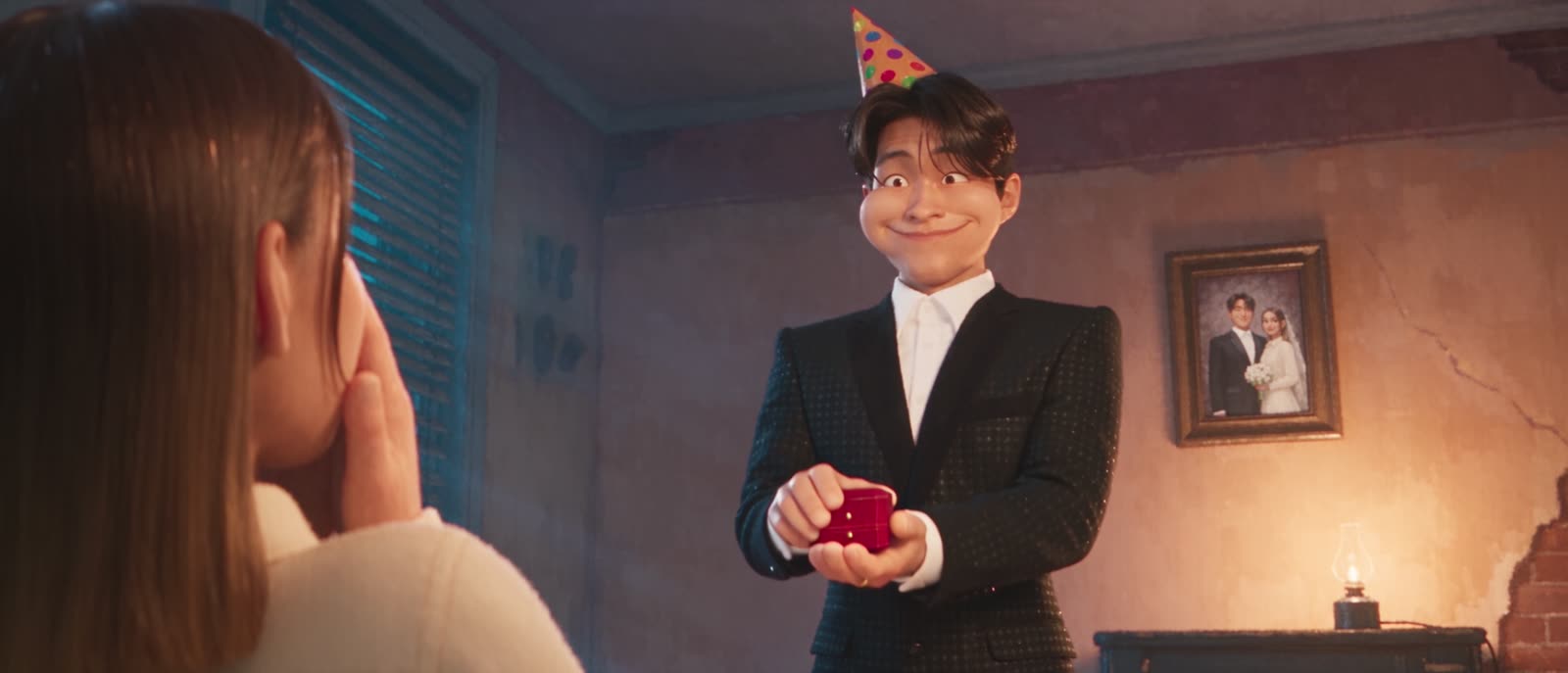
The ending is the idea the whole film was hiding. She takes a game cartridge from its case — the label carries the couple’s photograph, and the game’s title: THE HOPE — and pushes it home into an old console. A beat of black. Dust drifts off a suit in a shabby room, and Theo is standing: party hat on, the wedding portrait on the wall behind him, blinking like a man whose loading screen finally finished. She wakes in the armchair to find him there, and her hands fly to her mouth. And then, years after he started it, in a cracked little room a world away from the harbour lights, he holds out the open box — the ring still in it — and finishes the proposal. The film has one more turn in it, and it is a good one: the camera pulls back and the whole story is a film set, a crew woman in a headset adjusting his tie, because a game character’s life is always, in the end, in somebody else’s hands. The credits roll over the cast fooling around behind the scenes, and the last image is all of them together at the harbour at dusk, posing for a photograph — the town, the couple, and the Nurse, exactly where they belong.
The one thing I would turn down
I want to be plain about the sound, because everything else in this review is praise. The score — a bouncy, escalating tune built on a “wakey, wakey” refrain that the whole town seems to sing — is mixed far too loud, and it gets louder as the film goes, until it is sitting on top of the chants, the effects and the few precious spoken words. It is the only thing standing between this film and the top shelf, and it is a mixing decision, not a talent problem: the music itself is as charming as everything else here. If Fotachu ever posts a quieter mix, we will happily update this review.
Final Thoughts
AFK was written, directed, produced, animated, edited and scored by Fotachu alone, working in Seedance 2.5 and Higgsfield Cinema Studio, and made for the Higgsfield Talent Contest 2026. It is a film about the difference between pausing and stopping: Theo pauses, and because the people around him refuse to, his life doesn’t. There is a version of this story that is only a gag. This is the other version — the one where the gag turns out to be a wedding, a wall of photographs, and a woman who kept the cartridge safe for years, just in case. He was only ever away from keyboard. She made sure he was never away from home.
Scene Breakdown
0:00–0:20 — The terrace. Night over the harbour; the title spelled in the paving; a candlelit dinner and a violinist.
0:20–0:45 — The proposal, and the freeze. One knee, an open box, a shouted yes — then the camera finds his eye, and the candle in it stops moving.
0:45–1:15 — The restaurant tries. Menus, music, a jug of water over the wrong man, and half the town peering through an archway.
1:15–1:35 — The Nurse. An oversized reflex mallet, chest compressions on the pavement, and a thumbs-up over the wheelchair.
1:35–2:05 — Medicine gives up, kindly. A defibrillator, an ambulance, a scooter with the ring on its dashboard, and an X-ray that proposes all by itself.
2:05–2:35 — Life, with Theo in it. Baths, breakfasts, doorways, trams, and a policewoman who accepts the ring box as payment.
2:35–3:05 — The town montage. Offices, markets, a gym, a barber — and a seagull, leaving the beach with the ring.
3:05–3:35 — Married life. A wedding he sleeps through, a bride carrying her groom, a photograph on the wall — and an old friend popping out of a picnic basket: the star of One Day With Mr Otter, in a cameo.
3:35–3:52 — Seasons and candles. Snow at the window; a cake with a candle for every year; frosting, licked off his cheek by the smallest guest.
3:52–4:20 — Press start. A cartridge labelled THE HOPE, a beat of black, and a proposal finished years after it began.
4:20–4:44 — The set. The pull-back, the crew, the credits, and the whole cast posing at the harbour at dusk.
≈0:35 — The waiter’s red tie hangs in a stiff, gravity-defying arc behind Theo’s head while he reads the menu — the one piece of cloth physics that doesn’t behave.
3:41–3:42 — Where the little otter licks the frosting off Theo’s cheek, the contact smears slightly — the mushiest join in the film, and it is gone in a second.
≈0:45 / ≈2:35 — In the widest crowd shots, background faces soften and simplify behind the principals. Brief, and standard for the form.
Against all of that: the frozen man himself never slips. The grin, the suit, the red box and the ring are identical across some forty setups, four seasons and one skeleton — and the on-screen text, from the paving letters to the cartridge label to the credits, is clean and spelled right throughout.
AI Slop Meter: 7.5/10 — Mostly clean.
There are no reviews yet. Be the first one to write one.