

 BARDSONGTAVERN
Score breakdown
929 views
A Dungeon-Delve Lore Tale
Best Scene
Film Review
A dungeon delve told by its only survivor: The Hunt for Shar’s Lost Crystal is not a plotted drama but a single archer, telling us after the fact how four adventurers went down beneath the cliffs of Shadowdale hunting the Starry Gnosis — and how the temple of Shar kept three of them. Its subject is curiosity as a trespass: every locked door in the mountain opens, and every one of them was locked for a reason.
This review discusses the ending. If you would rather watch the film first, we recommend you do, and then come back.
“I believed I had looked upon the worst horrors Faerûn could offer”
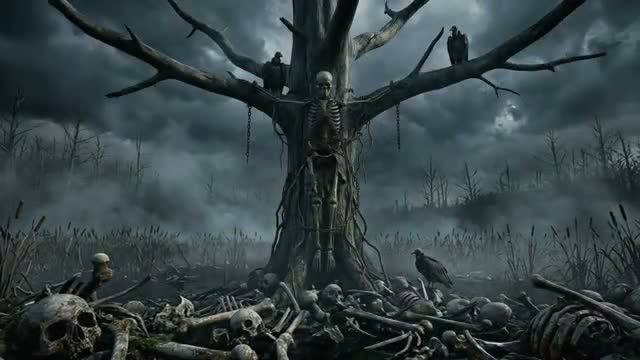
The framing is the film’s best decision, and it is the same one its Bardsong Tavern sibling makes: a narrator who has already survived the story, telling it to us because somebody has to. “I have crossed forests claimed by Deadbark Dryads and seen sacred groves wither into poisoned marshes.” He believed he had seen the worst Faerûn could offer. Then four of them descended beneath the cliffs of Shadowdale, hunting a crystal relic said to hold secrets hidden between the stars — and what they found “taught me how little I truly understood fear.”
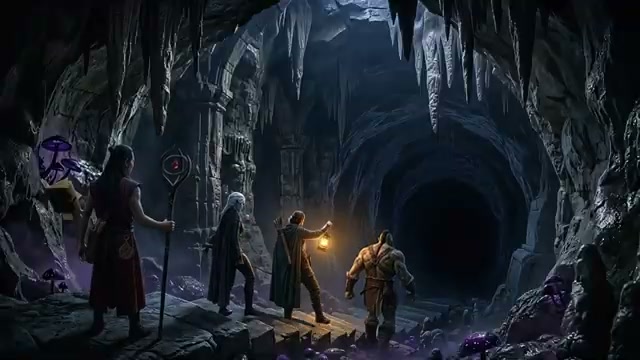
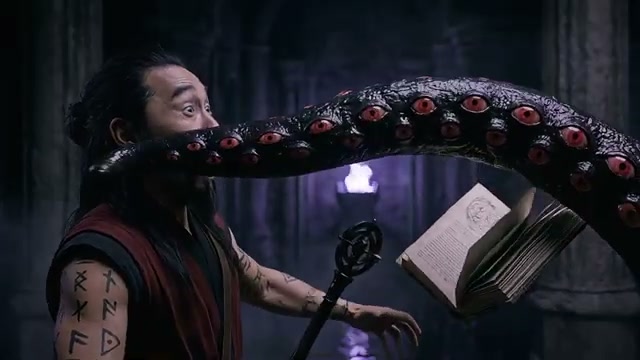
The delve is led by Callan, an illusionist who once studied at Candlekeep, whose hunger for forgotten knowledge “often carried him into places wiser men preferred to leave buried”. With him are Nessa, Brooke and the warrior Ruuk — four silhouettes the film keeps distinct all the way down: Callan’s tattooed arms and red robe, Ruuk’s bulk and axe, Nessa’s black leathers and twin daggers, Brooke’s lantern. They are sketched, not developed — a trait each, a weapon each — but the film never once confuses them, which is more than most AI dungeon crawls manage.
Those who fear the night shall never know its secrets
The descent is a catalogue of warnings, ignored one by one. A wound in the rock, ringed with violet, that seems to drink the light around it. A pale cave lizard. White mushrooms whose spores wake regrets none of them wished to remember. A ledge above a drop so deep the lanterns cannot find the bottom — a fragment breaks under Nessa’s boot and vanishes, and Brooke catches her shoulder before she can follow it. Then a corridor of ancient inscriptions, one of which the film holds on like a thesis statement: “Those who fear the night shall never know its secrets.”
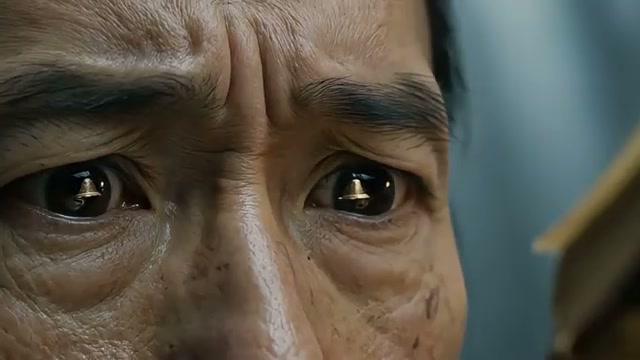
Near the end of the crossing waits something stranger still: an enormous bronze bell above the abyss, which even Callan cannot explain. Curiosity overcomes caution — Brooke steps forward and lays a hand against the ancient metal — and the film gives us its signature sound: “A single note rolled through the cavern. The sound was not loud, yet it seemed to pass through the mountain itself.” The close-up that follows is the film’s finest small image: Callan’s eyes, the bell reflected in both of them, while a deep hum continues somewhere beneath them, long after the bell is still.
The temple seemed to remember what it had once been
Deeper still the temple stops being a ruin and starts being a congregation: a procession of silent lantern-bearing worshippers descending into the depths, gone when the narrator looks again; dozens of statues kneeling before a blank wall, “less like a shrine than a congregation still waiting for something to happen”; a camp pitched among them, because there is nowhere else to sleep. Nessa finds a hidden seam under the dust, a wall rotates inward, and a spiral stair winds down a cylindrical shaft to a solitary platform where a weathered altar and a dark marble basin overlook the dark — and the narrator’s blood, caught on the basin’s edge, falls onto ancient stain and vanishes “almost immediately”.
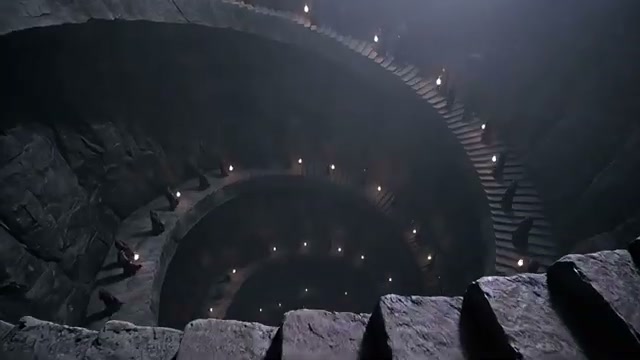
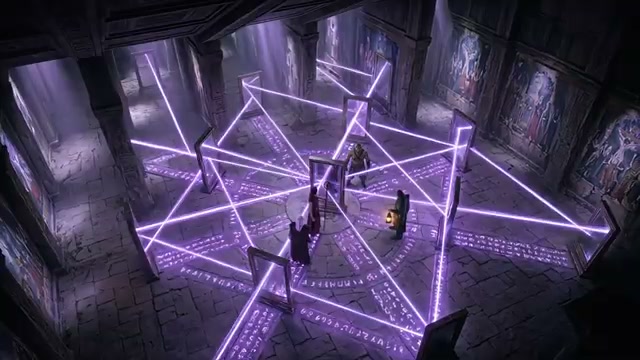
Then the mirror chamber, the film’s most beautiful room: Nessa working the ancient mechanisms while Callan guides the mirrors with simple illusions, violet moonlight racing through the chamber until “for a brief moment the temple seemed to remember what it had once been”. One corridor stays dark — a shattered mirror broke the chain — and the murals leave no doubt where they are: a forgotten temple of Shar, Lady of Loss, its surviving fragments repeating one name again and again. The Watcher Beneath. No description accompanies the title. When they try to retrace their steps, “a vast abyss waited where solid stone had once stood. The temple was built to keep something in.”
The water moved
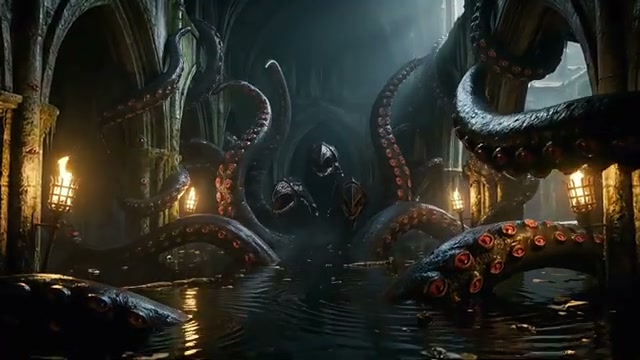
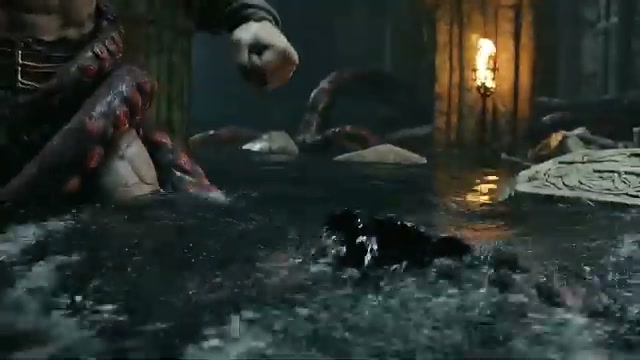
The final hall is where the film earns its horror. The water moves. What the narrator mistook for roots tangled around the pillars shifts, and “slick black flesh rose from the lake, and hundreds of shielded crimson eyes opened along the length of every tentacle.” Ruuk charges before anyone can stop him, his axe severing a tentacle and sending black water across the stones — and the lake answers “with impossible speed”, wrapping leg and waist and arms and chest until the strongest among them vanishes beneath the water. Callan answers with a lance of violet force that lights the lake from beneath and shows the body spreading through the water, tentacles coiled around pillars like living vines; his mirror image fails when one of the creature’s countless eyes finds the real caster, and a tentacle wraps across his face, “smothering the spell from his lips”.
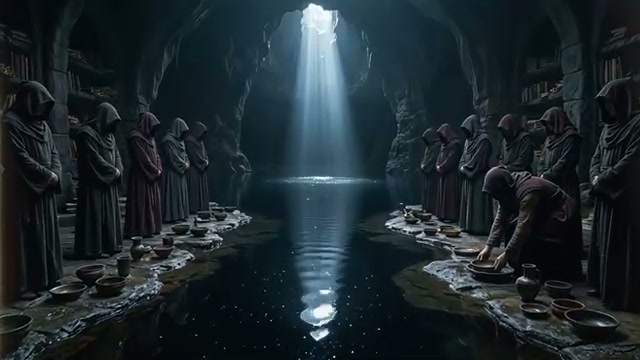
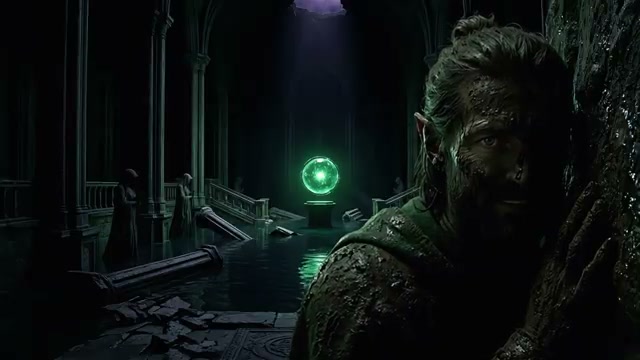
Across the water, the crystal rests on a distant pedestal — “tiny stars shimmered around a heart of perfect blackness” — and Nessa stops to point at it, a heartbeat too late: a tentacle takes her ankle, her daggers flash toward the staring eyes, and she is dragged under “without a cry”. Callan stirs, still alive, and is dragged under too. “That was when I understood. It was searching for body heat.” The narrator slips into cold mud, smears it across skin, clothing and hair, and presses himself against the cavern wall. The crystal sits across the water, unreached. The darkness below is moving. “Slowly, deliberately, as though it had finally found what it was looking for.”
Best Scene (5:52–6:54)
The water moves
The shapes the narrator mistook for roots shift. Slick black flesh rises from the black lake and hundreds of crimson eyes open along the length of every tentacle, and Ruuk charges before anyone can stop him — his axe severing a tentacle, black water spraying across the ruined stones, the lake answering with impossible speed until the strongest among them vanishes beneath the water. It is the title’s promise and the film’s whole thesis in a single minute: the temple kept something in, and they opened it.
Final Thoughts
Judged as a story, this is a catalogue with a casualty list rather than an arc — a guided descent through a haunted temple with no protagonist to follow except the man who lived to tell it, and an ending that refuses to end at all: the crystal unreached, the creature still moving, the narrator’s survival unconfirmed. The cliffhanger is the film’s one real weakness; it stops where a last scene should be. Judged as what it actually is, a tavern tale of a delve gone wrong, it is atmospheric, literate, and built around one genuinely frightening idea — a prison that hunts by warmth, and a party that walked into it carrying lanterns.
The craft serves the telling: violet moonlight against black water, a party that stays recognisable from first frame to last, and creature work — the Watcher’s eye-ringed tentacles coiling around the pillars — that holds up in the wide reveal, where AI films usually come apart.
The Hunt for Shar’s Lost Crystal is part of Bardsong Tavern’s Season 1 on YouTube. It is Forgotten Realms-inspired fan work, and says so itself: its description declares it unofficial fan content under Wizards of the Coast’s Fan Content Policy, and its lore — Shar, Shadowdale, Candlekeep, Faerûn — is drawn from that world. Its end card carries the channel’s seal and no personal credits, so the director credit rests with the channel. One naming note: the film itself carries no title card — YouTube lists it as “The Watcher Beneath”, the name the narration gives the creature, while StoryVeo and the creator’s own description title the piece The Hunt for Shar’s Lost Crystal, and that is the title used here.
Scene Breakdown
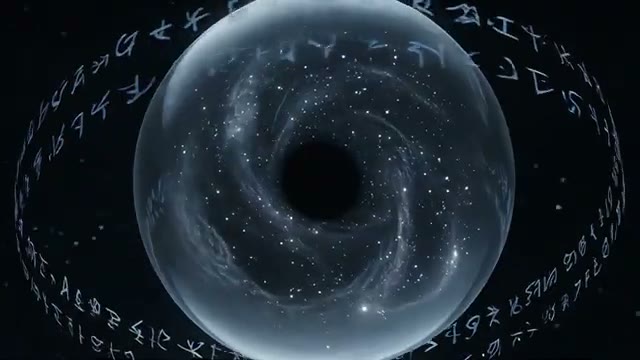
0:00–1:01 — The telling begins. The NADA FAMILY ENTERTAINMENT card and the Bardsong Tavern ident; the dead tree; the narrator’s prologue and Callan’s hunger for the Starry Gnosis.
1:01–2:54 — The descent. The violet wound in the rock, the cave lizard, the spore mushrooms, the ledge and the prayer-wall inscription, the bronze bell’s single note.
2:54–4:37 — The temple’s outer rooms. The silent procession, the kneeling statues, the camp, Nessa’s hidden seam, the spiral stair, the blood in the basin.
4:37–5:42 — The mirrors and the name. Violet moonlight in the mirror chamber, the shattered mirror, the murals of Shar, the Watcher Beneath named, the temple built to keep something in.
5:42–7:04 — The water moves. The final hall, the eyes opening, Ruuk’s charge and death.
7:04–8:32 — The spells fail. Callan’s lance and mirror image, the tentacle across his face, Nessa’s daggers, the crystal sighted across the water.
8:32–10:28 — The last one standing. Nessa taken, Callan taken, the cold mud, the crystal across the water, and the darkness moving.
≈0:28 — The Starry Gnosis orb is ringed with pseudo-runes: glyph-like marks that read as script at a glance but resolve into nothing. The mirror-chamber floor runes (≈5:08) are the same soft pseudo-text.
≈2:20 — The crumbling ledge close-up is soft, almost out of focus; the falling fragment reads but the rock texture is mush.
≈6:32 — The severed-tentacle close-up is a blur of dark flesh; it plays as motion blur, but the detail is gone.
≈5:36 — The hooded procession by the lake is painterly where the close-ups are near-live-action — the one clear style break, though the darkness carries it.
≈9:20 — Callan’s arm tattoos read as a full sleeve as he is dragged through the mud, where earlier shots showed rune marks only on the upper arm — a possible drift, though no earlier frame shows the same arm clearly enough to prove it.
The Watcher itself never drifts — slick black flesh and crimson-ringed eyes from its first rise (≈5:58) to the final wide (≈10:18) — and the four adventurers stay recognisable from the cave mouth to the black water.
There are no reviews yet. Be the first one to write one.