

 Vygor
Score breakdown
21.9K views
Film Review
This review discusses the ending. If you would rather watch the film first, we recommend you do, and then come back.
Twenty minutes to leave your home
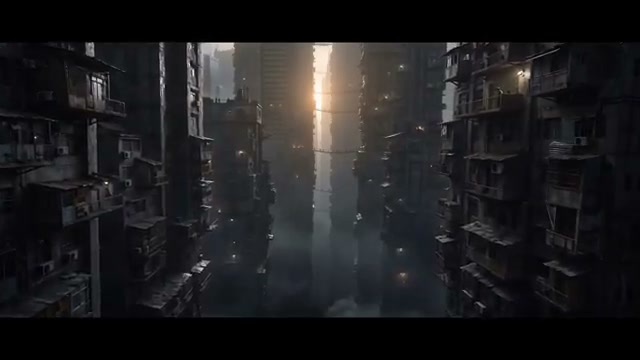
The film opens in total darkness, and it means it literally. A tower block in Archeston has twenty minutes to empty so it can be pulled down and let the sun reach the streets below. A resident makes the only argument that matters: “This is our home. Where else are we supposed to go? Can’t you choose another building?” The answer is pure procedure — the block “has been decommissioned,” make your way to East Gantry, they’ll take care of you there.
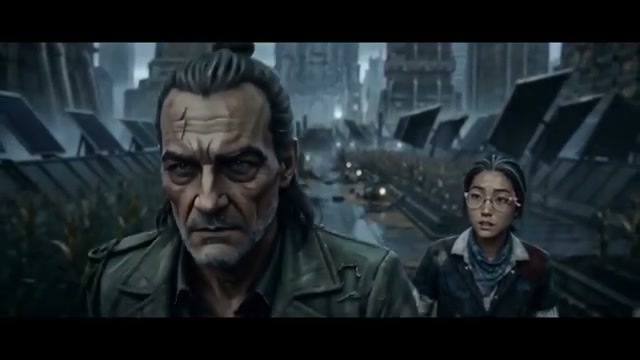
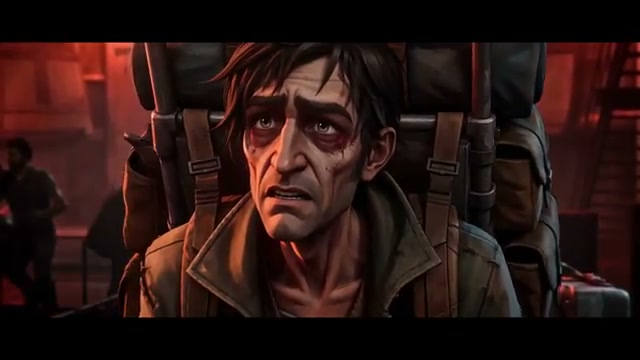
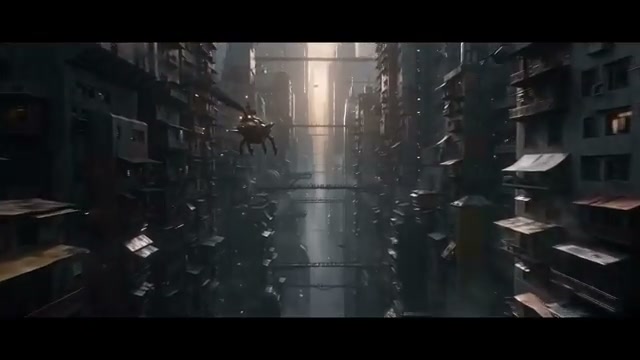
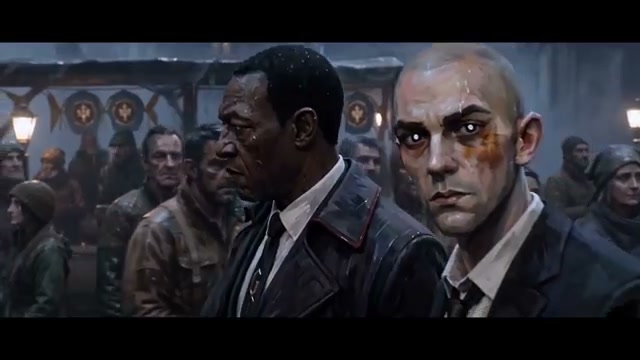
And what does the demolition buy? “Another six moons.” The film’s own verdict arrives in the same breath: “This is just a band-aid.” That exchange is the whole premise priced honestly — homes for half a year of light — and the animation sells it: bruised faces in the rain, an elderly woman staring up at the towers, and one extraordinary shot of a single shaft of sunlight falling between the buildings like something rationed.
The dead man’s device
The middle of the film is a council chamber, and it asks a newcomer to keep up. The Founders of the Anyth examine what was found on the body of Naman Nostav: a device “fused with his cerebral cortex,” used, the mind masons guess, to control his conscious state. Elaine reads it as a threat delivered by the Heavens — a statement that even those who do not fear them should. Solace, the youngest voice at the table, offers the dangerous alternative: if Naman was bargaining with the Heavens, then “some measure of peaceful communication can be possible.”
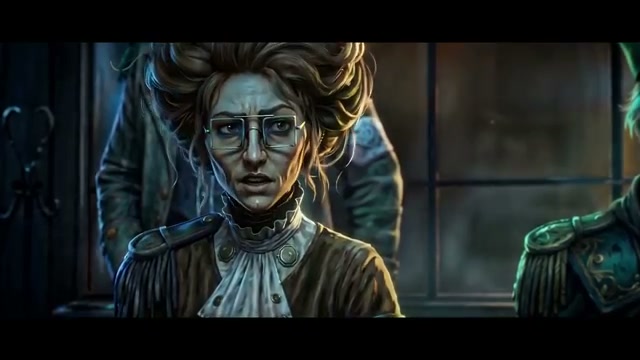
It is dense, invented-vocabulary exposition, and the film makes no concessions to anyone who hasn’t seen the previous chapter. But the faces carry it — this is stylised CGI animation with a painter’s finish, and the same scarred commander, the same blonde Elaine, the same Solace with the pink bow tied to her glasses return cut after cut, which is what makes a talking-heads council play like drama instead of a lore dump.
The Gatekeeper comes up
Then Warner arrives, and the film finds its gear. A Gatekeeper who has just stopped a killing outside walks into the garden holding a bloody trophy and announces, pleasantly, “I’m ready to come up now.” His business is theft: thousands of micronics siphoned from Archeston into the lower gates, and something being built with them. His remedy is occupation. “This is Keeper Reese. I’m granting him full authority to investigate here in the lower gates until this theft is uncovered. And I, for one, won’t lose any sleep if a few bones are broken in the process.”
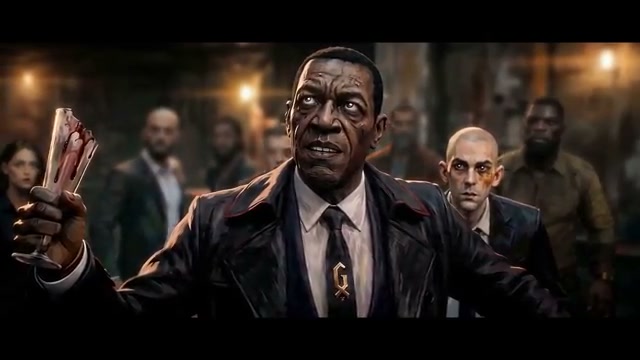
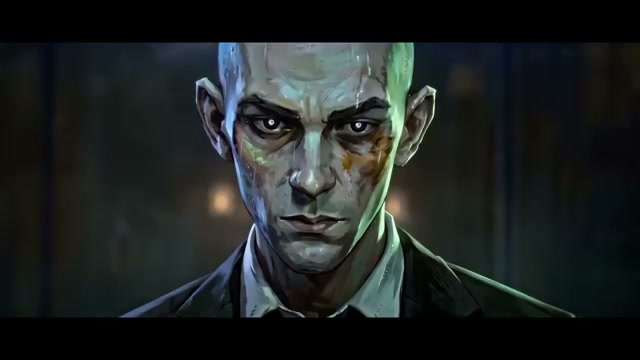
Quarry answers in kind — “I am granting myself full authority to kill you where you stand” — and Warner simply declines to be governed: “Your laws mean nothing to me. Neither do your threats… We’ll take your cooperation or not. Either way, we’ll eventually get what we came for.” The film then refuses to resolve any of it. It closes on a numb, sung interior passage — “I feel so alive. But nothing’s inside” — a weapon levelled at a seated young person, and a card: THE STORY CONTINUES. As an ending it is a promise, not a conclusion, and viewers meeting this universe for the first time should know that going in.
Best Scene (9:36–11:12)
Warner’s ultimatum
A polite invasion, conducted at garden-party volume. Warner asks after Elaine’s father, observes every formality, and then grants his own investigator authority over a district that is not his, promising broken bones the way another man might promise rain. When Quarry threatens to kill him where he stands, Warner doesn’t raise his voice — “Don’t test my patience” — and the council understands, all at once, that the gates were never theirs. Power, exercised as good manners, is the scariest thing in the film.
Final Thoughts
Those Who Live Below is worldbuilding first and a standalone film second: a grimdark animated universe eight years in the making, rendered in a consistent painterly style with real faces, real rain and a premise — sunlight worth demolishing homes for — that earns its moral argument in the first two minutes. It is a film about what a city will knock down to survive, and whether surviving that way is still survival.
Judged as a chapter, it is rich and confident; judged as a first encounter, it is demanding — the council exposition assumes knowledge the film doesn’t supply, and the cliffhanger is a membership invitation as much as an ending. The craft, though, is never in doubt.
Those Who Live Below is by Vygor, the channel of creator Kai Vygor, and continues directly from the team’s previous film, This One Does Not Fear. Its description credits Head of Art Odysseus Pollock, Production Designer Ellie McCandless, Cinematographer Peter McGregor, and mo-cap performers Tom Dray and Chantelle Peck.
Scene Breakdown
0:00–2:14 — The eviction. Total darkness; twenty minutes to empty an inhabited tower marked for demolition; a resident begs, and is sent to East Gantry.
2:14–3:00 — Six moons. The price is named — the demolition buys another six moons of light — and dismissed in the same room: “This is just a band-aid.”
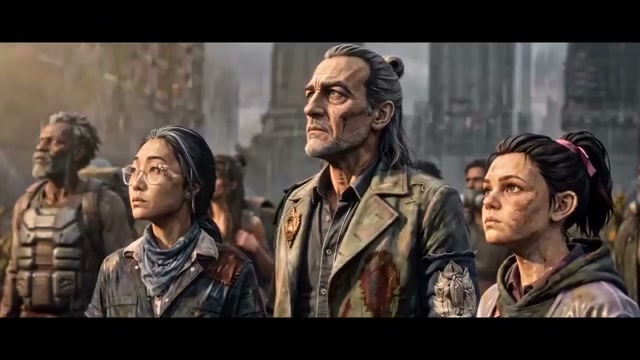
3:00–5:24 — Life below. A father and daughter, a masked sun-priest’s blessing (“The last spark. You are the light”), and a Revolt voice warning that the killing will continue unless they help “like Naman did.”
5:24–7:14 — Naman’s device. The Founders debate the tech fused to the dead man’s brain: Elaine calls it intimidation; Solace wonders if it proves communication with the Heavens is possible.
7:14–9:13 — Warner arrives. Screaming outside, a killing stopped, and the Gatekeeper comes up into the garden with a bloody trophy in his hand.
9:13–11:12 — The ultimatum. Stolen micronics, the Revolt blamed, Keeper Reese granted full authority, and Quarry’s death threat waved away.
11:12–12:52 — Nothing’s inside. A sung, numb closing passage, a weapon levelled at a seated young person, and the card: THE STORY CONTINUES.
≈8:20 — The handshake is the film’s clearest seam: the fingers tangle and double in the clasp, the classic AI hand failure, held a beat too long in close-up.
≈7:35 — Warner’s bloody trophy reads oddly — more wax than flesh — and the hand holding it is stiff, even as the moment itself lands.
Crowd faces behind the principals soften into painterly shapes at the eviction and Warner’s arrival; forgivable at this scale, and the leads carry every close-up.
There is mild style drift throughout: some faces sit closer to photoreal than the brushier council faces. The film wobbles between two finishes without ever breaking — and the leads themselves (the scarred commander, Warner, Solace’s bow-tied glasses) are the same people in every scene, which is what holds a lore-heavy chapter together.
There are no reviews yet. Be the first one to write one.