
We Kept the Sun
 Surreal AI
Score breakdown
317.6K views
Single Review
Written by Kineograph
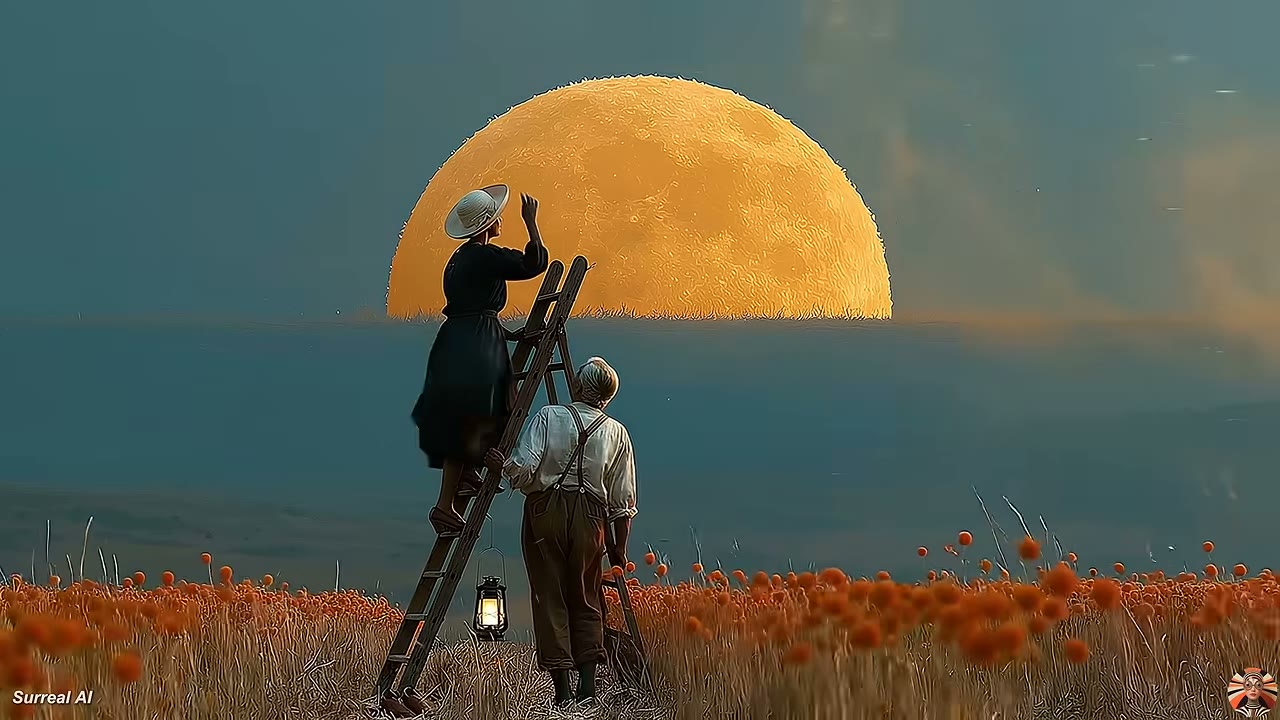
An elderly couple in a field of poppies, a ship on the horizon, a moon so big it needs a ladder — and two old voices singing the truest line in this batch: “We didn’t just survive the fire. Darling, we kept the sun.”
The Song
It opens almost spoken — “We spent half our lives chasing the morning” — and lets the title arrive quietly at 0:20, as a refrain the whole song will keep returning to like a handrail. The verses are full of a long life’s specific furniture: coffee going cold on the porch, fireflies, “summers full of leaving”, “names we’ll always miss”, a peach that still tastes like August. The chorus is the thesis — “Every storm we outlasted turned the light in the gray / We didn’t just survive the fire / Darling, we kept the sun” — and the arrangement keeps making room for it: cello and violin weeping politely underneath, the choir answering like a congregation that knows the couple. The closing minute strips back to the two voices and a spoken coda: “We’ve got plenty of light left, sweetheart. Plenty.”
The Film
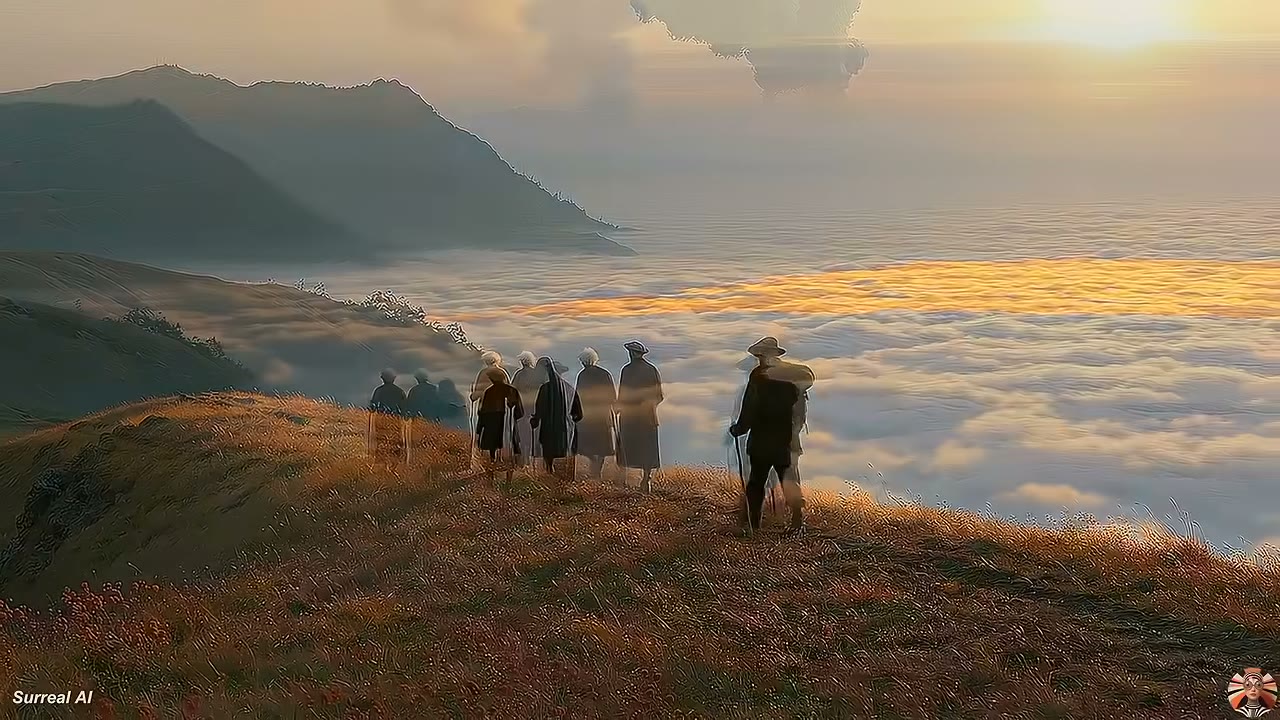
A living oil painting, and it never breaks its own spell. The couple are seen the way memory sees people: from behind, at a distance, in profile — under a great tree, walking poppy fields toward a tall ship, watching a steam train cross a viaduct, sitting out a rain shower under one umbrella, reading on a bench while the light goes. The images are allowed to be impossible in the gentle way of paintings: a harvest moon big enough to climb to, a wave made of wheat, a white chapel alone on a golden hill. Because every frame obeys the same painted surface, the impossibilities feel like emphasis rather than error. It ends, plainly, with a thank-you card — the only frame that isn’t a painting, and by then it has earned the plainness.
Best Moment (3:45)
“We didn’t just survive the fire” — the last chorus
Near the end the song stops being gentle about it: the line arrives almost shouted, the two voices together, over the couple standing in the field as the light turns. Everything before it was gratitude; this is defiance — the sound of two people who know exactly what the fire was, refusing to let it have the last word. Then the music softens, and the coda answers it: plenty of light left. Plenty.
Where It Strains
Barely, and only in appetite: the film’s method — one painted tableau after another, the couple placed inside — is so consistent that a viewer hungry for incident may find the middle passages drifting. That patience is the point, and the song keeps moving underneath it. But it is a film to sit with, not to glance at.
Final Thoughts
The finest single in this batch, and one of the finest in the section: a love song for the harvest years, sung by the people who lived them.
Play it on a quiet evening. It will keep the light on for you.
Scene Breakdown
0:00–0:27 — The opening: “We spent half our lives chasing the morning” — the couple under the great tree; the title refrain arrives (~0:20).
0:27–0:58 — Poppy fields and a tall ship; the ladder raised against the giant harvest moon.
0:58–1:42 — Verse: “Green turns to amber” — the farmhouse, the white dog, coffee going cold; first full chorus: “We didn’t just survive the fire.”
1:44–2:14 — “Look at the harvest, look at the glow” — the viaduct train, hay bales, the chapel hill.
2:22–3:10 — Verse two: “There were summers full of leaving” — the painter at his easel; the embrace by the window; chorus returns.
3:17–3:45 — “Shadows get longer — but so does the love”: the kite, the bench, the umbrella in the rain.
3:45–4:26 — The final chorus at full voice; the crossroads signpost; the spoken coda — “Plenty of light left, sweetheart. Plenty.” — and the closing card.
Video: the painterly style is the film’s own chosen surface, and within it everything holds — silhouettes, landscapes, light. The only marks are the channel’s tiny signature watermarks in the corners of some frames (the maker’s branding, not an artefact) and the deliberate softness of painted motion. Faces are mostly seen from behind or at distance, consistently, as a directorial choice.
Audio: no seams we could catch — the duet and the choir sit in one warm room from first note to last.
Single by Surreal AI. Credits and the maker’s account of the song are from the video’s own description; the lyric is from its uploaded captions; everything else is from our own listening and viewing.
There are no reviews yet. Be the first one to write one.