

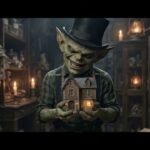
 Whispers From The Dark
Score breakdown
2.9K views
A Poe Retelling
Best Scene
Film Review
Poe in a plague mask: a lush, candlelit retelling of The Masque of the Red Death that understands the story’s cruelty is administrative. The Masque is about a man who files his kingdom’s dead under ‘out of sight’ — and is made, at the end, to dance with the paperwork.
This review discusses the ending. If you would rather watch the film first, we recommend you do, and then come back.
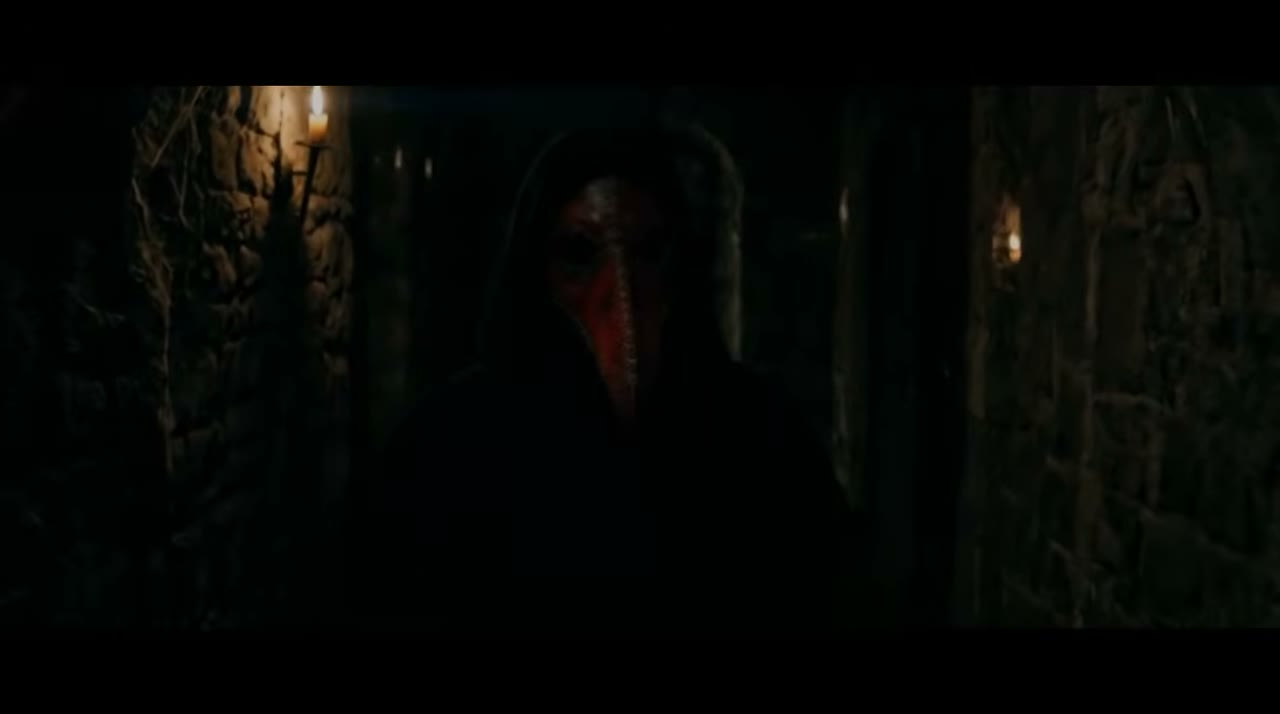
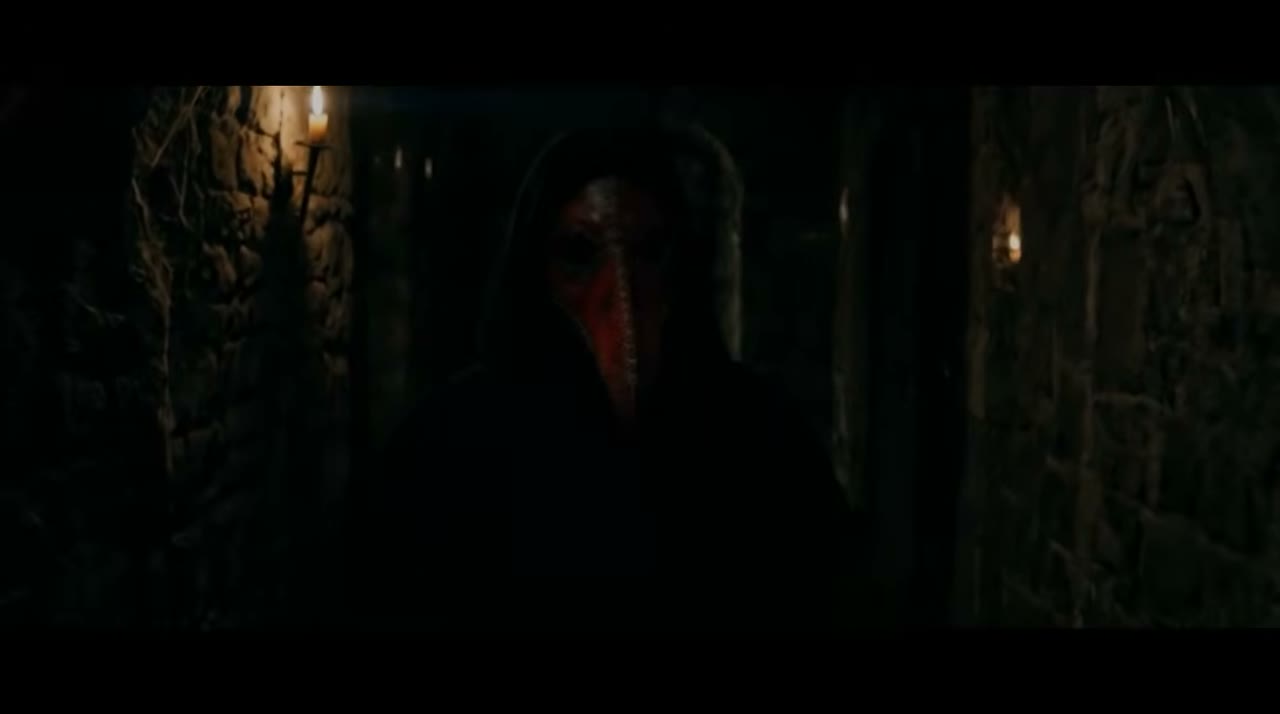
Lock the gates, pour the wine
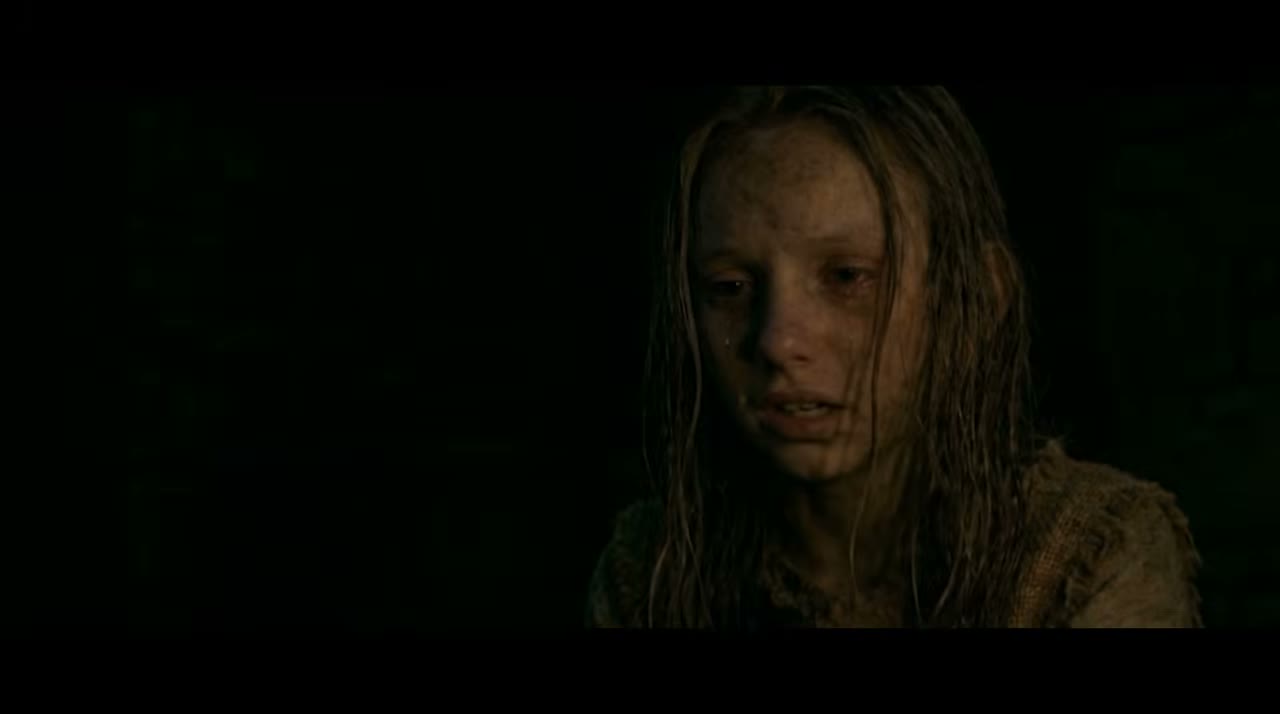
The host states the Lord’s policy with a smirk: “Lock the gates, pour the wine, ignore the screaming. What could possibly go wrong?” Outside the walls, a child begs bread for her sick mother and is turned away by the guard. Inside, the steward Osric makes the case the film will spend nine minutes judging: “If we sent bread down, or medicine… a little mercy. A little bread. A little open gate.”
The Lord’s refusal is the coldest line in the batch: “I have no intention of dying in the mud with them. I have guests to protect from sorrow.” It is a perfect villain’s line because it is a policy, not a snarl — sorrow itself has been banned from the castle, and the ball goes ahead under candlelight, masked, musical, and walled.
The stranger at the ball
The ball sequences are the film’s visual feast: gold masks, a violinist, dancers turning in a stone hall while the plague works outside. Into it walks a stranger whose mask nobody recognises. “Who is he?” “A fool.” The Lord, who has tolerated everything except being defied, gives the order that seals him: “REMOVE YOUR MASK.”
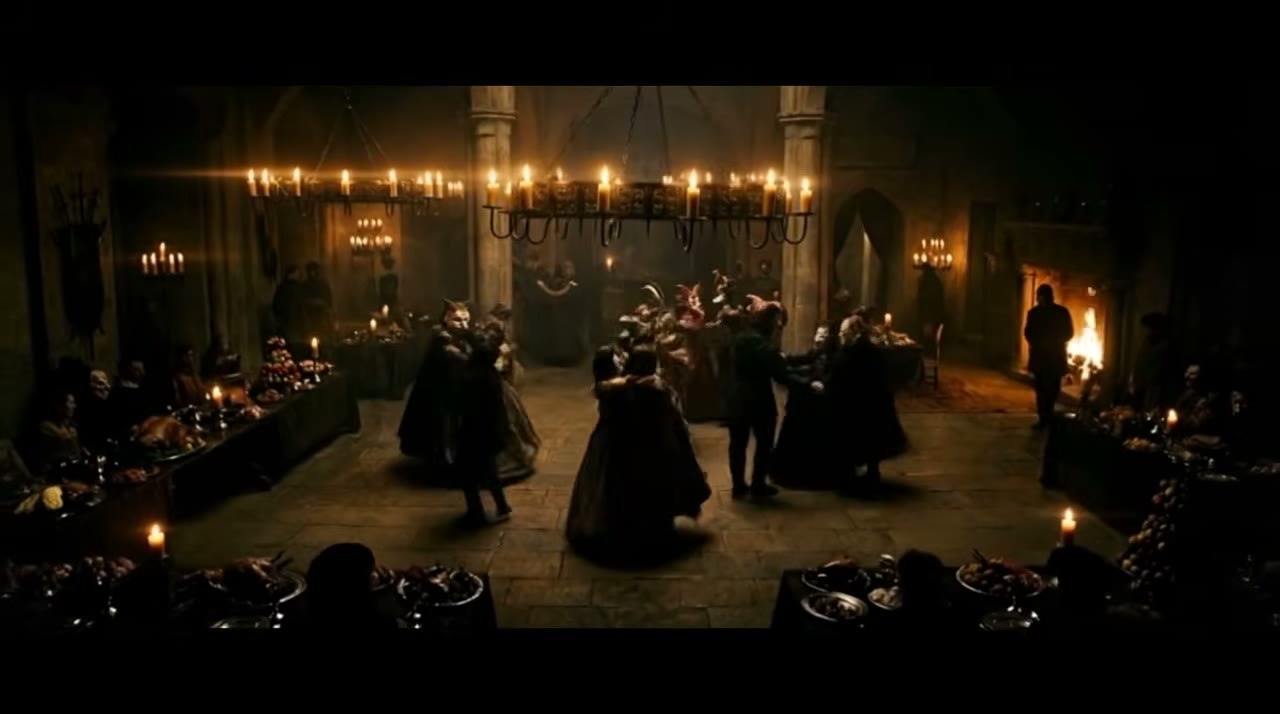
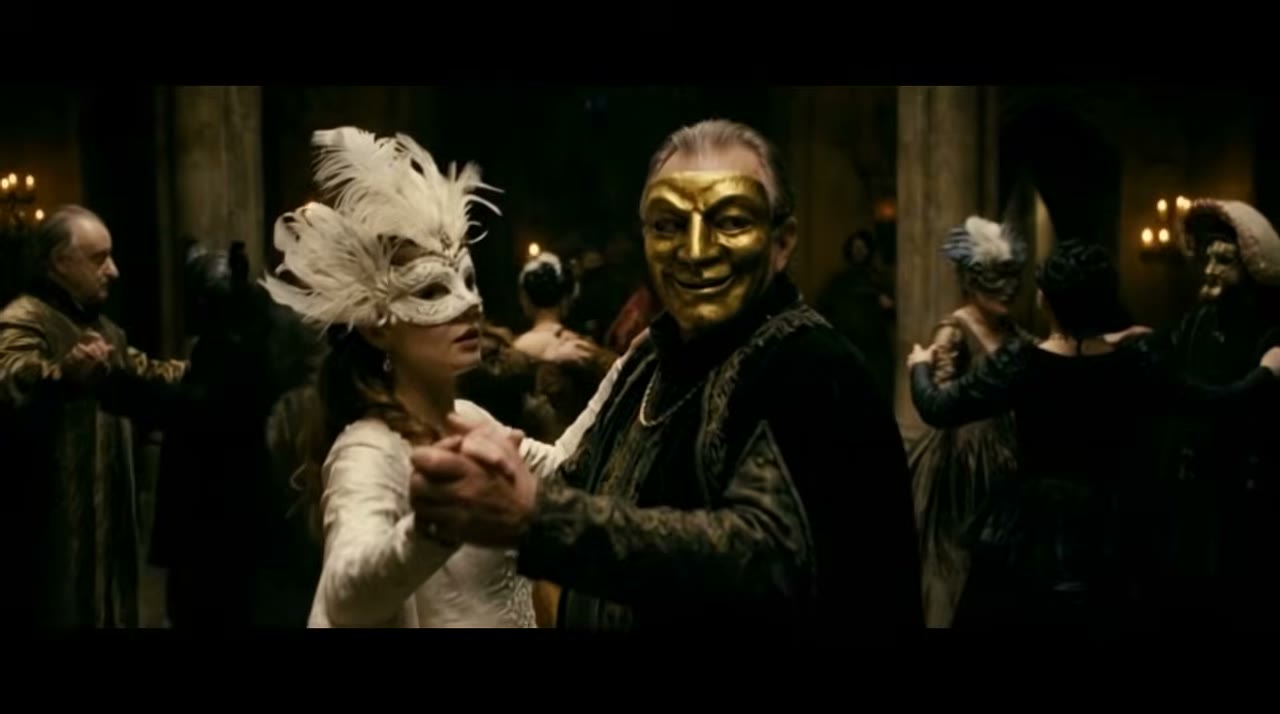
The chase that follows — the Lord, his men, the hound, corridors of torchlight — ends at a sealed door with nowhere left to run, and the film springs its darkest invention. The door opens not on escape but on the Lord’s secret: the plague dead of his own household, stacked away beneath the hall. “You put them under the hall.” “I put them out of sight.” Poe never wrote that line, but he would have recognised the bookkeeping.
DANCE, my lord
The stranger’s judgement is not a sword. It is an invitation the Lord cannot refuse: “DANCE, my lord.” Compelled, the man who would not open a gate for bread dances before his whole court, and begs — not the stranger, not his guards, but a serving girl: “GIRL, HELP ME. PLEASE.” Nobody moves. The film has spent its whole length showing us who in this castle gets helped, and the answer arrives as choreography.
The host names the visitor on the way out — “Ah, the Red Death. So rude. No invitation, no table manners, and absolutely impossible to keep outside” — and the joke lands because the film has proved it for nine minutes: walls are a policy, and the Red Death does not read policy.
Best Scene (7:18–7:56)
“DANCE, my lord”
The Lord, who refused a dying village a little bread, is made to dance by the guest he tried to unmask — and his court watches the way he watched the gate. When he begs a serving girl for help and gets silence, the film completes its circuit: every mercy he withheld is returned to him, in order, at tempo. Poe’s judgement, staged as a dance.
Final Thoughts
The Masque is the batch’s most beautiful film — candlelight, stone, gold leaf and plague — and its adaptation is intelligent rather than decorative, adding the cellar of hidden dead to Poe’s story without breaking its spine. It is a film about the difference between keeping death out and keeping it out of sight, and it knows exactly which one its villain chose.
Like Smile for the Camera, it carries Bad Batch Studio’s mark — its end cards credit the studio and producer Elia Bouthors — and shares that film’s polish: consistent faces, a held-together world, and a climax staged with total confidence.
The Masque is part of the Whispers From The Dark horror anthology on YouTube, hosted by the channel’s goblin storyteller, and is a retelling of Edgar Allan Poe’s The Masque of the Red Death. Its end cards credit Bad Batch Studio and producer Elia Bouthors.
Scene Breakdown
0:00–1:45 — The policy. The host frames the tale; the plague kingdom; a child turned away at the gate, begging bread for her sick mother.
1:45–3:10 — A little mercy. Osric pleads for bread, medicine, an open gate; the Lord refuses and orders the ball.
3:10–5:00 — The ball. Masks, music and dancing; the stranger appears; “Who is he?” “A fool.”
5:00–6:40 — The chase. “REMOVE YOUR MASK.” Corridors, the hound, the sealed door.
6:40–7:18 — Under the hall. The Lord’s secret: his own dead, hidden beneath the feast.
7:18–9:14 — The dance. “DANCE, my lord.” The begging, the silence, the Red Death; the host teases the Amazon next.
≈7:18 — The compelled dance is the film’s most puppet-like passage: the Lord’s partner’s white wig reads as a wig, and her grip on him is stiff. It plays — but it is where the illusion thins.
Ball wide shots soften the crowd into candlelit shapes; forgivable at this scale, and the masks carry the close-ups.
≈5:50 — The hound in the chase is small in frame and briefly weightless as it lunges; the cut away is quick and kind.
The Lord himself — heavy-set, jowled, unmistakable — is the same man at the feast, the confrontation and the dance, which is what makes his fall legible.
There are no reviews yet. Be the first one to write one.