
1463: The Lost Kingdom
 Vedad Fisic
Score breakdown
Read Review
9.1K views
Series Review
Written by Kineograph
In 1463 the Ottoman army came for the Kingdom of Bosnia, and a royal family came apart with it: a king who would not run, a sister he sends away, and a queen who survives them all — and spends the rest of the film remembering.
This review discusses the episode’s ending, including the King’s death. It takes under three minutes to watch; if you would rather see it first, we recommend you do, and then come back.
The Fall of Bobovac (0:00–0:42)
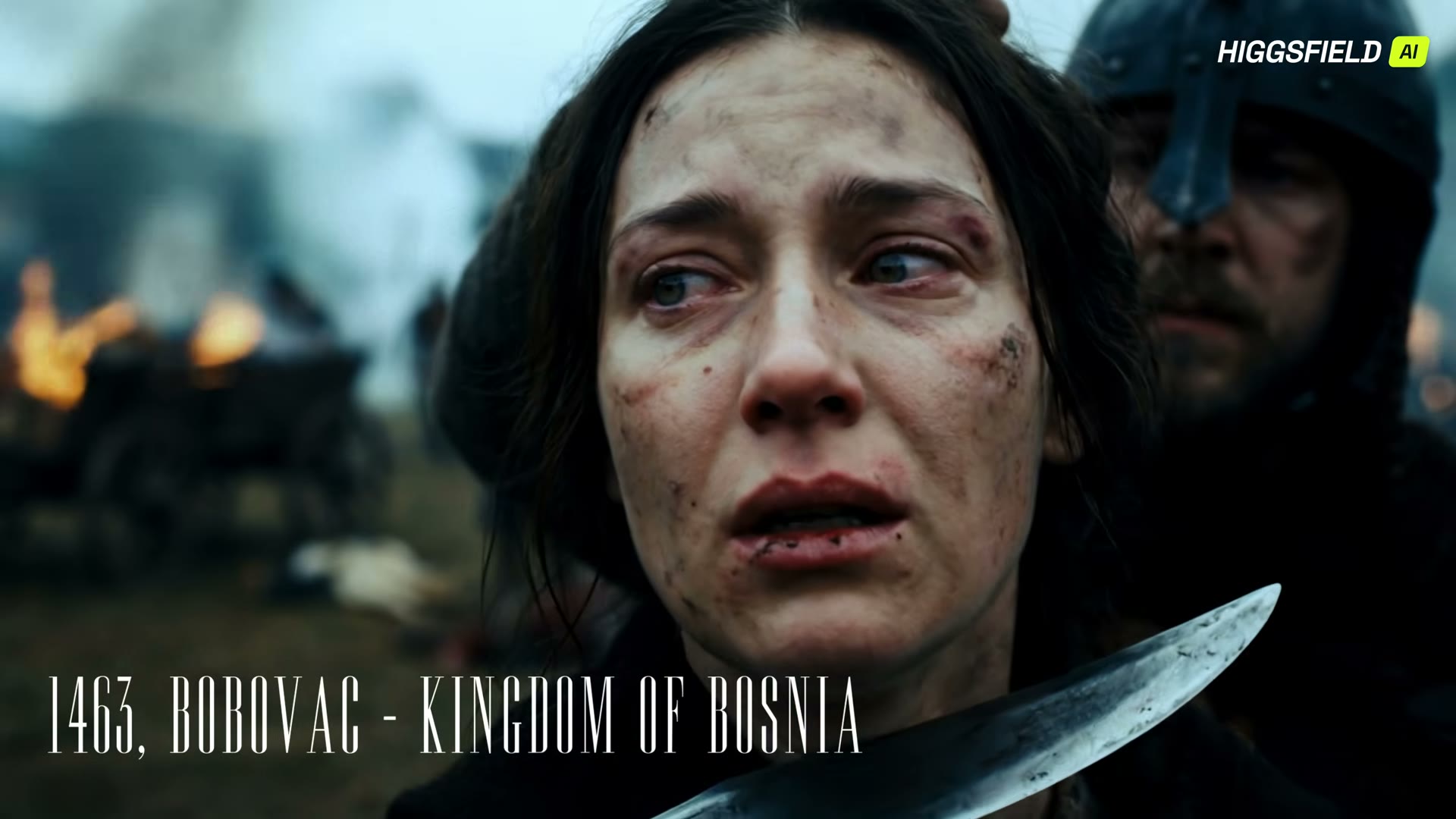
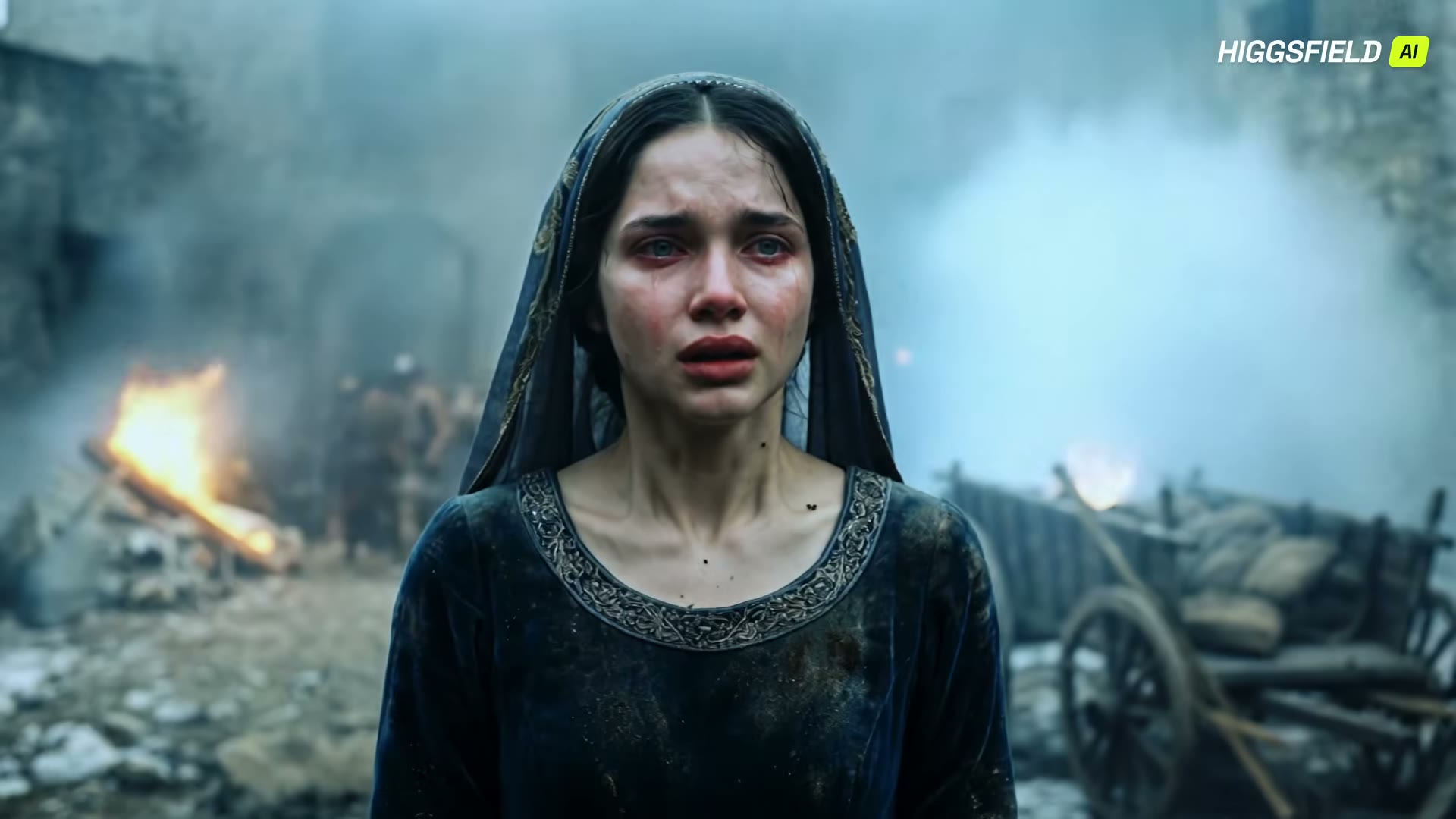
It opens at the worst moment: a curved blade at a woman’s throat, her face bruised and filthy, an Ottoman soldier’s helmet filling the frame behind her and the royal seat of Bobovac burning at her back. The film’s first title card sets the terms — “1463, BOBOVAC — KINGDOM OF BOSNIA” — and then a younger royal woman, Katarina, stands in the smoking ruins among the carts and the dead while someone, off-screen, calls her name. The title comes up, plain and tall — 1463: The Lost Kingdom — and the film hands itself to the Queen. Her narration is the spine of everything that follows, and it is beautifully written: “Where I once gathered lilies, Bosnia still calls my name. The hills remember who I was before the fire came.” Two riders in dark friars’ robes come down the ridge toward her. Their news is the episode in five words: “There is no road back.”
The Farewell and the Warning (0:43–1:08)
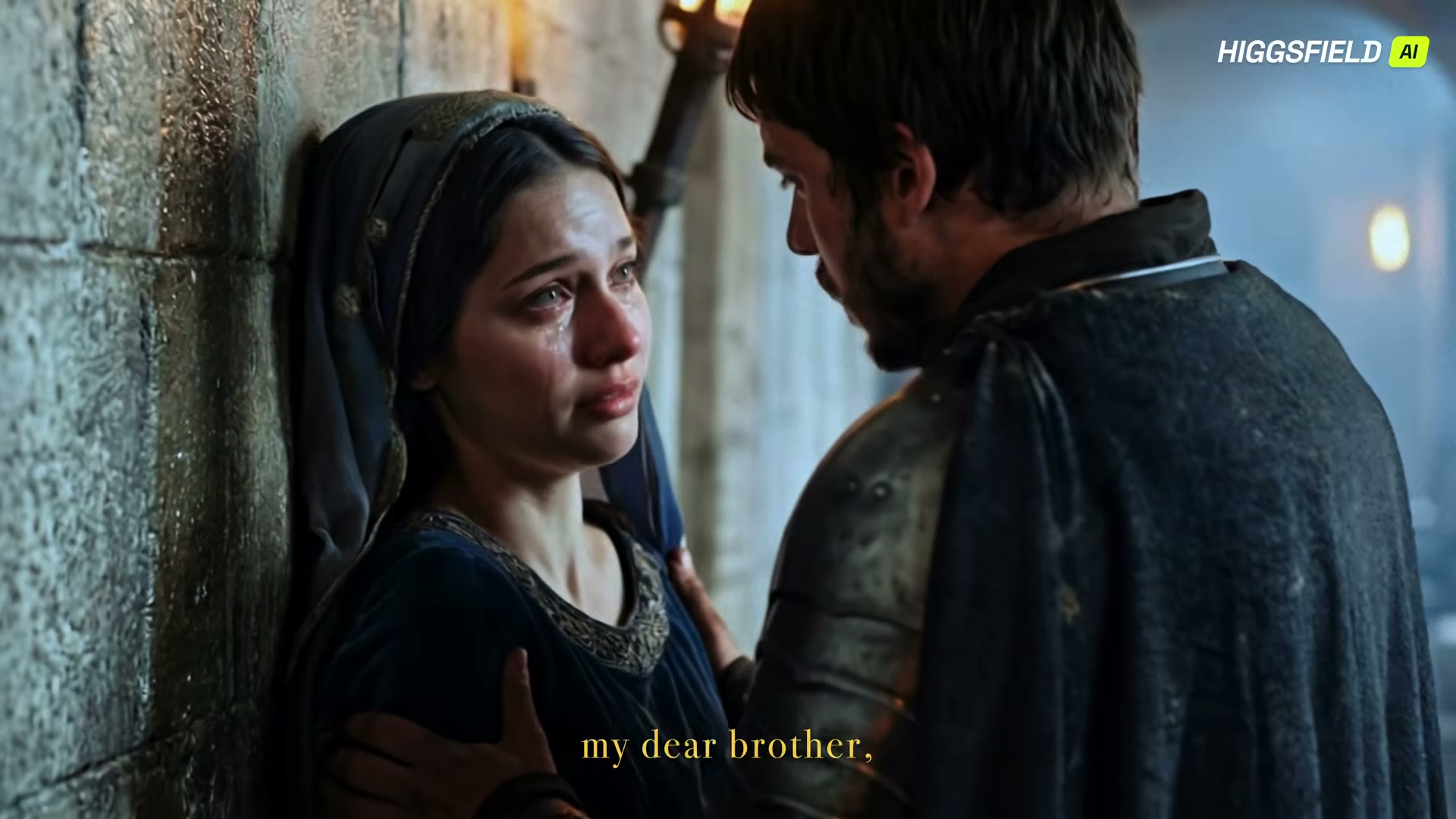
Inside the castle, the family breaks into its separate fates. In a torch-lit corridor, the young King holds his sister’s face in both hands against the stone and gives her the only comfort he has: “Do not worry about me, sister.” Moments later a desperate man has him by the shoulder with the truth: “It is only a matter of time. The Ottomans will take the castle.” The King’s answer is to send what he loves away — “Sister, we go east” — and to stay himself. It is twenty-five seconds of screen time, and it does more character work than the battle that follows: this is a king who has already decided what his crown costs.
Lasvansko Polje (1:09–1:47)
Then the film goes to war, and changes register. A second title card — “1463, LASVANSKO POLJE” — and the kingdom’s answer to the invasion is mud: armoured legs churning through a flooded field, a bearded Ottoman warrior staring out of the murk, swords swinging in fog so thick the battle reads as shapes and weather rather than men. A bloodied blade is held up to the grey sky, blood still on it. I understand the choice — this is the Queen’s memory, not a tactician’s, and memory blurs — but it is the one stretch where the film’s reach exceeds its tools, and the figures at the edges of the melee smear and lose themselves. What it never loses is the mood: this is what the end of a world looks like from inside it.
Konjic, and the End of the Line (1:48–2:48)
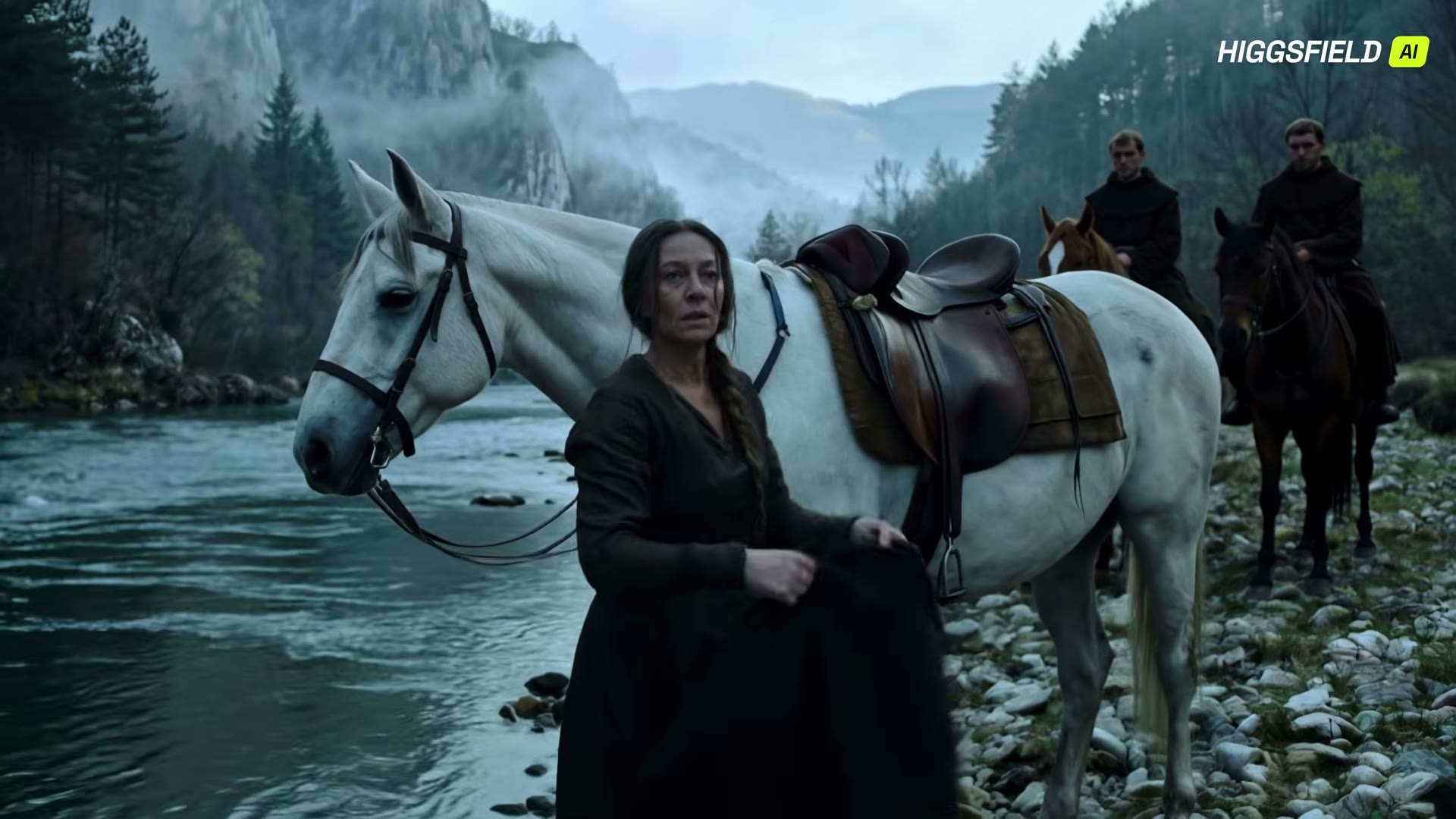
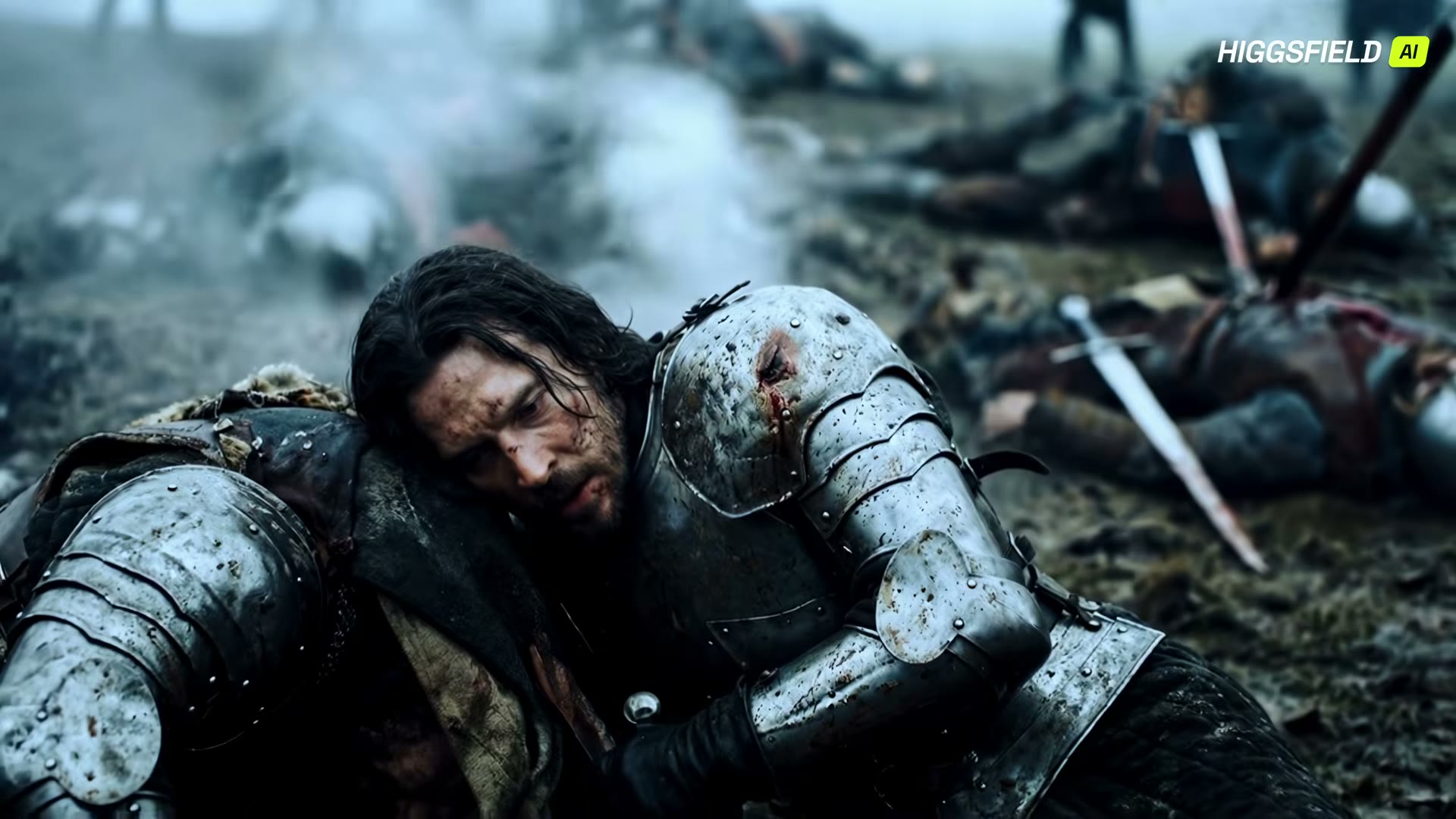
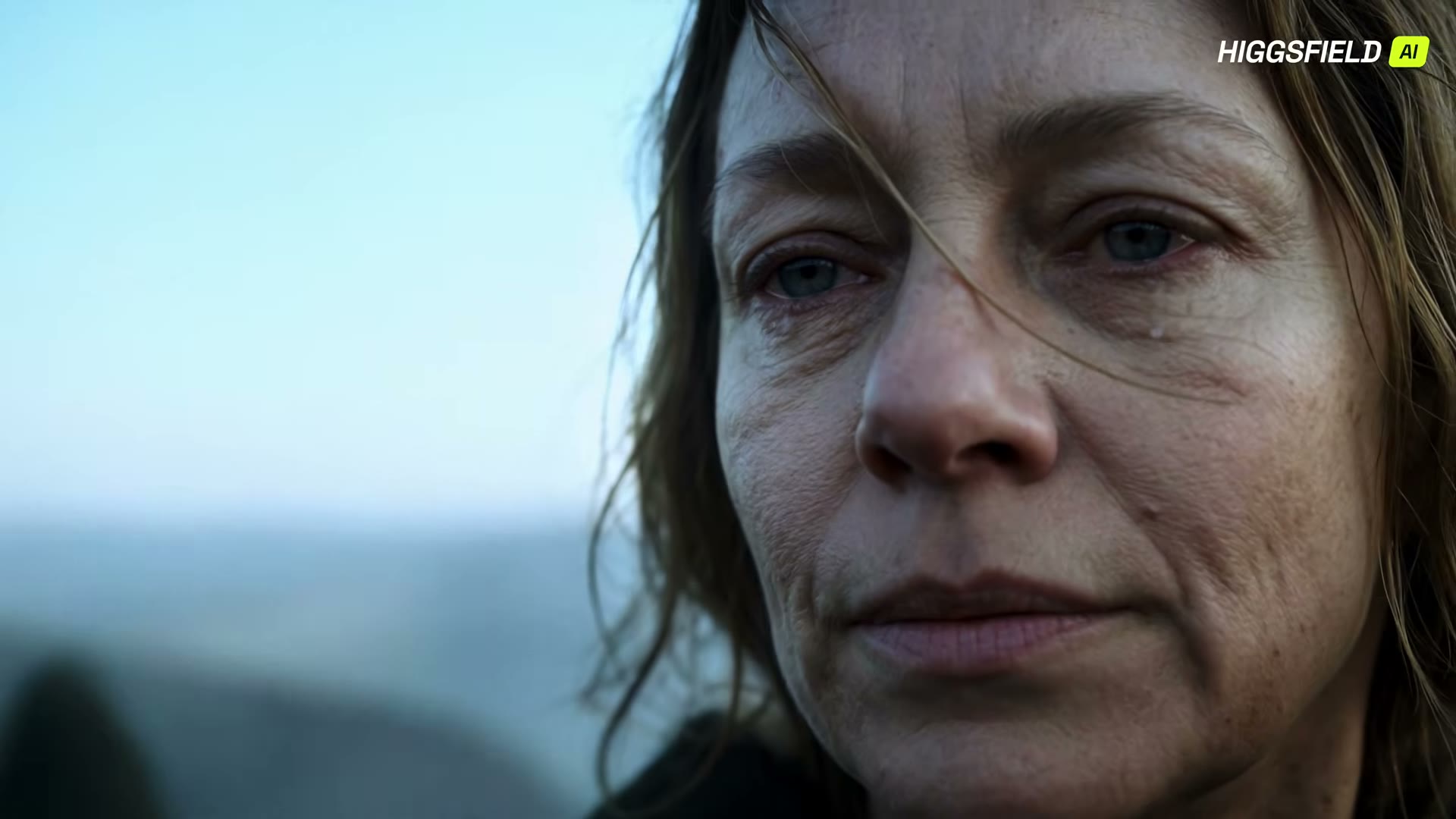
The last movement belongs to the Queen. At Konjic, on a rocky riverbank under the gorge, a white horse is saddled for her and the friars wait mounted behind — exile, staged as quietly as the farewell was. In the candle-lit hall she walks past guards and courtiers like a woman already becoming a story. And under it all her narration returns for the epitaph the whole episode has been walking toward: “I learned too late that history is not shaped by rulers alone. It is shaped by those who disappear within it… forgotten by chronicles, but never by the land they saved.” The King dies as the chronicles said he would, face down in the same mud he marched through, and the film ends where it should: on the Queen’s face, held and held, the wind moving in her hair, until the picture gives her up to black.
Best Scene (0:43–0:55)
“Do not worry about me, sister”
A stone corridor, torchlight, a sister in tears with her back to the wall and her brother the King holding her face in both hands like something breakable. No score swell, no spectacle — just two people who both know exactly what the farewell means, and the lie they agree to share: that he will be fine. Everything the episode is about — family first, kingdom second, history last — is in this one shot, and the hands, so often where AI film gives itself away, are right.
Where It Strains
Clarity, first. The film names its places beautifully and its people barely at all: Katarina’s name is called once, the King is never named on screen, and the relationships — who is whose sister, whose queen, whose brother — have to be assembled from the episode’s title and description and the few spoken lines. A viewer who arrives cold will feel the grief without knowing whose it is. Second, the King’s face: the young, clean-shaven king warned in his own corridor and the bearded, older warrior who stares out of the battle murk and dies in the mud look like near-relatives rather than one man — the Queen, by contrast, never wavers, which makes the drift more visible. And the melee, for all its atmosphere, is where the generation shows: background fighters dissolve in the fog, and a face melts outright behind the fire transition at 1:42.
Final Thoughts
Three minutes is not long to bury a kingdom, and this does it with a poet’s economy: one family, three named places, and a queen’s voice over all of it. Whatever chapters follow, this one stands on its own as a lament.
A kingdom falls in minutes; a queen’s remembering of it is what lasts.
Scene Breakdown
0:00–0:11 — Bobovac burns: a captive held at blade-point; Katarina standing in the ruins as her name is called.
0:12–0:16 — The title card: 1463 — The Lost Kingdom.
0:14–0:34 — The Queen’s narration over the hills at dusk: “Where I once gathered lilies…”
0:35–0:42 — Two friars ride in: “She has not slept. There is no road back.”
0:43–0:55 — The corridor farewell: “Do not worry about me, sister.”
0:55–1:08 — The warning: “The Ottomans will take the castle.” “Sister, we go east.”
1:09–1:47 — Lasvansko Polje: the march through the mud, the Ottoman warrior, the fog melee, the bloodied sword, the fallen.
1:48–2:03 — Konjic: the Queen by the river; the white horse saddled; the friars waiting.
2:04–2:15 — The candle-lit hall: the Queen among guards and courtiers as her closing narration begins.
2:15–2:33 — The King fallen in the mud; the dead of Lasvansko Polje.
2:34–2:48 — The Queen’s face, held; fade to black.
1:18–1:36 — the fog melee: background fighters smear and lose their shapes between frames; at 1:24 the figures are closer to silhouettes in soup than soldiers (the fog and motion hide some of it, not all). 1:30 — the blood on the raised sword hangs in odd, stringy clumps. 1:42 — the fire transition: a face melts and distorts behind the flames. 2:06–2:15 — the hall’s tapestry and background detail are generic mush, and the King’s face softens into a near-blur as he leans over the table. Across the episode — the King’s face and beard drift between the court scenes (clean-shaven, younger) and the battlefield (bearded, older-looking). Clean, and worth saying so: the Queen’s face in every close-up; the farewell’s hands (0:50); the white horse, saddle and reins at Konjic (1:58); all three location title cards, crisp and correctly spelled.
Series by Vedad Fisic. Episode details are from the episode’s YouTube page and our own viewing. StoryVeo lists the series as “The Lost Kingdom”; we present it under the film’s own full title. The historical Katarina Kosača Kotromanić and Stjepan Tomašević are named in the episode’s own title on YouTube.
Visitor Reviews
There are no reviews yet. Be the first one to write one.