

 Isaias Garcia
 Creator ID26-11-05-0101

Score breakdown
6 views on Kineograph
Film Review
Written by Kineograph
In the autumn of 1982, on one block in Recoleta, a caretaker’s grandson waits every morning for the general’s wife — while the radio in his grandmother’s kitchen counts down, broadcast by broadcast, to the war that will take him.
This film is about life under a military dictatorship and a war fought by conscripts. Its subjects include forced conscription, a draft lottery, and the fear that hung over ordinary families in Argentina in 1982. There is no on-screen violence, sex or gore — the weight here is in what people know is coming, and in what they cannot prevent. It is handled, and reviewed, with the care those subjects deserve.
This review discusses the ending. If you would rather watch the film first, we recommend you do, and then come back.
“Every Morning I Waited For Her”
An adult Santi remembers. “There is a block in Recoleta where I lived with my grandmother. There, in the autumn of ’82, I was a kid who knew nothing… except one thing: every morning I waited for her.” The film opens with a song, “Flor sin flor” — a flower behind glass, that nobody ever planted, with no earth or owner, no name or scent — and then settles into the domestic heart it will keep returning to: the grandmother at the kitchen table, serving mate, the kettle on, an old radio glowing. “Take it, it’ll get cold.”
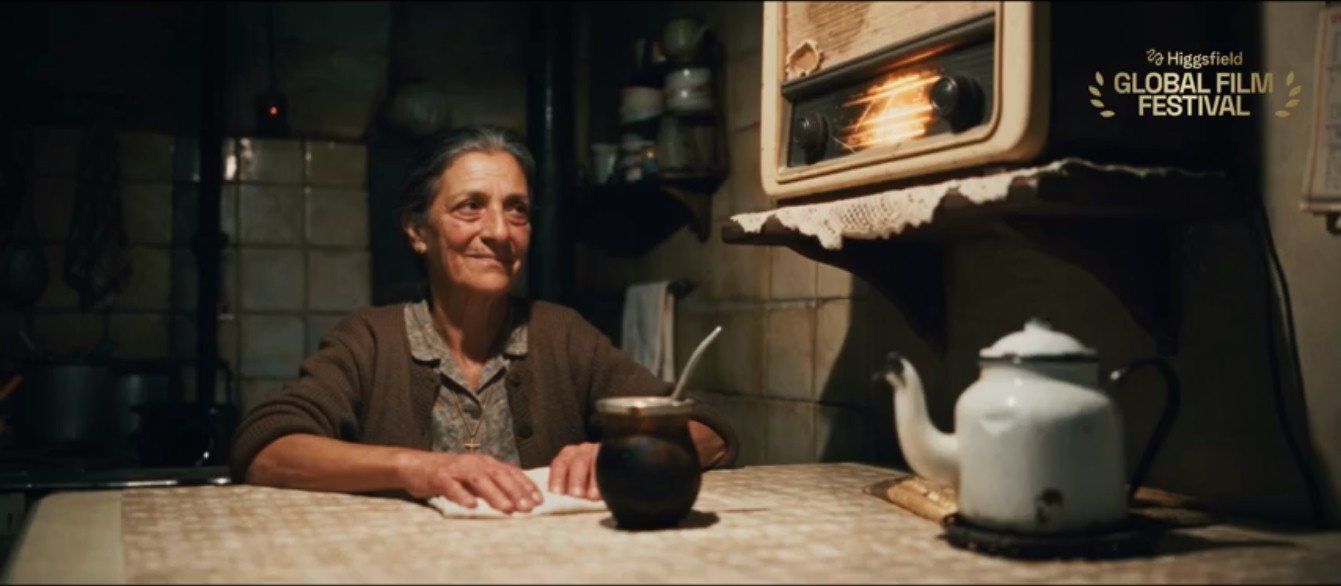
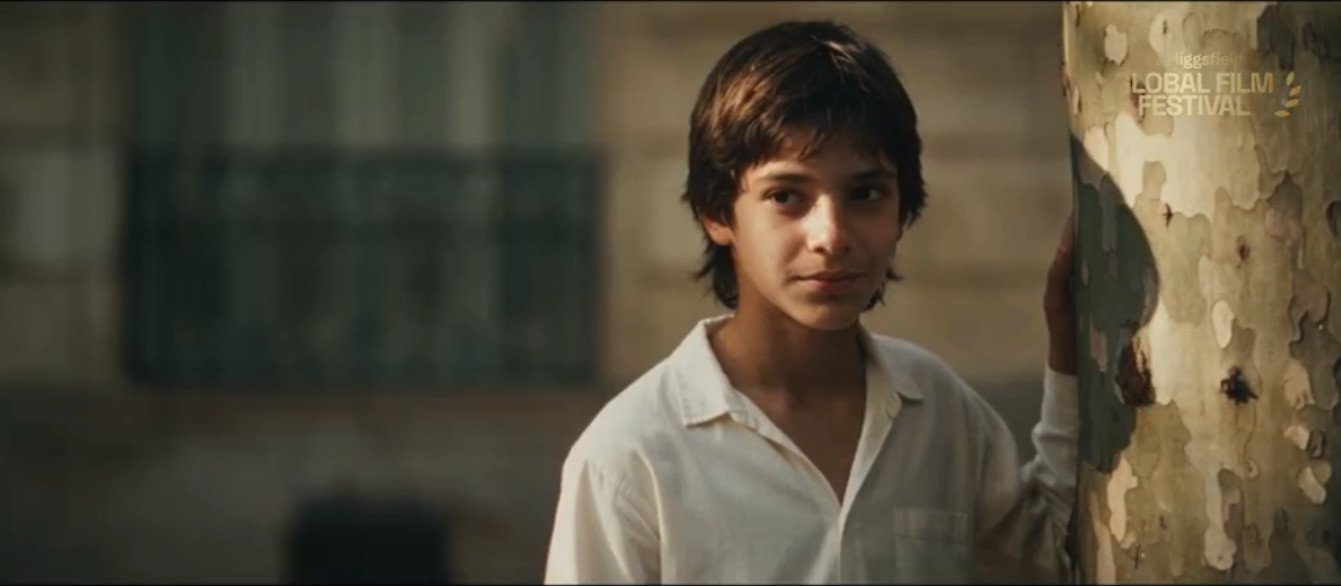
The war enters through that radio and through small talk, the way it enters real homes. Santi passes the Palermo regiment and sees “a line of boys in the yard, all with their hair cut, all the same… about your age”. A neighbour’s son is already in Campo de Mayo; “the mother doesn’t sleep”. And Santi, holding onto the one defence a boy can invent, decides: “I will never cut my hair. With that hair, the army won’t take me.” The film never mocks that logic. It understands exactly what it is — a child bargaining with history.
Fifteen Seconds In An Elevator
His job is delivering the newspaper to apartment 4B. “Inés. She was the general’s wife. The envy of all Buenos Aires.” The elevator ride to the fourth floor lasts fifteen seconds: “I lived for those fifteen seconds… like a kid in love, an idiot, I’d invent any excuse to do the same thing every day.” Once, left on the other side of her door, he heard her laugh, alone — and the film understands that too: a whole first love built out of a laugh through a door.
Inés arrived with the general six years earlier from Mendoza, Santi tells us, “like paintings are brought”. “People like them aren’t asked how they feel.” It is the saddest line in the film, and it is about her, not him: a woman transported like furniture into a powerful man’s house, whose feelings are not part of the inventory. Meanwhile the radio keeps its own ledger — official communiqués about the South Atlantic, troops consolidating positions, morale high, “¡Que viva la patria!” — and then, one day, the announcement that changes the temperature of every kitchen in the film: the military-service lottery numbers are published. “The kids and I already knew our numbers! What we didn’t know was whose turn it would be.”
“I Wouldn’t Be So Calm”
The general notices everything. “It was his. It was in how he walked, in where he put his eyes and his steps.” When he questions Santi — are you the caretaker’s grandson? You were drawn in the lottery? — the boy hides behind his grandmother’s comfort: it is very unlikely it will be me. The general’s reply is the coldest line in the film: “I wouldn’t be so calm.” The radio begins reading out identity numbers. Citizens called up will be notified.
Best Scene (~10:00–12:00)
Inés pleads; the general refuses
Inés goes to her husband for the boy’s life. “General! Forgive me… It’s for the boy. They called him. I know. I heard it on the radio. Don’t you know people? One word from you…” She is asking him to spend a fraction of his power — one word, one telephone call — and the film makes you feel how small the ask is and how total the refusal will be.
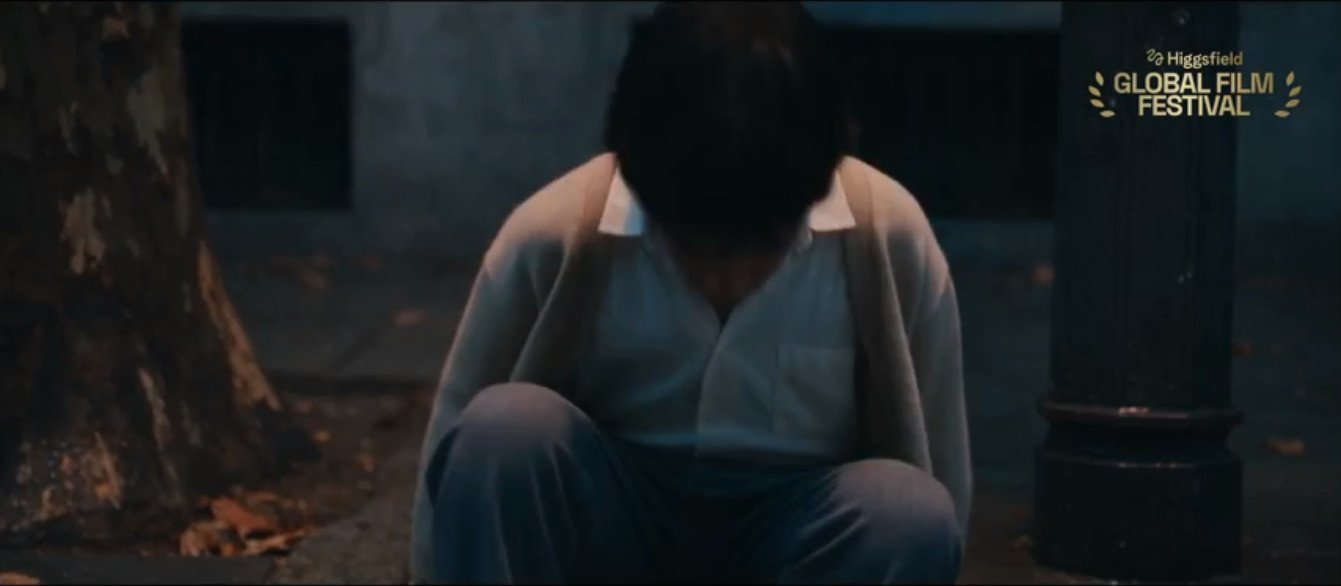
“Do you think I don’t know what you’re thinking? That boy is nothing, he’s the caretaker’s grandson. End this stupidity… If you dare lift that telephone with my surname… you will have nowhere to return to.” It is a threat aimed at both of them at once: the boy is disposable, and so, if she disobeys, is she. Everything the film has quietly built — the fifteen seconds, the laugh through the door, the woman brought like a painting — converges in this room, and loses. This is the scene the film will be remembered by.
“Adiós, Santín”
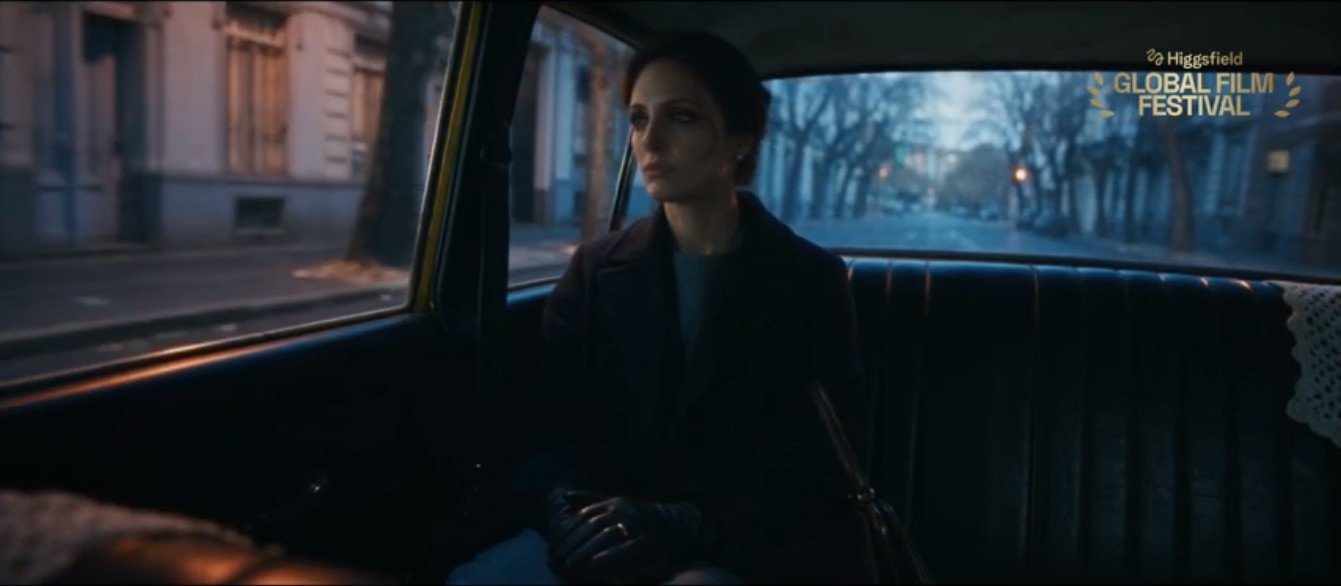
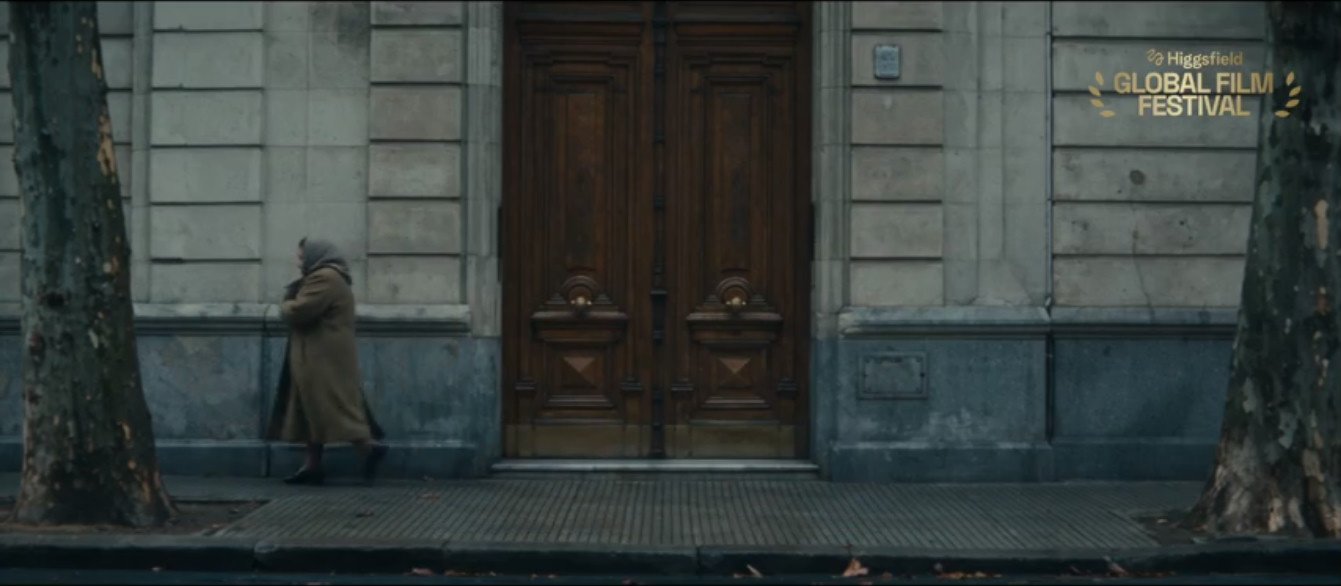
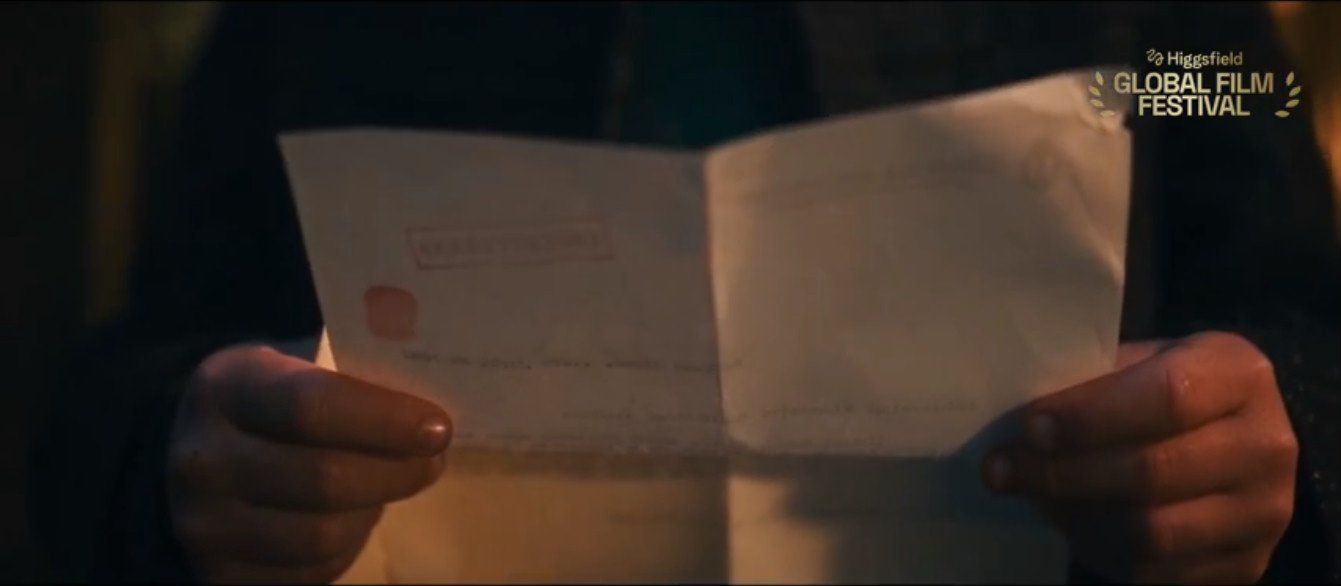
What remains is a farewell. “I always liked your hair like that,” Inés tells him — the hair he swore would keep him out of the army, noticed and named by the one person he grew it past for. “Adiós, Santín.” Then the film gives us the evidence in his hands: the open call-up letter with its red stamp. And it leaves Inés where she has been all along — in motion, being taken somewhere: in the back seat of a car, in a dark coat and gloves, watching the street trees go past.
Santi’s number was called. What happened to him, the film does not say — it does not show him going to war, or returning, or anything after the letter. The ending is open, and I read that openness as the film’s honesty rather than an omission (that reading is mine, and the film leaves room for it): for the families who lived it, that unanswered question was the experience. The song returns — the flower behind glass, with no earth or owner — and the film fades on her departure.
The Craft Is Quietly Sure
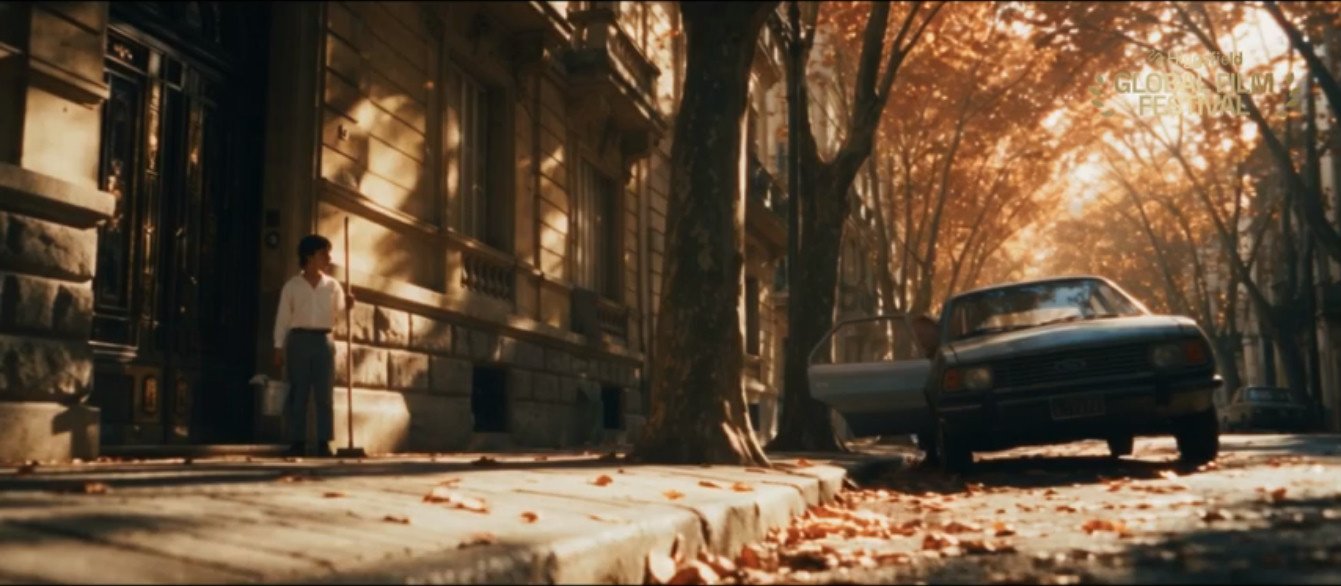
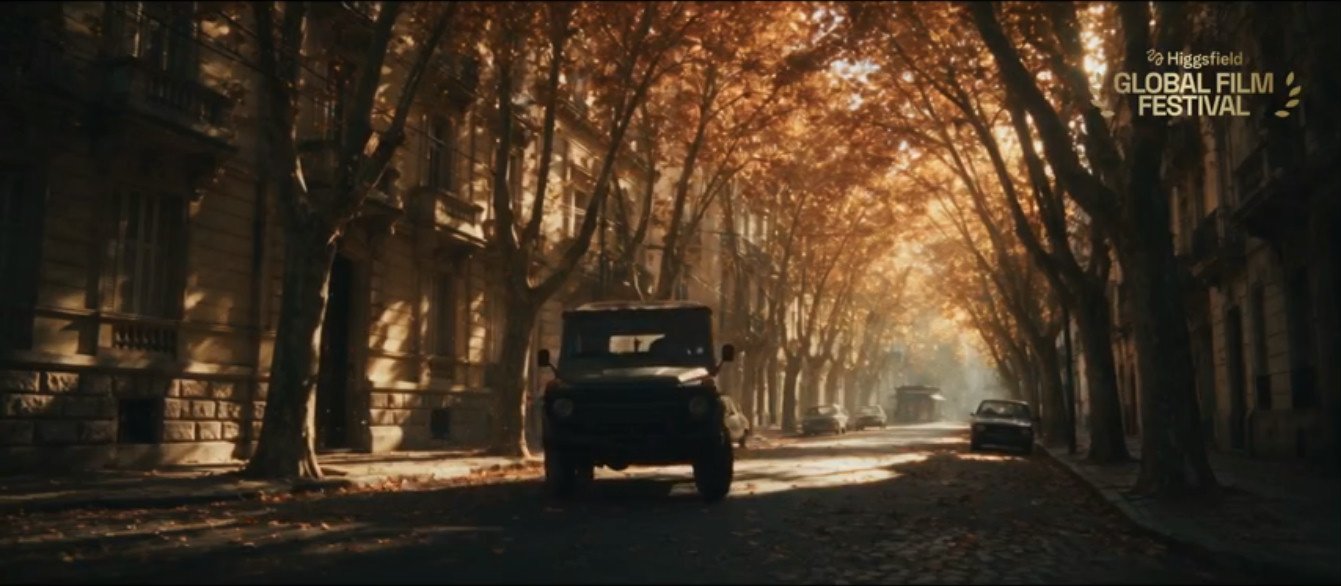
Of the four films in this batch, this one has the fewest and least intrusive artifacts, and it is not close. Faces, period detail and light are notably stable: the grey Ford Falcon with its door open on an autumn street, the military jeep, the glowing radio, the Recoleta building, the plane trees — the world holds together shot after shot, which is exactly what a memory film needs. What wobble there is stays minor: occasional face drift (Santi’s hair, the grandmother, Inés herself), the call-up letter’s text illegible in the hands that hold it, and one shouted scene around the five-minute mark whose audio dissolves into noise. None of it breaks the film’s spell, and some of it — a document you cannot quite read, a voice lost in shouting — sits almost comfortably inside a story about a boy who only ever partly understood what was happening around him.
Final Thoughts
Inés is a first love remembered at the exact moment history came to collect it — a quiet, beautiful film about the people who are not asked how they feel.
I would recommend it to anyone who likes their historical drama intimate rather than epic, and to anyone who wants to see how much an AI film can do with a kitchen table, an elevator and a radio. Spanish speakers will get the most from it; everyone else should know it speaks Spanish without subtitles — and that its images speak clearly in any case.
Scene Breakdown
0:00–2:00 — The opening song, “Flor sin flor”; Santi’s narration begins: the block in Recoleta, the grandmother, the mate and the glowing radio. The Palermo regiment’s line of boys, all with their hair cut.
~2:00–4:00 — The newspaper run to apartment 4B; Inés, the general’s wife; the fifteen-second elevator ride; the radio’s South Atlantic communiqués; her laugh, heard through a door.
~4:00–6:00 — Inés’s arrival from Mendoza, “like paintings are brought”; a chaotic shouted scene; the radio publishes the draft lottery numbers.
~6:00–8:00 — The general’s presence on the street; Santi sweeps the entrance as the grey Ford Falcon waits; the Junta’s announcement about the Malvinas.
~8:00–10:00 — The general’s interrogates Santi: “I wouldn’t be so calm.” The radio reads out identity numbers.
~10:00–12:00 — Best Scene: Inés pleads for the boy; the general refuses and threatens her.
~12:00–14:00 — The farewell: “I always liked your hair like that… Adiós, Santín.” The call-up letter, with its red stamp, in Santi’s hands.
~14:00–16:33 — “Flor sin flor” returns; Inés leaves in the back seat of a car; the film fades to black on her departure. Santi’s fate is never shown.
~5:00 — One shouted scene whose audio is unintelligible.
Throughout — Occasional face drift between shots — Santi’s hair, the grandmother, Inés herself; the call-up letter’s text is illegible; and the radio’s numbers and names garble. That is nearly the whole list — the faces, the period detail and the autumn light are the most stable in this batch.
An entry in the Higgsfield Global Film Festival. Inspired primarily by Gabriel García Márquez’s 1955 short story “One of These Days”. In Spanish, without subtitles.
There are no reviews yet. Be the first one to write one.